
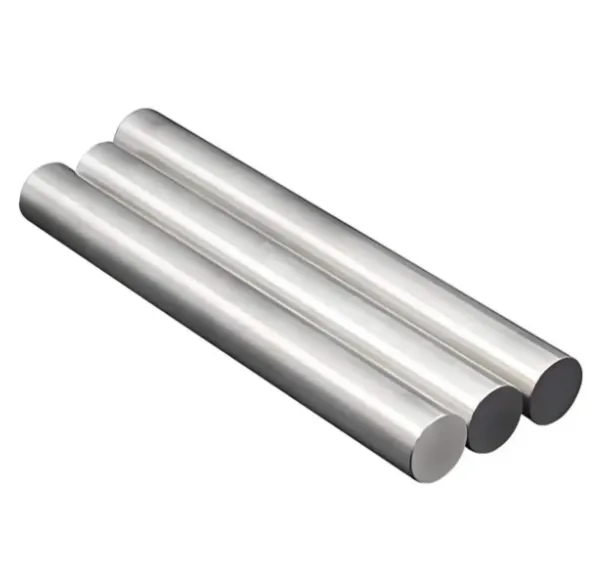
Nitronic 50 round bar (XM-19, UNS S20910) is a premium nitrogen-strengthened austenitic stainless steel that offers a superior combination of corrosion resistance and mechanical strength. With a yield strength nearly double that of conventional 316/316L stainless steel, it is the preferred choice for engineers facing extreme environments in the subsea, petrochemical, and aerospace sectors.
Nitronic 50 round bar (UNS S20910, also designated XM-19) is one of the most capable austenitic stainless steels available today, offering minimum yield strength of 55,000 psi (379 MPa) in the annealed condition — approximately double that of standard 316L stainless steel — combined with corrosion resistance that meets or exceeds 317L in most environments. MWalloys manufactures and supplies Nitronic 50 round bar to engineering teams, procurement specialists, and fabrication shops across marine, oil and gas, chemical processing, biomedical, and structural engineering sectors. If your application involves seawater exposure, high mechanical loads, cryogenic service, or environments where both strength and corrosion resistance must be satisfied simultaneously without resorting to expensive nickel superalloys, Nitronic 50 round bar is the material that resolves that engineering conflict.
What Is Nitronic 50 Steel and What Do UNS S20910 and XM-19 Mean?
Nitronic 50 is a nitrogen-strengthened austenitic stainless steel originally developed by Armco Steel Corporation (now AK Steel) in the early 1970s under the proprietary trade name "Nitronic." The "50" designation refers to its position within the Nitronic family — positioned between Nitronic 40 and Nitronic 60 in terms of alloy content and performance characteristics. While "Nitronic 50" remains the most widely recognized commercial name, this alloy carries multiple official designations used across different standards bodies and procurement systems:
- UNS S20910: The Unified Numbering System identifier assigned by SAE/ASTM.
- XM-19: The ASTM special designation used in standards like ASTM A276 and ASTM A479.
- 22Cr-13Ni-5Mn: A compositional shorthand sometimes used in technical literature.
- EN 1.3816: The European material number under EN standards (less commonly referenced).
Understanding which designation applies in your procurement system matters because purchase orders, mill certifications, and quality records must reference consistent identifiers. When you order from MWalloys, our Mill Test Reports reference all applicable designations — UNS S20910, XM-19, and the applicable ASTM standard — so your documentation is unambiguous.
The alloy belongs to the austenitic stainless steel family, meaning its room-temperature microstructure consists of face-centered cubic (FCC) austenite. However, unlike conventional 300-series austenitic stainless steels that rely primarily on nickel for austenite stabilization, Nitronic 50 uses nitrogen as a primary austenite stabilizer alongside manganese, while maintaining a chromium-nickel base that provides the corrosion resistance framework. This substitution is what enables the dramatically elevated strength without sacrificing the corrosion resistance or non-magnetic character of the austenitic structure.
The Nitronic Family: Where Does Nitronic 50 Sit?
The Nitronic series includes several grades, each optimized for different property priorities. Nitronic 50 occupies the position where strength and corrosion resistance are both maximized simultaneously, making it the most frequently specified grade in structural and marine applications.
| Grade | UNS | Primary Strength | Key Characteristic |
|---|---|---|---|
| Nitronic 32 | S24100 | Moderate | Low nickel, cost-driven |
| Nitronic 33 | S24000 | Moderate | High Mn, non-magnetic |
| Nitronic 40 | S21900 | Good | Higher Mn than Nitronic 50 |
| Nitronic 50 | S20910 | Excellent | Best strength-corrosion balance |
| Nitronic 60 | S21800 | Good | Outstanding wear/galling resistance |
Chemical Composition and Specification Requirements for Nitronic 50
The chemical composition of Nitronic 50 (UNS S20910) is specified under ASTM A276, ASTM A479, and ASTM A582, among other applicable standards. The composition represents a carefully engineered balance of elements, each contributing a specific function to the alloy's performance profile.
Nitronic 50 Chemical Composition (UNS S20910 / XM-19)
| Element | Minimum (%) | Maximum (%) |
|---|---|---|
| Chromium (Cr) | 20.50 | 23.50 |
| Nickel (Ni) | 11.50 | 13.50 |
| Manganese (Mn) | 4.00 | 6.00 |
| Nitrogen (N) | 0.20 | 0.40 |
| Molybdenum (Mo) | 1.50 | 3.00 |
| Silicon (Si) | — | 1.00 |
| Columbium (Nb) / Vanadium (V) | 0.10 (each, min) | 0.30 (each, max) |
| Carbon (C) | — | 0.06 |
| Phosphorus (P) | — | 0.040 |
| Sulfur (S) | — | 0.030 |
| Iron (Fe) | Balance | Balance |
The Function of Each Key Element
Chromium (20.50–23.50%): The foundation of corrosion resistance. At 20.5–23.5%, Nitronic 50 carries substantially more chromium than 316L (16–18%) or 317L (18–20%), creating a more robust passive oxide film and improving resistance to both pitting and crevice corrosion. Chromium also contributes to oxidation resistance at elevated temperatures.
Nitrogen (0.20–0.40%): The defining element that differentiates Nitronic 50 from conventional austenitic stainless steels. Nitrogen in solid solution strengthens austenite through interstitial solid solution hardening — the same mechanism by which carbon strengthens steel, but without the sensitization risk. Each 0.10% increase in nitrogen raises yield strength by approximately 10,000 psi (69 MPa). Nitrogen also stabilizes the austenite phase, reducing the risk of martensite formation during cold work, and improves pitting corrosion resistance by enhancing the passive film stability.
Nickel (11.50–13.50%): Stabilizes the austenitic microstructure alongside nitrogen and manganese. The nickel content in Nitronic 50 is similar to 316L, but because nitrogen and manganese also contribute to austenite stability, the alloy maintains a fully austenitic structure at room temperature and below.
Molybdenum (1.50–3.00%): Significantly improves resistance to pitting and crevice corrosion in chloride environments. Molybdenum enhances the passive film stability by forming molybdate species that repair breaks in the passive layer. The combination of high chromium, nitrogen, and molybdenum gives Nitronic 50 a Pitting Resistance Equivalent Number (PREN) substantially above 316L.
Manganese (4.00–6.00%): Provides austenite stabilization as a partial nickel substitute and enhances nitrogen solubility in the melt. Higher manganese content allows higher nitrogen addition during steelmaking without nitrogen porosity forming during solidification.
Columbium (Niobium) and Vanadium (0.10–0.30% each): These microalloying elements form fine carbide and nitride precipitates (MC, MN type) that pin grain boundaries, refine grain size, and provide precipitation strengthening. Their presence is a key reason Nitronic 50 maintains its strength advantage after welding and heat exposure, as fine precipitates resist coarsening at moderate temperatures.
PREN Calculation for Nitronic 50
The Pitting Resistance Equivalent Number (PREN) is calculated as:
PREN = %Cr + 3.3(%Mo) + 16(%N)
Using mid-range composition values for Nitronic 50:
PREN = 22.0 + 3.3(2.25) + 16(0.30) = 22.0 + 7.43 + 4.80 = 34.2
This PREN value exceeds 316L (approximately 24–26) and approaches duplex 2205 (approximately 35–38), explaining why Nitronic 50 competes directly with duplex stainless steel in many marine and chemical service specifications.
Mechanical and Physical Properties of Nitronic 50 Round Bar
The mechanical property profile of Nitronic 50 round bar is what consistently surprises engineers encountering this alloy for the first time. The combination of yield strength, ultimate tensile strength, and elongation in the annealed condition is genuinely exceptional for an austenitic stainless steel.
Mechanical Properties of Nitronic 50 Round Bar (Annealed Condition)
| Property | Nitronic 50 Annealed | ASTM Minimum (A276/A479) |
|---|---|---|
| Tensile Strength | 100,000–115,000 psi (690–793 MPa) | 100,000 psi (690 MPa) |
| Yield Strength (0.2% offset) | 55,000–75,000 psi (379–517 MPa) | 55,000 psi (379 MPa) |
| Elongation in 2 inches | 35–55% | 35% minimum |
| Reduction of Area | 55–70% | 55% minimum |
| Brinell Hardness | 241–285 HBW | 285 HBW maximum |
| Charpy Impact (at -196°C) | 100–150 J | Excellent (no brittle transition) |
Cold Worked / Cold Drawn Condition Properties
Cold working Nitronic 50 round bar through drawing or rolling further elevates strength while retaining significant ductility, a consequence of the nitrogen-stabilized austenite that resists deformation-induced martensite transformation.
| Condition | Tensile Strength | Yield Strength | Elongation |
|---|---|---|---|
| Annealed | 100,000–115,000 psi | 55,000–75,000 psi | 35–55% |
| 20% Cold Worked | 130,000–155,000 psi | 110,000–135,000 psi | 20–30% |
| 40% Cold Worked | 160,000–185,000 psi | 140,000–165,000 psi | 12–20% |
| 60% Cold Worked | 185,000–210,000 psi | 165,000–190,000 psi | 8–15% |
This cold work strengthening behavior is exploited in the marine fastener industry, where cold-headed or cold-drawn Nitronic 50 bolts and studs achieve strength levels exceeding 150,000 psi without any heat treatment, while retaining the corrosion resistance of the fully austenitic microstructure.
Physical Properties of Nitronic 50 (UNS S20910)
| Physical Property | Value |
|---|---|
| Density | 7.88 g/cm³ (0.285 lb/in³) |
| Melting Range | 1,371–1,399°C (2,500–2,550°F) |
| Thermal Conductivity | 14.2 W/m·K at 20°C |
| Specific Heat Capacity | 502 J/kg·°C |
| Coefficient of Thermal Expansion | 15.9 µm/m·°C (20–100°C) |
| Electrical Resistivity | 82 µΩ·cm at 20°C |
| Modulus of Elasticity | 197 GPa (28.6 × 10⁶ psi) |
| Magnetic Permeability (annealed) | 1.003–1.010 (essentially non-magnetic) |
The very low magnetic permeability of Nitronic 50 in the annealed condition is critical for applications in minesweeping equipment, MRI-compatible hardware, and sensitive electromagnetic instrumentation where ferromagnetic materials cannot be tolerated. Unlike 304 or 316 stainless steel, which can develop measurable ferromagnetism after cold working, Nitronic 50's nitrogen-stabilized austenite remains non-magnetic even after moderate cold work — a significant advantage in applications that specify maximum permeability limits.
How Nitronic 50 Achieves Superior Strength: The Nitrogen Strengthening Mechanism
To genuinely understand why Nitronic 50 outperforms conventional stainless steel grades in mechanical strength, it helps to understand the underlying metallurgical mechanism rather than simply accepting the property numbers at face value.
Interstitial Solid Solution Strengthening by Nitrogen
Nitrogen atoms are small enough to occupy interstitial positions in the FCC austenite crystal lattice — the spaces between iron and alloying element atoms. When nitrogen sits in these positions, it creates local lattice distortions that impede the movement of dislocations. Since plastic deformation (yielding) requires dislocation motion, making that motion more difficult directly raises the yield strength.
This mechanism is analogous to how carbon strengthens steel, but nitrogen in solid solution has two critical advantages over carbon in stainless steel:
No sensitization risk: In austenitic stainless steels, carbon that exceeds its solid solubility limit precipitates as chromium carbide (Cr₂₃C₆) at grain boundaries during slow cooling through 450–850°C. This depletes chromium from the boundary regions and causes sensitization — localized loss of corrosion resistance called "intergranular corrosion." Nitrogen forms chromium nitrides only at substantially higher temperatures and lower chromium concentrations, making Nitronic 50 far more resistant to sensitization than high-carbon austenitic grades.
Direct pitting resistance contribution: Dissolved nitrogen in the passive film region actively improves pitting resistance by forming ammonium ions (NH4+) at pit initiation sites. These species raise the local pH, suppressing pit propagation. This means nitrogen serves double duty — it strengthens the alloy AND improves its corrosion resistance, which is why the PREN formula includes nitrogen with a factor of 16.
Precipitation Strengthening From Nb and V Additions
The columbium (niobium) and vanadium additions in Nitronic 50 form fine carbonitride particles (Nb(C,N) and V(C,N)) that contribute additional precipitation strengthening and grain boundary pinning. These particles resist coarsening at temperatures up to approximately 650°C, which is why Nitronic 50 maintains a meaningful strength advantage over plain austenitic grades even after welding or moderate heat exposure.
This multi-mechanism strengthening approach — solid solution nitrogen plus precipitation from Nb/V carbonitrides plus manganese solid solution effects — is what allows Nitronic 50 to achieve its strength targets while remaining in the fully annealed, single-phase austenitic condition.
Corrosion Resistance of Nitronic 50 in Marine, Chemical, and Industrial Environments
The corrosion performance of Nitronic 50 is a central reason engineers specify it over standard 316L or 317L stainless steel. Understanding where it excels and where its limits lie is essential for correct material selection.
Corrosion Performance Summary
| Environment | Nitronic 50 Performance | Comparison to 316L |
|---|---|---|
| Seawater (flowing) | Excellent | Significantly better |
| Seawater (stagnant / crevice) | Good | Notably better |
| Chloride solutions (neutral pH) | Excellent | Better by large margin |
| Dilute sulfuric acid | Good | Comparable to 317L |
| Phosphoric acid | Good | Better than 316L |
| Nitric acid (dilute-moderate) | Excellent | Comparable |
| Hydrochloric acid | Limited | Similar limitations |
| Caustic soda (NaOH) | Good | Comparable |
| Organic acids | Excellent | Comparable to better |
| Humid atmospheric (chloride) | Excellent | Superior |
| Crevice corrosion (seawater) | Good | Substantially better |
| Stress corrosion cracking (SCC) | Good resistance | Better than 316L |
Pitting and Crevice Corrosion in Seawater
Pitting corrosion in seawater is the single most common failure mode in marine stainless steel components, and it is the area where Nitronic 50's PREN advantage over 316L is most practically significant. Critical pitting temperature (CPT) measurements in 3.5% NaCl solutions show Nitronic 50 achieving CPT values in the range of 40–55°C, compared to 15–20°C for 316L. This means Nitronic 50 can withstand warm coastal seawater conditions that would pit 316L within weeks.
Crevice corrosion resistance follows a similar pattern. Crevice corrosion temperature (CCT) for Nitronic 50 in seawater is approximately 25–35°C, substantially above 316L's 0–5°C CCT. In practical terms, this means Nitronic 50 fasteners, shafts, and fittings in gasketed joints or under barnacle fouling tolerate marine exposure that 316L cannot.
Stress Corrosion Cracking Resistance
Stress corrosion cracking (SCC) in chloride environments is a significant concern for austenitic stainless steels under tensile stress. Nitronic 50 demonstrates better SCC resistance than 316L in chloride solutions, partly because its higher nitrogen content stabilizes the austenite against strain-induced martensite formation, and partly because its higher alloy content reduces the thermodynamic driving force for passive film breakdown. However, Nitronic 50 is not immune to SCC under severe conditions (high temperature, high stress, concentrated chlorides), and designers should apply appropriate stress limits in such environments.
Critical Pitting Temperature Data
| Material | CPT in 3.5% NaCl (°C) | PREN (approx.) |
|---|---|---|
| 316L | 15–20 | 24–26 |
| 317L | 22–28 | 28–32 |
| Nitronic 50 (S20910) | 40–55 | 33–36 |
| Duplex 2205 (S31803) | 35–50 | 35–38 |
| Super duplex 2507 (S32750) | 70–85 | 42–45 |
| 904L (N08904) | 60–75 | 36–40 |
Nitronic 50 vs. 316L, 317L, Duplex 2205, and Other Competing Grades
Material selection decisions for Nitronic 50 typically involve comparing it against 316L stainless, 317L stainless, duplex 2205, and occasionally against 6Mo superaustenitic grades. Each comparison has a different outcome depending on which property governs the design.
Comprehensive Grade Comparison Table
| Property | Nitronic 50 S20910 | 316L S31603 | 317L S31703 | Duplex 2205 S31803 | 6Mo AL-6XN N08367 |
|---|---|---|---|---|---|
| Yield Strength (annealed) | 55,000 psi min | 25,000 psi min | 25,000 psi min | 65,000 psi min | 45,000 psi min |
| Tensile Strength | 100,000 psi min | 70,000 psi min | 70,000 psi min | 90,000 psi min | 95,000 psi min |
| PREN (approx.) | 33–36 | 24–26 | 28–32 | 35–38 | 46–48 |
| Magnetic (annealed) | Non-magnetic | Non-magnetic | Non-magnetic | Slightly magnetic | Non-magnetic |
| Max Chloride (ppm, ambient) | ~5,000 | ~200 | ~500 | ~5,000 | >10,000 |
| Cryogenic Toughness | Excellent | Good | Good | Limited | Good |
| SCC Resistance | Good | Moderate | Moderate | Very good | Excellent |
| Weldability | Good | Excellent | Good | Good (with care) | Good |
| Relative Material Cost | Moderate-high | Baseline | Moderate | Moderate | High |
| Cold Work Strengthening | Excellent | Moderate | Moderate | Limited | Moderate |
Nitronic 50 vs. 316L: The Most Frequent Upgrade Decision
The most common question we receive from engineers is whether to upgrade from 316L to Nitronic 50 for a specific application. The decision framework is straightforward:
Upgrade to Nitronic 50 when:
- Mechanical strength requirements exceed what annealed 316L can deliver (yield > 25 ksi is not enough)
- The component is in seawater or chloride solutions above 200 ppm at temperatures above 20°C.
- Non-magnetic behavior must be preserved after cold working.
- Size and weight reduction through higher design stress is a priority.
- Cryogenic service is involved.
Stay with 316L when:
- The environment is benign (fresh water, atmospheric, mild chemicals).
- Strength requirements are low and fit within 316L's envelope.
- Maximum weldability without precautions is required.
- Cost is the dominant driver and environment does not justify the upgrade.
Nitronic 50 vs. Duplex 2205: A Nuanced Comparison
Duplex 2205 offers comparable PREN to Nitronic 50 and higher yield strength (65,000 psi minimum vs. 55,000 psi), but it has a ferrite-austenite microstructure that introduces limitations Nitronic 50 does not share:
- Duplex 2205 is partially magnetic (approximately 50% ferrite), which disqualifies it from non-magnetic applications.
- Duplex 2205 has a lower temperature limit of approximately -40°C for structural applications before ductile-brittle transition concerns arise.
- Duplex 2205 cold work strengthening is more limited because the ferrite phase work-hardens differently than nitrogen-strengthened austenite.
- Welding of duplex 2205 requires strict heat input control to maintain the 50/50 ferrite-austenite ratio; Nitronic 50 welding is less sensitive to heat input variations.
In applications where these duplex limitations matter — cryogenic service, non-magnetic requirements, cold-worked fasteners — Nitronic 50 is the better specification despite the slightly lower minimum yield strength.
International Standards and Equivalent Designations for UNS S20910
Nitronic 50 is primarily a North American designation, but the alloy is used globally and appears in international specifications under various designations.
Applicable Standards for Nitronic 50 Round Bar
| Standard | Issuing Body | Scope |
|---|---|---|
| ASTM A276 | ASTM International | Stainless steel bars and shapes |
| ASTM A479 | ASTM International | Stainless steel bars for boilers and pressure vessels |
| ASTM A582 | ASTM International | Free-machining stainless steel bars |
| ASTM A240 | ASTM International | Plate, sheet, and strip (composition reference) |
| ASME SA-276 | ASME | Boiler and pressure vessel code equivalent |
| ASME SA-479 | ASME | BPV code equivalent for pressure vessel bars |
| AMS 5764 | SAE AMS | Aerospace bar, wire, and forgings |
| NACE MR0175 / ISO 15156 | NACE/ISO | Sour service qualification |
| EN 10272 | CEN | Stainless steel bars for pressure vessels |
International Designations for UNS S20910
| Country / Standard | Designation |
|---|---|
| USA (UNS) | S20910 |
| USA (ASTM) | XM-19 |
| USA (Trade Name) | Nitronic 50 |
| Europe (EN) | 1.3816 |
| Germany (Werkstoff) | X2CrNiMnMoNNb 21-16-5-3 |
| Japan (JIS) | No direct JIS equivalent (S20910 referenced) |
| China (GB) | 022Cr21Ni13Mo2N (approximate) |
It is worth noting that Nitronic 50 does not have widely adopted equivalents in JIS or Chinese GB standards, which means procurement from Asian mills typically still references the ASTM/UNS designation directly. When sourcing internationally, we strongly recommend requiring MTRs that explicitly state UNS S20910 and the applicable ASTM standard to avoid receiving a compositionally different material under an "equivalent" claim.
Industries and Engineering Applications That Specify Nitronic 50 Round Bar
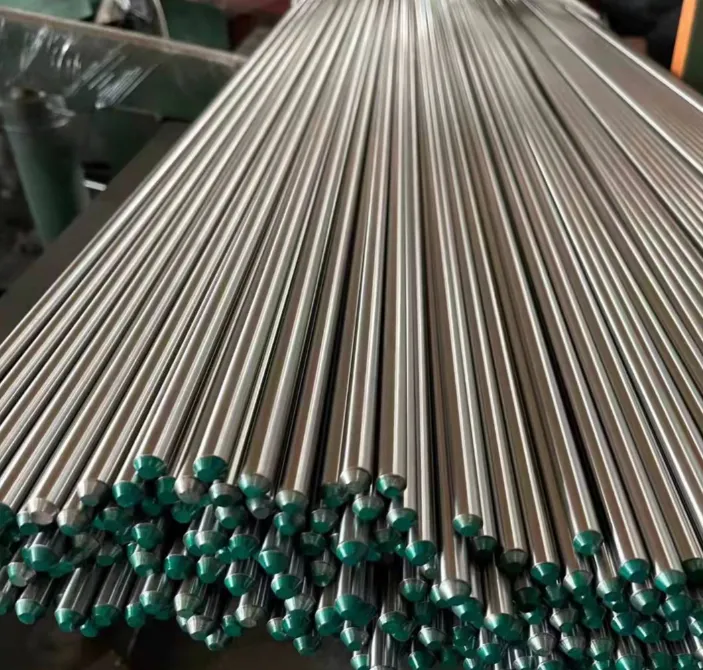
The performance profile of Nitronic 50 round bar suits a collection of industries where other stainless grades fall short in one or more critical properties.
Marine and Offshore Engineering
Marine applications represent arguably the largest single end-use sector for Nitronic 50 round bar. The combination of high strength, seawater corrosion resistance, and non-magnetic character addresses a cluster of marine engineering challenges:
- Propeller shafts and rudder stocks: The yield strength advantage over 316L allows smaller shaft diameters for equivalent torque capacity, reducing drag and weight. The corrosion resistance eliminates the rapid pitting that disqualifies 316L from long-term seawater immersion.
- Marine fasteners: Nitronic 50 hex bolts, studs, and nuts in annealed or cold-worked condition outperform 316L fasteners in seawater applications dramatically. Cold-worked Nitronic 50 fasteners achieve strength equivalent to B8M Class 2 (cold-worked 316) fasteners while retaining better corrosion resistance.
- Umbilical termination fittings: In subsea oil and gas umbilical systems, Nitronic 50 fittings and tube end connectors withstand both high mechanical loads and seawater exposure at depth.
- Naval minesweeper shafting: Non-magnetic shafts and structural components in minesweeping vessels are a classic Nitronic 50 application, where the material's non-magnetic character at all levels of cold work is essential.
Oil and Gas Production
- Downhole completion equipment: Pump shafts, mandrels, and locking components in electric submersible pump (ESP) strings.
- Wellhead connector pins and locking elements: High-strength, corrosion-resistant locking mechanisms in wellhead assemblies.
- Subsea valve stems and actuator shafts: Applications requiring combined seawater resistance and high mechanical loading.
- H2S-containing environments: Under NACE MR0175 / ISO 15156, annealed Nitronic 50 with maximum hardness of 35 HRC is acceptable for sour service in many configurations.
Chemical and Process Industry
- Pump shafts in chloride-containing process fluids: Nitronic 50 shaft stock outperforms 316L in sodium chloride brines, bleach solutions, and chlorinated water treatment systems
- Agitator shafts: High-strength shafts for mixing vessels handling moderately corrosive solutions where 316L would require over-sized sections.
- Heat exchanger tube supports and tie rods: The material's thermal stability and corrosion resistance suit process heat exchangers handling chloride-containing cooling water.
Biomedical and Pharmaceutical
Nitronic 50 has found application in surgical instruments, orthopedic implant tooling, and pharmaceutical processing equipment where the combination of high surface hardness after cold working, non-magnetic character, and excellent corrosion resistance in body fluid environments is valuable.
Cryogenic and Low-Temperature Engineering
- LNG facility components: Pump shafts, valve stems, and structural fasteners in liquefied natural gas (LNG) transfer and storage systems operating at -162°C.
- Liquid nitrogen handling equipment: Support structures and mechanical components in cryogenic research facilities.
- Aerospace cryogenic systems: Structural fasteners and shaft components in liquid oxygen and liquid hydrogen propulsion systems where 300-series stainless steel toughness is insufficient.
Structural and Architectural Engineering
In structural applications where corrosion resistance and high strength must coexist, Nitronic 50 round bar is used for:
- Cable anchorage pins and clevises in architectural tension structures near marine environments.
- Structural bolts in coastal and bridge structures where 316L pits and A325 carbon steel rusts.
- Rock anchor rods in marine ground anchoring applications.
Machinability, Welding, and Fabrication of Nitronic 50 Bar Stock
Nitronic 50 is a work-hardening austenitic stainless steel, which means it requires more attention to machining parameters and fabrication procedures than standard carbon steel or even 316L stainless.
Machinability of Nitronic 50
Nitronic 50 has a machinability rating of approximately 35–45% relative to B1112 free-machining steel. This rating is lower than 316L (approximately 50%) because of the higher nitrogen and manganese content, which increase work-hardening rate and cutting forces. The material is machinable but demands careful attention to parameters.
Recommended Machining Parameters for Nitronic 50 Round Bar
| Operation | Tool Material | Cutting Speed | Feed Rate | Depth of Cut | Coolant |
|---|---|---|---|---|---|
| Turning (roughing) | Carbide C-2/C-3 | 30–60 m/min | 0.20–0.40 mm/rev | 2.0–5.0 mm | Heavy flood |
| Turning (finishing) | Carbide C-3/C-4 | 60–90 m/min | 0.10–0.20 mm/rev | 0.25–1.0 mm | Heavy flood |
| Drilling | HSS-Co / Carbide | 10–20 m/min | 0.05–0.15 mm/rev | — | Heavy flood |
| Milling | Carbide inserts | 40–70 m/min | 0.08–0.15 mm/tooth | 1.5–4.0 mm | Heavy flood |
| Tapping | HSS-Co | 3–8 m/min | Per pitch | — | Tapping oil |
| Boring | Carbide | 40–70 m/min | 0.10–0.20 mm/rev | 0.5–2.0 mm | Flood |
Critical machining precautions for Nitronic 50:
- Never allow the cutting tool to rub or dwell without cutting — this work-hardens the surface and makes the next pass exponentially more difficult.
- Use positive rake carbide geometry; neutral or negative rake significantly increases cutting forces.
- Maintain consistent, aggressive feeds — light feeds cause rubbing and work-hardening.
- Keep the tool sharp; dull tooling multiplies work-hardening problems rapidly.
- Use maximum coolant flow to control heat buildup.
Welding Nitronic 50 Round Bar
Nitronic 50 is weldable by most standard fusion welding processes, though some specific precautions apply.
Welding Parameters and Recommendations
| Welding Parameter | Recommendation |
|---|---|
| Preferred process | GTAW (TIG), GMAW (MIG), SMAW |
| Filler metal (TIG/MIG) | AWS ER209, ER219, or matching composition filler |
| Filler metal (SMAW) | AWS E209 covered electrode |
| Preheat | Not required (austenitic, no hydrogen cracking risk) |
| Interpass temperature | Maximum 150°C (300°F) to control distortion and sensitization risk |
| Heat input | Moderate; avoid excessive heat input that extends time in sensitization range |
| Post-weld heat treatment | Solution annealing at 1,010–1,065°C (1,850–1,950°F) if maximum corrosion resistance is required |
| Shielding gas (TIG) | Argon or Argon/2% N₂ to compensate nitrogen loss in weld pool |
| Back purge | Argon recommended for pipe welding |
An important consideration specific to Nitronic 50 welding is nitrogen loss from the weld pool. Nitrogen, being a dissolved interstitial element, can escape from the molten weld pool as N₂ gas. This reduces nitrogen content in the weld metal, potentially dropping weld metal strength and pitting resistance below base metal values. Using filler metal with slightly higher nitrogen content than the base metal, or adding 2% N₂ to the shielding gas, compensates for this loss and maintains weld metal properties close to the base metal specification.
Cryogenic Performance and Elevated Temperature Behavior
Cryogenic Properties
Nitronic 50 maintains excellent toughness at cryogenic temperatures, a characteristic of fully austenitic FCC microstructures. Unlike ferritic or martensitic steels that undergo ductile-to-brittle transition at sub-zero temperatures, nitrogen-strengthened austenitic stainless steels like Nitronic 50 retain high Charpy impact values down to liquid nitrogen temperature (-196°C / -320°F) and below.
Nitronic 50 Charpy Impact Values at Low Temperatures
| Test Temperature | Charpy Impact Energy (Longitudinal) |
|---|---|
| +20°C (68°F) | 150–220 J |
| -40°C (-40°F) | 130–200 J |
| -100°C (-148°F) | 120–180 J |
| -196°C (-320°F) | 100–160 J |
| -253°C (-423°F, liquid H₂) | 80–140 J |
These values substantially exceed the minimum toughness requirements for ASME pressure vessel codes and LNG equipment specifications, making Nitronic 50 a validated choice for cryogenic structural and pressure-containing components.
Elevated Temperature Behavior
Nitronic 50 is not a high-temperature alloy in the same sense as Inconel or Incoloy grades, but it does perform creditably up to approximately 650°C (1,200°F) compared to standard 316L.
| Temperature | Nitronic 50 Yield Strength | 316L Yield Strength |
|---|---|---|
| 20°C | 379 MPa min | 170 MPa min |
| 200°C | 290 MPa | 130 MPa |
| 400°C | 240 MPa | 110 MPa |
| 600°C | 185 MPa | 90 MPa |
| 650°C | 165 MPa | 80 MPa |
Above 650°C, carbide and nitride precipitation becomes significant and the material loses its advantage. For continuous service above 650°C, nickel-based superalloys or high-alloy austenitic grades are more appropriate.
Available Sizes, Tolerances, and Stock Conditions at MWalloys
MWalloys maintains Nitronic 50 round bar in stock across a comprehensive size range in annealed condition, with custom cold-drawn and cut-to-length services available.
Nitronic 50 Round Bar Stock Size Range
| Diameter Range | Condition | Standard Length | Tolerance |
|---|---|---|---|
| 6 mm – 25 mm | Annealed | 3,000–6,000 mm | ±0.20 mm (h11) |
| 25 mm – 75 mm | Annealed | 3,000–6,000 mm | ±0.30 mm (h11) |
| 75 mm – 150 mm | Annealed | 2,000–5,000 mm | ±0.50 mm (h11) |
| 150 mm – 250 mm | Annealed | 1,500–4,000 mm | ±0.80 mm |
| 250 mm – 400 mm | Annealed (on order) | 1,000–3,000 mm | Per inquiry |
Inch-Size Availability
| Diameter (inches) | Condition | Standard Length |
|---|---|---|
| 1/4" – 1" | Annealed / Cold drawn | 10–12 ft |
| 1" – 3" | Annealed | 10–12 ft |
| 3" – 6" | Annealed | 10–12 ft |
| 6" – 10" | Annealed (on order) | 5–10 ft |
Processing Services at MWalloys
- Cut-to-length (saw cut ±1.5mm or precision cut ±0.5mm)
- Rough turning to remove surface scale and near-surface inhomogeneities.
- Centerless grinding to precision tolerance (h6, h7)
- Ultrasonic testing per ASTM A388 for critical applications.
- Certification to ASME SA-479 for pressure vessel applications.
- Dual certification (ASTM A276 + ASTM A479) on request.
Quality Certifications and Traceability Standards at MWalloys
Every shipment of Nitronic 50 round bar from MWalloys is accompanied by complete, traceable documentation confirming specification compliance.
Standard Documentation Package
| Document | Content | Standard Reference |
|---|---|---|
| Mill Test Report (MTR) | Full chemistry, mechanical properties, heat number | ASTM A276 / A479 |
| Certificate of Conformance | Signed compliance statement | Customer specification |
| Hardness Test Report | Brinell hardness per ASTM E10 | ASTM A276 |
| Dimensional Report | Diameter, length, straightness measurements | ASTM A484 |
| Ultrasonic Test Report | Internal integrity confirmation | ASTM A388 (on request) |
| EN 10204 Type 3.1 | Third-party validated MTR | EN 10204 (on request) |
We maintain digital archives of all certifications for a minimum of 10 years, supporting customers who need historical material records for maintenance, regulatory audits, or litigation support years after the original purchase.
How to Request a Quote for Nitronic 50 Round Bar
MWalloys provides fast, accurate quotations for Nitronic 50 (UNS S20910 / XM-19) round bar. To generate a precise quote, the following information is helpful:
Quotation Checklist
| Item | Details |
|---|---|
| Alloy designation | Nitronic 50 / UNS S20910 / XM-19 |
| Diameter | Specify in inches or mm |
| Length per piece | In feet, inches, or mm |
| Total quantity | Pieces or weight (lbs or kg) |
| Condition | Annealed, cold drawn, stress relieved |
| Applicable standard | ASTM A276, A479, AMS 5764, ASME SA-276, etc. |
| Certifications required | Standard MTR, EN 10204 3.1, NACE compliance |
| Special testing | UT, PMI, hardness, chemical recheck |
| Delivery location | Country, city, port (for export) |
| Required delivery date | For scheduling and shipping mode selection |
Our technical sales team responds to complete inquiries within 24 business hours, and for standard stocked sizes, we can often confirm availability and price within 4 hours.
Frequently Asked Questions About Nitronic 50 Round Bar
Q1: What is the yield strength of Nitronic 50 compared to 316L stainless steel?
Nitronic 50 in the annealed condition has a minimum yield strength of 55,000 psi (379 MPa) per ASTM A276 and A479. Standard 316L stainless steel in the annealed condition has a minimum yield strength of 25,000 psi (170 MPa) under the same standards. This means Nitronic 50 delivers more than twice the yield strength of 316L at equivalent section size, allowing engineers to design lighter components or use smaller cross-sections for equivalent load capacity. In cold-worked condition, Nitronic 50's yield strength can exceed 150,000 psi (1,034 MPa).
Q2: Is Nitronic 50 magnetic?
In the annealed condition, Nitronic 50 is essentially non-magnetic, with a magnetic permeability of 1.003–1.010 µ. This is a critical property advantage over 304 and 316 stainless steels, which develop measurable ferromagnetism after cold working due to deformation-induced martensite. Because Nitronic 50's austenite is stabilized by nitrogen against martensite transformation, it remains non-magnetic even after significant cold working. This makes it the preferred material for marine minesweeping components, MRI-adjacent hardware, and electromagnetic instrumentation requiring non-magnetic structural elements.
Q3: What is the difference between Nitronic 50 and XM-19?
They are the same material. XM-19 is the ASTM special designation assigned within ASTM A276 and ASTM A479, while Nitronic 50 is the original trade name given by Armco Steel. UNS S20910 is the Unified Numbering System identifier. All three designations refer to the identical alloy composition. When reviewing mill certifications or specifications, any of these designations may appear. MWalloys references all applicable designations on our documentation to prevent procurement confusion.
Q4: Can Nitronic 50 round bar be used in sour service (H2S) environments?
Yes, with conditions. NACE MR0175 / ISO 15156 permits UNS S20910 (Nitronic 50) in solution-annealed condition with a maximum hardness of 35 HRC for sour service applications. The material must not be cold worked beyond the hardness limit, and the specific temperature, H2S partial pressure, and pH conditions of the service must be evaluated against the standard's environmental severity tables. We recommend engaging a corrosion engineer to confirm suitability for your specific sour service conditions before specifying Nitronic 50.
Q5: What filler metal should be used when welding Nitronic 50?
AWS ER209 or ER219 filler metal is recommended for GTAW (TIG) and GMAW (MIG) welding of Nitronic 50. These fillers have nitrogen content that partially compensates for nitrogen lost from the weld pool during welding. Adding 2% nitrogen to the argon shielding gas further reduces nitrogen loss and maintains weld metal composition closer to the base metal. For SMAW (stick) welding, AWS E209 covered electrodes are the standard specification. Post-weld solution annealing at 1,010–1,065°C (1,850–1,950°F) restores maximum corrosion resistance if the joint geometry permits this treatment.
Q6: How does Nitronic 50 perform at cryogenic temperatures compared to 316L?
Nitronic 50 maintains excellent toughness at cryogenic temperatures down to -253°C (liquid hydrogen temperature), with Charpy impact values typically in the 80–160 J range even at -196°C. This performance is superior to standard 316L stainless steel, which shows adequate but lower toughness at cryogenic temperatures. More importantly, Nitronic 50's higher yield strength at cryogenic temperatures — where yield strength actually increases as temperature decreases in austenitic stainless steels — makes it more suitable for structural components in LNG, liquid oxygen, and liquid hydrogen systems than 316L, because its higher base strength allows thinner walls and lighter components.
Q7: What certifications does MWalloys provide with Nitronic 50 round bar shipments?
Standard documentation includes a Certified Mill Test Report (MTR) showing heat analysis, product analysis, and mechanical test results per the applicable ASTM standard (A276, A479, or both), plus a Certificate of Conformance. Optional certifications include EN 10204 Type 3.1 (third-party validated MTR), NACE MR0175 compliance documentation, AMS 5764 certification for aerospace applications, ultrasonic test reports per ASTM A388, and hardness test reports per ASTM E10. All documentation references the heat number stamped or tagged on the physical material, ensuring complete traceability.
Q8: What is the maximum service temperature for Nitronic 50 round bar?
Nitronic 50 is rated for continuous service up to approximately 650°C (1,200°F). Above this temperature, niobium and vanadium carbonitride precipitates begin to coarsen, reducing the precipitation strengthening contribution, and sigma phase formation becomes a concern in some environments. For ASME pressure vessel applications, the allowable stress values in ASME Section II Tables apply at elevated temperatures. For applications above 650°C, higher-alloy austenitic grades or nickel-based alloys should be evaluated. At the other end of the temperature range, Nitronic 50 has no practical lower temperature limit for toughness, making it suitable from cryogenic through moderate elevated temperature service.
Q9: Is there a free-machining version of Nitronic 50 available?
ASTM A582 covers free-machining stainless steel bars and includes XM-19 (Nitronic 50) with added sulfur to improve machinability. The sulfur addition (typically 0.15–0.35%) improves chip formation significantly but reduces corrosion resistance and transverse mechanical properties compared to the standard low-sulfur grade. Free-machining Nitronic 50 is appropriate for high-volume screw machine production of connectors, fittings, and fasteners where extensive machining is required and the corrosion environment does not require maximum pitting resistance. For marine and chemical service applications, the standard low-sulfur grade per ASTM A276 or A479 is the correct specification.
Q10: How does the cost of Nitronic 50 compare to 316L and duplex 2205?
Nitronic 50 typically commands a price premium of 40–80% over equivalent sections of 316L stainless steel, reflecting its higher alloy content (chromium, nickel, molybdenum, nitrogen, niobium, vanadium) and more complex melting and processing requirements. Compared to duplex 2205, pricing is generally comparable or slightly higher depending on market conditions for nickel and molybdenum. When the total cost of a system is considered — including the ability to use smaller cross-sections due to higher allowable stress, reduced maintenance and replacement costs from better corrosion performance, and elimination of coating systems needed to protect lower-grade materials — Nitronic 50 frequently represents the lower total cost of ownership over a component's service life. We encourage customers to request quotations based on finished component requirements rather than raw material price per pound alone, and our technical team is available to support that analysis.
Why MWalloys Is a Trusted Nitronic 50 Round Bar Manufacturer and Supplier
We have built MWalloys around the principle that technical credibility and supply chain reliability must coexist. Our customers — naval architects, offshore engineers, chemical plant designers, and precision machine shops — depend on Nitronic 50 material that exactly meets UNS S20910 requirements, arrives with complete documentation, and ships on the schedule they plan around.
Our Nitronic 50 round bar inventory is sourced from certified primary mills whose quality systems we audit directly. Every heat entering our warehouse is verified against ASTM A276 and A479 composition limits before it is made available for sale. Hardness testing, dimensional verification, and MTR review are part of our standard receiving protocol, not optional add-ons.
When you contact MWalloys for Nitronic 50 round bar, you receive a quotation from a team that understands the material, knows the applications, and will ask the right questions to confirm you receive the specification your project requires.
Contact our technical sales team today with your diameter, length, quantity, and applicable standard. We will respond with stock availability confirmation and a competitive quotation within one business day.