


Nickel alloy surface finishes affect more than appearance: they influence dimensional accuracy, surface cleanliness, manufacturing cost, and the risk of surface-related problems in service. Bright, pickled,...
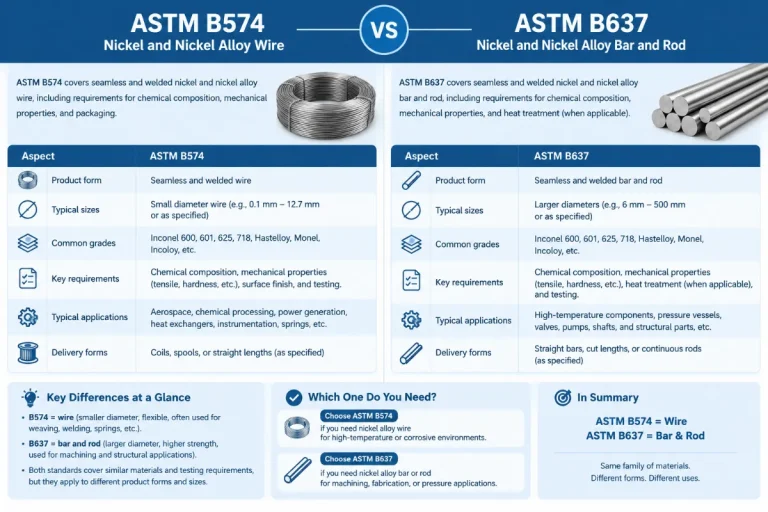
ASTM B574 and ASTM B637 are not interchangeable specifications. ASTM B574 covers rod made from specified corrosion-resistant, low-carbon nickel alloys, including commonly purchased grades such as UNS N10276...
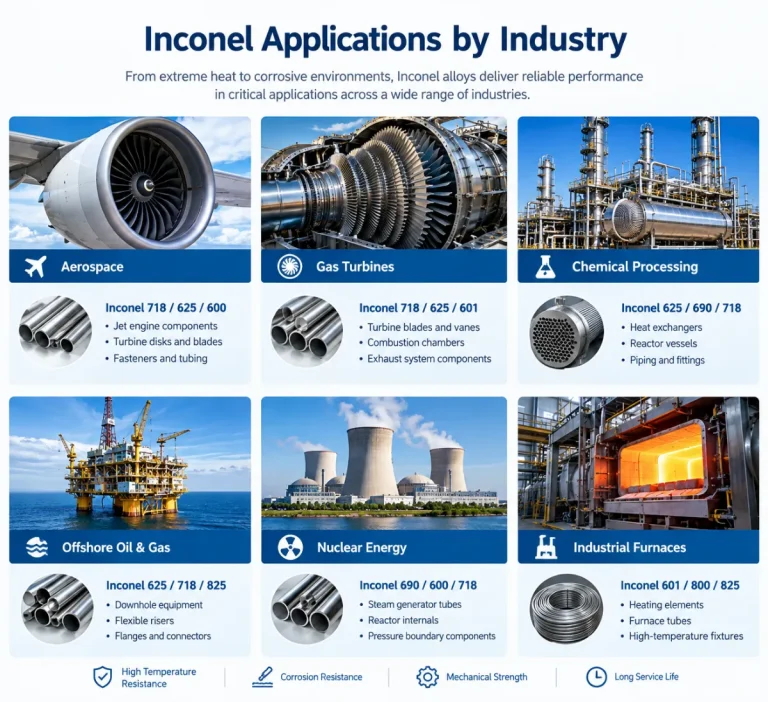
Inconel is used for components exposed to combinations of high temperature, mechanical stress, oxidation, or aggressive corrosion. Typical applications include aerospace and gas turbines, chemical and...
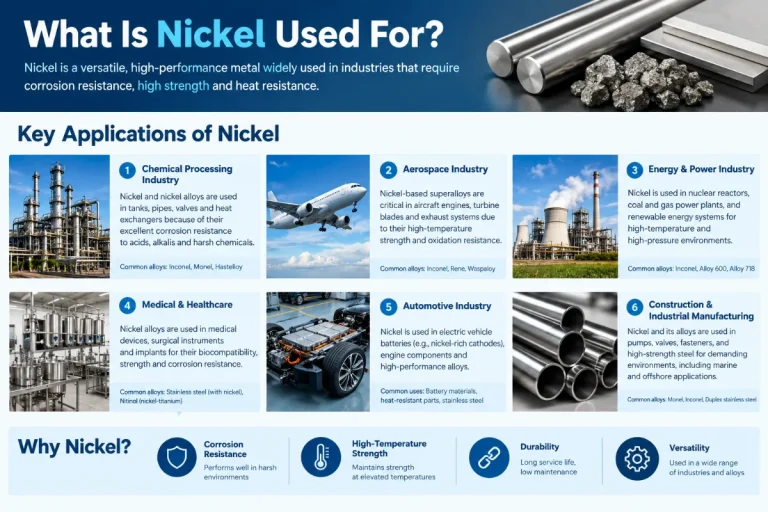
Nickel is used mainly as an alloying element and, to a lesser extent, as commercially pure metal, a plating material, and in chemical compounds. Its most important industrial uses are in stainless and...

Incoloy 825 and Incoloy 800H are both nickel-iron-chromium alloys, but they are designed around different engineering priorities. Incoloy 825 (UNS N08825) is primarily selected for corrosion resistance,...
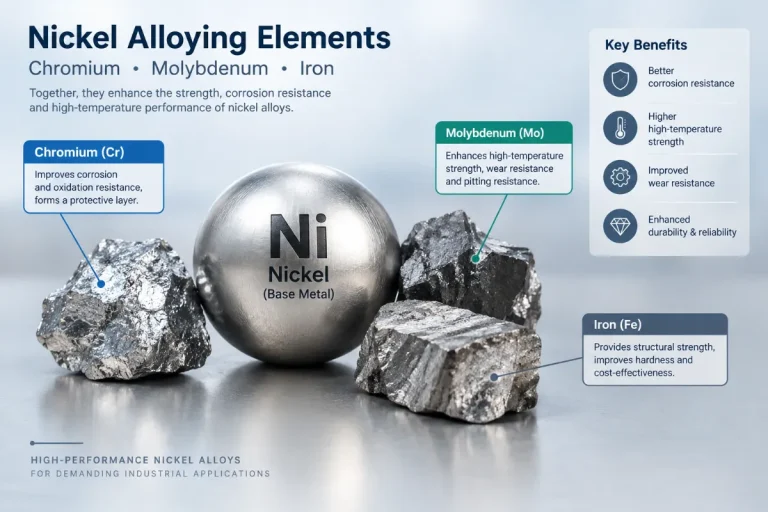
Chromium, molybdenum, and iron influence nickel alloy performance through their effects on corrosion behavior, oxidation resistance, mechanical properties, phase stability, and alloy microstructure. Chromium...
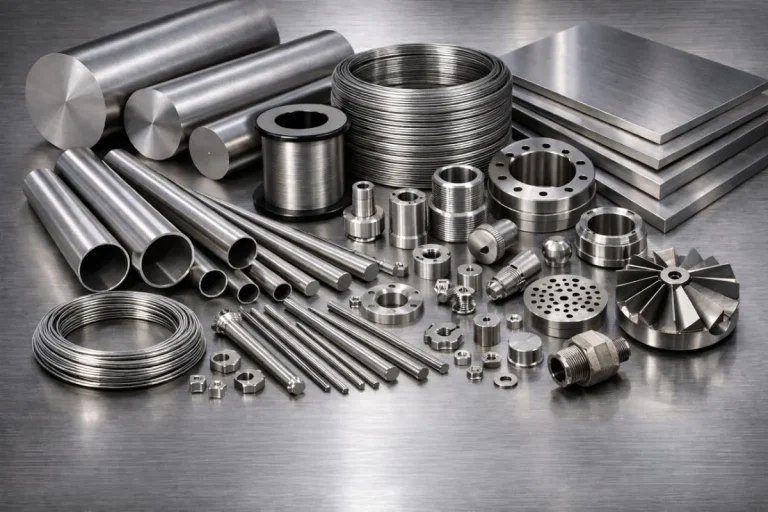
Nickel-chromium, nickel-iron, and nickel-molybdenum alloys differ primarily in their alloying chemistry, metallurgical structure, corrosion behavior, thermal properties, and intended service conditions....
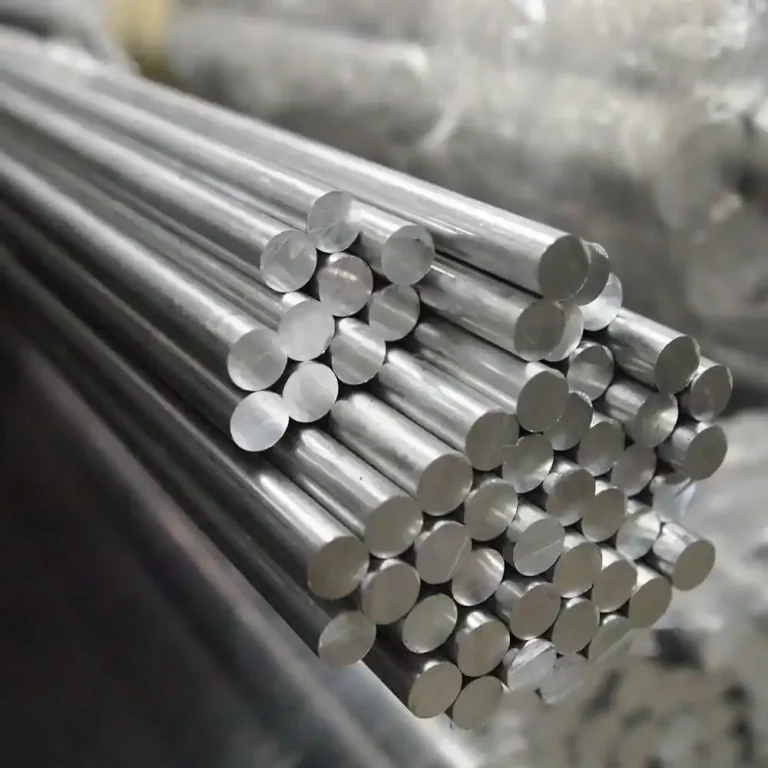
Nickel alloys are used in high-temperature and corrosive environments because nickel provides a stable metallic base that can be combined with elements such as chromium, molybdenum, iron, cobalt and tungsten...
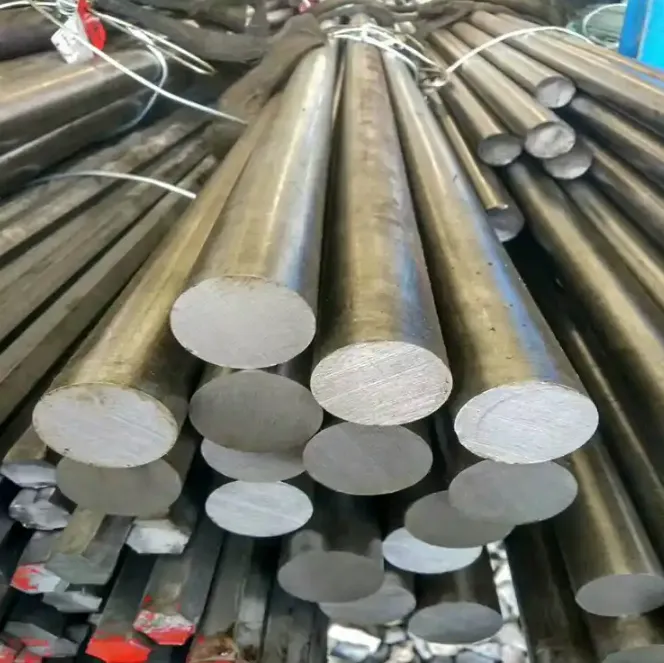
If you're choosing between 80CrV2 and 1095 for a blade project, 80CrV2 delivers noticeably better toughness and wear resistance thanks to its vanadium and chromium content, while 1095 sharpens to a slightly...
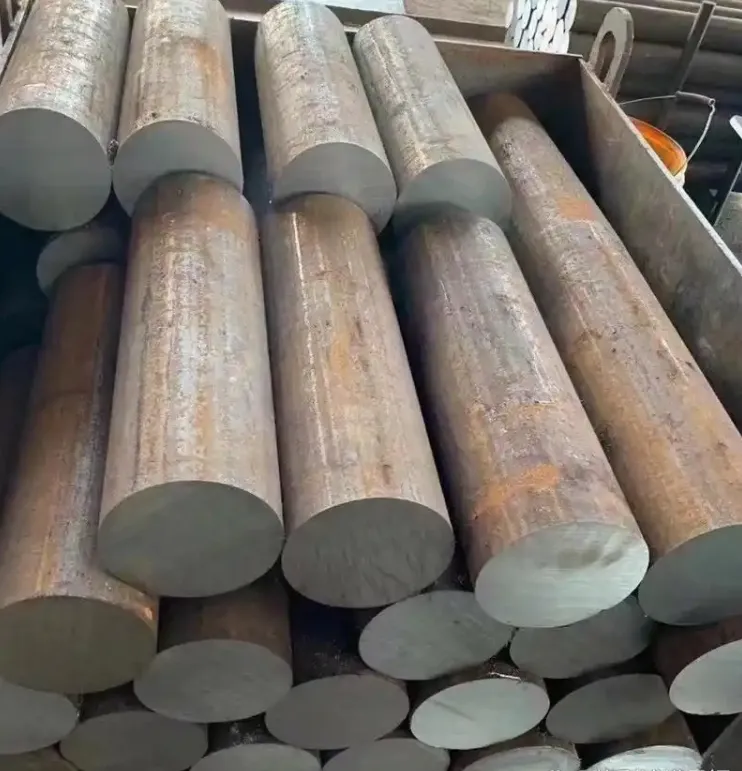
If you want the short answer before the metallurgy, 80CrV2 is a shallow-hardening, high-carbon chromium-vanadium tool steel that makes an excellent choice for hand-forged knives, swords, and cutting tools...