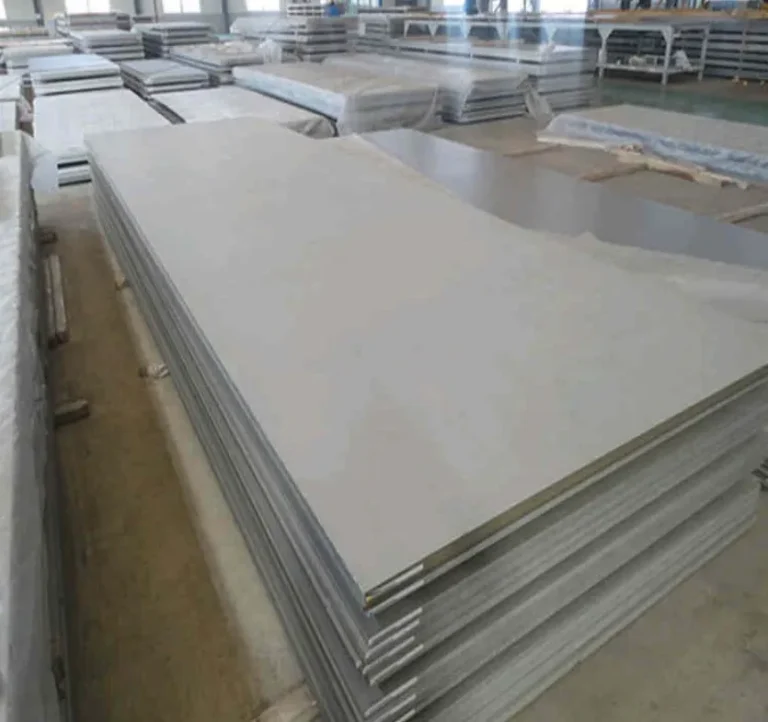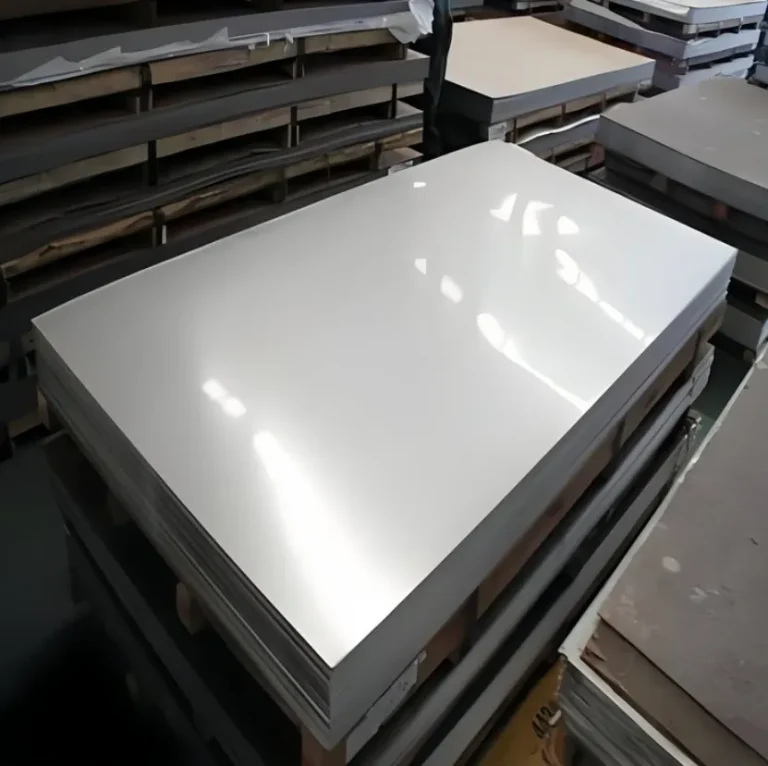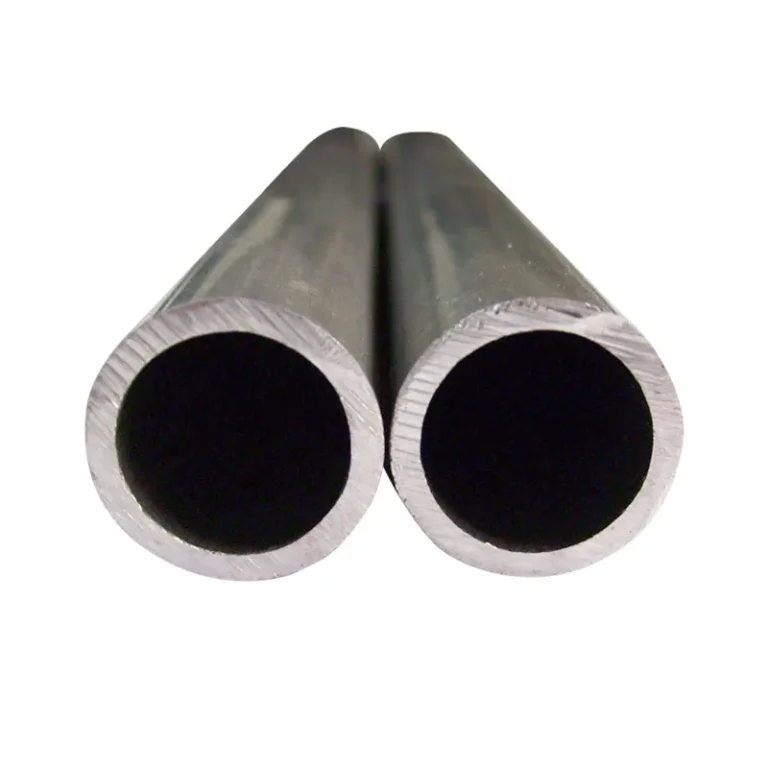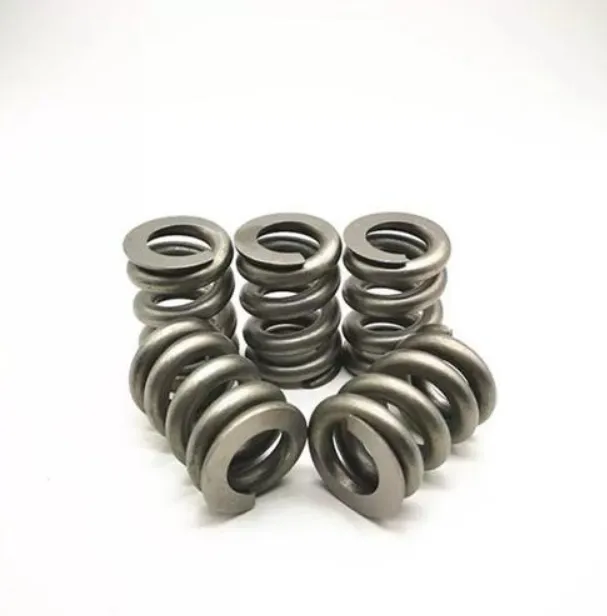

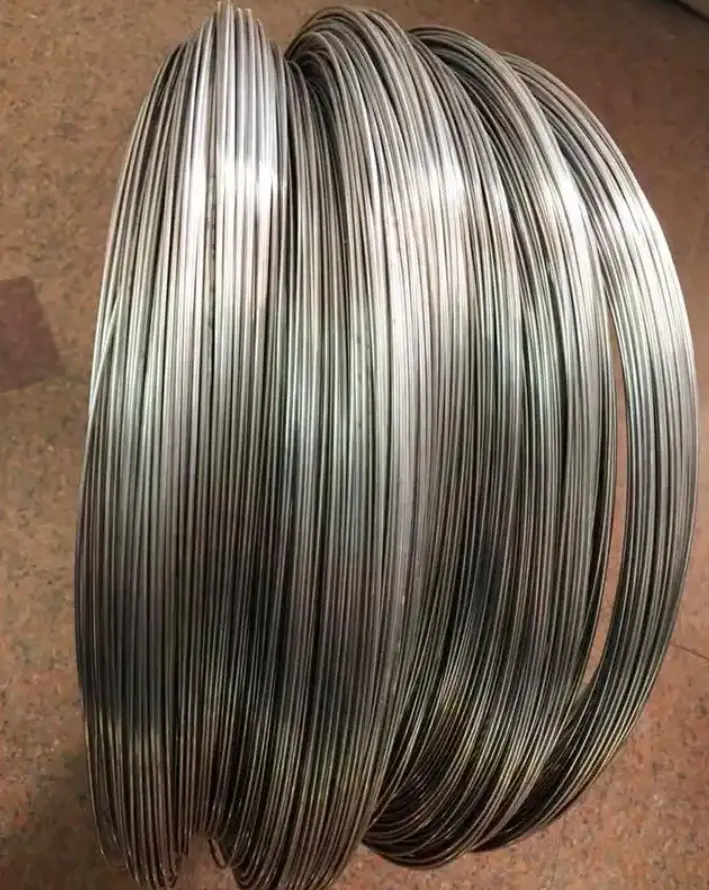
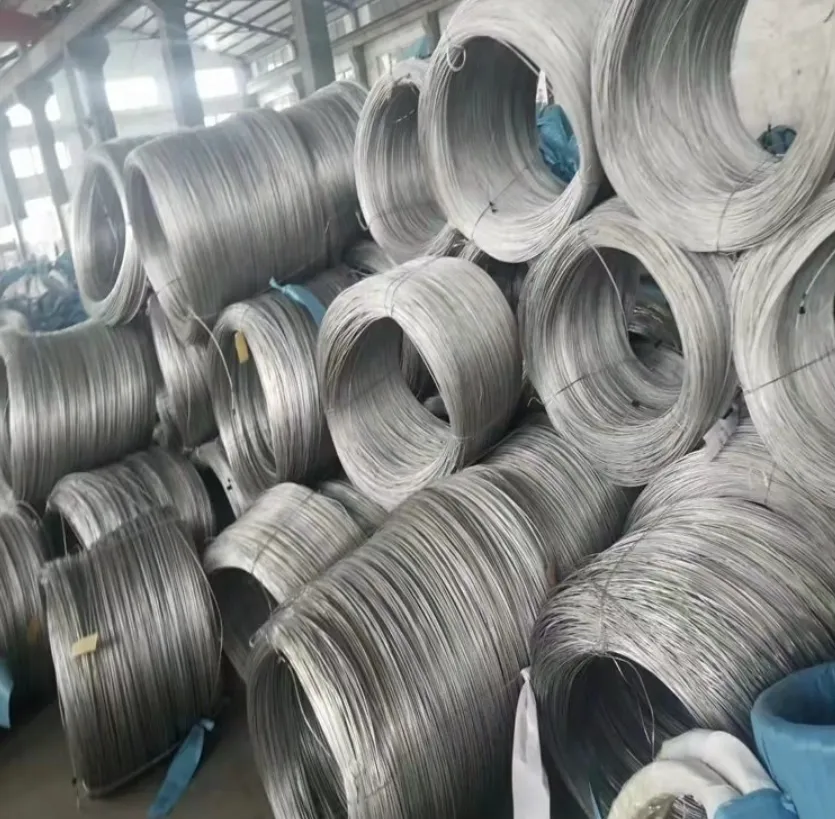
Custom Hastelloy C22 wire (UNS N06022) is a nickel-chromium-molybdenum-tungsten alloy wire product that provides the broadest corrosion resistance of any commercially available wire form, outperforming C276, 316L, and Inconel 625 in oxidizing acid environments while maintaining competitive resistance in reducing media, with diameter capability ranging from 0.05mm precision wire to 12mm welding wire, supplied in annealed, spring-temper, and as-drawn conditions for welding filler, spring fabrication, and precision component manufacturing. At MWalloys, we supply custom Hastelloy C22 wire to chemical plant engineers, aerospace fabricators, pharmaceutical equipment manufacturers, and precision spring makers who need guaranteed corrosion performance in the most aggressive service environments.
The choice between standard catalog wire and genuinely custom Hastelloy C22 wire affects every downstream process: weld quality, spring rate consistency, coil uniformity, and ultimately equipment service life.
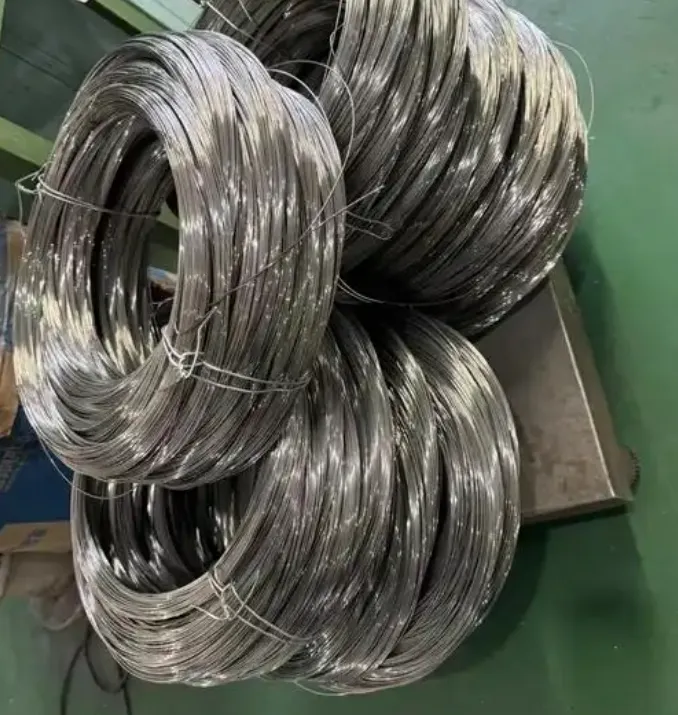
What Is Hastelloy C22 Wire and What Distinguishes It from Other Nickel Alloy Wire Products?
Hastelloy C22 is a registered trademark of Haynes International. It belongs to the C-family of nickel-chromium-molybdenum alloys, a group developed specifically to resist severe corrosion in chemical processing, pollution control, and pharmaceutical manufacturing environments where conventional stainless steels and lower-alloy nickel grades fail prematurely.
In wire form, C22 occupies a unique position in the corrosion-resistant alloy wire market. It is not simply a reformulation of C276 with slightly different chemistry: it was deliberately designed in the 1980s to address the performance gap C276 exhibits in oxidizing acid environments, by raising chromium content from approximately 15.5% to 21% while maintaining strong reducing acid resistance through a carefully balanced molybdenum content of 13.5%.
Why Wire Form Matters Differently Than Plate or Bar
Most published data on Hastelloy C22 addresses its performance in plate and tube form. Wire introduces additional technical considerations that are rarely discussed:
- Drawing texture: The cold drawing process used to produce wire introduces significant crystallographic texture and residual stress that affect both mechanical behavior and corrosion performance in the wire's finished state.
- Surface area to volume ratio: Wire has dramatically higher surface area per unit weight than plate, meaning surface quality directly affects corrosion behavior in immersed or flowing media.
- Temper sensitivity: The mechanical properties of wire change substantially with the degree of cold draw reduction, and for spring applications, precise temper control is essential for consistent spring rates.
- Spooling geometry: Wire under tension on a spool carries residual curvature and stress that must be understood for precision forming operations.
At MWalloys, we have found that customers who specify C22 plate successfully often underestimate how different the technical requirements are when transitioning to C22 wire procurement. The alloy is the same, but the product form requires a completely different set of specification parameters.
C22 Wire Product Family Overview
| Wire Type | Primary Function | Typical Diameter Range | Supply Condition |
|---|---|---|---|
| Welding wire (GTAW/TIG) | Filler metal for corrosion-resistant welds | 0.8mm – 3.2mm | Annealed, bright drawn |
| Welding wire (GMAW/MIG) | Continuous wire feed welding | 0.9mm – 1.6mm | Annealed, precision layer wound |
| Submerged arc wire | High-deposition weld overlay | 2.4mm – 4.0mm | Annealed |
| Spring wire | Precision springs, seals, gaskets | 0.1mm – 6.0mm | Cold drawn to temper |
| Precision wire | Sensors, instruments, fine components | 0.05mm – 2.0mm | Annealed or drawn |
| Knitted mesh wire | Filter media, catalyst support | 0.05mm – 0.5mm | Annealed, soft |
| Woven wire (weaving grade) | Mesh fabric, screens | 0.1mm – 2.0mm | Annealed |
| Rope and strand wire | Flexible connectors, chemical plant | 0.3mm – 3.0mm | Annealed |
What Is the Full Chemical Composition and Property Profile of Hastelloy C22 Wire?
The chemical composition of C22 wire must conform to the same specification as C22 in all other product forms, though wire drawing introduces specific concerns about surface chemistry and compositional uniformity along the wire length.
Chemical Composition Requirements
| Element | UNS N06022 Min (%) | UNS N06022 Max (%) | Role in Performance |
|---|---|---|---|
| Nickel (Ni) | Balance (~56%) | Balance | Base matrix, SCC immunity, general stability |
| Chromium (Cr) | 20.0 | 22.5 | Oxidizing acid resistance, passive film stability |
| Molybdenum (Mo) | 12.5 | 14.5 | Reducing acid resistance, pitting resistance |
| Tungsten (W) | 2.5 | 3.5 | Enhanced pitting and crevice resistance |
| Iron (Fe) | 2.0 | 6.0 | Cost modifier, minor structural role |
| Cobalt (Co) | – | 2.5 | Controlled residual element |
| Carbon (C) | – | 0.010 | Minimized to prevent carbide sensitization |
| Silicon (Si) | – | 0.08 | Minimized to prevent silicide precipitation |
| Manganese (Mn) | – | 0.50 | Deoxidation, controlled for wire drawing |
| Phosphorus (P) | – | 0.025 | Impurity control |
| Sulfur (S) | – | 0.010 | Impurity control critical for wire drawing |
| Vanadium (V) | – | 0.35 | Minor residual |
The extremely low sulfur limit (0.010% maximum) is particularly critical for wire applications. Sulfur segregates to grain boundaries and inclusions during solidification, and in wire drawing, these sulfide inclusions become elongated stringers that can initiate surface cracking during severe drawing reductions. For fine wire production below 0.5mm diameter, many wire mills apply additional sulfur restrictions (0.005% maximum) beyond the standard specification.
Mechanical Properties by Wire Condition
| Property | Annealed Wire | 25% Cold Drawn | 50% Cold Drawn | Spring Temper (70%+ CR) |
|---|---|---|---|---|
| Tensile Strength (MPa) | 690 – 760 | 900 – 1050 | 1100 – 1280 | 1380 – 1550 |
| Yield Strength (MPa) | 290 – 360 | 650 – 800 | 900 – 1050 | 1200 – 1380 |
| Elongation (%) | 45 – 55 | 20 – 30 | 10 – 18 | 3 – 8 |
| Hardness (HRC / HRB) | 85 – 90 HRB | 25 – 32 HRC | 35 – 40 HRC | 40 – 44 HRC |
| Reduction of Area (%) | 60 – 70 | 45 – 55 | 30 – 40 | 15 – 25 |
Values represent typical properties for 2.0mm diameter wire. Properties vary with exact diameter, drawing schedule, and intermediate anneal history.
Physical Properties of C22 Wire
| Physical Property | Value | Significance for Wire Applications |
|---|---|---|
| Density | 8.69 g/cm³ | Affects spool weight calculations |
| Electrical resistivity | 1.14 µΩ·m | High resistivity relevant for resistance welding |
| Thermal conductivity | 10.1 W/m·K | Low conductivity affects heat buildup in high-speed drawing |
| Modulus of elasticity | 211 GPa | Controls spring rate design calculations |
| Modulus of rigidity | 80 GPa | Used in torsional spring calculations |
| Coefficient of thermal expansion | 12.7 µm/m·°C | Affects spring behavior across temperature range |
| Melting range | 1357 – 1399°C | Relevant for welding wire solidification behavior |
| Magnetic permeability | < 1.002 (non-magnetic) | Compatible with magnetic-sensitive applications |
The modulus of elasticity (211 GPa) and modulus of rigidity (80 GPa) are essential inputs to spring design calculations. Unlike carbon steel spring wire (where design charts are universally available), C22 spring wire requires explicit use of these modulus values because standard spring design references assume carbon steel properties. Using incorrect modulus values produces springs with systematically incorrect spring rates that may not be apparent until installed in service.
What Diameter Ranges and Wire Form Specifications Are Available for Custom C22 Wire?
The dimensional range of custom Hastelloy C22 wire is broader than most procurement professionals realize. From fine sensor wire below 0.1mm to heavy welding rod at 4.0mm, the manufacturing requirements at each end of this spectrum are entirely different.
Diameter Tolerance Capabilities by Size Range
| Nominal Diameter | Standard Tolerance | Precision Tolerance | Ultra-Precision Tolerance |
|---|---|---|---|
| 0.05 – 0.10mm | ±0.005mm | ±0.003mm | ±0.002mm |
| 0.10 – 0.25mm | ±0.008mm | ±0.005mm | ±0.003mm |
| 0.25 – 0.50mm | ±0.010mm | ±0.008mm | ±0.005mm |
| 0.50 – 1.00mm | ±0.015mm | ±0.010mm | ±0.008mm |
| 1.00 – 2.00mm | ±0.020mm | ±0.015mm | ±0.010mm |
| 2.00 – 4.00mm | ±0.030mm | ±0.020mm | ±0.015mm |
| 4.00 – 8.00mm | ±0.050mm | ±0.030mm | ±0.020mm |
| 8.00 – 12.00mm | ±0.080mm | ±0.050mm | ±0.030mm |
Wire Surface Condition Options
| Surface Condition | Description | Typical Application | Ra Achievable |
|---|---|---|---|
| Bright drawn | As-drawn, clean metallic surface | Welding wire, spring wire | 0.1 – 0.4 µm |
| Annealed bright | Drawn then annealed in controlled atmosphere | Soft wire, weaving, knitting | 0.2 – 0.6 µm |
| Pickled | Oxide removed by acid treatment | Weld wire where scale unacceptable | 0.4 – 1.0 µm |
| Electropolished | Electrochemically smoothed | Medical, pharmaceutical, sensor | < 0.1 µm |
| Descaled only | Scale removed mechanically | Less critical applications | 0.8 – 2.0 µm |
| Lightly oxide coated | Controlled thin oxide from anneal | Some welding applications | Variable |
Spool and Coil Packaging Options
| Package Type | Typical Wire Diameter | Weight Capacity | Best Application |
|---|---|---|---|
| Traverse-wound spool (plastic) | 0.5 – 2.4mm | 5 – 15 kg | GMAW welding, automated feeding |
| Traverse-wound spool (metal) | 0.5 – 3.2mm | 15 – 30 kg | Heavy production GMAW |
| Drum pack (layer wound) | 0.9 – 1.6mm | 50 – 250 kg | High-volume automated welding |
| Coil (hand lay) | 0.1 – 6.0mm | 1 – 25 kg | GTAW, spring winding, general |
| Oscillate-wound spool | 0.05 – 1.0mm | 0.5 – 5 kg | Fine wire, precision feeding |
| Straight cut lengths | 0.8 – 4.0mm | Per piece | GTAW rod, hand welding |
| Custom spools | Any | Customer-specified | OEM applications |
How Is Hastelloy C22 Welding Wire Specified and What Makes It Perform in Critical Weld Applications?
Hastelloy C22 welding wire is classified under AWS A5.14 as ERNiCrMo-10. This classification covers bare wire for gas tungsten arc welding (GTAW/TIG), gas metal arc welding (GMAW/MIG), and plasma arc welding. Understanding the complete specification framework prevents the substitution errors that can result in weld joints with compromised corrosion resistance.
AWS and International Welding Wire Classifications
| Process | AWS Classification | Alternate Designation | Applicable Standard |
|---|---|---|---|
| GTAW (TIG) bare wire | ERNiCrMo-10 | W. Nr. 2.4602 | AWS A5.14 / ASME SFA-5.14 |
| GMAW (MIG) wire | ERNiCrMo-10 | – | AWS A5.14 |
| Plasma arc welding | ERNiCrMo-10 | – | AWS A5.14 |
| SMAW electrode | ENiCrMo-10 | – | AWS A5.11 |
| SAW wire | ERNiCrMo-10 + matching flux | – | AWS A5.14 |
| PTA (powder) | C22 powder | – | Supplier specification |
Why ERNiCrMo-10 Is Preferred Over ERNiCrMo-4 (C276 Wire) in Mixed Environments
One of the most technically significant and least understood practices in corrosion-resistant alloy welding is the use of C22 filler metal (ERNiCrMo-10) to weld C276 base metal. This cross-alloy approach is recommended by Haynes International and widely practiced in chemical plant construction for the following reasons:
The weld heat-affected zone (HAZ) and weld metal are always the first areas to corrode in mixed or oxidizing acid environments because:
- The weld thermal cycle creates localized chromium depletion adjacent to carbide precipitates in the HAZ.
- Weld metal segregation creates microscale composition variations that can create localized corrosion cells.
- The weld surface geometry creates crevice-like conditions at the weld toe that concentrate corrosive media.
By using C22 filler (higher Cr content at 21%) on C276 base metal (15.5% Cr), the weld metal and HAZ effectively have higher chromium than the surrounding base metal, making the weld zone more resistant to oxidizing attack than the base material itself. This is counter-intuitive but metallurgically sound and field-proven over decades of FGD, pharmaceutical, and chemical plant service.
GTAW Welding Parameters for C22 Wire
| Parameter | Recommended Value | Notes |
|---|---|---|
| Shielding gas | Argon (100%) or Ar + 5% H₂ | H₂ addition improves penetration, use with caution |
| Purge gas (back side) | Argon (100%) | Essential for corrosion-resistant root pass |
| Current type | DC electrode negative (DCEN) | Standard for GTAW nickel alloys |
| Current range | 80 – 200A (depends on diameter) | Lower than steel for equivalent joint |
| Voltage | 10 – 15V | Shorter arc than steel welding |
| Travel speed | 100 – 200 mm/min | Slower than steel to control heat input |
| Interpass temperature | 150°C maximum | Critical to prevent HAZ sensitization |
| Preheat | Not required (base metal < 3mm) | 100°C for thick sections |
| Wire diameter (GTAW) | 1.6mm (standard), 2.4mm (heavy) | Match to joint size |
| Filler wire feed angle | 15 – 20° to work piece | Lower angle than steel |
GMAW Welding Parameters for C22 Wire
| Parameter | Recommended Value | Notes |
|---|---|---|
| Wire diameter | 0.9mm, 1.2mm, or 1.6mm | 1.2mm most common for production |
| Shielding gas | 100% Ar or Ar + 20% He | Helium improves heat input and fluidity |
| Wire feed speed | 4 – 8 m/min | Lower than steel, adjust for diameter |
| Voltage | 20 – 28V | Short circuit or spray transfer |
| Transfer mode | Spray transfer preferred | Better for corrosion-critical joints |
| Contact tip to work | 15 – 20mm | Longer than typical steel GMAW |
| Travel angle | 5 – 15° push | Reduces spatter, improves fusion |
Post-Weld Treatment Requirements
Unlike carbon steel welds, C22 welds generally do not require post-weld heat treatment (PWHT) for stress relief or hardness control. However, several post-weld surface treatments significantly improve corrosion performance:
Heat tint removal: The oxidized surface layer (heat tint) that forms adjacent to welds is chromium-depleted and significantly less corrosion resistant than the base passive film. Removal by one of the following methods is strongly recommended for corrosion-critical applications:
| Method | Effectiveness | Notes |
|---|---|---|
| Pickling (HNO₃ + HF) | Excellent | Standard method; follow OSHA H₂F protocols |
| Electrochemical cleaning | Very Good | Safer than acid pickling; portable equipment available |
| Glass bead blasting + passivation | Good | For areas where chemical treatment is impractical |
| Grinding + passivation | Acceptable | Risk of embedding abrasive; use dedicated tools |
Absolutely avoid using grinding tools or abrasives that have previously contacted carbon steel or other iron-containing materials. Iron contamination on the C22 surface will cause accelerated corrosion and can completely negate the alloy's corrosion advantage.
What Are the Technical Requirements for Hastelloy C22 Spring Wire and Precision Coil Applications?
Spring wire represents the most technically demanding form of C22 wire production. The combination of precise dimensional control, controlled mechanical properties across the full wire length, excellent surface condition, and consistent temper requires manufacturing capabilities significantly beyond standard wire drawing.
Spring Design Parameters for C22 Wire
The following design parameters apply specifically to C22 wire and differ from carbon steel spring design tables:
| Design Parameter | C22 Wire Value | Carbon Steel Comparison | Design Impact |
|---|---|---|---|
| Modulus of elasticity (E) | 211 GPa | 207 GPa | Similar spring deflection behavior |
| Modulus of rigidity (G) | 80 GPa | 79 GPa | Very similar torsional spring calculations |
| Maximum recommended stress (spring temper) | 450 – 520 MPa | 700 – 900 MPa | C22 springs require larger wire or more coils |
| Fatigue endurance limit (R = -1) | ~420 – 480 MPa | ~600 – 800 MPa | Lower fatigue limit requires conservative design |
| Stress relaxation at 200°C | < 5% loss over 1000h | Higher (CS) | C22 superior at temperature |
| Stress relaxation at 300°C | 8 – 15% loss over 1000h | Much higher (CS) | C22 significantly better |
| Recommended spring index (D/d) | 4 – 12 | 4 – 15 | Similar range |
| Minimum bend radius (spring temper) | 3 × wire diameter | Varies | Avoid sharp bends |
Spring Wire Temper Specifications
For spring applications, the wire temper must be specified precisely because each temper delivers a different combination of strength, ductility, and surface condition:
| Temper Designation | Cold Reduction (%) | Tensile Strength (2mm dia, MPa) | Elongation (%) | Best Application |
|---|---|---|---|---|
| Annealed | 0 | 690 – 760 | 45 – 55 | Forming, soft springs, weaving |
| Light drawn | 10 – 20 | 850 – 950 | 30 – 40 | Moderate duty springs |
| Half hard | 30 – 40 | 1000 – 1150 | 18 – 28 | Medium-strength springs |
| Three-quarter hard | 50 – 60 | 1200 – 1350 | 10 – 18 | High-load springs |
| Spring temper | 65 – 75 | 1380 – 1550 | 3 – 8 | Maximum strength springs |
| Extra spring | >75 | 1500 – 1650 | 1 – 5 | Exceptional load springs |
Precision Wire Applications and Their Specific Requirements
Beyond springs, C22 precision wire is used in applications where the wire form itself is the functional component rather than an input to a formed part:
| Precision Wire Application | Diameter Range | Critical Specification | Surface Requirement |
|---|---|---|---|
| Thermocouple protection wire | 0.5 – 2.0mm | Diameter tolerance ±0.005mm | Bright, oxide-free |
| Sealing wire for gaskets | 0.5 – 3.0mm | Round cross-section, straightness | Clean, burr-free |
| Surgical/pharmaceutical mesh | 0.05 – 0.3mm | Diameter uniformity along length | Electropolished |
| Catalyst support mesh | 0.1 – 0.5mm | Weavability, ductility | Annealed, soft |
| Chemical plant instrument leads | 0.3 – 1.0mm | Electrical continuity, corrosion | Bright drawn |
| Filter media wire | 0.05 – 0.5mm | Weave consistency | Annealed |
| Heater element wire | 0.5 – 3.0mm | Resistivity uniformity | Clean surface |
| Shaped wire (profile wire) | Custom cross-section | Profile dimensional tolerance | Per application |
Straightness and Cast/Helix Requirements for Precision Wire
For precision spring winding and automated component assembly, wire must meet specific geometry requirements:
Cast: The natural diameter of the circle that wire forms when a coil is cut and laid on a flat surface. Tight cast control ensures consistent feeding in CNC spring winding machines.
| Wire Diameter | Acceptable Cast (min coil diameter on flat surface) |
|---|---|
| 0.1 – 0.5mm | > 100 × wire diameter |
| 0.5 – 2.0mm | > 80 × wire diameter |
| 2.0 – 6.0mm | > 60 × wire diameter |
Helix: The lateral deviation of the cast coil from a flat plane. Excessive helix causes wire to jump off guide rollers in spring winding machines.
| Wire Diameter | Maximum Acceptable Helix |
|---|---|
| 0.1 – 2.0mm | < 25mm per coil of cast circle |
| 2.0 – 6.0mm | < 50mm per coil of cast circle |
How Is Custom Hastelloy C22 Wire Manufactured to Meet Precision Specifications?
Understanding the manufacturing process helps engineers write better specifications and helps procurement professionals ask the right questions when qualifying suppliers.
Complete C22 Wire Drawing Process
Stage 1: Rod Production
C22 wire production begins with hot-rolled rod, typically 5 – 12mm diameter, produced by hot rolling from vacuum-melted billet. The rod surface is descaled by pickling (HNO₃-HF) to remove the hot-rolling oxide, then given an initial solution anneal (1121°C, rapid quench) to establish a uniform fine-grained starting microstructure.
Stage 2: Initial Drawing Schedule
The descaled and annealed rod enters the drawing die sequence. C22's high work-hardening rate limits the total reduction possible between anneals to approximately 60 – 70% area reduction before the wire becomes too hard to draw without cracking. Typical drawing schedules use 10 – 15% reduction per pass, with die angle of 6 – 8°.
| Drawing Variable | Effect on Wire Quality | Typical Control Range |
|---|---|---|
| Die material | Surface finish, die wear rate | Diamond (fine wire), carbide (heavy wire) |
| Die angle | Friction, residual stress | 6 – 9° semi-angle |
| Reduction per pass | Work hardening, risk of seaming | 10 – 18% per pass |
| Drawing lubricant | Surface quality, die life | Mineral oil, synthetic lubricant |
| Drawing speed | Heat generation, surface condition | 10 – 500 m/min (size dependent) |
| Intermediate anneal frequency | Ductility restoration | Every 50 – 70% cumulative reduction |
Stage 3: Intermediate Annealing
Intermediate anneals restore ductility for continued drawing. The annealing atmosphere is critical: hydrogen or nitrogen-hydrogen atmospheres prevent oxide formation and maintain the bright surface essential for welding wire quality. Bright annealing in a controlled atmosphere tube furnace is standard for welding wire production. For spring wire, the final temper (degree of cold work after the last anneal) is carefully calculated to achieve the specified tensile strength range.
Stage 4: Final Drawing to Precise Diameter
The final drawing passes establish the exact finished diameter, surface condition, and temper. In-line laser micrometer measurement monitors wire diameter continuously during final drawing. Any excursion outside the tolerance triggers automatic process adjustment or coil rejection.
Stage 5: Surface Finishing
Depending on the intended application:
- Welding wire receives a final bright anneal or is supplied as bright-drawn with no oxide.
- Spring wire may receive a stress equalization treatment (low-temperature thermal treatment at 300 – 400°C for 1 – 2 hours) to reduce residual drawing stress without softening the temper significantly.
- Precision wire for medical or pharmaceutical applications receives electropolishing.
Stage 6: Spooling and Packaging
Precision winding onto spools maintains consistent cast and helix. Traverse winding for welding wire requires exactly controlled traverse pitch to produce level layers that unwind smoothly in automated welding equipment. Layer winding inconsistency is a significant cause of wire feeding problems in production welding.
What Corrosion Performance Advantages Does C22 Wire Provide in Real Industrial Service?
The corrosion performance of C22 wire in its actual service environment is what ultimately justifies its cost premium over lower-alloy alternatives. The following data and examples reflect the real-world performance advantages that make C22 wire the material of choice in demanding applications.
Comparative Corrosion Rate Data for Wire-Form Applications
| Corrosive Environment | 316L Wire Rate | C276 Wire Rate | C22 Wire Rate | Test Condition |
|---|---|---|---|---|
| 10% HNO₃, boiling | 15.2 mils/year | 19.1 mils/year | 2.1 mils/year | ASTM G28 |
| 65% HNO₃, boiling | Failed rapidly | 19.1 mils/year | 2.1 mils/year | ASTM G28 |
| 10% HCl, 70°C | Failed rapidly | 5.8 mils/year | 7.3 mils/year | Immersion |
| FeCl₃ (10%), 50°C | Failed rapidly | 4.2 mils/year | 1.1 mils/year | ASTM G48 |
| Mixed HNO₃ + HF | Failed rapidly | 35.4 mils/year | 8.7 mils/year | Immersion |
| H₂SO₄ (20%), boiling | 12.4 mils/year | 9.5 mils/year | 11.2 mils/year | Immersion |
| Seawater + oxidizer | 3.2 mils/year | 1.8 mils/year | 0.9 mils/year | Field exposure |
Data compiled from Haynes International technical bulletins and peer-reviewed corrosion studies. Values are approximate and condition-specific.
Pitting Resistance in Wire Applications
Pitting corrosion is of particular concern in wire applications because a single pit penetrating through a fine wire can cause complete cross-sectional failure. The PREN value for C22:
PREN (C22) = 21 + 3.3 × (13.5 + 0.5 × 3.0) + 16 × 0 = 21 + 3.3 × 15 = 21 + 49.5 = ~70.5
This compares favorably with C276 (PREN ~72) and far exceeds 316L (PREN ~24). In critical pitting temperature testing per ASTM G48 Method C, C22 achieves a critical pitting temperature above 85°C in 6% ferric chloride solution, demonstrating exceptional resistance to chloride-induced pitting that directly translates to long service life in wire applications exposed to chloride-containing process streams.
Weld Corrosion Performance of ERNiCrMo-10 Deposits
Weld metal corrosion is frequently the limiting factor in equipment service life. ERNiCrMo-10 (C22) weld deposits have been evaluated extensively in simulated service environments:
| Test Environment | C276 Weld Metal (ERNiCrMo-4) | C22 Weld Metal (ERNiCrMo-10) |
|---|---|---|
| HAZ attack in 65% HNO₃ | Severe (chromium-depleted zone) | Minimal (higher Cr baseline) |
| Pitting in 6% FeCl₃, 70°C | Moderate pitting in HAZ | No pitting observed |
| SCC in MgCl₂ (boiling) | No cracking | No cracking |
| Mixed acid FGD slurry | Moderate attack at weld toe | Minimal attack |
These results confirm that for mixed or oxidizing acid service, ERNiCrMo-10 produces inherently more corrosion-resistant weld deposits than ERNiCrMo-4, justifying its use even when welding C276 base metal.
Which Industries Depend on Custom Hastelloy C22 Wire and What Specific Applications Drive Their Requirements?
Chemical Processing and Pharmaceutical Manufacturing
The chemical and pharmaceutical industries are the largest consumers of C22 wire in all forms. Specific applications:
| Application | Wire Form | Why C22 | Diameter Range |
|---|---|---|---|
| FGD absorber tower welds | ERNiCrMo-10 welding wire | Mixed oxidizing/reducing environment | 1.6 – 3.2mm |
| Reactor vessel cladding | GMAW wire | Oxidizing acid lining | 1.2 – 1.6mm |
| Pharmaceutical mixer gasket wire | Spring wire | CIP/SIP compatibility, cleanliness | 1.0 – 3.0mm |
| Chemical injection line seals | Precision wire | Chemical resistance, pressure | 0.5 – 2.0mm |
| Catalyst mesh supports | Woven wire | Oxidizing chemical environment | 0.1 – 0.5mm |
| Pressure relief spring | Spring wire | Corrosive vapor compatibility | 2.0 – 6.0mm |
| Agitator seal springs | Spring wire | Process fluid compatibility | 1.0 – 4.0mm |
Aerospace and Defense Applications
| Application | Wire Form | Key Requirement | Diameter |
|---|---|---|---|
| Exhaust system repair welds | ERNiCrMo-10 TIG wire | High-temp oxidation + corrosion | 1.6 – 2.4mm |
| Seal wire for fuel systems | Precision wire | Fuel compatibility, fatigue | 0.5 – 2.0mm |
| Spring actuators (corrosive env) | Spring wire | Strength + corrosion in service | 1.0 – 4.0mm |
| Chemical weapon detection | Fine wire | Sensor element, chemical resistance | 0.1 – 0.5mm |
Oil and Gas Industry
| Application | Wire Form | Driving Requirement |
|---|---|---|
| Sour service valve springs | Spring wire | H₂S resistance, NACE compliance |
| Downhole seal springs | Spring wire | H₂S + CO₂ + chloride resistance |
| Subsea connector welds | TIG wire | Seawater + sour gas |
| Chemical injection quill welds | TIG/MIG wire | Inhibitor chemical compatibility |
| Flexible riser repair | Welding wire | Seawater corrosion resistance |
Nuclear and Power Generation
| Application | Wire Form | Key Specification |
|---|---|---|
| Steam generator repair welds | ERNiCrMo-10 | Nuclear grade, full traceability |
| Boric acid system springs | Spring wire | Borated water corrosion resistance |
| Waste processing vessel welds | TIG/MIG wire | HNO₃ + HF compatibility |
| Heat exchanger tube plugging | Precision wire | High integrity, corrosion resistance |
How Do You Correctly Specify and Order Custom Hastelloy C22 Wire?
Precise specification is the foundation of receiving wire that performs correctly in your application. The following framework covers every parameter that must be defined.
Complete Specification Checklist for C22 Wire Orders
1. Alloy Identification
- Alloy: Hastelloy C22 (UNS N06022)
- AWS Classification (welding wire): ERNiCrMo-10 per AWS A5.14
- Applicable material standard: ASTM B863 (wire), AWS A5.14 (welding wire)
2. Wire Dimensions
- Nominal diameter (mm or inches)
- Diameter tolerance (specify class: standard, precision, or ultra-precision)
- Cross-section: round (standard), or profile/shaped (provide drawing)
3. Mechanical Property Requirements
- Tensile strength range (min and max)
- Minimum elongation
- Hardness range if specified
- Specify condition: annealed, drawn to temper (specify % reduction or target tensile range)
4. Surface Condition
- Bright drawn, annealed, electropolished, or pickled
- Ra value if critical
- Specific defect acceptance criteria (no seams, no laps, no surface cracks)
5. Wire Geometry (Cast, Helix, Straightness)
- Minimum cast diameter (for coiled wire)
- Maximum helix deviation
- Straightness (for cut lengths: maximum bow per 300mm)
6. Package and Spool Specification
- Spool or coil type
- Spool ID, OD, width (if spool)
- Net weight per spool/coil
- Winding: layer wound, traverse wound, oscillate wound
- Interleave or separator requirements.
7. Chemical Composition
- Compliance with UNS N06022 composition per ASTM B163/B863
- Any supplemental restrictions (e.g., maximum sulfur 0.005% for fine wire)
8. Certifications Required
- EN 10204 Type 3.1 or 3.2
- Chemical analysis certificate
- Mechanical test certificate
- AWS A5.14 compliance certificate (welding wire)
- Nuclear qualification if applicable (NQA-1, 10 CFR 50 Appendix B)
Common Specification Errors and Their Consequences
| Specification Error | Practical Consequence | Correct Approach |
|---|---|---|
| Not specifying temper for spring wire | Receiving annealed wire: spring rate too low | Specify tensile range or % cold reduction |
| Omitting cast/helix requirements | Wire unsuitable for CNC spring winding | Specify minimum cast per wire diameter |
| Not specifying winding type | Level-wound wire supplied as random wound: feeding problems | Specify traverse wound or layer wound explicitly |
| Using trade name only, no UNS | Risk of non-equivalent substitution | Always include UNS N06022 |
| Not specifying surface condition | Receiving pickled wire when bright drawn needed for welding | Specify bright drawn or annealed bright |
| Requesting 3.1 cert for nuclear | Insufficient for nuclear QA program | Specify NQA-1 level and 3.2 cert |
How Does C22 Wire Compare to C276, C2000, and Inconel 625 Wire Alternatives?
Engineers frequently evaluate multiple alloy wire options before finalizing specifications. The following comparison addresses the key decision criteria.
Wire Alloy Comparison Table
| Property | C22 (N06022) | C276 (N10276) | C2000 (N06200) | Inconel 625 (N06625) | 316L SS |
|---|---|---|---|---|---|
| Chromium (%) | 21 | 15.5 | 23 | 22 | 17 |
| Molybdenum (%) | 13.5 | 16 | 16 | 9 | 2.2 |
| PREN | ~70 | ~72 | ~82 | ~52 | ~24 |
| Oxidizing acid resistance | Excellent | Moderate | Excellent | Good | Limited |
| Reducing acid resistance | Good | Excellent | Good | Moderate | Limited |
| Mixed acid resistance | Excellent | Moderate | Excellent | Good | Poor |
| Seawater pitting | Excellent | Excellent | Excellent | Very Good | Poor |
| Weldability (as filler) | Excellent | Excellent | Good | Excellent | Good |
| Spring wire availability | Good | Good | Limited | Very Good | Excellent |
| Relative cost (wire) | High (base) | Similar to C22 | +20-30% vs C22 | Similar to C22 | Much lower |
| Weld cross-compatibility | Yes (welds C276) | Standard | Limited | Standard | Standard |
When to Choose Each Alternative
Choose C22 wire when:
- The service environment has any oxidizing character (nitric acid, ferric chloride, hypochlorite)
- The application involves mixed or fluctuating acid conditions (FGD, pharmaceutical CIP)
- You need to weld C276 base metal in oxidizing service (use C22 filler)
- Pharmaceutical or nuclear service requires the best available passive film stability.
Choose C276 wire when:
- The environment is purely reducing (concentrated HCl, H₂S-dominant streams)
- You are welding C276 base metal in pure reducing service.
- Budget is constrained and corrosion analysis confirms reducing-only conditions.
Choose C2000 wire when:
- The broadest possible single-alloy corrosion coverage is required.
- Both very high chromium and very high molybdenum are simultaneously needed.
- Cost is not the primary driver and maximum service life is the priority.
Choose Inconel 625 wire when:
- High fatigue resistance combined with corrosion resistance is needed.
- Seawater service with mechanical loading is the primary concern.
- Weld overlay for erosion-corrosion resistance is the application.
- Spring wire with lower corrosion requirements at lower cost is acceptable.
FAQs: Custom Hastelloy C22 Wire for Welding, Spring, and Precision Applications
1: What is the AWS classification for Hastelloy C22 welding wire?
Hastelloy C22 welding wire is classified as ERNiCrMo-10 under AWS A5.14 (Specification for Nickel and Nickel-Alloy Bare Welding Electrodes and Rods) and as ENiCrMo-10 for covered SMAW electrodes under AWS A5.11. The "ER" prefix indicates bare electrode or rod suitable for GTAW, GMAW, or PAW processes. The "NiCrMo" designation identifies the nickel-chromium-molybdenum alloy family, and the "-10" suffix distinguishes C22 chemistry from other Ni-Cr-Mo classifications: ERNiCrMo-4 is C276, ERNiCrMo-3 is Inconel 625, and ERNiCrMo-7 is Hastelloy C4. When ordering welding wire, always specify both the UNS number (N06022) and the AWS classification (ERNiCrMo-10) to prevent substitution errors. The ASME equivalent designation is SFA-5.14 ERNiCrMo-10, used when welding to ASME Boiler and Pressure Vessel Code requirements. Some European suppliers reference the material as W. Nr. 2.4602, which is the German Werkstoff number equivalent for C22 weld wire composition.
2: Can C22 welding wire be used to weld C276 base metal, and is this recommended?
Yes, ERNiCrMo-10 (C22 wire) is specifically recommended for welding C276 base metal in oxidizing and mixed acid service environments, because the higher chromium content of the C22 filler produces weld metal with superior resistance to oxidizing attack compared to ERNiCrMo-4 (matching C276 filler). Haynes International explicitly endorses this cross-alloy welding practice in their technical literature. The weld heat-affected zone is always the most vulnerable location in a corrosion-resistant alloy joint because the thermal cycle can create localized chromium-depleted zones adjacent to carbide precipitation sites. By using a higher-chromium filler, the weld deposit begins with a higher chromium baseline that better survives the corrosion of the joint zone. In practice, virtually all C276 equipment destined for FGD scrubbers, pharmaceutical reactors, and chemical plants handling mixed acid streams is now welded with ERNiCrMo-10 rather than the matching ERNiCrMo-4. The reverse practice (using C276 wire on C22 base metal) is not recommended because it introduces a lower-chromium zone that would be preferentially attacked in oxidizing conditions.
3: What minimum diameter is available for custom Hastelloy C22 spring wire?
Custom Hastelloy C22 spring wire is commercially available from approximately 0.10mm diameter, with production capability extending to 0.05mm for specialized sensor and filter mesh applications, though lead times and minimum order quantities increase substantially below 0.25mm. Producing C22 spring wire at very fine diameters requires multiple intermediate anneals, progressively finer diamond drawing dies, rigorous surface quality control to prevent die marking that would act as stress concentration sites in the finished spring, and careful tension control to prevent wire breakage during drawing. At diameters below 0.25mm, the primary application is woven mesh and knitted filter media rather than conventional coil springs, because the spring index requirements for functional springs at these diameters become extremely difficult to wind consistently. For conventional coil spring applications requiring corrosion resistance, practical minimum diameters in spring temper C22 are approximately 0.3 – 0.5mm, with the most commonly requested range being 0.5mm to 6.0mm. Contact MWalloys with your specific diameter and mechanical property requirements to confirm production capability and lead time.
4: How does the spring rate of C22 wire compare to 316L stainless steel spring wire?
C22 spring wire has a modulus of rigidity (shear modulus G) of approximately 80 GPa compared to 75 GPa for 316L stainless steel, meaning C22 springs are approximately 7% stiffer than geometrically identical 316L springs, but C22's lower allowable stress limit requires larger wire diameters or more coils to handle equivalent loads. The spring rate formula for compression springs is k = Gd⁴/(8D³N), where G is the shear modulus, d is wire diameter, D is mean coil diameter, and N is the number of active coils. The similar G values mean that a spring wound from C22 wire to the same geometry as a 316L spring will have nearly the same spring rate. However, the maximum allowable torsional stress for C22 spring wire (approximately 450 – 520 MPa in spring temper) is lower than for high-carbon steel spring wire but comparable to 316L spring wire. The practical consequence is that you cannot directly use carbon steel spring design charts for C22: you must use C22-specific material properties and recalculate. The payoff is that C22 springs maintain their spring rate much better than 316L under prolonged elevated-temperature loading, due to C22's superior stress relaxation resistance above 150°C.
5: What shielding gas should be used with ERNiCrMo-10 wire in GTAW welding?
Pure argon (99.99% purity minimum) is the standard shielding gas for GTAW welding with ERNiCrMo-10, with argon-helium mixtures (typically 75% Ar + 25% He or 50% Ar + 50% He) used when deeper penetration or higher travel speeds are required. The back purge gas (used to protect the root pass from atmospheric contamination) must also be pure argon at minimum 99.95% purity; any oxygen contamination above 50 ppm in the purge gas will cause oxidation of the root bead surface, creating a corrosion-susceptible zone that defeats the purpose of using C22. Active gas additions such as CO₂ or oxygen, which are commonly used with steel welding wire to improve arc stability and penetration, are strictly prohibited with C22 and all nickel alloy welding wires: even small additions of active gas cause porosity, reduced corrosion resistance, and potential hot cracking in nickel alloy weld deposits. Hydrogen additions (up to 5%) to argon can improve fluidity and reduce oxide formation, but must be used with caution because nickel alloys are susceptible to hydrogen-assisted weld cracking if hydrogen levels exceed a critical threshold during cooling.
6: What certifications are required for C22 welding wire used in ASME pressure vessel fabrication?
For ASME Boiler and Pressure Vessel Code Section VIII, Division 1 construction, ERNiCrMo-10 welding wire must comply with ASME SFA-5.14, be supplied with an EN 10204 Type 3.1 material test certificate, and be used under a qualified welding procedure specification (WPS) with supporting procedure qualification record (PQR) per ASME Section IX. The welding procedure qualification must demonstrate that the weld joint meets the mechanical property requirements of the Code for the specific application (tensile strength, bend ductility). The welder or welding operator must also be qualified under ASME Section IX for the specific process and position used. For nuclear applications under ASME Section III, additional requirements apply: the wire supplier must be on the Authorized Material Supplier list (if applicable), material must be purchased to a controlled procurement document, and the quality system must comply with NQA-1 or equivalent. For repair welding on existing ASME Code vessels, the National Board Inspection Code (NBIC) requirements for repair welding apply in addition to the Code requirements. Always verify current applicable Code edition and addenda requirements with your Authorized Inspection Agency (AIA) before finalizing weld procedure qualification.
7: How should Hastelloy C22 spring wire be stress relieved after coiling?
C22 spring wire should be stress relieved at 400 – 500°C for 1 to 4 hours in an inert atmosphere (argon or vacuum) after coiling, which reduces residual coiling stresses and improves dimensional stability without significantly reducing hardness or corrosion resistance. The stress relief treatment improves spring performance in two ways: it reduces the risk of hydrogen-assisted delayed cracking from drawing lubricant residues, and it improves dimensional stability by equalizing the residual stress distribution around the wire cross-section (which is non-uniform after coiling because the outer fiber is in tension and the inner fiber is in compression). Temperatures above 550°C should be avoided because they begin to reduce hardness through partial recrystallization and can cause carbide precipitation at grain boundaries if cooling is slow. The atmosphere control during stress relief is important: air atmosphere at these temperatures will cause significant oxidation of C22 that would reduce corrosion resistance and alter surface appearance. Bright (non-oxidizing) stress relief is achievable in argon or vacuum furnaces. After stress relief, spring rate should be verified against design requirements on sample springs from each production lot before acceptance.
8: Is Hastelloy C22 wire NACE MR0175 compliant for sour service spring applications?
Yes, Hastelloy C22 wire in the solution-annealed condition is compliant with NACE MR0175 / ISO 15156-3 for use in sour service environments, but heavily cold-worked spring temper wire may require qualification testing to verify compliance with the hardness limits specified in the standard. NACE MR0175 / ISO 15156 Part 3 covers CRAs for sour service and permits C22 (UNS N06022) for use subject to: hardness not exceeding 35 HRC, solution-annealed condition for most applications, and verification that the specific H₂S partial pressure, temperature, and chloride combination falls within the qualified environmental limits. Spring temper C22 wire with hardness above 35 HRC (equivalent to approximately 345 HV) may not comply with the standard's hardness limit, meaning that high-strength C22 springs in sour gas service require a careful review of the NACE specification and potentially supplemental testing per NACE TM0177. For springs that must be both high strength and NACE compliant, consultation with a materials engineer familiar with both spring design and sour service requirements is strongly recommended before finalizing the specification. MWalloys can provide technical support and material documentation for NACE-compliant C22 wire procurement.
9: What is the minimum order quantity for custom C22 welding wire or spring wire?
Minimum order quantities for custom Hastelloy C22 wire range from approximately 5 kg for standard welding wire diameters available from stock, to 25 – 100 kg for non-standard diameters or temper conditions requiring dedicated production runs, with unit price decreasing significantly at higher quantities. Standard welding wire diameters (1.6mm and 2.4mm ERNiCrMo-10 in straight lengths or on standard spools) are typically held in inventory by MWalloys and available in small quantities for urgent requirements. Non-standard diameters, precision temper conditions, or special packaging requirements require production orders with minimum quantities that reflect the setup and process control costs of small-run precision wire production. For spring wire in non-standard diameters or tightly controlled mechanical property ranges, minimum order quantities of 25 – 50 kg are typical for initial qualification orders, with production orders typically starting at 50 – 100 kg per diameter. We recommend early engagement with the MWalloys technical team during product development to establish the optimal specification that balances performance requirements with practical minimum order quantities and lead times.
10: How is C22 wire tested for quality verification before shipment?
Quality verification for custom C22 wire at MWalloys includes 100% dimensional inspection using laser micrometers, mechanical testing on samples from each coil, chemical composition verification from heat certificates, surface inspection, and cast/helix measurement on each spool, with results documented on EN 10204 Type 3.1 certificates. The dimensional verification uses in-line laser micrometers during final drawing and confirmatory measurement after spooling, checking diameter at multiple points across each coil to verify both nominal diameter and tolerance compliance. Mechanical testing (tensile strength, elongation, hardness) is performed on wire samples taken from the first and last 500mm of each coil using calibrated universal testing machines traceable to national measurement standards. Chemical composition is verified from the mill heat certificate against UNS N06022 limits; additional spectrographic analysis is available on request. Surface inspection covers freedom from seams, laps, pits, and mechanical damage. For welding wire, a diffusible hydrogen test per AWS A4.3 and arc performance verification are available as supplemental tests. Positive material identification (PMI) using XRF is performed on every spool of welding wire before release.
Conclusion: Getting Custom C22 Wire Right from the First Order
Custom Hastelloy C22 wire in welding, spring, and precision forms represents one of the most technically demanding wire products in the corrosion-resistant alloy category. The combination of a work-hardening alloy chemistry, tight dimensional requirements, application-specific temper control, and rigorous certification demands means that specification errors at the purchasing stage translate directly into performance problems in service or fabrication problems in manufacturing.
The key principles from this technical review:
- Specify C22 wire by UNS N06022 plus AWS A5.14 ERNiCrMo-10 for welding wire; never rely on trade names alone.
- Define temper by mechanical property range, not just condition name, for spring and precision wire.
- Specify cast and helix requirements for any wire used in automated coiling or spring winding equipment.
- Use ERNiCrMo-10 filler when welding C276 base metal in oxidizing or mixed acid service.
- Verify permeability, shielding gas purity, and post-weld heat tint removal for corrosion-critical weld applications.
- Engage your supplier's technical team during the design phase, not at the point of purchase order.
Ready to Order Custom Hastelloy C22 Wire?
MWalloys supplies custom Hastelloy C22 wire in welding, spring, precision, and mesh-grade forms from 0.05mm fine wire to 12mm bar, with full EN 10204 Type 3.1 and 3.2 certification, AWS A5.14 compliance documentation, and custom packaging to your spooling requirements.
Our capabilities include:
- ERNiCrMo-10 welding wire in straight lengths and precision traverse-wound spools.
- Spring wire in annealed through spring-temper conditions with controlled mechanical property ranges.
- Precision wire from 0.05mm with electropolished surface for medical and pharmaceutical applications.
- Custom diameter and temper combinations with tolerances to ±0.002mm.
- NACE MR0175 and nuclear-grade documentation packages.
- Fast-turn quotations with same-day response for standard grades from stock.
Contact MWalloys today to submit your C22 wire specification for technical review and quotation. Our wire products engineering team responds to all technical inquiries within one business day.
Verified and Authoritative Sources
- Haynes International – Hastelloy C-22 Alloy Technical Brochure (H-2019C).
- AWS A5.14 / ASME SFA-5.14 – Specification for Nickel and Nickel-Alloy Bare Welding Electrodes and Rods. American Welding Society / American Society of Mechanical Engineers.
- AWS A5.11 / ASME SFA-5.11 – Specification for Nickel and Nickel-Alloy Welding Electrodes for Shielded Metal Arc Welding. American Welding Society.
- ASTM International – ASTM B863: Standard Specification for Titanium and Titanium Alloy Wire (referenced for wire product form methodology); ASTM B166: Nickel-Chromium-Iron Alloys Rod, Bar, and Wire.
- ASTM International – ASTM G48: Standard Test Methods for Pitting and Crevice Corrosion Resistance of Stainless Steels and Related Alloys by Use of Ferric Chloride Solution.
- NACE International (AMPP) – NACE MR0175 / ISO 15156: Petroleum and Natural Gas Industries – Materials for Use in H₂S-Containing Environments in Oil and Gas Production. Parts 1, 2, and 3.
- ASME Boiler and Pressure Vessel Code, Section IX – Welding, Brazing, and Fusing Qualifications. American Society of Mechanical Engineers.
- ASME Boiler and Pressure Vessel Code, Section VIII, Division 1 – Rules for Construction of Pressure Vessels. American Society of Mechanical Engineers.
- Wahl, A.M. – Mechanical Springs, 2nd Edition. McGraw-Hill. ISBN 978-0-07-067875-8.
- Lincoln Electric Company – Procedure Handbook of Arc Welding, 14th Edition. Cleveland, Ohio.
- ASM International – ASM Handbook, Volume 6: Welding, Brazing, and Soldering. ASM International, Materials Park, Ohio. ISBN 978-0-87170-382-8.
- EN 10204:2004 – Metallic Products: Types of Inspection Documents. European Committee for Standardization, Brussels.
- Shigley, J.E., Mischke, C.R., Budynas, R.G. – Mechanical Engineering Design, 8th Edition. McGraw-Hill. ISBN 978-0-07-312193-2.
- Special Metals Corporation – Inconel Alloy 625 Welding Products Technical Bulletin.
- NQA-1:2019 – Quality Assurance Requirements for Nuclear Facility Applications. American Society of Mechanical Engineers.