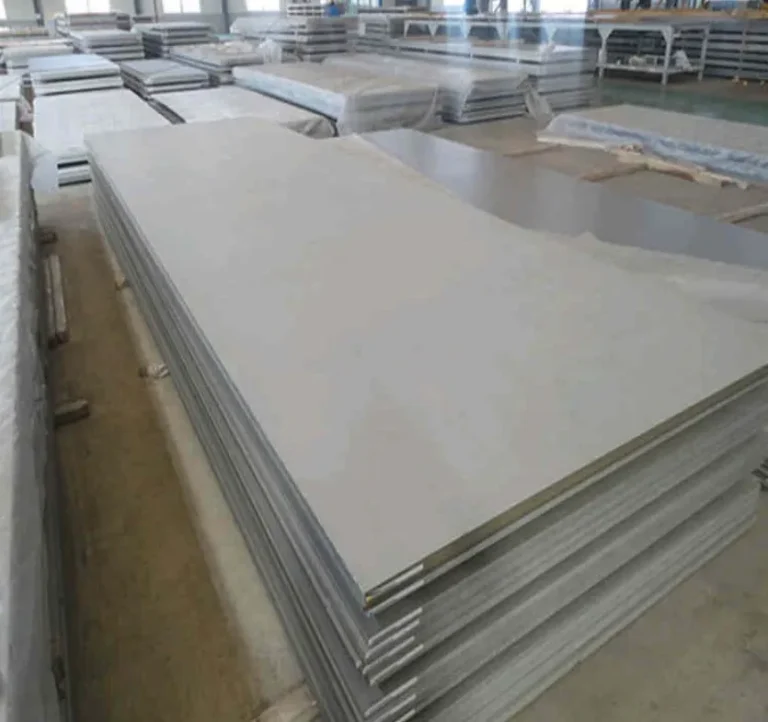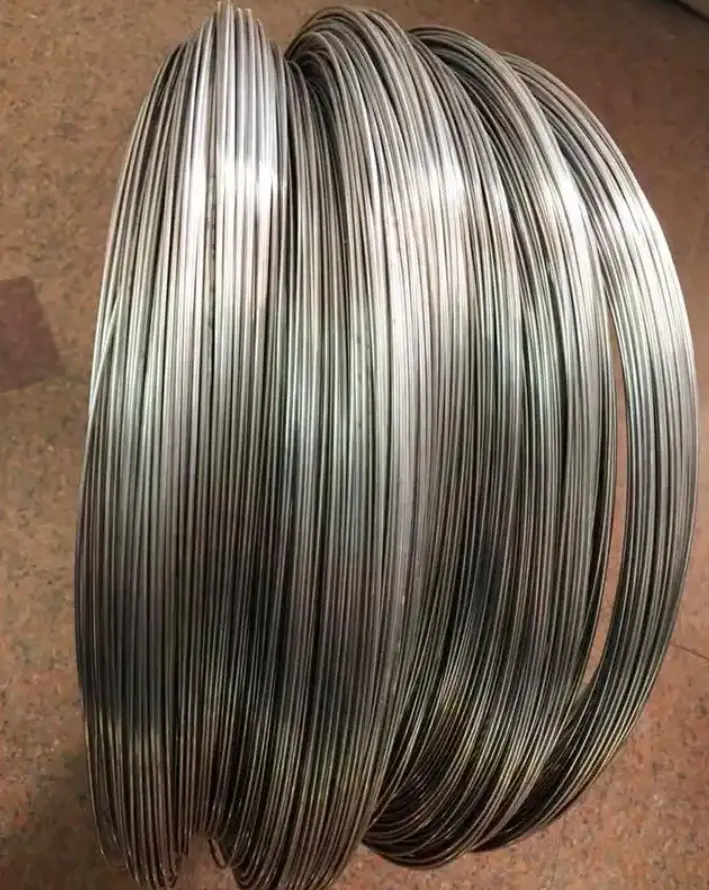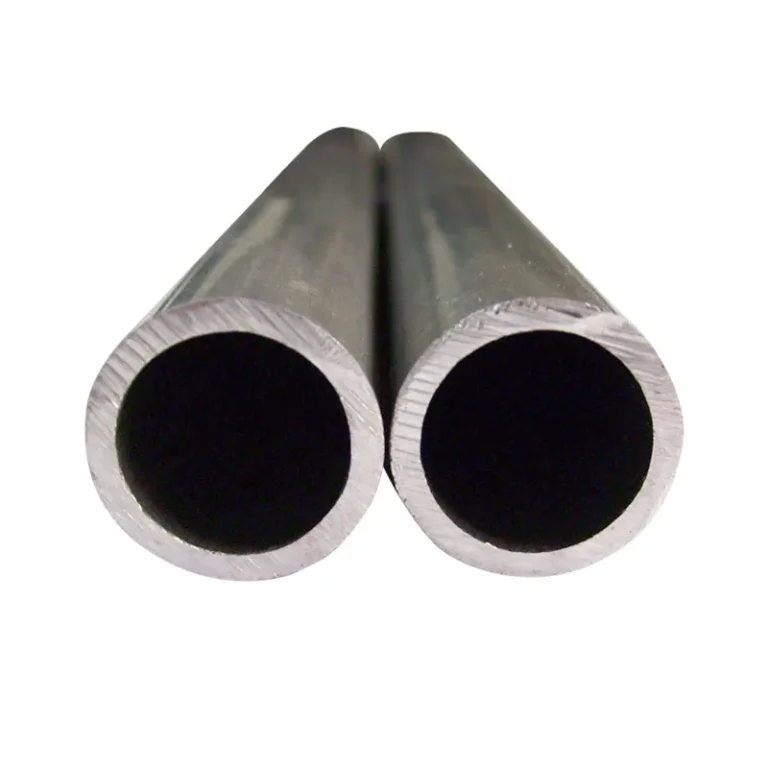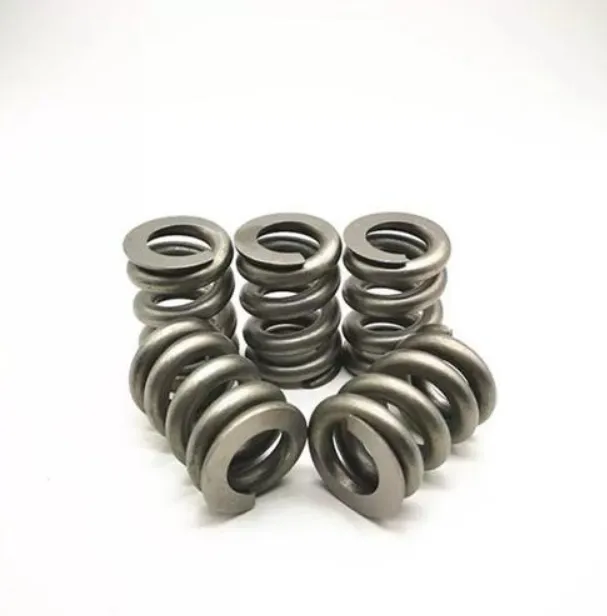

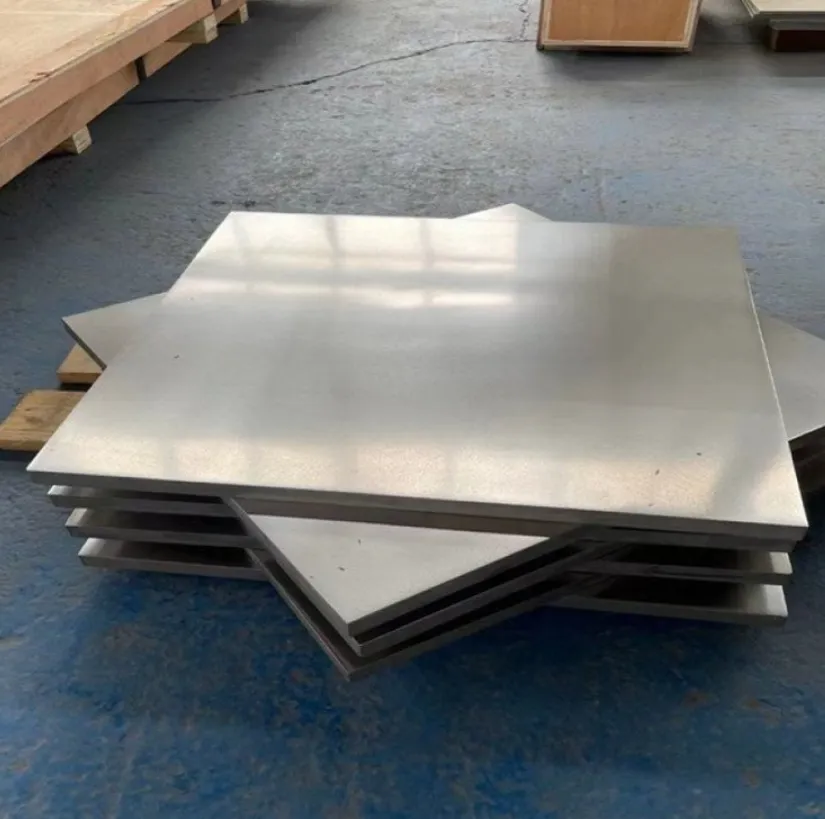
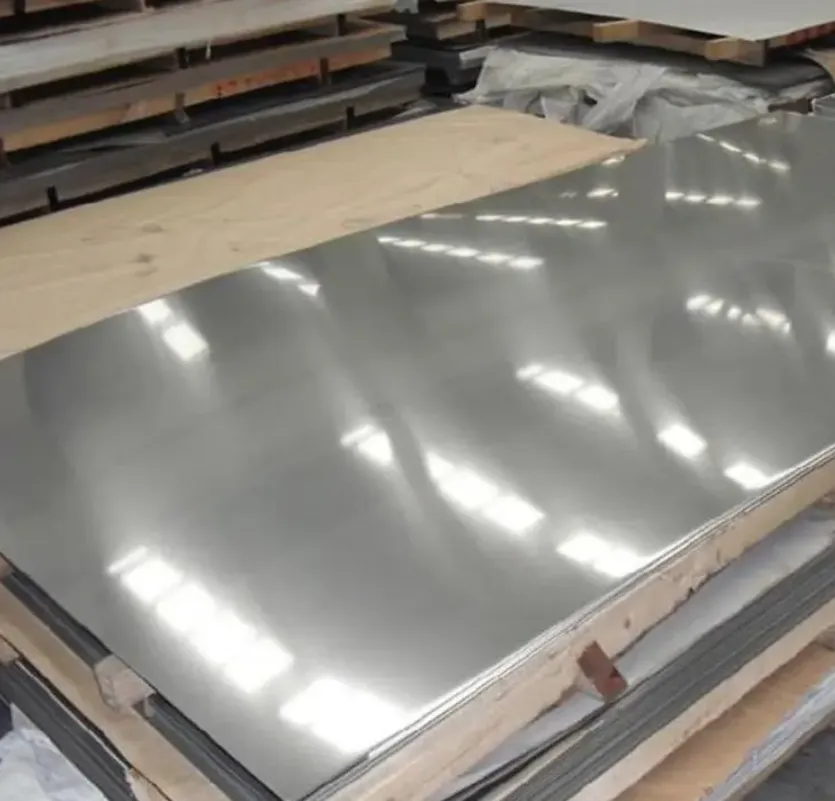
Monel K500 plate (UNS N05500) is a precipitation-hardenable nickel-copper alloy delivering yield strengths of 690 MPa or higher combined with exceptional seawater corrosion resistance, near-immunity to chloride stress corrosion cracking, and compliance with NACE MR0175 for sour oil and gas service, making it the benchmark material for marine shafting, subsea components, valve bodies, and offshore structural parts where no other commercially available alloy simultaneously meets all three requirements at comparable cost. At MWalloys, we supply Monel K500 plate in hot-rolled and cold-rolled conditions, cut to customer-specified dimensions from stock inventory, with full EN 10204 Type 3.1 mill certifications and same-week delivery on standard thicknesses.
What Is Monel K500 Plate and How Does It Fundamentally Differ from Standard Monel 400?
Monel K500 and Monel 400 share the same nickel-copper base chemistry, but K500 incorporates deliberate additions of aluminum (2.30 – 3.15%) and titanium (0.35 – 0.85%) that enable precipitation hardening through a controlled aging heat treatment. This single metallurgical distinction transforms what would otherwise be a moderate-strength corrosion-resistant alloy into a high-strength engineering material capable of replacing steel in the most aggressive marine and chemical environments.
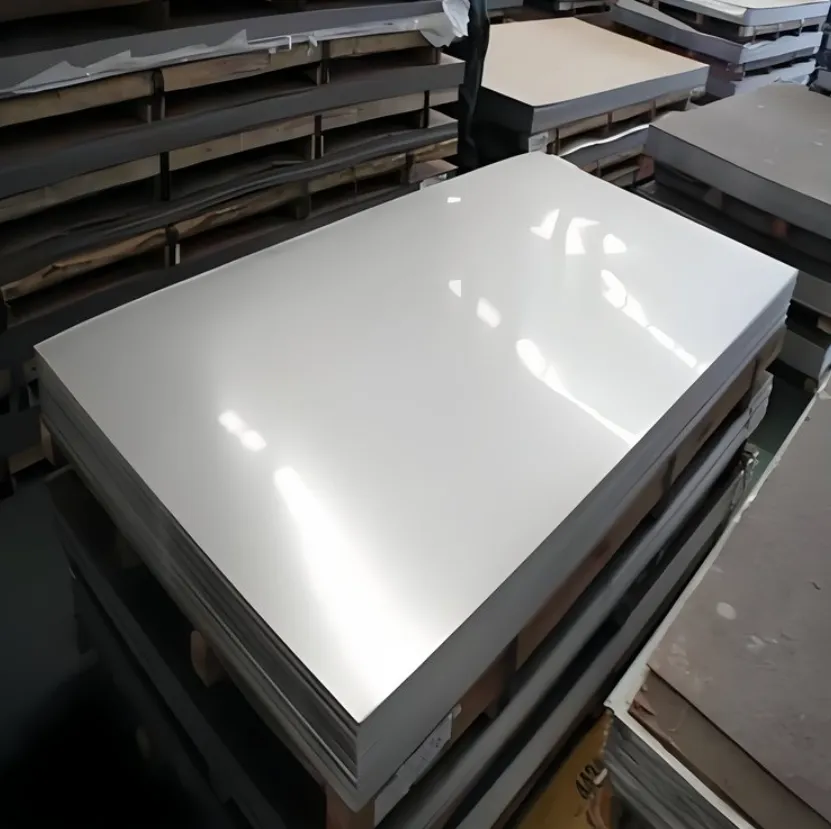
Monel is a registered trademark of Special Metals Corporation. The K500 designation specifically identifies the age-hardenable variant of the Monel nickel-copper family. In plate form, K500 is produced by hot rolling from forged or continuously cast slab, then either supplied in the annealed condition for customer heat treatment, or supplied pre-aged to the customer's required strength level.
The K500 vs Monel 400 Distinction in Plate Applications
| Property | Monel 400 (N04400) | Monel K500 (N05500) | Practical Impact |
|---|---|---|---|
| Yield strength (annealed) | 170 – 345 MPa | 310 – 415 MPa | K500 annealed stronger than 400 |
| Yield strength (aged) | Not age-hardenable | 690 – 760 MPa | K500 reaches pressure vessel design strengths |
| Tensile strength (aged) | N/A | 1000 – 1140 MPa | Comparable to medium-carbon alloy steels |
| Hardness (aged) | ~130 HB | 250 – 310 HB | K500 significantly harder: wear resistance |
| Seawater corrosion | Excellent | Excellent | Both essentially equivalent |
| Chloride SCC resistance | Excellent | Excellent | Both immune under normal conditions |
| HF acid resistance | Excellent | Excellent | K500 inherits this from base Monel chemistry |
| Cost premium vs Monel 400 | Baseline | +20 – 35% | K500 costlier due to Al/Ti additions |
| Heat treatment required | No | Yes (for full strength) | Adds fabrication step for K500 |
| Available as plate | Yes | Yes | Both standard product forms |
The cost premium of K500 over Monel 400 is consistently justified in applications where the higher yield strength enables thinner sections (reducing total material weight and cost), where wear resistance is required alongside corrosion resistance, or where the component must carry significant mechanical loads in addition to resisting chemical attack.
At MWalloys, we regularly assist engineers who initially specify Monel 400 plate only to discover that the yield strength is insufficient for their structural load calculations. Upgrading to K500 and adjusting the section design to take advantage of the higher allowable stress typically recovers the material cost premium through reduced plate weight.
Historical Context and Development of Monel K500
Monel K500 was developed in the early 20th century as an improvement on original Monel 400, driven by demand from marine engineering for a corrosion-resistant alloy with strength adequate for propeller shafting, pump shafts, and fasteners. The discovery that aluminum and titanium additions enabled age hardening of the nickel-copper base was a significant metallurgical advance that positioned K500 as one of the first commercially successful precipitation-hardenable nickel alloys, preceding by several decades the widespread adoption of nickel superalloys like Inconel 718.
What Is the Full Chemical Composition and Metallurgical Basis of Monel K500 Plate?
The chemical composition of Monel K500 is the foundation of every property that makes it valuable in marine and oil/gas service. Understanding the role of each alloying element helps engineers assess equivalency claims and evaluate material test certificates correctly.
Monel K500 Chemical Composition
| Element | UNS N05500 Min (%) | UNS N05500 Max (%) | Metallurgical Function |
|---|---|---|---|
| Nickel (Ni) | 63.0 | – (balance ~67%) | Base matrix; corrosion resistance, SCC immunity |
| Copper (Cu) | 27.0 | 33.0 | Seawater resistance, HF acid resistance |
| Aluminum (Al) | 2.30 | 3.15 | Primary precipitation hardening element |
| Titanium (Ti) | 0.35 | 0.85 | Secondary hardening, grain refinement |
| Iron (Fe) | – | 2.0 | Residual from melt; minor strengthening |
| Manganese (Mn) | – | 1.5 | Deoxidation, hot workability |
| Carbon (C) | – | 0.25 | Controlled to limit carbide formation |
| Silicon (Si) | – | 0.50 | Deoxidation |
| Sulfur (S) | – | 0.010 | Controlled impurity; affects hot ductility |
The precipitation hardening mechanism in K500 involves the formation of gamma-prime (γ') phase particles: an ordered Ni₃(Al,Ti) intermetallic compound that precipitates coherently within the nickel-copper matrix during the aging heat treatment. These fine, uniformly distributed particles obstruct dislocation movement, dramatically increasing yield strength without significantly reducing ductility.
The key insight is that the gamma-prime phase in K500 is thermodynamically unstable above approximately 590°C. This means that components must not be used at service temperatures above this threshold, and that any welding or elevated-temperature processing that exposes the aged material to temperatures above 590°C will dissolve the precipitates and reduce the material to near-annealed strength levels.
Effect of Carbon Content on K500 Performance
Carbon in K500 is controlled below 0.25% to prevent excessive titanium carbide (TiC) formation during solidification. If titanium is consumed by carbon (forming TiC), less titanium is available for the γ' precipitation hardening reaction, resulting in lower-than-expected strength after aging. For critical applications requiring maximum aged strength and minimum variability, some procurement specifications impose a tighter carbon limit (0.15% maximum), which ensures consistent aging response across different heats.
What Mechanical Properties Does Monel K500 Plate Achieve in Different Conditions?
The mechanical properties of Monel K500 plate vary substantially between the annealed and aged conditions. Specifying the correct condition is fundamental to receiving plate that will perform as intended.
Room Temperature Mechanical Properties by Condition
| Property | Annealed | Hot-Rolled (as-rolled) | Aged (from annealed) | Aged (from cold-worked) |
|---|---|---|---|---|
| Tensile Strength (MPa) | 760 – 900 | 800 – 950 | 1000 – 1100 | 1100 – 1200 |
| Yield Strength (MPa, 0.2%) | 310 – 415 | 380 – 500 | 690 – 790 | 790 – 900 |
| Elongation (% in 50mm) | 30 – 40 | 25 – 35 | 20 – 30 | 18 – 25 |
| Reduction of Area (%) | 55 – 65 | 50 – 60 | 45 – 55 | 40 – 50 |
| Hardness (Brinell) | 160 – 200 | 180 – 230 | 250 – 310 | 280 – 330 |
| Charpy V-notch (J, room temp) | 100 – 150 | 80 – 120 | 60 – 100 | 50 – 80 |
Elevated Temperature Strength Retention
| Temperature (°C) | Tensile Strength (MPa, aged) | Yield Strength (MPa, aged) | Elongation (%) |
|---|---|---|---|
| 20 | 1000 – 1100 | 690 – 790 | 20 – 30 |
| 100 | 960 – 1050 | 650 – 750 | 22 – 32 |
| 200 | 900 – 1000 | 610 – 710 | 24 – 33 |
| 300 | 840 – 940 | 565 – 660 | 25 – 35 |
| 400 | 790 – 880 | 520 – 620 | 26 – 36 |
| 500 | 720 – 820 | 470 – 570 | 28 – 38 |
| 550 | 650 – 750 | 410 – 510 | 30 – 40 |
Properties begin to drop more rapidly above 500°C as the gamma-prime phase begins to dissolve. For sustained service above 480°C (895°F), K500 should not be relied upon to maintain its aged strength properties.
Low Temperature and Cryogenic Behavior
Monel K500 is one of the few high-strength alloys that maintains excellent toughness at cryogenic temperatures, a property inherited from the FCC (austenitic) crystal structure of the nickel-copper matrix:
| Temperature (°C) | Charpy V-notch (J, aged plate) | Notes |
|---|---|---|
| +20 | 60 – 100 | Room temperature baseline |
| -40 | 55 – 95 | Acceptable for cold climate offshore |
| -100 | 50 – 85 | Suitable for LNG adjacent service |
| -196 (liquid N₂) | 40 – 70 | Adequate cryogenic toughness |
| -269 (liquid He) | 30 – 55 | Research applications |
This retention of toughness at sub-zero temperatures distinguishes K500 from many high-strength steels that undergo ductile-to-brittle transition at temperatures routinely encountered in Arctic offshore operations.
Physical Properties of Monel K500 Plate
| Physical Property | Value | Engineering Relevance |
|---|---|---|
| Density | 8.44 g/cm³ | Lower than steel (7.85); weight calculations |
| Modulus of elasticity | 180 GPa | Used in deflection and stiffness calculations |
| Modulus of rigidity | 66 GPa | Torsional design of shafts |
| Coefficient of thermal expansion | 13.7 µm/m·°C (20 – 100°C) | Differential expansion in assemblies |
| Thermal conductivity | 17.5 W/m·K | Moderate; relevant for heat exchanger sizing |
| Electrical resistivity | 0.615 µΩ·m | Relevant for cathodic protection calculations |
| Magnetic permeability | < 1.002 | Effectively non-magnetic |
| Melting range | 1315 – 1350°C | Welding and casting reference |
| Specific heat | 419 J/kg·K | Thermal analysis |
The non-magnetic nature of K500 (permeability < 1.002) is critically important in certain subsea and marine applications: compass proximity zones, degaussed naval vessels, and MWD (measurement while drilling) tool housings all require non-magnetic structural materials, and K500 meets this requirement while delivering structural performance that aluminum and titanium alternatives cannot always match.
What Plate Dimensions, Thicknesses, and Cut-to-Size Capabilities Are Available?
Understanding the dimensional range of commercially available Monel K500 plate and the cut-to-size capabilities of precision suppliers like MWalloys helps engineers design components efficiently without being constrained by standard mill dimensions.
Standard Monel K500 Plate Thickness Range
| Thickness Category | Thickness Range | Typical Condition Supplied | Production Method |
|---|---|---|---|
| Sheet (thin plate) | 1.0 – 4.75mm | Annealed | Cold rolled |
| Medium plate | 4.75 – 25.4mm | Hot rolled annealed | Hot rolled |
| Standard plate | 25.4 – 76.2mm | Hot rolled annealed | Hot rolled |
| Heavy plate | 76.2 – 150mm | Hot rolled annealed | Hot rolled from slab |
| Extra heavy | 150 – 250mm | Hot rolled annealed | Forged or hot rolled |
Standard Mill Plate Widths and Lengths
| Width Range | Length Range | Availability Note |
|---|---|---|
| 600 – 1000mm | 1500 – 3000mm | Most readily available sizes |
| 1000 – 1500mm | 2000 – 6000mm | Standard production range |
| 1500 – 2000mm | 3000 – 8000mm | Less common; confirm with supplier |
| Custom widths | Custom lengths | Available on mill order basis |
MWalloys Cut-to-Size Capabilities for K500 Plate
At MWalloys, we provide precision cutting services that convert standard mill plate into customer-specific blanks, eliminating the waste and cost of customer-side cutting operations. Our cutting capabilities for Monel K500 plate include:
| Cutting Method | Maximum Thickness | Dimensional Tolerance | Surface Quality |
|---|---|---|---|
| Waterjet cutting | Up to 150mm | ±0.3mm | Smooth, no HAZ |
| Plasma cutting | Up to 75mm | ±1.0 – 2.0mm | Slight dross, minor HAZ |
| Bandsaw cutting | Up to 200mm | ±1.0 – 1.5mm | Clean, no HAZ |
| Milling (plate profiling) | Up to 150mm | ±0.1mm | Machined quality |
| Shear cutting | Up to 12mm | ±0.3 – 0.5mm | Clean edge |
Waterjet cutting is the preferred method for K500 plate because it introduces no heat-affected zone (critical for aged plate where local overheating could dissolve the precipitate strengthening), leaves no hardened edge layer, and achieves tolerances adequate for most fabrication requirements without secondary machining.
A practical note from our processing experience: when cutting aged K500 plate by plasma or gas cutting, the HAZ at the cut edge can reach temperatures sufficient to over-age or dissolve the gamma-prime precipitates, creating a narrow soft zone adjacent to the cut edge. For structural components where edge zones carry significant stress, either waterjet cutting followed by edge inspection, or machining the cut edge to remove the HAZ, should be specified.
Thickness and Width Tolerances for K500 Plate
| Thickness | Thickness Tolerance | Width Tolerance | Length Tolerance |
|---|---|---|---|
| 1.0 – 3.0mm | ±0.10mm | +3.0 / -0mm | +10 / -0mm |
| 3.0 – 10mm | ±0.20mm | +3.0 / -0mm | +10 / -0mm |
| 10 – 25mm | ±0.30mm | +5.0 / -0mm | +15 / -0mm |
| 25 – 50mm | ±0.40mm | +5.0 / -0mm | +20 / -0mm |
| 50 – 100mm | ±0.60mm | +6.0 / -0mm | +25 / -0mm |
| 100 – 150mm | ±0.80mm | +8.0 / -0mm | +30 / -0mm |
These tolerances follow ASTM B127 requirements. Tighter tolerances are achievable through additional machining on specific surfaces and should be specified where dimensional precision is critical for fit-up in assemblies.
How Is Monel K500 Plate Heat Treated to Achieve Its Full Strength Potential?
The heat treatment of Monel K500 plate is more complex than for most structural alloys, and errors in the heat treatment sequence are among the most common causes of below-specification mechanical properties. Understanding the full sequence is essential for any engineer or heat treater working with this material.
Complete Heat Treatment Sequence
Step 1: Solution Annealing (if required)
Before aging, the plate must be in the solution-annealed condition to ensure a uniform, single-phase solid solution free of prior precipitates. If the plate was solution annealed at the mill and has not been subsequently processed at elevated temperatures, this step may be skipped.
- Temperature: 980 – 1010°C (1800 – 1850°F)
- Time: 30 minutes per 25mm of thickness, minimum 30 minutes
- Cooling: Rapid quench (water quench or rapid air cool for thin sections)
- Atmosphere: Air is acceptable; controlled atmosphere prevents scaling.
Step 2: Precipitation Aging
This is the critical step that develops the high-strength properties. Two aging schedules are commonly used:
| Aging Schedule | Temperature | Time | Target Properties | Application |
|---|---|---|---|---|
| Standard age | 595°C (1100°F) | 16 hours | Tensile 1000 MPa, Yield 690 MPa | General structural |
| Two-stage age | 980°C/1h + 595°C/16h | Combined | Similar to standard | Starting from hot-worked condition |
| High-strength age | 480 – 510°C | 8 – 16 hours | Higher strength, lower ductility | Maximum strength applications |
| Under-age | 480°C | 4 – 6 hours | Intermediate properties | Where ductility more critical |
Critical Note on Over-Aging: Aging temperatures above 620°C or aging times significantly beyond 24 hours at 595°C result in over-aging, where the γ' precipitates coarsen and the strength decreases. Over-aged K500 can be difficult to identify visually but will fail mechanical property tests.
Effect of Prior Cold Work on Aging Response
Cold working K500 plate before aging (known as cold-worked and aged, or "spring tempered and aged" in some specifications) significantly increases the final yield strength compared to straight annealed-and-aged material:
| Prior Condition Before Aging | Yield Strength After Aging | Tensile Strength After Aging | Ductility |
|---|---|---|---|
| Solution annealed | 690 – 760 MPa | 1000 – 1100 MPa | Good (20 – 30%) |
| 15% cold work | 760 – 830 MPa | 1050 – 1140 MPa | Moderate (18 – 25%) |
| 25% cold work | 830 – 900 MPa | 1100 – 1200 MPa | Reduced (15 – 22%) |
| 35% cold work | 900 – 970 MPa | 1150 – 1250 MPa | Limited (12 – 18%) |
For plate applications, achieving cold work above 15% is generally impractical except through rolling operations. The most common approach is solution anneal followed by aging, which represents the baseline condition documented in most standards.
Heat Treatment Verification and Acceptance
After aging, mechanical property verification is mandatory. Required tests typically include:
| Test | Standard | Accept Criteria (ASTM B865 Grade A) |
|---|---|---|
| Tensile strength | ASTM E8 | 1000 MPa minimum |
| Yield strength (0.2%) | ASTM E8 | 690 MPa minimum |
| Elongation | ASTM E8 | 20% minimum |
| Hardness | ASTM E10 | 250 – 310 HB |
| Impact (optional) | ASTM E23 | Per specification |
What Corrosion Resistance Properties Make Monel K500 Plate the Top Choice in Marine Service?
The corrosion resistance of Monel K500 in marine environments is the result of the nickel-copper base chemistry forming a stable, adherent protective film in seawater and most saline conditions. This behavior is fundamentally different from the passive chromium oxide film mechanism in stainless steels, which makes K500's protection more stable across a wider range of electrochemical conditions encountered in marine service.
Seawater Corrosion Performance
| Corrosion Parameter | Monel K500 Performance | Comparison to 316L SS |
|---|---|---|
| General corrosion rate (seawater, ambient) | < 0.025 mm/year | 316L: 0.1 – 0.5 mm/year (with crevice risk) |
| Pitting resistance | Essentially immune (no chloride pitting threshold) | 316L: pitting at temperatures > 25°C |
| Crevice corrosion | Very resistant (does not rely on passive film) | 316L: susceptible at temperature |
| Velocity effects (up to 8 m/s) | No erosion-corrosion | 316L: marginal at high velocity |
| Biofouling corrosion | Slightly biostatic; modest biofouling | 316L: significant biofouling |
| Galvanic position | Noble (protects coupled less-noble metals) | 316L similar but less consistent |
| Stress corrosion cracking | Immune in natural seawater | 316L: susceptible above 60°C |
Resistance to Specific Marine Corrosive Agents
| Agent | K500 Behavior | Notes |
|---|---|---|
| Natural seawater (ambient – 100°C) | Excellent; corrosion rate < 0.025 mm/year | One of the best structural materials |
| Stagnant seawater | Good; no anaerobic SRB attack | Better than duplex SS in stagnant zones |
| Seawater + oxidizers (Cl₂, H₂O₂) | Good; passive in oxidizing seawater | Better than titanium grade 2 in some oxidizing conditions |
| Brackish water | Excellent | Similar to seawater performance |
| Caustic soda (NaOH) solutions | Very Good | Excellent alkaline resistance |
| Hydrofluoric acid (HF) | Outstanding | One of very few structural alloys usable in HF |
| Organic acids | Very Good | Suitable for most organic acid service |
| Neutral salt solutions | Excellent | Broad salt resistance |
| Marine atmosphere | Excellent | No corrosion allowance needed |
| Sulfuric acid (< 85%) | Good at lower concentrations | Consult corrosion data for specific conditions |
Cathodic Protection Compatibility
A frequently overlooked aspect of K500 plate in marine structures is its interaction with cathodic protection systems. K500 is a relatively noble alloy (corrosion potential approximately -0.04 to -0.10 V vs SCE in seawater), which means:
- It requires less cathodic protection current density than carbon steel.
- It can act as a cathode in galvanic couples with less noble metals (zinc anodes, aluminum anodes, carbon steel)
- Excessive cathodic protection (overprotection) can cause hydrogen absorption and hydrogen embrittlement in the aged condition.
The hydrogen embrittlement risk from overprotection is a genuinely important practical consideration that is underemphasized in most material datasheets. In fully cathodically protected subsea structures, the protection potential should be controlled to avoid polarizing K500 components more negative than -0.90 V vs Ag/AgCl (approximately -0.80 V vs SCE). Below this threshold, atomic hydrogen generation at the metal surface can cause hydrogen-induced cracking (HIC) in the high-strength aged condition.
How Does Monel K500 Plate Perform in Oil and Gas Sour Service Environments?
The oil and gas industry's use of K500 plate extends far beyond simple corrosion resistance. The combination of high strength, seawater corrosion resistance, and H₂S compatibility under NACE MR0175 makes K500 plate a structural material of choice in applications where these three properties must coexist.
NACE MR0175 / ISO 15156 Compliance for K500 Plate
NACE MR0175 / ISO 15156-3 (Part 3 covers CRAs for sour service) qualifies Monel K500 for use in H₂S-containing environments subject to the following conditions:
| Requirement | NACE MR0175 Limit for K500 | Practical Implication |
|---|---|---|
| Maximum hardness | 35 HRC (approximately 331 HB) | Limits maximum aging: must verify hardness on every heat |
| Maximum strength | No explicit tensile limit (hardness governs) | Full aged condition may exceed hardness limit |
| Heat treatment condition | Solution annealed and aged | Must be properly heat treated, not cold worked only |
| H₂S partial pressure limit | Per Table B.2 of ISO 15156-3 | Environmental limits apply |
| Temperature limit | Per qualification testing | Typically up to 150°C (300°F) |
| Chloride content limit | No fixed limit for K500 | One of its advantages vs stainless steels |
The hardness limit of 35 HRC is the most frequently encountered compliance challenge for K500 plate in sour service. Standard fully aged K500 per ASTM B865 Grade A targets hardness of 250 – 310 HB (approximately 25 – 32 HRC), which is within the NACE limit. However, if aging conditions produce hardness above 331 HB (35 HRC), the material is non-compliant.
When specifying K500 plate for sour service, always include a hardness acceptance test per ASTM E10 with the maximum hardness limit stated explicitly (331 HB maximum for NACE MR0175 compliance). This is not automatically included in standard ASTM B127 or B865 certifications.
Specific Oil and Gas Applications for K500 Plate
| Application | Why K500 Plate | Key Performance Requirements |
|---|---|---|
| Valve bodies (sour service) | Strength + H₂S resistance + seawater | NACE MR0175, pressure containment |
| Wellhead component plates | High strength + sour service + seawater | API 6A material class, NACE compliance |
| Subsea manifold structural plates | Non-magnetic + seawater + strength | PREN not required; Ni-Cu immunity |
| Pump housing plates | Erosion-corrosion resistance + strength | High-velocity fluid handling |
| Compressor valve plates | Fatigue + corrosion in sour gas | High cycle fatigue in H₂S |
| Flange blanks | Sealing performance + sour service | ASME B16.5 / API 6A pressure rating |
| Instrument housing plates | Non-magnetic + seawater + machineability | Dimensional precision after machining |
| Firewater system components | Seawater + high pressure + no coating | Long service life without maintenance |
K500 Plate in Deepwater and Subsea Applications
Deepwater and subsea applications represent the most demanding combined environment for structural plates: high hydrostatic pressure, low temperature (2 – 4°C at depth), flowing seawater, potential H₂S from reservoir fluids, and cathodic protection interaction.
K500 plate is specified for subsea applications specifically because it addresses all of these simultaneously:
- Low-temperature toughness (demonstrated down to -196°C)
- Seawater corrosion immunity without protective coatings.
- H₂S resistance under NACE MR0175 in the correctly aged condition.
- Non-magnetic properties compatible with MWD tools and subsea instrumentation.
- Adequate strength (690 MPa yield) without the weight penalty of equivalent-strength carbon steel.
What Fabrication, Welding, and Machining Practices Are Critical for Monel K500 Plate?
The fabrication of K500 plate into finished components involves considerations that differ significantly from standard carbon steel or stainless steel fabrication. Errors at the fabrication stage can invalidate the heat treatment, compromise corrosion resistance, or introduce stress concentrations that cause premature fatigue failure.
Welding Monel K500 Plate
Welding K500 plate is more complex than welding Monel 400 because the aging heat treatment interacts with weld thermal cycles, and the HAZ adjacent to welds typically loses its aged strength.
Recommended Approach: Weld in Annealed Condition, Then Age the Assembly
The standard procedure for welded K500 fabrications is:
- Solution anneal all plate material (if not already in annealed condition)
- Perform all welding operations on annealed material.
- Solution anneal the welded assembly (to homogenize the HAZ and weld metal)
- Age the complete welded assembly to develop full properties throughout.
This sequence ensures uniform properties across the weld, HAZ, and base metal. The disadvantage is that the assembly must fit into an aging furnace, which can be a practical constraint for large structures.
| Welding Parameter | K500 Plate Requirement |
|---|---|
| Preferred process | GTAW (TIG) for critical joints; GMAW for production |
| Filler metal (GTAW) | ERNiCu-7 (Monel 60/67 filler) or matching composition |
| Filler metal (GMAW) | ERNiCu-7 |
| Shielding gas | Argon or Ar + He mixture |
| Back purge | Argon for root pass corrosion resistance |
| Preheat | Not required for sections < 25mm |
| Interpass temperature | 150°C maximum |
| Post-weld heat treatment | Solution anneal + age (for critical structural applications) |
| Joint design | Full penetration preferred for pressure applications |
Common Welding Defects in K500 and Their Prevention
| Defect | Cause | Prevention |
|---|---|---|
| Hot cracking (solidification) | High residual stresses + low ductility weld metal | Control heat input; use correct filler |
| HAZ softening | Precipitate dissolution during welding | Always post-weld age |
| Porosity | Moisture or contamination | Use dry, clean filler; decontaminate surfaces |
| Hydrogen cracking | Hydrogen from lubricants, moisture | Clean all surfaces; dry filler storage |
| Intergranular attack at HAZ | Carbide precipitation at grain boundaries | Use low-carbon base metal and filler |
Machining Monel K500 Plate
K500 in the aged condition is significantly more difficult to machine than in the annealed condition. The work-hardening tendency of nickel alloys, combined with the higher hardness of aged K500 (250 – 310 HB), requires careful attention to cutting parameters.
| Machining Parameter | Annealed K500 | Aged K500 | Notes |
|---|---|---|---|
| Cutting speed (turning) | 20 – 45 m/min | 10 – 25 m/min | Slower for aged material |
| Feed rate (turning) | 0.15 – 0.30 mm/rev | 0.10 – 0.20 mm/rev | Positive rake angle tools |
| Depth of cut | 2 – 5mm (roughing) | 1 – 3mm (roughing) | Avoid rubbing cuts |
| Tool material | Carbide (preferred), HSS acceptable | Carbide mandatory | Coated inserts for aged |
| Coolant | Soluble oil or sulfur-free synthetic | Sulfur-free synthetic essential | Sulfur causes surface attack |
| Work-hardening risk | High | Very High | Never stop feed while cutting |
| Surface roughness achievable | Ra 0.8 – 1.6 µm | Ra 0.8 – 1.6 µm | Achievable with sharp tools |
The prohibition on sulfur-containing cutting fluids is absolute: sulfur penetrates grain boundaries in nickel alloys at machining temperatures and causes intergranular attack (sulfur embrittlement) that dramatically reduces fatigue life. Always verify that cutting fluids are sulfur-free before use on K500.
Forming and Bending K500 Plate
Hot forming should be performed at 930 – 1230°C (1700 – 2250°F). If forming is performed above 620°C, the material must be re-solution annealed before aging. Cold forming in the annealed condition is feasible but requires increased forming forces compared to mild steel due to K500's higher yield strength (310 – 415 MPa annealed). Minimum bend radii for annealed K500 plate:
| Plate Thickness | Minimum Bend Radius (annealed) |
|---|---|
| Up to 3mm | 1.5 × thickness |
| 3 – 6mm | 2.0 × thickness |
| 6 – 12mm | 2.5 × thickness |
| 12 – 25mm | 3.0 × thickness |
Forming of aged K500 plate is not recommended because the reduced ductility (20 – 30% elongation) combined with the work-hardening tendency creates high risk of cracking at bend radii. Always form in the annealed condition and age after forming.
How Does Monel K500 Plate Compare to Alternative Materials for Marine and Subsea Structural Use?
Material selection for marine and oil/gas structural plate involves comparing multiple candidates across mechanical, corrosion, fabrication, and cost criteria. The following comparison reflects the trade-offs that drive specification decisions in practice.
Comprehensive Material Comparison for Marine Plate Applications
| Property | Monel K500 | Super Duplex 2507 | Ti Grade 5 (Ti-6Al-4V) | Inconel 625 | 316L SS |
|---|---|---|---|---|---|
| Yield strength (MPa) | 690 – 760 (aged) | 550 | 830 | 415 – 620 | 170 |
| Tensile strength (MPa) | 1000 – 1100 | 750 | 900 | 830 – 1000 | 485 |
| Density (g/cm³) | 8.44 | 7.80 | 4.43 | 8.44 | 7.99 |
| Seawater corrosion | Excellent | Very Good | Outstanding | Excellent | Limited |
| Pitting resistance (PREN) | N/A (Ni-Cu, not Cr-based) | 42 | N/A | ~52 | ~24 |
| Chloride SCC resistance | Excellent | Good | Excellent | Excellent | Poor |
| H₂S resistance (NACE) | Yes (with hardness control) | Yes | Yes | Yes | Limited |
| Non-magnetic | Yes | No | Yes | Yes | Yes |
| Max service temp (°C) | 480 (strength limited) | 300 | 300 | 815 | 870 |
| Weldability | Moderate | Moderate | Difficult | Good | Good |
| Relative cost vs 316L | ~6 – 8× | ~3 – 4× | ~12 – 15× | ~8 – 10× | 1× |
| Machinability | Moderate (lower in aged) | Moderate | Difficult | Moderate | Good |
| HF acid resistance | Outstanding | None | None | None | None |
When K500 Plate Wins Against Each Alternative
K500 vs Super Duplex 2507:
K500 wins when: HF acid resistance is required, chloride SCC is a concern at elevated temperatures, non-magnetic properties are mandatory, or when the combined seawater + sour service environment requires immunity without the chloride concentration limitations that affect duplex grades.
K500 vs Titanium Grade 5:
K500 wins when: cost is constrained (K500 approximately half the cost of Ti-6Al-4V plate), HF compatibility is needed (titanium corrodes in HF), or when welding complexity must be minimized (titanium welding requires full inert atmosphere protection).
K500 vs Inconel 625:
K500 wins when: the maximum strength from aging (690+ MPa yield) is needed and Inconel 625's annealed yield strength (415 MPa) is insufficient. K500 loses when high-temperature service above 480°C is required, or when oxidizing acid resistance (chromium-based protection) is the primary corrosion concern.
K500 vs 316L:
K500 wins in virtually every marine and sour service comparison where strength, chloride pitting, SCC, or H₂S resistance is evaluated. The cost premium of 6 – 8× is justified by substantially extended service life and elimination of coating maintenance costs.
What Specifications, Standards, and Certifications Govern Monel K500 Plate Procurement?
Correct specification of Monel K500 plate requires identifying the applicable standard for the product form, the heat treatment condition, and the additional supplemental requirements specific to the end-use industry.
Primary Material Standards for K500 Plate
| Standard | Issuing Body | Scope | Key Provisions |
|---|---|---|---|
| ASTM B127 | ASTM International | Plate, sheet, strip (annealed) | Chemistry, mechanical properties |
| ASTM B865 | ASTM International | Plate, sheet, strip, bar (age-hardenable) | Three grades: A, B, C with different strength levels |
| ASME SB-127 | ASME | Pressure vessel plate | Same as ASTM B127, ASME-stamped |
| ASME SB-865 | ASME | Pressure vessel plate (aged) | Same as ASTM B865, ASME-stamped |
| AMS 4676 | SAE International | Plate, sheet, strip (aerospace) | Tighter quality controls, aerospace certification |
| DIN 17742 | DIN | German standard equivalent | NiCu30Al (2.4375) |
| EN 10095 | CEN | European standard | NiCu30Al/Ti equivalent |
| NACE MR0175 / ISO 15156-3 | AMPP / ISO | Sour service qualification | Hardness limits, environmental restrictions |
ASTM B865 Grade Designations
ASTM B865 defines three grades of age-hardenable Monel alloy plate, with K500 corresponding to Grade A in most applications:
| Grade | Alloy | Min Tensile (MPa) | Min Yield (MPa) | Min Elongation (%) |
|---|---|---|---|---|
| Grade A | Monel K500 (N05500) | 1000 | 690 | 20 |
| Grade B | Monel K500 (N05500, higher strength) | 1100 | 790 | 15 |
| Grade C | Monel K500 (N05500, intermediate) | 1050 | 720 | 18 |
For most marine structural and oil/gas applications, Grade A is specified. Grade B is used where maximum strength is required and reduced ductility is acceptable.
Certification Requirements by Application Sector
| Application Sector | Minimum Certificate | Additional Requirements |
|---|---|---|
| General industrial | EN 10204 Type 2.2 | Chemistry on certificate |
| Pressure vessel / piping | EN 10204 Type 3.1 | Full chem + mechanical per SB-127/SB-865 |
| Offshore / subsea | EN 10204 Type 3.1 + NACE | Hardness per NACE MR0175 |
| Naval / defense | EN 10204 Type 3.2 | MIL specifications, third-party witness |
| Aerospace | AMS 4676 compliance | Full AMS certification package |
| Nuclear | EN 10204 Type 3.2 + NQA-1 | Full nuclear quality documentation |
FAQs: Monel K500 Plate for Marine and Oil/Gas Applications
1: What is the yield strength of Monel K500 plate in the aged condition?
Monel K500 plate in the standard solution-annealed and aged condition achieves a minimum yield strength of 690 MPa (100 ksi) and minimum tensile strength of 1000 MPa (145 ksi) per ASTM B865 Grade A, which is approximately twice the yield strength of Monel 400 and significantly higher than 316L stainless steel or duplex 2205. The aging treatment that produces these properties involves holding the solution-annealed plate at 595°C (1100°F) for 16 hours, which precipitates fine Ni₃(Al,Ti) gamma-prime particles throughout the nickel-copper matrix. These particles obstruct dislocation movement, raising strength without significantly reducing corrosion resistance. Grade B of ASTM B865 requires minimum 790 MPa yield strength for applications demanding maximum mechanical performance. The as-received annealed condition delivers only 310 – 415 MPa yield strength, which is adequate for light structural use but insufficient for most marine structural and pressure-containing applications. Always verify the heat treatment condition on the material test certificate before accepting K500 plate for structural applications.
2: Is Monel K500 plate suitable for use in seawater without any protective coating?
Yes, Monel K500 plate is specifically designed for uncoated service in seawater and is routinely used for propeller shafts, pump components, valve bodies, and subsea structural parts without any protective coating, achieving corrosion rates below 0.025 mm/year in most seawater conditions. The nickel-copper base alloy forms a stable, self-repairing corrosion product film in seawater that protects the underlying metal without the passive chromium oxide film mechanism of stainless steels. Unlike stainless steels, which rely on a fragile passive film that breaks down in crevices or at elevated chloride concentrations, Monel K500's corrosion protection mechanism does not depend on passivity and is therefore more stable across the wide range of conditions encountered in marine service (including stagnant zones, crevices, and higher temperatures). The material is also essentially immune to chloride-induced stress corrosion cracking in natural seawater, which is a common failure mode for austenitic stainless steels in hot seawater service. The only coating sometimes applied to K500 in marine service is antifouling paint on hull surfaces, which addresses biofouling rather than corrosion.
3: Does Monel K500 plate comply with NACE MR0175 for sour service applications?
Yes, Monel K500 plate in the solution-annealed and aged condition is listed in NACE MR0175 / ISO 15156-3 as an acceptable material for sour service, provided the hardness does not exceed 35 HRC (approximately 331 HB) and the material meets all other requirements of the standard for the specific environmental conditions. The hardness limit of 35 HRC is critical and must be explicitly verified on the material test certificate. Standard fully-aged K500 per ASTM B865 Grade A targets 250 – 310 HB, which is within the NACE limit. However, if aging conditions produce material at the upper end of the hardness range, particularly for Grade B material, the 35 HRC limit may be approached or exceeded. For NACE compliance, always specify maximum hardness of 331 HB on the purchase order in addition to the standard mechanical property requirements. Additionally, NACE MR0175 imposes environmental limits on H₂S partial pressure, temperature, and chloride content that must be verified against actual service conditions; K500 is not unconditionally approved for all sour environments regardless of severity.
4: What is the maximum service temperature for Monel K500 plate?
The maximum recommended service temperature for Monel K500 plate in the aged condition is approximately 480°C (895°F) for sustained structural loading, above which the gamma-prime precipitates begin to dissolve, progressively reducing strength toward annealed-condition levels. The strength reduction is gradual between 480 and 590°C: at 500°C, aged K500 retains approximately 65 – 70% of its room-temperature yield strength, and by 590°C (the approximate gamma-prime solvus temperature), the material is effectively fully annealed. For applications with intermittent temperature excursions above 480°C, the total exposure time above this temperature should be tracked because cumulative over-aging will eventually soften the material. Below 480°C, K500 retains adequate properties for most structural applications. The minimum service temperature is practically unlimited: K500 maintains excellent toughness down to cryogenic temperatures (-196°C and below), making it suitable for Arctic offshore applications and cryogenic process equipment where other high-strength alloys undergo ductile-to-brittle transition. Always perform mechanical property verification after any elevated temperature exposure to confirm that strength requirements are still met.
5: How does Monel K500 plate behave in hydrofluoric acid environments?
Monel K500 plate is one of the very few structural alloys that withstands hydrofluoric acid (HF) across a wide concentration range, exhibiting corrosion rates below 0.5 mm/year in anhydrous HF and dilute HF solutions that would rapidly destroy stainless steels, carbon steel, and most other common engineering materials. The HF resistance of K500 is inherited from its Monel nickel-copper base chemistry: both nickel and copper form stable fluoride films in HF that protect the underlying metal. This makes Monel K500 plate the material of choice for HF alkylation unit structural components, uranium hexafluoride processing equipment, and fluorine chemical plant structures where both strength and HF resistance are required simultaneously. Titanium and zirconium alloys, despite excellent resistance to other corrosives, react vigorously with HF and are completely unsuitable for this application. The limitation is in oxidizing HF solutions (HF + HNO₃ mixtures, or HF + H₂O₂), where corrosion rates increase and the alloy selection should be re-evaluated. For most pure HF applications in the concentration range of 10 – 70%, Monel K500 plate in the aged condition provides acceptable service life when designed with appropriate corrosion allowance.
6: What is the difference between hot-rolled and cold-rolled Monel K500 plate?
Hot-rolled Monel K500 plate is produced by rolling at temperatures above the recrystallization temperature (typically 900 – 1230°C), resulting in scale on the surface, slightly coarser dimensional tolerances, and a microstructure that requires subsequent annealing to be uniform and ready for aging. Cold-rolled plate starts from hot-rolled material and adds a cold reduction pass at room temperature, producing tighter thickness tolerances, better surface finish, and some additional work-hardening that improves the final aged properties. For most marine and oil/gas structural applications where plate thicknesses exceed 10mm, hot-rolled and annealed plate is the standard supply condition because cold rolling becomes impractical at heavy gauges. For thinner plate (below 6mm), cold-rolled annealed plate provides better surface quality and dimensional consistency that benefits machining and welding operations. Both conditions require a final solution anneal before aging to eliminate microstructural non-uniformity from the hot or cold working operation. MWalloys supplies both conditions depending on thickness and application requirements, and the condition should always be specified explicitly on the purchase order along with the required heat treatment condition (annealed only vs annealed and aged).
7: Can Monel K500 plate be welded to stainless steel or carbon steel in marine structures?
Yes, Monel K500 plate can be welded to austenitic stainless steels (304L, 316L) or carbon steel using ERNiCu-7 filler metal, but the dissimilar metal joint requires careful consideration of galvanic corrosion, coefficient of thermal expansion differences, and the mechanical property mismatch between the high-strength K500 and lower-strength base metals. For K500-to-316L joints, ERNiCu-7 (matching Monel composition filler) produces sound joints with adequate strength, though the weld metal will not have the same aged strength as the K500 base metal. The joint design should locate weld joints away from peak stress regions to account for the lower-strength weld zone. For K500-to-carbon steel joints, ENiCu-7 covered electrodes or ERNiCu-7 wire are used, and the carbon steel side of the joint should be designed to carry the structural load without relying on weld strength. Galvanic corrosion between K500 (noble) and carbon steel (less noble) in seawater is a serious concern: the small anode (carbon steel) large cathode (K500 plate) area ratio can produce accelerated corrosion of the carbon steel. Proper isolation (insulating flanges, coating of the carbon steel) or cathodic protection is essential at any K500-to-carbon steel interface in seawater.
8: What is the cut-to-size lead time for Monel K500 plate orders from MWalloys?
For standard Monel K500 plate thicknesses (6 – 75mm) held in our stock inventory, MWalloys provides cut-to-size service with typical lead times of 3 to 7 business days for waterjet-cut pieces and 1 to 3 business days for bandsaw cuts, with same-day cutting available for urgent requirements on in-stock material. Non-standard thicknesses or dimensions requiring mill production orders carry lead times of 10 to 18 weeks depending on the specific thickness, width, and quantity, and whether the material is required in the annealed or pre-aged condition. We maintain inventory in the most commonly requested thicknesses (12.7mm, 19.05mm, 25.4mm, 38.1mm, 50.8mm) in plate dimensions suitable for most marine and oil/gas component fabrication. For aged condition plate, additional time of 3 to 5 days must be added for the aging heat treatment after cutting, which we perform in-house using calibrated furnaces with temperature uniformity verification. Projects requiring NACE MR0175 compliance documentation or EN 10204 Type 3.2 certification should include additional time for documentation preparation and any required third-party inspection activities.
9: How should Monel K500 plate be stored and handled to prevent contamination or damage before fabrication?
Monel K500 plate should be stored indoors on wooden or rubber-covered racks (never in direct contact with iron or steel surfaces), protected from moisture and halogen-containing cutting fluids, and handled with dedicated lifting equipment that has not been used on carbon steel without thorough cleaning. Iron contamination from carbon steel storage racks, lifting chains, or contaminated abrasives is the most common and most consequential form of surface contamination for K500 plate. Iron deposits on the K500 surface cause galvanic corrosion pitting that can be indistinguishable from stress corrosion or fatigue initiation sites in service. If iron contamination is suspected, the surface should be treated with a stainless-steel-safe acid cleaner (citric acid or passivation solution) to dissolve iron deposits before further processing. Chloride-containing cutting fluids or lubricants should never be used on K500 plate intended for marine service, as residual chloride can initiate localized corrosion in crevice geometries. All lifting equipment should be plastic-coated or dedicated non-ferrous equipment. For long-term storage (over 6 months), a light application of clean petroleum-based oil on the plate surface provides adequate protection.
10: What non-destructive testing methods are used to verify Monel K500 plate quality?
Standard non-destructive testing for Monel K500 plate includes ultrasonic testing (UT) per ASTM A578 for internal defects, liquid penetrant testing (PT) per ASTM E165 for surface discontinuities, and hardness testing per ASTM E10 for heat treatment verification, with magnetic particle testing (MT) not applicable because K500 is non-magnetic. Ultrasonic testing is the primary volumetric NDE method and is required by most pressure vessel and offshore structural specifications. The UT acceptance criteria are typically Class C or D per ASTM A578, with Class A (more stringent) specified for critical pressure-containing applications. Liquid penetrant testing is used for surface inspection of machined or welded surfaces and at weld joints. Because K500 is non-magnetic (permeability < 1.002), magnetic particle testing cannot be used and penetrant testing is the required surface NDE method. Positive material identification (PMI) by XRF is increasingly required by offshore and chemical plant owners to verify alloy identity, and MWalloys performs PMI on every plate before shipment as standard practice. For safety-critical applications, EN 10204 Type 3.2 certification with third-party witness of mechanical testing and NDE is available upon request.
Conclusion: Monel K500 Plate Delivers Where Other Alloys Compromise
Monel K500 plate occupies a genuinely unique position in the materials selection landscape for marine and oil/gas applications. No other commercially available plate material simultaneously delivers 690 MPa yield strength, seawater corrosion immunity without protective coatings, NACE MR0175 sour service compliance, non-magnetic properties, and HF acid resistance. Each of these properties individually could be matched by different alternative materials, but the combination in K500 is what makes it irreplaceable in its target applications.
The critical success factors for K500 plate procurement and fabrication are:
- Always specify the condition (annealed vs aged) and the applicable ASTM B865 grade.
- For NACE MR0175 compliance, explicitly state maximum hardness of 331 HB on the purchase order.
- Specify EN 10204 Type 3.1 certificates as a minimum, with Type 3.2 for offshore and nuclear applications.
- Use waterjet cutting for aged plate to avoid HAZ softening at cut edges.
- Machine in the annealed condition wherever possible and age after final machining.
- Store separately from carbon steel and use dedicated, non-contaminated tooling.
- Manage cathodic protection potential to avoid overprotection-induced hydrogen embrittlement.
Source Your Monel K500 Plate from MWalloys
MWalloys supplies Monel K500 plate from certified mill sources in thicknesses from 1.5mm sheet to 150mm heavy plate, cut to your exact dimensions by waterjet, bandsaw, or plasma cutting with dimensional documentation. We maintain stock inventory in the most commonly requested thicknesses with same-week delivery capability.
Our K500 plate supply services include:
- Cut-to-size in any rectangular or profile shape from stock or mill-direct plate.
- Aged condition supply with furnace records and hardness certification.
- NACE MR0175 compliant material with explicit hardness verification.
- EN 10204 Type 3.1 and 3.2 certification.
- PMI (XRF) on every plate before shipment.
- API 6A, offshore, and nuclear grade documentation packages.
- Technical consultation on grade selection, heat treatment, and fabrication.
Contact MWalloys today to submit your K500 plate requirements and receive a same-day quotation. Our materials engineering team is available to review your specification and confirm suitability for your specific application environment.
Verified and Authoritative Sources
- Special Metals Corporation – Monel Alloy K-500 Technical Bulletin (SMC-046).
- ASTM International – ASTM B127: Standard Specification for Nickel-Copper Alloy Plate, Sheet, and Strip.
- ASTM International – ASTM B865: Standard Specification for Precipitation Hardening Nickel Alloy Plate, Sheet, Strip, and Rolled Bar.
- NACE International (AMPP) – NACE MR0175 / ISO 15156: Petroleum and Natural Gas Industries – Materials for Use in H₂S-Containing Environments. Parts 1, 2, and 3.
- ASME Boiler and Pressure Vessel Code, Section II – Part B: Nonferrous Material Specifications (SB-127, SB-865). American Society of Mechanical Engineers.
- ASM International – ASM Handbook, Volume 2: Properties and Selection: Nonferrous Alloys and Special-Purpose Materials. ASM International. ISBN 978-0-87170-378-1.
- ASM International – ASM Handbook, Volume 13B: Corrosion: Materials. ASM International. ISBN 978-0-87170-707-9.
- API Standard 6A – Specification for Wellhead and Christmas Tree Equipment, 21st Edition.
- ASTM International – ASTM A578/A578M: Standard Specification for Straight-Beam Ultrasonic Examination of Rolled Steel Plates for Special Applications.
- SAE International – AMS 4676: Nickel-Copper Alloy Sheet, Strip, and Plate, Precipitation Hardenable. SAE International, Warrendale, PA.
- EN 10204:2004 – Metallic Products: Types of Inspection Documents. European Committee for Standardization, Brussels.
- Schweitzer, P.A. – Corrosion Engineering Handbook: Corrosion of Linings and Coatings, 2nd Edition. CRC Press. ISBN 978-0-8493-8234-2.
- Peckner, D., Bernstein, I.M. – Handbook of Stainless Steels. McGraw-Hill. ISBN 978-0-07-049147-7.
- ISO 15156-3:2020 – Petroleum and Natural Gas Industries – Materials for Use in H₂S-Containing Environments – Part 3: Cracking-Resistant CRAs and Other Alloys. ISO, Geneva.
- ASTM International – ASTM E10: Standard Test Method for Brinell Hardness of Metallic Materials.