

Nickel alloys are used in high-temperature and corrosive environments because nickel provides a stable metallic base that can be combined with elements such as chromium, molybdenum, iron, cobalt and tungsten to achieve specific combinations of strength, oxidation resistance and corrosion resistance. Depending on the alloy composition and material condition, these properties help components withstand aggressive chemicals, elevated temperatures, mechanical loads and long periods of service. However, not every nickel alloy is suitable for every high-temperature or corrosive application. Material selection must consider the actual operating environment, temperature, stress, manufacturing condition and applicable specifications.
Nickel-based alloys are used in chemical processing, power generation, aerospace, petrochemical equipment, marine systems and other industrial applications where conventional materials may not provide the required combination of environmental resistance and mechanical performance.
1. What Makes Nickel a Useful Base Metal?
Nickel has a face-centered cubic (FCC) crystal structure over a broad range of temperatures relevant to many engineering applications. This structure, together with nickel's alloying flexibility, supports the development of materials with useful ductility, toughness and high-temperature properties.
The value of nickel is not based on one property alone. Its role as a matrix element allows metallurgists to tailor the alloy through controlled additions of other elements and through processing.
Important characteristics include:
-
Alloying flexibility: Nickel can be combined with chromium, molybdenum, iron, copper and other elements to target specific service environments.
-
High-temperature capability: Certain nickel alloys retain useful mechanical properties at temperatures where many conventional materials lose strength or become more vulnerable to oxidation.
-
Corrosion resistance: Selected nickel alloys resist specific acidic, alkaline, chloride-containing or other aggressive environments.
-
Metallurgical design flexibility: Alloy composition, heat treatment and processing can be adjusted to obtain different balances of strength, corrosion resistance and fabricability.
The Nickel Institute describes nickel alloy families with distinct properties, including nickel-chromium alloys for oxidation and high-temperature applications, nickel-chromium-molybdenum alloys for corrosion resistance, and nickel-based materials with high-temperature strength and creep resistance.
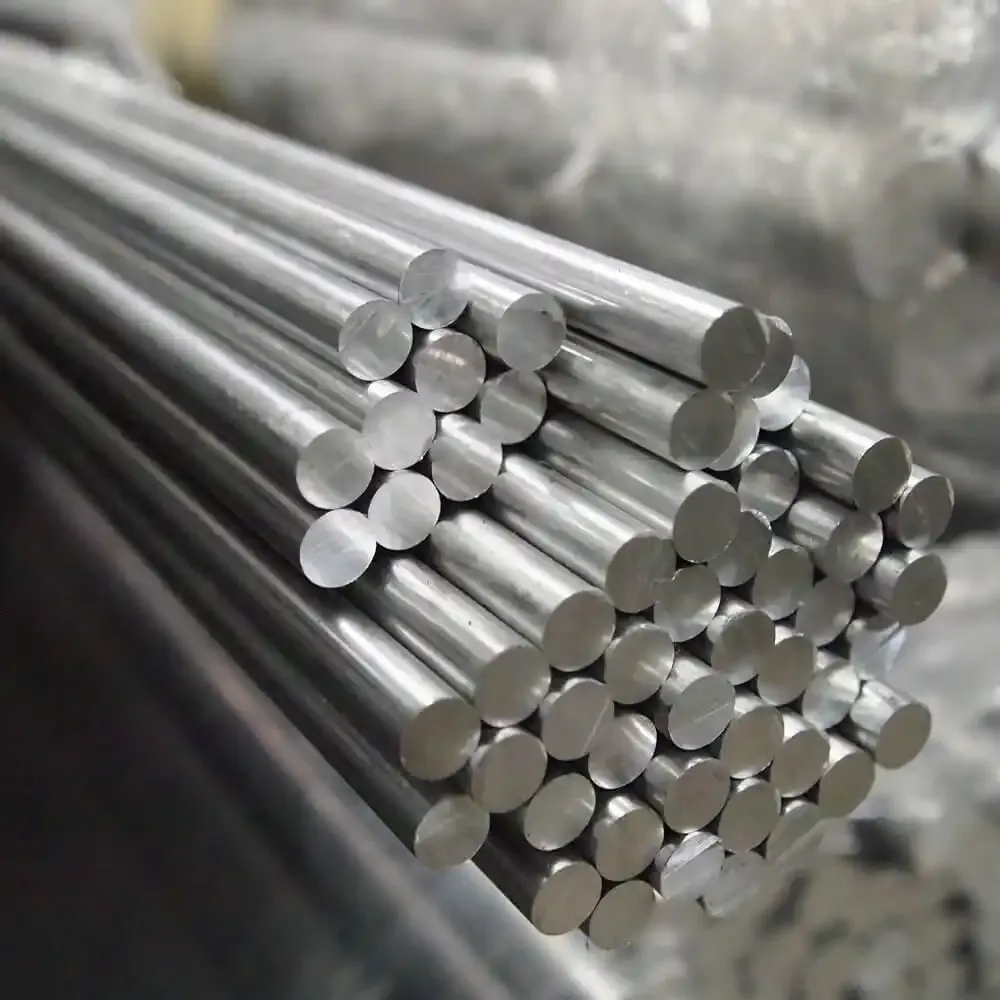
2. How Nickel Alloys Maintain Performance at High Temperatures
High-temperature service creates several challenges for metallic components. Increasing temperature can reduce strength, accelerate oxidation, promote diffusion and cause microstructural changes. Under sustained stress, materials may also experience creep or creep rupture.
Nickel-based high-temperature alloys are designed to manage some of these challenges through their matrix composition and strengthening mechanisms.
2.1 High-temperature strength
Strength at elevated temperature depends on alloy chemistry, microstructure, product form, heat treatment and the actual test or service conditions.
Some nickel-based superalloys use precipitation strengthening. In these materials, carefully controlled phases within the nickel-based matrix help resist deformation at elevated temperatures.
Other nickel alloys rely primarily on solid-solution strengthening or other metallurgical mechanisms. The appropriate strengthening approach depends on the intended application and the specific alloy.
A useful engineering distinction is that room-temperature tensile strength does not establish long-term high-temperature suitability. Designers may also need data for creep, stress rupture, fatigue and thermal exposure.
2.2 Resistance to creep
Creep is time-dependent deformation under sustained stress, often becoming important at elevated temperatures.
Components such as furnace parts, heat exchangers, turbine components and high-temperature pressure equipment may experience prolonged thermal and mechanical exposure. A material's creep resistance is affected by temperature, stress, grain structure, precipitates and service history.
The required creep performance cannot be inferred from the alloy name alone. It should be evaluated using data applicable to the relevant temperature, stress range, product form and material condition.
2.3 Microstructural stability
High-temperature exposure can alter the phases and grain structure of an alloy. These changes may affect ductility, strength, weldability or corrosion behavior.
For this reason, a high-temperature material assessment should consider not only initial mechanical properties but also how the material may change during its expected service life.
The Nickel Institute identifies creep strength, creep rupture, thermal fatigue, thermal shock resistance, oxidation and other environmental properties as important considerations when selecting materials for elevated-temperature applications.
3. How Alloying Elements Improve Corrosion Resistance
Nickel provides a versatile base, but many of the corrosion and oxidation properties of nickel alloys depend on the combined effects of alloying elements.
The same element may contribute differently depending on the alloy's composition and the environment in which it is used.
3.1 Chromium: Oxidation resistance and passivation
Chromium is widely used in corrosion-resistant and high-temperature alloys.
In suitable environments, chromium can promote the formation of protective chromium-rich oxide films. These films may slow further oxidation or corrosion, although their protective behavior depends on temperature, atmosphere, alloy chemistry and exposure conditions.
Chromium also plays an important role in the corrosion resistance of many nickel-chromium and nickel-chromium-molybdenum alloys.
The Nickel Institute identifies nickel-chromium alloys as materials with high resistance to corrosion at normal and elevated temperatures, including resistance to high-temperature scaling in appropriate applications.
3.2 Molybdenum: Resistance in selected aggressive environments
Molybdenum is an important alloying element in several corrosion-resistant nickel alloy families.
It is particularly relevant to the resistance of selected alloys in reducing acids and to localized corrosion behavior in certain environments. Its effects must be evaluated together with chromium, tungsten and the remainder of the alloy composition.
For example, Hastelloy C-276 (UNS N10276) is a nickel-chromium-molybdenum alloy recognized for corrosion resistance in reducing acids. Its suitability still depends on the specific chemicals, concentrations, temperatures and service conditions.
Research on nickel-based alloys indicates that chromium, molybdenum and tungsten can influence protective oxide behavior and localized corrosion resistance. The effect of each element is not universal across all environments.
3.3 Iron, copper and other elements
Iron and copper are used in different nickel alloy families to tailor performance.
Nickel-copper alloys such as Alloy 400 are used in selected marine and chemical-processing applications. Nickel-chromium-iron alloys are used for various combinations of corrosion resistance and elevated-temperature performance.
Other additions, including cobalt, tungsten, titanium and aluminum, may contribute to strengthening, oxidation behavior or specific high-temperature properties.
The effect of alloying should be assessed as part of the complete composition rather than by assuming that increasing a single element will always improve performance.
4. High-Temperature Resistance Is Not the Same as Corrosion Resistance
One of the most important distinctions in nickel alloy selection is the difference between high-temperature oxidation resistance and resistance to aqueous or chemical corrosion.
These mechanisms can occur under different conditions and require different material-selection criteria.
|
Performance requirement |
What engineers need to evaluate |
|---|---|
|
High-temperature oxidation |
Temperature, atmosphere, exposure duration, oxide stability |
|
Reducing-acid corrosion |
Acid chemistry, concentration, temperature, contaminants |
|
Chloride-related corrosion |
Chloride level, temperature, pH, oxygen and stress |
|
High-temperature sulfidation |
Sulfur activity, gas composition, temperature and exposure |
|
Creep resistance |
Temperature, sustained stress, duration and microstructure |
|
Thermal fatigue |
Temperature cycling, geometry, stress concentration and material properties |
A material that performs well against one corrosion mechanism may be vulnerable to another. Similarly, an alloy selected for high-temperature oxidation resistance may not be the appropriate choice for a specific aqueous chemical environment.
The ASM Handbook identifies high-temperature corrosion modes including oxidation, carburization, metal dusting, sulfidation, nitridation, halogen attack and molten-salt corrosion. It also emphasizes that nickel alloy corrosion performance varies by environment.
5. Which Nickel Alloys Are Used in Demanding Environments?
Nickel alloys are not one uniform material category. Different alloy families are developed for different combinations of temperature, corrosion resistance, strength and manufacturing requirements.
The following examples illustrate common material-selection considerations. They are not universal service-temperature limits or automatic recommendations.
|
Alloy family or grade |
General material focus |
Selection consideration |
|---|---|---|
|
Nickel-chromium alloy with useful high-temperature corrosion resistance |
Evaluate atmosphere, temperature and mechanical requirements |
|
|
Nickel-chromium alloy used for oxidation and corrosion resistance |
Consider oxidizing conditions and required mechanical performance |
|
|
High-temperature strength and aqueous corrosion resistance |
Check temperature, stress, fabrication and chemical exposure |
|
|
Hastelloy C-276, UNS N10276 |
Corrosion resistance in various aggressive chemical environments |
Assess acid chemistry, localized corrosion and processing condition |
|
Alloy 400, UNS N04400 |
Nickel-copper alloy used in marine and chemical applications |
Confirm suitability for the actual chemical environment |
|
Nickel-chromium-iron alloys |
High-temperature strength and oxidation or corrosion resistance, depending on grade |
Select the grade according to service conditions and specifications |
The Nickel Institute provides descriptions of these alloy families and their different application characteristics. Specific performance claims should be supported by the relevant grade specification and technical data.
Why Inconel 625 and Hastelloy C-276 should not be treated as interchangeable
Inconel 625 and Hastelloy C-276 are both nickel-based alloys, but they are not identical in composition, strengthening approach or intended performance balance.
Inconel 625 is widely recognized for a combination of high-temperature strength and aqueous corrosion resistance. C-276 is a nickel-chromium-molybdenum alloy associated with corrosion resistance in various aggressive chemical environments.
The selection between them requires more than comparing their nominal nickel content. The engineer should assess the required corrosion resistance, operating temperature, mechanical loads, welding or forming requirements, and applicable product specification.
A broad claim that one alloy is "better" without defining the service conditions is not technically meaningful.
6. Why Temperature Changes Corrosion Behavior
Temperature affects both the chemical environment and the material itself. Increasing temperature can accelerate chemical reactions, change the stability of protective surface films and influence diffusion, phase transformations and corrosion kinetics.
This is why corrosion data obtained at room temperature should not automatically be treated as representative of high-temperature service.
6.1 Aqueous corrosion at elevated temperature
In aqueous systems, temperature can affect corrosion rates, solution chemistry and the stability of surface films. Chloride-containing environments may present additional risks, depending on the alloy and operating conditions.
For nickel-chromium-molybdenum alloys, research has examined the roles of chromium, molybdenum and tungsten in localized corrosion resistance at elevated temperatures. The effects depend on the alloy system and exposure conditions.
6.2 Oxidation in gas atmospheres
In high-temperature gas service, oxidation and other forms of attack may occur. The protective nature of an oxide layer depends on the alloy composition and the atmosphere.
A material selected for air oxidation resistance may respond differently in an environment containing sulfur, carbon-bearing gases, halogens or other reactive species.
High-temperature material selection therefore needs to consider the actual atmosphere, not merely the nominal operating temperature.
6.3 Thermal cycling
Industrial equipment may experience repeated heating and cooling rather than constant-temperature service.
Thermal expansion, thermal gradients and differences in local restraint can create stresses. Repeated thermal cycling may contribute to fatigue or damage to protective surface layers.
The design assessment should consider the number of cycles, temperature range, component geometry, heating and cooling rates, and the material's fatigue characteristics.
7. Corrosion-Resistant Nickel Alloys for Chemical Processing
Chemical-processing equipment often operates in environments where chemical composition, concentration and temperature vary throughout the process.
Nickel alloys can be selected for their resistance to specific chemical environments, including certain acids, alkaline solutions and chloride-containing conditions.
However, no single alloy is resistant to every chemical combination.
7.1 Reducing and oxidizing conditions
The distinction between reducing and oxidizing environments is important in corrosion engineering.
Some nickel-molybdenum alloys are designed for resistance in reducing acid environments, while chromium-containing nickel alloys can offer useful resistance under selected oxidizing conditions.
The presence of oxidizing ions, dissolved oxygen, contaminants or changes in process chemistry can influence corrosion behavior.
An engineer should evaluate the complete operating environment instead of selecting an alloy solely because it is described as "acid resistant."
7.2 Localized corrosion
Localized corrosion includes forms such as pitting and crevice corrosion. These attacks can cause substantial damage even when general corrosion rates appear relatively low.
The risk depends on the alloy, solution chemistry, temperature, geometry and other environmental factors.
For components exposed to chloride-containing environments, the design should consider localized corrosion resistance and possible environmentally assisted cracking where relevant.
ASM's discussion of nickel and nickel-base alloys identifies resistance to selected reducing acids and chloride-induced corrosion phenomena as important considerations in material selection.
8. Engineering Limitations: When Nickel Alloys May Not Be the Right Choice
Nickel alloys can provide useful performance in demanding environments, but they also introduce trade-offs.
8.1 Material cost
Nickel and alloying elements such as molybdenum and cobalt can increase material cost. The economic justification depends on service life, maintenance requirements, downtime risk and the consequences of material failure.
A lower-cost material may be suitable when the environment and operating conditions are less demanding. Conversely, a more corrosion-resistant alloy may be justified where replacement or unplanned shutdown costs are significant.
8.2 Fabrication and machining
Nickel alloys may require careful control of machining, forming, welding and heat treatment.
The processing requirements depend on the alloy grade and product form. Welding procedures, thermal input, joint design and post-weld requirements may affect the finished component's properties.
Buyers should specify whether the material is intended for machining, forming, welding, forging or another manufacturing route.
8.3 Welding and heat-affected regions
Welding can change microstructure and may influence corrosion performance or mechanical properties in the weld metal and heat-affected regions.
The applicable welding procedure and post-weld requirements depend on the alloy and service environment. A corrosion-resistant base material should not be assumed to guarantee identical performance in every welded configuration.
For applications where welding is important, engineers should assess the alloy's weldability, joint requirements and relevant inspection criteria.
8.4 Environmental cracking
Some nickel alloys may experience environmentally assisted cracking under specific combinations of material condition, stress and environment.
The absence of general corrosion does not automatically establish immunity to all cracking mechanisms.
Material selection should consider the actual service conditions and applicable technical guidance.
9. How Engineers Should Select a Nickel Alloy
A suitable nickel alloy should be selected using a defined set of operating and manufacturing requirements.
The following framework helps organize the initial assessment.
-
Define the operating temperature
Record the minimum, normal and maximum temperatures, including expected excursions and thermal cycles.
-
Identify the chemical environment
Document the chemicals, concentrations, pH, pressure, moisture, contaminants and expected changes during operation.
-
Determine mechanical requirements
Consider tensile strength, yield strength, creep, fatigue, toughness and other properties relevant to the loading conditions.
-
Specify the product form
Identify whether the component requires bar, rod, plate, sheet, tube, pipe, wire, strip, coil, forging or another form.
-
Confirm material condition and processing
Specify relevant heat treatment, surface condition, dimensional tolerances, forming or machining requirements.
-
Review standards and inspection documents
Determine the applicable material specification, testing requirements, traceability and documentation before placing an order.
This framework is a starting point rather than a substitute for detailed engineering evaluation, corrosion testing or applicable design codes.
10. What Should Buyers Include in a Nickel Alloy RFQ?
A technically complete RFQ helps suppliers evaluate feasibility, identify the appropriate material and provide a more useful quotation.
The required details will vary by application, but the following information is generally helpful.
|
RFQ item |
Information to provide |
|---|---|
|
Alloy grade |
Grade name and UNS designation, if applicable |
|
Product form |
Bar, plate, sheet, tube, pipe, wire, strip or forging |
|
Dimensions |
Diameter, thickness, width, length or drawing reference |
|
Quantity |
Pieces, total length, weight or other applicable quantity |
|
Material condition |
Annealed, solution treated, cold worked, aged or other required condition |
|
Standard |
Applicable ASTM, ASME, AMS or other specification |
|
Testing |
Mechanical, chemical, dimensional or special inspection requirements |
|
Documentation |
MTC, certificate type, traceability and other required records |
|
End use |
General industrial application and relevant operating environment |
|
Delivery requirements |
Destination, requested delivery schedule and commercial terms |
MWalloys can assess nickel alloy sourcing and customized requirements based on the requested grade, product form, dimensions and specifications. Availability, production route, documentation and lead time should be confirmed for each individual inquiry rather than assumed in advance.
For a procurement request, providing the required grade, dimensions, material condition and standard is generally more useful than requesting a quotation using only a broad description such as "high-temperature nickel alloy."
11. Why Product Form and Material Condition Matter
Nickel alloy performance is not determined by chemical composition alone.
The product form and material condition may affect mechanical properties, processing behavior, dimensional accuracy and suitability for the intended application.
For example, a round bar intended for machining may have different dimensional and condition requirements from a plate intended for fabrication. A cold-worked product may have different properties from an annealed product of the same alloy grade.
When preparing a purchase specification, engineers should distinguish between:
-
The alloy grade and chemical composition.
-
The applicable product specification.
-
The required heat treatment or material condition.
-
The dimensional and surface requirements.
-
The required inspection and certification documents.
A supplier's confirmation should be based on the complete requested specification, not just the alloy designation.
12. Nickel Alloys in Industrial Applications
Nickel alloys are used across a range of industrial environments where corrosion resistance, temperature performance or mechanical reliability is required.

Chemical processing
Equipment and components may require resistance to specific acids, alkaline solutions and mixed chemical environments. Alloy selection depends on the chemical composition and operating conditions.

Heat treatment and furnace equipment
Selected high-temperature nickel alloys are used where resistance to oxidation, thermal exposure and mechanical degradation is required.

Power generation and energy systems
Certain nickel-based alloys are used for components exposed to elevated temperature, thermal cycling, corrosion or sustained mechanical loads.

Aerospace and high-temperature machinery
Nickel-based superalloys can be selected for specific combinations of high-temperature strength, creep resistance and environmental performance.
The precise suitability of an alloy for any application must be established from the relevant grade data, service conditions and design requirements.
13. How to Verify Technical Suitability Before Purchase
Before committing to a material, buyers and engineers should review the evidence supporting the proposed selection.
Material documentation
Check the alloy designation, chemical composition, material condition and applicable product standard.
Mechanical requirements
Confirm that available mechanical data correspond to the relevant product form and material condition. High-temperature design may require creep, stress-rupture or fatigue data rather than only room-temperature tensile properties.
Corrosion information
Review corrosion data for the specific chemical environment, temperature and exposure conditions. General alloy descriptions should not replace application-specific evaluation.
Processing and inspection
Confirm whether the material will be welded, machined, formed or otherwise processed. Determine the required inspection documents and traceability before order placement.
Technical limitations
Review the conditions under which the material may be vulnerable to corrosion, cracking, microstructural change or mechanical degradation.
A supplier can assist with identifying available grades and evaluating a sourcing request, but final material approval should follow the requirements of the responsible engineer, project specifications and applicable codes.
FAQ
1. Why are nickel alloys preferred for high-temperature applications?
Nickel alloys can retain useful mechanical properties at elevated temperatures, and selected grades provide resistance to oxidation and other high-temperature degradation mechanisms. Their suitability depends on the alloy composition, material condition, temperature, stress and environment.
2. Are all nickel alloys resistant to corrosion?
No. Corrosion resistance varies substantially among nickel alloy families. Different grades are designed for different chemical environments, and a material that performs well in one condition may not be appropriate in another.
3. What is the role of chromium in nickel alloys?
Chromium can promote protective oxide formation and contribute to corrosion resistance in appropriate environments. Its effect depends on the complete alloy composition and exposure conditions.
4. What is the role of molybdenum in corrosion-resistant nickel alloys?
Molybdenum contributes to corrosion resistance in selected alloy systems, particularly in certain aggressive environments. Its effect must be evaluated together with the other alloying elements and actual service conditions.
5. Is Inconel 625 suitable for corrosive environments?
Inconel 625 is known for a combination of high-temperature strength and aqueous corrosion resistance. Its suitability must be assessed against the required temperature, chemical exposure, stress and product specification.
6. Is Hastelloy C-276 suitable for high-temperature service?
Hastelloy C-276 is primarily recognized for its corrosion-resistant characteristics in various aggressive chemical environments. Whether it is suitable for a specific high-temperature application requires evaluation of temperature, mechanical requirements, corrosion conditions and material data.
7. What information should I include when requesting a nickel alloy quotation?
Include the alloy grade, UNS designation where applicable, product form, dimensions, quantity, material condition, standard, testing requirements, documentation and intended application. These details help the supplier assess the request more accurately.
8. Can nickel alloys be customized?
Certain nickel alloy sourcing and production requirements may be assessed based on the grade, dimensions, product form, specifications and requested material condition. Feasibility, availability and commercial terms require case-by-case confirmation.