

Maßgefertigter hochglanzpolierter Edelstahl mit Hochglanzpolitur bietet Oberflächenrauhigkeitswerte von nur Ra 0,05 µm, ein Reflexionsvermögen von mehr als 90% und eine Korrosionsbeständigkeit, die nach ASTM B117 Salzsprühnebel-Standards über 1.000 Stunden hinaus getestet wurde - was ihn zur definitiven Wahl für architektonische Verkleidungen, lebensmitteltaugliche Geräte, medizinische Instrumente und Luxuskonsumgüter macht. Bei MWalloys haben wir jährlich über 2.000 Tonnen hochglanzpolierten Edelstahl verarbeitet und können bestätigen, dass das Erreichen einer echten #8-Hochglanzpolitur mindestens fünf progressive Schleif- und Polierstufen, eine abgestimmte Legierungsauswahl und strenge Prozesskontrollen erfordert, die die meisten Standardwerke einfach nicht bieten.
Wenn Ihr Projekt die Verwendung von maßgefertigtem, hochglanzpoliertem Edelstahl erfordert, können Sie Kontaktieren Sie uns für ein kostenloses Angebot.
Was ist hochglanzpolierter Edelstahl und wie wird er klassifiziert?
Hochglanzpolierter Edelstahl ist eine mechanisch polierte Metalloberfläche, die so weit veredelt ist, dass sie das Licht mit nahezu optischer Klarheit reflektiert und im Wesentlichen wie ein Metallspiegel wirkt. Die Oberfläche wird nach internationalen Normen kategorisiert - am häufigsten ist die Oberfläche Nr. 8 nach ASTM A480/A480M und die entsprechende EN 10088-2 2J, die in Europa weit verbreitet ist.
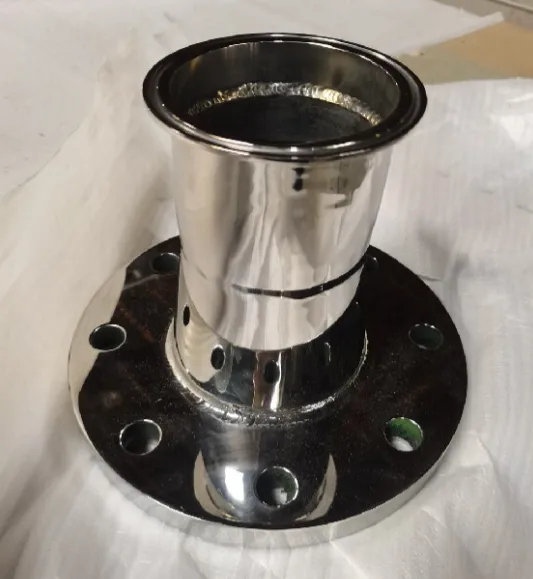
Das Nummerierungssystem für Oberflächenbehandlungen erklärt
Das Klassifizierungssystem für die Oberflächenbeschaffenheit von rostfreiem Stahl reicht von den rohen Walzoberflächen bis hin zu den polierten Oberflächen mit dem höchsten Reflexionsgrad. In der folgenden Tabelle sind die am häufigsten verwendeten Bezeichnungen zusammengefasst:
| Finish Bezeichnung | Beschreibung | Ra-Wert (µm) | Typische Anwendung |
|---|---|---|---|
| Nr. 1 | Warmgewalzt, geglüht, gebeizt | 3.0 - 6.0 | Industrielle Struktur |
| Nr. 2B | Kaltgewalzt, geglüht, gebeizt, leichtgewalzt | 0.1 - 0.5 | Allgemeine Herstellung |
| Nr. 4 | Gebürstet/satinierte Oberfläche, unidirektional | 0.2 - 0.8 | Küchenausstattung, Architekturpaneele |
| Nr. 6 | Äquivalent Tampon/Klebepaste | 0.3 - 0.6 | Dekorativ, Automobilverkleidung |
| Nr. 7 | Hochglanz, etwas Reflektivität verbleibend | 0.05 - 0.1 | Vorspiegeln, dekorativ |
| Nr. 8 | Spiegelnde Oberfläche, maximale Reflektivität | ≤ 0.05 | Architektur, Medizin, Luxusgüter |
| Nr. 8+ / Super Mirror | Ultra-raffiniert über den Standard Nr. 8 hinaus | ≤ 0.025 | Halbleiter, Optik, Premium-Dekor |
Quelle: ASTM A480/A480M Standard Specification for General Requirements for Flat-Rolled Stainless and Heat-Resisting Steel Plate, Sheet, and Strip; EN 10088-2:2014.
Der Ra-Wert (Roughness Average) ist das arithmetische Mittel der absoluten Werte der Profilabweichungen von der Mittellinie, gemessen in Mikrometern. Eine Spiegelglätte Nr. 8 mit Ra ≤ 0,05 µm bedeutet, dass die Oberflächenabweichungen weniger als 50 Nanometer betragen - eine Skala, die sich der Wellenlänge des sichtbaren Lichts selbst annähert.
Was bedeutet "Sonderanfertigung" im Zusammenhang mit hochglanzpoliertem Edelstahl?
Bei MWalloys umfasst der Begriff "Sonderanfertigung" wesentlich mehr als nur die Bestellung eines Blechs mit einer polierten Oberfläche. Maßgeschneiderte Produktion umfasst:
- Nicht-Standard-Abmessungen: Breiten über 1.500 mm, Dicken von 0,3 mm bis 80 mm und Zuschnitte bis zu 6.000 mm.
- Einseitiges vs. zweiseitiges PolierenFür Anwendungen wie die Innenausstattung von Aufzügen müssen beide Seiten auf Nr. 8 geschliffen werden, während für Bauplatten möglicherweise nur eine Seite behandelt werden muss.
- Kundenspezifische Substratvorbereitung: Beseitigung bereits vorhandener Oberflächenfehler, Schweißnähte oder Walzlinien vor Beginn des Polierens.
- SchutzfolienkaschierungSchutzfolien aus PE oder PVC unmittelbar nach dem Polieren anbringen, um Kratzer während des Transports und der Verarbeitung zu vermeiden.
- Profil- und Formularanpassung: Hochglanzpolierte Rohre, Winkel, Rundstäbe und kundenspezifische Formen, nicht nur flache Bleche.
Dieses Maß an Individualisierung ist der Punkt, an dem Handelsunternehmen oft versagen und an dem spezialisierte Verarbeiter wie MWalloys einen messbaren Mehrwert für die Lieferkette schaffen.
Welche Edelstahlsorten eignen sich am besten zum Hochglanzpolieren?
Nicht jede Edelstahlsorte eignet sich gleichermaßen für das Hochglanzpolieren. Die metallurgische Zusammensetzung, insbesondere der Kohlenstoffgehalt, der Schwefelgehalt und das Korngefüge, bestimmen sowohl die erreichbare Oberflächenqualität als auch die Schwierigkeit des Verfahrens.
Vergleich der Polierbarkeit nach Klassenstufen
| Klasse | Typ | Wichtige Legierungselemente | Bewertung der Polierbarkeit | Gemeinsame Spiegelanwendungen |
|---|---|---|---|---|
| 304 / 1.4301 | Austenitisch | 18% Cr, 8% Ni | Ausgezeichnet | Architektur, Lebensmittelausstattung, Dekoration |
| 316 / 1.4401 | Austenitisch | 18% Cr, 10% Ni, 2% Mo | Ausgezeichnet | Marine, Pharmazie, Medizin |
| 316L / 1.4404 | Austenitisch (kohlenstoffarm) | 18% Cr, 12% Ni, 2% Mo | Ausgezeichnet | Geschweißte medizinische Baugruppen |
| 430 / 1.4016 | Ferritisch | 17% Cr | Gut | Architekturpaneele für Innenräume |
| 201 / 1.4372 | Austenitisch (Mn-substituiert) | 17% Cr, 4% Ni, 6% Mn | Gut | Kostensensitives Dekor |
| 2205 / 1.4462 | Duplex | 22% Cr, 5% Ni, 3% Mo | Mäßig | Hochfeste Struktur |
| 310S / 1.4845 | Austenitisch (hoher Cr-Gehalt) | 25% Cr, 20% Ni | Mäßig | Hochtemperaturanwendungen |
Quelle: SSINA (Specialty Steel Industry of North America) Grade Selection Guide; Outokumpu Stainless Steel Handbook 2021.
Warum ist der Schwefelgehalt beim Spiegelpolieren wichtig?
Dies ist ein Punkt, den wir den Beschaffungsingenieuren nicht genug betonen können: Der Schwefelgehalt im Edelstahlsubstrat ist einer der kritischsten - und am häufigsten übersehenen - Faktoren, um eine makellose Hochglanzoberfläche zu erzielen.
Frei bearbeitbare Sorten (wie 303) enthalten Schwefelzusätze bis zu 0,15% nach Gewicht, um die Bearbeitbarkeit zu verbessern. Diese Schwefelzusätze bilden Mangansulfid (MnS)-Einschlüsse, die beim Polieren als dunkle Gruben oder Schlieren erscheinen. Laut einer in der Zeitschrift Korrosionswissenschaft (Band 52, Ausgabe 7, 2010) sind MnS-Einschlüsse die primären Keimstellen für Lochfraßkorrosion und wirken zudem als Spannungskonzentratoren, die das Erreichen einer kontinuierlichen, fehlerfreien Spiegeloberfläche verhindern.
Für echte Nr. 8-Spiegelbearbeitungen spezifizieren wir immer schwefelarme Sorten mit S ≤ 0,005% nach Gewicht. Die Standardsorten 304 und 316 erfüllen S ≤ 0,030%, was für die meisten Spiegelanwendungen akzeptabel ist, aber anspruchsvolle Arbeiten von optischer Qualität können die Bestellung von werkszertifiziertem Material mit eingeschränkten Schwefelhöchstwerten erfordern.
Austenitische vs. ferritische Güten für Spiegelanwendungen
Austenitische Güten (304, 316) dominieren den Hochglanzmarkt aus mehreren Gründen:
- Nicht-magnetische Struktur: Die kubisch-flächenzentrierte Kristallstruktur (FCC) erzeugt eine homogenere Oberfläche, die sich gleichmäßiger polieren lässt.
- Höherer Nickelgehalt: Nickel trägt zu einer glatteren passiven Oxidschicht bei, die Hochglanzpolituren leichter annimmt und beibehält.
- Bessere Duktilität: Austenitische Werkstoffe verformen sich plastisch, bevor sie brechen, was bedeutet, dass polierende Schleifmittel die Oberfläche abschleifen, anstatt die Kristallite zu brechen, was zu niedrigeren Ra-Werten führt.
Ferritische Sorten (430, 439) können Hochglanzoberflächen erzielen, aber die kubisch-raumzentrierte Struktur (BCC) führt zu einem leicht anisotropen Polierverhalten, und das Erreichen von Ra-Werten unter 0,05 µm erfordert eine bessere Prozesskontrolle. Für dekorative Anwendungen im Innenbereich, bei denen die Kosten eine Rolle spielen, ist die Hochglanzoberfläche 430 durchaus akzeptabel. Für Außenanwendungen oder korrosive Umgebungen bleibt 316L die eindeutige Empfehlung.
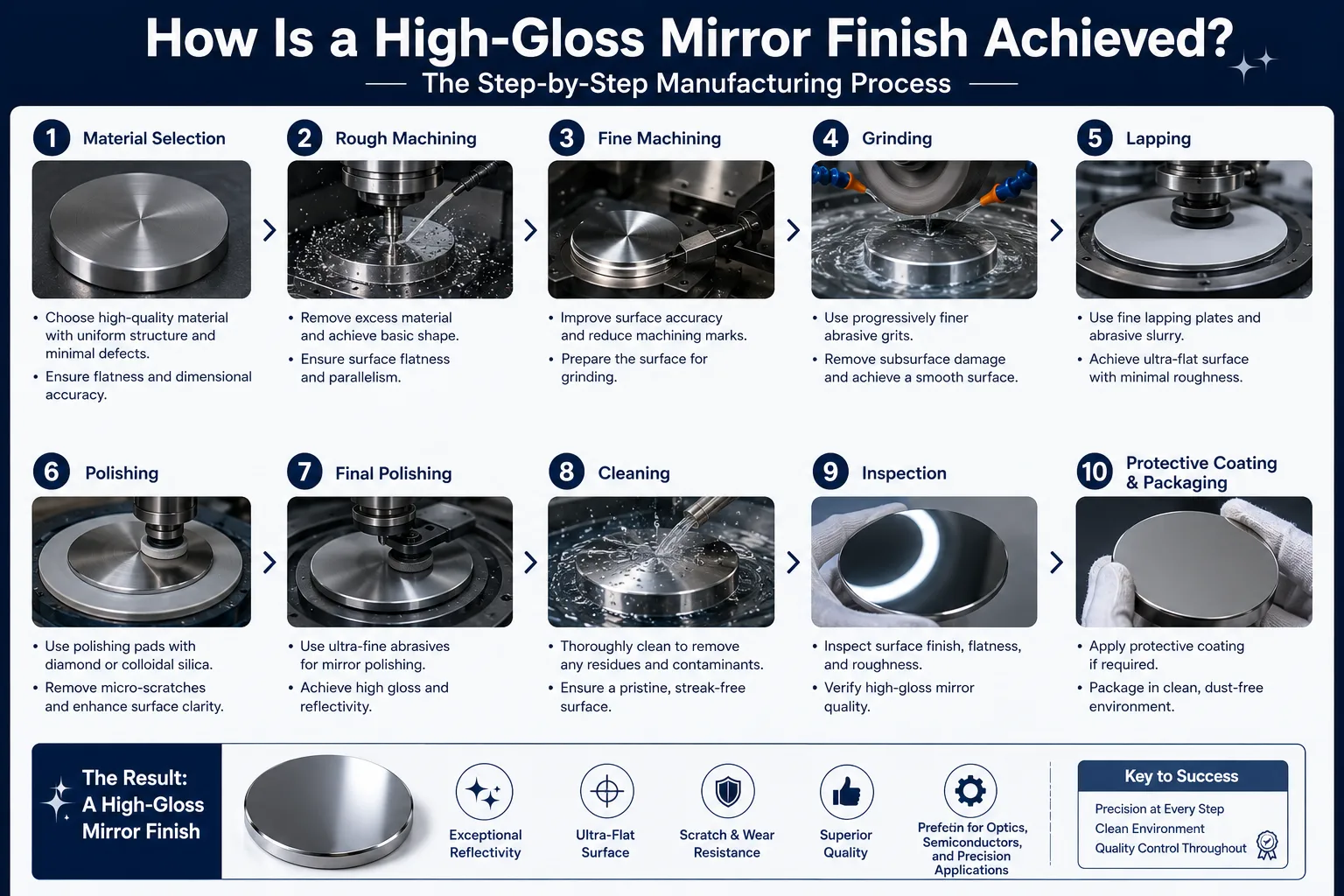
Wie wird eine hochglänzende Spiegeloberfläche erreicht? Der schrittweise Herstellungsprozess
Die Herstellung einer echten Nr. 8-Spiegeloberfläche ist nicht nur ein einziger Polierschritt - es ist ein sorgfältig aufeinander folgender Materialabtrag und Oberflächenveredelungsprozess. Bei MWalloys befolgen wir einen mindestens fünfstufigen Prozess für Standard-Spiegelarbeiten, mit zusätzlichen Stufen für Super-Spiegel-Spezifikationen.
Stufe 1 - Vorbereitung des Substrats und Eingangskontrolle
Bevor ein Schleifmittel das Metall berührt, führen wir ein Verfahren durch:
- Sichtprüfung unter einer Beleuchtung von mindestens 500 Lux auf Kratzer, Dellen, Einschlüsse oder Walzfehler.
- Überprüfung der Dicke mit kalibrierten digitalen Mikrometern (Genauigkeit ±0,001 mm).
- Überprüfung der Härte anhand der Rockwell-B-Skala (Standard 304 sollte 85-90 HRB anzeigen).
- Chemische Überprüfung mittels tragbarem XRF (Röntgenfluoreszenz)-Analysator zur Bestätigung der Qualität.
Jeder Substratfehler, der in dieser Phase nicht behoben wird, vergrößert sich durch den Polierprozess. Ein 50 µm tiefer Kratzer auf dem eingehenden 2B-Blech erfordert die Beseitigung von mindestens 100 µm Material, was sich auf die Maßtoleranzen auswirkt.
Stufe 2 - Grobschleifen (Körnung P120-P180)
In der ersten Schleifstufe werden Aluminiumoxid- oder Siliziumkarbid-Bänder oder -Scheiben mit einer Körnung von P120 bis P180 zum Entfernen verwendet:
- Reste von Walzwerkszunder.
- Oberflächenkratzer von früherer Bearbeitung.
- Schweißraupenprofile (für kundenspezifisch gefertigte Baugruppen).
In diesem Stadium liegt der Ra-Wert typischerweise zwischen 0,5 und 1,5 µm - die Oberfläche sieht gleichmäßig zerkratzt aus mit sichtbaren, gerichteten Schleifspuren. Bandgeschwindigkeit, Anpressdruck und Vorschubgeschwindigkeit werden kontrolliert, um eine Überhitzung zu vermeiden. Eine Wärmezufuhr von mehr als ca. 150 °C kann bei der Sorte 304 zu einer Sensibilisierung führen, bei der sich Chromkarbide an den Korngrenzen ablagern (ein Phänomen, das als "Schweißnahtverfall" oder Sensibilisierung bekannt ist und in der ASTM A262 Practice A (Prüfung der Anfälligkeit für interkristallinen Angriff) beschrieben wird).
Stufe 3 - Zwischenschleifen (Korn P240-P400)
Durch die schrittweise Reduzierung der Körnung wird das Kratzermuster der vorherigen Stufe entfernt. Jede nachfolgende Körnung sollte Kratzer entfernen, die etwa 2-3 Mal tiefer sind als ihre eigene Kratzertiefe. Diese Stufe umfasst in der Regel zwei oder drei Kornwechsel (P240, dann P320, dann P400).
Nach dem P400-Schleifen:
- Ra-Wert: 0,1-0,3 µm.
- Die Oberfläche erscheint halbglänzend mit feinen, gleichmäßigen Kratzspuren.
- Unter 10-facher Vergrößerung sollten die Kratzermuster gleichmäßig unidirektional sein.
Stufe 4 - Feinpolieren (P600-P1200 und Schleifmittel)
Feinpolieren ist der Übergang vom Materialabtrag zur Oberflächenveredelung. Wir verwenden:
- P600-P800 Schleifpapier oder Schleifbänder: Übergang zu feineren Kratzmustern.
- Flüssige Poliermittel: Chromoxid- oder Aluminiumoxid-Suspensionsmischungen mit einer Partikelgröße von 1-5 µm.
- Polierscheiben aus Baumwolle oder Sisal at speeds of 1,500–2,500 RPM.
At this stage, the surface Ra approaches 0.08–0.12 µm and begins to show noticeable reflectivity. Objects can be seen reflected in the surface, though with visible distortion.
Stufe 5 - Abschließendes Polieren und Spiegelentwicklung
The critical final stage uses:
- Fine buffing compounds: cerium oxide or diamond paste with particle sizes 0.1–0.5 µm.
- Soft cotton or felt buffing mops at controlled speeds.
- Consistent overlapping passes to prevent "orange peel" texture from inconsistent contact.
After final buffing, Ra values of ≤ 0.05 µm are verified. The surface should produce a clear, undistorted reflection of objects placed 1 meter away. We test this by placing a standard resolution test card (adapted from ISO 12233 principles) in front of the polished panel and photographing the reflection to document reflectivity quality.
Stufe 6 - Elektrolytisches Polieren (optional, für Super-Mirror-Spezifikationen)
For applications requiring Ra ≤ 0.025 µm (super-mirror), electropolishing follows mechanical polishing. Electropolishing is an electrochemical material removal process in which the workpiece serves as the anode in an electrolytic cell containing a phosphoric/sulfuric acid solution.
According to data published by the Metal Finishing Association (MFA Technical Report, 2019), electropolishing removes a uniform 10–30 µm layer, preferentially attacking microscopic surface asperities (peaks), which mathematically reduces Ra values. Benefits include:
- Ra reduction of 30–50% below the mechanically polished value.
- Improved corrosion resistance (passive layer thickness increases from ~2 nm to ~5 nm post-electropolish, per XPS surface analysis data)
- Elimination of surface contamination and embedded abrasives.
Schutzfolienanwendung
Immediately after polishing and before any handling, we apply a pressure-sensitive polyethylene (PE) or PVC film to all polished surfaces. Film peel adhesion strength is typically 50–150 g/cm² — enough to remain in place during fabrication but removable without surface adhesive residue after processing is complete.
Was sind die wichtigsten Normen zur Oberflächenbeschaffenheit und wie kann man sie lesen?
Specifying mirror-finish stainless steel without referencing the correct standard creates ambiguity that costs money and causes rejection. Here is how the major international standards compare:
Vergleich der internationalen Normen für Oberflächengüte
| Standard | Organisation | Mirror Designation | Ra Specification | Anmerkungen |
|---|---|---|---|---|
| ASTM A480/A480M | ASTM International | Nr. 8 | Not numerically specified in standard | Relies on visual comparators |
| EN 10088-2 | European Committee for Standardization | 2J | ≤ 0.1 µm (indicative) | More prescriptive than ASTM |
| JIS G 4305 | Japanische Industrienormen | BA, #800, #1000 | 0.03–0.1 µm | Common in Asian markets |
| ISO 1302 | International Organization for Standardization | N1–N12 scale | Ra numerically defined | Engineering drawing callout standard |
| DIN 8200 | Deutsches Institut für Normung e.V. | Rmax, Rz parameters | Rmax ≤ 0.5 µm for mirror class | Common in German-spec projects |
Source: ASTM International publication library; EN 10088-2:2014 Stainless steels — Technical delivery conditions for sheet/plate; JIS G 4305:2021.
Wie man eine korrekte Spezifikation der Oberflächenbeschaffenheit erstellt
When writing a purchase order or engineering drawing callout for mirror-finish stainless steel, we recommend including all of the following elements:
- Grundstoff: Grade and standard (e.g., 316L per ASTM A240/A240M)
- Finish designation: No. 8 per ASTM A480/A480M or 2J per EN 10088-2.
- Ra requirement: ≤ 0.05 µm (for No. 8) or ≤ 0.025 µm (for super-mirror)
- Inspection method: Contact profilometer (stylus) per ISO 4288 or non-contact optical profilometer.
- Sample size and acceptance: AQL (Acceptable Quality Level) per ANSI/ASQ Z1.4 sampling plan.
- Protective packaging: Specify PE film, interleaving paper, or foam packaging.
- Test reports required: Mill certificate (EN 10204 Type 3.1 or 3.2), surface roughness measurement reports.
Welche Branchen verwenden spiegelpolierten Edelstahl und warum?
Mirror-finish stainless steel is not a niche product. Its combination of aesthetics, corrosion resistance, hygiene, and mechanical strength makes it relevant across a wide range of industries.
Übersichtstabelle Industrieanwendungen
| Industrie | Typische Anwendung | Grade Used | Schlüsselanforderung |
|---|---|---|---|
| Architecture & Interior Design | Elevator interiors, wall cladding, column covers | 304, 316 | Aesthetics, flatness, scratch resistance |
| Lebensmittelverarbeitung | Tanks, hoppers, conveyor surfaces | 316L | Hygiene, cleanability, FDA compliance |
| Pharmazeutische | Reactors, sterile processing equipment | 316L, 316L ELI | Ra ≤ 0.5 µm (process), Ra ≤ 0.05 µm (ultra-clean) |
| Medizinische Geräte | Surgical instruments, implant-adjacent components | 316L, 17-4 PH | Biocompatibility, surface integrity |
| Automobilindustrie | Trim rings, exhaust tips, decorative components | 304, 430 | Formability post-polish, outdoor durability |
| Consumer Electronics | Watch cases, phone frames, decorative bezels | 316L, 17-4 PH | Surface uniformity, dimensional precision |
| Halbleiter | Vacuum chamber components, wafer handling | 316L, electropolished | Ultra-low Ra, particle contamination control |
| Maritime | Vessel fittings, deck hardware | 316, 2205 | Chlorid-Korrosionsbeständigkeit |
| Luxury Goods | Furniture, kitchenware, signage | 304, 316 | Visual uniformity, reflectivity |
Architektur und Innenarchitektur Anwendungen
Architectural applications represent the single largest volume market for mirror-finish stainless steel globally. According to a market analysis by Grand View Research (2023), the global architectural stainless steel market was valued at approximately USD 28.4 billion in 2022, with mirror-polished sheet accounting for an estimated 18–22% of the decorative segment.
Key architectural uses include:
Elevator cab interiors: The classic application. A standard 2.1 m × 1.4 m elevator cab interior requires approximately 8–10 panels of mirror-polished stainless steel. The challenge is maintaining consistent reflectivity across all panels — a variation in gloss level between panels is immediately visible to passengers. We source matched coils from the same production run when large elevator projects require multiple panels.
Curtain wall cladding: Large-format mirror-finish panels (up to 3,000 mm × 1,500 mm) are used as exterior cladding on premium commercial buildings. The reflective surface reduces solar heat gain by reflecting incident radiation — a properly polished No. 8 surface reflects 65–75% of solar radiation compared to 20–30% for a No. 2B surface, according to data from Lawrence Berkeley National Laboratory studies on building envelope materials.
Column covers and reception desks: Interior accent elements where the mirror surface creates the illusion of increased space and contributes to premium brand environments.
Anforderungen an Lebensmittel und pharmazeutische Qualität
The food processing and pharmaceutical industries have specific surface finish requirements driven by hygiene rather than aesthetics, though the two often align.
The FDA's Code of Federal Regulations (21 CFR Part 117) requires that food contact surfaces be "smooth and easily cleanable." The European Hygienic Engineering and Design Group (EHEDG) Document 8 provides quantitative guidance: food contact surfaces should achieve Ra ≤ 0.8 µm minimum, with critical applications specifying Ra ≤ 0.4 µm.
For pharmaceutical applications, the ASME BPE (Bioprocessing Equipment) Standard, most recently revised in 2022, specifies:
- SF1 (standard food): Ra ≤ 0.8 µm
- SF2 (pharmaceutical-grade): Ra ≤ 0.5 µm
- SF3 (ultra-clean): Ra ≤ 0.25 µm
- SF4 (ultra-high purity): Ra ≤ 0.125 µm
Mirror-finish polishing producing Ra ≤ 0.05 µm exceeds all ASME BPE categories, which is why pharmaceutical customers often specify mirror polishing on internal vessel surfaces, not for aesthetics but for validated cleanability and resistance to biofilm formation.
Wie wirken sich die Optionen zur Maßanpassung auf Leistung und Kosten aus?
Understanding how dimensional parameters interact with polishing costs and performance helps procurement teams make informed trade-offs. This section breaks down the key variables.
Dicke und ihr Einfluss auf die Schwierigkeit des Polierens
| Dickenbereich | Polishing Challenge | Typical Ra Achievable | Relative Cost Premium Over 2B |
|---|---|---|---|
| 0.3 – 0.8 mm | High — thin material deflects under polishing pressure | 0.05 – 0.10 µm | +60–80% |
| 1.0 – 2.0 mm | Moderate — some flexibility, requires support backing | 0.04 – 0.08 µm | +40–60% |
| 2.0 – 6.0 mm | Low — rigid enough for stable polishing | 0.03 – 0.06 µm | +25–45% |
| 6.0 – 20 mm | Low to Moderate — heavy material handling requirements | 0.04 – 0.08 µm | +35–55% |
| >20 mm (plate) | Moderate — surface area is smaller relative to handling cost | 0.05 – 0.10 µm | +50–70% |
Thin gauges (below 1.0 mm) present particular challenges because the polishing contact force flexes the metal, creating inconsistent material removal and "waves" in the finished surface. We use vacuum-backed polishing tables for gauges below 0.8 mm to maintain flatness during polishing.
Überlegungen zu Breite und Länge
Standard polishing lines process widths up to 1,524 mm (60 inches). Custom widths beyond this require specialized wide-belt polishing systems or manual bench polishing, both of which affect:
- Production speed: wide-belt lines process at 2–8 meters per minute; manual bench polishing is typically 0.3–1.0 meter per minute.
- Surface consistency: automated lines produce more consistent Ra values across the width; manual polishing requires highly skilled operators to maintain uniformity.
- Vorlaufzeit: custom-width polishing may require dedicated machine setup time, adding 5–10 business days to standard lead times.
Kundenspezifisch gefertigte Formen: Rohre, Profile und komplizierte Formen
Mirror polishing is not limited to flat sheet and plate. We regularly produce mirror-finished:
- Round tubes: OD from 6 mm to 300 mm, using internal mandrel-supported polishing for seamless tube interiors (critical for food-grade piping).
- Square and rectangular tubes: Flat face polishing on each face, with edge treatment to maintain consistency around corners.
- Angle and channel sections: Polishing each flat face independently, with particular attention to the inside radii where abrasive access is limited.
- Custom laser-cut profiles: Mirror-finish sheet cut to complex geometries, with post-cutting edge deburring to prevent injury and maintain aesthetics.
The cost of polishing complex forms is typically 2–4× the cost of polishing equivalent flat sheet, reflecting the additional process time and skill required.
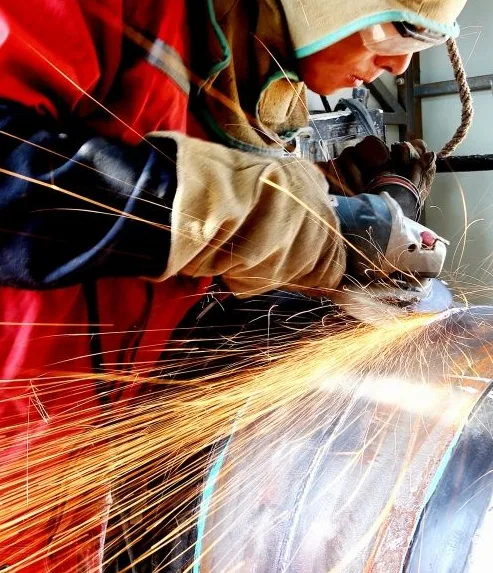
Welche Qualitätskontroll- und Inspektionsmethoden gewährleisten ein echtes Hochglanzfinish?
Quality control for mirror-finish stainless steel operates at three levels: in-process monitoring, final inspection, and documentation.
Methoden zur Messung der Oberflächenrauhigkeit
| Methode | Instrument | Standard | Genauigkeit | Am besten für |
|---|---|---|---|---|
| Contact Stylus Profilometry | Taylor Hobson Talysurf, Mitutoyo SJ series | ISO 4288, ISO 25178 | ±5% | Production floor QC |
| Non-Contact Optical Profilometry | Zygo NewView, Keyence VK series | ISO 25178 | ±2% | Research, high-precision inspection |
| White Light Interferometry | Bruker ContourGT | ISO 25178 | ±1% | Semiconductor, aerospace validation |
| Atomic Force Microscopy (AFM) | Bruker Dimension Icon | ISO 25178 | ±0.1 nm | Super-mirror, R&D |
For production quality control, contact stylus profilometry per ISO 4288 is the industry standard. The stylus tip radius is typically 2 µm, and the measurement cutoff wavelength (λc) is selected based on the expected roughness scale — for mirror-finish work, λc = 0.25 mm or 0.08 mm is typical.
Protokolle für visuelle Inspektionen
Numerical Ra alone does not fully characterize a mirror finish. Visual inspection remains essential for detecting:
- Orange peel texture: A macro-scale waviness pattern from inconsistent buffing pressure.
- Haze or cloudiness: Sub-surface stress from aggressive polishing without adequate compound progression.
- Linear scratches: From abrasive contamination in buffing wheels or compounds.
- Staining or discoloration: Heat tint from excessive polishing speeds, or acid residue from electrolytic polishing.
Our standard visual inspection is conducted under:
- White fluorescent light at 1,000 lux minimum.
- Inspection angle: 45° incidence, 45° reflection geometry.
- Viewing distance: 500 mm to 1,000 mm.
- Accept/reject criteria documented against ASTM A480 visual quality standards.
Überprüfung von Ebenheit und Welligkeit
For architectural panels, flatness is as critical as surface roughness. A mirror-finish panel with poor flatness distorts reflections dramatically — what appears to be a minor 1 mm bow in a 1,000 mm panel creates visible image distortion in the reflection.
We measure flatness using:
- Precision granite surface plates per ISO 8512 for small panels.
- Laser scanning for large panels (> 1,000 mm × 1,000 mm)
- Specified maximum flatness tolerance: ≤ 1 mm per 1,000 mm for architectural grade.
Wie schneidet spiegelpolierter Edelstahl im Vergleich zu Alternativen ab?
Buyers frequently evaluate mirror-finish stainless steel against other high-gloss materials. Here is an objective comparison:
Materialvergleich für Hochglanzanwendungen
| Eigentum | Mirror SS 316L | Chromium-Plated Steel | Anodized Aluminum | PVD-Coated SS | Acrylic/Polycarbonate |
|---|---|---|---|---|---|
| Reflexionsvermögen | 85–92% | 70–80% | 70–85% (dependent on dye) | 60-80% | 90–92% (transparent) |
| Korrosionsbeständigkeit | Excellent (Cl- resistant) | Poor in Cl- environment | Good (indoor), Moderate (marine) | Ausgezeichnet | Gut |
| Scratch Hardness (Mohs scale) | 5.5-6.5 | 5–6 | 3–4 (anodize layer) | 7–8 (TiN PVD) | 2-3 |
| Maximale Betriebstemperatur | 870°C (304), 925°C (310) | 200°C max | 150°C | 400°C | 80–120°C |
| Hygienic Compliance | FDA, EHEDG, ASME BPE | Not suitable for food contact | FDA compliant (uncoated) | Anwendungsspezifisch | FDA-approved grades exist |
| Wiederverwertbarkeit | 100%, high scrap value | Complex (hazardous Cr plating) | 100% | 100% (base metal) | Limited, low value |
| Typical Cost (relative) | 1.0× (baseline) | 0.7–0.9× | 0.5–0.7× | 1.2–1.5× | 0.2–0.4× |
| Lifespan (outdoor) | 20–50+ years | 5-10 Jahre | 10–20 years | 15–30 years | 5-15 Jahre |
Source: Materials Properties Database, ASM International; ASTM performance data; European Coatings Journal (2020).
Wann sollten Sie sich für eine Hochglanzbeschichtung von Edelstahl gegenüber einer PVD-Beschichtung entscheiden?
This is a question we encounter regularly from architects and designers. PVD (Physical Vapor Deposition) coating applies a thin film (typically 1–5 µm) of titanium nitride, chromium nitride, or similar compounds over a polished stainless steel substrate. The result can be mirror-bright with decorative colors (gold, rose gold, black, bronze).
Choose mirror-finish stainless (uncoated) when:
- The application requires weldability without color change at heat-affected zones.
- Regular refinishing or rebuffing may be needed after installation.
- Budget constraints make PVD's 20–50% cost premium prohibitive.
- Food contact is required (PVD coatings must be specifically tested for food contact compliance).
Choose PVD-coated mirror stainless when:
- Colored metallic surfaces are specified (architectural design requirements)
- Enhanced surface hardness is needed (TiN PVD reaches 2,300 HV, versus 200 HV for polished 304)
- Long-term scratch resistance is prioritized in high-traffic public environments.
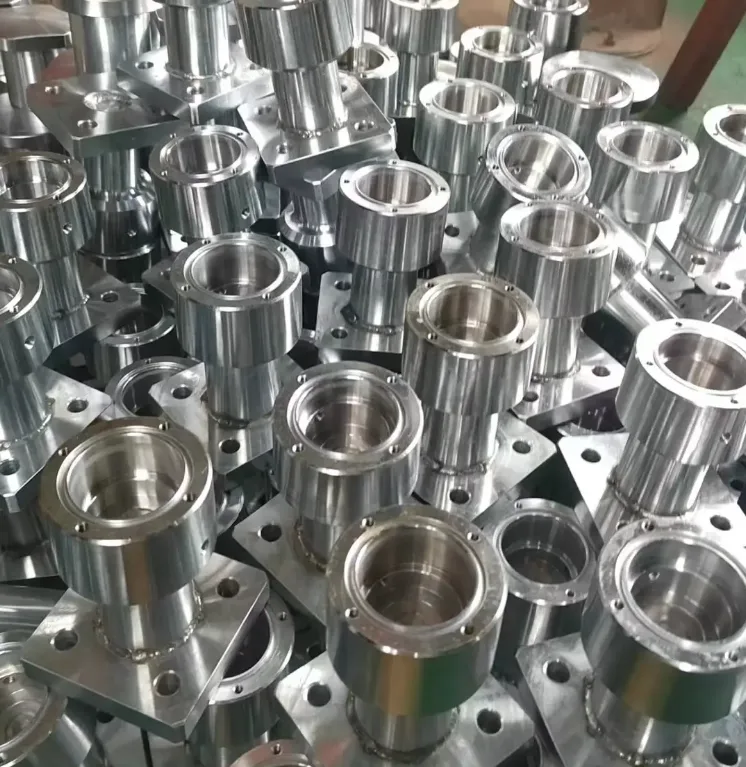
Was sind die Wartungs- und Pflegeanforderungen für hochglanzpolierte Oberflächen?
Mirror-finish stainless steel requires more careful maintenance than lower-finish alternatives, but the maintenance procedures are straightforward when followed correctly.
Empfehlungen für die routinemäßige Reinigung
| Contaminant Type | Recommended Cleaning Agent | Methode | Frequenz |
|---|---|---|---|
| Fingerprints, oils | Mild detergent solution (0.5–1% neutral pH) | Soft microfiber cloth, wipe in polishing direction | Daily to weekly |
| Water spots, mineral deposits | Diluted white vinegar (1:4 with water) or proprietary stainless cleaner | Apply, dwell 2 minutes, wipe with grain | As needed |
| Light surface marks | Specialized stainless polish (e.g., Flitz, Bar Keepers Friend liquid) | Apply with soft cloth, buff out | Monthly |
| Graffiti, adhesive residue | Isopropyl alcohol (IPA, 70%) or acetone (test in hidden area first) | Apply with lint-free cloth | As needed |
| Rust staining (from carbon steel contact) | Oxalic acid-based cleaner or citric acid solution | Apply, 10-minute dwell, rinse thoroughly | As needed |
What to avoid: Never use chloride-based bleach solutions, steel wool or carbon steel brushes, abrasive powder cleaners, or cross-grain wiping patterns. Chloride ions from bleach solutions attack the passive chromium oxide layer, initiating pitting corrosion even in 316-grade stainless.
Restaurierung von zerkratzten Spiegeloberflächen
Minor scratches (< 5 µm depth) in mirror-finish stainless can be rebuffed on-site using:
- Automotive-grade polishing compound (Stage 1: cutting compound, Stage 2: polishing compound).
- Orbital polisher with foam pad.
- Final polishing with microfiber cloth and dedicated stainless mirror polish.
For deeper scratches requiring abrasive grinding, on-site restoration is typically impractical without specialized equipment, and panel replacement or professional re-polishing is recommended.
Wie beschaffen und spezifizieren Sie kundenspezifischen, spiegelpolierten Edelstahl von einem zuverlässigen Lieferanten?
Sourcing custom mirror-finish stainless steel involves evaluating technical capability, quality management systems, and supply chain reliability simultaneously.
Kriterien für die Lieferantenbewertung
| Kriterien | What to Verify | Verification Method |
|---|---|---|
| Quality Management System | ISO 9001:2015 certification minimum; IATF 16949 for automotive | Request current certificate |
| Material Traceability | EN 10204 Type 3.1 or 3.2 mill certificates | Review sample certificates |
| Polishing Capability | Demonstrated Ra ≤ 0.05 µm capability | Request CPK data or polishing qualification records |
| Surface Measurement Equipment | Calibrated profilometers with current calibration certificates | Audit or certificate review |
| Clean Room / Controlled Environment | Critical for super-mirror (Ra ≤ 0.025 µm) production | Facility audit |
| Packaging and Logistics | PE film application, appropriate crating, international shipping experience | Reference checks |
| Vorlaufzeit | Standard: 2–4 weeks; complex custom: 4–8 weeks | Confirm with order history |
Rote Fahnen bei der Bewertung von Lieferanten für Spiegeloberflächen
Based on our experience at MWalloys, common problems with under-qualified suppliers include:
- Inconsistent Ra across panel surfaces: Indicates poor process control or inadequate polishing equipment maintenance.
- Edge quality significantly lower than face quality: Suggests automated polishing without manual edge finishing — edges may be sharp or have inconsistent finish transitions.
- No surface roughness measurement reports: Relying solely on visual inspection is insufficient for engineering specifications.
- Inability to provide matched panels from same production run: Creates visible finish variation when panels are installed side by side.
- Missing or uncertified mill certificates: Cannot verify chemistry or mechanical properties of the base material.
MWalloys Custom Mirror-Finish Bestellverfahren
At MWalloys, our standard ordering workflow for custom mirror-finish stainless steel follows these steps:
- Technical consultation: We review your drawings, specifications, and application requirements. Our engineering team provides DFM (Design for Manufacturability) feedback within 2 business days
- Material sourcing: We procure certified base material from approved mill partners (Outokumpu, POSCO, Yieh United) with full 3.1 mill certificates.
- First Article Inspection (FAI): For new part numbers, we produce a sample panel for customer approval before full production.
- Production and in-process QC: Documented roughness measurements at each polishing stage.
- Final inspection and documentation package: Full dimensional report, surface roughness report, mill certificates, and photographic records.
- Protective packaging and shipping: PE film application, foam-lined crating for international shipments, with shock-indicating labels.
Häufig gestellte Fragen (FAQs)
1: Was ist der Unterschied zwischen einer Hochglanzpolitur Nr. 8 und einer Superspiegelpolitur?
A No. 8 mirror finish, as defined by ASTM A480/A480M, achieves a surface roughness Ra ≤ 0.05 µm through mechanical polishing using progressively finer abrasive compounds ending with buffing wheels and polishing rouge. It produces clear, undistorted reflections suitable for the vast majority of architectural, food-grade, and decorative applications. A super-mirror finish goes beyond No. 8 standards, achieving Ra values ≤ 0.025 µm — and in some semiconductor applications, Ra ≤ 0.010 µm — typically through a combination of mechanical polishing and electropolishing. The super-mirror specification adds 30–60% to processing costs and is primarily justified in semiconductor manufacturing, precision optics, and ultra-high vacuum (UHV) equipment where surface particle generation and outgassing must be minimized.
2: Wie lange hält eine Hochglanzoberfläche auf rostfreiem Stahl in Außenbereichen?
Mirror-finish 316L stainless steel in typical outdoor urban environments maintains its reflective appearance for 15–30 years with appropriate periodic maintenance. Key factors affecting longevity include chloride exposure (coastal environments accelerate surface dulling), UV radiation (minimal effect on stainless itself), and mechanical contact (foot traffic scratching on horizontal surfaces). Research conducted by the Nickel Institute (Technical Series No. 10 057, 2020) on 30-year installed stainless steel architectural panels in European cities found that 316L panels in non-coastal environments retained greater than 85% of original reflectivity with only annual cleaning. In aggressive marine environments (within 1 km of breaking surf), 2205 duplex or 904L alloy is recommended over standard 316L.
3: Kann hochglänzender Edelstahl geschweißt werden, ohne die Oberfläche zu zerstören?
Welding mirror-finish stainless steel assemblies requires careful procedural controls to protect the polished surfaces adjacent to weld zones. Yes, it can be welded, but the heat-affected zone (HAZ) will lose mirror finish and require post-weld re-polishing. Standard practice is to weld the fabricated assembly first, then polish the entire external surface to mirror finish. If post-fabrication polishing is impractical (large complex assemblies), masking tape and thermal barriers protect polished surfaces during welding of only the required joints, followed by localized re-polishing of the heat-affected zone. Precision TIG (GTAW) welding with inert gas back-purging minimizes the HAZ width to 5–15 mm, limiting the area requiring post-weld polishing.
The cost premium for No. 8 mirror finish over 2B finish stainless steel typically ranges from 25% to 80% depending on material thickness, panel size, order quantity, and complexity. For standard 304 grade in 1.5 mm thickness, common architectural panel sizes (1,000 × 2,000 mm), in quantities above 100 sheets, a realistic premium is 35–50% over 2B pricing. Super-mirror specifications add a further 30–60% over No. 8 pricing. Factors that increase the premium include thinner gauges (below 1.0 mm), complex shapes, two-sided polishing, and small order quantities below 10 sheets, which prevent efficient production batching. At MWalloys, we provide detailed cost breakdowns upon request so customers can make informed grade and finish trade-offs.
5: Beeinflusst das Hochglanzpolieren die mechanischen Eigenschaften von rostfreiem Stahl?
Mirror polishing has a negligible effect on the bulk mechanical properties of stainless steel (yield strength, tensile strength, elongation). However, surface polishing does measurably improve fatigue strength. Published research in the International Journal of Fatigue (Volume 96, 2017) demonstrated that electropolished 316L stainless steel showed a 15–25% improvement in fatigue limit compared to as-machined surfaces, attributed to compressive residual stress introduction and elimination of stress concentration sites. For thin gauge material below 0.5 mm, the material removal during polishing (typically 10–50 µm total) represents a meaningful percentage of total thickness, which must be accounted for in dimensional specifications. Always specify the final post-polish dimensions, not the pre-polish blank dimensions.
6: Mit welcher Mindestbestellmenge (MOQ) sollten Käufer für hochglanzpolierten Edelstahl nach Maß rechnen?
Minimum order quantities for custom mirror-finish stainless steel vary significantly by supplier and specification. For standard sheet sizes (1,000 × 2,000 mm or 1,220 × 2,440 mm) in common grades (304, 316L) and standard No. 8 finish, MOQs at specialist processors like MWalloys can be as low as 5–10 sheets, enabling prototype and small-project sourcing. For non-standard widths requiring dedicated polishing line setup, MOQs typically rise to 200–500 kg to justify setup costs. Super-mirror specifications with Ra ≤ 0.025 µm typically carry MOQs of 500 kg or greater due to electropolishing bath preparation costs. Custom cut-to-size shapes from stock mirror-finish sheet can often be sourced with no practical MOQ beyond the cut piece cost minimums (typically USD 50–100 per order).
7: Ist hochglanzpolierter Edelstahl lebensmittelecht und FDA-konform?
Yes, mirror-finish stainless steel in appropriate grades (304, 316L) is fully food safe and compliant with FDA regulations under 21 CFR Part 177.2600 (rubber articles intended for repeated use) and relevant EU food contact regulations (EU Regulation No. 10/2011, as amended). The Ra ≤ 0.05 µm surface roughness achieved in No. 8 mirror polishing far exceeds the Ra ≤ 0.8 µm threshold specified by EHEDG (European Hygienic Engineering and Design Group) for food contact surfaces, creating a surface that is exceptionally easy to clean and resistant to bacterial biofilm adhesion. Key consideration: the base stainless steel grade must be food-safe (304, 316, 316L), and no contaminants (polishing compounds, lubricants, protective film adhesives) should remain on surfaces after cleaning validation. Post-polishing cleaning certification documentation is available from MWalloys upon request.
8: Wie kann ich Fingerabdrücke und Flecken auf hochglanzpolierten Edelstahlinstallationen verhindern?
Fingerprints are an inherent challenge on mirror-finish stainless steel because the high-reflectivity surface makes any contamination visually prominent. Several approaches mitigate this in practice. First, specifying an anti-fingerprint (AFP) nano-coating applied over the mirror finish reduces visible fingerprint marks significantly — these oleophobic coatings, applied at 50–200 nm thickness via chemical vapor deposition or roll coating, do not measurably affect Ra values. Second, for high-touch applications (elevator buttons, handrails), a satin finish (No. 4 or No. 6) may be more practical than mirror finish, as the directional grain pattern masks fingerprints far better. Third, for installations where mirror finish is aesthetically required in high-touch areas, specifying a microfiber cloth cleaning protocol with daily cleaning schedules manages the issue operationally. AFP-coated mirror panels from MWalloys carry a 5-year coating performance warranty.
9: Welche Verpackung ist erforderlich, um sicherzustellen, dass der hochglanzpolierte Edelstahl ohne Schäden ankommt?
Mirror-finish stainless steel is significantly more vulnerable to transit damage than standard mill-finish material. Proper packaging should include: a pressure-sensitive PE or PVC protective film applied directly to the polished face (minimum 50 µm film thickness), foam interleaving between sheets when multiple panels are stacked, wooden crating or cardboard edge protectors to prevent corner impacts, and moisture-absorbing silica gel packets inside sealed packaging for ocean freight shipments. For international shipments by sea, additional consideration for vibration during container handling requires positive foam blocking between panels — sheets should not be free to move relative to each other. At MWalloys, we apply a dual-film system: a soft-face PE film directly on the polished surface, followed by a harder PVC outer film for transit protection. Shipment tracking and GPS shock monitoring is available for high-value orders.
10: Wie lässt sich überprüfen, ob es sich bei einem hochglanzpolierten Edelstahlprodukt wirklich um die angegebene Sorte handelt und nicht um eine substituierte niedrigere Legierung?
Grade verification is a legitimate concern in the stainless steel market, where 304 is occasionally substituted for 316L or carbon steel is plated to simulate stainless. The most reliable field verification methods are: (1) Portable XRF (X-Ray Fluorescence) analysis, which provides elemental chemistry results in 30–90 seconds and can definitively distinguish 304 from 316 by detecting molybdenum content (316 contains approximately 2–3% Mo; 304 contains none); (2) Magnetic testing using a neodymium magnet — 304 and 316 austenitic grades show minimal magnetic response, while 430 ferritic and 201 (partially austenitic) show varying magnetic response, but this method is only a screening check, not a definitive grade test; (3) EN 10204 Type 3.1 mill certificate cross-referenced against the manufacturer's heat number marked on the material. At MWalloys, every shipment is accompanied by a Type 3.1 certificate with heat number traceability, and we maintain XRF testing records for all incoming material lots.
Schlussfolgerung: Warum die Präzision von spiegelglattem Edelstahl wichtig ist
Custom made high-gloss polished stainless steel with a mirror finish represents one of the most technically demanding surface products in the metals industry. Achieving consistent, verifiable No. 8 mirror quality requires expertise across metallurgy, abrasives technology, process engineering, and quality systems — not simply access to polishing equipment.
At MWalloys, we have built our mirror-finish processing capabilities around three core principles: material traceability from certified mills, documented multi-stage process control, and third-party verifiable inspection data for every shipment. The specifications in this article reflect real-world production requirements, not theoretical ideals.
Whether your project involves elevator interior panels, pharmaceutical-grade vessel linings, architectural statement walls, or precision instrument components, the foundation of a successful outcome is the same: a clearly written specification, a qualified supplier, and documented quality verification. We welcome technical inquiries from engineers, architects, and procurement professionals who need mirror-finish stainless solutions that perform exactly as specified.
Sources and References:
- ASTM A480/A480M — Standard Specification for General Requirements for Flat-Rolled Stainless and Heat-Resisting Steel Plate, Sheet, and Strip
- EN 10088-2:2014 — Stainless Steels: Technical Delivery Conditions for Sheet/Plate and Strip
- ASME BPE-2022 — Bioprocessing Equipment Standard
- ISO 4288:1996 — Geometrical Product Specifications (GPS) — Rules and Procedures for the Assessment of Surface Texture
- ISO 25178 — Geometrical Product Specifications — Surface Texture: Areal
- JIS G 4305:2021 — Cold-Rolled Stainless Steel Plate, Sheet and Strip
- Outokumpu Stainless Steel Handbook, 2021 Edition
- Nickel Institute Technical Series No. 10 057 (2020) — Stainless Steel in Architecture
- Grand View Research — Architectural Stainless Steel Market Analysis, 2023
- International Journal of Fatigue, Volume 96, 2017 — Surface finish effects on fatigue of austenitic stainless steels
- EHEDG Document 8 — Hygienic Design of Food Processing Equipment
- FDA 21 CFR Part 117 — Current Good Manufacturing Practice, Hazard Analysis, and Risk-Based Preventive Controls for Human Food
MWalloys specializes in custom fabricated and processed stainless steel products, including mirror-finish sheet, plate, tube, and profiles in all standard and custom grades. Contact our technical team for specification review, material samples, and quotations.