
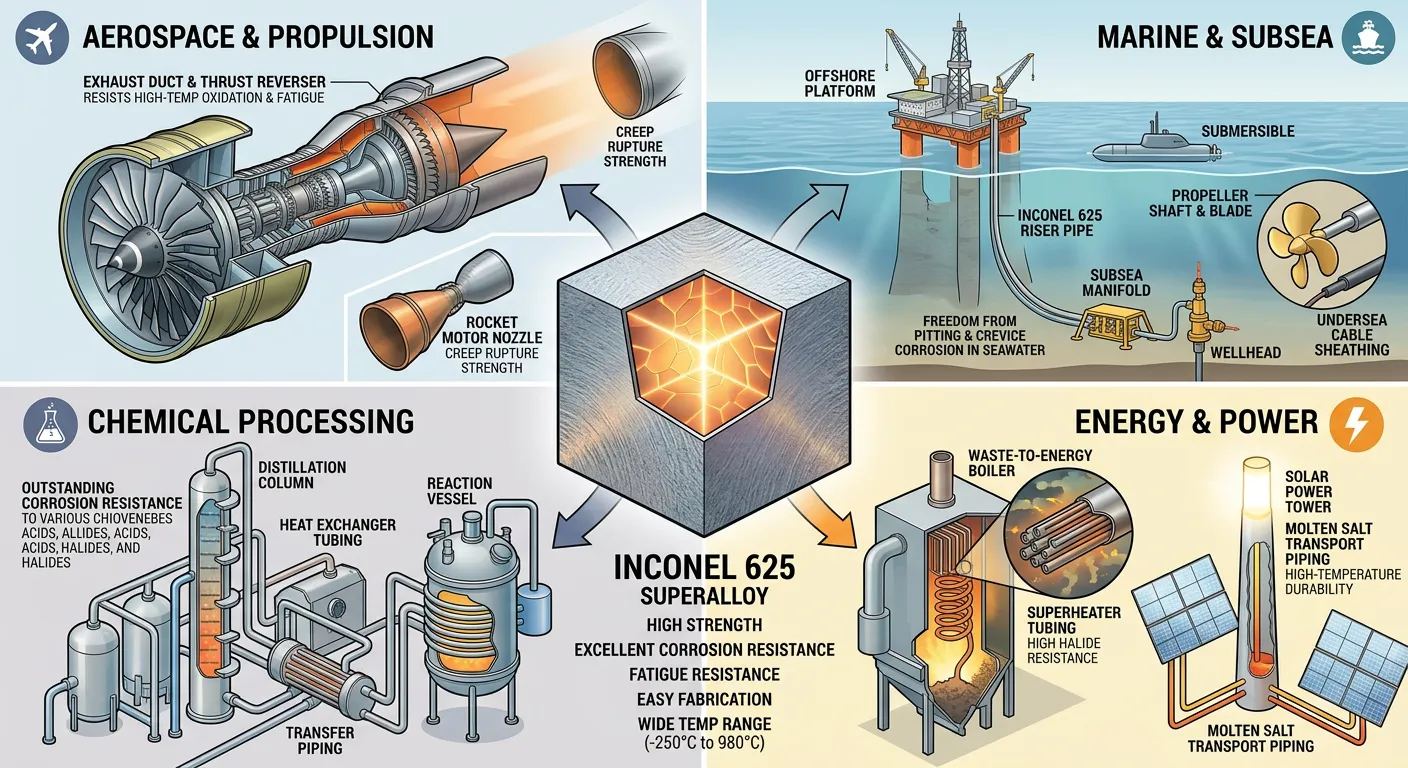
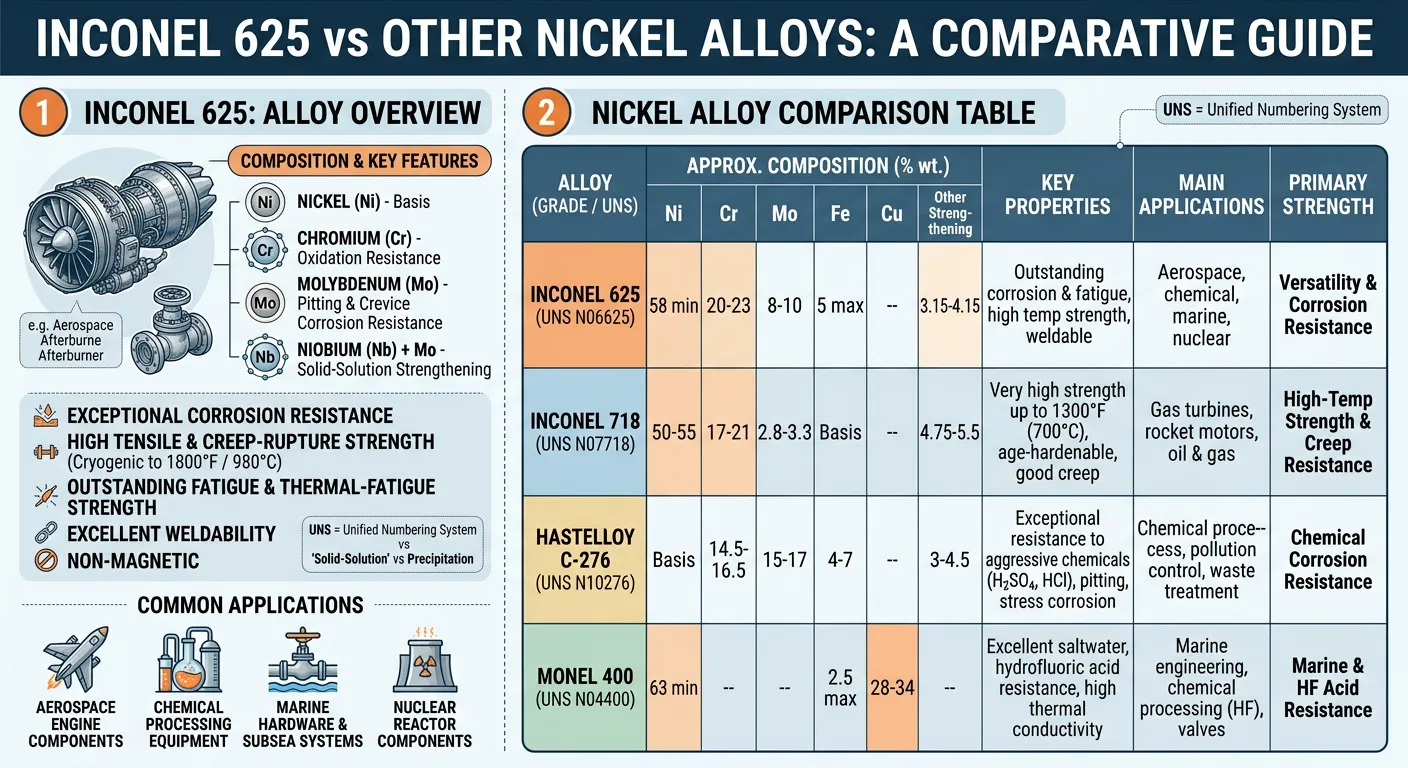
Inconel 625 is used primarily in applications that demand simultaneous resistance to corrosion, high mechanical stress, and extreme temperatures — industries including offshore oil and gas, aerospace and defense, chemical processing, marine engineering, nuclear power, and pollution control systems rely on this alloy when no cheaper alternative can survive the operating conditions. The alloy (UNS N06625) earns its specification through a unique combination of roughly 58% nickel, 21% chromium, and 9% molybdenum, which together produce outstanding pitting resistance, immunity to stress corrosion cracking in chloride environments, and structural integrity from cryogenic temperatures up to approximately 980°C (1800°F).
If your project requires the use of Inconel 625, you can contact us for a free quote.
At MWalloys, we have supplied Inconel 625 in plate, tube, bar, wire, and fittings to projects on every continent. The pattern we observe repeatedly is that engineers reach for Inconel 625 when a previous material — often 316L stainless steel, duplex stainless, or even another nickel alloy — has already failed or is predicted to fail within an unacceptable service life. This article breaks down every major application category with the technical reasoning behind each selection, so both engineers specifying the material and procurement professionals sourcing it can make well-informed decisions.
Why Do Engineers Choose Inconel 625 Over Other Alloys?
Before covering specific applications, it is worth understanding the core material attributes that make Inconel 625 the selected material across so many different industries. This is not a one-trick alloy. Its value comes from the convergence of multiple performance characteristics that would ordinarily require trade-offs in other materials.
The Core Performance Characteristics That Drive Application Selection
| Performance Attribute | Inconel 625 Capability | Why It Matters in Service |
|---|---|---|
| Pitting Resistance (PREN) | ~51 | Survives seawater and chloride environments where 316L (PREN ~24) fails |
| Stress Corrosion Cracking (SCC) | Highly resistant | Critical in pressurized chloride and H₂S environments |
| Tensile Strength (annealed) | 827 MPa minimum | Structural capability without additional heat treatment |
| Temperature Range | -196°C to +980°C | Covers cryogenic to near-combustion service |
| Weldability | Excellent, no PWHT needed | Reduces fabrication time and cost significantly |
| Fatigue Resistance | High | Suitable for dynamic loading in flexible riser and cyclic thermal systems |
| Oxidation Resistance | Up to 980°C in air | Useful in combustion-adjacent environments |
| NACE MR0175 Compliance | Qualified | Approved for sour gas service |
This combination is genuinely rare. Most alloys optimize for one or two of these characteristics at the expense of others. Inconel 625 occupies a unique position where all of these attributes are present simultaneously, which justifies its cost premium in demanding service conditions.
Also read: What is Inconel 625? Properties, Composition, Applications, Technical Specs.
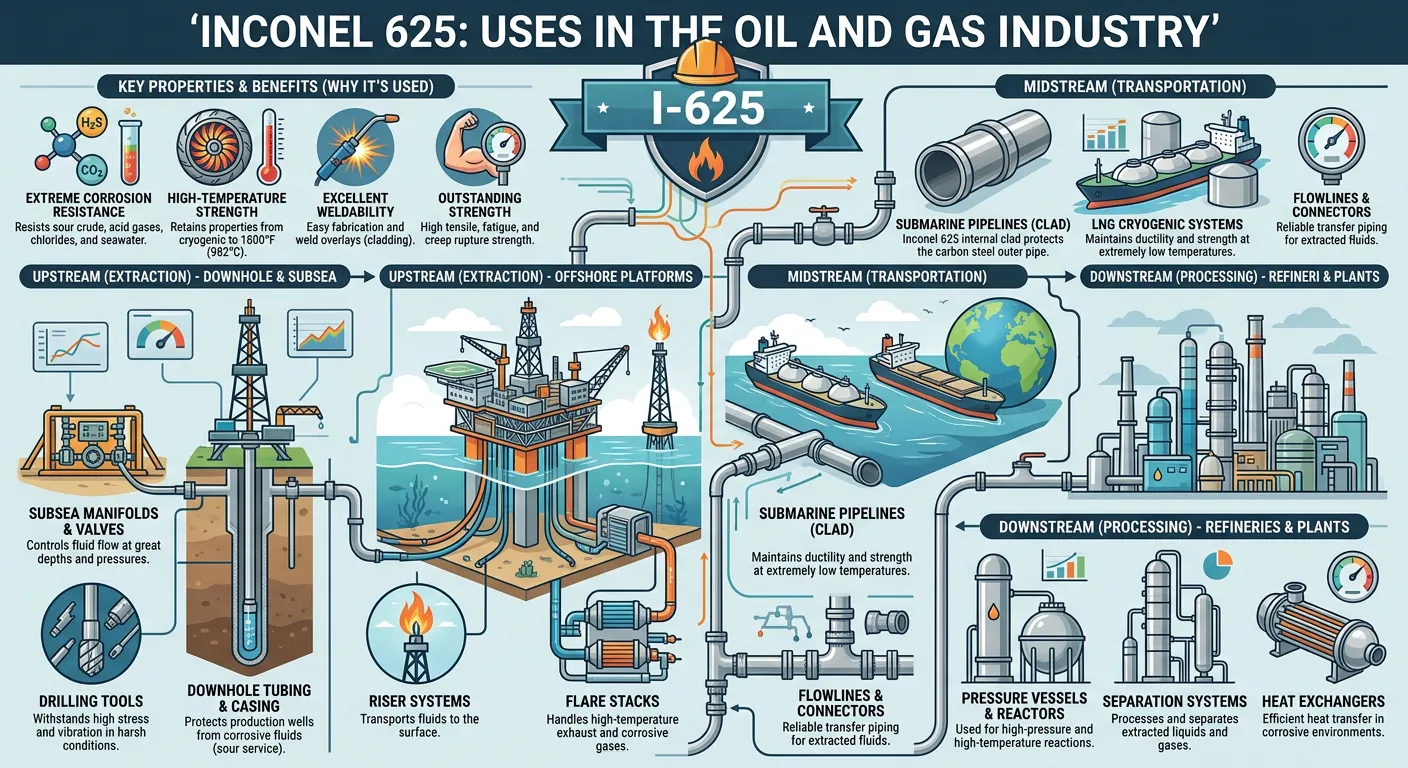
What is Inconel 625 Used for in the Oil and Gas Industry?
The oil and gas sector represents one of the largest volume application areas for Inconel 625. Offshore production environments combine seawater immersion, high-pressure sour gas, mechanical fatigue, and elevated temperatures — a combination that eliminates virtually every lower-cost material option.
Subsea Umbilical Tubing and Control Lines
Subsea umbilical systems are bundles of hydraulic control lines, chemical injection tubes, and electrical cables that connect the surface platform to wellheads on the seafloor, often at water depths exceeding 2,000 to 3,000 meters. Each individual hydraulic or chemical injection tube within the umbilical is typically a small-bore, high-pressure tube manufactured from Inconel 625.
The reasons are straightforward: these tubes operate in seawater at ambient pressure on the outside while carrying hydraulic fluids at pressures of 5,000 to 15,000 psi on the inside. They must flex continuously with ocean currents and wave action over a service life of 20 to 30 years. Conventional stainless steel cannot survive the combination of external seawater corrosion and cyclic fatigue. Inconel 625 in the LCF (Low Cycle Fatigue) variant, covered under ASTM B704, was specifically optimized for this application.
We have supplied Inconel 625 LCF welded tubing to umbilical manufacturers building systems for deepwater fields in the Gulf of Mexico, Brazil's pre-salt Santos Basin, and West Africa. The material specification for these applications invariably requires:
- ASTM B704 (welded tube) or ASTM B444 (seamless tube).
- Tight dimensional tolerances on wall thickness uniformity.
- Full hydrostatic pressure testing.
- Eddy current or ultrasonic inspection.
- Low carbon content for maximum corrosion resistance in the weld seam area.
Wellhead Components and Christmas Tree Equipment
At the wellhead, process fluids often contain H₂S, CO₂, chlorides, and sand at elevated temperatures and pressures. NACE MR0175 / ISO 15156 governs material selection for sour service, and Inconel 625 qualifies in the annealed condition for use in these systems. Typical wellhead components manufactured from Inconel 625 include:
- Tubing hangers.
- Production tree valves and valve trim.
- Completion tool components.
- Landing strings and running tools.
- Choke valve bodies and seats.
Flexible Risers and Flow Assurance Hardware
Flexible risers connect subsea wellheads to floating production platforms (FPSOs and semi-submersibles). The inner pressure sheaths and interlocked carcass layers of flexible risers frequently incorporate Inconel 625 strip and wire because the material can handle the combination of internal production fluid chemistry (often acidic with CO₂ and H₂S), cyclic bending loads, and the need for a service life matching the field life of the platform.
Chemical Injection Lines and Downhole Tubing
Chemical injection is essential in offshore production to prevent scale, hydrate formation, wax deposition, and corrosion in the production stream. The injection lines carry concentrated treatment chemicals — including corrosion inhibitors, methanol, scale inhibitors, and biocides — through small-bore Inconel 625 tubing from the platform to the injection points on the seafloor or downhole. The alloy's resistance to the chemicals being injected, combined with its seawater corrosion resistance on the outer surface, makes it the preferred choice.
How is Inconel 625 Used in Aerospace and Defense Applications?
Aerospace is the second major application domain, and the selection rationale shifts from corrosion resistance toward the combination of high-temperature strength, oxidation resistance, and weight efficiency.
Jet Engine Exhaust and Combustion Hardware
Commercial and military jet engines operate with combustion zone temperatures far exceeding the capability of aluminum alloys, titanium alloys, and standard stainless steels. While the hottest sections of the engine (turbine blades and vanes) typically require single-crystal nickel superalloys with thermal barrier coatings, the surrounding structural components — combustion liners, exhaust nozzle flaps, afterburner hardware, and tailpipes — operate at temperatures where Inconel 625 performs reliably.
Key components manufactured from Inconel 625 sheet and fabricated assemblies include:
- Combustion liner panels and splash plates.
- Augmentor (afterburner) liners in military aircraft.
- Exhaust nozzle convergent-divergent flap panels.
- Turbine exhaust case structural rings.
- Thrust reverser inner structures.
The material is typically specified to AMS 5596 (sheet and plate) for these applications, with specific heat lot traceability and mechanical testing requirements driven by aerospace quality management systems.
Rocket Motor Components and Space Launch Systems
Inconel 625 has a significant history in rocketry and space systems, where the combination of cryogenic capability (for liquid propellant systems) and high-temperature resistance (for nozzle and combustion chamber components) is uniquely matched by this alloy.
Applications in launch vehicle and spacecraft hardware include:
- Liquid rocket engine nozzle extensions and skirts.
- Turbopump housings and components.
- Propellant feed lines and manifolds.
- Thrust chamber structural shells.
- Attitude control thruster bodies.
One important aspect that is often underappreciated: Inconel 625 performs well at liquid nitrogen temperature (-196°C) and liquid oxygen temperature (-183°C) without the ductile-to-brittle transition that eliminates ferritic steels from cryogenic service. This makes it suitable across the full temperature range seen in cryogenic-propellant rocket engines, from the propellant tank outlet to the post-combustion exhaust.
Aircraft Structural and Skin Components
On certain high-speed aircraft, aerodynamic heating from supersonic flight creates skin temperatures that exceed the capability of aluminum alloys (approximately 120°C continuous) and even titanium alloys at sustained speeds above Mach 2.5. Inconel 625 has been used in leading edge panels, engine nacelle structures, and boundary layer bypass doors on supersonic and high-performance aircraft where these temperature constraints apply.
Military and Defense Applications
Defense applications extend beyond aircraft to include:
- Submarine pressure hull penetrators and through-hull fittings
- Naval gun barrel liners and cooling jacket components
- Guided missile motor casings operating at elevated temperatures
- Armored vehicle exhaust systems in high-cycle-fatigue service
- Shipboard gas turbine exhaust ducts
The non-magnetic property of Inconel 625 (magnetic permeability below 1.002) is a specific requirement in some naval applications where magnetic signature management is operationally important.
What Chemical Processing Equipment is Made from Inconel 625?
The chemical processing industry represents a broad and technically varied application space. The common thread is aggressive chemical environments — particularly at elevated temperatures — where the alloy's resistance to multiple corrosion mechanisms simultaneously provides economic justification despite the higher material cost.
Heat Exchangers Handling Aggressive Process Streams
Heat exchangers in chemical plants frequently handle combinations of temperature and chemistry that are hostile to standard materials. Inconel 625 tubing and tube sheets are specified when the process side contains:
- Phosphoric acid in fertilizer production (wet process phosphoric acid, which also contains fluoride and chloride impurities).
- Hydrochloric acid in chemical synthesis processes.
- Mixed acid streams containing sulfuric and nitric acids (nitration processes).
- Chlorinated organic compound streams in specialty chemical production.
- Sea water cooling with process-side chemical exposure.
The alloy is particularly valued in phosphoric acid heat exchangers because it resists the combined attack of phosphoric acid, hydrofluoric acid (present as an impurity in wet-process systems), and chlorides simultaneously. Austenitic stainless steels fail by pitting and stress corrosion cracking; duplex stainless steels fail by selective phase attack; Inconel 625 survives.
Reactor Vessels and Agitator Systems
Chemical reactors handling corrosive organic acids, halogenated compounds, or mixed acid systems are frequently lined with Inconel 625 cladding, or built entirely from Inconel 625 plate when wall thickness allows economical construction. The agitator shafts, impeller blades, and baffles in these reactors are also frequently machined from Inconel 625 bar when mechanical wear combines with chemical attack.
We have supplied Inconel 625 plate and bar for reactor construction in pharmaceutical intermediate synthesis, dye manufacturing, and specialty polymer production, where the regulatory requirement for product purity also demands that the vessel material does not introduce metallic contamination into the batch.
Scrubber Systems and Pollution Control Equipment
Gas scrubbers treating flue gas, acid vapor exhaust, or industrial process off-gases contain a particularly harsh combination of wet acid chemistry, elevated temperatures, and mechanical erosion from the gas stream. Inconel 625 is specified for:
- Scrubber tower internals (packing support grids, liquid distributors, demisters).
- Spray nozzle bodies in direct contact with acid scrubbing liquor.
- Ductwork connecting furnaces or reactors to the scrubber inlet.
- Venturi scrubber throat sections where erosion-corrosion is concentrated.
Distillation and Separation Equipment in Fine Chemical Production
Pharmaceutical and fine chemical production involves distillation of compounds that can be simultaneously corrosive and contamination-sensitive. The regulatory requirement to avoid trace metal contamination of drug intermediates, combined with the corrosive nature of some synthesis streams, leads to Inconel 625 specification for column internals, condenser tubing, and reboiler shells.
Seawater is one of the most challenging environments for metallic materials. The combination of chlorides, dissolved oxygen, biological activity, and varying temperature creates attack mechanisms including pitting, crevice corrosion, biofouling-assisted corrosion, and stress corrosion cracking that eliminate most common engineering alloys from long-term service.
Marine Propulsion and Propeller Shaft Systems
High-performance marine vessels including naval combatants, research ships, and fast ferries use Inconel 625 shafting and propeller components where the combination of mechanical loading, seawater exposure, and the need for non-magnetic properties eliminates other options. Conventional bronze propellers and stainless steel shafting are adequate for many vessels, but the highest-performance applications demand the fatigue strength and corrosion resistance that Inconel 625 provides.
Seawater Piping and Heat Exchanger Systems
Shipboard systems handling seawater for cooling, ballast, and firefighting present continuous corrosion challenges. Naval vessels in particular maintain high-velocity seawater flow through piping systems that creates erosion-corrosion attack at elbows, tees, and reducers. Inconel 625 piping and fittings resist both the chemical attack and the erosive component better than copper-nickel alloys at higher flow velocities.
Submarine and Underwater Vehicle Components
Submarine pressure hull penetrators, sonar dome fittings, and research submersible components require materials that can withstand deep-sea pressure, seawater immersion over extended periods, and the structural requirements of pressure-containing assemblies. The non-magnetic requirement for submarine hull fittings (to minimize magnetic signature) additionally restricts the material options to non-magnetic alloys, a requirement Inconel 625 satisfies in its annealed condition.
Offshore Platform Structural Components
Splash zone components on offshore oil platforms — those alternately submerged and exposed to atmosphere with wave action — experience some of the most severe corrosion conditions in any industrial environment. Inconel 625 cladding on structural steel components, or solid Inconel 625 fittings in splash zone systems, provides the corrosion protection needed to meet 20 to 30 year design life requirements.
How is Inconel 625 Used in Nuclear Power Plants?
Nuclear power generation imposes extreme demands on materials: high-temperature coolant, radiation fields, very long design lives (60 years for modern plants), and the absolute requirement to prevent radioactive contamination release. Inconel 625 plays several roles in both light water reactors and advanced reactor designs.
Reactor Vessel Internals and Core Components
Inside the reactor pressure vessel, structural internals must maintain dimensional stability and mechanical integrity over the full plant life while exposed to high neutron flux, high-temperature primary coolant, and cyclic thermal stresses. Inconel 625 components in this environment include:
- Core barrel alignment pins and hold-down springs
- Reactor vessel closure head penetration sleeves
- Fuel assembly top and bottom nozzle components
- Instrumentation thimble guide tubes
The alloy's resistance to radiation-induced embrittlement (compared to ferritic and martensitic steels) is a specific advantage in high-fluence core internal positions.
Steam Generator Tubing Support Hardware
While Inconel 690 is now the standard material for steam generator tubes themselves, Inconel 625 is used for the structural components within the steam generator shell — anti-vibration bars, tube support plate hardware, flow distribution components, and mechanical fasteners that hold the tube bundle assembly together. These components must resist steam generator secondary chemistry, which can contain sulfates, chlorides, and caustic species in concentrated crevice chemistry environments.
Waste Processing and Containment Systems
In spent nuclear fuel processing and radioactive waste handling, equipment is exposed to highly radioactive liquid streams that may contain nitric acid, other acids used in fuel reprocessing, and radiation-generated oxidizing species. Inconel 625 tanks, piping, and heat exchangers for reprocessing plant service are specified where the combined requirements of nitric acid resistance and structural reliability over long service periods need to be met.
Inconel 625 in Pollution Control and Environmental Applications
Environmental regulations have created a significant and growing application space for Inconel 625 in flue gas treatment and waste processing systems.
Flue Gas Desulfurization (FGD) Systems
Power plants burning high-sulfur coal or heavy fuel oil are required to remove sulfur dioxide from flue gas before emission. The wet FGD process — the most common technology — uses a limestone or lime slurry scrubbing system. The internal environment of an FGD absorber tower combines sulfuric acid (formed from SO₂ oxidation), hydrochloric acid (from chlorides in the fuel), elevated temperature, and mechanical abrasion from the slurry.
This environment is responsible for some of the most severe corrosion seen in any industrial application. Inconel 625 clad steel or solid Inconel 625 liner panels are used in:
- Absorber tower wall linings in the spray zone.
- Outlet duct liners where condensing acid combines with flue gas.
- Mist eliminator support structures.
- Recirculation pump casings and impellers in the slurry circuit.
Waste-to-Energy and Incineration Plants
Municipal solid waste and hazardous waste incineration generates combustion gases containing hydrogen chloride, sulfur compounds, heavy metals, and particulates. The combination of chloride-laden combustion gas at temperatures between 200°C and 900°C is particularly destructive through high-temperature chloride corrosion and sulfidation attack. Inconel 625 is used for:
- Boiler tube cladding in the upper furnace zone.
- Superheater tube shields and protective covers.
- Gas duct linings in the post-combustion section.
- Heat recovery steam generator (HRSG) inlet components.
Industrial Chimney Liners and Stack Systems
Industrial stacks and chimneys handling acid-laden flue gas from chemical plants, refineries, and power stations use Inconel 625 liner systems where fiberglass-reinforced plastic (FRP) cannot handle the temperature and where conventional stainless steel corrodes too rapidly for the required design life.
Cryogenic Applications: Why Inconel 625 Works at Extremely Low Temperatures
One characteristic of Inconel 625 that is frequently overlooked in product literature but is critically important to certain industries is its excellent performance at cryogenic temperatures.
LNG and Liquefied Gas Storage and Transfer Systems
Liquefied natural gas (LNG) plants, liquefied hydrogen systems, and liquid oxygen production facilities require piping, valves, and fittings that maintain toughness and ductility at temperatures down to -196°C. The face-centered cubic (FCC) crystal structure of nickel-based alloys means they do not undergo the ductile-to-brittle transition that makes ferritic carbon steels dangerous at cryogenic temperatures.
Applications include:
- LNG transfer line couplings and flexible connections.
- Cryogenic valve bodies and seat components.
- Liquid oxygen and liquid nitrogen manifolds in industrial gas plants.
- Liquid hydrogen fuel system components in aerospace ground support equipment.
Medical and Research Cryogenic Equipment
Magnetic resonance imaging (MRI) systems use liquid helium to cool superconducting magnets. The cryostat components, transfer lines, and structural supports within MRI machines operate at temperatures approaching -269°C (liquid helium temperature). Inconel 625's non-magnetic property is an additional requirement here — magnetic components within the MRI bore would distort the imaging magnetic field. The alloy satisfies both the cryogenic toughness requirement and the non-magnetic requirement simultaneously.
Specialized and Emerging Applications of Inconel 625
Beyond the well-established industries above, Inconel 625 has found application in several newer and more specialized contexts that reflect the broadening technical requirements of modern engineering.
Additive Manufacturing (3D Printing) with Inconel 625 Powder
Metal additive manufacturing using laser powder bed fusion (LPBF) and directed energy deposition (DED) processes has identified Inconel 625 as one of the most printable nickel superalloys. Its relatively low susceptibility to solidification cracking during rapid thermal cycling in the additive process — compared to precipitation-hardened alloys like Inconel 718 — makes it suitable for building near-net-shape complex components that would be impractical to machine from solid bar.
Current additive applications include:
- Combustion chamber components with internal cooling channels that cannot be produced by conventional machining.
- Heat exchanger cores with lattice structures for aerospace thermal management.
- Subsea valve trim with optimized flow geometry.
- Repair cladding of worn turbomachinery components using DED processes.
Medical Implant and Surgical Instrument Applications
Inconel 625 has demonstrated acceptable biocompatibility in laboratory studies, and its combination of strength, corrosion resistance in body fluids, and non-magnetic properties has led to its use in specialized surgical instruments and implant components where standard titanium alloys or cobalt-chromium alloys are inadequate for the specific mechanical requirement. This remains a relatively niche application but is growing with the expansion of minimally invasive surgical techniques.
Geothermal Energy Systems
Geothermal power plants extract energy from hot subsurface brines that can contain chlorides, hydrogen sulfide, carbon dioxide, and dissolved silica at temperatures from 150°C to over 300°C. This combination of high temperature, corrosive chemistry, and scaling tendency creates a very demanding service environment. Inconel 625 is used in geothermal wellhead equipment, production tubing, and heat exchanger components where the brine chemistry is too aggressive for duplex or super duplex stainless steel.
Inconel 625 Application Selection: How to Know When It's the Right Choice
One of the most practical questions engineers and procurement teams ask us is when to specify Inconel 625 versus a less expensive alternative. The answer depends on an honest assessment of the operating environment against the material's cost premium.
Decision Matrix: Inconel 625 vs Alternative Materials
| Application Condition | Recommended Material Tier | Reasoning |
|---|---|---|
| Ambient temperature, no chlorides | 316L Stainless Steel | No need for Inconel-grade corrosion resistance |
| Moderate chlorides, up to 50°C | Super Duplex (2507) | Lower cost, sufficient pitting resistance |
| Seawater immersion, any temperature | Inconel 625 | PREN ~51 required for long-term chloride resistance |
| H₂S + chlorides (sour service) | Inconel 625 or 825 | NACE compliance, SCC resistance required |
| Strong oxidizing acids (HNO₃) | Inconel 625 or 690 | Chromium content essential |
| Above 800°C, oxidizing | Inconel 625 or 601 | Sustained high-temperature oxidation resistance |
| High strength + heat treatment possible | Inconel 718 | Higher strength via aging; less corrosion resistance |
| Cryogenic + non-magnetic | Inconel 625 | Unique combination of both requirements |
| Cost-critical, moderate environment | Incoloy 825 | Lower nickel, lower cost, adequate performance |
Industries and Applications Summary Table
| Industry | Key Applications | Primary Material Driver |
|---|---|---|
| Oil and Gas (Offshore) | Umbilicals, wellheads, risers, chemical injection | Seawater corrosion + SCC + fatigue |
| Oil and Gas (Onshore) | Sour gas processing equipment | H₂S resistance (NACE) |
| Aerospace | Jet engine exhaust, rocket nozzles, aircraft skin | High-temperature strength + oxidation |
| Chemical Processing | Heat exchangers, reactors, scrubbers | Multi-acid corrosion resistance |
| Marine / Naval | Shafting, seawater piping, submarine fittings | Seawater + non-magnetic + fatigue |
| Nuclear Power | Steam generator hardware, reactor internals | SCC resistance + radiation stability |
| Pollution Control | FGD systems, incinerators, stack liners | Chloride + acid + high temperature |
| Cryogenic Systems | LNG, liquid oxygen, MRI cryostats | Low-temperature toughness + non-magnetic |
| Additive Manufacturing | Complex near-net-shape components | Printability + resulting part properties |
| Geothermal Energy | Wellhead, production equipment | Hot brine corrosion resistance |
Frequently Asked Questions About Inconel 625 Applications
1: Is Inconel 625 suitable for use with hydrochloric acid?
Inconel 625 offers moderate resistance to hydrochloric acid, particularly in dilute concentrations at lower temperatures. In dilute HCl below 5% concentration and at temperatures under 40°C, the alloy performs reasonably well. However, at higher concentrations or elevated temperatures, corrosion rates increase significantly, and more resistant alloys such as Hastelloy C-276 may be more appropriate. In practice, Inconel 625 is most frequently used in applications where HCl is present as a secondary or trace component rather than as the primary service fluid.
2: Can Inconel 625 replace stainless steel 316L in all applications?
No, and we would not recommend that approach. Inconel 625 significantly outperforms 316L in chloride-rich, high-temperature, and SCC-prone environments, but 316L is perfectly adequate — and considerably more economical — in mild environments such as ambient-temperature water, food processing, and general chemical service without aggressive chlorides or elevated temperatures. The correct approach is matching material capability to actual service conditions rather than defaulting to the highest-performance option regardless of need.
3: Why is Inconel 625 used in subsea umbilicals instead of stainless steel?
Subsea umbilicals spend their entire service life immersed in seawater, experience continuous cyclic bending loads from ocean currents and vessel motion, and must maintain leak-tight integrity at internal pressures up to 15,000 psi over a 25 to 30 year service life. Standard 316L stainless steel will pit and fail by fatigue crack propagation in this environment within years. Super duplex stainless steel performs better but still shows susceptibility to crevice corrosion in clamped regions of the umbilical. Inconel 625 in the LCF variant combines the corrosion resistance needed for seawater immersion with the cyclic fatigue performance needed for dynamic bending service, making it the industry standard for this application.
4: What is Inconel 625 used for in the nuclear industry specifically?
In nuclear power plants, Inconel 625 is used for steam generator structural hardware (anti-vibration bars, tube support fasteners, and mechanical clips), reactor vessel internal components, closure head penetration hardware, and certain pressure boundary fittings. It is used alongside Inconel 690 (which is the standard for steam generator tubing itself). The specific selection between 625 and 690 depends on whether the primary service requirement is corrosion resistance (favoring 690 for tube applications) or a balanced combination of strength, fabricability, and corrosion resistance (favoring 625 for structural components).
5: Is Inconel 625 used in medical devices?
Yes, in specialized applications. Inconel 625 has demonstrated acceptable biocompatibility and is used in certain surgical instruments, implantable device components, and medical hardware where the combination of high strength, corrosion resistance in body fluids, and non-magnetic properties is required. However, for most biomedical implant applications, titanium alloys (Ti-6Al-4V) and cobalt-chromium alloys remain the dominant choices due to their longer clinical history and established regulatory pathways. Inconel 625 occupies a niche where those alloys cannot meet the specific mechanical requirement.
6: Can Inconel 625 be used for high-temperature furnace components?
Inconel 625 can be used in furnace components operating up to approximately 980°C in oxidizing atmospheres. However, for applications above 950°C or in strongly carburizing or nitriding furnace atmospheres, higher-chromium alloys such as Inconel 601 (23% Cr, 1.4% Al) or Haynes 214 provide better long-term performance. Inconel 625 is more commonly chosen in furnace applications where the component also needs to resist chemical attack or where weldability is a fabrication requirement.
7: Is Inconel 625 approved for pressure vessel construction?
Yes. Inconel 625 is listed in ASME Boiler and Pressure Vessel Code, Section II, Part B as approved material for pressure-containing components. The applicable material specifications under the ASME code are SB-443 (plate and sheet), SB-444 (tube), SB-446 (bar), and SB-564 (forgings). Allowable stress values are published in ASME Section II Part D for design temperature up to the material's high-temperature limit, enabling code-compliant pressure vessel design and construction.
8: What makes Inconel 625 suitable for additive manufacturing compared to other superalloys?
Inconel 625 is one of the most successfully printed nickel superalloys because it is a solid-solution-strengthened alloy rather than a precipitation-hardened one. Precipitation-hardened alloys like Inconel 718 are prone to hot cracking during the rapid thermal cycling of laser powder bed fusion because the precipitate-forming elements create high-temperature brittleness during solidification. Inconel 625's strengthening comes from the dissolved molybdenum and niobium in the matrix, which does not create the same solidification cracking sensitivity. Printed Inconel 625 components achieve mechanical properties approaching wrought material after appropriate post-build heat treatment.
9: How long does Inconel 625 last in seawater service?
In fully immersed seawater service at ambient temperature, Inconel 625 has demonstrated corrosion rates below 0.025 mm per year (1 mpy) in long-term testing — effectively negligible. In real-world offshore applications, Inconel 625 umbilical tubing and subsea hardware have operated for 25 to 30 years without corrosion-related failures in numerous documented deepwater installations. The practical limitation on service life is typically mechanical fatigue or external mechanical damage rather than corrosion. In splash zone conditions where wetting and drying cycles occur with biological fouling, performance is somewhat reduced but still substantially better than any stainless steel grade.
10: What is the difference between Inconel 625 and Inconel 625 LCF, and when is each used?
Standard Inconel 625 (ASTM B444, B443, B446) is specified for the majority of applications across all industries described in this article. Inconel 625 LCF (Low Cycle Fatigue) is a refinement of the base alloy specifically developed for dynamic fatigue applications — primarily subsea umbilical tubes and flexible riser components. The LCF variant has tighter compositional control within the N06625 range, improved melt cleanliness (lower inclusion content through vacuum melting and remelting), and is manufactured with tighter process controls to maximize fatigue life under cyclic bending loads. If you are designing a static pressure vessel or a heat exchanger, standard Inconel 625 is appropriate. If you are building subsea umbilical systems or flexible risers that will flex continuously for 25 years, Inconel 625 LCF to ASTM B704 is the correct specification.
Working with MWalloys for Inconel 625 Supply Across All Application Areas
At MWalloys, our experience supplying Inconel 625 across every major industry described in this article gives us a practical perspective that goes beyond catalog specification sheets. We understand that an offshore engineer specifying umbilical tubing has different documentation requirements than an aerospace fabricator building jet engine exhaust components, and both have different needs than a chemical plant engineer sourcing heat exchanger tubing for a phosphoric acid plant.
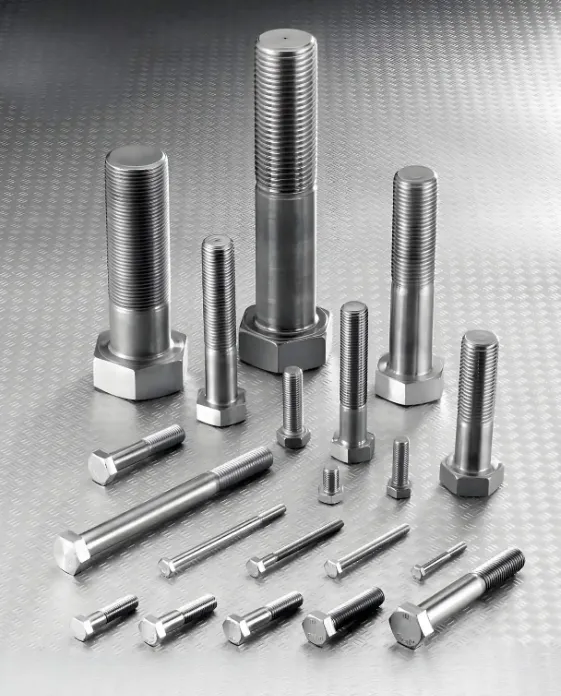
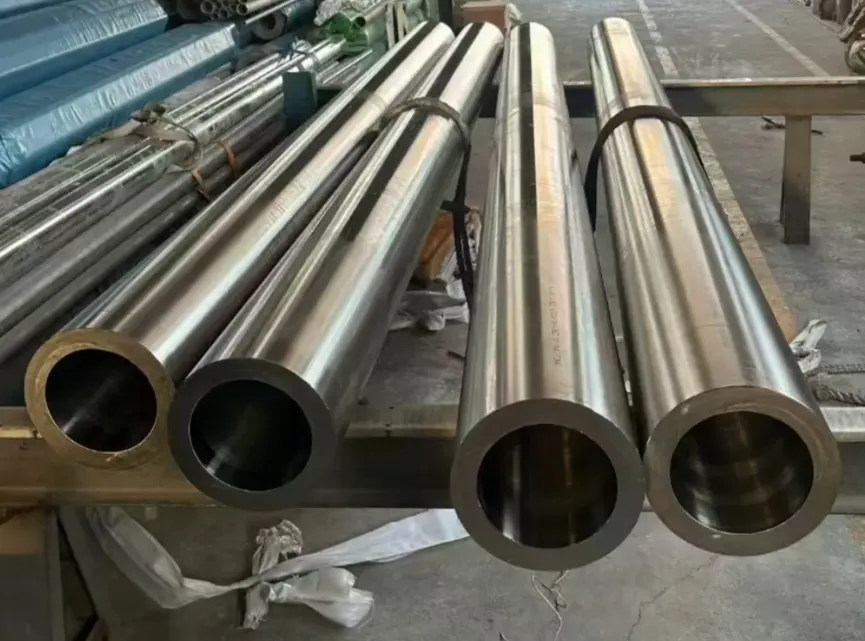
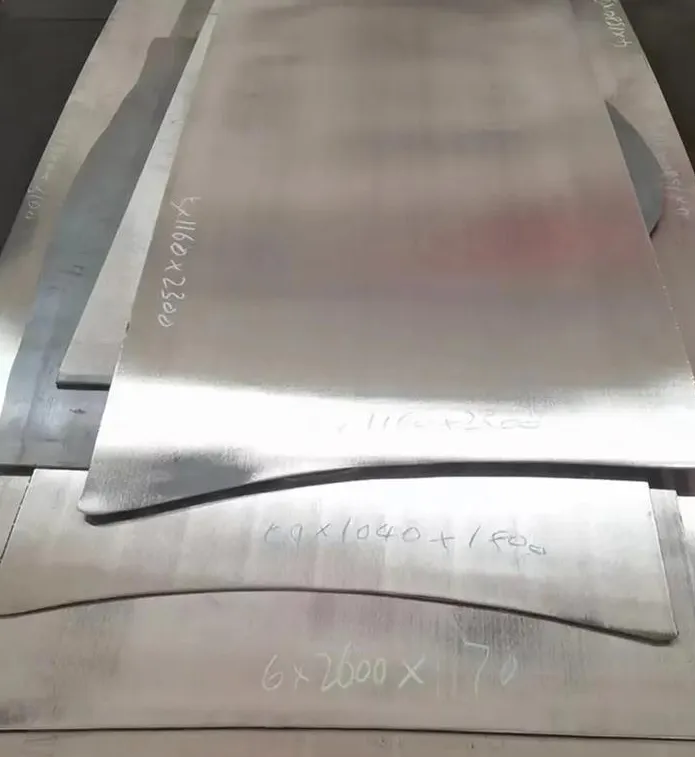
Our inventory covers all standard product forms — plate, sheet, seamless and welded tube, round bar, hex bar, fittings, flanges, and ERNiCrMo-3 weld wire — with full ASTM, AMS, and ASME compliance documentation. We can provide material in standard mill lengths or cut to specific piece lengths based on your fabrication drawings. Third-party inspection by recognized inspection bodies is available on request.
If you are early in the design phase and need help confirming whether Inconel 625 is the right material choice for your specific operating conditions — temperature, chemistry, pressure, and cyclic loading — our technical team is available to review the application and provide a written recommendation with supporting data.
Contact MWalloys with your application details, required product form, dimensional requirements, quantity, applicable code, and delivery timeline. We will respond with material availability, certification scope, and current pricing within one business day.
MWalloys supplies high-performance nickel alloys, corrosion-resistant materials, and specialty metals to the global engineering industry. Technical support, material selection assistance, and full certification documentation are available for all orders.
Related Material Specifications Referenced:
- ASTM B443: Inconel 625 Sheet, Strip, and Plate.
- ASTM B444: Inconel 625 Seamless Pipe and Tube.
- ASTM B446: Inconel 625 Rod and Bar.
- ASTM B564: Inconel 625 Forgings.
- ASTM B704: Inconel 625 LCF Welded Tube.
- AMS 5596: Sheet and Plate, Aerospace.
- AMS 5666: Bar, Rod, and Wire.
- AMS 5837: ERNiCrMo-3 Weld Wire.
- NACE MR0175 / ISO 15156: Sour Service Qualification.
- ASME Section II Part B: Pressure Vessel Material Allowables.