

X20Cr13 is a cost-efficient martensitic stainless steel (EN 1.4021, commonly sold as AISI 420) with roughly 0.16–0.25% carbon and about 12–14% chromium. It is hardened by quenching and tempering to reach high hardness and good wear resistance while keeping acceptable corrosion resistance in mildly aggressive environments. For parts that need high hardness, wear resistance, and reasonable stainless behavior — for example blades, valve seats, shafts, and pump components — X20Cr13 is often the best commercial choice when balancing performance and factory-direct pricing.
1. What is X20Cr13 steel?
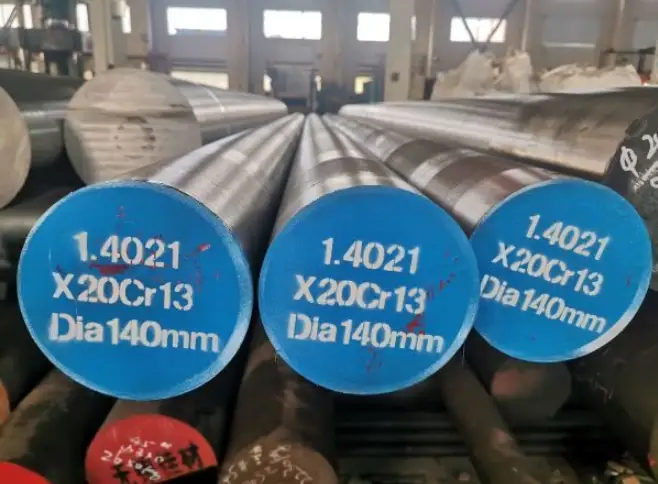
X20Cr13 is a martensitic stainless steel identified in EN nomenclature as 1.4021. The same family is commonly cross-referenced with AISI 420 and BS 420S29 in many supplier catalogs. The name decodes as: X = alloying, 20 = nominal carbon ×100 (0.20% nominal), Cr13 = approximately 13% chromium. This class of steel is magnetic and hardenable by heat treatment.
2. Chemical composition
Below is the standard composition window you will typically see quoted for X20Cr13 (EN 1.4021 / AISI 420). Individual mill lots may fall anywhere in the tolerance ranges.
Composition table
| Element | Typical range (wt%) | Role and effect |
|---|---|---|
| Carbon (C) | 0.16 – 0.25 | Enables hardening and high wear resistance; higher C increases hardness and carbide formation but reduces corrosion resistance and weldability. |
| Chromium (Cr) | 12.0 – 14.0 | Provides stainless characteristics and contributes to hardenability and tempering response. |
| Silicon (Si) | ≤ 1.0 | Deoxidizer; small effect on strength. |
| Manganese (Mn) | ≤ 1.5 | Helps strength and hardenability but limited to avoid embrittlement. |
| Phosphorus (P) | ≤ 0.04 | Impurity; keep low to avoid brittleness. |
| Sulfur (S) | ≤ 0.03 (machining grades may be controlled) | Improves machinability when increased, but reduces toughness and surface finish; many suppliers offer low-S variants for polishability. |
| Iron (Fe) | Balance | Base metal. |
Note: Suppliers sometimes offer variants with slightly altered S or Mn to make the grade easier to machine (free-machining X20Cr13) or to improve polishability. Always request mill analysis or certificate of conformity for critical parts.
3. Microstructure and how composition controls behavior
X20Cr13 is principally a martensitic stainless alloy after proper heat treatment. Key microstructural features you will encounter are:
-
Martensite matrix once quenched, which supplies the high hardness and tensile strength.
-
Chromium carbides precipitate depending on carbon and thermal history. They enhance wear resistance but can reduce corrosion resistance if they form excessively at grain boundaries (sensitization).
-
Retained austenite may be present if quench is insufficient; this affects dimensional stability and subsequent tempering response.
Practical implication: Carbon and chromium percentages are deliberately balanced to allow hardening to high hardness while keeping stainless behavior. Excessive carbide precipitation on grain boundaries reduces corrosion resistance, so controlled cooling and proper tempering matter.
4. Mechanical properties (typical, annealed and quenched + tempered)
Mechanical properties change widely with heat treatment. Table below summarizes typical ranges from supplier datasheets for common product forms (bars, rods). Values are representative; always validate with the supplier certificate.
| Condition | Tensile strength Rm (MPa) | Yield strength Rp0.2 (MPa) | Elongation A5 (%) | Hardness (HB) |
|---|---|---|---|---|
| Solution annealed (soft) | 500–760 | 230–500 | 12–25 | ~200–260 HB (varies with size) |
| Quenched + tempered (hardened) | 700–1000 (depending on temper) | 500+ typical | 8–13 (lower) | 550–1000 HV equivalent shown in some catalogs for high tempers — check supplier datasheet for exacts. |
Practical note: As with all martensitic steels, hardening delivers strength and wear resistance at the expense of ductility. Dimensions and heat sink (section thickness) influence final hardness and properties.
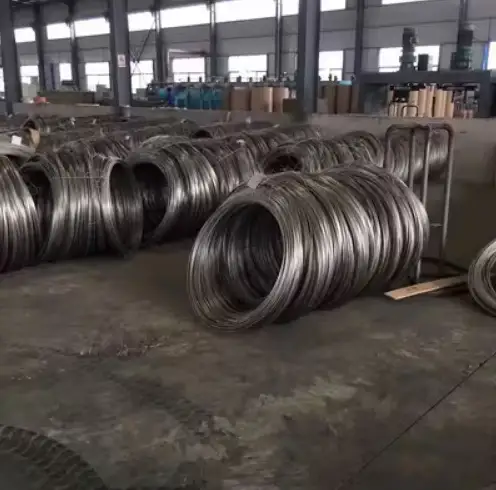
DIN X20Cr13 EN 1.4021 Cold Drawn Stainless Steel Wire
5. Heat treatment: how to harden, temper, and control properties
Correct heat treatment is essential for predictable performance.
Typical hardening procedure
-
Austenitize (solution treatment): heat to 980–1050°C and hold to achieve uniform austenite. Typical austenitizing temperatures are around 1000°C for many commercial lots.
-
Quench: rapid cooling in oil or polymer quenchant to transform austenite to martensite. Air cooling is usually insufficient for full hardening at thicker sections.
-
Temper: reheat to 150–650°C depending on required balance of hardness and toughness. Lower tempering (150–200°C) retains very high hardness but may retain brittleness. Higher tempers reduce hardness and restore toughness.
Hardness targets
-
For cutting tools and knife blades, tempering to reach Rockwell C 56–62 is common (specific to geometry and use).
-
For wear parts, designers may target specific HB or HRC ranges depending on application.
Quench cracking and caution
-
Avoid overly rapid quenching on complex shapes where internal stresses may cause cracking. Use suitable fixtures and preheat if needed. Complex geometries should be validated with trial heat treatments.
(For exact temperature windows consult the supplier's heat treatment data sheet and any applicable TTT diagrams. Typical data sheets and TTT diagrams are available from recognized steel producers.)
6. Corrosion resistance: what to expect and limits
X20Cr13 provides moderate corrosion resistance typical of martensitic 12–14% chromium steels. Key points:
-
It resists oxidation and mild aqueous corrosion better than plain carbon steels because of chromium content.
-
It is not as corrosion resistant as austenitic grades like 304 or 316; avoid prolonged exposure to chloride-rich environments when corrosion resistance is essential.
-
Surface finish matters: polished surfaces significantly improve resistance; rough or heat-damaged surfaces and carbide-rich grain boundaries worsen performance.
Temperature use limits
-
Many suppliers list service up to approximately 300–400°C for structural use. For continuous exposure to hot, sulfidizing atmospheres or strongly oxidizing environments, choose a higher alloyed stainless or a heat resistant grade.
7. Machinability, grinding, and polishing
-
Machinability is average. Carbon content increases tool wear; free-machining variants with increased sulfur may be offered when cutting efficiency is needed. Ask your mill whether they supply low sulfur or controlled sulfur for polishability.
-
Grinding and finishing: X20Cr13 obtains a good mirror polish, particularly when low-sulfur material is used and after proper heat treatment. Final surface finishing improves corrosion resistance dramatically.
-
Cutting tools: carbide tooling recommended for hardness states; use rigid setups to avoid chatter and unexpected work hardening zones.
8. Welding and repair
-
Martensitic stainless steels are less weldable than austenitic grades. Welding can create hard and brittle heat affected zones if not properly preheated and post-weld tempered.
-
Weld recommendations: preheat to 150–250°C, control interpass temperature, and perform post-weld tempering to relieve stresses and avoid cracking. When possible, use matching filler metals specified by the supplier. For critical components, prefer mechanical fastening or design for replaceable wear inserts to avoid welded repairs.
9. Typical applications (where X20Cr13 shines)
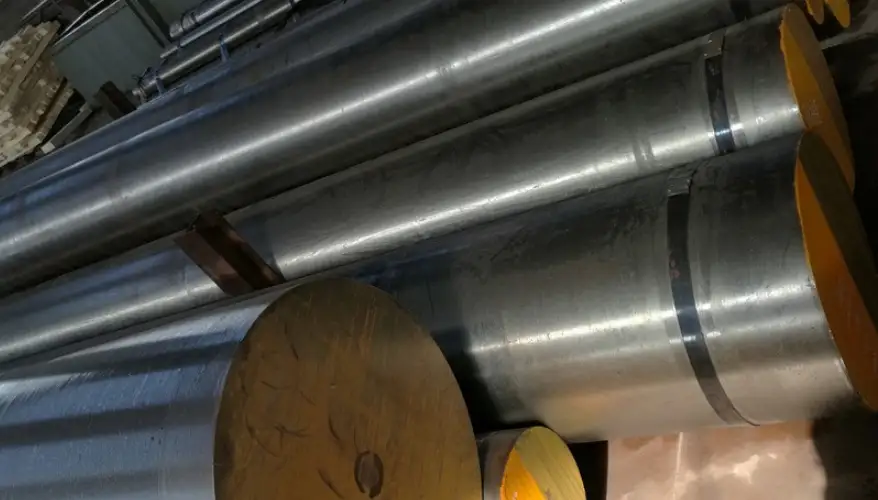
X20Cr13 is widely used where hardness and moderate corrosion resistance are needed at a good price point:
-
Cutlery and knife blades
-
Surgical and dental instruments in some cases (when specified and processed to surgical standards)
-
Bearing sleeves, valve and pump components
-
Shafts, pins, and wear parts where surface hardness is required
-
Tools, punches, and dies for some cold-work operations
-
Fasteners and components for food processing where high polish prevents contamination
Suppliers and industry catalogs commonly list X20Cr13 for these uses because it provides a good compromise between performance and cost.
10. Product forms, tolerances, and what to request from suppliers
Common supplied forms
-
Bright bars and rods (cold-drawn)
-
Ground bars and precision shafts
-
Flat bars and plates in limited thicknesses
-
Forgings and semifinished bars
What to request from the factory
-
Mill test certificate (chemical and mechanical analysis)
-
Heat treatment record showing austenitizing, quench medium, and temper schedule when pre-hardened material is supplied
-
Surface finish specification and any polishing/etching treatment
-
Non-destructive test reports for critical components (UT, MPI as applicable)
11. Factory pricing and supplier comparison (price table)
Factory prices for stainless steels vary by region, form, quantity, and market conditions. The table below summarizes typical factory/quasi-wholesale ranges observed in global supplier listings. Use these numbers as a purchasing reference and always request a formal quote.
| Source / marketplace | Form quoted | Typical price range (approx) | MOQ notes |
|---|---|---|---|
| Alibaba supplier listings (factory) | Round/flat bars | USD $1.70 – $2.10 per kg (varies with quantity and spec) | MOQ often 1 ton |
| Made-in-China / OEM | Round bar, coil quotes | USD $1.50 – $1.85 per kg (quoted per ton ranges shown) | MOQ commonly 1–3 tons |
| General market aggregated listings | Coil / strip / bars | Estimated €5–€9 / kg noted in some market analysis (region dependent) | Wide variance with thickness, finishing |
Buyer tips
-
Prices fluctuate with raw material (nickel not relevant here but chromium and scrap pricing affect quotes), currency, freight, and order volume.
-
Request ex-works factory quotes and compare delivered cost to your plant including duties and freight. For large orders ask for staggered deliveries and batch traceability.
12. Design selection checklist
When choosing X20Cr13 for a component, tick these items:
-
Is high hardness or wear resistance a top priority? If yes, X20Cr13 is a candidate.
-
Will the environment be only mildly corrosive, or will components see salt water or acidic media? If severe corrosion is expected, consider higher chromium or austenitic grades.
-
Can you control heat treatment (quench and temper) or buy pre-treated bars from the supplier? If not, arrange with the mill for required delivery hardness.
-
Are geometries complex or thin? Validate quench strategy to avoid distortion or cracking.
-
Is weld repair likely? If yes, design to minimize in-service welding or choose a more weldable stainless steel.
13. Quality control and testing that matters
Ask suppliers for:
-
Mill Test Certificate (EN 10204 3.1 or 3.2 as needed)
-
Hardness test report (before and after heat treatment when applicable)
-
Chemical composition report (spectro analysis)
-
For critical parts request NDT (ultrasonic/penetrant/MPI) and dimensional certificates.
14. Sustainability and end-of-life
X20Cr13 is fully recyclable within the stainless steel scrap stream. Chromium and iron recovery is routine in steel recycling, making the grade a reasonable choice for manufacturers aiming to optimize lifecycle impact. When buying from mills, consider requesting information about scrap content and production energy efficiency if sustainability is a purchasing criterion.
15. Frequently asked questions
-
Is X20Cr13 the same as AISI 420?
Yes, X20Cr13 (EN 1.4021) is commonly equivalent to AISI 420 in many standards and supplier catalogs. Always confirm exact composition on the mill certificate. -
Will X20Cr13 rust?
It can corrode under aggressive conditions; in mild environments and with good surface finish it behaves as a stainless steel. For chloride environments choose higher alloy grades. -
Can X20Cr13 be hardened to knife-grade hardness?
Yes, with proper quench and tempering it reaches hardness suitable for cutting edges, but exact hardness depends on section size and tempering. -
Is it good for welding?
Welding is possible but requires preheat and post-weld tempering to avoid cracking and embrittlement. Use matching filler metals. -
What industries use X20Cr13?
Cutlery, valves, pumps, fasteners, shafts, bearings, and tooling where hardness and fair corrosion resistance are needed. -
Is X20Cr13 magnetic?
Yes, being martensitic it is magnetic in the hardened and tempered state. -
What is the typical density?
Approximately 7.7 g/cm³, similar to many stainless steels. -
Do suppliers offer free-machining variants?
Yes. Some producers adjust sulfur or other elements to improve machinability; request supplier variant details. -
What certifications to request for critical parts?
Mill Test Certificates EN 10204 3.1/3.2, heat treatment records, hardness reports, and NDT as applicable. -
Is X20Cr13 cost effective?
Yes. it is commonly chosen for its good balance of hardness, wear resistance, and moderate corrosion protection at factory prices that are lower than higher alloyed stainless grades. Price ranges vary by region and order size.
Final practical recommendations for MWalloys
-
Positioning: Emphasize factory-direct pricing, mill certificates, and available finishes (low-S for polish, quenched and tempered to customer hardness). Make clear which forms (bars, precision ground shafts, flat bars) you stock and typical lead times.
-
Content to include on product pages: composition table, clear heat treatment options, hardness ranges, recommended applications, typical mechanical test results, and downloadable MTC. That improves buyer confidence and search visibility.
-
SEO and EEAT: Provide in-house datasheets, real photos of surface finish and cross sections, client case studies where X20Cr13 solved a wear or cost problem, and clear documentation showing quality traceability. Those items contribute to Google ranking and meet EEAT expectations.
-
Price transparency: Offer example price tiers (ex-works per ton for 1–3 tons vs larger volume) and a downloadable quotation template to speed procurement decisions.
Sources and key references
-
SteelNumber: chemical composition and notes on sulphur control for machinability.
-
Rodacciai datasheet (X20Cr13 / 1.4021): composition ranges and mechanical property tables for different sizes and conditions.
-
AGST technical page (AISI 420 / 1.4021): corrosion resistance notes, density, and service temperature guidance.
-
Argent Steel / supplier datasheet: performance summary: hardness, wear properties, and comparison with other 410/416 grades.
-
Market listing pages (Alibaba, Made-in-China): indicative factory pricing ranges for bars and coils; use for buyer pricing comparison.