
If your application needs a spring that keeps load in hot, corrosive, or oxidizing service, an Inconel X-750 spring is often the most dependable choice because the alloy combines precipitation strengthening with strong corrosion resistance and proven spring stability at elevated temperature. MWalloys manufactures and supplies Inconel X-750 spring wire, strip, and finished springs at factory-direct pricing, with customization for geometry, heat treatment condition, surface finish, and inspection documentation.
1) What “Inconel X-750 spring” means in procurement terms
“Inconel X-750” refers to a precipitation hardenable nickel chromium alloy (UNS N07750) widely specified for high temperature springs and elastic parts. In purchasing language, an “Inconel X-750 spring” can mean several deliverables:
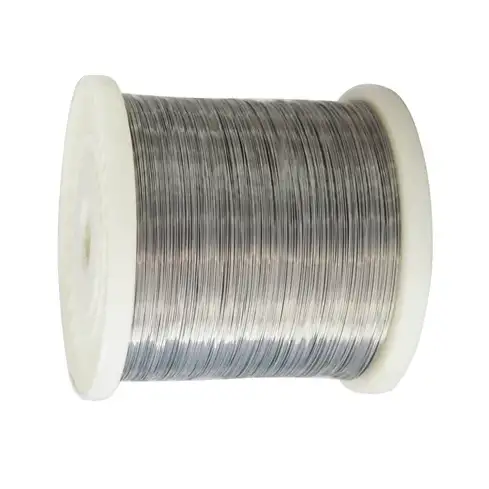
- Spring wire for cold coiling (straightened, spooled, or in coils).
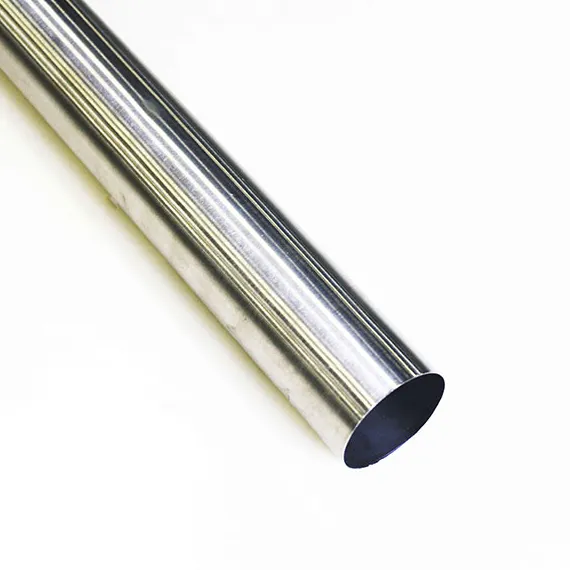
- Strip for spiral springs, wave springs, retaining rings, clips.
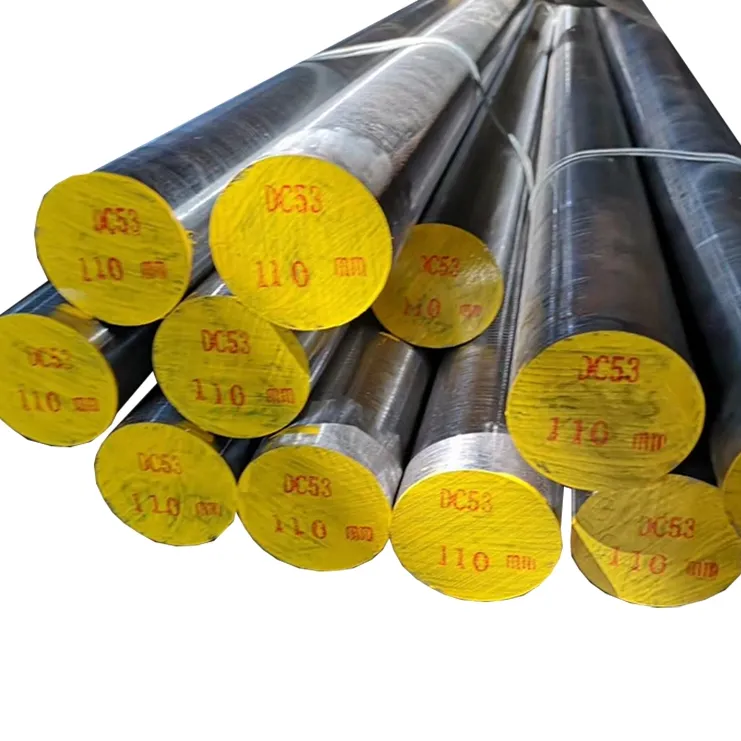
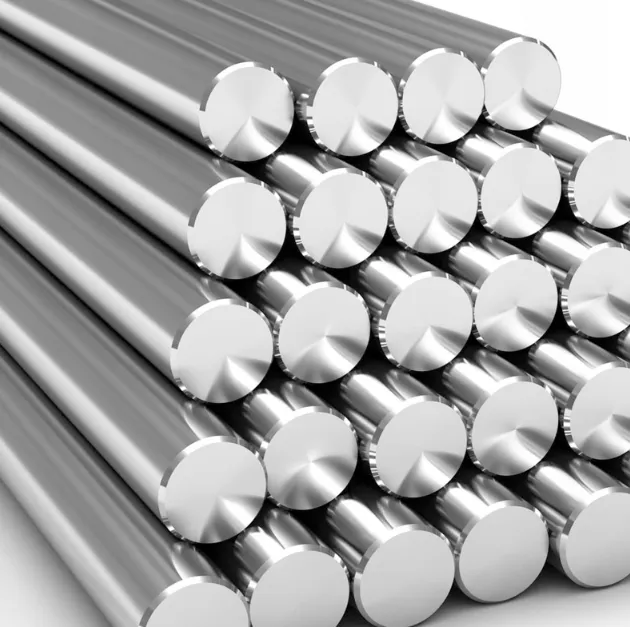
- Bar or rod for machined springs, spring energized seals, special elastic components.
- Finished springs: compression, extension, torsion, double torsion, conical, wave springs, disc springs (Belleville), constant force springs, custom formed parts.
Key point for engineers: the term “X-750 spring” does not define the final properties by itself. Properties depend heavily on:
- Melting route (VIM, VAR, ESR where applicable).
- Cold work level (spring temper condition, reduction schedule).
- Heat treatment sequence (solution, stabilization, aging).
- Final surface condition (oxide, scale-free, polished, shot peened).
- Environment (hot air, steam, chloride, sour conditions, nuclear primary water).
- Stress range and time at temperature (stress relaxation control).
For procurement teams: a correct RFQ normally needs wire diameter or strip thickness, mechanical property targets, specification number, heat treatment condition, and inspection requirements.
Common naming equivalents
- INCONEL alloy X-750 (trade name used widely in industry).
- UNS N07750.
- Nickel chromium precipitation hardening alloy for springs (typical description on drawings).
Primary application categories
- Gas turbine and aero engine hardware (retaining rings, seals, spring elements).
- Industrial furnace hardware, hot fixtures.
- Petrochemical and high temperature valve springs.
- Nuclear hardware in select conditions (application dependent, requires careful metallurgy selection).
- Tooling springs in corrosive or hot cycling service.
References: Special Metals alloy datasheet for INCONEL X-750; ASM Handbook on nickel alloys; SAE AMS material specifications for X-750 product forms.
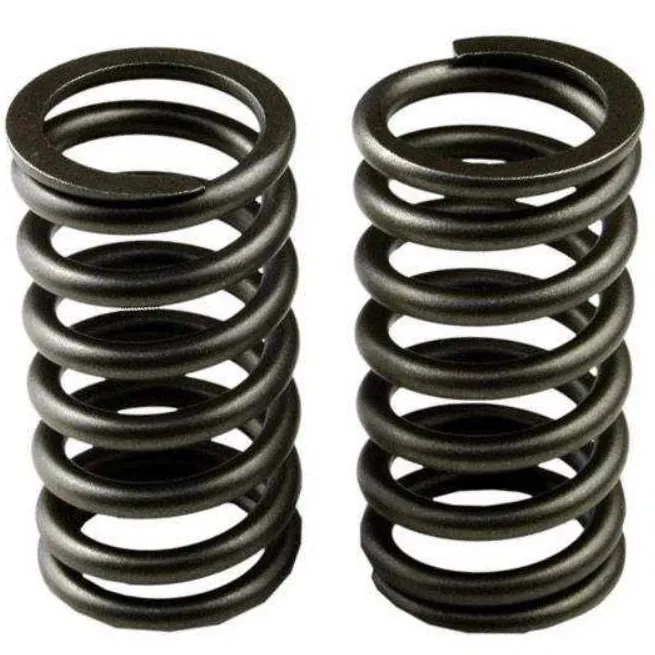
2) Why engineers select Inconel X-750 for springs
Spring materials fail in several predictable ways: loss of load due to stress relaxation, fatigue cracking, corrosion fatigue, hydrogen effects, oxidation scaling, or distortion during heat treatment. Inconel X-750 stays popular because it performs strongly in the combined space where many alloys fall short.
2.1 Property profile that fits real spring failure modes
Inconel X-750 is chosen when design priorities include:
- High yield strength after aging suited for elastic energy storage.
- Good stress relaxation resistance at elevated temperature relative to many stainless grades.
- Oxidation resistance from chromium content.
- Corrosion resistance in many aqueous and hot gas environments.
- Fatigue capability enhanced by clean steelmaking, good surface finish, and shot peening practice.
2.2 Typical temperature capability for springs
Many buyers turn to X-750 when service temperature pushes beyond the practical range of common spring stainless steels. The real limit depends on allowable stress relaxation and environment, not only “maximum temperature” marketing statements. For many spring designs, X-750 supports long exposures in the several-hundred-degree Celsius range with usable load retention, provided the correct aging condition gets used.
2.3 Where X-750 tends to outperform alternatives
- Versus 17-7PH / 301 / 302: much stronger high temperature stability.
- Versus Inconel 625: 625 resists corrosion strongly but lacks precipitation hardening strength; X-750 often gives better spring load retention at higher stress.
- Versus Inconel 718: 718 has excellent strength and creep performance, yet spring wire availability, forming behavior, and spec tradition often favor X-750 in many spring supply chains.
Selection still needs nuance. For example, nuclear primary water stress corrosion cracking sensitivity can depend on heat treatment and microstructure, so engineering review stays essential for that sector.
3) Alloy chemistry and metallurgical fundamentals
3.1 What the alloy contains and why it matters
Inconel X-750 uses nickel as the base, chromium for oxidation and corrosion resistance, plus aluminum and titanium to form precipitation strengthening phases during aging.
Table 1. Typical chemical composition ranges for UNS N07750 (Inconel X-750)
(Exact limits depend on governing specification and product form.)
| Element | Typical role in springs | Typical range (wt %) |
|---|---|---|
| Nickel (Ni) | Base metal, high temperature stability | Balance |
| Chromium (Cr) | Oxidation and corrosion resistance | ~14 to 17 |
| Iron (Fe) | Secondary constituent | ~5 to 9 |
| Titanium (Ti) | Precipitation strengthening | ~2.25 to 2.75 |
| Aluminum (Al) | Precipitation strengthening | ~0.4 to 1.0 |
| Niobium + tantalum (Nb+Ta) | Precipitation behavior, strengthening | ~0.7 to 1.2 (often reported) |
| Carbon (C) | Carbide formation, grain boundary effects | typically limited |
| Cobalt, manganese, silicon, sulfur, copper | minor elements with controlled limits | controlled |
For drawing and spring forming, cleanliness and inclusion control matter nearly as much as chemistry. Inclusion size influences fatigue life and torsional endurance of spring wire.
References: Typical composition ranges are published in major producer datasheets and aerospace material specs for UNS N07750.
3.2 Strengthening mechanism that creates spring strength
X-750 gains strength primarily through precipitation hardening, with precipitates forming during controlled aging. The hardening response depends on solution condition, prior cold work, and time-temperature exposure. Improper thermal history can lead to:
- reduced yield strength,
- reduced ductility,
- grain boundary precipitation that affects cracking resistance,
- changed stress relaxation performance.
For spring service, the heat treatment condition frequently matters more than a small difference in wire tensile strength.
3.3 Microstructure notes that affect reliability
For high duty cycle springs, engineers look for:
- uniform grain size,
- controlled carbide distribution,
- stable precipitate distribution after the chosen aging schedule,
- minimal surface defects (seams, laps, pits).
Surface condition can dominate fatigue performance, so wire finishing and final inspection deserve attention during purchasing.
4) Heat treatment conditions used for X-750 springs
Heat treatment terminology varies across standards and supplier practice. A practical way to manage procurement: specify a recognized standard condition (AMS condition, customer spec, or qualified internal recipe) plus verification tests.
4.1 Typical sequences used in industry
Common sequences include combinations of:
- Solution heat treatment to dissolve precipitates and set baseline microstructure
- Stabilization to control grain boundary precipitation behavior
- Aging to precipitate strengthening phases and reach target strength
Exact temperatures and soak times depend on specification, section size, furnace capability, and targeted balance between strength and relaxation resistance.
Table 2. Heat treatment themes used for Inconel X-750 spring performance
(Shown conceptually; production must follow the controlling specification or validated process.)
| Step | Purpose | What engineers watch |
|---|---|---|
| Solution | resets precipitate state, improves formability | grain growth risk, quench control |
| Stabilization | improves microstructural stability for high temperature exposure | grain boundary condition, cracking sensitivity in certain environments |
| Aging | builds strength via precipitation | final hardness, yield, relaxation behavior |
4.2 Heat treatment planning for springs: coil form matters
Finished springs do not heat treat like straight coupons.
- Coiled geometry changes heating uniformity.
- Mass and pitch influence thermal gradients.
- Fixturing influences distortion and free length change.
- Atmosphere influences scale formation and surface integrity.
Purchasing tip: for finished springs, request a defined heat treat plus straightening or setting procedure when dimensional stability matters (free length, load at height, torque).
4.3 Stress relief after coiling
Cold coiling introduces residual stress. A stress relief step can:
- reduce initial set,
- stabilize dimensions,
- improve fatigue behavior when paired with shot peening,
- support load retention.
Engineers typically validate stress relief temperature with the final aging plan, so precipitation does not drift out of target.
5) Mechanical properties that matter for spring design
Procurement datasheets often list tensile strength. Springs need more than tensile numbers. The practical list includes:
- yield strength or proof strength,
- torsional strength (for helical springs),
- modulus (elastic stiffness),
- fatigue limit behavior,
- stress relaxation curves,
- hardness range,
- ductility for forming.
5.1 Typical room temperature mechanical behavior
In precipitation hardened condition, X-750 reaches high tensile and yield strength suitable for compact springs. Values depend on product form and heat treatment. For procurement, insist on property tests per the governing specification.
Table 3. Mechanical property categories to request on X-750 spring wire or finished springs
| Property | Why it matters | Typical verification method |
|---|---|---|
| Tensile, yield (0.2% proof) | sets allowable stress, spring index limits | tensile test per ASTM E8 / ISO equivalent |
| Hardness | quick process control, correlates to strength | Rockwell hardness per ASTM E18 |
| Torsion test (wire) | checks ductility and surface condition | wire torsion or wrap tests (spec dependent) |
| Grain size, microstructure | affects fatigue, relaxation | metallography per agreed method |
| Surface condition | fatigue driver | visual, eddy current, surface roughness checks |
| Stress relaxation test | load retention prediction | dedicated relaxation test at service temperature |
5.2 Elastic constants
Designers often use shear modulus for helical spring rate. Nickel alloys have modulus that changes with temperature. For high temperature springs, spring rate at temperature can drop, then affect valve timing, sealing load, or contact force. Engineering calculations should use temperature-dependent modulus data from qualified sources.
5.3 Fatigue performance and what controls it in practice
For a helical spring, fatigue commonly initiates from the surface. Dominant controls:
- surface defects (seams, pits),
- decarburization not relevant like carbon steels, yet surface oxidation and handling scratches still matter,
- shot peening quality (coverage, intensity),
- residual compressive stress stability at temperature,
- coil-to-coil contact wear in compression springs.
Purchasing tip: if fatigue life is critical, specify surface quality class, NDT method (eddy current for wire), and shot peening requirements on the drawing or RFQ.
6) Temperature capability, oxidation, and corrosion behavior
6.1 Oxidation resistance in hot air and combustion products
Chromium provides a protective oxide scale that supports high temperature service. For spring parts in hot gas, key risks include:
- scale spallation during thermal cycling,
- surface roughening that reduces fatigue life,
- loss of residual compressive stress from peening due to creep.
In such service, a smoother initial surface and controlled heat treat atmosphere can produce more consistent outcomes.
Reference: Nickel alloy oxidation behavior and high temperature degradation mechanisms are covered in ASM handbooks and producer datasheets.
6.2 General corrosion resistance
X-750 resists many industrial media, yet corrosion performance depends on:
- chloride concentration and temperature,
- oxidizing vs reducing acids,
- crevice geometry under spring contact points,
- galvanic coupling with mating materials.
If chloride stress corrosion cracking is a concern, engineers may compare X-750 with other nickel alloys selected for chloride resistance, plus consider stress level and exposure temperature.
6.3 Stress corrosion cracking and environment-specific warnings
Any high strength nickel alloy can show environment-dependent cracking susceptibility under the wrong conditions. In nuclear or high purity water service, microstructure and heat treatment history become critical. For procurement into regulated industries, use only qualified material routes and verified heat treatment conditions tied to the application standard.

Inconel X-750 High Temperature Alloy Spring Manufacturers
7) Stress relaxation, creep, and spring load retention
For hot springs, the biggest performance risk frequently is not fracture, it is loss of force.
7.1 What stress relaxation means in spring terms
A spring is preloaded, then held at temperature. Over time, plastic strain accumulates, reducing load at fixed deflection. Designers care about:
- percent load loss at temperature after a defined time,
- allowable set after thermal exposure,
- recovery after cooling (often limited).
X-750 is selected because it offers strong relaxation resistance for many mid to high temperature applications compared with common stainless spring grades, when processed correctly. [1][2]
7.2 Practical controls for better relaxation performance
- Choose a heat treatment condition with verified relaxation data at the service temperature
- Limit working stress where long service life matters
- Use larger wire diameter or more active coils to reduce stress per coil when geometry allows
- Avoid sharp tool marks and local stress raisers that speed creep-strain localization
- Control exposure temperature excursions during operation and during assembly
7.3 Creep and time-dependent deformation
For springs under continuous load at elevated temperature, creep matters. Creep resistance depends on:
- temperature,
- applied stress,
- microstructure from aging and prior cold work,
- section size.
If a project demands multi-year load retention at temperature, request supplier stress relaxation or creep data relevant to the condition supplied, then validate with application-specific tests.
8) Spring design notes specific to Inconel X-750
This section targets engineers who already design springs, yet need nickel alloy specific reminders.
8.1 Wire selection: diameter tolerance, roundness, and surface class
Spring consistency depends on wire geometry.
- diameter tolerance affects spring rate and load at height,
- out-of-round wire causes uneven stress distribution,
- surface imperfections reduce endurance.
For critical springs, specify:
- diameter tolerance class,
- surface quality requirements,
- eddy current inspection criteria,
- maximum permissible seam depth.
8.2 Spring index and forming limits
Nickel alloys work harden rapidly. Tight spring index can cause cracking during coiling, especially in higher strength wire. Controls include:
- choose an appropriate wire condition for coiling,
- use proper mandrel and tooling radii,
- lubricate correctly,
- plan post-coil heat treatment to reach final properties.
8.3 Set removal, presetting, and scragging
For load-critical parts, presetting (controlled overstress) can stabilize free length and reduce in-service set. With precipitation hardened alloys, presetting should be coordinated with final aging and stress relief steps.
8.4 Shot peening and surface enhancement
Shot peening adds compressive residual stress, improving fatigue life. For high temperature springs, benefits can fade if the spring sees temperatures where creep relaxes residual stress. Still, peening often remains valuable for cyclic loading, especially if temperature stays moderate relative to the alloy capability.
When quoting, it helps to define:
- intensity range,
- coverage,
- media type,
- post-peen cleaning,
- verification method.
8.5 Coatings, plating, and surface treatments
Coatings can reduce galling or improve corrosion behavior in special environments, yet they can introduce hydrogen or cracking risks depending on process. For nickel alloys, avoid uncontrolled plating routes. If a coating is required, specify a qualified process and test plan.
9) Manufacturing route for X-750 spring wire and finished springs
9.1 Wire production chain that influences final spring reliability
A simplified chain:
- melting and refining,
- hot working,
- solution treatment,
- wire drawing with intermediate anneals,
- final cold work to target strength,
- final heat treatment per spec,
- finishing and inspection.
Small changes in reduction schedule and thermal steps affect yield, ductility, torsion ductility, and surface integrity.
9.2 Spring fabrication routes
MWalloys supplies materials and can support finished spring manufacturing through qualified partners or internal processes depending on project scope, including:
- cold coiling of helical springs,
- forming of clips and retaining rings from strip,
- machining of bar for spring energized elements,
- heat treatment per specified condition,
- shot peening, passivation where applicable,
- dimensional inspection, load testing, and sorting.
Factory-direct supply reduces cost layers, yet the technical value comes from controlled processing and documented inspection.
9.3 Quality control checkpoints buyers should request
For engineering procurement, a controlled inspection plan saves project time.
Table 4. Typical QC and documentation for Inconel X-750 spring supply
| Item | What it proves | Typical deliverable |
|---|---|---|
| Chemical analysis | alloy identity and conformance | heat lot chemistry report |
| PMI | positive ID on finished springs | XRF or OES report (method stated) |
| Mechanical tests | strength and ductility in supplied condition | tensile, hardness, torsion (wire) |
| Dimensional inspection | fit and function | inspection report, Cpk if requested |
| NDT | surface defect control | eddy current for wire, dye penetrant for parts when needed |
| Heat treatment records | property repeatability | furnace chart, lot traceability |
| Certificates | traceability chain | EN 10204 3.1 or customer format |
Note: certificate format depends on customer requirement and region. EN 10204 3.1 is common in global trade.
10) Specifications and standards engineers cite for Inconel X-750 springs
Engineering drawings often call out AMS standards for X-750, especially in aerospace supply chains.
10.1 Common identifiers used in specifications
- UNS N07750 (material designation)
- AMS specifications for X-750 in wire, bar, strip forms (spec number depends on product form)
- ASTM standards for precipitation hardening nickel alloy products in certain forms (spec depends on product form)
Because standards evolve, the RFQ should state the revision level.
Table 5. Specification selection logic for buyers
| You are buying | Typical spec family used in industry | Buyer note |
|---|---|---|
| Spring wire | AMS spring wire specification for X-750 | include temper, diameter tolerance, test requirements |
| Bar / rod | AMS bar specification for X-750 | include condition, grain size when needed |
| Strip | AMS strip specification for X-750 | include thickness tolerance, edge condition |
| Finished springs | customer drawing + process specs | include heat treat, peening, load test, marking |
References: SAE AMS material standards; producer datasheets for UNS N07750. [1][3]
10.2 Traceability expectations
For industrial procurement, traceability normally includes:
- heat number,
- lot number,
- certificate linking finished springs to raw material,
- retained samples or test coupons when specified.
For regulated industries, additional requirements may include full process traceability, calibration records, and special process accreditation.
11) Product forms MWalloys supplies for Inconel X-750 spring projects
MWalloys focuses on nickel alloy materials and spring-related deliverables for engineers and buyers who need stable quality with factory-direct pricing.
11.1 Supply forms
- Inconel X-750 spring wire: coils, spools, straight lengths
- X-750 strip and sheet for spring elements, rings, clips
- X-750 bar and rod for machining elastic components
- Custom springs and formed parts built to drawing
11.2 Customization options that affect performance
- wire diameter and tolerance selection,
- surface finish level (scale-free, bright finish, polished),
- heat treatment condition selection to match load retention targets,
- shot peening and surface enhancement,
- special inspection package (PMI, eddy current, microstructure checks),
- packaging for corrosion control and handling damage prevention.
11.3 Factory price value, without losing technical control
Factory-direct pricing matters, yet spring reliability depends on process discipline. The best outcomes come from an RFQ that defines the critical performance targets, then ties those targets to measurable acceptance criteria.
12) How to specify an Inconel X-750 spring in an RFQ
A strong RFQ reduces back-and-forth and prevents receiving a spring that meets dimensions yet fails performance.
12.1 Minimum technical information to include
- spring type: compression, extension, torsion, wave, disc, ring, custom
- drawing with tolerances and critical dimensions
- load requirements: load at height, rate, solid height, torque (torsion)
- operating temperature profile and environment
- cycle life target and duty cycle
- material spec and revision (UNS N07750 plus AMS/ASTM spec where required)
- heat treatment condition and special process requirements
- surface requirements: finish, peening, coating if any
- inspection plan: AQL or 100% checks for critical dimensions, load test sampling plan
- required documentation: CoC, 3.1, raw material certs, NDT reports, heat treat charts
12.2 A procurement checklist buyers can copy into internal systems
Table 6. RFQ checklist for X-750 spring purchasing
| Category | What to write | Why it prevents issues |
|---|---|---|
| Material | Inconel X-750, UNS N07750, spec + revision | avoids wrong alloy substitution |
| Condition | wire temper or final aging condition | controls strength and relaxation |
| Geometry | wire dia, strip thickness, spring index, ends | ensures manufacturability |
| Performance | load at height, rate, torque, set limit | ties part to function |
| Environment | temperature, media, chloride, steam | influences cracking risk and finish |
| Life | cycles, dwell time at load | drives fatigue and relaxation validation |
| Processes | peening, stress relief, passivation | controls fatigue and stability |
| Acceptance | dimensional + load testing plan | supports consistent receiving inspection |
| Documentation | certs, PMI, heat treat records | supports traceability |
12.3 Red flags to watch during supplier selection
- vague claims like “meets X-750” without spec revision and test plan,
- no mention of surface inspection for wire,
- no discussion of heat treatment verification,
- load testing not tied to temperature when hot performance matters.
13) Inconel X-750 spring compared with other common spring materials
Material selection is rarely about one property. Engineers balance cost, manufacturability, corrosion, fatigue, temperature, and supply chain.
Table 7. Material comparison for high temperature spring applications (high level)
| Material | Strength mechanism | Temperature suitability for springs | Corrosion notes | Typical use case |
|---|---|---|---|---|
| Inconel X-750 (N07750) | precipitation hardening | strong for hot springs, good load retention when processed correctly | good general corrosion and oxidation resistance | turbine retainers, hot valve springs, elastic hardware |
| Inconel 718 (N07718) | precipitation hardening | excellent strength, often used in hot sections, creep capable | good corrosion resistance | high strength fasteners, hot components, springs in select supply chains |
| Inconel 625 (N06625) | solid solution | good temperature capability, lower spring strength | excellent corrosion resistance | corrosion-driven designs, bellows, fasteners, tubing |
| 17-7PH stainless | precipitation hardening | moderate temperature | good corrosion in many atmospheres | general spring use, lower temperature than nickel alloys |
| 316 stainless | solid solution | limited for hot load retention | good corrosion, chloride limits | low cost, moderate duty springs |
Final choice depends on stress relaxation requirements, environment, compliance requirements, and available product form.
14) FAQs
What is the UNS number for Inconel X-750?
What makes an Inconel X-750 spring different from stainless spring steel?
Which matters more for performance, tensile strength or heat treatment condition?
Can X-750 springs work in chloride environments?
Is shot peening useful on X-750 springs?
What product forms can MWalloys supply for an Inconel X-750 spring program?
What documents should come with X-750 spring wire?
Does X-750 require passivation?
How do I specify load testing for springs?
What information speeds up an RFQ for a custom Inconel X-750 spring?
References
- Special Metals Corporation. INCONEL alloy X-750 (technical datasheet for UNS N07750).
- ASM International. ASM Handbook (nickel alloys, heat treatment, corrosion, high temperature behavior).
- SAE International. AMS specifications for Inconel X-750 product forms (wire, bar, strip; revision per contract).