

Inconel 625 outperforms Monel 400 in high-temperature strength, oxidation resistance, and broad chemical corrosion resistance, while Monel 400 delivers superior performance in hydrofluoric acid service, seawater at moderate temperatures, and applications requiring lower material cost with adequate corrosion protection. At MWalloys, we supply both alloys across all product forms and routinely help engineers navigate this exact selection decision. The right choice depends entirely on your specific combination of temperature, corrosive medium, mechanical load, and budget — and this article provides the precise technical framework to make that determination confidently.
Neither alloy is universally superior. Inconel 625 (UNS N06625) is a nickel-chromium-molybdenum superalloy with outstanding resistance across a wider range of aggressive chemicals and temperatures up to 980°C. Monel 400 (UNS N04400) is a nickel-copper alloy that excels in seawater, hydrofluoric acid, and alkaline environments at moderate temperatures. Understanding where each alloy succeeds and where each reaches its limits is the foundation of sound materials engineering in corrosive service design.
If your project requires the use of Inconel 625 or Monel 400, you can contact us for a free quote.
What Are Inconel 625 and Monel 400 and How Do They Differ Fundamentally?
Inconel 625 and Monel 400 belong to the same broad family of high-nickel alloys, but they represent fundamentally different engineering philosophies and serve distinctly different performance envelopes.
Inconel 625 (UNS N06625, W.Nr. 2.4856) is a nickel-chromium-molybdenum-niobium alloy developed by Special Metals Corporation (originally International Nickel Company) in the late 1950s and early 1960s. Its development was driven by the need for an alloy that could withstand the most aggressive combinations of temperature and corrosive media encountered in aerospace propulsion, chemical processing, and seawater systems. The alloy achieves its exceptional properties primarily through solid solution strengthening — the large atoms of molybdenum and niobium dissolve into the nickel matrix and create lattice distortions that resist dislocation movement, producing high strength without the need for precipitation hardening heat treatment.
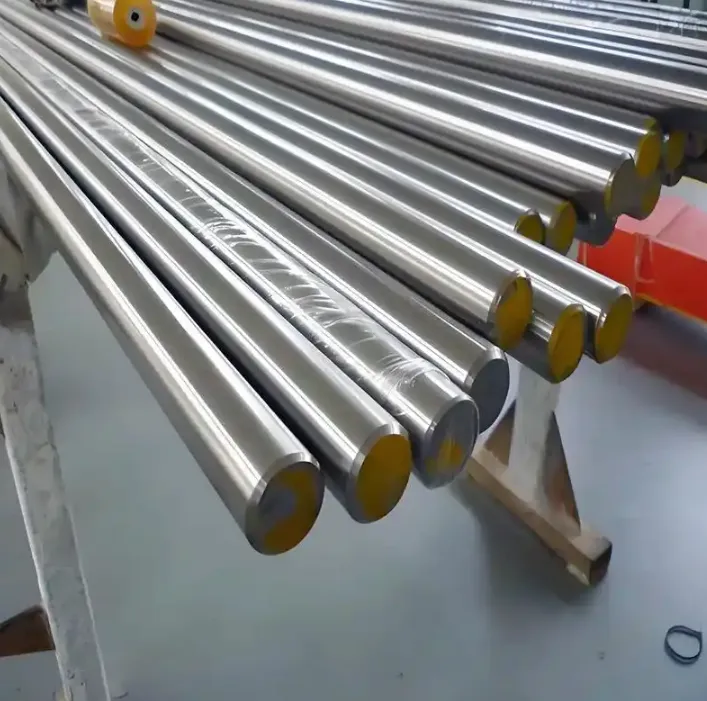
Monel 400 (UNS N04400, W.Nr. 2.4360) is a simpler binary nickel-copper alloy that dates to the early twentieth century, predating most modern superalloys by several decades. Its corrosion resistance mechanism is fundamentally different from chromium-bearing alloys: rather than relying on a passive chromium oxide film, Monel 400 leverages the inherent electrochemical nobility of the nickel-copper system in aqueous environments. The alloy sits near copper in the galvanic series, giving it thermodynamic stability in seawater that no iron-based alloy can match.
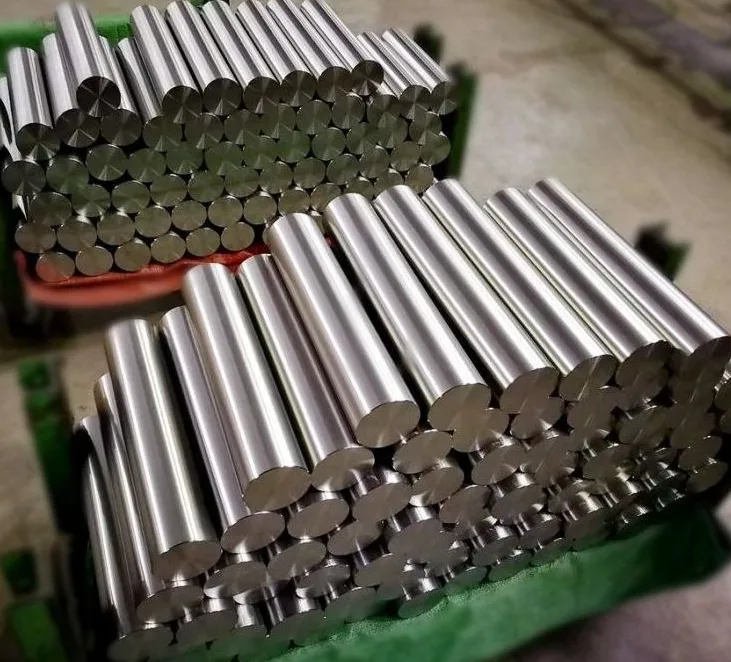
The most important fundamental difference between these two alloys is the role of chromium. Inconel 625 contains 20–23% chromium, which is responsible for its broad resistance to oxidizing acids, high-temperature oxidation, and hot corrosion. Monel 400 contains no chromium whatsoever — it relies entirely on the nickel-copper matrix for corrosion protection. This single compositional difference explains most of the performance divergences between the two alloys: Inconel 625 handles oxidizing environments and high temperatures that Monel 400 cannot manage, while Monel 400 handles hydrofluoric acid and certain reducing acid conditions where the passive chromium film of Inconel 625 offers less advantage.
We have processed inquiries from engineers who initially assume that the higher-cost Inconel 625 is always the "better" choice. This assumption leads to unnecessary spending on many projects. In pure seawater cooling systems below 300°C, Monel 400 provides equivalent or superior corrosion performance at 40–50% lower material cost. Selecting Inconel 625 for that application pays a significant premium for capabilities the service environment never demands.

Quick Reference Comparison — Inconel 625 vs Monel 400
| Characteristic | Inconel 625 | Monel 400 |
|---|---|---|
| UNS Designation | N06625 | N04400 |
| Base System | Ni-Cr-Mo-Nb | Ni-Cu |
| Nickel Content | 58% min | 63–70% |
| Chromium Content | 20–23% | None |
| Primary Strengthening | Solid solution (Mo, Nb) | Solid solution (Cu) |
| Precipitation Hardenable | No (standard); Yes (625+ variant) | No (standard); Yes (K-500 variant) |
| Max Service Temp (structural) | 816°C (1500°F) | 480°C (900°F) |
| Seawater Resistance | Excellent | Excellent |
| HF Acid Resistance | Moderate | Outstanding |
| Oxidizing Acid Resistance | Good | Poor |
| ASTM Pipe Specification | B444 (seamless), B705 (welded) | B165 (seamless), B725 (welded) |
| Relative Material Cost | High | Moderate |
| Density | 8.44 g/cm³ | 8.80 g/cm³ |
How Do the Chemical Compositions of Inconel 625 and Monel 400 Compare?
Chemical composition is the root of all performance differences between these two alloys. An engineer who understands the role of each element in each alloy can predict performance differences in new applications without needing to consult corrosion rate tables for every specific condition.
Inconel 625 Chemical Composition (UNS N06625 / ASTM B443)
| Element | Min (%) | Max (%) | Function |
|---|---|---|---|
| Nickel (Ni) | 58.0 | — (balance) | Base metal; FCC matrix; corrosion resistance foundation |
| Chromium (Cr) | 20.0 | 23.0 | Passive Cr₂O₃ film; oxidizing acid resistance; high-temperature oxidation resistance |
| Molybdenum (Mo) | 8.0 | 10.0 | Pitting/crevice corrosion resistance in chlorides; solid solution strengthening |
| Niobium + Tantalum (Nb+Ta) | 3.15 | 4.15 | Solid solution strengthening; carbide stabilization (prevents sensitization) |
| Iron (Fe) | — | 5.0 max | Controlled tramp element |
| Carbon (C) | — | 0.10 max | Carbide former; controlled for sensitization prevention |
| Manganese (Mn) | — | 0.50 max | Deoxidizer |
| Silicon (Si) | — | 0.50 max | Deoxidizer |
| Phosphorus (P) | — | 0.015 max | Controlled impurity |
| Sulfur (S) | — | 0.015 max | Controlled impurity |
| Cobalt (Co) | — | 1.0 max | Solid solution strengthening contribution |
| Aluminum (Al) | — | 0.40 max | Deoxidizer; very slight oxidation resistance contribution |
| Titanium (Ti) | — | 0.40 max | Carbide stabilizer |
The molybdenum content of 8–10% is one of the highest in any commercially available nickel alloy. Molybdenum is the primary contributor to Inconel 625's remarkable pitting and crevice corrosion resistance in chloride-containing environments. In corrosion science, pitting resistance is commonly quantified through the Pitting Resistance Equivalent Number (PREN = %Cr + 3.3×%Mo + 16×%N). For Inconel 625, the calculated PREN is approximately 20 + (3.3 × 9) = 49.7, which is among the highest values achievable in commercial alloys and explains why Inconel 625 resists pitting in seawater conditions that cause rapid failure in duplex stainless steels.
Monel 400 Chemical Composition (UNS N04400 / ASTM B165/B725)
| Element | Min (%) | Max (%) | Function |
|---|---|---|---|
| Nickel (Ni) + Cobalt (Co) | 63.0 | — (balance) | Base metal; primary corrosion resistance mechanism |
| Copper (Cu) | 28.0 | 34.0 | Electrochemical nobility in aqueous media; HF acid fluoride film formation; biofouling resistance |
| Iron (Fe) | — | 2.5 max | Matrix element; controlled for galvanic stability |
| Manganese (Mn) | — | 2.0 max | Deoxidizer; sulfur scavenger |
| Carbon (C) | — | 0.30 max | Grain boundary carbides; sensitization risk at high carbon |
| Silicon (Si) | — | 0.50 max | Deoxidizer |
| Sulfur (S) | — | 0.024 max | Controlled impurity |
The simplicity of the Monel 400 composition is striking compared to Inconel 625. This simplicity has practical advantages: the alloy is easier to melt consistently, has narrower property scatter between heats, and is less sensitive to minor compositional variations in the chemistry window. The relatively wide copper range (28–34%) and high carbon maximum (0.30%) compared to premium superalloys reflect the alloy's industrial heritage and the broad property equivalence across the composition window.
The copper content is the critical functional element. Copper's position in the electrochemical nobility series — close to silver — provides Monel 400 with its unique combination of immunity to seawater pitting, resistance to neutral and reducing acid environments, and the specific mechanism of HF acid resistance through NiF₂/CuF₂ film formation.
Composition-Based Performance Prediction Summary
| Performance Criterion | Driven By | Inconel 625 Advantage | Monel 400 Advantage |
|---|---|---|---|
| Seawater pitting resistance | Mo, Cr content | High PREN (approx. 50) | Electrochemical nobility |
| HF acid resistance | Cu content | Limited | Outstanding (NiF₂ film) |
| Oxidizing acid resistance | Cr passive film | Yes — significant | No — poor |
| High-temperature oxidation | Cr, Al content | Yes — up to 980°C | Limited — up to 480°C |
| Solid solution strength | Mo, Nb content | High at all temperatures | Moderate, temperature-limited |
| Pitting resistance number (PREN) | Cr + Mo | ~50 | Not applicable (no Cr) |
| Sensitization risk | C content | Low (Nb stabilized) | Moderate (high C max) |
What Mechanical Properties Separate Inconel 625 from Monel 400?
Mechanical property differences between Inconel 625 and Monel 400 are significant and directly affect pressure ratings, structural weight, fatigue life, and elevated temperature design allowables. Engineers selecting between these alloys must account for these differences in their structural calculations.
Room Temperature Mechanical Properties Comparison
| Property | Inconel 625 (Annealed) | Monel 400 (Annealed) | Test Standard |
|---|---|---|---|
| Ultimate Tensile Strength (min) | 827 MPa (120 ksi) | 482 MPa (70 ksi) | ASTM E8 |
| 0.2% Yield Strength (min) | 414 MPa (60 ksi) | 193 MPa (28 ksi) | ASTM E8 |
| Elongation in 2" (min) | 30% | 35% | ASTM E8 |
| Reduction of Area | 50% typical | 55% typical | ASTM E8 |
| Hardness (typical, annealed) | 96 HRB (Brinell 200) | 75 HRB (Brinell 149) | ASTM E18 |
| Modulus of Elasticity | 207 GPa (30 Msi) | 179 GPa (26 Msi) | — |
| Shear Modulus | 79 GPa (11.5 Msi) | 66 GPa (9.6 Msi) | — |
| Density | 8.44 g/cm³ | 8.80 g/cm³ | — |
The yield strength difference is the most practically significant number in this table. Inconel 625's minimum yield strength of 414 MPa is more than twice the 193 MPa minimum of Monel 400. In pressure piping design under ASME B31.3, this translates directly into the ability to use thinner wall sections in Inconel 625 compared to Monel 400 to achieve equivalent pressure ratings — which partially offsets the higher material cost of Inconel 625 on a per-system basis.
The higher elastic modulus of Inconel 625 (207 GPa vs 179 GPa for Monel 400) also matters in structural stiffness calculations. A pipe or vessel shell made from Inconel 625 will deflect less under equivalent load than the same geometry in Monel 400. For long pipe spans between supports, or for flanged joint designs where flange rigidity affects bolt load distribution, this modulus difference should be incorporated into the engineering analysis.
Elevated Temperature Strength Comparison
This comparison is where Inconel 625's superiority becomes most pronounced. The alloy maintains useful structural strength at temperatures where Monel 400 has entered the creep-dominated regime.
| Temperature | Inconel 625 UTS (MPa) | Inconel 625 YS (MPa) | Monel 400 UTS (MPa) | Monel 400 YS (MPa) |
|---|---|---|---|---|
| 21°C (70°F) | 930 typical | 480 typical | 550 typical | 240 typical |
| 200°C (392°F) | 820 | 380 | 490 | 195 |
| 400°C (752°F) | 780 | 355 | 450 | 175 |
| 540°C (1000°F) | 750 | 340 | 395 | 155 |
| 650°C (1200°F) | 710 | 330 | 295 | 115 |
| 760°C (1400°F) | 650 | 310 | 170 | 75 |
| 870°C (1600°F) | 490 | 250 | Not recommended | — |
Above approximately 480°C, Monel 400 rapidly loses strength and is no longer appropriate for sustained pressure service. Inconel 625 maintains substantial structural strength through 816°C and retains oxidation resistance through 980°C, making it suitable for applications in that temperature range where Monel 400 simply cannot be considered.
ASME Allowable Stress Comparison (B31.3 Process Piping)
| Temperature | Inconel 625 Allowable Stress (ksi) | Monel 400 Allowable Stress (ksi) | Ratio (625/400) |
|---|---|---|---|
| 38°C (100°F) | 30.0 | 17.5 | 1.71 |
| 200°C (392°F) | 28.7 | 17.1 | 1.68 |
| 300°C (572°F) | 27.5 | 15.8 | 1.74 |
| 400°C (752°F) | 26.2 | 13.4 | 1.96 |
| 480°C (900°F) | 25.0 | 9.7 | 2.58 |
| 650°C (1200°F) | 22.5 | N/A | — |
| 760°C (1400°F) | 15.2 | N/A | — |
The allowable stress ratio increases dramatically with temperature, reaching 2.58:1 at 480°C — meaning an Inconel 625 pipe wall only needs to be 39% as thick as an equivalent Monel 400 pipe wall at that temperature to achieve the same pressure rating. Above 480°C, Monel 400 falls out of the ASME tables entirely, leaving Inconel 625 as the only viable option between these two alloys.
How Do Inconel 625 and Monel 400 Perform in Corrosive Environments?
Corrosion performance in specific media is the primary selection driver for most engineers choosing between these alloys. The following section provides structured corrosion data organized by media type, drawing on published corrosion testing results and documented service experience.
Seawater and Marine Environment Corrosion Behavior
Both alloys perform well in seawater, but through different mechanisms and with different specific limitations.
| Seawater Condition | Inconel 625 Performance | Monel 400 Performance | Notes |
|---|---|---|---|
| Flowing seawater (0.5–3 m/s) | Excellent — less than 0.025 mm/yr | Excellent — less than 0.025 mm/yr | Both alloys are practical choices |
| Stagnant seawater | Excellent — no pitting observed | Good — slight pitting risk in warm water | 625 advantage in stagnant conditions |
| High velocity (greater than 10 m/s) | Excellent — erosion resistance | Moderate — erosion-corrosion begins | 625 advantage in high-velocity service |
| Warm seawater (above 27°C, stagnant) | Excellent | Moderate — biofouling MIC risk | 625 maintains resistance |
| Crevice (under gaskets, etc.) | Excellent — Mo provides crevice resistance | Moderate — crevice corrosion possible | Significant 625 advantage |
| Tidal zone / splash zone | Excellent | Good | Both acceptable |
| Deep seawater (high pressure, cold) | Excellent | Excellent | Both equivalent |
The critical distinction in seawater is crevice corrosion behavior. In creviced geometries — under pipe support saddles, beneath gaskets, in threaded joints, or at tube-to-tubesheet interfaces — Monel 400 can experience accelerated attack because the restricted geometry depletes oxygen and shifts the local chemistry toward conditions that overcome the alloy's electrochemical nobility defense. Inconel 625's high molybdenum content specifically addresses crevice corrosion by maintaining passive film stability even in oxygen-depleted, chloride-concentrated local environments. For heat exchangers with many tube-to-tubesheet joints, tube support baffles, and gasketed header covers, Inconel 625 is the technically superior choice even though both alloys pass simple immersion corrosion tests with equally excellent results.
Acid Corrosion Resistance Comparison
| Acid / Concentration | Inconel 625 | Monel 400 | Preferred Choice |
|---|---|---|---|
| Hydrofluoric acid (HF), all concentrations | Moderate — some attack | Outstanding — NiF₂ film protection | Monel 400 |
| Hydrofluoric acid (HF), aerated/oxidizing | Poor | Poor — film disrupted | Neither (use Hastelloy C-276) |
| Sulfuric acid (H₂SO₄), dilute (less than 10%) | Good | Good | Cost-dependent |
| Sulfuric acid (H₂SO₄), 10–60% | Excellent | Moderate | Inconel 625 |
| Sulfuric acid (H₂SO₄), above 60% | Good | Poor | Inconel 625 |
| Hydrochloric acid (HCl), dilute non-aerated | Good | Moderate | Inconel 625 |
| Nitric acid (HNO₃), all concentrations | Good | Poor — rapid attack | Inconel 625 |
| Phosphoric acid (H₃PO₄) | Excellent | Good | Inconel 625 |
| Organic acids (acetic, formic) | Excellent | Good | Inconel 625 |
| Caustic soda (NaOH), all concentrations | Excellent | Excellent | Cost-dependent — Monel 400 lower cost |
The hydrofluoric acid data represents the most significant advantage Monel 400 holds over Inconel 625. In HF alkylation units — a process used in roughly half of US petroleum refineries — Monel 400 is the standard material of construction for the entire piping system. Inconel 625 is not the preferred alloy in this service because it does not form the same protective fluoride film that makes Monel 400 nearly immune to HF attack.
This is a case where the less expensive alloy genuinely outperforms the more expensive one, and substituting Inconel 625 for Monel 400 in an HF alkylation system would represent both a cost penalty and a technical downgrade. We have seen this substitution attempted on value-engineering exercises, and the result is invariably a reversal back to Monel 400 once the corrosion data is properly reviewed.
Corrosion Resistance in Alkaline and Industrial Chemical Environments
| Environment | Inconel 625 | Monel 400 |
|---|---|---|
| Ammonia (dry or aqueous) | Excellent | Excellent |
| Chlorine gas (dry) | Good | Good |
| Chlorine gas (wet or moist) | Moderate | Poor |
| Steam (all pressures) | Excellent | Good (limited by temp) |
| Hydrogen sulfide (H₂S) | Good — NACE qualified | Good — NACE qualified |
| Carbon dioxide (CO₂ + water) | Excellent | Good |
| Seawater + H₂S (sour seawater) | Excellent | Good |
| Saltwater spray (marine atmosphere) | Excellent | Excellent |
| Sodium hypochlorite | Good | Poor |
What Are the High-Temperature Capabilities of Each Alloy?
Temperature capability is arguably the dimension of performance where Inconel 625 and Monel 400 diverge most dramatically. Understanding the thermal limits of each alloy is essential before specifying either material for any elevated-temperature service.
Oxidation Resistance at High Temperatures
Oxidation resistance describes an alloy's ability to resist weight gain and surface degradation when exposed to oxygen-containing atmospheres at elevated temperatures. This property is entirely dependent on the formation and stability of a protective surface oxide.
| Temperature | Inconel 625 Oxidation Behavior | Monel 400 Oxidation Behavior |
|---|---|---|
| Up to 400°C | Negligible oxidation — passive film intact | Negligible oxidation — copper oxide very slow |
| 400–600°C | Very low oxide growth rate — Cr₂O₃ dominant | Low oxidation rate, acceptably slow |
| 600–800°C | Low to moderate — Cr₂O₃ scale protective | Significant oxidation — NiO scale less protective |
| 800–980°C | Moderate — Cr₂O₃ scale stable | Rapid oxidation — not recommended |
| Above 980°C | Scale spalling begins — approaching limit | Unsuitable for continuous service |
Inconel 625's chromium content enables it to form a coherent, adherent Cr₂O₃ scale that provides effective oxidation protection up to approximately 980°C in continuous service and 1095°C in intermittent service (thermal cycling). Monel 400, lacking chromium, relies on NiO and Cu₂O formation at elevated temperatures, which provides significantly less oxidation protection above 500°C.
For gas turbine exhaust systems, heat treatment furnace components, combustion equipment, and any application with sustained temperature above 600°C in air, Inconel 625 is the clear selection between these two alloys. Monel 400 is unsuitable for these conditions.
Thermal Fatigue and Cycling Behavior
Applications that involve repeated thermal cycling — startup and shutdown cycles, heat exchanger service with temperature fluctuations, or components near intermittent heat sources — impose thermal fatigue stresses in addition to mechanical stresses.
Inconel 625 demonstrates superior thermal fatigue resistance compared to Monel 400 for two reasons. First, its higher elevated-temperature strength means the alloy can accommodate higher thermal stresses elastically before yielding. Second, its protective chromium oxide scale is more thermally stable through cycling, reducing the oxidation-assisted fatigue crack initiation that occurs when oxide layers spall and re-form repeatedly on bare metal surfaces.
For Monel 400, the practical thermal cycling limit is approximately 400°C peak temperature. Above this level, repeated cycling through the oxidation-active temperature regime causes progressive surface degradation and increased probability of oxidation-assisted fatigue crack initiation.
How Do Weldability and Fabrication Characteristics Compare?
Both Inconel 625 and Monel 400 are considered weldable by the standards of the high-performance alloy category, but they have different welding characteristics, filler metal requirements, and post-weld treatment considerations that affect fabrication planning and cost.
Welding Process Compatibility
| Welding Process | Inconel 625 | Monel 400 | Notes |
|---|---|---|---|
| GTAW (TIG) | Excellent — preferred | Excellent — preferred | Both alloys weld best with GTAW |
| SMAW (Stick) | Good | Good | Positional welding on heavy sections |
| GMAW (MIG) | Good | Good | High deposition; slightly higher spatter |
| SAW (Submerged Arc) | Acceptable | Acceptable | Large diameter pipe seam welding |
| PAW (Plasma Arc) | Good | Good | Precision welding, thin sections |
| Resistance Welding | Good (spot/seam) | Good (spot/seam) | Sheet and strip applications |
| Electron Beam | Excellent | Good | Precision, vacuum environment |
| Laser Welding | Good | Good | Thin section, precision joints |
Filler Metal Recommendations
| Base Metal | Filler Metal (AWS Designation) | Notes |
|---|---|---|
| Inconel 625 to Inconel 625 | ERNiCrMo-3 (Inconel 625 filler) | Matching filler; highest corrosion resistance |
| Inconel 625 to carbon steel | ERNiCrMo-3 or ERNiCrFe-6 | 625 filler preferred for corrosion resistance |
| Inconel 625 to 316L SS | ERNiCrMo-3 | 625 filler handles dilution from SS |
| Monel 400 to Monel 400 | ERNiCu-7 (Monel Filler Metal 60) | Matching composition |
| Monel 400 to carbon steel | ERNiCu-7 | Good dilution tolerance |
| Monel 400 to 316L SS | ERNiCu-7 | Monitor dilution from SS side |
| Inconel 625 to Monel 400 | ERNiCrMo-3 | 625 filler provides better overall corrosion resistance |
Key Welding Procedure Differences
Inconel 625 Welding Considerations:
Inconel 625 is generally considered one of the easier nickel alloys to weld because it does not require post-weld heat treatment to restore corrosion resistance (the niobium content stabilizes the microstructure against sensitization), and it does not age-harden in the weld heat-affected zone as Inconel 718 does. The primary welding challenges are: the alloy's sluggish weld pool behavior (it is less fluid than steel and does not flow well to fill narrow groove geometries); the tendency toward hot cracking if sulfur or phosphorus contamination is present; and the need for thorough surface cleaning before welding to remove any hydrocarbon contamination.
Preheat is generally not required for Inconel 625 but moisture removal (surface temperature minimum 16°C above dew point) is essential. Back purging with argon or helium is mandatory for root passes in pipe welding to prevent oxide contamination of the inside weld surface.
Monel 400 Welding Considerations:
Monel 400 presents a specific challenge not present in Inconel 625: the alloy is susceptible to hot cracking in the weld metal if sulfur contamination is present. Sulfur — even in trace amounts from machining lubricants, grease, or marker inks containing sulfur compounds — concentrates at grain boundaries in the weld pool and causes hot tears as the weld solidifies. This requires extremely thorough cleaning of all surfaces and heat-affected areas before welding.
Monel 400 weld beads are wider and flatter than steel welds and have a tendency toward porosity if shielding gas coverage is interrupted. Post-weld annealing at 870–980°C is strongly recommended for fabrications in aggressive chemical service to dissolve sensitizing carbide precipitation and relieve residual stress.
Forming and Machining Characteristics Comparison
| Operation | Inconel 625 | Monel 400 | Notes |
|---|---|---|---|
| Cold forming | Good — moderate work hardening | Good — similar work hardening | Both require annealing after heavy forming |
| Hot forming range | 900–1175°C | 650–1200°C | Both hot-formable over wide range |
| Machinability rating | Difficult (25% of free-machining steel) | Moderate-Difficult (35% of free-machining steel) | Monel 400 slightly easier to machine |
| Turning cutting speed | 20–50 SFM carbide | 30–70 SFM carbide | Monel 400 allows higher cutting speeds |
| Drilling | Requires carbide, high-pressure coolant | Carbide or HSS cobalt acceptable | Both challenging |
| Thread cutting | Difficult — sharp tools, slow speed | Moderate — sharp tools required | Monel 400 slightly more forgiving |
| Work hardening rate | High | Moderate-High | Both require sharp tools and consistent feed |
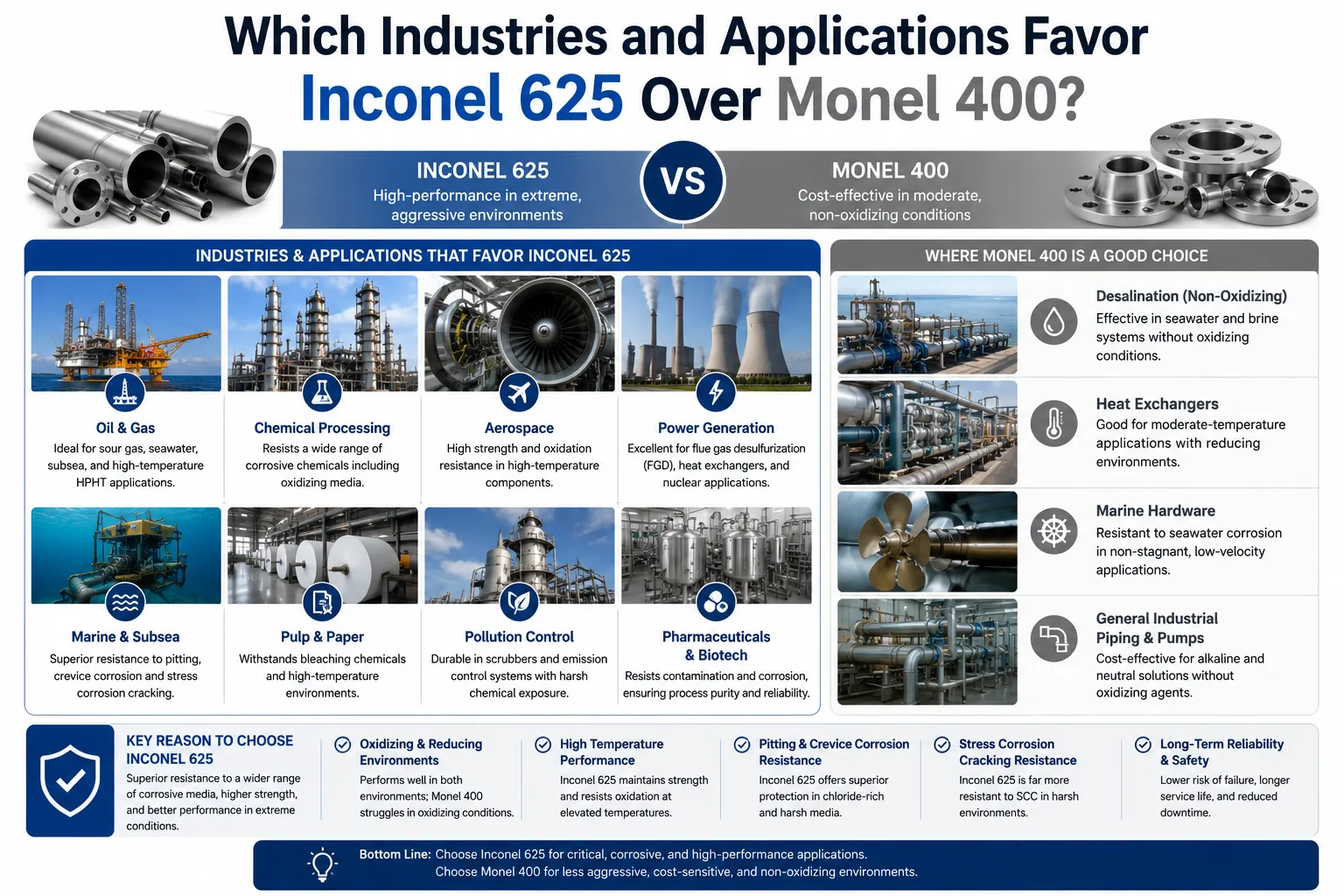
Which Industries and Applications Favor Inconel 625 Over Monel 400?
Inconel 625 is the better technical choice in a clearly defined set of application categories. Understanding which conditions trigger the superiority of Inconel 625 helps engineers recognize when the cost premium is genuinely justified.
Aerospace and Defense Applications
Gas turbine engine components operating in the hot section — turbine exhaust liners, combustor support brackets, thrust reversers, and exhaust nozzles — require sustained structural integrity at temperatures from 500°C to 900°C in oxidizing combustion gas environments. Monel 400 is simply not a viable candidate for these applications; its maximum structural service temperature of 480°C and its poor oxidation resistance above 600°C eliminate it from consideration.
Inconel 625 is routinely specified for:
- Flexible exhaust ducting on military and commercial aircraft, where the alloy's combination of high-temperature strength and flexibility allows thin-wall bellows construction.
- Afterburner liner components in military jet engines.
- Rocket engine injector components and thrust chamber components at intermediate temperature zones.
- Hypersonic vehicle thermal protection systems where high temperature and oxidizing conditions coexist.
- Aircraft hydraulic tubing in hot locations near engines where both temperature and pressure resistance matter.
Offshore Oil and Gas Applications
Subsea and topside offshore applications that combine seawater exposure with elevated pressure, elevated temperature, and H₂S-containing produced fluids create conditions where Inconel 625's broader corrosion resistance and higher strength both provide meaningful advantages.
| Application | Why Inconel 625 Is Preferred | Monel 400 Suitability |
|---|---|---|
| Subsea umbilicals (hydraulic tubing) | High pressure + seawater; crevice resistance in multi-line bundles | Acceptable in some designs |
| Flexible riser armor wire | High fatigue load + seawater | Not commonly used |
| Wellhead sour service components | H₂S + CO₂ + chlorides at elevated temperature | Acceptable at lower severity |
| Seawater injection pump shafts | High velocity seawater + mechanical stress | Monel K-500 (not 400) used here |
| Subsea manifold tubing | HPHT sour service at depth | Preferred choice |
| Downhole production tubing (sour HPHT) | Temperature above 200°C + H₂S | Preferred choice |
Chemical Process Industries Where Inconel 625 Excels
- Flue gas desulfurization (FGD) systems: The combination of sulfur dioxide, chlorides, low pH condensate, and elevated temperature in absorber vessels and ducting creates. conditions where Inconel 625 outperforms virtually all alternatives including Monel 400, which has inadequate oxidizing acid resistance for the SO₂-rich environment.
- Nitric acid production: The oxidizing character of nitric acid attacks Monel 400 rapidly but Inconel 625 resists it through the chromium passive film.
- Mixed acid pickling lines: Stainless steel pickling using mixed HF and HNO₃ requires alloys that resist both acids simultaneously — Inconel 625 handles this combination better than Monel 400 in the oxidizing conditions created by HNO₃.
- Pharmaceutical synthesis reactors: Where broad chemical resistance across a range of solvents, acids, and alkaline cleaning agents is required in a single system.
Which Applications Are Better Served by Monel 400 Than Inconel 625?
Monel 400 is not simply a lower-cost substitute for Inconel 625 in demanding applications. In specific service conditions, it is the technically superior choice — not merely the economically attractive one.
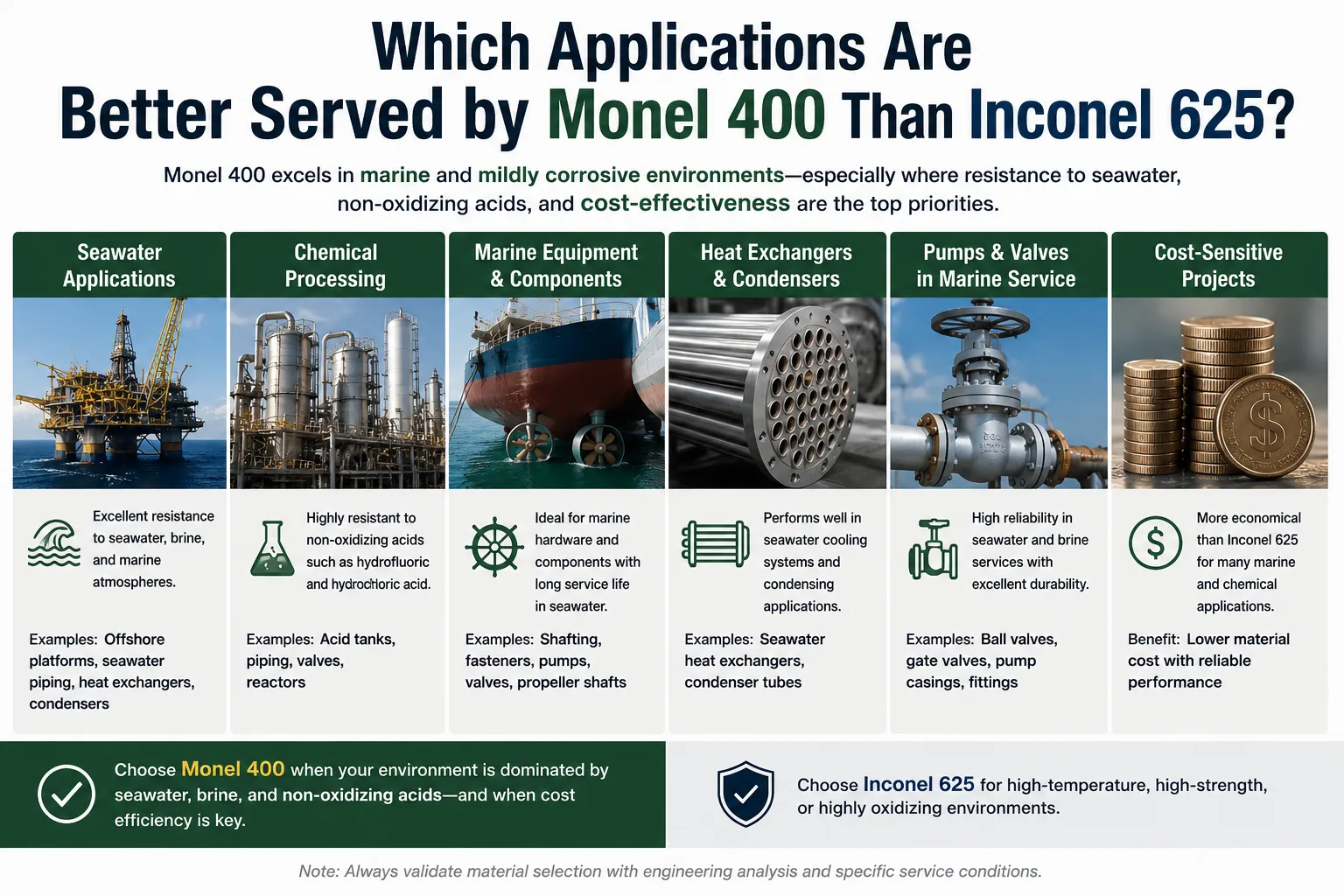
Applications Where Monel 400 Is the Correct Technical Choice
HF Acid Service — Petroleum Refining:
As discussed in the corrosion section, Monel 400 is the standard material for HF alkylation unit piping systems. The NiF₂ protective film formed in HF service provides corrosion rates below 0.1 mm/year in concentrated anhydrous HF, a performance level that Inconel 625 does not match in this specific medium. Refineries have operated Monel 400 HF alkylation piping for decades without replacement.
Marine Seawater Systems at Moderate Temperature:
In seawater service below 300°C without crevice geometry concerns — open sea chests, strainers, pump casings, and simple pipe runs — Monel 400 provides corrosion performance equivalent to Inconel 625 at 40–50% lower material cost. The electrochemical nobility mechanism of Monel 400 is as effective as the passive film mechanism of Inconel 625 in this specific environment.
Caustic Soda (NaOH) Service:
Both alloys resist caustic soda well, but Monel 400's lower cost makes it the standard choice for caustic handling and storage equipment. The only condition favoring Inconel 625 here is extremely high temperature caustic (above 300°C), where Monel 400's strength becomes limiting.
Ammonia Handling:
Ammonia — both anhydrous and aqueous — is handled efficiently in Monel 400 piping and vessels. The alloy's resistance to ammonia stress corrosion cracking (which affects brass and copper but not Monel 400) combined with its lower cost makes it the dominant material choice in ammonia refrigeration and chemical processing systems.
Freshwater and Low-Chloride Service:
In freshwater systems, desalinated water storage and transfer, and low-chloride process streams, Monel 400 provides complete corrosion resistance at a fraction of the cost of Inconel 625. Specifying Inconel 625 for freshwater service would be a significant overspecification.
Cost-Justified Monel 400 Applications by Sector
| Sector | Application | Monel 400 Advantage |
|---|---|---|
| Marine | Naval vessel seawater piping, 1/2"–8" NPS | 40–50% lower material cost vs 625, equivalent performance |
| Chemical | HF alkylation process piping | Technically superior — better HF resistance |
| Chemical | Caustic handling and transfer | Adequate performance, significant cost saving |
| Desalination | Brine and permeate handling headers | Seawater resistance, cost-effective vs 625 |
| Offshore | Platform firewater headers (below 200°C) | Seawater resistance, no elevated temp requirement |
| Industrial | Ammonia refrigeration piping | Ammonia resistance, no high-temperature requirement |
| Pharmaceutical | Purified water distribution | Corrosion resistance, lower cost than 625 |
How Do the Available Product Forms and Specifications Compare?
Both alloys are widely available across all standard product forms, but there are specification differences and availability nuances that affect procurement planning.
Product Form and Specification Comparison
| Product Form | Inconel 625 Specification | Monel 400 Specification | Notes |
|---|---|---|---|
| Plate | ASTM B443 | ASTM B127 | Both widely available |
| Sheet/Strip | ASTM B443 | ASTM B127 | Both standard production items |
| Bar (round) | ASTM B446 | ASTM B164 | Both in stock at major distributors |
| Seamless Pipe | ASTM B444 / ASME SB-444 | ASTM B165 / ASME SB-165 | Both in standard schedules |
| Welded Pipe | ASTM B705 / ASME SB-705 | ASTM B725 / ASME SB-725 | Both available, larger diameters |
| Seamless Tube | ASTM B444 | ASTM B165 | Heat exchanger tube widely available |
| Welded Tube | ASTM B704 | ASTM B730 | Standard heat exchanger fabrication |
| Fittings (butt weld) | ASTM B366 (Grade WPNCI) | ASTM B366 (Grade WPMC) | Both in standard B16.9 dimensions |
| Flanges (forgings) | ASTM B564 (N06625) | ASTM B564 (N04400) | Both to ASME B16.5 dimensions |
| Wire | ASTM B446 | ASTM B164 | Both available, standard sizes |
| Welding Consumable | AWS ERNiCrMo-3 | AWS ERNiCu-7 | Standard classification |
Stock Availability and Lead Time Considerations
At MWalloys, our experience is that Inconel 625 pipe, plate, and bar are somewhat more widely stocked in the distribution network than equivalent Monel 400 product, reflecting the higher current demand volume driven by offshore oil and gas programs. However, Monel 400 in smaller standard pipe sizes (1/2" through 4" NPS, Schedule 40S) is typically available from stock with short lead times due to consistent demand from marine and chemical process markets.
For non-standard dimensions — heavy wall pipe, large diameter plate, or custom bar sizes — both alloys require mill sourcing with similar lead times of 8–16 weeks depending on the specific product form and mill scheduling.
What Is the Cost Difference Between Inconel 625 and Monel 400?
Material cost is a real engineering consideration — not a secondary factor to be minimized. Understanding the true cost difference between Inconel 625 and Monel 400 enables engineers to make specifications that are both technically correct and economically responsible.
Raw Material and Finished Product Cost Drivers
The primary cost driver for both alloys is nickel, which fluctuates on the London Metal Exchange (LME). Both alloys contain high nickel levels — Inconel 625 at minimum 58% Ni and Monel 400 at 63–70% Ni. However, Inconel 625 also contains 8–10% molybdenum (a higher-cost alloying element) and 3.15–4.15% niobium (another premium-priced addition), which together push the raw material cost of Inconel 625 significantly above Monel 400.
| Cost Factor | Inconel 625 | Monel 400 | Impact |
|---|---|---|---|
| Nickel content | 58%+ (high) | 63–70% (high) | Both high Ni content |
| Molybdenum content | 8–10% (significant cost adder) | None | Major cost driver for 625 |
| Niobium content | 3.15–4.15% (cost adder) | None | Secondary cost driver for 625 |
| Copper content | Minimal | 28–34% (moderate cost) | Copper cheaper than Mo/Nb |
| Melting complexity | VIM or AOD required | AOD standard | Slight 625 processing premium |
| Typical relative price (plate, per lb) | 1.7–2.2× Monel 400 | Baseline | Approximate ratio, market-dependent |
Total Installed Cost Perspective
The material price difference does not always translate linearly into project cost difference, because:
- Inconel 625's higher yield strength allows thinner wall designs that partially offset the higher material cost per pound.
- Welding consumable costs for Inconel 625 (ERNiCrMo-3) are higher than Monel 400 consumables (ERNiCu-7), adding to fabrication costs.
- Heat treatment requirements are similar for both alloys (both typically supplied and used in the annealed condition without precipitation hardening)
- For systems where Monel 400 is the correct technical choice, the 40–50% material cost premium of Inconel 625 provides no return on investment.
We consistently advise our customers: where either alloy is technically acceptable, select Monel 400. Where Inconel 625's higher temperature capability, broader chemical resistance, or superior crevice corrosion resistance is genuinely needed, the premium is justified and the correct engineering decision is to specify Inconel 625 without compromise.
How Do You Make the Final Alloy Selection Between These Two Materials?
The selection decision between Inconel 625 and Monel 400 reduces to a structured evaluation of four key parameters. We use the following decision framework when advising customers on alloy selection.
Structured Alloy Selection Decision Framework
Step 1: Temperature Assessment:
If the maximum operating temperature exceeds 480°C at any point in the system's operating envelope, Monel 400 is eliminated from consideration. Proceed with Inconel 625.
Step 2: Corrosive Media Assessment:
- If the primary corrosive medium is hydrofluoric acid (any concentration, non-oxidizing conditions): specify Monel 400
- If the medium includes nitric acid, oxidizing conditions, or requires resistance to a broad range of chemicals simultaneously: specify Inconel 625
- If the medium is seawater without crevice geometry concerns and temperature below 300°C: Monel 400 is acceptable and cost-effective
Step 3: Crevice Geometry Assessment:
If the design includes tube-to-tubesheet joints, gasketed connections with potential for oxygen-depleted stagnant seawater, or other inherent crevice geometries in chloride service: specify Inconel 625 for its superior crevice corrosion resistance.
Step 4: Budget and Value Analysis:
If Steps 1–3 show either alloy is technically acceptable, calculate the total installed cost difference for both options. If Monel 400 provides adequate technical performance, the cost saving (typically 30–50% on material) should be captured.
Final Selection Summary Matrix
| Condition | Recommended Alloy | Rationale |
|---|---|---|
| Temperature above 480°C | Inconel 625 | Monel 400 not code-rated above 480°C |
| HF acid service | Monel 400 | Superior HF resistance |
| Oxidizing acid service | Inconel 625 | Cr passive film required |
| Seawater, no crevices, below 300°C | Monel 400 | Cost-effective with equivalent performance |
| Seawater with crevice geometry | Inconel 625 | Mo-based crevice resistance |
| High-velocity seawater (above 10 m/s) | Inconel 625 | Better erosion-corrosion resistance |
| Caustic soda service | Monel 400 | Cost-effective; both alloys suitable |
| Ammonia service | Monel 400 | Cost-effective; both alloys suitable |
| Sour service HPHT (above 200°C) | Inconel 625 | Temperature + chemical severity |
| Gas turbine exhaust / combustion system | Inconel 625 | Temperature capability required |
| Mixed acid (HF + HNO₃) | Inconel 625 | Oxidizing component requires Cr |
| Budget-limited seawater system | Monel 400 | 40–50% cost saving vs 625 |
FAQs: Inconel 625 vs Monel 400
FAQ 1: Which alloy is stronger — Inconel 625 or Monel 400?
Inconel 625 is significantly stronger than Monel 400 at all temperatures, with a minimum yield strength of 414 MPa (60 ksi) compared to Monel 400's 193 MPa (28 ksi) in the annealed condition — more than double the yield strength. At elevated temperatures, the strength advantage of Inconel 625 grows further: at 480°C, Inconel 625 retains approximately 340 MPa yield strength while Monel 400 has dropped to roughly 155 MPa. In pressure piping design, this strength difference allows Inconel 625 to achieve equivalent pressure ratings with significantly thinner wall sections, which partially offsets the higher material cost on a per-system basis. For applications where minimum weight or minimum wall thickness is critical — subsea umbilical tubing, aircraft hydraulic lines, high-pressure chemical process piping — Inconel 625's strength advantage is a primary selection driver. Monel 400's lower strength is acceptable in lower-pressure systems, gravity-feed piping, atmospheric vessels, and tank linings where stress levels are inherently low.
2: Can Inconel 625 and Monel 400 be welded to each other in dissimilar metal joints?
Yes. Inconel 625 and Monel 400 can be joined by fusion welding using ERNiCrMo-3 (Inconel 625 matching filler) as the recommended consumable, which provides adequate metallurgical compatibility with both base metals and delivers good corrosion resistance across the weld interface. The weld joint between these two alloys presents no fundamental metallurgical incompatibility because both base metals have FCC austenitic structures with similar solidification behavior. The ERNiCrMo-3 filler is preferred over ERNiCu-7 because its broader corrosion resistance covers both the Inconel 625 and Monel 400 service environments simultaneously, and its higher strength provides a balanced joint efficiency. Preheat is generally not required for either base metal. Post-weld annealing at 870°C is recommended when the fabrication will see corrosive chemical service, to relieve residual welding stress and restore maximum corrosion resistance in the heat-affected zone of both base metals. Welding qualifications should be performed per ASME Section IX with both base metals included in the procedure qualification record.
3: Is Inconel 625 or Monel 400 more resistant to stress corrosion cracking in chloride environments?
Inconel 625 provides superior resistance to chloride stress corrosion cracking (SCC) compared to Monel 400, with essentially no documented SCC failures in standard seawater or chloride service, while Monel 400 can experience SCC under extreme chloride concentration combined with tensile stress above approximately 70% of yield strength. The SCC resistance of both alloys is significantly better than austenitic stainless steels (304/316 grades), which are highly susceptible to chloride SCC above approximately 60°C. Inconel 625's high chromium and molybdenum content stabilizes the passive film against the localized attack that initiates SCC, while the FCC nickel matrix provides the inherent resistance to hydrogen embrittlement that would drive crack propagation. Monel 400's SCC sensitivity in extremely concentrated chloride brines (above 20% NaCl) under tensile stress is a real limitation that engineers should consider for applications in concentrated brine service, evaporator bodies, or salt crystallizer vessels. For subsea equipment or offshore platform service where stress levels are well-controlled and chloride concentrations are typical seawater rather than concentrated brine, Monel 400 SCC is not typically a practical concern.
4: What is the service life difference between Inconel 625 and Monel 400 in seawater applications?
In properly designed seawater piping systems with appropriate flow velocities and no chronic stagnation, both Inconel 625 and Monel 400 can provide service lives exceeding 30–50 years, making service life alone an insufficient criterion to choose one alloy over the other in this specific environment. The practical differentiator in seawater system longevity is typically crevice corrosion resistance rather than general corrosion rate — Inconel 625 provides better resistance in creviced geometries such as gasketed flanges, tube support baffles, and dead legs where oxygen-depleted, chloride-concentrated local conditions develop. For straight pipe runs, open system inlets, and well-designed heat exchanger tube bundles with adequate flow, both alloys have documented decades-long service histories in naval, commercial marine, and offshore platform applications. The decision between alloys in pure seawater service should therefore be driven by the crevice geometry assessment, operating temperature, system pressure requirements, and total system cost rather than an expectation that one alloy will significantly outlast the other in equivalent conditions.
5: Does Inconel 625 or Monel 400 perform better in sour oil and gas service (H₂S environments)?
Both Inconel 625 and Monel 400 are approved for sour service applications per NACE MR0175/ISO 15156, but Inconel 625 is the preferred choice for high-temperature, high-pressure sour service above approximately 150°C where its superior strength and broader chemical resistance provide meaningful operational advantages. NACE MR0175/ISO 15156-3 qualifies both alloys for H₂S service with specific hardness limitations: Monel 400 must not exceed 35 HRC and Inconel 625 must not exceed 40 HRC in the annealed condition, both of which are easily met by standard mill production. In sour gas streams that also contain carbon dioxide, chlorides, and condensed water — the typical produced fluid matrix in deep offshore wells — Inconel 625's chromium content provides specific resistance to CO₂ corrosion (sweet corrosion) and chloride-induced pitting that Monel 400 cannot match equally. For lower-severity sour service such as produced water handling at ambient to moderate temperatures, Monel 400 is a cost-effective and technically adequate choice that is widely used in offshore separation equipment.
6: Which alloy is better for cryogenic service at liquid nitrogen temperatures?
Both Inconel 625 and Monel 400 maintain excellent toughness at cryogenic temperatures down to liquid nitrogen (-196°C) and liquid hydrogen (-253°C) temperatures, as both alloys have fully austenitic (FCC) crystal structures that do not undergo ductile-to-brittle transition at low temperatures. This makes both alloys vastly superior to carbon steel and most ferritic stainless steels for cryogenic service. The selection between them at cryogenic temperatures typically comes down to the other service conditions: if the cryogenic fluid is also corrosive (liquid oxygen presents oxidizing conditions, LNG contains minor sulfur compounds), Inconel 625's broader corrosion resistance provides a safety margin. For liquid nitrogen or cryogenic hydrocarbon service where corrosion is not a concern, Monel 400's adequate low-temperature toughness and lower cost make it the more economical choice. Yield strength of both alloys actually increases at cryogenic temperatures, providing additional safety margin in pressure containment designs compared to room temperature values.
7: Which alloy should be used for heat exchanger tubing in offshore seawater cooling systems?
Inconel 625 tube (ASTM B444) is the preferred specification for heat exchanger tubing in offshore seawater service where the tube-to-tubesheet joints, baffles, and support plates create multiple crevice geometries susceptible to oxygen-depleted corrosion attack, while Monel 400 tube (ASTM B165) is acceptable in simpler single-pass designs with well-managed flow distribution. Heat exchangers with multiple baffles and tube support plates represent the most challenging application for seawater alloy selection because every contact point between tube and support plate is a potential crevice. Inconel 625's high molybdenum content provides specific resistance to crevice corrosion in these geometries that Monel 400 cannot guarantee. For shell-and-tube heat exchangers handling seawater on the tube side in critical offshore applications, Inconel 625 tubing against a Monel 400 or Inconel 625 tubesheet (rolled and welded joints per TEMA standards) represents the most reliable design. At MWalloys, we supply both alloys in heat exchanger tube form and can advise on wall thickness selection based on the specific design temperature, pressure, and baffle configuration.
8: How do Inconel 625 and Monel 400 compare for use in marine exhaust systems?
Inconel 625 is the correct material for marine exhaust manifolds, exhaust mixing elbows, and exhaust systems exposed to combustion gas temperatures above 500°C, while Monel 400 is suitable only for water-cooled exhaust sections where metal temperatures stay below 400°C. Marine diesel engine exhaust systems present a combination of mechanical vibration, thermal cycling from start-stop operation, condensed sulfuric acid from high-sulfur bunker fuel combustion, and intermittent high-velocity gas flow that collectively represents one of the most demanding material environments in shipboard service. Water-jacketed (wet exhaust) sections, where seawater cooling keeps the outer pipe metal below 300°C, can use Monel 400 with good results over many years of service. Dry exhaust sections upstream of the water injection point — where metal temperatures reach 400–700°C — require Inconel 625 for adequate oxidation resistance and elevated temperature strength. Misspecifying Monel 400 in a high-temperature dry exhaust location leads to rapid oxidation, wall thinning, and structural failure, a situation we have encountered in post-failure analysis consulting.
9: What is the magnetic behavior difference between Inconel 625 and Monel 400?
Inconel 625 is essentially non-magnetic with a relative permeability of approximately 1.0006 in the annealed condition, while Monel 400 is slightly magnetic — particularly in cold-worked condition — with relative permeability values ranging from 1.001 to 1.005 depending on the degree of cold work and specific heat chemistry. For applications in magnetically sensitive environments — MRI facilities, naval minesweeping vessels, magnetic anomaly detection (MAD) equipment, and precision magnetometry instruments — Inconel 625 provides more reliable non-magnetic performance than Monel 400. The magnetic character of Monel 400 arises from the FCC nickel-copper matrix, which can develop slight ferromagnetic regions under cold work due to trace compositional gradients within the allowable chemistry range. For most general marine and chemical process applications, the slight magnetic permeability of Monel 400 is completely irrelevant. Engineers specifying pipe or components for magnetically sensitive platforms should specify Inconel 625 and request magnetic permeability testing results with the material certification.
10: Which alloy offers better value for desalination plant construction?
Monel 400 offers better value than Inconel 625 for most desalination plant piping applications, providing equivalent corrosion performance in the brine handling and seawater intake circuits at 40–50% lower material cost, though Inconel 625 is preferred in specific high-temperature and high-velocity zones within evaporator-based multi-effect distillation (MED) systems. Desalination plant construction — whether membrane-based reverse osmosis (RO) or thermal-based multi-effect distillation — involves large quantities of corrosion-resistant piping in both the seawater intake and brine concentrate reject circuits. In RO plants where maximum process temperatures rarely exceed 45°C, Monel 400 provides complete corrosion resistance in the seawater and brine streams at significantly lower capital cost than Inconel 625. In thermal desalination plants (MED or MSF — multi-stage flash), where brine temperatures reach 60–120°C in the higher-temperature effects, Monel 400 remains adequate while providing substantial project cost savings versus Inconel 625 specification throughout. Inconel 625 becomes the preferred choice specifically for flash chamber partition plates in MSF units, highest-temperature evaporator body sections, and any zone where concentrated brine with elevated temperature combines with crevice geometry, conditions that push beyond Monel 400's optimal performance range.
Verifiable References
The following sources were consulted in preparing this technical comparison and are independently verifiable by engineers and materials specialists:
- Special Metals Corporation. INCONEL alloy 625 Data Sheet (SMC-063). Special Metals, Huntington, WV.
- Special Metals Corporation. MONEL alloy 400 Data Sheet (SMC-080). Special Metals, Huntington, WV.
- ASTM International. ASTM B443: Standard Specification for Nickel-Chromium-Molybdenum-Columbium Alloy (UNS N06625) and Nickel-Chromium-Molybdenum-Silicon Alloy (UNS N06219) Plate, Sheet, and Strip. ASTM International, West Conshohocken, PA.
- ASTM International. ASTM B127: Standard Specification for Nickel-Copper Alloy (UNS N04400) Plate, Sheet, and Strip. ASTM International, West Conshohocken, PA.
- ASTM International. ASTM B444: Standard Specification for Nickel-Chromium-Molybdenum-Columbium Alloys (UNS N06625 and UNS N06852) Pipe and Tube. ASTM International, West Conshohocken, PA.
- ASTM International. ASTM B165: Standard Specification for Nickel-Copper Alloy (UNS N04400) Seamless Pipe and Tube. ASTM International, West Conshohocken, PA.
- ASME International. ASME Section II Part B: Non-Ferrous Material Specifications. ASME, New York, NY. Current Edition.
- ASME International. ASME B31.3: Process Piping Code, Appendix A — Allowable Stresses. ASME, New York, NY. Current Edition.
- NACE International. NACE MR0175 / ISO 15156-3: Petroleum and Natural Gas Industries — Materials for Use in H₂S-Containing Environments, Part 3. NACE International, Houston, TX.
- Davis, J.R. (Editor). Nickel, Cobalt and Their Alloys (ASM Specialty Handbook). ASM International, Materials Park, OH, 2000. ISBN: 0-87170-685-7
- Schweitzer, P.A. Handbook of Corrosion-Resistant Piping. Industrial Press, New York, 1994. ISBN: 0-8311-3043-8
- Fontana, M.G. Corrosion Engineering, 3rd Edition. McGraw-Hill, New York, 1986. ISBN: 0-07-021463-8
- Haynes International. Corrosion-Resistant Alloys Technical Overview. Haynes International, Kokomo, IN.
- American Welding Society (AWS). AWS A5.14: Specification for Nickel and Nickel-Alloy Bare Welding Electrodes and Rods. AWS, Miami, FL. Current Edition.
- Kirchheiner, R. and Wahl, V. "Nickel Alloys in Chemical Plant Construction." Werkstoffe und Korrosion (Materials and Corrosion), Vol. 57, Issue 2, 2006. (Corrosion rate data for Inconel 625 and Monel 400 in various media)