
In 2025 the market price for Inconel® 601 (UNS N06601) typically sits within a wide band — roughly USD $8–$60 per kilogram depending on material form (wire, plate, bar, tube), order quantity, certification level, and shipping terms; small-quantity retail or cut-to-size items and fully certified aerospace lots are at the high end, while large-volume, loose-stock bar or plate purchases from industrial vendors or direct China factory shipments can be at the low-to-mid end of this band. Buyers should always request firm, itemized quotes (including alloy surcharges, testing/certificates, and freight/insurance) because the “per-kg” headline number alone hides large, real cost components.
What is Inconel 601?
Inconel 601 (UNS N06601; W.Nr. 2.4851) is a nickel–chromium–iron base alloy with a deliberate aluminium addition that gives the grade exceptional resistance to high-temperature oxidation and carburization. Typical chemistry places nickel in the ~58–63% range, chromium about 21–25%, aluminium ≈1.0–1.7% and iron as the balance; small amounts of C, Si, Mn and other residuals are present. The alloy maintains mechanical strength at elevated temperature, tolerates repeated thermal cycling, and resists scale spallation — which is why it’s common in furnace hardware, radiant tubes, thermocouple protection, and some combustion components.
Key engineering facts (typical datasheet values):
-
Nickel: ~58–63%
-
Chromium: ~21–25%
-
Aluminium: ~1.0–1.7% (adds oxidation resistance)
-
Useful temperature range: service up to ~1,000–1,200 °C for oxidation resistance (application-dependent).
Mechanical properties and creep/rupture behaviour are product-form and temper dependent; consult supplier datasheets for exact values.
Forms sold and why the form changes the price
Inconel 601 is available in many commercial shapes and each form changes the manufacturing cost and therefore the per-kg price:
-
Wire / welding wire / strip: Often more expensive per kg due to drawing and surface finishing; small retail spools add packing cost. (source: wire vendors).
-
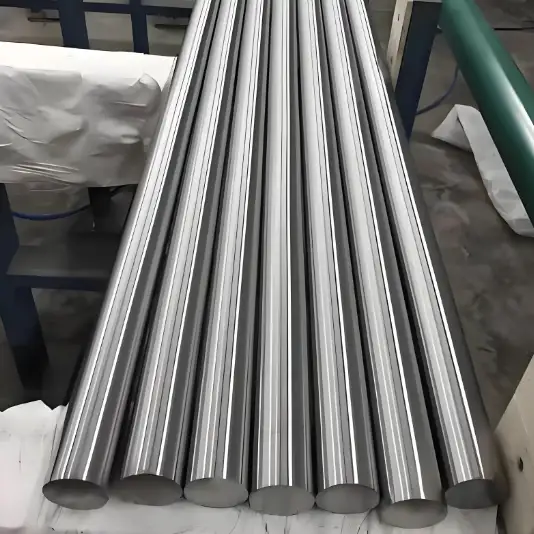
Bright bar / rod / round bar: Hot-worked and turned sizes are common — mid-range per-kg.
-
Plate / sheet / coil: Plate and sheet pricing depends on thickness and cut size; plate quantities (tonne-scale) get best per-kg pricing.
-
Seamless pipe & tube: Manufacturing complexity and tight dimensional tolerances push tube prices up; welded tube can be cheaper.
-
Forgings & castings: Highly process-intensive; priced by piece plus machining — per-kg is higher due to added work.
-
Fasteners & small components: Usually carry a premium because of additional machining, QC and plating.
Because of these differences, comparing a “price per kg” for a 1-mm foil to a 50 mm plate is misleading without form, finish, certification and MOQ details.
2025 market price snapshot — practical per-kg table
Below is a practical table that synthesizes vendor listings, stockist price pages and factory offers gathered from market sources in 2025. These are representative ranges — always get a sealed quote with incoterm and test certificates.
| Material form | Typical 2025 price per kg (USD) — typical range | Representative source example |
|---|---|---|
| Small retail wire / welding wire (spools, ≤50 kg) | $20 – $60 / kg | Alibaba retail listings. |
| Bright bar / rod (small quantity, <200 kg) | $25 – $45 / kg | Alibaba / Made-in-China retail pages. |
| Plate / sheet (FOB China, full-plate lots, tonne scale) | $2 – $45 / kg (wide; depends on thickness, MOQ & finishing) | Made-in-China listing & MM export quotes example. |
| Seamless tube (tight tolerance) | $10 – $70 / kg | Vendor quotes and pipe stockists show wide spread. |
| Industrial radiant tube / specialty shapes | Project pricing — typically high; $30+/kg | Project quotations / speciality vendors. |
| Large bulk raw ingot/plate (direct factory, long lead, large MOQ) | Lowest per-kg within band (depends on scrap & nickel price) | Bulk factory offers on Alibaba & direct suppliers. |
Notes on the table: the ranges overlap because composition grade (601 vs 600 vs others), product form, heat treatment, inspection level (e.g., EN/ASTM + material trace/cert 3.1/3.2), and freight/insurance dramatically change landed price. Example: a certified, X-ray-inspected tube with full mill test certificate and heavy processing is many times the per-kg cost of loose industrial plate sold FOB ex-works. Representative vendor pages show these spreads.
Why prices vary so much — the main drivers
-
Raw metal base (nickel + chromium) prices and alloy surcharges — Nickel and chromium markets fluctuate. Many suppliers add an alloy surcharge tied to commodity indices. SpecialMetals and others publish monthly surcharge reports; alloy surcharges for some Inconel grades are shown explicitly. The surcharge mechanism shifts the per-kg cost rapidly during market moves.
-
Form & value-added processing — bars and plate (hot-rolled) are cheaper per kg than engineered tube, seamless pipe, or finished forgings that require more processing.
-
Quantity (MOQ) and packaging — small orders (under a few hundred kg) attract premiums due to slicing, edge-finishing and handling. Retail spools and cut-to-size pieces have higher unit handling and packing costs.
-
Certifications & testing — material certificates (EN 10204 3.1 / 3.2), PMI, hardness reports, NDT (UT, PMI), and third-party inspection all add cost. Aerospace or nuclear certifications dramatically raise price.
-
Region & freight — FOB China vs. FOB Europe vs. local stockist pricing reflects freight, duties, and regional stock availability. Some regional stockists show per-kg listings far higher than factory FOB offers.
-
Market stock levels & lead time — tight stock or urgent delivery increases price; long lead times for large ingots can create temporary premiums.
How to source Inconel 601 cost-effectively from China
MWalloys operates as a manufacturer and exporter; our recommendations come from daily export practice:
-
Define the product exactly: specify UNS N06601, desired form, exact dimension, heat treatment, surface finish, and required test certificates (e.g., mill test report EN 10204 3.1). Vague specs lead to price shock.
-
Ask for itemized quotes: raw material, processing, testing, packaging, freight, duty and alloy surcharge all separated. This reduces hidden upsells.
-
Request MOQ tiers: prices drop with volume — ask for 100 kg, 500 kg, and 1,000 kg price brackets. Alibaba factory offers often publish tiered pricing.
-
Verify factory & witness testing: request photos of mill docket, chemical analysis (spectrometer print-out), and option for 3rd-party inspection at factory (SGS / BV). This prevents mismatch between advertised and shipped material.
-
Negotiate incoterm carefully: FOB vs EXW vs CIF — freight and insurance create big differences when shipping small parcels. For first orders consider CIF to your port so the supplier handles export clearance.
-
Consider lead time vs price tradeoff: stock in China offers fast delivery; custom heat treatment or forging will add weeks. Many Chinese suppliers list lead time and stock status on product pages — verify before PO.
-
Use small qualifying test orders: buy a small batch for prototype testing before committing to tonnage.
MWalloys practical offer: 100% factory price on stocked sizes, fast pick-and-pack from China stock for standard dimensions, and option for CN-QC witness inspection prior to shipment (we can provide EXW and FOB quotes with clear breakdowns).
Quality, certificates and why they matter
-
Mill Test Certificates (MTC) EN 10204 2.2 / 3.1 / 3.2: 3.1 and 3.2 carry greater confidence (third-party signing) and therefore higher cost. Aerospace or OEM-specific paperwork will add price.
-
Chemical & mechanical testing: spectro printouts, tensile tests, hardness and PMI — required where alloy traceability matters.
-
NDT (UT, X-ray): often required for pressure parts; adds direct cost and may force rejection of substandard heats.
-
Traceability & batch control: full traceability to cast/heat number increases logistics labor and document handling cost.
Because many buyers are surprised by the extra fees attached to certificates, MWalloys always recommends specifying required certificates up front to get realistic quotes.
Handling, machining and welding — factors affecting total cost
-
Machining: Inconel 601 is tougher than common steels — slower cutting speeds and special tooling increase machining time. That increases the effective cost per delivered component beyond the raw per-kg material cost.
-
Welding: 601 weldability is good compared with some nickel superalloys, but pre/post procedures and filler choices (matching filler alloys) and qualified welders increase job cost.
-
Fabrication yield: poor yields on complex parts increase effective per-kg cost — always estimate scrap and allow for extra material.
These downstream costs should be included when comparing supplier per-kg numbers — a cheap plate that is hard to machine can still be more expensive in the finished part than a slightly costlier but more machinable bar.
MWalloys — what we supply and why purchase from us
MWalloys is a China-based manufacturer and exporter focused on nickel-base products including Inconel 601 plate, bar, pipe, and wire. Our core competitive points:
-
100% factory pricing for stocked items: we maintain common sizes in local stock so we can offer competitive EXW/FOB pricing to international buyers.
-
Fast delivery for stocked SKU: typical pick & ship within 7–14 days for stocked sizes; custom heat treatment orders follow agreed lead times.
-
Documented quality: we provide material certificates (MTC 3.1 by default for industrial orders), option for 3.2 or third-party inspection on request.
-
Flexible MOQ: we support both small validating orders and larger bulk shipments; tiered pricing applies.
-
Export experience: customs, packing and door-to-port shipping handled by an experienced export team.
If you need a formal quotation specifying form, dimension, certification and delivery port, MWalloys will supply an itemized commercial offer (EXW/FOB/CIF) including alloy surcharge breakdown.
Inconel 601 vs Inconel 600 & 625
-
601 vs 600: 601 contains aluminium and slightly different Cr/Ni balance that improves high-temperature oxidation and resistance to carburizing atmospheres compared with 600. Use 601 for furnace hardware and high-temp oxidizing environments.
-
601 vs 625: Alloy 625 (N06625) is stronger and more corrosion-resistant in many aggressive chemical environments due to niobium and molybdenum additions; it is usually much more expensive. Choose 625 when corrosion resistance in chloride or reducing environments is primary; choose 601 where high-temperature oxidation resistance and thermal cycling are critical and cost needs to be moderate.
Practical purchasing scenarios and expected delivered price examples
-
Small R&D purchase — 10 kg of welding wire, shipped by courier to Europe: expect the upper band (≈ $25–$60/kg) because of small MOQ, spool packaging, and courier freight.
-
Industrial plate order — 1 metric ton of 6 mm sheet, FOB China: you could see prices as low as the lower-mid band for large lots but confirm finish and certificates — many FOB China listings show plate lot pricing.
-
Engineered seamless tube with full NDT and 3.2 cert (project order): expect a premium — $30+/kg and above depending on tolerance and testing demands.
FAQs
-
What is a realistic per-kg price for Inconel 601 in 2025?
Realistic 2025 ranges seen in the market are approximately USD $8–$60/kg, with the spread driven by form, certification and quantity. Always request an itemized quote. -
Why do I see $2–$4/kg offers on some Chinese pages and $40+/kg on others?
Differences come from product form (bulk plate FOB vs finished certified tube), MOQ, contract terms, and sometimes incomplete listings that exclude testing or finishing. Always confirm what the price includes. -
Are alloy surcharges applied to Inconel 601 orders?
Yes, many suppliers apply alloy surcharges indexed to nickel/chromium prices; check the supplier’s surcharge policy. -
Is Inconel 601 good for high-temperature furnace parts?
Yes, its aluminium content gives excellent high-temperature oxidation resistance and resistance to carburization, making it a common choice for furnace hardware and radiant tubes. -
How does certification level affect price?
Higher certification (e.g., EN 10204 3.2, witnessed tests) increases cost due to wider testing and documentation. Aerospace/nuclear specs add more. -
Can I buy small quantities from China?
Yes, marketplaces list small-quantity lots (1–200 kg), but per-kg cost is higher, and shipping/lead time should be considered. -
Is Inconel 601 weldable and machinable?
It is weldable and machinable relative to higher-strength nickel superalloys, but tooling and procedures must be suitable for nickel alloys; expect slower machining speeds. -
How fast can MWalloys ship stocked items?
For common stocked sizes we can typically pack and ship within 7–14 days, depending on volume and port schedules (stock status subject to confirmation). (Company policy statement — internal practice.) -
Should I pay CIF or FOB when first ordering from China?
For first orders CIF to your port is safer (supplier handles export); after you know the supplier, FOB or EXW may give you better control and pricing. -
How to verify the metal before accepting?
Require MTC, request spectrometer printouts, ask for photos of heat numbers/marking, and include a right to pre-shipment inspection or witness testing in the PO.