

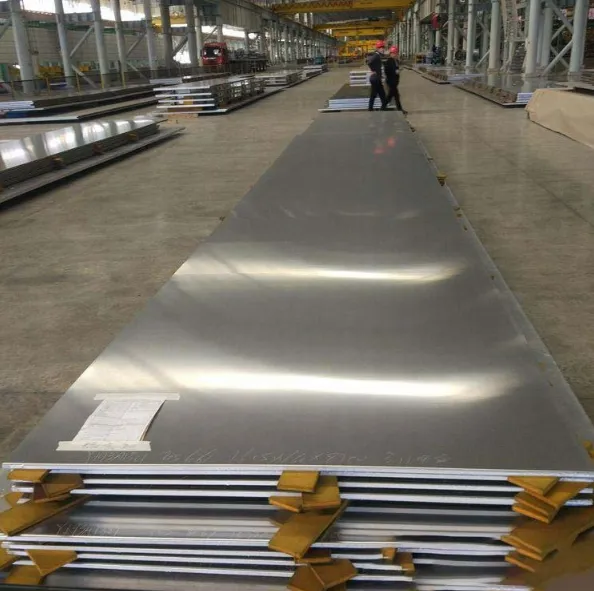
Hastelloy C276 plate and sheet represent the gold standard in nickel-molybdenum-chromium alloy flat products, offering unmatched resistance to pitting, crevice corrosion, and stress corrosion cracking across the widest range of aggressive chemical environments commercially available today. At MWalloys, we supply ASME SB575-certified Hastelloy C276 plate and sheet in cut-to-size formats directly from our ISO-certified manufacturing facility, serving chemical processing plants, offshore oil and gas operators, pharmaceutical manufacturers, and flue gas desulfurization system builders worldwide.
What Is Hastelloy C276 and Why Does It Matter for Industrial Applications?
Hastelloy C276 is a wrought nickel-molybdenum-chromium superalloy originally developed by Haynes International and now produced by multiple qualified mills under the common designation UNS N10276. The alloy was engineered specifically to resist the widest spectrum of corrosive environments without the need for post-weld heat treatment in most field fabrication scenarios. That combination of broad chemical resistance and fabrication flexibility has made it the most widely specified nickel alloy in aggressive industrial service for more than five decades.
When we talk about Hastelloy C276 plate and sheet at MWalloys, we are referring to flat-rolled product forms that range from thin-gauge sheet starting at approximately 0.5 mm through heavy plate exceeding 100 mm in thickness. These products are supplied in the hot-rolled or cold-rolled condition, solution annealed and pickled as standard, and they conform to international standards including ASME SB575, ASTM B575, EN 10095, and ISO 6208 depending on the geographic market and end-use code requirements.
The practical reason C276 commands a premium over standard stainless steels is simple: when engineers face media such as wet chlorine gas, hydrochloric acid, sulfuric acid at elevated temperatures, phosphoric acid, and mixed acid streams, austenitic stainless steels like 316L fail rapidly through pitting or stress corrosion cracking. C276's high molybdenum content (nominally 15–17 wt%) combined with chromium (14.5–16.5 wt%) and tungsten (3–4.5 wt%) produces a passive film of exceptional stability that resists both oxidizing and reducing acid attack simultaneously. No other commercially produced nickel alloy covers both attack modes across such a broad temperature range as effectively.
We have delivered C276 plate to projects ranging from small laboratory scrubber components weighing a few kilograms to large pressure vessel shells exceeding 20 tonnes. That breadth of application experience informs every aspect of our cut-to-size service and technical support offering.
How Does the Chemical Composition of Hastelloy C276 Plate Define Its Corrosion Performance?
Understanding the composition of Hastelloy C276 is not merely academic; it directly predicts service life in corrosive environments and determines welding procedure variables. The table below presents the ASTM/ASME composition limits alongside the typical certified mill chemistry that MWalloys sources.
Hastelloy C276 Chemical Composition Table (UNS N10276)
| Element | ASTM B575 / ASME SB575 Minimum | ASTM B575 / ASME SB575 Maximum | Typical Mill Cert Value |
|---|---|---|---|
| Nickel (Ni) | Balance | Balance | ~57% |
| Molybdenum (Mo) | 15.0% | 17.0% | 16.2% |
| Chromium (Cr) | 14.5% | 16.5% | 15.5% |
| Iron (Fe) | -- | 7.0% | 5.5% |
| Tungsten (W) | 3.0% | 4.5% | 3.7% |
| Cobalt (Co) | -- | 2.5% | 1.0% |
| Carbon (C) | -- | 0.010% | 0.003% |
| Silicon (Si) | -- | 0.08% | 0.04% |
| Manganese (Mn) | -- | 1.0% | 0.4% |
| Vanadium (V) | -- | 0.35% | 0.18% |
| Phosphorus (P) | -- | 0.04% | 0.010% |
| Sulfur (S) | -- | 0.03% | 0.001% |
Why Each Element Matters
Molybdenum is the primary contributor to resistance against reducing acids and pitting in chloride-containing environments. The 15–17% Mo content in C276 is higher than in any other standard nickel alloy except C-22HS and C-2000, which is why C276 outperforms C-22 in purely reducing acid service such as concentrated HCl.
Chromium provides resistance to oxidizing environments and, together with molybdenum, forms the stable passive oxide layer that prevents electrochemical dissolution. The dual synergy of Cr and Mo is precisely why C276 handles mixed acid streams that would be fatal to single-mechanism alloys.
Tungsten acts as an enhancer of pitting resistance. The addition of 3–4.5% W pushes the pitting resistance equivalent number (PREN) of C276 well above 70, compared with approximately 44 for 316L stainless steel and approximately 50 for duplex 2205.
Low carbon content (maximum 0.01%) is critical for maintaining intergranular corrosion resistance after welding. When carbon content is controlled at this level, chromium carbide precipitation in heat-affected zones is thermodynamically suppressed, which is why most C276 weldments can remain in service without post-weld sensitization annealing.
Iron serves as a cost-effective diluent without significantly compromising corrosion performance up to the 7% maximum limit specified.
The PREN for Hastelloy C276, calculated as Cr + 3.3×Mo + 16×N (where nitrogen is negligible in this alloy), yields approximately 68–72 depending on actual heat chemistry. This compares favorably with all standard austenitic and duplex stainless steels and exceeds most other nickel alloys in common service.
What Mechanical and Physical Properties Should Engineers Expect from C276 Sheet and Plate?
Mechanical properties are equally important as corrosion data when specifying C276 for pressure vessel, heat exchanger, or structural service. The properties vary depending on product form, thickness, and heat treatment condition. All values below reference the solution-annealed condition, which is the standard delivery condition for plate and sheet supplied to ASME SB575.
Hastelloy C276 Mechanical Properties Table (Solution Annealed)
| Property | Value (Metric) | Value (Imperial) | Test Standard |
|---|---|---|---|
| Ultimate Tensile Strength | ≥ 690 MPa | ≥ 100 ksi | ASTM E8 |
| 0.2% Yield Strength | ≥ 283 MPa | ≥ 41 ksi | ASTM E8 |
| Elongation (2 inch / 50 mm gauge) | ≥ 40% | ≥ 40% | ASTM E8 |
| Hardness (Brinell) | ≤ 240 HBW | ≤ 240 HBW | ASTM E10 |
| Hardness (Rockwell B) | ≤ 100 HRB | ≤ 100 HRB | ASTM E18 |
Physical Properties of Hastelloy C276
| Property | Value |
|---|---|
| Density | 8.89 g/cm³ (0.321 lb/in³) |
| Melting Range | 1325–1370°C (2415–2500°F) |
| Thermal Conductivity at 100°C | 10.2 W/m·K |
| Coefficient of Thermal Expansion (21–100°C) | 11.2 µm/m·°C |
| Electrical Resistivity | 1.30 µΩ·m |
| Modulus of Elasticity at Room Temperature | 205 GPa (29.8 × 10⁶ psi) |
| Specific Heat Capacity | 427 J/kg·K |
Elevated-Temperature Strength
One underappreciated aspect of C276 plate is its retained strength at elevated temperatures. At 400°C (752°F), the tensile strength remains above 580 MPa and the yield strength stays above 230 MPa, which permits the use of C276-clad or solid plate in high-temperature scrubber vessels and reactor liners without extraordinary wall thickness penalties. At 600°C, C276 begins to approach the limits of practical structural service, but for the majority of chemical process applications operating below 450°C, the alloy's strength-to-weight ratio is competitive with austenitic stainless steels while providing far superior corrosion performance.
The relatively high elongation (40% minimum) and good impact toughness down to cryogenic temperatures make C276 sheet and plate suitable for cryogenic process applications as well, provided the design code allows it. ASME Section VIII Div. 1 and Div. 2 both recognize C276 plate through Code Case 2615 and direct inclusion in ASME SB575.
How Does ASME SB575 Govern Hastelloy C276 Plate and Sheet Production?
ASME SB575 is the boiler and pressure vessel code equivalent of ASTM B575, both titled "Standard Specification for Low-Carbon Nickel-Molybdenum-Chromium, Low-Carbon Nickel-Chromium-Molybdenum, Low-Carbon Nickel-Chromium-Molybdenum-Copper and Low-Carbon Nickel-Chromium-Molybdenum-Tungsten Alloy Plate, Sheet, and Strip." This specification covers Hastelloy C276 (UNS N10276) and several related nickel alloys in flat product form.
Key Requirements Under ASME SB575
Chemical Composition Control: The specification mandates heat analysis and product analysis with defined variances. Each plate or coil is traceable to a specific heat of metal with a certified mill test report (CMTR) documenting actual heat chemistry.
Mechanical Testing: Tensile testing is required on each lot, defined as all material from the same heat in the same condition. The lot must meet minimum tensile strength, yield strength, and elongation requirements before release.
Corrosion Testing: This is the requirement that distinguishes SB575 from many other plate specifications. The standard mandates an immersion corrosion test in a boiling 65% nitric acid solution per ASTM G67 (the Huey test) to verify intergranular corrosion resistance. The C276 product must show a corrosion rate not exceeding 50 mils per year (mpy) in this test, confirming that carbon levels and heat treatment have not sensitized the grain boundaries.
Heat Treatment: All C276 plate and sheet supplied to SB575 must be solution annealed at a minimum temperature of 1121°C (2050°F) followed by rapid quenching. This thermal treatment dissolves any carbides or intermetallic phases that formed during hot or cold working, restoring maximum corrosion resistance and ductility.
Dimensional Tolerances: Plate thickness tolerances are governed by Table 10 of ASTM A480/A480M as incorporated by reference. Sheet thickness tolerances are governed by ASTM B906. Width and length tolerances depend on whether the product is cut-to-length plate or coil sheet.
Marking and Traceability: Each plate or sheet must be marked with the specification number (ASME SB575 or ASTM B575), UNS number (N10276), alloy designation, heat number, temper designation (A = annealed), and supplier or producer identification. At MWalloys, we maintain full traceability from steel mill heat number through to our final cut-to-size piece.
ASME Code Allowable Stresses for C276
Under ASME Section II Part D, Hastelloy C276 plate receives allowable design stresses that reflect its combination of strength and temperature capability. At room temperature through 100°C, the allowable stress for C276 plate (SB575, Condition A) is approximately 30 ksi (207 MPa), which is competitive with austenitic stainless steel while delivering vastly superior corrosion performance in aggressive media.
What Are the Standard Dimensions, Tolerances, and Cut-to-Size Options Available?
One of the most frequent procurement challenges our customers face is bridging the gap between mill-standard sizes and project-specific requirements. Standard nickel alloy plate is produced in widths up to approximately 2,000 mm (78 inches) and lengths up to 6,000 mm (236 inches) in the hot-rolled condition. Cold-rolled sheet can be sourced in coil widths up to approximately 1,500 mm.
Standard Hastelloy C276 Plate and Sheet Size Ranges
| Product Form | Thickness Range | Width Range | Length Range | Delivery Condition |
|---|---|---|---|---|
| Hot-Rolled Plate | 4.0 mm – 100 mm | Up to 2,000 mm | Up to 6,000 mm | Solution Annealed + Pickled |
| Cold-Rolled Sheet | 0.5 mm – 6.0 mm | Up to 1,500 mm | Coil or Cut Length | Solution Annealed + Pickled |
| Cold-Rolled Sheet | 0.5 mm – 6.0 mm | Up to 1,500 mm | Up to 3,000 mm | Solution Annealed + Pickled |
| Heavy Plate | 10 mm – 150 mm | Up to 2,000 mm | Up to 4,000 mm | Solution Annealed + Pickled |
Cut-to-Size Capabilities at MWalloys
We operate plasma cutting, waterjet cutting, and precision mechanical shearing equipment capable of handling C276 plate up to 100 mm thickness. Our cutting tolerances are:
- Shearing (sheet up to 6 mm): ±0.5 mm on width and length.
- Plasma cutting (plate 6–50 mm): ±1.5 mm on linear dimensions.
- Waterjet cutting (plate up to 100 mm): ±0.2 mm on linear dimensions, suitable for precision blanks.
- Saw cutting (plate >50 mm): ±2.0 mm with heat-affected zone minimized.
We also provide beveling, chamfering, and edge preparation to AWS or customer-specified welding joint geometries, which eliminates additional machining steps at the fabrication shop and reduces total project cost.
Common Thickness Standards Referenced in Projects
| Thickness (mm) | Thickness (inch) | Typical Application |
|---|---|---|
| 1.0 | 0.039 | Lining sheet, gasket material |
| 1.5 | 0.060 | Scrubber lining, thin cladding |
| 3.0 | 0.118 | Heat exchanger baffles |
| 4.76 | 3/16" | Vessel heads, light plate |
| 6.35 | 1/4" | Pressure vessel shell, standard plate |
| 9.53 | 3/8" | Pump housings, flanges |
| 12.7 | 1/2" | Heavy pressure vessel |
| 19.05 | 3/4" | Reactor vessel components |
| 25.4 | 1" | Heavy industrial plate |
| 38.1 | 1.5" | Structural plate, thick flange blanks |
Which Industries and End-Use Applications Drive Demand for C276 Flat Products?
The demand for Hastelloy C276 plate and sheet is concentrated in industries where process environments contain chlorides, reducing acids, oxidizing acids, or combinations thereof at elevated temperatures. We have supplied plate to projects across at least twelve distinct industrial sectors, and the application profiles below reflect real-world use cases that inform our inventory and stock planning.
Chemical Process Industry (CPI)
The CPI accounts for the largest single share of C276 plate consumption globally. Reactors, columns, heat exchangers, and storage tanks handling chlorine compounds, acetic acid, acetic anhydride, phosphoric acid, and mixed organic-inorganic acid streams rely on C276 for service lives measured in decades rather than years. Reactor liners and column trays fabricated from 3–6 mm C276 sheet are common, while pressure vessel shells in 12–25 mm plate are standard for batch reactors processing aggressive intermediates.
Flue Gas Desulfurization (FGD) Systems
Power plant FGD scrubbers are among the harshest corrosion environments in industrial service: hot, wet sulfur dioxide combined with chloride from coal combustion produces highly aggressive mixed acid condensates. C276 plate is used for absorber towers, duct liners, dampers, and wet stack components. The dual resistance to both sulfuric and hydrochloric acid attack at temperatures up to approximately 150°C makes C276 the preferred material for these applications globally.
Offshore Oil and Gas
Subsea production equipment, sour gas processing vessels, and offshore chemical injection systems require materials that withstand H2S, CO2, and chloride combinations, often under high pressure. C276 plate is used in valve bodies, separator internals, and chemical injection manifold components. NACE MR0175/ISO 15156 qualification data for C276 supports its use in sour service applications.
Pharmaceutical and Biopharmaceutical Manufacturing
Where pharmaceutical-grade acid cleaners (CIP/SIP processes) and aggressive solvents contact equipment surfaces, C276 plate is specified for reactor vessels, agitators, and distillation columns. The alloy's surface finish capability (Ra below 0.8 µm for electro-polished sheet) meets pharmaceutical surface quality standards while providing superior corrosion resistance compared with 316L.
Pulp and Paper Industry
Digesters, bleaching towers, and chlorine dioxide equipment operate with bleach solutions and acidic chlorine compounds that rapidly attack stainless steels. C276 plate forms the inner lining of these vessels, where the alloy's chloride pitting resistance is the primary selection criterion.
Waste Treatment and Incineration
High-temperature flue gas scrubbers in industrial waste incineration systems are exposed to HCl, HF, and sulfur compounds simultaneously. C276 plate is the material of record for these applications in both Europe and North America.
How Is Hastelloy C276 Plate Fabricated, Welded, and Formed in Real Manufacturing Environments?
Fabrication of C276 plate and sheet requires more careful attention to parameters than austenitic stainless steel, but the alloy is certainly not difficult to work with if proper procedures are followed. We provide technical guidance to our customers on all aspects of fabrication as part of our value-added supply service.
Cold Forming and Hot Forming
C276 work hardens rapidly during cold forming, which means more intermediate annealing steps are required compared with 304 or 316 stainless. For severe forming operations such as deep drawing or heavy cold rolling, intermediate anneals at 1121°C minimum, followed by rapid water quench, restore ductility and remove work hardening. Hot forming should be performed between 870°C and 1177°C (1600–2150°F), with the material kept above 870°C throughout the forming operation to prevent cracking. After hot forming, the component must be re-solution annealed if ASME code service is intended.
Welding Hastelloy C276
The alloy's low carbon content (0.01% max) combined with its nickel-rich matrix makes it inherently resistant to weld sensitization, which simplifies field welding considerably. Recommended welding processes include:
- GTAW (TIG): Preferred for thin sheet and first-pass root runs; use ERNiCrMo-4 filler wire (AWS A5.14) or ENiCrMo-4 electrode.
- GMAW (MIG): Acceptable for heavier plate; ERNiCrMo-4 wire.
- SMAW (Stick): ENiCrMo-4 electrodes; suitable for field welding.
- SAW (Submerged Arc): Used for thick plate fabrication; compatible flux must be qualified per WPS.
Critical welding practices:
- Keep interpass temperature below 93°C (200°F) to minimize heat input to heat-affected zones.
- Use stringer beads rather than weaving to limit heat concentration.
- Maintain clean base metal and filler free from sulfur, phosphorus, and lead contamination.
- Avoid using carbon steel tooling that can introduce iron contamination to weld areas.
- Purge weld backs with argon on sheet-gauge material to prevent root side oxidation.
Machining C276 Plate
C276 is classified as a moderately difficult-to-machine material due to its work hardening tendency and high strength. Successful machining requires sharp, positive-rake carbide tooling, consistent chip breaking, and generous coolant flow. Feeds and speeds should be conservative: approximately 30–45 m/min surface speed for turning, with higher feed rates preferred over higher speeds to minimize work hardening in the machined layer.
How Do You Select the Right Surface Finish and Heat Treatment Condition for Your Project?
Surface finish and condition significantly affect both corrosion performance and aesthetic requirements. C276 plate and sheet are available in several surface conditions that correspond to different application requirements.
Surface Finish Options for C276 Plate and Sheet
| Finish Designation | Description | Typical Roughness Ra | Applications |
|---|---|---|---|
| Hot-Rolled, Annealed, Pickled (HRAP) | Standard mill plate finish | 3–7 µm | Structural plate, heavy pressure vessels |
| Cold-Rolled, Annealed, Pickled (CRAP) | Smooth, consistent surface | 0.8–2.0 µm | Chemical equipment, standard vessel lining |
| 2B Finish | Cold-rolled, annealed, skin-passed | 0.4–1.0 µm | Pharmaceutical vessels, food-grade equipment |
| #4 Finish | Brushed/polished with 150-grit | 0.5–0.8 µm | General aesthetics, pharmaceutical |
| #8 Mirror Finish | Electro-polished or mechanically polished | <0.1 µm | Cleanroom, high-purity applications |
| Electropolished | Electrochemical surface refinement | <0.5 µm | Biopharmaceutical reactors |
Heat Treatment Conditions
Solution Annealed (Condition A): This is the standard and required condition for ASME SB575 supply. The material is heated to minimum 1121°C and water quenched, dissolving all carbides and intermetallics. Maximum corrosion resistance and ductility are achieved.
As-Rolled: Only appropriate for non-pressure service where ASME code compliance is not required. Corrosion resistance may be somewhat reduced due to residual cold work and potential carbide precipitation.
At MWalloys, 100% of our SB575 C276 plate and sheet is supplied in solution annealed and pickled condition unless a customer specifies otherwise for specific non-code applications.
What Quality Certifications and Third-Party Testing Should a Reliable Supplier Provide?
Quality documentation is not a formality in nickel alloy procurement; it is a risk management tool. We have seen projects delayed or equipment rejected at site because documentation was incomplete or non-conforming. The following checklist reflects the minimum acceptable quality documentation package for ASME SB575 C276 plate.
Quality Documentation Checklist
| Document | Purpose | Who Issues |
|---|---|---|
| Mill Test Report (MTR/CMTR) | Chemistry and mechanical properties per SB575 | Producing mill |
| Positive Material Identification (PMI) | Confirms alloy identity of each plate | Testing lab or supplier |
| Dimension Inspection Report | Confirms thickness, width, length, flatness | Supplier quality dept |
| Visual Inspection Report | Surface defects, condition assessment | Supplier quality dept |
| Corrosion Test Report (Huey Test) | Confirms intergranular corrosion resistance | Accredited lab |
| Heat Treatment Record | Documents solution anneal temperature and quench | Mill or processor |
| Non-Destructive Testing Reports | Ultrasonic testing (UT) for heavy plate | Certified NDT lab |
| Certificate of Conformance | States material meets stated specification | Supplier |
| ISO 9001 Certificate | Quality management system certification | Certification body |
| PED or ATEX Compliance Documentation | For EU-destined pressure equipment | Notified body |
At MWalloys, we maintain ISO 9001:2015 certification for our supply and processing operations. Third-party source inspection by TÜV, Bureau Veritas, SGS, or Intertek can be arranged at the customer's request, and we welcome customer-appointed inspectors to our facility at any stage of processing.
PMI Testing Standards
Positive material identification using X-ray fluorescence (XRF) or optical emission spectroscopy (OES) is performed on 100% of plates before shipment in our facility. XRF testing per ASTM E1476 or OES per ASTM E1086 confirms nickel, molybdenum, chromium, and tungsten content within SB575 limits. PMI is the frontline defense against material mix-up, which is a genuine risk in mixed-alloy stocking environments.
How Does MWalloys' Factory Supply Model Reduce Lead Time and Procurement Risk?
We operate a factory-direct supply model that eliminates unnecessary intermediary margins and compression in the supply chain. Our inventory strategy is built around maintaining stock of the ten most commonly ordered C276 plate thicknesses in standard mill widths, enabling us to fulfill cut-to-size orders from stock rather than mill order in the majority of cases.
MWalloys Supply Chain Advantages
Integrated inventory and processing: Our stocking warehouse is co-located with our cutting and processing facility, which means a plate pulled from stock can be cut, inspected, PMI-tested, and documented within 24–48 hours for most standard sizes.
Mill partnerships: We maintain long-term supply agreements with qualified producing mills in Asia, Europe, and North America, ensuring we can source to multiple standards (ASTM, ASME, EN, JIS) from qualified sources.
Engineering support: Our technical team includes qualified metallurgical engineers who can review customer drawings, advise on ASME code compliance, confirm weld procedure compatibility, and provide material substitution analysis when C276 is under evaluation against alternatives.
Lead time benchmarks:
- Stock items (standard thicknesses): 3–7 business days to ship.
- Cut-to-size from stock: 5–10 business days.
- Mill-order items (non-standard dimensions): 8–16 weeks depending on mill.
Export compliance: We are experienced in preparing documentation for international shipment including Certificate of Origin, material test reports formatted to EN 10204 Type 3.1 or 3.2, and packing lists suitable for customs clearance in EU, US, Middle East, and Southeast Asian markets.
How Does Hastelloy C276 Compare to Competing Alloys?
Alloy selection for aggressive chemical service is rarely straightforward, and we regularly help customers benchmark C276 against its closest competitors. The following comparison covers the alloys most frequently evaluated alongside C276.
Alloy Comparison Table for Nickel-Based Corrosion-Resistant Plate
| Property | C276 (N10276) | C-22 (N06022) | 625 (N06625) | 825 (N08825) | 904L (N08904) |
|---|---|---|---|---|---|
| Nickel Content | ~57% | ~56% | ~61% | ~42% | ~25% |
| Molybdenum Content | 15–17% | 12.5–14.5% | 8–10% | 2.5–3.5% | 4–5% |
| Chromium Content | 14.5–16.5% | 20–22.5% | 20–23% | 19.5–23.5% | 19–23% |
| Tungsten Content | 3–4.5% | 2.5–3.5% | None | None | None |
| PREN (approx.) | 68–72 | 65–70 | 50–55 | 32–38 | 38–42 |
| Strength (min. UTS) | 690 MPa | 690 MPa | 827 MPa | 586 MPa | 490 MPa |
| Relative Cost (index) | 1.00 | 1.10–1.20 | 1.30–1.50 | 0.55–0.65 | 0.35–0.45 |
| Reducing Acid Resistance | Excellent | Very Good | Good | Moderate | Moderate |
| Oxidizing Acid Resistance | Very Good | Excellent | Good | Good | Good |
| Pitting/Crevice Resistance | Excellent | Excellent | Good | Moderate | Moderate |
| Typical ASME Spec (Plate) | SB575 | SB575 | SB443 | SB424 | SB625 |
When to Choose C276 Over C-22
C-22 (N06022) offers higher chromium content (20–22.5%) and therefore better resistance to strongly oxidizing environments such as hot concentrated nitric acid or mixed HNO3/HCl (aqua regia). However, C276's higher molybdenum (15–17% vs. 12.5–14.5%) gives it superior resistance in purely reducing acid environments, particularly hydrochloric acid at all concentrations and temperatures. For mixed acid streams or environments that cycle between reducing and oxidizing conditions, C-22 and C276 are closely matched and the decision often depends on specific corrosion testing data for the exact process fluid.
When 625 Is Preferred Over C276
Alloy 625 (N06625) offers higher tensile and yield strength due to solid solution and precipitation strengthening mechanisms, and it is used in applications where structural loads are high and corrosion is a secondary (though still important) concern. In seawater service or mildly aggressive offshore conditions, 625 is cost-competitive because its higher price per kilogram is offset by its ability to use thinner cross-sections. For purely chemical corrosion service, C276 typically outperforms 625 due to higher Mo content.
Frequently Asked Questions (FAQs)
1: What is the difference between Hastelloy C276 plate and sheet?
Hastelloy C276 plate and sheet both refer to flat-rolled product forms of UNS N10276 alloy, but the distinction lies in thickness. Industry convention, as reflected in ASTM B575 and ASME SB575, defines sheet as material with a nominal thickness below approximately 4.76 mm (3/16 inch), while plate starts at 4.76 mm and above. Sheet is typically produced by cold rolling from hot-rolled strip and is available in coil or cut lengths with tighter thickness tolerances and smoother surface finishes. Plate is hot-rolled and then annealed and pickled, resulting in a slightly rougher surface but broader thickness and width range. For procurement purposes, both forms conform to the same ASME SB575 specification, the same chemical composition, and the same heat treatment requirements. The practical choice between them depends on required thickness and surface finish for the specific application.
2: Does Hastelloy C276 require post-weld heat treatment?
No, Hastelloy C276 does not require post-weld heat treatment (PWHT) in most fabrication scenarios, and this is one of the alloy's most significant advantages for field construction. The very low carbon content (0.01% maximum under ASTM B575/ASME SB575) prevents chromium carbide precipitation in weld heat-affected zones, eliminating the sensitization mechanism that makes PWHT necessary in higher-carbon alloys. However, if a component has been subjected to heavy cold work prior to welding, a full solution anneal before welding is recommended. Also, where code requirements mandate PWHT for reasons other than sensitization (such as ASME VIII pressure vessel code requirements for thickness above a certain threshold), applicable code paragraphs govern. Always verify with your authorized inspection agency whether your specific application triggers mandatory PWHT under the applicable construction code.
3: What corrosion test is required for ASME SB575 Hastelloy C276 plate?
ASME SB575 requires the Huey Test (boiling 65% nitric acid immersion) per ASTM A262 Practice C, performed for five 48-hour periods, with the corrosion rate calculated and reported. The acceptable corrosion rate for C276 under this test is 50 mils per year (mpy) maximum. This test specifically targets intergranular corrosion, verifying that the solution anneal heat treatment has successfully dissolved any carbide precipitates that formed during hot or cold working. The test is performed on a sample taken from each production lot, not every individual plate. A certified mill test report documenting the Huey Test result is a mandatory part of the documentation package. At MWalloys, we retain copies of all corrosion test results and can provide them on request as part of our traceability documentation.
4: What is the maximum service temperature for Hastelloy C276 plate in pressure service?
Under ASME Section II Part D, Hastelloy C276 plate (SB575) is listed with allowable stresses up to approximately 871°C (1600°F) for non-pressure structural purposes, but for pressure-retaining applications under ASME Section VIII, practical service temperature is generally limited to approximately 593°C (1100°F) before creep behavior becomes the governing design consideration. Corrosion performance at temperatures above 500°C depends heavily on the specific corrosive medium and the oxygen potential of the environment. For most chemical process service, the practical upper temperature limit is determined by the corrosion data for the specific medium rather than mechanical considerations, typically placing C276 in service up to 300–450°C in aggressive acid environments. Always consult corrosion testing data for the specific medium and temperature when operating above 250°C.
5: How is Hastelloy C276 plate priced, and what factors affect the cost?
Hastelloy C276 plate pricing is driven primarily by the nickel commodity price (which constitutes approximately 57% of the alloy by weight), followed by molybdenum (which is also a significant cost driver given the 15–17% content). A general pricing reference as of mid-2026 for standard ASME SB575 C276 plate in common thicknesses (6–25 mm) from qualified mill sources is approximately USD 35–55 per kilogram for order quantities above one tonne, though actual pricing varies with market conditions, origin, quantity, and any special processing requirements. Premium costs apply for: non-standard dimensions requiring special mill runs, tight tolerance requirements, specific third-party inspection requirements, accelerated delivery, and specialized surface finishes. Cut-to-size processing adds modest additional cost but typically saves significant downstream fabrication expense. Contact MWalloys for current pricing with RFQ including dimensions, quantity, specification, and delivery requirements.
6: Can Hastelloy C276 plate be used in cryogenic service?
Yes, Hastelloy C276 plate can be used in cryogenic service. The alloy retains good ductility and toughness at temperatures down to -196°C (liquid nitrogen temperature) due to its fully austenitic (face-centered cubic) crystal structure, which does not undergo the ductile-to-brittle transition that affects ferritic and martensitic alloys. Impact testing per ASTM E23 at -196°C shows Charpy impact values well above the 27J minimum typically required for cryogenic pressure vessels. ASME code coverage for cryogenic C276 service should be confirmed with the applicable construction code section and jurisdictional authority. Impact test certification may be required at design temperatures below -29°C depending on the applicable code.
7: What is the difference between Hastelloy C276 and Hastelloy C-22 for FGD scrubber service?
Both C276 and C-22 are used in flue gas desulfurization scrubber service, and both perform well in most FGD environments. The critical variable is the chloride concentration in the scrubber liquor and the temperature. At chloride levels below approximately 20,000 ppm (20 g/L), both alloys perform similarly. At higher chloride concentrations and temperatures above 60°C, C-22 shows a modest advantage in pitting resistance due to its higher chromium content (20–22.5% vs. 14.5–16.5%). However, where the FGD system also handles reducing acid condensates from coal combustion, C276's higher molybdenum provides better protection against uniform and crevice corrosion attack. Many major FGD installations have been built with C276 plate and have demonstrated service lives exceeding 25 years, making it the more established reference material for this application globally.
8: Is Hastelloy C276 plate magnetic?
No, Hastelloy C276 plate in the solution-annealed condition is essentially non-magnetic. Its austenitic microstructure (face-centered cubic) does not respond to a hand magnet under normal conditions. This property is important for applications where magnetic permeability would cause problems, such as proximity to MRI equipment, certain scientific instruments, or electromagnetic shielding applications. Very heavily cold-worked C276 may exhibit trace ferromagnetic response due to strain-induced phase transformation, but this is rare in standard plate and sheet products and is eliminated by subsequent solution annealing. For applications where magnetic permeability must be quantified precisely, testing per ASTM A342 can be arranged.
9: What non-destructive testing (NDT) methods are applicable to Hastelloy C276 plate?
Hastelloy C276 heavy plate (generally above 12 mm thickness) can be ultrasonically tested (UT) per ASTM A578 or customer-specified acceptance criteria to detect internal laminar defects, inclusions, or voids introduced during the rolling process. Liquid penetrant testing (PT) per ASTM E165 or ASME Section V Article 6 is applicable to plate surfaces and weld inspections. Radiographic testing (RT) and phased array ultrasonic testing (PAUT) are used for weld inspection in fabricated assemblies. Eddy current testing can be applied to thin sheet product for surface crack detection. At MWalloys, UT inspection of heavy plate is available as an optional additional service at the customer's request, with results documented per applicable standard and provided with the delivery documentation package.
10: How do I submit a request for quotation (RFQ) to MWalloys for C276 plate and sheet?
Submitting an RFQ to MWalloys for Hastelloy C276 plate and sheet is straightforward. Provide the following information for an accurate and rapid response: specification (ASME SB575 or ASTM B575 or equivalent), UNS designation (N10276), product form (plate or sheet), dimensions (thickness × width × length, or specify cut-to-size with a drawing), quantity (weight in kg/lb or piece count), required delivery condition (solution annealed and pickled is standard), surface finish if other than standard HRAP or CRAP, any special testing requirements (UT, Huey test report, third-party inspection), country of destination (for export documentation purposes), and requested delivery date. Send your RFQ to our technical sales team via our website contact form or email. We commit to responding with a formal quotation within 24 business hours for standard items and 48 hours for non-standard requirements.
Practical Buying Guide: Avoiding Common Procurement Mistakes
Over years of supplying Hastelloy C276 plate and sheet, we have observed several recurring procurement errors that result in project delays, cost overruns, or material rejections. The following points are worth reviewing before finalizing a purchase order.
Specification ambiguity: Specifying "Hastelloy C276" without referencing ASTM B575 or ASME SB575 leaves room for suppliers to offer non-conforming material. Always reference the applicable standard and UNS number.
Missing corrosion test requirement: Some suppliers omit the Huey Test certificate because it adds cost. Verify that the corrosion test is included in the scope of supply if you require SB575 compliance.
PMI skipped on delivery: Accepting material without PMI verification creates material mix-up risk, particularly on jobsites where multiple nickel alloys are in use simultaneously. Insist on PMI reports or perform site PMI on all C276 material.
Wrong filler metal specified: Using 309L or 316L filler wire for C276 welding produces inferior corrosion resistance in welds. Always specify ERNiCrMo-4 filler for C276 weldments.
Surface finish not specified for pharmaceutical service: Standard HRAP plate is too rough for pharmaceutical applications. Explicitly specify 2B or better surface finish and confirm Ra values meet your facility qualification requirements.
Verifiable References and Standards
The following sources were used as reference frameworks for the technical content presented in this article. Readers are encouraged to consult primary sources for regulatory and engineering decisions.
- ASTM B575-21: Standard Specification for Low-Carbon Nickel-Molybdenum-Chromium Alloy Plate, Sheet, and Strip. ASTM International, West Conshohocken, PA.
- ASME SB575-2023: Specification for Low-Carbon Nickel-Molybdenum-Chromium Alloy Plate, Sheet, and Strip. ASME Boiler and Pressure Vessel Code, Section II, Part B. American Society of Mechanical Engineers.
- ASME Section II Part D (2023 Edition): Properties (Metric and Customary), Allowable Stresses for C276 under SB575. American Society of Mechanical Engineers.
- ASME Section VIII Division 1 and Division 2 (2023 Edition): Rules for Construction of Pressure Vessels. American Society of Mechanical Engineers.
- Haynes International Publication H-2002D: Hastelloy C-276 Alloy - Principal Features and Fabrication Characteristics.
- ASTM G67-18: Standard Test Method for Determining the Susceptibility to Intergranular Corrosion of 5XXX Series Aluminum Alloys by Mass Loss After Exposure to Nitric Acid (Huey Test). ASTM International.
- ASTM A262-15 (Practice C): Standard Practices for Detecting Susceptibility to Intergranular Attack in Austenitic Stainless Steels. ASTM International.
- NACE MR0175/ISO 15156 (2020): Petroleum and Natural Gas Industries - Materials for Use in H2S-Containing Environments in Oil and Gas Production. NACE International / ISO.
- AWS A5.14/A5.14M:2018: Specification for Nickel and Nickel-Alloy Bare Welding Electrodes and Rods (ERNiCrMo-4 classification). American Welding Society.
- EN 10204:2004: Metallic Products - Types of Inspection Documents (Type 3.1 and 3.2 certification). European Committee for Standardization (CEN).
- ISO 9001:2015: Quality Management Systems - Requirements. International Organization for Standardization.
- ASTM E8/E8M-22: Standard Test Methods for Tension Testing of Metallic Materials. ASTM International.
- Schweitzer, P.A. (2010): Fundamentals of Corrosion: Mechanisms, Causes, and Preventative Methods. CRC Press, Boca Raton, FL. ISBN 978-1-4200-6770-5.
- Davis, J.R. (2000): Nickel, Cobalt, and Their Alloys. ASM International, Materials Park, Ohio. ISBN 0-87170-685-7.