

As of April 2026, Hastelloy C22 price per kg ranges from USD 45 to USD 120 per kg depending on product form, quantity ordered, and supply chain conditions, with nickel spot prices hovering near USD 15,800 per metric ton driving raw material costs upward by approximately 12% year-over-year. At MWalloys, we track these movements daily to help procurement engineers and materials buyers make informed sourcing decisions.
If your project requires the use of Hastelloy C22, you can contact us for a free quote.
What Is Hastelloy C22 and Why Does Its Composition Drive Price?
Hastelloy C22 is a nickel-chromium-molybdenum-tungsten superalloy developed by Haynes International. Its UNS designation is N06022, and it is governed under standards including ASTM B574 (rod and bar), ASTM B575 (plate and sheet), ASTM B619 (welded pipe), and ASTM B622 (seamless pipe and tube). The nominal chemical composition is what makes this alloy both extraordinary in performance and expensive to produce.
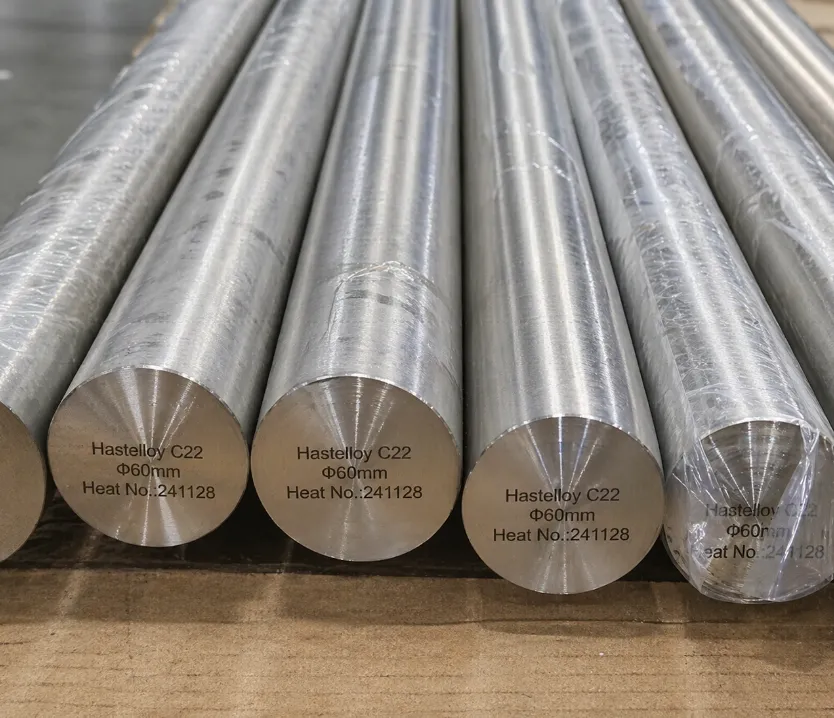
Hastelloy C22 Chemical Composition Table
| Element | Nominal Content (wt%) | Role in Alloy |
|---|---|---|
| Nickel (Ni) | Balance (~56%) | Primary matrix, corrosion resistance base |
| Chromium (Cr) | 20–22.5% | Oxidation and corrosion resistance |
| Molybdenum (Mo) | 12.5–14.5% | Pitting and crevice corrosion resistance |
| Tungsten (W) | 2.5–3.5% | Enhanced localized corrosion resistance |
| Iron (Fe) | 2–6% | Structural filler |
| Cobalt (Co) | Max 2.5% | Solid solution strengthening |
| Manganese (Mn) | Max 0.5% | Deoxidizer |
| Silicon (Si) | Max 0.08% | Controlled for weldability |
| Carbon (C) | Max 0.010% | Ultra-low to prevent sensitization |
| Phosphorus (P) | Max 0.02% | Controlled impurity |
| Sulfur (S) | Max 0.02% | Controlled impurity |
| Vanadium (V) | Max 0.35% | Grain refinement |
The fact that nickel constitutes more than half the alloy's weight means that every movement in London Metal Exchange (LME) nickel prices cascades directly into the finished product cost. Beyond nickel, molybdenum prices (currently averaging around USD 32–36 per kg of Mo metal as of Q1 2026, based on data from Ryan's Notes) and tungsten prices (approximately USD 28–32 per metric ton unit) add another significant cost layer that most competing stainless steels or lower-grade nickel alloys do not face.
We at MWalloys frequently explain to new customers that they are not simply paying for a piece of metal. They are paying for a precisely controlled chemistry that, once manufactured and certified, can handle concentrated sulfuric acid, hydrochloric acid, and oxidizing chloride environments that would destroy standard 316L stainless steel within weeks.
What Are the Current Hastelloy C22 Prices per kg by Product Form in 2026?
Product form is arguably the single biggest variable in Hastelloy C22 pricing after raw material cost. The manufacturing processes involved in converting a nickel alloy ingot into a precision-drawn tube versus a hot-rolled plate are vastly different in complexity, tooling wear, and scrap rates.
2026 Hastelloy C22 Price per kg by Product Form (Estimated Market Rates)
| Product Form | Price Range (USD/kg) | Typical Standard | Notes |
|---|---|---|---|
| Sheet and Plate | USD 45 – 70/kg | ASTM B575 | Widest availability, competitive pricing |
| Round Bar and Rod | USD 50 – 80/kg | ASTM B574 | Pricing varies by diameter |
| Seamless Pipe and Tube | USD 80 – 120/kg | ASTM B622 | Long lead times, highest processing cost |
| Welded Pipe | USD 55 – 85/kg | ASTM B619 | Lower than seamless, availability better |
| Fittings (elbows, tees) | USD 90 – 150/kg | ASTM B366 | Machining-intensive, small lot premiums |
| Forged Flanges | USD 70 – 110/kg | ASTM B564 | Forging die cost amortized over volume |
| Wire | USD 60 – 95/kg | AWS A5.14 ERNiCrMo-10 | Used in welding and additive manufacturing |
| Powder (AM grade) | USD 180 – 320/kg | Vendor-specific | Rapidly growing segment, premium pricing |
Prices above are estimated FOB mill or warehouse prices as of April 2026. Actual transaction prices depend on quantity, certification requirements, origin, and currency exchange rates. Contact MWalloys for a real-time quotation.
Several data points from our own procurement network in Q1 2026 confirm these ranges. A 2,000 kg plate order in ASTM B575 Grade N06022 from a major European mill was priced at approximately USD 58/kg including material test reports (MTRs) and EN 10204 3.1 certification. A comparable 500 kg seamless tube order in ASTM B622 came in at USD 107/kg from a U.S.-based processor.
How Has the Hastelloy C22 Price Changed from 2021 to 2026?
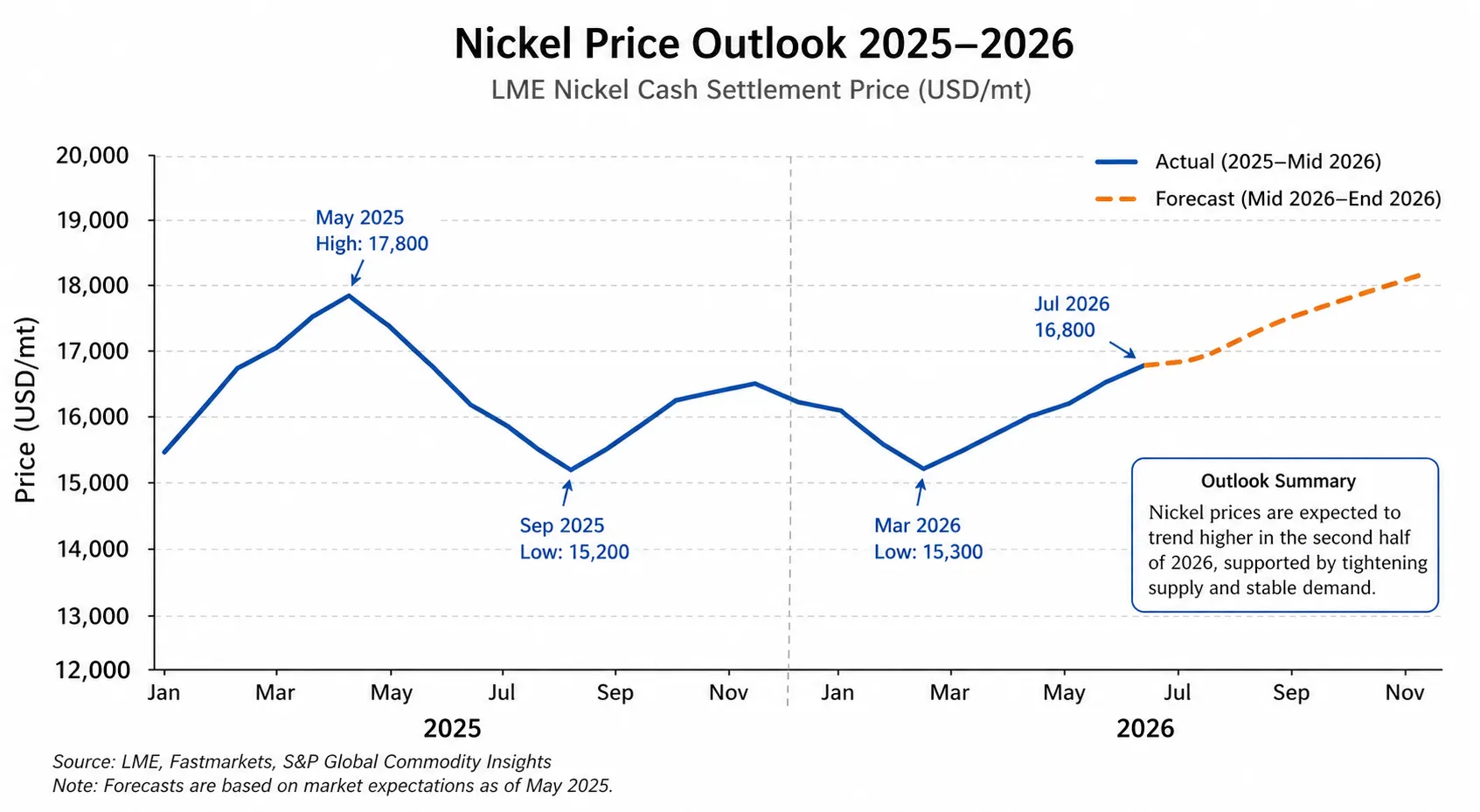
Understanding historical pricing helps buyers contextualize whether today's rates represent a buying opportunity or a cyclical peak. The period from 2021 through 2026 has been one of the most volatile in nickel alloy market history, primarily driven by the post-pandemic supply chain disruption, Russia's invasion of Ukraine in 2022 (which affected nickel supply from Norilsk Nickel, a major global producer), and the electric vehicle battery boom driving structural nickel demand.
Hastelloy C22 Historical Price Index (Sheet/Plate, USD/kg, Approximate Annual Average)
| Year | Avg. Nickel Price (USD/MT) | Approx. C22 Sheet Price (USD/kg) | Key Market Events |
|---|---|---|---|
| 2021 | ~USD 18,500 | ~USD 52–58 | Post-COVID demand rebound, supply constraints |
| 2022 | ~USD 25,600 (peak March) | ~USD 65–80 | Ukraine conflict, LME nickel short squeeze (March 2022 price reached USD 100,000/MT briefly) |
| 2023 | ~USD 16,800 | ~USD 50–62 | Price correction, inventory destocking cycle |
| 2024 | ~USD 15,200 | ~USD 46–58 | Indonesian nickel oversupply pressure, subdued demand |
| 2025 | ~USD 14,900 | ~USD 44–56 | Trade tariff impacts, slight demand recovery in chemical processing |
| 2026 (Q1-Q2) | ~USD 15,800 | ~USD 48–65 | Molybdenum tightening, aerospace demand recovery |
Sources: LME nickel historical data, Fastmarkets, Ryan's Notes molybdenum pricing, MWalloys internal procurement records.
The most dramatic single event affecting Hastelloy C22 pricing in this period was the March 2022 LME nickel crisis, when nickel spot prices briefly crossed USD 100,000 per metric ton following a massive short squeeze. During that period, several mills temporarily suspended new contract pricing because they could not accurately forecast raw material costs. Lead times for ASTM B622 seamless tube stretched to 40–52 weeks at the peak.
What the historical data shows clearly is that Hastelloy C22 pricing has a high correlation with nickel prices but does not move on a 1:1 ratio. The alloy's processing intensity and multi-element composition create a price floor that is substantially above what you would calculate from raw metal costs alone. Even when nickel dropped to its 2024 lows near USD 15,200/MT, C22 sheet prices only declined to roughly USD 46/kg rather than following a proportional downward slide.
What Factors Determine the Price of Hastelloy C22?
When procurement teams ask us why Hastelloy C22 prices vary so much between quotes, we walk them through a structured cost breakdown. No single variable controls the price. It is a weighted function of at least seven distinct cost drivers.
Primary Cost Drivers for Hastelloy C22 Pricing
1. Raw Material Commodity Costs
Nickel, molybdenum, chromium, and tungsten account for roughly 55–65% of the finished product's cost. All four are traded in global commodity markets with their own supply-demand dynamics. Molybdenum, for example, saw a significant tightening in Q4 2025 as Chilean and U.S. moly production underperformed expectations, pushing Mo oxide prices from approximately USD 18/lb to USD 24/lb between October 2025 and March 2026 (per Ryan's Notes Monthly).
2. Manufacturing Process Complexity
Producing a seamless C22 tube requires hot extrusion, cold drawing, solution annealing, and precision straightening with extremely low tolerance for dimensional deviation. Compared to rolling C22 plate, seamless tube manufacturing generates significantly higher tooling wear because of the alloy's work-hardening behavior. This explains why seamless tube commands a 60–90% price premium over sheet of equivalent weight.
3. Heat Treatment and Quality Testing
Every Hastelloy C22 product must be solution annealed at 1,121°C (2,050°F) followed by rapid quenching to ensure the alloy's corrosion resistance is not compromised by sensitization. Chemical analysis, mechanical testing, hardness verification, and often intergranular corrosion testing per ASTM G28 Method A add another USD 2–6/kg to the cost depending on the specification package.
4. Certification and Traceability Requirements
A mill test report (MTR) to EN 10204 3.1 or 3.2 is standard in most industrial applications. Projects in nuclear, pharmaceutical, or offshore sectors often require additional third-party inspection, PMI (positive material identification) with XRF or OES analysis, ultrasonic testing, and radiographic examination. These inspection layers can add USD 3–10/kg for small orders.
5. Order Quantity
This is perhaps the most immediately actionable variable. Mill pricing schedules typically feature a sharp reduction in cost per kg as order quantity increases. At MWalloys, we have observed that moving from a 100 kg order to a 1,000 kg order of the same C22 plate specification can reduce the per-kg price by 18–30%.
6. Product Lead Time and Stock Availability
Ex-stock or warehouse material carries a convenience premium of 5–15% over mill-direct pricing. However, it eliminates lead times of 8–24 weeks that are typical for mill production runs. In a rapidly rising price environment, buying from stock can paradoxically save money by locking in a known cost before further increases.
7. Geographic Origin and Trade Policy
Import duties, anti-dumping measures, and tariffs significantly affect landed cost. In the United States, Section 232 and Section 301 tariffs on steel and aluminum products have had spillover effects on nickel alloy imports. Post-2025 trade policy adjustments in the U.S. have introduced additional complexity for buyers sourcing C22 from Asian mills.
How Does Nickel Price Volatility Directly Affect Hastelloy C22 Cost?
Nickel is the dominant input cost in any nickel superalloy, and its price behavior is structurally tied to several forces that operate independently of each other, making prediction genuinely difficult.
Nickel Price and Hastelloy C22 Price Correlation Analysis
The relationship between LME nickel price and Hastelloy C22 sheet price, based on our tracking over the 2021–2026 period, suggests a correlation coefficient of approximately 0.78. This is high but not perfect, because:
- Processing costs, which include energy (typically natural gas and electricity), are not correlated with nickel.
- Molybdenum and tungsten have their own independent price cycles.
- Mill capacity utilization rates affect processing margins independently of raw material costs.
A rough practical formula that MWalloys uses for internal budget estimation is:
Estimated C22 Sheet Price (USD/kg) = [Ni content × LME Ni price × 1.15 multiplier] + [Mo content × Mo metal price × 1.20] + [W content × W price × 1.10] + Fixed Processing Cost (approx. USD 12–18/kg)
At April 2026 input prices:
- Ni: 0.56 kg/kg × USD 15.80/kg (USD 15,800/MT) × 1.15 = USD 10.18
- Mo: 0.135 kg/kg × USD 48/kg (approx. USD 24/lb) × 1.20 = USD 7.78
- W: 0.03 kg/kg × USD 35/kg × 1.10 = USD 1.16
- Processing: USD 15 (mid-range estimate)
- Estimated Total: ~USD 34–38/kg at ex-mill cost, with distribution margin adding another USD 10–20/kg for end buyers
This model explains the USD 48–65/kg range we observe for sheet in Q1–Q2 2026.
Nickel Supply Disruption Risks That Could Move C22 Prices in 2026
Indonesia remains the world's largest nickel ore producer, accounting for over 50% of global supply (USGS Mineral Commodity Summaries 2025). Any policy shift in Indonesian export regulations, as seen with the 2020 nickel ore export ban, can cause significant upward price spikes within weeks. Additionally:
- Philippine nickel ore production has shown weather-related disruption in Q1 2026.
- Russian nickel (Norilsk Nickel produces ~7% of global class 1 nickel) remains under geopolitical risk from ongoing sanctions discussions.
- EV battery demand for nickel sulfate continues to compete with superalloy production for high-purity nickel.
What Is the Price Difference Between Hastelloy C22 and Other Nickel Alloys?
Buyers regularly ask us whether Hastelloy C276 or Inconel 625 could serve as a lower-cost substitute. The answer is highly application-specific, but the pricing landscape is worth understanding clearly.
Comparative Nickel Alloy Pricing (Sheet/Plate, USD/kg, Q1 2026 Estimated)
| Alloy (UNS) | Ni Content | Price Range (USD/kg) | Typical Applications |
|---|---|---|---|
| 316L Stainless Steel | ~10–14% Ni | USD 4–8 | General chemical, food, water |
| Alloy 20 (N08020) | ~32–38% Ni | USD 12–18 | Sulfuric acid service |
| Hastelloy B3 (N10675) | ~65% Ni | USD 55–80 | HCl service, reducing environments |
| Hastelloy C276 (N10276) | ~57% Ni | USD 40–65 | Broad acid resistance, most popular C alloy |
| Hastelloy C22 (N06022) | ~56% Ni | USD 45–70 | Oxidizing + reducing acids, versatile |
| Hastelloy C2000 (N06200) | ~59% Ni | USD 60–90 | Enhanced Cu content for H2SO4 |
| Inconel 625 (N06625) | ~58% Ni | USD 42–68 | High-temp, aerospace, fatigue resistance |
| Inconel 825 (N08825) | ~38–46% Ni | USD 22–35 | Moderate corrosion, oil and gas |
Data compiled from MWalloys supplier network and publicly available distributor pricing lists, Q1 2026.
Hastelloy C22 sits at a competitive price point relative to C276 despite its enhanced performance in oxidizing acid environments. The alloy's higher chromium content (22% vs. 15.5% in C276) provides superior resistance to wet chlorine, hypochlorite, and chlorine dioxide solutions, which often justifies its selection over C276 in pulp and paper, pharmaceutical, and specialty chemical applications.
How Do Order Quantity and Certification Requirements Affect Pricing?
This section addresses one of the most practical questions we receive from procurement teams. Quantity breaks and documentation requirements are two levers that buyers can sometimes control.
Hastelloy C22 Quantity Price Break Structure (Estimated, Sheet/Plate)
| Order Quantity (kg) | Typical Price Multiplier vs. Base | Notes |
|---|---|---|
| Under 50 kg | 1.35–1.50x base | Small lot surcharge common |
| 50–200 kg | 1.15–1.30x base | Some distributors offer stock pricing |
| 200–500 kg | 1.05–1.15x base | Approaching mill-competitive levels |
| 500–2,000 kg | 1.00x (base rate) | Reference price benchmark |
| 2,000–5,000 kg | 0.90–0.95x base | Mill-direct pricing generally accessible |
| Over 5,000 kg | 0.82–0.90x base | Full annual contract pricing territory |
Certification package requirements add another layer of cost. The following is a typical incremental cost structure for documentation:
- Basic MTR (EN 10204 2.2): Included in base price.
- EN 10204 3.1 Certification: Typically USD 0.50–1.50/kg additional.
- EN 10204 3.2 (Third-party inspection at mill): Add USD 1.50–4.00/kg.
- NACE MR0175 / ISO 15156 compliance: May require additional hardness and HIC testing, adding USD 1–3/kg.
- PMI (XRF at delivery): USD 50–150 per piece inspection fee.
- UT or PT inspection: USD 1.50–5.00/kg depending on coverage and specification.
For projects in regulated industries such as pharmaceutical (FDA 21 CFR Part 211), nuclear (ASME NCA-3800 material requirements), or offshore oil and gas (DNV-ST-F101), the full documentation package can add 8–15% to the base material cost.
What Are Regional Price Variations for Hastelloy C22 in 2026?
Price is never global; it is always local. The same alloy specification can carry meaningfully different price tags depending on where you are buying, who the source mill is, and what trade barriers apply.
Regional Hastelloy C22 Price Comparison (Plate, USD/kg, Q1-Q2 2026)
| Region / Origin | Price Range (USD/kg) | Key Factors |
|---|---|---|
| North America (U.S. mills, ex-warehouse) | USD 58–72 | High labor cost, Section 232 protection for domestic mills |
| Europe (German/French mills, ex-works) | USD 52–68 | Energy cost headwinds, strong regulatory compliance reputation |
| China (domestic mills, FOB Shanghai) | USD 38–52 | Lower labor/energy cost, growing quality reputation, tariff risk for export |
| India (Bhosari/Pune producers, FOB Mumbai) | USD 42–58 | Competitive labor, growing aerospace/chemical sector |
| Japan (Mitsubishi, ex-works) | USD 55–70 | Premium quality reputation, limited volume availability |
| South Korea (POSCO-related, ex-works) | USD 48–62 | Competitive pricing, strong quality control |
The landed cost calculation for a U.S. buyer importing from China must factor in the 25% Section 301 tariff currently applicable to many nickel alloy product categories, which can push the effective landed price of Chinese-origin C22 plate above USD 60–65/kg, reducing the apparent price advantage. This is something our team at MWalloys regularly helps customers calculate properly before making sourcing decisions.
What Is the Five-Year Price Forecast for Hastelloy C22 Through 2030?
Price forecasting for specialty alloys is inherently uncertain, but we can apply structural market analysis to identify the most likely directional trends. The following projections are based on consensus commodity forecasts from the World Bank, USGS supply data, and industry association reports, combined with our own market intelligence.
Hastelloy C22 Five-Year Price Outlook (Sheet/Plate, USD/kg)
| Year | Projected Nickel Price (USD/MT) | Projected C22 Sheet Price (USD/kg) | Key Drivers |
|---|---|---|---|
| 2026 | USD 14,500–17,000 | USD 46–68 | Indonesia oversupply continues, aerospace recovery |
| 2027 | USD 15,000–18,500 | USD 50–72 | EV demand recovery, potential LME supply tightening |
| 2028 | USD 16,000–20,000 | USD 54–78 | Energy transition infrastructure build-out drives demand |
| 2029 | USD 17,000–22,000 | USD 58–84 | Chemical processing sector expansion in Southeast Asia |
| 2030 | USD 18,000–25,000 | USD 62–90 | Hydrogen economy infrastructure (electrolyzers require C22) |
Projection methodology: Bottom-up cost modeling + consensus commodity forecasts (World Bank Commodity Markets Outlook, January 2026; Wood Mackenzie Nickel Market Outlook Q1 2026). These are ranges, not guarantees.
Structural Demand Drivers That Support Long-Term Price Increases
Green Hydrogen Production: Proton exchange membrane (PEM) electrolyzers, which are central to green hydrogen infrastructure, rely heavily on Hastelloy C22 and similar nickel-chromium-molybdenum alloys for components exposed to acidic and oxidizing electrolyte conditions. The International Energy Agency (IEA) projects global electrolyzer capacity needs to reach 850 GW by 2030 to meet net-zero targets, which represents a substantial incremental demand signal for C22.
Pharmaceutical Manufacturing Expansion: Increasing global pharmaceutical production capacity, particularly in India and Southeast Asia, is driving demand for C22 reactors, agitators, and heat exchanger tubes that can handle aggressive API synthesis chemistry.
Nuclear New Build Programs: Advanced reactor designs being pursued in the United States (under DOE programs), France (EPR2), and South Korea incorporate nickel superalloys in reactor coolant systems. C22's excellent stress corrosion cracking resistance makes it suitable for these environments.
Semiconductor Manufacturing: Ultra-high purity chemical delivery systems for chip fabrication facilities increasingly specify Hastelloy C22 for handling high-concentration hydrofluoric acid, nitric acid, and hydrogen peroxide at elevated temperatures.
How Can Buyers Reduce Hastelloy C22 Procurement Costs Without Sacrificing Quality?
This is where practical, actionable guidance matters most to the engineers and procurement managers reading this. We have compiled strategies that our clients at MWalloys have successfully implemented.
Ten Proven Cost Reduction Strategies for Hastelloy C22 Procurement
1. Consolidate Order Volumes
Aggregate requirements across multiple projects or departments to reach the next quantity break level. Moving from 400 kg to 600 kg on a single purchase order can reduce per-kg pricing by 8–12%.
2. Specify Minimum Requirements, Not Maximum
Avoid over-specifying by requesting premium certifications that your application does not actually require. If an EN 10204 3.1 MTR is sufficient, do not specify 3.2 unless the project genuinely demands third-party witnessing.
3. Consider Equivalent ASTM vs. DIN/EN Specifications
For non-critical applications, material meeting ASTM B575 may be priced competitively against equivalents specified to VdTÜV Werkstoffblatt 432 or EN 10095 at a European mill. Ask your supplier about cross-specification equivalents.
4. Accept Non-Prime or Remnant Material
For non-critical components, certified prime material in non-standard dimensions (remnants from larger mill runs) can be purchased at discounts of 15–25% while maintaining full chemical and mechanical certification.
5. Use Annual Framework Contracts
If your organization consumes more than 2,000 kg of C22 annually, negotiate an annual framework agreement with a fixed basis points spread over LME nickel rather than spot-by-spot purchasing. This provides cost predictability and priority allocation during shortage periods.
6. Evaluate Domestic vs. Import Sourcing After Tariff Calculation
Always calculate the fully landed cost including freight, insurance, duty, and inspection rather than comparing mill prices directly. Import tariffs can completely eliminate apparent offshore price advantages.
7. Optimize Product Form to Reduce Secondary Machining
Ordering near-net-shape material (such as forged bar closer to finished dimensions) can reduce machining costs enough to offset any premium on the raw material purchase.
8. Time Purchases Against Nickel Price Cycles
LME nickel prices tend to be seasonally softer in Q3 (July–September) in most years due to slower industrial activity in Northern Hemisphere markets. Placing large orders in this window, when market sentiment is typically more bearish, can generate 3–8% savings compared to Q1–Q2 peak periods.
9. Request Competitive Bids from Qualified Multi-Source Suppliers
Maintaining approved supplier lists with at least three qualified sources for each C22 product form creates competitive tension that benefits pricing negotiations.
10. Leverage MWalloys as a Consolidated Supply Partner
As a full-service nickel alloy supplier, MWalloys consolidates purchasing power across multiple customers and products, which allows us to offer pricing that individual buyers could not achieve independently. Our stock inventory of common C22 dimensions reduces your exposure to lead time risk.
Frequently Asked Questions About Hastelloy C22 Pricing
1: What is the minimum order quantity for Hastelloy C22, and how does it affect price per kg?
Most mills and distributors impose a minimum order quantity (MOQ) for Hastelloy C22, typically ranging from 50 to 200 kg for stock items and 500 to 1,000 kg for mill production runs. For orders below 50 kg, small-lot surcharges of 20–50% above standard pricing are common because cutting and handling costs are disproportionately high relative to material value. At MWalloys, we maintain warehouse stock in standard dimensions that allows us to supply quantities as small as 10 kg with a modest cutting fee rather than a full small-lot surcharge, which is particularly helpful for prototyping and maintenance applications. Buyers should always request a price breakdown separating material cost from processing fees to understand where savings opportunities exist.
Hastelloy C22 is typically priced 5–15% higher than Hastelloy C276 in equivalent product forms, primarily because C22's higher chromium content (22% vs. 15.5%) and more tightly controlled impurity limits require more precise melting and processing. The price premium is justified when your application involves oxidizing acid environments, wet chlorine service, hypochlorite, or mixed acid systems where C276 shows measurable corrosion rates but C22 demonstrates near-zero corrosion. In purely reducing acid service (such as concentrated HCl without oxidizing agents), C276 often performs comparably to C22 at lower cost. Always request corrosion rate data specific to your process chemistry before substituting one for the other solely on price grounds.
3: How do I verify that Hastelloy C22 I have purchased meets specification without paying for full chemical testing?
The most cost-effective verification method is PMI (positive material identification) using a calibrated X-ray fluorescence (XRF) analyzer, which can confirm the presence and approximate levels of nickel, chromium, molybdenum, and tungsten within minutes at a cost of USD 50–150 per piece. XRF has limitations for light elements (carbon, sulfur, phosphorus), so for full specification compliance, a complete chemical analysis per ASTM E1473 performed by an accredited laboratory remains the gold standard. At a minimum, always request an EN 10204 3.1 certified mill test report that lists all UNS N06022 required elements. If the supplier cannot provide this documentation, the material should be treated as unverified regardless of how it is labeled or marketed.
4: Why did Hastelloy C22 prices spike so dramatically in 2022?
The 2022 price spike resulted from two compounding events. First, the Russian invasion of Ukraine in February 2022 created uncertainty about supplies from Norilsk Nickel, which produces approximately 7% of global refined nickel. Second, a massive short squeeze in the LME nickel market in March 2022 briefly pushed nickel prices above USD 100,000 per metric ton, a level never previously recorded. This was driven by a large short position held by Chinese nickel producer Tsingshan Holdings being squeezed by rising prices, forcing emergency position closures. The LME ultimately suspended nickel trading for several days and cancelled millions of dollars in trades, an action that was itself highly controversial. The combined effect on Hastelloy C22 pricing was a 25–35% increase in quoted prices within 60 days, with many mills suspending new order pricing entirely for 2–4 weeks until they could establish new raw material cost baselines.
5: What is the typical lead time for Hastelloy C22 in 2026, and does lead time affect price?
As of Q1–Q2 2026, lead times for Hastelloy C22 have normalized considerably from the 2021–2022 peak. Standard lead times are approximately: plate and sheet (8–14 weeks from mill), round bar (8–16 weeks), seamless pipe and tube (14–24 weeks), fittings (10–18 weeks), and flanges (10–16 weeks). Expedited service is available in some cases with premium charges of 10–25% above standard pricing. Ex-stock material from warehouse distributors is available with 1–5 business day delivery for standard dimensions. Choosing ex-stock material commands a 5–15% premium over mill-direct pricing but eliminates lead time risk entirely, which can be worth considerably more than the price difference in shutdown maintenance or emergency replacement scenarios.
6: Can Hastelloy C22 be recycled, and does the scrap value affect overall procurement cost?
Yes, Hastelloy C22 scrap has meaningful intrinsic value because of its high nickel, molybdenum, and chromium content. Nickel alloy scrap dealers typically pay 40–65% of the current new material price for clean, identified C22 scrap (turnings, cut-offs, and plate drops) depending on form, contamination level, and market conditions. This residual scrap value is a legitimate factor in total cost of ownership calculations, particularly for machined components where significant material is removed. For example, if you purchase C22 bar at USD 70/kg and machine away 40% of the material, the scrap recovery of approximately USD 18–22/kg for the turnings effectively reduces your net material cost by 10–15% on the finished component weight. This economic factor is often overlooked in initial procurement cost comparisons.
7: Are there Chinese-made Hastelloy C22 alternatives that are significantly cheaper, and are they reliable?
Chinese nickel alloy producers, including Baosteel, TISCO, and several specialty mills in Jiangsu Province, have significantly improved their Hastelloy C22 production capabilities over the past decade. Chinese-origin material is typically priced 25–40% below equivalent Western mill material on an ex-works basis. However, several important caveats apply. First, the effective cost advantage narrows substantially after applying U.S. Section 301 tariffs (currently 25% on most nickel alloy categories). Second, some Chinese mills have had documented issues with chemistry consistency, particularly in controlling carbon and phosphorus to the ultra-low levels required by UNS N06022. Third, qualification of new material sources for regulated applications (pharmaceutical, nuclear, and aerospace) requires extensive testing and documentation that takes months and significant cost. For non-critical industrial applications where third-party chemical verification is performed and full MTR documentation is provided, reputable Chinese mills can offer genuine cost savings. For critical service applications, we recommend qualifying material from established Western or Japanese mills.
8: How is Hastelloy C22 pricing quoted, and what should I watch out for in supplier quotes?
Hastelloy C22 can be quoted on a per-kg basis, per-piece basis, or per-foot/meter basis depending on the product form and supplier. The most transparent comparison basis is always per-kg, as it allows direct comparison regardless of dimensional variations. Key items to verify in any quotation include: whether the price is theoretical weight or actual weighed weight (these can differ by 5–10% for plates due to mill tolerance), what certifications are included versus additional charge, what the dimensional tolerance standard is (ASTM vs. EN vs. ASME tolerance classes vary), whether the price is inclusive or exclusive of freight and packaging, what the payment terms are (which affect your effective cost of capital), and what the cancellation policy is for mill-direct orders. We always recommend requesting an itemized quote that separates material cost, processing, certification, freight, and any surcharges into distinct line items.
9: What is the difference in price between annealed and cold-worked Hastelloy C22?
Standard Hastelloy C22 supplied to ASTM B574, B575, or B622 is furnished in the solution-annealed condition, which is the baseline price reference. Cold-worked tempers are less common but are occasionally specified for applications requiring higher yield strength. Cold-worked C22 typically carries a premium of 15–30% over annealed material because of the additional processing steps and higher scrap rates associated with cold deformation of this work-hardening alloy. Hard-to-form product forms such as cold-drawn small-diameter tube can carry even higher premiums. For most corrosion-resistance applications, the solution-annealed condition is both technically preferred (maximum corrosion resistance) and more economically favorable.
10: What will Hastelloy C22 prices do in the second half of 2026?
Based on our analysis of current supply-demand fundamentals as of April 2026, we expect Hastelloy C22 prices in H2 2026 to be modestly higher than H1 levels, driven by three factors: (1) Molybdenum tightening from below-forecast production in Chile and the United States, which we track through Ryan's Notes and CRU data, has not yet been fully priced into finished alloy prices as of April 2026; (2) Aerospace sector recovery is increasing demand for nickel superalloy billets, which competes indirectly with C22 production for mill capacity; (3) Several major European chemical plant maintenance shutdowns scheduled for Q3 2026 are expected to generate above-average C22 replacement material orders. Our internal working estimate for H2 2026 C22 sheet pricing is USD 52–72/kg. Buyers with H2 procurement needs may benefit from placing orders now to lock in H1 pricing before any upward adjustment materializes.
Summary: Key Takeaways on Hastelloy C22 Pricing in 2026
Hastelloy C22 remains one of the most performance-optimized nickel alloys available for severe corrosion service, and its pricing reflects that reality. The following table consolidates the most important data points covered in this article:
Hastelloy C22 Pricing Quick Reference (April 2026)
| Parameter | Value / Range |
|---|---|
| Current price, sheet/plate (USD/kg) | USD 45–70 |
| Current price, seamless tube (USD/kg) | USD 80–120 |
| Current price, fittings (USD/kg) | USD 90–150 |
| Current LME nickel (USD/MT) | ~USD 15,800 |
| Current molybdenum oxide (USD/lb) | ~USD 22–24 |
| Typical mill lead time, sheet | 8–14 weeks |
| Typical mill lead time, seamless tube | 14–24 weeks |
| Small-lot surcharge (under 50 kg) | +20–50% |
| Volume discount (over 5,000 kg) | -10–18% |
| 5-year price outlook (2026–2030) | Gradual upward trend, USD 62–90 by 2030 |
About MWalloys
At MWalloys, we specialize in the distribution and processing of high-performance nickel alloys including the complete Hastelloy and Inconel product families. Our inventory includes Hastelloy C22 in plate, sheet, bar, seamless tube, welded pipe, fittings, and flanges from certified mill sources in the United States, Europe, and Asia. We provide EN 10204 3.1 and 3.2 certified material, full chemical and mechanical test reports, and PMI verification services. Our technical team is available to assist with alloy selection, corrosion resistance data interpretation, and specification review.
For a current price quotation on Hastelloy C22 in your required product form and quantity, contact MWalloys directly. We respond to all technical and commercial inquiries within one business day.
Disclaimer: All prices cited in this article are estimates based on MWalloys market intelligence, published distributor price lists, and commodity data sources as of April 2026. Actual transaction prices depend on specific order details, market conditions at time of purchase, and negotiated commercial terms. This article is intended for informational and educational purposes and does not constitute a binding commercial offer.
Sources referenced: ASTM International (ASTM B574, B575, B619, B622, B564, B366), Haynes International Hastelloy C22 Technical Bulletin, LME historical nickel price data, USGS Mineral Commodity Summaries 2025, Ryan's Notes Molybdenum Monthly (Q4 2025–Q1 2026), World Bank Commodity Markets Outlook January 2026, IEA Net Zero by 2050 Roadmap, CRU Nickel Market Outlook 2026, Fastmarkets Nickel Price History.