

Custom Hastelloy B-2 springs manufactured from UNS N10665 nickel-molybdenum alloy wire are the only commercially available precision spring solution that simultaneously delivers resistance to concentrated hydrochloric acid at elevated temperatures, hydrogen sulfide environments, and reducing acid process streams where 316L stainless steel, Inconel 625, and even Hastelloy C276 springs corrode at rates that cause catastrophic spring failure within weeks or months of installation. At MWalloys, we manufacture custom Hastelloy B-2 springs to precise spring rate specifications, in compression, tension, torsion, and flat spring configurations, supplying chemical plant engineers, HCl acid system designers, and pharmaceutical equipment fabricators who require zero spring failure tolerance in their most aggressive process environments.
The manufacturing of Hastelloy B-2 springs requires a fundamentally different approach than standard spring production. The alloy's high work-hardening rate, limited ductility in spring-temper condition, and sensitivity to contamination and thermal processing errors mean that precision spring manufacturing from B-2 wire demands process controls and quality verification steps that most general spring manufacturers do not maintain.
What Is Hastelloy B-2 and Why Is It the Preferred Choice for Springs in Reducing Acid Service?
Hastelloy B-2 is a registered trademark designation of Haynes International for UNS N10665, a nickel-molybdenum alloy containing approximately 65% nickel and 26 – 30% molybdenum with very low chromium content (1% maximum). This unusual compositional profile makes B-2 fundamentally different from the more commonly known C-family Hastelloy grades (C276, C22) and positions it in a unique performance niche that no other commercial spring material occupies.
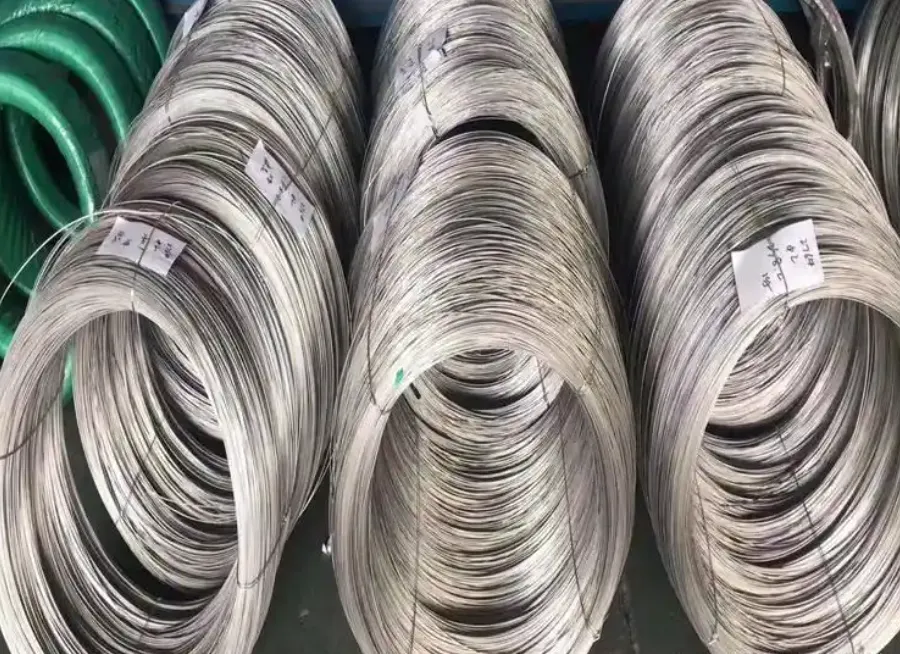
The defining characteristic of B-2 in spring applications is its resistance to concentrated hydrochloric acid (HCl) at all concentrations and temperatures, including boiling 37% HCl, which destroys every chromium-bearing alloy including C276, C22, and all stainless steel grades. When a spring must function inside a hydrochloric acid reactor, HCl stripping column, or reducing acid chemical plant environment, the material selection converges on Hastelloy B-2 as the only technically viable option among standard spring alloys.
The Metallurgical Basis of B-2's Reducing Acid Resistance
The extremely high molybdenum content of B-2 (26 – 30%) is the source of its exceptional reducing acid performance. Unlike chromium, which protects through an oxidizing passive film mechanism, molybdenum protects in reducing environments through a completely different electrochemical mechanism:
- Molybdenum significantly raises the hydrogen overvoltage on the alloy surface, making it thermodynamically harder for the cathodic reduction of H⁺ ions that drives metal dissolution in reducing acid environments.
- High molybdenum content stabilizes the alloy at very negative electrochemical potentials where most other metals dissolve actively.
- The nickel-molybdenum matrix does not rely on a passive oxide film that would be destabilized by reducing conditions.
This mechanism explains why B-2's corrosion resistance fundamentally improves in reducing acid environments, the opposite of chromium-bearing alloys that perform well in oxidizing conditions but fail in strongly reducing media.
Why Chromium Is Deliberately Minimized in B-2
The intentional limitation of chromium to 1% maximum in B-2 is counterintuitive to engineers familiar with stainless steels and C-family nickel alloys. The reason is electrochemical: chromium raises the alloy's corrosion potential toward the transpassive range in reducing acid environments, which actually increases corrosion rates in concentrated HCl and similar reducing media. By eliminating chromium, B-2 maintains a very low, stable corrosion potential in reducing acids, where its high molybdenum content provides the protection mechanism.
The consequence of this chemistry is that B-2 has poor resistance to oxidizing environments. A spring that contacts nitric acid, ferric chloride, or even dissolved oxygen at elevated temperatures will corrode rapidly in B-2. The alloy selection is environment-specific: B-2 is uniquely superior in reducing conditions and inadequate in oxidizing conditions.
What Are the Chemical Composition and Metallurgical Standards Governing Hastelloy B-2 Wire?
For spring manufacturing, the chemical composition of the wire feedstock directly determines both the mechanical properties achievable through cold drawing and the corrosion performance in service. Any deviation from B-2's tight composition window, particularly in molybdenum and iron content, produces measurably degraded performance.
ASTM B333 / UNS N10665 Chemical Composition Requirements
| Element | UNS N10665 Min (%) | UNS N10665 Max (%) | Role in Spring and Corrosion Performance |
|---|---|---|---|
| Nickel (Ni) | Balance | Balance (~65%) | Base matrix; ductility; drawing characteristics |
| Molybdenum (Mo) | 26.0 | 30.0 | Primary corrosion resistance in reducing acids |
| Iron (Fe) | – | 2.0 | Strictly controlled; excess Fe degrades HCl resistance |
| Chromium (Cr) | – | 1.0 | Deliberately minimized; avoids oxidizing potential |
| Cobalt (Co) | – | 1.0 | Controlled residual |
| Carbon (C) | – | 0.02 | Very low: prevents carbide sensitization |
| Silicon (Si) | – | 0.10 | Minimized: silicide precipitation risk |
| Manganese (Mn) | – | 1.0 | Deoxidation |
| Phosphorus (P) | – | 0.04 | Impurity |
| Sulfur (S) | – | 0.03 | Critical control: sulfur severely embrittles |
Critical Compositional Controls for Spring-Grade B-2 Wire
The iron content limit (2% maximum) deserves special attention in spring wire procurement. Research published by Haynes International and independently confirmed by multiple corrosion studies has established that iron content in B-2 significantly affects hydrochloric acid corrosion resistance: even within the 0 – 2% allowable range, lower iron heats consistently outperform higher iron heats in HCl service. For the most critical spring applications, specifying maximum iron of 1.0% (stricter than the standard 2.0%) provides meaningful performance margin.
Similarly, the carbon limit of 0.02% maximum is critical for spring applications. B-2 wire produced from heats with carbon approaching the maximum can develop carbide precipitation at grain boundaries during intermediate annealing in the wire drawing sequence, creating preferential corrosion sites that would undermine the spring's corrosion resistance even though bulk composition appears compliant.
At MWalloys, we source B-2 spring wire feedstock from heats with carbon below 0.015% and iron below 1.5% as our internal quality standard, providing additional margin against the specification limits that translates to better corrosion performance in service.
Comparison: B-2 vs B-3 Composition and Spring Applicability
Hastelloy B-3 (UNS N10675) was developed as an improvement over B-2, addressing specific thermal stability problems:
| Property | Hastelloy B-2 (N10665) | Hastelloy B-3 (N10675) | Impact on Spring Manufacturing |
|---|---|---|---|
| Molybdenum (%) | 26 – 30 | 27 – 32 | B-3 slightly higher Mo |
| Iron (%) | 2.0 max | 1.0 – 3.0 | Similar control |
| Chromium (%) | 1.0 max | 1.0 – 3.0 | B-3 allows slightly higher Cr |
| Nickel (%) | Balance | Balance | Similar |
| Thermal stability | Moderate | Better | B-3 less sensitive to sensitization |
| HCl resistance | Excellent | Excellent | Both outstanding |
| Spring wire availability | Good | Limited | B-2 more widely available |
| Cost | Lower | Higher | B-2 more economical |
For spring applications, B-2 remains the more practical choice because: spring-grade wire in B-3 is less commonly stocked by wire producers, B-2's thermal stability limitations are manageable through proper processing controls in spring manufacturing, and the corrosion performance difference in spring service environments is negligible when B-2 is correctly processed.
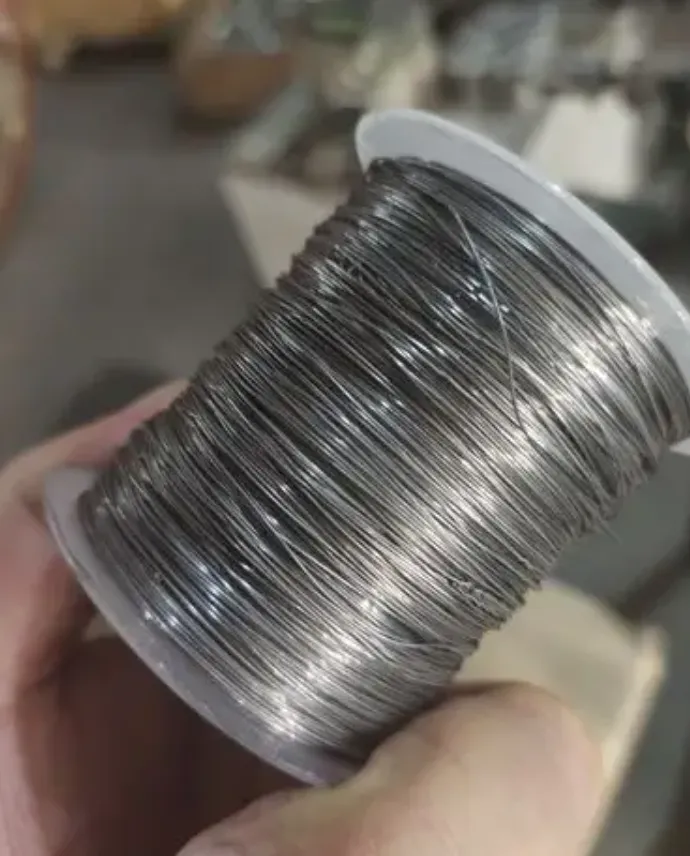
What Mechanical Properties Does Hastelloy B-2 Wire Deliver for Precision Spring Design?
The mechanical properties of B-2 wire used in spring design calculations differ fundamentally from both stainless steel and other nickel alloy spring materials. Using incorrect values produces springs with wrong spring rates that may not be apparent until the springs are installed in service.
B-2 Wire Mechanical Properties by Temper Condition
| Property | Annealed | Light Drawn (20% CR) | Half Hard (37% CR) | Spring Temper (60%+ CR) |
|---|---|---|---|---|
| Tensile Strength (MPa) | 760 – 900 | 950 – 1100 | 1100 – 1280 | 1350 – 1550 |
| Yield Strength (MPa, 0.2%) | 345 – 450 | 700 – 850 | 900 – 1050 | 1150 – 1350 |
| Elongation (%) | 40 – 55 | 25 – 35 | 12 – 22 | 3 – 8 |
| Hardness (HRB/HRC) | 85 – 92 HRB | 22 – 28 HRC | 30 – 36 HRC | 38 – 43 HRC |
| Reduction of Area (%) | 55 – 70 | 40 – 52 | 25 – 38 | 10 – 18 |
Values for 1.5 – 2.5mm diameter wire; properties vary with exact diameter and drawing history
Spring Design Engineering Properties for B-2 Wire
These values are the critical inputs to spring design calculations. Using carbon steel or stainless steel spring design charts for B-2 produces systematically incorrect spring rates:
| Design Property | Hastelloy B-2 Value | Carbon Steel Comparison | Design Impact |
|---|---|---|---|
| Modulus of elasticity (E) | 219 GPa | 207 GPa | B-2 springs ~6% stiffer than steel |
| Modulus of rigidity (G) | 83 GPa | 79 GPa | B-2 coil springs ~5% stiffer than steel |
| Maximum recommended stress (spring temper) | 380 – 450 MPa | 700 – 900 MPa (CS) | B-2 requires larger wire or more coils |
| Fatigue endurance limit (R = -1) | 350 – 420 MPa | 550 – 700 MPa (CS) | Conservative design required |
| Stress relaxation at 100°C | < 3% loss over 1000h | Higher (CS oxidizes) | B-2 superior at temperature |
| Stress relaxation at 200°C | 5 – 10% over 1000h | Much higher | B-2 better in acid vapor |
| Density | 9.22 g/cm³ | 7.85 g/cm³ | B-2 springs heavier for equivalent geometry |
| Minimum spring index (D/d) | 4.0 | 4.0 | Same minimum practical index |
| Maximum recommended spring index | 15 | 15 – 18 | Similar practical range |
Why B-2's Higher Modulus Values Matter in Precision Spring Design
B-2's modulus of elasticity (219 GPa) and modulus of rigidity (83 GPa) are both higher than carbon steel's commonly used values. This higher stiffness means that a B-2 spring wound to the same geometry as a carbon steel spring will be approximately 5 – 6% stiffer. In precision applications where spring rate must meet tight tolerances (such as pressure relief valves, analytical instrument mechanisms, or control valve actuators), this difference must be explicitly accounted for in the design calculation.
The spring rate formula for compression springs is:
k = Gd⁴ / (8D³N)
Where G is the shear modulus, d is wire diameter, D is mean coil diameter, and N is the number of active coils. Using G = 83 GPa for B-2 rather than G = 79 GPa for stainless steel (a 5% difference) produces a spring that is 5% stiffer than a geometrically identical stainless steel spring. For a spring designed to ±5% spring rate tolerance, this difference alone would consume the entire tolerance budget.
At MWalloys, our spring design calculations use B-2-specific modulus values verified against measured spring rate data from production springs, not generic nickel alloy values that may not accurately represent B-2's specific microstructure and composition.
How Are Custom Hastelloy B-2 Springs Designed and What Calculations Govern Their Performance?
Precision spring design from B-2 wire requires adaptation of standard spring engineering principles to account for B-2's specific material properties and the corrosive service conditions that typically define the application.
Compression Spring Design Parameters for B-2
The fundamental compression spring calculation set for B-2 springs:
Spring Rate:
k = Gd⁴ / (8D³Na)
Where Na = number of active coils
Maximum Shear Stress (Wahl Correction):
τ = (8PD / πd³) × Kw
Where Kw = (4C-1)/(4C-4) + 0.615/C (Wahl correction factor)
C = D/d (spring index)
Stress at Maximum Compression (must not exceed allowable):
τmax ≤ 0.45 × UTS (for static service)
τmax ≤ 0.35 × UTS (for dynamic / fatigue service)
Recommended Design Practice for B-2 Springs:
| Parameter | Recommended Range | Notes |
|---|---|---|
| Spring index (C = D/d) | 5 – 12 | Avoid C < 4 (manufacturing difficulty) |
| Stress ratio (working stress / UTS) | 0.35 – 0.45 static | Lower for fatigue service |
| Active coil count (Na) | 3 – 20 | Fewer coils give stiffer spring |
| Solid height clearance | 20 – 25% of free length | Prevents coil binding |
| Free length tolerance | ±1% or ±0.5mm (whichever larger) | Standard for precision springs |
| Spring rate tolerance | ±5% or ±10% depending on class | Class A: ±5%; Class B: ±10% |
| Squareness (end parallelism) | < 3° of perpendicular | Critical for uniform load distribution |
Tension Spring Design Considerations for B-2
Tension springs in B-2 require additional design attention because the hook or end loop represents the highest stress location in the spring, and B-2's lower ductility compared to stainless steel means that poorly designed hooks can crack during winding or fail in service:
| Tension Spring Parameter | B-2 Specific Requirement |
|---|---|
| Hook type | Machine hooks preferred; full loops acceptable |
| Hook stress calculation | Must verify stress at hook bend separately |
| Initial tension | Typically 30 – 50% of maximum working load |
| End loop minimum radius | 1.5 × wire diameter |
| Avoid sharp bends at hooks | R < 1 × d causes cracking during winding |
| Stress at hook (bending) | Must not exceed 0.75 × Yield Strength |
Flat Spring Design Principles for B-2 Strip
B-2 is also used in flat spring configurations cut or stamped from sheet or precision strip, though this is less common than wire-form springs. Key design parameters:
| Flat Spring Parameter | Value for B-2 Strip |
|---|---|
| Modulus of elasticity | 219 GPa |
| Maximum bending stress (spring temper strip) | 650 – 750 MPa |
| Minimum bend radius | 2 × strip thickness (half-hard condition) |
| Fatigue stress range (10⁷ cycles) | 280 – 340 MPa |
| Deflection formula | δ = PL³ / (3EI) for cantilever |
Stress Relaxation Design Allowance
In chemical plant service where springs may operate at elevated temperatures in acid-vapor environments, stress relaxation must be accounted for in the initial spring design. B-2 springs operating at 150°C in HCl vapor should be designed to an initial stress 15 – 20% above the minimum required operating stress to ensure adequate spring force throughout the design life after relaxation has occurred.
| Temperature | Stress Relaxation Over 1000 Hours | Design Allowance Recommendation |
|---|---|---|
| 20 – 60°C | < 2% | 5% additional initial stress |
| 60 – 100°C | 2 – 5% | 8 – 10% additional |
| 100 – 150°C | 5 – 12% | 15 – 20% additional |
| 150 – 200°C | 10 – 20% | 25 – 30% additional |
| > 200°C | Consult test data | Full elevated temperature testing required |
What Spring Types and Configurations Can Be Manufactured in Hastelloy B-2?
MWalloys manufactures custom Hastelloy B-2 springs in all standard spring configurations, adapted to the alloy's specific forming characteristics.
Spring Types Available in Custom Hastelloy B-2
| Spring Type | Wire Diameter Range | Key Application | Manufacturing Note |
|---|---|---|---|
| Compression springs | 0.3 – 12mm | Valve seats, check valves, pressure relief | Most common B-2 spring type |
| Extension (tension) springs | 0.3 – 8mm | Latching mechanisms, actuator returns | Hook design critical |
| Torsion springs | 0.5 – 10mm | Valve actuators, hinges, rotary mechanisms | Leg geometry requires careful bending |
| Conical springs | 0.5 – 8mm | Variable rate applications, filter housings | Progressive rate useful in pumps |
| Barrel springs | 0.5 – 8mm | Reduced solid height applications | Complex geometry; longer lead time |
| Volute springs | Wire strip | High-load, compact applications | Requires strip feedstock |
| Flat springs (cantilever) | Strip 0.1 – 3mm | Contact elements, flexures | Cut from B-2 sheet or strip |
| Wave springs | Strip 0.2 – 2mm | Compact bearing preload, seals | Multiple turns in small axial space |
| Disc springs (Belleville) | Sheet 0.5 – 5mm | High load in short travel | Stamped from B-2 sheet |
| Drawbar springs | 0.5 – 8mm | Pull-type actuators | Closed coil construction |
End Configurations for B-2 Compression Springs
The end configuration affects both the spring's mechanical behavior (number of active coils, solid height, load distribution) and the manufacturing complexity:
| End Type | Description | Active Coils Lost | Squareness | Manufacturing Ease | Application |
|---|---|---|---|---|---|
| Open ends (not ground) | Plain cut ends, coil pitch continues | 0 | Poor | Easiest | Non-critical applications |
| Open ends (ground) | Ground flat after winding | 0 | Good | Moderate | Standard industrial |
| Closed ends (not ground) | Last coil touches adjacent coil | 1 per end (2 total) | Moderate | Easy | General purpose |
| Closed and ground | Closed ends, then ground flat | 1 per end (2 total) | Excellent | More complex | Precision applications |
| Pigtail ends | End coil formed into circular shape | Variable | Poor | Specialized | Tension/compression combination |
For precision B-2 springs in valve seats and check valves, closed and ground ends are the standard because they provide consistent load distribution and predictable squareness. The grinding operation on B-2 requires carbide abrasive wheels (not aluminum oxide) to avoid contamination, and the grinding must not generate enough heat to alter the spring-temper properties in the end coil zone.
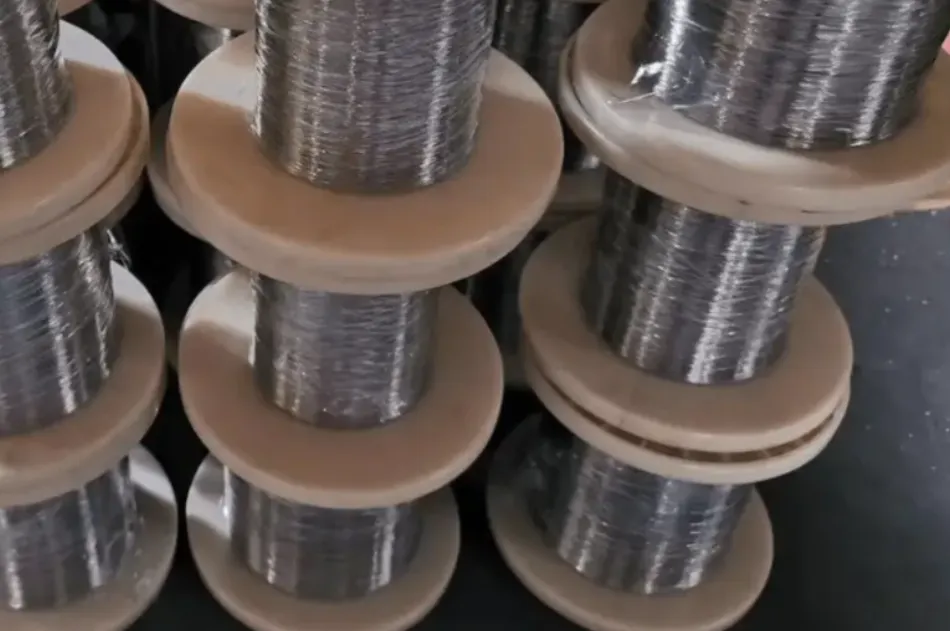
How Are Hastelloy B-2 Precision Springs Manufactured at MWalloys?
The manufacturing process for precision Hastelloy B-2 springs requires specialized equipment, controlled processes, and quality verification steps that differentiate genuine precision spring manufacturing from commodity spring production.
Wire Feedstock Qualification
Before coiling begins, every spool of B-2 wire receives incoming inspection at MWalloys:
| Inspection Step | Method | Acceptance Criteria |
|---|---|---|
| PMI (chemistry verification) | XRF spectrometry | Confirms N10665 composition on every spool |
| Diameter measurement | Laser micrometer, 5 locations | Within specified tolerance ±0.003mm precision |
| Surface inspection | Visual + optical comparator | No seams, laps, pits, or surface cracks |
| Hardness check | Portable Rockwell tester | Within specified spring-temper range |
| Tensile verification | Pull test on wire sample | Within specified tensile strength range |
| Cast measurement | Coil laid on flat surface | Minimum cast per wire diameter specification |
This incoming inspection protocol catches the most common wire quality problems before winding begins, preventing the discovery of non-conforming material after springs have been produced and heat treated.
CNC Spring Coiling Process for B-2
Hastelloy B-2 coiling requires specific machine parameter adjustments compared to stainless steel spring coiling:
| Process Parameter | Carbon Steel Setting | B-2 Adjusted Setting | Reason for Adjustment |
|---|---|---|---|
| Coiling speed | 100 – 300 rpm | 40 – 120 rpm | Lower speed: better dimensional control |
| Back pressure (pitch tool) | Standard | Increased 15 – 25% | Higher work hardening requires more force |
| Mandrel material | Standard steel | Chrome-plated or carbide | Prevents iron contamination |
| Lubrication | Standard oil | Sulfur-free synthetic | Sulfur causes intergranular attack |
| Springback allowance | 3 – 5° per coil | 5 – 8° per coil | Higher springback due to higher yield |
| Pitch consistency monitoring | Periodic check | Every 10th spring or continuous | Higher work-hardening amplifies drift |
| Tool wear monitoring | Shift basis | Per 50 springs | Faster wear on B-2 |
Stress Equalization (Low-Temperature Stress Relief)
After coiling, B-2 springs receive a stress equalization treatment that reduces residual coiling stresses without significantly reducing hardness or corrosion resistance:
| Parameter | Value | Purpose |
|---|---|---|
| Temperature | 400 – 480°C | Below recrystallization; reduces residual stress |
| Time | 1 – 4 hours | Equalize residual stress through cross-section |
| Atmosphere | Inert (argon or vacuum) | Prevents oxidation of B-2 surface |
| Cooling | Air cool | No quenching required |
| Effect on hardness | < 2 HRC change | Preserves spring-temper properties |
| Effect on spring rate | < 1% change | Negligible dimensional change |
Critical warning: B-2 springs must not be stress relieved in air at temperatures above 300°C because the near-zero chromium content means no protective oxide forms, and B-2 oxidizes rapidly in air at elevated temperatures. Argon or vacuum atmosphere for all thermal treatments after final winding is mandatory.
Critical thermal stability warning for B-2: The alloy is susceptible to precipitation of a nickel-molybdenum ordered phase (Ni₄Mo) during exposure in the temperature range 550 – 900°C, which reduces both toughness and corrosion resistance. All heat treatments must remain below 500°C or perform full solution anneal above 1000°C with rapid quench. The intermediate range 500 – 1000°C must be avoided for any thermal exposure.
End Grinding Process
Closed and ground B-2 springs require precision end grinding:
| Grinding Parameter | Specification | Notes |
|---|---|---|
| Grinding wheel | Silicon carbide or CBN | Carbide avoids iron contamination |
| Wheel speed | 1800 – 2200 rpm | Conservative to limit heat |
| Coolant | Sulfur-free water-soluble oil | Prevents thermal damage and contamination |
| Ground face flatness | < 0.1mm deviation | Measured with optical flat |
| Squareness tolerance | < 2° from perpendicular | Verified with square and feeler gauge |
| Surface roughness | Ra 0.8 – 1.6 µm | Adequate for spring seating |
| Removal per pass | < 0.05mm | Light passes prevent thermal damage |
Dimensional Verification and Spring Rate Testing
Every custom B-2 spring order from MWalloys undergoes the following final verification:
| Test | Measurement Tool | Frequency | Documentation |
|---|---|---|---|
| Free length | Digital calipers ±0.01mm | 100% of springs | Recorded on inspection report |
| Wire diameter | Micrometer ±0.001mm | Per lot sample | On certificate |
| Mean coil diameter | Digital calipers | Per lot sample | On certificate |
| Total coil count | Visual count | 100% | Verified vs specification |
| Active coil count | Calculated from total | Per lot | On certificate |
| Spring rate measurement | Calibrated spring tester | Per lot (10% or 5 springs minimum) | Test report |
| Solid height | Compressed to solid; measure | Per lot sample | On certificate |
| Squareness | Square and feeler gauge | Per lot sample | Pass/fail |
| Load at specified deflection | Spring tester | 100% (precision Class A) | Individual spring record |
What Corrosive Environments Specifically Justify Hastelloy B-2 Spring Specification?
The specification of B-2 springs over less expensive alternatives must be justified by the service environment. B-2's significant cost premium over stainless steel (approximately 15 – 20 times the cost of 316L springs) is warranted only in environments where lower-cost alloys fail within unacceptable timeframes.
Environments Where B-2 Springs Are the Correct Specification
| Environment | Concentration / Condition | Why B-2 | Competing Options That Fail |
|---|---|---|---|
| Hydrochloric acid (HCl) | All concentrations, all temps | B-2 corrodes at < 0.25 mm/year | C276 (5 – 15 mpy), 316L (fails rapidly) |
| Hydrogen chloride gas (dry) | Elevated temp | B-2 resists; no passive film needed | Most alloys fail in dry HCl |
| Hydrogen chloride + water vapor | Hot, humid HCl atmosphere | B-2 superior to all Cr-bearing alloys | C276, 316L, 904L all susceptible |
| Sulfuric acid (dilute, < 30%) | Cold to 80°C | B-2 excellent in reducing H₂SO₄ | 316L limited; C276 moderate |
| Phosphoric acid (pure, < 85%) | Moderate temperature | B-2 very good in pure H₃PO₄ | 316L adequate only in dilute cold |
| Acetic acid (any concentration) | Including boiling glacial | B-2 excellent in organic reducing acids | 316L acceptable only at low concentration |
| H₂S (hydrogen sulfide) | Gas or dissolved | B-2 excellent in reducing sour streams | Standard grades suffer SCC or corrosion |
| Reducing chemical process streams | Mixed organic + HCl | B-2 handles mixed reducing streams | Individual alloys may not address all species |
| HCl regeneration systems | Regeneration acid, hot | B-2 standard for regeneration equipment | No other standard alloy handles this |
| Vinyl chloride production | HCl process streams | B-2 specified by most process licensors | 316L inadequate; C276 borderline |
Environments Where B-2 Springs Are NOT Appropriate
Understanding where B-2 performs poorly is equally important:
| Environment | B-2 Performance | Correct Alternative |
|---|---|---|
| Nitric acid (any concentration) | Poor: no Cr for passive film | C22, 304L, titanium |
| Ferric chloride solutions | Poor: oxidizing chloride | C276, C22 |
| Bleach / hypochlorite solutions | Poor: oxidizing | C22, titanium |
| Mixed acid (HNO₃ + HCl) | Poor: oxidizing component | C22, C2000 |
| Seawater (hot, with oxidizers) | Moderate to Poor | C276, C22, Inconel 625 |
| Atmospheric oxidizing service | Poor above 300°C (no Cr₂O₃) | Inconel 600, 601 |
| Fluorine-containing streams | Verify specific conditions | Consult materials engineer |
How Does Hastelloy B-2 Compare to C276, C22, and Inconel 625 for Spring Service?
Engineers frequently face the choice between B-2 and other high-performance nickel alloy springs. The following comparison clarifies when each alloy is the correct spring material.
Spring Alloy Comparison Table
| Property | B-2 (N10665) | C276 (N10276) | C22 (N06022) | Inconel 625 (N06625) | 316L SS |
|---|---|---|---|---|---|
| Chromium (%) | < 1 | 15.5 | 21 | 22 | 17 |
| Molybdenum (%) | 28 | 16 | 13.5 | 9 | 2.2 |
| HCl resistance (all concentrations) | Outstanding | Good | Moderate | Moderate | Poor |
| Oxidizing acid resistance | Poor | Moderate | Excellent | Good | Limited |
| Mixed acid resistance | Poor | Good | Excellent | Good | Poor |
| Seawater pitting resistance | Poor (no PREN basis) | Excellent | Excellent | Excellent | Poor |
| Spring temper tensile (MPa) | 1350 – 1550 | 1350 – 1550 | 1350 – 1500 | 1500 – 1700 | 1300 – 1700 |
| Modulus of rigidity (GPa) | 83 | 80 | 80 | 79 | 75 |
| Maximum allowable spring stress (MPa) | 380 – 450 | 380 – 440 | 370 – 430 | 420 – 480 | 350 – 500 |
| Stress relaxation resistance (150°C) | Good | Good | Good | Good | Moderate |
| Wire availability (spring temper) | Good | Good | Good | Good | Excellent |
| NACE MR0175 compliance | Yes (annealed) | Yes | Yes | Yes | Limited |
| Relative spring cost vs 316L | ~15 – 20× | ~12 – 16× | ~14 – 18× | ~12 – 15× | 1× |
Decision Framework: Which Alloy to Specify for Your Spring Application
Specify B-2 springs when:
- The spring will contact concentrated HCl at any temperature.
- The process stream is a reducing acid environment with no oxidizing species.
- Hydrogen sulfide is the primary corrosive medium.
- The application involves dry hydrogen chloride gas.
- HCl regeneration or vinyl chloride production equipment is the context.
- Previous springs in C276 or 316L have failed through corrosion within one maintenance cycle.
Specify C276 springs when:
- The environment is mixed (both reducing and mild oxidizing species)
- Sulfuric acid is present at moderate concentrations alongside other species.
- Sour oil and gas service requires both H₂S resistance and seawater exposure.
- The application must also handle occasional oxidizing cleaning agents.
Specify C22 springs when:
- Oxidizing acids (HNO₃, bleach, ferric chloride) are present.
- FGD scrubbing environments with mixed acid/oxidizer chemistry.
- Pharmaceutical equipment subject to oxidizing CIP protocols.
Specify Inconel 625 springs when:
- High cycle fatigue in seawater or moderate acid environments is the primary driver.
- The spring must also function as a structural sealing element.
- High-temperature service above 500°C is required.
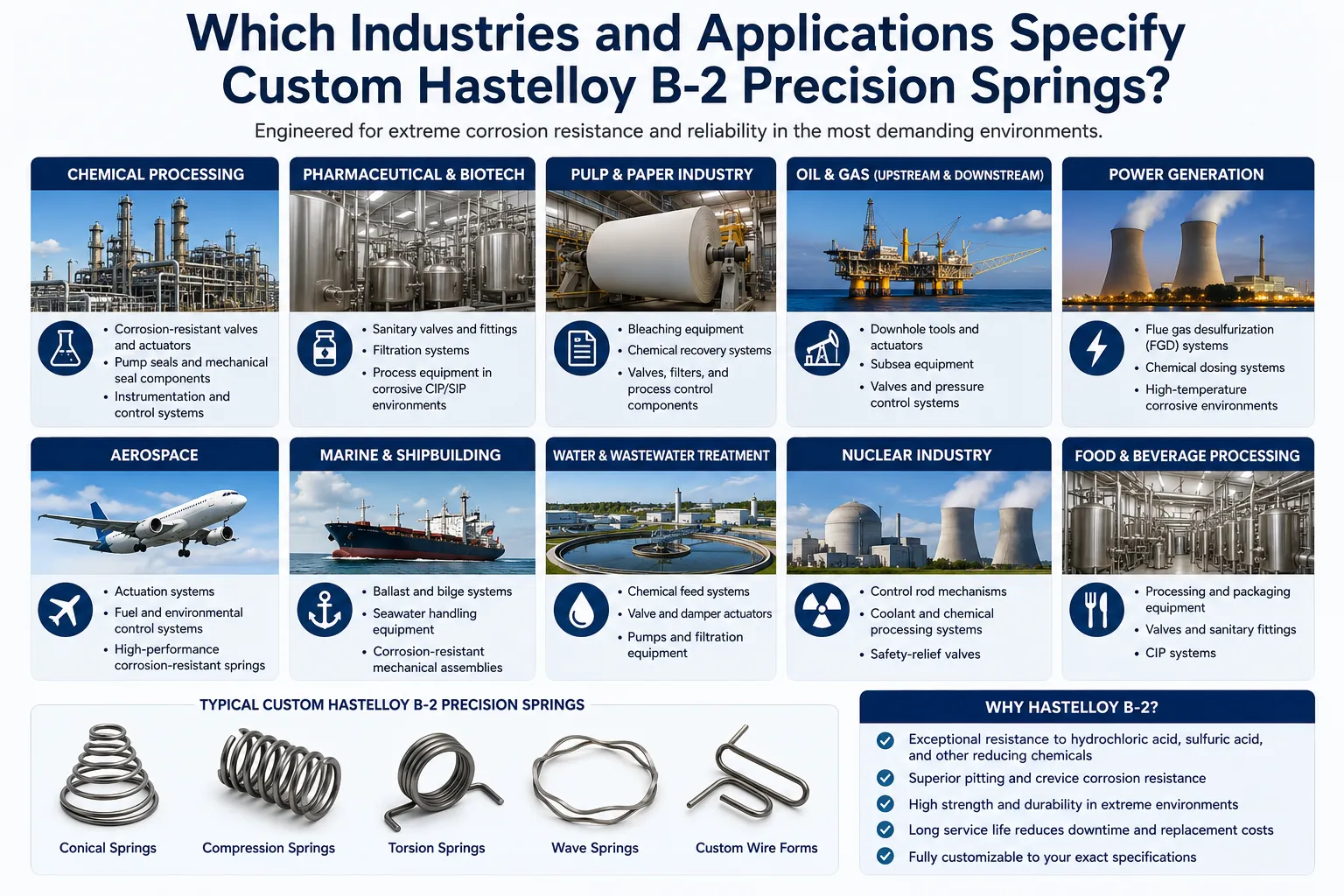
Which Industries and Applications Specify Custom Hastelloy B-2 Precision Springs?
Chemical Processing Industry Applications
The chemical processing industry is the primary consumer of Hastelloy B-2 springs. The following applications represent the most common uses:
| Application | Spring Function | Why B-2 | Typical Spring Dimensions |
|---|---|---|---|
| HCl acid reactor valve seats | Keeps valve closed against backpressure | HCl at all concentrations; high temperature | d: 2 – 6mm; D: 15 – 50mm; L: 30 – 150mm |
| HCl stripping column internals | Check valve springs in distillation trays | Concentrated HCl vapor | d: 1 – 4mm; D: 8 – 30mm |
| Vinyl chloride monomer production | Process control valve springs | HCl intermediate streams | d: 2 – 8mm; D: 15 – 60mm |
| Hydrochloric acid pump check valves | Prevents acid backflow | Pump operates in concentrated HCl | d: 1.5 – 5mm; D: 10 – 40mm |
| Acid metering system springs | Spring-loaded dosing valves | Precise HCl delivery systems | d: 0.5 – 3mm; D: 5 – 20mm |
| Phosphoric acid plant internals | Agitator seal springs | Reducing phosphoric acid + impurities | d: 2 – 6mm; D: 12 – 45mm |
| Acetic acid process valves | Control valve actuator springs | High-concentration organic acid | d: 2 – 8mm; D: 15 – 60mm |
| Reducing acid distillation equipment | Column internals, pressure relief | Multiple reducing acid species | Custom per vessel specification |
Pharmaceutical and Fine Chemical Applications
| Application | Specific Use | Key Requirement |
|---|---|---|
| HCl salt formation reactors | Valve and seal springs | Pharmaceutical grade purity + HCl resistance |
| Amino acid production equipment | Process valve springs | Reducing organic + HCl environment |
| Active pharmaceutical ingredient synthesis | Reactor check valve springs | Corrosion resistance + cleanability |
| Chemical analysis instruments | Sample valve springs in HCl environments | Ultra-precise spring rate + corrosion |
| pH control systems (HCl dosing) | HCl injection valve springs | Resistance to HCl at dosing concentrations |
Oil and Gas Industry Applications
| Application | Why B-2 | Operating Condition |
|---|---|---|
| Downhole HCl acidizing tool springs | HCl acidizing fluid is concentrated | 15 – 28% HCl at downhole temperature |
| Acid injection check valve springs | Prevents acid backflow into chemical injection lines | Concentrated HCl in reducing environment |
| Sour gas processing equipment | H₂S + reducing conditions | Both reducing acid and H₂S resistance |
| Wellbore stimulation tool internals | Ball seat spring in HCl service | High pressure + HCl compatibility |
Industrial Equipment Applications
| Application | Application Context | B-2 Advantage |
|---|---|---|
| Water treatment (HCl regeneration) | Ion exchange resin regeneration systems | Concentrated HCl cycling |
| Steel pickling line equipment | HCl pickling bath valve springs | Hot concentrated HCl |
| Circuit board manufacturing | PCB etching line valve springs | HCl + reducing chemistry |
| Metal surface treatment | Acid cleaning equipment valve springs | HCl-based cleaning solutions |
| Semiconductor wet processing | HF + HCl mixed acid equipment | Reducing acid in ultra-clean environment |
What Quality Standards and Certifications Apply to Custom Hastelloy B-2 Precision Springs?
Quality documentation for Hastelloy B-2 springs must address both the spring manufacturing requirements and the alloy-specific material certifications that establish the composition and corrosion-resistant properties of the base wire.
Applicable Standards for B-2 Springs and Wire
| Standard | Body | Scope | Application |
|---|---|---|---|
| ASTM B333 | ASTM | B-2 (N10665) plate, sheet, strip | Material standard reference |
| ASTM B335 | ASTM | B-2 bar and rod | Bar feedstock reference |
| ASTM B626 | ASTM | B-2 welded tube | Tube reference (not wire but same alloy) |
| ASME SB-333 | ASME | B-2 plate (Code vessels) | Pressure equipment reference |
| NACE MR0175 / ISO 15156 | AMPP | Sour service material qualification | Sour service springs |
| EN 10204:2004 | CEN | Material test certificate types | Certification document format |
| ASTM A125 | ASTM | Heat treated steel springs (reference) | Spring test method reference |
| DIN 2093 | DIN | Disc spring standards (reference) | Belleville spring geometry |
| ISO 13906 | ISO | Conical and cylindrical coil springs | Spring dimensional standards |
| MIL-S-13572 | Military | Compression spring requirements | Defense applications reference |
MWalloys Quality Documentation Package for B-2 Springs
| Document | Content | Standard Provision |
|---|---|---|
| EN 10204 Type 3.1 wire certificate | Chemistry, mechanical properties, heat number | Standard on all orders |
| PMI report (XRF) | Element-by-element analysis per spool | Standard: every wire spool |
| Spring inspection report | Free length, wire diameter, coil count, squareness | Standard: every spring lot |
| Spring rate test certificate | Measured spring rate vs design target | Standard: per lot minimum |
| Load at specified length | Measured load vs design specification | Class A orders: 100% |
| Material heat treatment record | Anneal temperature, time, atmosphere | Available on request |
| Stress relief certification | Confirms argon atmosphere treatment | Available on request |
| NACE MR0175 compliance statement | Hardness confirmation for sour service | On request for O&G orders |
| First article inspection report | Full dimensional + functional verification | On request for new designs |
| Certificate of conformance | Signed conformance to order specification | Standard on all orders |
Spring Classification and Tolerance Standards
MWalloys manufactures B-2 springs to three precision classes based on application requirements:
| Precision Class | Spring Rate Tolerance | Load Tolerance | Free Length Tolerance | Application |
|---|---|---|---|---|
| Class C (commercial) | ±15% | ±15% at specified length | ±2% or ±1mm | Non-critical, general service |
| Class B (precision) | ±10% | ±10% at specified length | ±1% or ±0.5mm | General industrial |
| Class A (high precision) | ±5% | ±5% at specified length | ±0.5% or ±0.25mm | Valves, instruments, critical service |
| Class AA (ultra-precision) | ±2% | ±3% at specified length | ±0.25% or ±0.15mm | Calibration equipment, analytical instruments |
Most chemical plant and valve applications specify Class A or B. Analytical instrumentation, calibration equipment, and precision control valves in corrosive service specify Class A or AA.
FAQs: Custom Hastelloy B-2 Springs Manufacturing
1: What makes Hastelloy B-2 springs superior to C276 springs in hydrochloric acid service?
Hastelloy B-2 springs outperform C276 springs in concentrated hydrochloric acid by a factor of 10 to 50 times in terms of corrosion rate, because B-2's 28% molybdenum and near-zero chromium content allows it to maintain a very low, stable corrosion potential in reducing HCl environments, while C276's 15.5% chromium actually increases corrosion susceptibility in strongly reducing acid by raising the alloy's electrode potential toward the active dissolution range. In boiling 20% hydrochloric acid, C276 corrodes at approximately 15 – 25 mils per year, while B-2 corrodes at less than 0.5 mils per year under the same conditions. For a compression spring with 0.5mm wire diameter, C276 would lose approximately 15% of its cross-sectional area per year in this environment, causing spring rate reduction and eventual failure. B-2 would show negligible dimensional change over the same period. The practical consequence is that C276 springs in concentrated HCl service typically last one to three process cycles before requiring replacement, while B-2 springs can last the full plant turnaround interval of three to five years. The cost premium of B-2 over C276 (approximately 20 – 30% higher per spring) is recovered many times over through reduced maintenance shutdowns and spring replacement costs.
2: What wire diameters are available for custom Hastelloy B-2 spring manufacturing?
Custom Hastelloy B-2 compression and tension springs can be manufactured from wire diameters ranging from 0.3mm to 12mm, with the most commonly requested range for chemical plant valve applications being 1.5 to 6mm, and the practical minimum for flat spring work being 0.1mm strip thickness. Wire below 1.0mm diameter in B-2 spring temper requires specialized fine-wire coiling equipment because the high spring-back and work-hardening rate of B-2 in very fine diameters makes consistent pitch control challenging with standard CNC spring coilers. Above 8mm wire diameter, hot forming or mandrel winding may be required rather than cold coiling, which affects dimensional accuracy and requires separate tooling qualification. MWalloys maintains production capability across this full diameter range, with standard stock wire available in the most common sizes (1.5mm, 2.0mm, 2.5mm, 3.0mm, 4.0mm, 5.0mm, 6.0mm) in spring-temper condition for fast-turnaround orders. Contact our spring engineering team with your wire diameter, spring index, and required spring rate to receive a production capability confirmation and lead time estimate before finalizing your spring design.
3: Can Hastelloy B-2 springs be used in NACE MR0175 sour service applications?
Yes, Hastelloy B-2 (UNS N10665) in the solution-annealed condition is listed as acceptable in NACE MR0175 / ISO 15156-3 for sour service, but spring-temper cold-worked B-2 wire may exceed the standard's hardness limits and requires specific qualification testing before use in H₂S-containing environments at elevated partial pressures. NACE MR0175 / ISO 15156-3 covers nickel-molybdenum alloys and permits N10665 subject to hardness not exceeding 35 HRC (approximately 331 HB) and compliance with the environmental severity limits specified in Table B.2. Annealed B-2 (used in lightly loaded springs or as raw material before cold working) typically achieves 85 – 92 HRB (approximately 10 – 15 HRC), well within the NACE limit. Spring-temper B-2 wire, with hardness of 38 – 43 HRC in full spring-temper condition, substantially exceeds the 35 HRC NACE limit and requires either supplemental sulfide stress cracking (SSC) testing per NACE TM0177, or selection of a lighter-drawn temper condition that achieves adequate spring performance within the hardness limit. For oil and gas sour service applications requiring B-2 springs, MWalloys recommends early consultation with a materials engineer to establish the optimal combination of spring geometry and wire temper that meets both spring performance requirements and NACE compliance.
4: What is the maximum service temperature for Hastelloy B-2 springs?
Hastelloy B-2 springs are generally limited to service temperatures below 480°C for maintaining spring-temper mechanical properties, and below 300°C in oxidizing atmospheres due to the alloy's very low chromium content that prevents protective oxide formation at higher temperatures. The temperature limitation in oxidizing environments (air, steam with dissolved oxygen, oxidizing acid vapors) is the more practically important constraint: B-2's near-zero chromium means it cannot form the Cr₂O₃ protective scale that allows other nickel alloys to survive elevated temperature atmospheric exposure. Above 300°C in air, B-2 oxidizes progressively, reducing the wire cross-section and altering the spring rate. In reducing environments (the primary application for B-2 springs), the temperature limit is governed by mechanical properties: above approximately 480°C, stress relaxation accelerates, and above approximately 550°C, the risk of Ni₄Mo phase precipitation in the 550 – 900°C range becomes significant. Any exposure in the 550 – 900°C range either during manufacturing (stress relief in air furnace) or during service in high-temperature reducing environments causes embrittlement and potential spring failure. For applications requiring springs in reducing acid environments above 300°C, a materials engineer should review the specific temperature, time, and atmosphere conditions before confirming B-2 as the appropriate alloy.
5: How long does it take to manufacture custom Hastelloy B-2 precision springs?
Standard custom Hastelloy B-2 compression spring orders from MWalloys have lead times of 3 to 6 weeks for quantities below 1000 springs when wire feedstock is available from inventory, with Class A precision springs requiring an additional 1 to 2 weeks for full spring rate testing and documentation preparation. The lead time breakdown for a typical custom order involves: wire feedstock verification and selection (2 – 3 days), CNC coiling setup and first article production (1 – 3 days depending on spring complexity), stress equalization heat treatment in argon atmosphere (2 – 5 days including furnace scheduling), end grinding if required (1 – 2 days), dimensional verification and spring rate testing (1 – 3 days), and documentation preparation and packaging (1 – 2 days). Non-standard wire diameters that are not stocked by MWalloys add 6 to 10 weeks for wire procurement and incoming inspection before production can begin. Prototype and first-article quantities (typically 5 – 25 springs) have similar process times but may have expedited scheduling. For planned plant shutdowns and maintenance turnarounds where B-2 springs are critical path items, we recommend initiating orders at minimum 8 weeks before required delivery date, and 16 weeks for non-standard wire diameters or quantities above 5,000 springs.
6: What is the difference between Hastelloy B-2 and Hastelloy B-3 springs?
Hastelloy B-3 (UNS N10675) springs offer improved thermal stability compared to B-2 in the 200 – 500°C temperature range because B-3's modified composition (with small controlled additions of chromium and other elements) significantly reduces the tendency to form the embrittling Ni₄Mo ordered phase that makes B-2 sensitive to exposure in the 550 – 900°C range, but B-3 spring wire is less commercially available and typically costs 15 to 25% more than equivalent B-2 wire. In terms of corrosion performance in hydrochloric acid and other reducing acid environments, B-2 and B-3 springs perform essentially equivalently: both deliver corrosion rates below 0.5 mils per year in all concentrations of HCl. The practical advantage of B-3 appears in manufacturing (slightly lower risk of embrittlement during stress relief processing if temperature controls are imperfect) and in applications where the spring may experience thermal excursions above 300°C during process upsets. For the majority of chemical plant spring applications where service temperatures remain below 200°C, B-2 provides equivalent performance to B-3 at lower cost and with better wire availability. The selection of B-3 over B-2 is justified when: service temperature regularly exceeds 250°C in a reducing environment, manufacturing history includes episodes of B-2 embrittlement, or the application requires absolutely zero tolerance for performance degradation from inadvertent thermal excursion.
7: How do I specify a custom Hastelloy B-2 compression spring correctly?
A complete custom B-2 spring specification must include: wire diameter (with tolerance), mean coil diameter (or OD/ID), free length (with tolerance), total number of coils, active coil count, spring rate (with tolerance class), end configuration, surface finish or treatment, alloy designation (UNS N10665), wire condition (spring temper with target tensile range), and required certifications (EN 10204 Type 3.1 minimum, PMI on wire feedstock). The most common specification errors for B-2 springs are: using carbon steel spring rate tolerances (±15% commercial) when precision valves require ±5% Class A, not specifying the alloy temper condition (receiving annealed wire coiled to spring geometry but without spring temper properties), omitting the argon atmosphere requirement for stress equalization (resulting in oxidized springs that are visually unattractive and potentially compromised at end grinding zones), and not specifying the wire chemistry controls beyond the standard UNS N10665 limits (particularly iron content maximum for critical HCl applications). MWalloys provides a spring specification template that covers all required parameters and can be populated with your application requirements to produce a complete purchase specification. Contact our engineering team to receive this template and a review of your design before finalizing the specification.
8: Can Hastelloy B-2 springs be electropolished or surface treated?
Yes, Hastelloy B-2 springs can be electropolished using a phosphoric-sulfuric acid electrolyte bath, which improves surface smoothness, removes minor surface imperfections from the drawing and coiling processes, and can produce a surface finish of Ra < 0.2 µm for applications requiring ultra-clean spring surfaces. Electropolishing is particularly relevant for B-2 springs used in pharmaceutical and fine chemical applications where surface cleanliness and freedom from particulate generation are important. The electropolishing process on B-2 is effective because the high nickel content produces a homogeneous dissolution that smooths surface asperities without the differential attack that can occur on alloys with large compositional gradients between phases. Passivation treatments (nitric acid passivation, citric acid passivation) are also applicable to B-2 springs and improve the corrosion resistance at the surface by removing iron contamination from tooling that may have been deposited during coiling and grinding operations. Shot peening is not typically applied to corrosion-service B-2 springs because the resulting compressive surface stress is beneficial for fatigue but introduces iron contamination from steel shot that would compromise corrosion performance; ceramic or glass bead peening is an acceptable alternative if surface stress improvement is required alongside corrosion resistance.
9: What is the minimum order quantity for custom Hastelloy B-2 springs from MWalloys?
MWalloys accepts custom Hastelloy B-2 spring orders with a minimum quantity of 10 pieces for prototype and development orders, with standard production orders typically starting at 25 – 50 pieces per spring design, and per-piece pricing improving significantly at quantities of 100, 500, and 1000+ pieces. The minimum quantity reflects the setup costs inherent in precision spring manufacturing: CNC coiler setup and first-article verification consume the same time regardless of whether 10 or 1000 springs are subsequently produced. For new spring designs, a first-article prototype batch of 10 – 25 springs for customer testing and approval is followed by production orders at the confirmed specification. Blanket purchase orders with scheduled releases over 6 to 12 months reduce per-piece cost by allowing more efficient production planning and wire feedstock procurement. For maintenance operations requiring small quantities of replacement B-2 springs on short notice, MWalloys maintains a standard spring catalog in the most common B-2 spring sizes used in chemical plant valve applications; emergency delivery of catalog springs is typically possible within 5 to 10 business days without the full lead time of a custom design. Contact our sales team to check if your required spring geometry matches an available catalog item before initiating a full custom manufacturing order.
10: How should Hastelloy B-2 springs be cleaned and inspected after installation?
Hastelloy B-2 springs should be cleaned before installation using deionized water rinse or isopropyl alcohol wipe (not chlorinated solvents, acid cleaners, or alkaline cleaners unless specifically compatible with B-2), and should be inspected after removal from service by visual examination under 10× magnification for corrosion pitting, wire diameter reduction, and any coil-to-coil contact marks that indicate spring has been operated beyond its design travel. Before installation, spring surfaces should be free from any iron contamination that could initiate galvanic corrosion: verify by wiping with a damp clean cloth and checking for any rust color on the cloth. In service, B-2 springs in HCl environments do not require periodic cleaning because HCl tends to self-clean the spring surface. After service, recovered B-2 springs in good condition can be reused if: wire diameter reduction is less than 2% of original diameter (indicating corrosion rate within acceptable limits), spring rate verification shows less than 5% change from original specification, and visual inspection shows no pitting deeper than 0.05mm or any surface cracking. Springs that show corrosion pitting, diameter reduction exceeding 2%, or spring rate shift exceeding 5% should be replaced rather than returned to service. Maintaining a log of spring service life (installation date, service conditions, replacement date) provides data for predicting optimal maintenance intervals and identifying process upsets that accelerate corrosion beyond normal rates.
Conclusion: Custom Hastelloy B-2 Springs Deliver Performance No Other Material Provides
Hastelloy B-2 springs occupy an irreplaceable position in the precision spring market. In concentrated hydrochloric acid, reducing organic acid, and H₂S-dominated process environments, B-2 is not merely a better choice than stainless steel or C276: it is the only spring material that survives long enough to justify installation.
The key principles from this technical and manufacturing review:
- B-2's near-zero chromium and 28% molybdenum content produces reducing acid resistance that no chromium-bearing alloy can match.
- Spring design must use B-2-specific modulus values (G = 83 GPa) not generic stainless steel values.
- All thermal processing after coiling must use inert atmosphere to prevent surface oxidation.
- The 550 – 900°C temperature range must be avoided absolutely to prevent Ni₄Mo embrittlement.
- NACE MR0175 sour service compliance requires hardness verification because spring-temper B-2 may exceed the 35 HRC limit.
- Complete specification must include wire temper, alloy UNS designation, atmosphere requirements, and precision class.
- Lifecycle cost analysis in HCl service consistently shows B-2 springs as the most economical choice despite the high initial cost.
Order Custom Hastelloy B-2 Precision Springs from MWalloys
MWalloys manufactures custom Hastelloy B-2 precision springs in compression, tension, torsion, flat, and wave spring configurations from wire diameters of 0.3 to 12mm, with full EN 10204 Type 3.1 material certification, PMI verification on all wire feedstock, argon atmosphere stress equalization, and spring rate testing documentation.
Our custom B-2 spring manufacturing capabilities include:
- CNC spring coiling on dedicated equipment for B-2 and other nickel alloys.
- Wire diameters from 0.3mm to 12mm in spring-temper B-2.
- Precision classes from Class C commercial to Class AA ultra-precision.
- Closed and ground ends with squareness < 2° standard.
- Electropolishing available for pharmaceutical and fine chemical applications.
- NACE MR0175 compliant supply with hardness certification for O&G applications.
- First-article inspection with full dimensional and spring rate documentation.
- Minimum order 10 pieces for prototype; 25 pieces standard production.
- Emergency supply of catalog B-2 springs within 5 to 10 business days.
Contact MWalloys today to submit your B-2 spring design for engineering review and quotation. Provide your wire diameter, spring index, free length, required spring rate, service environment description, and quantity requirement for a same-day technical response and lead time confirmation.
Verified and Authoritative Sources
- Haynes International – Hastelloy B-2 Alloy Technical Brochure (H-2006D); Hastelloy B-3 Alloy Technical Brochure (H-2063).
- ASTM International – ASTM B333: Standard Specification for Nickel-Molybdenum Alloy Plate, Sheet, and Strip.
- ASTM International – ASTM B335: Standard Specification for Nickel-Molybdenum Alloy Rod.
- NACE International (AMPP) – NACE MR0175 / ISO 15156: Petroleum and Natural Gas Industries – Materials for Use in H₂S-Containing Environments. Parts 1, 2, and 3.
- Wahl, A.M. – Mechanical Springs, 2nd Edition. McGraw-Hill, New York. ISBN 978-0-07-067875-8.
- Shigley, J.E., Mischke, C.R., Budynas, R.G. – Mechanical Engineering Design, 8th Edition. McGraw-Hill. ISBN 978-0-07-312193-2.
- ASM International – ASM Handbook, Volume 13B: Corrosion: Materials. ASM International, Materials Park, Ohio. ISBN 978-0-87170-707-9.
- Schweitzer, P.A. – Corrosion Engineering Handbook: Corrosion of Linings and Coatings, 2nd Edition. CRC Press. ISBN 978-0-8493-8234-2.
- ISO 13906:2008 – Steel Wire and Springs: Cylindrical Helical Springs Made from Round Wire and Bar. International Organization for Standardization.
- EN 10204:2004 – Metallic Products: Types of Inspection Documents. European Committee for Standardization, Brussels.
- ASTM A125 – Standard Specification for Steel Springs, Helical, Heat-Treated (reference methodology for spring testing).
- DIN 2093 – Disc Springs: Dimensions; Quality Specifications; Testing. Deutsches Institut für Normung.
- Fontana, M.G. – Corrosion Engineering, 3rd Edition. McGraw-Hill. ISBN 978-0-07-021463-7.
- ASME Boiler and Pressure Vessel Code, Section II, Part B – Nonferrous Material Specifications (SB-333). American Society of Mechanical Engineers.
- Special Metals Corporation – Nickel Alloy Technical Bulletins: Properties and Corrosion Performance of Ni-Mo Alloys.