

AMS 4928 defines the requirements for Ti-6Al-4V (Grade 5 / UNS R56400) in wrought product forms (bars, wire, forgings, flash-welded rings and drawn shapes) in the annealed condition; it is the industry standard used when a high strength-to-weight, corrosion-resistant titanium alloy is required for aerospace, medical, marine and high-performance industrial parts. Buyers and engineers choosing AMS 4928 material can expect composition limits consistent with Ti-6Al-4V (≈6% Al, ≈4% V), typical annealed tensile and yield strengths in the 120–135 ksi range (depending on section size and condition), and the option to perform solution-treating & aging (STA) for higher strength when required by application.
Specification
AMS 4928 is an SAE/AMS specification covering Ti-6Al-4V (commonly called Grade 5, UNS R56400) in wrought product forms: bars, wire, forgings, flash welded rings and drawn shapes up through specified diameters/sections. The standard describes chemical limits, dimensional limits, required tests and acceptable conditions (annealed) for supplied stock intended for critical engineering use. The document has been updated over time (latest revision letters and changes to size limits and testing methods are documented in the AMS release history).
Brief background and identifiers
Ti-6Al-4V was developed in the mid-20th century and became the “workhorse” titanium alloy because it combines high specific strength, good fracture toughness and corrosion resistance across a broad temperature range. Typical synonyms and identifiers you will encounter in procurement or engineering documents:
-
Ti-6Al-4V, 6Al-4V, Ti-6-4
-
Grade 5 (ASTM/UNS), UNS R56400
-
AMS specs that apply to forms and tempers: AMS 4911, AMS 4928, AMS 4965, AMS 6930/6931 (AMS 4928 specifically targets annealed bars/wire/forgings).
Chemical composition (AMS 4928 limits)
Below is a concise table of the element limits that AMS 4928 requires for Ti-6Al-4V (values are mass %). These reflect the specification upper/lower bounds used by material producers and test labs.
| Element | Typical AMS 4928 limits (wt%) |
|---|---|
| Aluminum (Al) | 5.5 – 6.75 |
| Vanadium (V) | 3.5 – 4.5 |
| Oxygen (O) | ≤ 0.20 |
| Iron (Fe) | ≤ 0.30 |
| Carbon (C) | ≤ 0.08 |
| Nitrogen (N) | ≤ 0.05 |
| Hydrogen (H) | ≤ 0.0125 |
| Yttrium (Y) | ≤ 0.005 |
| Other elements (total) | ≤ 0.40 |
| Titanium (Ti) | Balance |
(These numbers summarize the composition table and tolerances shown in AMS 4928 and common datasheets for Ti-6Al-4V).
Typical mechanical properties (annealed) and notes
Mechanical values vary with section size and whether material is annealed or STA (solution-treated and aged). Below is a practical, reference table that engineers use when selecting AMS 4928 material (values are typical/minimum ranges for wrought annealed stock):
| Property (room temp) | Typical / Minimum (annealed, ranges) |
|---|---|
| Ultimate tensile strength (UTS) | ~125–135 ksi (≈860–930 MPa) depending on cross-section |
| 0.2% offset yield strength | ~120–130 ksi (≈825–900 MPa) |
| Elongation in 2" | ≥ 8–15% (section-dependent) |
| Reduction of area | ≈ 20–36% |
| Young’s modulus | ~16.5 ×10^3 ksi (≈113.8 GPa) (typical alloy value) |
| Fatigue strength (unnotched) | ~50–75 ksi (varies with surface finish & loading) |
AMS 4928 directs different minimum property limits by size bands; users should consult the spec or the certificate of test for exact acceptance criteria for their lot. When higher strength is required, STA (solution treat + age) produces higher tensile/yield at the expense of some ductility.
Product forms, size limits, surface finish and identification
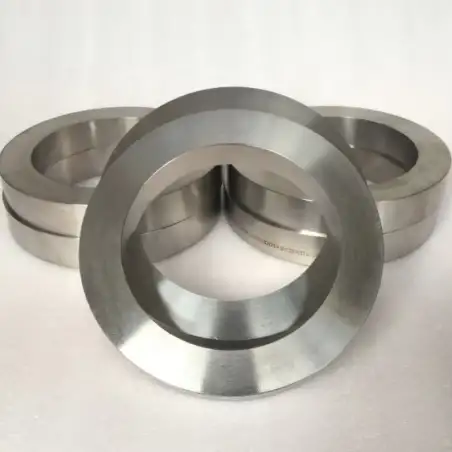
AMS 4928 covers:
-
Bars (round, rectangular/flat)
-
Forgings (machined or forged stock)
-
Wire (drawn)
-
Flash-welded rings and drawn shapes
The current revision expanded the upper size limit for some forms (for example, bars and forgings up to 10.000 in / 254 mm in certain cases) and tightened reporting/identification requirements (see the AMS rationale and revision notes). Surface contamination (alpha case, oxide, scale) inspection magnification and allowable levels are specified by the standard. Identification marking and lot traceability requirements are covered in the spec’s identification and certification sections.
Microstructure & heat treatment
Ti-6Al-4V is an α+β alloy (two-phase). In AMS 4928 the product is supplied in the annealed condition, which gives a balanced microstructure (globular primary α within transformed β matrix) delivering a good combination of strength and ductility.
Key heat treatment notes:
-
Annealed (mill anneal): produces the balanced structure used for general machining, forging and high-strength applications up to about 400°C service temperature.
-
Solution treatment and aging (STA): used when higher static strength is required; solution treat into the β phase field, quench and age to precipitate strengthening phases—this raises UTS/Yield but reduces some ductility.
-
Surface alpha case: hot working and high temperature exposure cause oxygen-enriched surface layers (“alpha case”) that are brittle; AMS 4928 references acceptable inspection magnifications and requires control or removal when critical.
Fabrication: machining, welding, forging and inspection
Practical points from experience and manufacturer datasheets:
Machining
-
Titanium alloy tends to work-harden and has low thermal conductivity; use low cutting speeds, rigid setups, heavy feeds and generous coolant to avoid work hardening and tool wear. Carbide tooling with positive geometry is standard. Expect machinability to be lower than steels (typical machinability index ~20–25% of a reference steel).
Forging
-
Hot forging (above β-transus in controlled environment) followed by appropriate anneal or STA yields desired mechanical structure. For critical aerospace forgings, control of oxygen pickup and grain size is essential.
Welding
-
Ti-6Al-4V welds well when inert gas shielding (argon, helium) is used; AMS 4928 material is compatible with typical processes used for this alloy. Welds must be shielded to avoid contamination; post-weld heat treatment or stress relief may be required in critical applications.
Inspection & testing
-
AMS 4928 requires chemical analysis and may require mechanical testing, dimensional checks, non-destructive inspection (depending on buyer’s purchase order). Watch for surface alpha case (magnification limits), interstitial content (O, N, H) and traceability documentation (MTRs / mill test reports).
Corrosion, temperature range and environmental behavior
Corrosion resistance
-
Ti-6Al-4V has excellent corrosion resistance in oxidizing environments and many seawater/chemical environments; it is often selected where combined low weight and corrosion resistance are needed. It is generally immune to atmospheric corrosion and resists many organic and inorganic chemicals but may suffer crevice corrosion or stress corrosion cracking in certain aggressive localized chemistries.
Temperature
-
Useful service range is roughly −250°C to +400°C (approx. −420°F to +750°F); properties degrade at elevated temperature and detailed alloy tables give allowable service limits. For prolonged exposure above ~400°C, consider specialized high-temperature titanium alloys.
Typical applications
-
Aerospace structural components: high strength-to-weight and fracture toughness make Ti-6Al-4V the primary choice for landing gear components, fasteners, fittings and forgings specified to AMS standards.
-
Engine components and rotor parts: where elevated strength and low density are essential.
-
Medical implants (orthopaedic and dental) — because of the alloy’s biocompatibility, though medical implants often use ELI (extra low interstitial) variants (e.g., Grade 23 / Ti-6Al-4V-ELI) that tighten oxygen, nitrogen and carbon limits.
-
Marine, chemical and power generation parts that require corrosion resistance and strength.
-
Performance sporting goods and motorsport where light weight and strength matter.
Equivalents and cross-references
Common cross-references you will find in procurement documents:
-
UNS R56400 — the UNS designation for Ti-6Al-4V.
-
ASTM B348 — common ASTM specification for titanium and titanium alloy bars and shapes; some forms of Ti-6Al-4V are supplied to B348.
-
AMS 4911 / AMS 4965 / AMS 6930 / AMS 6931 — other AMS documents covering different product forms, tempers or testing regimes for Ti-6Al-4V.
When specifying material, name the standard explicitly (e.g., “AMS 4928, Ti-6Al-4V, annealed, with MTR and surface alpha case inspection per clause X”) to avoid ambiguity.
Purchasing, traceability and supplier selection
When buying AMS 4928 material you should request:
-
Full MTR (mill test report) that references AMS 4928 clause numbers and element test results.
-
Heat/lot traceability linking product to melting/processing batches.
-
Surface condition report (alpha case inspection, finish condition).
-
Dimensional report and hardness/mechanical test certificates for the lot or representative samples.
-
Non-destructive test (NDT) if the part is fatigue-critical (e.g., ultrasonic or eddy current).
Prefer suppliers who follow vacuum melting (VAR, EB) for critical aerospace forgings and who can provide NATO/airframe approvals when required.
Handling, storage and contamination control
Small practical rules that reduce rework and scrap:
-
Keep titanium stock dry and protected from oils/contaminants that can cause adhesion problems during welding.
-
Avoid contact with carbonaceous materials and steel chips; foreign contamination accelerates corrosion and may cause galvanic effects in service.
-
Store in clean rooms or covered racking; label with spec, heat number and MTR reference.
-
If heat or cutting introduces alpha case, arrange for chemical/mechanical removal per AMS guidance before final critical machining.
Quick procurement checklist
-
Specify AMS 4928 explicitly in PO.
-
Require MTR and heat/lot traceability.
-
State required size/form, finish, and alpha-case limits.
-
Decide if STA or annealed supply is required.
-
Require chemical analysis showing Al and V within limits.
-
Add NDT/UT for fatigue-critical components.
-
Confirm welding/forging history for large forgings (VAR/EB info).
FAQs
-
What does AMS 4928 cover?
AMS 4928 covers Ti-6Al-4V (Grade 5 / UNS R56400) in bars, wire, forgings, flash-welded rings and drawn shapes supplied annealed, with defined chemical limits, inspection and testing requirements. -
Is AMS 4928 the same as Ti-6Al-4V Grade 5?
Yes — AMS 4928 specifies the Grade 5 alloy composition and acceptance criteria for certain wrought product forms in the annealed state. -
What is the typical tensile strength for AMS 4928 material?
Typical annealed tensile strength is in the ~125–135 ksi range (≈860–930 MPa), with yield around 120–130 ksi, but exact minima depend on section size and the supplier’s MTR. -
Can AMS 4928 material be welded?
Yes, Ti-6Al-4V welds well when inert gas shielding is used and contamination is avoided; weld procedure qualification is recommended for critical parts. -
What’s the difference between AMS 4928 and ASTM B348?
AMS 4928 is an SAE/AMS spec focused on annealed forms and aerospace acceptance details; ASTM B348 is a commonly used ASTM specification for titanium bars and shapes. Cross-references exist and some suppliers satisfy both, but buyers should specify the exact spec required. -
Are there medical (implant) variants of Ti-6Al-4V?
Yes — Ti-6Al-4V-ELI (Grade 23, UNS R56401) tightens interstitial limits for biocompatibility; AMS 4928 covers standard Grade 5 (not necessarily ELI). For implants, use the ELI spec/ASTM F1472 or F136 references. -
How do suppliers control alpha case?
AMS 4928 specifies inspection magnification and allowable surface contamination; acceptable practice is to chemically or mechanically remove alpha case and to verify with micrographic inspection when required. -
What should I request on a purchase order for flight hardware?
Request AMS 4928 material, full MTR referencing the AMS clauses, NDT if needed, certification of heat treatment/anneal condition, and proof of vacuum melting for critical forgings. -
Is Ti-6Al-4V corrosive in seawater?
Ti-6Al-4V has excellent general corrosion resistance in seawater and marine atmospheres, but localized or crevice corrosion can occur under certain chemistries—evaluate with corrosion testing for aggressive environments. -
What alternatives should I consider if I need higher temperature capability?
For continuous service above ~400°C, consider near-beta or other high temperature titanium alloys (e.g., Ti-6Al-2Sn-4Zr-2Mo or other specialty grades) rather than standard Ti-6Al-4V. Consult alloy datasheets for max continuous temperature.
Why include AMS 4928 in technical drawings & POs
Naming AMS 4928 in the drawing or PO removes ambiguity: it sets chemical composition, size/finish limits, minimum testing & identification, and surface contamination inspection levels. This prevents substitute materials, reduces procurement disputes and simplifies certification for aerospace or regulated markets. Always pair the spec with any buyer-specific test requirements (e.g., hardness, NDT, or specific fatigue testing).
Practical tips from procurement & metallurgists
-
Get the MTR before acceptance and match heat numbers to physical markings.
-
Request micrograph(s) for critical components showing acceptable alpha case and grain size.
-
Ask about melting practice (VAR/EB) for high-reliability forgings.
-
If ordering long bars/stock, confirm straightness and machining stock allowance—titanium is expensive; plan yield and scrap accordingly.
Limitations and failure modes to watch for
-
Alpha case: brittle oxygen-rich layer; must be controlled or removed for fatigue parts.
-
Wear resistance: Ti-6Al-4V has relatively poor abrasive wear resistance compared to steels; consider coatings or surface treatments if sliding wear is expected.
-
Galling: titanium fasteners paired with certain alloys can gall; lubrication and surface finish matter.
Summary
AMS 4928 is the correct specification when you need Ti-6Al-4V (Grade 5) in wrought forms in the annealed condition, with strict control over chemistry, surface contamination and traceability. Use it for structural aerospace forgings, high-performance components and applications demanding a combination of low mass, high strength and corrosion resistance. For medical implants or very low interstitial content, reference the ELI specifications. When ordering, insist on full MTRs, alpha-case documentation, and supplier history for vacuum melting if part integrity is critical.