

Z12CN18-10 is an austenitic stainless steel broadly equivalent to the commonly used 18/10 (AISI/EN) family (often mapped to 304 / X5CrNi18-10 variants). It offers a balanced combination of corrosion resistance, formability and weldability for general-purpose applications, while requiring standard precautions against chloride attack and sensitization in aggressive environments. For specification, procurement and design decisions it is treated the same way you would treat 18% Cr — ~9–10% Ni grades, with small variations in carbon and trace elements that influence performance in welded or high-temperature uses.
what is the Z12CN18-10 means
Z12CN18-10 is an AFNOR/European style designation that encodes the approximate nominal alloy content: roughly 12 → low carbon range indicator, CN → chromium (Cr) and nickel (Ni), and 18-10 → ~18% Cr, ~10% Ni. In practice this grade is classed among the austenitic stainless steels used for general corrosion resistance and mechanical performance at ambient and moderately elevated temperatures. Many international cross-reference tables and material databases map Z12CN18-10 to the widely recognized 304 / X5CrNi18-10 type families.
Chemical composition (typical ranges)
Below is a succinct table of the commonly reported composition windows for Z12CN18-10 (values are weight percent unless otherwise stated). Actual composition for a specific heat or mill certificate should always be read from the mill test report (MTR).
| Element | Typical min | Typical max | Notes |
|---|---|---|---|
| C (carbon) | — | 0.15 | some variants have lower C (≤0.08) for improved weld/intergranular resistance. |
| Si (silicon) | — | 1.0 | deoxidizer, small effect on high-temp strength |
| Mn (manganese) | — | 2.0 | manufacturing impurity/added for deoxidation |
| P (phosphorus) | — | 0.040 | impurity limit |
| S (sulfur) | — | 0.030 | impurity limit; lower is better for machining/surface quality |
| Cr (chromium) | 17.0 | 20.0 | primary passive film former |
| Ni (nickel) | 8.0 | 11.0 | stabilizes austenite and improves corrosion resistance |
| N (nitrogen) | — | trace | sometimes specified in low-C / N-enhanced versions |
(Compiled from AFNOR/industry conversion tables and grade datasheets.)
Practical note: If you require improved resistance to intergranular corrosion after welding, choose the lower-carbon variant (304L / Z2CN18-10 equivalents) or specify stabilized grades (e.g., 321, 347) depending on service conditions.
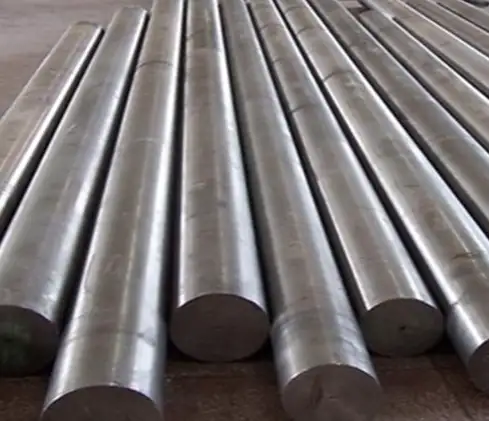
Mechanical properties & typical delivery conditions
Mechanical values vary with temper, cold work, and precise chemistry. Typical properties for solution-annealed Z12CN18-10 (representative of 304-type austenitic stainless steels) are:
| Property | Typical value (solution annealed) |
|---|---|
| Density | ≈ 7.9 g/cm³ |
| Tensile strength, Rm | 500 – 750 MPa (depends on product form) |
| Yield strength, Rp0.2 | ≈ 200 – 350 MPa (lower for annealed sheet; higher for cold-worked bar) |
| Elongation A (%) | 35% (varies by thickness and product) |
| Hardness (HB) | ~140 HBW typical; cold work raises hardness |
These are conservative, engineering-use numbers — refer to the supplier’s MTR for contract values.
Microstructure and metallurgical behavior
Z12CN18-10 is fully austenitic at ambient temperature: its crystal structure is face-centered cubic (FCC). Austenite provides excellent toughness down to cryogenic temperatures and good ductility, which makes the grade easy to cold-form.
Key metallurgical points:
-
Sensitization: When held between roughly 450–850 °C, chromium carbide (Cr₂₃C₆) can precipitate at grain boundaries if carbon is present in sufficient amounts. That leads to intergranular corrosion in some environments. Using low-carbon variants (304L) or stabilized grades prevents this.
-
Work hardening: Austenitic stainless steels strain-harden rapidly — forming operations raise strength but reduce ductility. Design forming sequences accordingly.
-
Non-magnetic as-annealed: Typical austenitic grades are essentially non-magnetic in solution-annealed condition; cold working can induce some magnetic response.
Corrosion performance & environmental limits
Z12CN18-10 behaves like other 18/10 austenitic grades: it has a protective chromium-rich passive oxide film that gives general resistance to oxidizing atmospheres, foodstuffs, and many chemicals, but there are limitations:
-
General atmospheric & food contact: Excellent; widely used for kitchenware, food processing equipment and architecture.
-
Chloride/pitting susceptibility: In chloride-rich environments (seawater, brine, de-icing salts) 18/10 grades can suffer pitting and crevice corrosion — for these, consider 316/EN 1.4401 (Mo-bearing) or duplex grades.
-
Stress corrosion cracking (SCC): Austenitic grades are susceptible to chloride SCC in the presence of tensile stress and elevated temperature. Design to avoid sustained tensile stress in chloride environments, or choose SCC-resistant alloys.
Practical guidance: For welded assemblies, consider specifying post-weld annealing or using low-carbon/ stabilized alternatives when the welded structure will operate in corrosive or high-temperature regimes.
Fabrication — forming, machining, welding, heat treatment
Forming & cold work
-
Z12CN18-10 has excellent ductility and can be deep-drawn, bent and cold formed. Because of rapid work hardening, forming should use intermediate anneals for severe reductions.
Machining -
Austenitic grades can be gummy; use sharp tools, rigid setups and coolant, and consider specifying slightly higher sulfur versions only if free-cut machining is required (but sulfur lowers corrosion resistance).
Welding -
The grade is readily welded by TIG, MIG, resistance and other standard processes. Typical filler for matching mechanical and corrosion properties is ER308/308L (or ER309 for dissimilar steels). Avoid overheating and long holds in the sensitization band; utilize low-carbon filler or post-weld solution annealing if required.
Heat treatment -
Solution anneal at ~1,040–1,120 °C followed by rapid quench (water or air depending on section) to re-dissolve carbides and recover corrosion resistance. There is no hardening by conventional heat treatment (it’s not a heat-treatable alloy); strength is increased via cold work.
Standards, cross-references and equivalents
Z12CN18-10 appears in AFNOR / French tables and is commonly cross-referenced to international grades in industry databases. Representative equivalents and references include:
-
EN / DIN: X5CrNi18-10 / 1.4301 (AISI 304 family equivalents).
-
AISI / UNS: Often functionally equivalent to 304 (S30400) or close family members, though precise mapping depends on carbon limits.
-
JIS / SUS: SUS304 and related grades in JIS.
Important: Cross-reference tables vary — always confirm the equivalent you rely upon by checking composition windows and intended product form. Some AFNOR codes (e.g., Z2CN18-10 vs Z12CN18-10) represent subtle differences intended by French standards; check the exact sheet/version used by the supplier.
Typical applications & industry use cases
Z12CN18-10 is a general-purpose austenitic stainless steel used where corrosion resistance, aesthetic finish and formability are needed:
-
Food processing equipment, kettles, utensils, cutlery, and kitchen appliances.
-
Architectural cladding and interior trim (where polishing and surface finish matter).
-
Chemical plant equipment for non-chloride processes, tanks and piping handling mildly corrosive fluids.
-
Fasteners, bolts and drawn components (if surface finish and corrosion resistance are required).
-
Automotive trim and small structural parts in non-critical corrosion zones.
Selecting Z12CN18-10 for specific applications should consider operating temperature, chloride presence, and welding requirements.
Testing, quality control and inspection
For specification compliance and acceptance testing the following are common requirements:
-
Mill Test Report (MTR): Check chemical composition (each lot) and mechanical values (tensile, yield, elongation).
-
Corrosion testing: For critical service request pitting potential or ASTM G48 type tests in chloride solutions if pitting risk is a concern.
-
Weld inspection: Radiographic or dye-penetrant NDT for pressure-bearing or safety items, plus post-weld corrosion checks where sensitization is possible.
-
Surface finish verification: Ra measurements and visual inspection for architectural or hygienic uses.
Procurement & specification tips
When ordering or specifying Z12CN18-10, adopt this practical checklist:
-
Specify the exact AFNOR number and the applicable edition. If your supply chain requires an international equivalent, state both (e.g., Z12CN18-10 / X5CrNi18-10) and list the tolerance table you accept.
-
Request mill certificates (EN 10204 3.1 or 3.2) for critical parts.
-
State welding and post-weld requirements. If the part will be welded and used in chloride environments, require low-carbon or stabilized alternatives.
-
Define surface finish and mechanical testing acceptance limits up front (Ra, hardness, tensile).
-
Ask about production route and traceability: cold-rolled vs hot-rolled, anneal schedule, and whether the supplier uses vacuum or conventional melting (relevant for inclusion levels).
Sustainability and recyclability
Austenitic stainless steels are highly recyclable; scrap recovery rates are high and stainless production typically uses a significant proportion of recycled feedstock. Using Z12CN18-10 in designs that enable disassembly and material sorting improves circularity. Lifecycle assessments generally favor stainless when long service lives and low maintenance in corrosive environments are needed.
| Feature | Z12CN18-10 (18/10) | 304L (low C) | 316 (Mo) |
|---|---|---|---|
| Cr (%) | 17–20 | 17–19 | 16–18 |
| Ni (%) | 8–11 | 8–12 | 10–14 |
| C (max) | 0.15 | 0.03 | 0.08 |
| Corrosion in chlorides | Moderate risk of pitting | Slightly better for welded parts | Much better (Mo improves pitting resistance) |
| Weldability | Good | Superior for intergranular corrosion control | Good; careful filler needed |
| Typical use | General purpose | Welded structures, pressure vessels | Marine, chemical, chloride environments |
FAQs
-
Is Z12CN18-10 the same as AISI 304?
It is generally treated as equivalent or closely related to the 18/10 family (EN X5CrNi18-10 / 1.4301) in many cross-reference tables, but always verify exact composition and carbon limits on the mill certificate before substituting. -
Can I weld Z12CN18-10 without special filler?
Yes, standard austenitic filler rods (ER308/308L) are typically recommended for matching corrosion and mechanical properties. For critical service or to avoid sensitization use low-carbon filler or select the low-carbon variant. -
Will Z12CN18-10 resist seawater?
Not reliably; for continuous seawater exposure choose Mo-bearing grades such as 316 or duplex stainless steels for much better pitting and crevice resistance. -
Does Z12CN18-10 require heat treatment to harden?
No. It is not a heat-treatable, precipitation-hardening grade — strength is achieved via cold working; annealing is used to restore ductility and corrosion resistance. -
What are the common product forms available?
Sheet, plate, coil, bar, wire, tubing and forgings — availability varies by mill and stockholder. Request the product form and delivery condition from your supplier. -
How to avoid intergranular corrosion after welding?
Use low-carbon variants (e.g., 304L), perform solution annealing after welding when feasible, or select stabilized grades (321, 347) that tie up carbon. -
Is the grade magnetic?
In the solution-annealed condition it is essentially non-magnetic. Cold working may induce some ferromagnetism. -
Typical tensile strength and elongation?
Tensile strengths commonly range from ~500–750 MPa depending on product and cold work; elongation in annealed condition is typically >30%. Always use supplier MTR values for design. -
What surface finishes are available?
Mill-finish, #2B, BA, No.4 brushed and polished finishes are common. Specify Ra or mirror finish requirements where appearance or hygiene matters. -
Environmental/safety concerns in fabrication?
Welding and grinding produce fumes and particulates; follow standard industrial hygiene practices (ventilation, PPE). For severe environments, choose a higher corrosion-resistant alloy to avoid frequent replacement and associated environmental impacts.
Closing notes for engineers and buyers
Z12CN18-10 sits in the large and well-understood family of 18/10 austenitic stainless steels and is an economical, reliable choice for many general-purpose applications. When specifying it for use in welded assemblies, chloride environments, or high-temperature service, check the mill certificate, choose appropriate sub-grades (low-C or stabilized), and consult corrosion and welding experts for critical components. For rapid confirmation of equivalency to an international standard always compare the exact compositional limits (Cr, Ni, C) rather than relying solely on a name mapping.