

X10CrNi18-8 (EN 1.4310, AISI 301) is a metastable austenitic stainless steel chosen primarily when high strength, excellent springback control, and fatigue resistance are required through cold working, while maintaining corrosion resistance close to 1.4301 (AISI 304) in many indoor, urban, and mild industrial environments. In practical engineering terms, 1.4310 is not the “most corrosion resistant” 300 series option, yet it is one of the most cost effective ways to reach very high tensile strength (often above 1,200 MPa in hard tempers) without heat hardening, which explains its dominance in springs, clamps, railway components, hose reinforcements, and precision strip parts.
If your project requires the use of X10CrNi18-8, you can contact us for a free quote.
What exactly is X10CrNi18-8 (1.4310 / AISI 301) stainless steel?
X10CrNi18-8 is the European name used under EN conventions; 1.4310 is the associated EN material number; AISI 301 is the widely used North American designation. All three point to the same family: an austenitic chromium nickel stainless steel whose austenite is intentionally less stable than 304. That controlled instability is a feature, not a defect.
Why engineers specify 301 instead of 304
AISI 301 becomes significantly stronger after cold rolling, cold drawing, stamping, or forming because plastic deformation triggers strain induced martensite. This transformation raises strength and hardness rapidly, enabling:
- Thin gauges to carry high load
- High cycle spring service with compact geometry.
- Good dent resistance in formed sheet components.
- Strong mechanical fasteners and clamps using strip.
Where 304 often needs thicker section or alternative strengthening methods, 301 often reaches the target strength simply through temper selection.
Typical product identity seen in purchasing
Procurement documents usually list one or more of the following:
- EN 10088: X10CrNi18-8, 1.4310.
- ASTM: AISI 301 (often under ASTM A240, ASTM A666, ASTM A313, ASTM A580 depending on form).
- DIN legacy naming may appear in older drawings.
The key is aligning chemical composition, mechanical condition (annealed, quarter hard, half hard, full hard), surface finish, flatness, and certification.
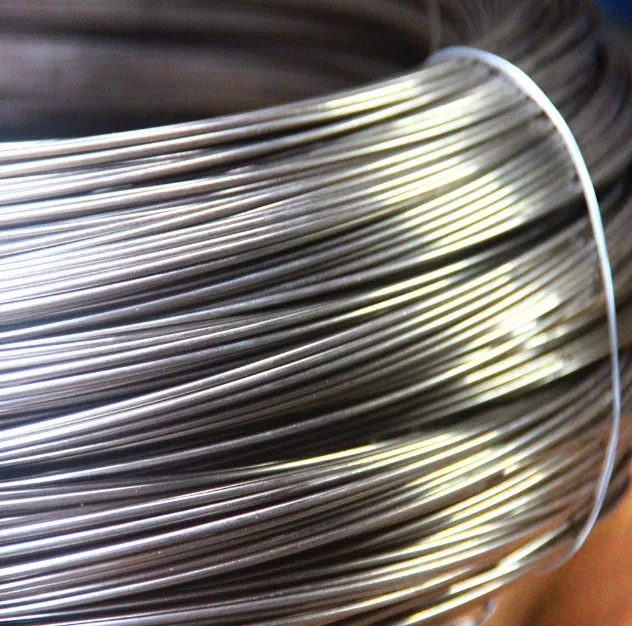
Which standards and designations control 1.4310 material supply?
Different industries purchase 301 via different standards. A strong specification ties grade identity to product form, mechanical condition, dimensional tolerances, surface quality, and inspection documentation.
Common standards by form (typical market practice)
| Product form | Common standards (typical) | Notes procurement teams verify |
|---|---|---|
| Plate, sheet, strip | EN 10088-2, ASTM A240, ASTM A666 | Temper, finish (2B, BA, No.4), flatness, edge condition |
| Cold rolled precision strip | EN 10151 plus EN 10088 chemistry | Spring temper definitions and tight thickness tolerances |
| Wire | EN 10088-3, ASTM A580 | Drawn condition, tensile range, straightness, coil condition |
| Spring wire | ASTM A313 (301 spring wire) | Mechanical range tied to diameter |
| Bar | EN 10088-3, ASTM A276 | Condition (solution annealed, cold finished), straightness |
| Tube | ASTM A554 (welded mechanical), ASTM A269/A213 (pressure where applicable) | Weld quality, eddy current, dimensional checks |
Designation cross reference table
| System | Designation |
|---|---|
| EN name | X10CrNi18-8 |
| EN number | 1.4310 |
| AISI | 301 |
| UNS | S30100 |
| JIS (approximate) | SUS301 |
“Approximate” matters: exact compliance requires a mill test certificate matching the governing standard, since national standards sometimes differ slightly in limits.
Also read: X5 CrNiMo 18-10: 1.4401(AISI 316) Stainless Steel Properties, Specs.
What chemical composition defines 1.4310 and how does it affect performance?
The chemistry targets an austenitic matrix with enough chromium to passivate and enough nickel to remain austenitic after solution anneal, yet not so much nickel that martensitic transformation disappears during cold work.
Typical chemical composition limits (representative)
| Element | Typical EN limit (mass %) | Effect on properties |
|---|---|---|
| C | max 0.15 | Strength potential; higher sensitization risk in welding/slow cooling |
| Si | max 1.00 | Deoxidation; slightly improves oxidation resistance |
| Mn | max 2.00 | Austenite stabilizer; supports hot workability |
| P | max 0.045 | Impurity; excessive levels reduce toughness |
| S | max 0.015 | Impurity; improves machinability when higher, yet hurts corrosion |
| Cr | 16.0 to 19.0 | Passivation, general corrosion resistance |
| Ni | 6.0 to 8.0 | Austenite stability, toughness; lower than 304 drives work hardening |
| N | often limited (varies by standard) | Strength and austenite stability; too much changes forming response |
What the “18-8” label really means here
The shorthand “18-8” refers to roughly 18% chromium and 8% nickel. In 1.4310, nickel sits lower than many 18-8 grades. That nickel reduction is a main reason 301 transforms to martensite more readily than 304 during forming. That shift explains both the elevated strength after cold work and the increase in magnetic response.
Practical implication: corrosion versus strength trade
- Lower nickel relative to 304 can slightly reduce corrosion resistance in marginal conditions.
- Strength after cold work can be dramatically higher than 304 at comparable thickness.
- Designers choose 301 when strength-to-thickness dominates, then manage corrosion using surface condition, passivation, cleaning, and environment control.
What mechanical properties should engineers expect in annealed and cold worked conditions?
Mechanical behavior is condition dependent. A single line item “AISI 301” without temper is incomplete.
Typical mechanical properties by condition (indicative ranges)
| Condition (common market terms) | Rp0.2 yield strength (MPa) | Rm tensile strength (MPa) | A50 elongation (%) | Hardness (typical) |
|---|---|---|---|---|
| Solution annealed (soft) | 200 to 350 | 520 to 750 | 35 to 55 | 160 to 220 HB |
| 1/4 hard | 500 to 700 | 750 to 950 | 10 to 25 | 250 to 350 HV |
| 1/2 hard | 700 to 900 | 900 to 1,150 | 6 to 18 | 320 to 420 HV |
| 3/4 hard | 900 to 1,100 | 1,100 to 1,350 | 4 to 12 | 380 to 470 HV |
| Full hard | 1,000 to 1,300 | 1,250 to 1,650 | 2 to 8 | 430 to 520 HV |
Values vary with thickness, rolling schedule, and the exact standard defining temper. Precision strip standards often link temper to minimum tensile strength rather than “fraction hard” naming.
Why property scatter exists in 301
301 is intentionally work hardening responsive. Small differences in reduction ratio, intermediate anneals, and final skin pass alter the martensite fraction and dislocation density. Two coils labeled “half hard” can differ if temper definitions are not locked to a standard.
Fatigue and spring behavior
In spring applications, the relevant metrics extend beyond tensile strength:
- High yield-to-tensile ratio in hard tempers supports elastic energy storage.
- Good fatigue strength in clean strip with controlled edge quality.
- Stable modulus near other austenitic grades; strength increases without a proportional modulus change.
Designers typically use S-N curves obtained from the exact strip source, thickness, edge condition, and surface finish, since fatigue is surface sensitive.
How does cold working change strength, ductility, and magnetic response?
Cold deformation converts some austenite to martensite. This phenomenon drives a distinctive combination: rising strength plus growing ferromagnetism.
Cold work effects table (engineering overview)
| Cold work level (conceptual) | Microstructural change | Typical result | Design consequence |
|---|---|---|---|
| Low | Dislocation density rises; minor martensite | Moderate strength increase | Still formable; reduced radius needed begins to rise |
| Medium | Martensite fraction grows | Large strength jump; ductility drops | Spring temper strip becomes feasible |
| High | Significant martensite, high internal stress | Very high strength; low elongation | Tight bend radii difficult; stress corrosion risk rises in chlorides |
Is AISI 301 magnetic?
Solution annealed 301 is usually weakly magnetic or nearly non magnetic, depending on processing. After cold rolling, it often becomes noticeably magnetic due to martensite formation. Magnetism is not a reliable quality metric on its own; it mainly indicates cold work history.
Forming notes engineers care about
- Springback increases with strength, which means die compensation becomes necessary in hard tempers.
- Minimum bend radius must be verified per thickness and temper. Full hard strip can crack if bent too tight across the rolling direction.
- Directionality matters. Rolling direction affects bend performance and fatigue life due to elongated grains and texture.
Which physical and thermal properties influence design calculations?
Even though strength drives many 301 selections, physical properties still govern thermal movement, electrical resistance, and stiffness calculations.
Typical physical properties (room temperature)
| Property | Typical value | Notes |
|---|---|---|
| Density | 7.9 to 8.0 g/cm3 | Similar to other 300 series grades |
| Elastic modulus | about 193 GPa | Minor variation with temper and direction |
| Poisson ratio | about 0.29 | Used in stress analysis |
| Electrical resistivity | about 0.72 micro ohm m | Useful in electrical contact and heating calculations |
| Thermal conductivity | about 16 W/m K | Lower than carbon steel |
| Mean thermal expansion (20 to 100 C) | about 16.5 micro m/m K | Important in bimetal assemblies |
Elevated temperature considerations
301 is not usually selected as a high temperature stainless due to:
- Reduced strength at elevated temperature typical of austenitic steels.
- Sensitization risk within roughly 450 to 850 C depending on time and cooling rate.
- Need to preserve cold worked strength, which relaxes with heat.
When service temperature cycles above a few hundred degrees C, reassess temper stability.
How corrosion resistant is 1.4310 in real service conditions?
301 has good general corrosion resistance in many environments similar to 304, though slightly less robust in aggressive chloride exposure. Corrosion behavior depends heavily on surface condition and contamination control.
General corrosion behavior
- Indoor and urban atmospheres: Typically excellent when kept clean.
- Rural outdoor exposure: Usually good with periodic rain washing.
- Industrial atmospheres: Sulfur compounds and deposits can cause staining; finish selection and cleaning schedules matter.
Chloride and pitting resistance
301 is vulnerable to pitting and crevice corrosion in chloride bearing environments, especially warm, stagnant, or deposit covered conditions. Avoid assumptions based solely on “stainless” labeling.
Comparative corrosion overview (qualitative)
| Environment | 1.4310 (301) | 1.4301 (304) | 1.4404 (316L) |
|---|---|---|---|
| Fresh water, indoor | Very good | Very good | Very good |
| Coastal splash, salt spray | Limited without maintenance | Limited without maintenance | Good to very good |
| Mild food exposure | Good with hygienic finish | Good with hygienic finish | Very good |
| Chloride crevices, warm | Poor to limited | Poor to limited | Better, not immune |
| Dilute oxidizing acids | Often acceptable | Often acceptable | Often acceptable |
| Reducing acids | Limited | Limited | Limited to moderate |
Can 301 rust?
Yes, staining or rust can occur when:
- Free iron contamination exists (carbon steel tooling, handling chains, shop dust).
- Chloride deposits remain on the surface.
- Crevices trap moisture
- Heat tint remains after welding without pickling and passivation.
Proper cleaning, passivation, and avoidance of iron contamination are usually more influential than minor grade changes in mild service.
Surface finish impact
Smoother finishes resist deposit buildup and clean more easily. Typical ranking in cleanliness and corrosion behavior:
- Bright annealed (BA) and polished finishes reduce crevice sites.
- 2B is suitable in many environments with routine cleaning.
- Rough finishes trap contaminants, raising staining risk.
How does 1.4310 behave during welding, cutting, and fabrication?
301 is weldable, yet welding procedure details matter due to carbon content and sensitization tendency.
Welding characteristics engineers should know
- Austenitic stainless welds typically require control of heat input and interpass temperature.
- Thin sheet and strip often use resistance spot welding with excellent results.
- Arc welding can cause distortion due to thermal expansion and low thermal conductivity.
Sensitization and intergranular corrosion risk
With carbon up to 0.15%, classic 301 can sensitize in the heat affected zone when exposed to the 450 to 850 C range long enough to precipitate chromium carbides at grain boundaries. Sensitized zones can suffer intergranular corrosion in certain media.
Mitigation options include:
- Use low heat input procedures
- Minimize time in the critical temperature range.
- Select a low carbon alternative (example: 301L type variants where available) when welding thick sections or severe corrosion media exist.
- Post weld solution anneal when geometry and distortion limits allow.
Typical filler metal selection (common industry practice)
| Joining combination | Filler metal (typical choice) | Reason |
|---|---|---|
| 301 to 301 | ER308L / E308L | Balanced composition, crack resistance via ferrite control |
| 301 to 304 | ER308L | Matches 18Cr 8Ni family weld metal |
| 301 to carbon steel | ER309L | Higher alloy buffer reduces dilution problems |
| 301 to 316 | ER316L (or 309L depending on dilution) | Supports corrosion resistance on 316 side |
Exact selection depends on service environment, dilution, and design codes.
Post weld cleaning requirements
- Remove heat tint via pickling paste or mechanical cleaning followed by chemical passivation.
- Rinse thoroughly, especially in crevices.
- Avoid carbon steel wire brushes and contaminated abrasives.
Machining behavior
301 machines similarly to 304, with a tendency to work harden. Good practice includes:
- Rigid setup, sharp tooling, positive rake.
- Continuous feed without dwell.
- Adequate coolant and chip evacuation.
Cutting and blanking notes
In hard tempers, edge cracking risk rises during blanking. Tooling clearance, punch sharpness, and burr control matter, especially when the edge later becomes a fatigue origin.
What heat treatment options exist, and what do they change?
301 is not a precipitation hardening grade, so heat treatment does not create the strength jump seen in PH stainless steels. Heat cycles mainly control microstructure, corrosion behavior, and residual stress.
Solution annealing (softening and restoring corrosion resistance)
- Typical range: roughly 1,000 to 1,100 C.
- Rapid cooling (usually water quench or fast air cooling in thin gauges) limits carbide precipitation.
- Restores austenitic structure, reduces hardness, improves ductility.
Stress relieving cold worked parts
Low temperature stress relief can reduce residual stress and dimensional drift, yet it can also reduce the benefits of cold work if temperature becomes too high. A narrow temperature band is often used in spring manufacturing, validated by in house testing.
What heat will do to a spring temper strip
Any significant exposure to elevated temperature will reduce strength by recovery and recrystallization. If the design relies on full hard strength, verify the highest service temperature and any downstream processes such as paint curing, brazing, or powder coating.
Where is X10CrNi18-8 used, and why does it win those applications?
301 is a workhorse grade in components requiring a blend of corrosion resistance and high mechanical strength from cold work.
Common applications mapped to material advantages
| Application | Typical product form | Why 301 fits |
|---|---|---|
| Springs, spring clips, retaining rings | Precision strip, spring wire | High tensile in hard temper, good fatigue resistance |
| Hose clamps, banding | Cold rolled strip | Strength plus corrosion resistance in wet service |
| Railway coach side panels and structural sheet | Sheet | Dent resistance and formability; weight reduction |
| Automotive trim and formed brackets | Sheet, strip | Formability then strengthening via cold work |
| Bellows, flexible couplings | Thin sheet | Work hardening supports cyclic motion |
| Appliance and device components | Sheet, strip | Clean appearance with suitable finish |
| Fasteners and lock washers | Wire, strip | Spring properties, repeatable load |
Selection still depends on environment. In chloride rich service, 316L or duplex steels may be required despite higher cost.
How does 1.4310 compare with 304, 316, 201, 301LN, 430 in selection decisions?
Engineers and buyers often decide within a short list. The key comparisons revolve around corrosion margin, cost volatility, strength potential, magnetism, and weldability.
Comparison table focused on practical trade offs
| Grade | Family | Corrosion resistance | Cold work strengthening | Magnetism after cold work | Typical reason to pick |
|---|---|---|---|---|---|
| 1.4310 (301) | Austenitic | Good, slightly below 304 in marginal media | Excellent | Often noticeable | High strength strip, springs, weight reduction |
| 1.4301 (304) | Austenitic | Very good general | Good | Lower than 301 | General purpose fabrication, welded assemblies |
| 1.4404 (316L) | Austenitic Mo | Better pitting resistance | Good | Similar trend, still possible | Marine, chloride, chemical exposure |
| 1.4318 (301LN, where specified) | Austenitic N | Often similar to 301 with improved stability | Strong | Reduced martensite tendency | Structural sheet with better weld behavior |
| 201 (various) | Austenitic Mn | Variable, often lower than 304 | Strong | Can be magnetic after forming | Cost pressure applications with controlled environment |
| 430 (1.4016) | Ferritic | Good in mild atmospheres | Limited | Magnetic | Lower cost, low nickel needs, heat resistance in some uses |
301 versus 304: the decision logic
Choose 301 when:
- Target strength requires cold work temper.
- Thin section is needed
- Springs or clips demand high yield.
Choose 304 when:
- Welded fabrication is dominant.
- Corrosion margin matters more than ultimate strength.
- Deep drawing requires more stable austenite.
301 versus 316L
If chloride pitting drives failures, 316L generally wins. If strength and temper selection drive the design, 301 often remains the better fit, provided environment control exists.
What specs should buyers write to avoid quality disputes?
Many field problems originate from incomplete purchase specifications. A solid purchase order describes grade identity and condition in measurable terms.
Procurement checklist tied to inspection reality
- Standard and grade: EN 10088, ASTM, or customer spec, with exact designation.
- Product form: strip, sheet, wire, bar, tube.
- Mechanical condition: annealed or temper tied to tensile range per relevant standard.
- Dimensions: thickness, width, ID/OD, length, tolerances.
- Surface: 2B, BA, brushed, polished; protective film type if needed.
- Edge: slit edge, round edge, deburred, edge camber limits.
- Flatness: coil set limits, waviness limits, leveling requirement.
- Certification: EN 10204 3.1 mill test certificate, heat number traceability.
- Testing: hardness, tensile, bend, PMI, corrosion tests if needed.
- Packaging: corrosion inhibiting paper, coil protection, pallet type.
Product standards and what they typically control
| Standard family | What it primarily defines | Why it matters |
|---|---|---|
| EN 10088 | Chemistry, property ranges, delivery condition | Legal grade identity in many markets |
| EN 10151 | Precision strip tempers, tolerances | Spring temper repeatability |
| ASTM A240 | Plate and sheet requirements | Widely used in global supply chains |
| ASTM A666 | Annealed and cold worked sheet, strip, plate | Temper and mechanical requirements |
| ASTM A313 | Spring wire | Strength ranges by diameter |
| ASTM A967 | Passivation practices | Surface condition and corrosion performance |
Documentation that supports EEAT level traceability
Technical buyers usually request:
- Mill test certificate with heat number and results.
- Dimensional inspection report on request.
- PMI results (handheld XRF) on request.
- RoHS and REACH statements when required by end product regulation.
- Country of origin statement.
- Quality system evidence (ISO 9001, IATF 16949 in automotive supply chains).
MWalloys commonly supports these documentation expectations and can align inspection frequency with project criticality.
Which tests verify 1.4310 properties in a way that reduces risk?
Test selection depends on application risk. Springs and safety related parts need tighter control than decorative trim.
Typical verification plan (examples)
| Requirement | Test method | What it confirms | Typical trigger |
|---|---|---|---|
| Grade identity | PMI via XRF | Cr, Ni, Mn level consistency | Mixed inventory risk, critical service |
| Tensile properties | Tensile test per EN ISO 6892-1 | Yield, tensile, elongation | Temper validation |
| Hardness | HV or HRB/HRC conversion control | Process control and quick screening | Incoming inspection on coils |
| Bend performance | Mandrel bend, reverse bend | Edge quality and ductility | Springs, clips, stamped parts |
| Surface cleanliness | Water break test, visual, roughness Ra | Cleanability and coating adhesion | Food contact, adhesive bonding |
| Corrosion readiness | Salt spray (comparative), ferroxyl test | Contamination and passivation quality | Marine logistics, high appearance needs |
| Weld qualification | Macroetch, ferrite estimate, corrosion check | HAZ quality | Welded assemblies |
A mature supplier provides not only certificates but also clarity on which tests are meaningful per application.
How do surface finishes and coil processing affect downstream manufacturing?
AISI 301 is frequently bought in coil, then blanked, stamped, rolled, or formed at high speed. Finish and coil characteristics can become bottlenecks.
Surface finish selection notes
- 2B: versatile, common, good base finish.
- BA: reflective, smoother, good cleanliness.
- No.4 brushed: aesthetic, hides fingerprints better, yet directional.
- Polished: improved cleanability depending on polishing quality.
Coil set, flatness, and stamping yield
Precision strip buyers often track:
- Residual stresses causing coil set and lateral camber.
- Slitting burr height, which can initiate cracks.
- Edge wave and center buckle that reduce press stability.
A purchase spec that includes flatness metrics and edge condition can raise yield dramatically in progressive dies.
What are common engineering mistakes when selecting 1.4310?
Mistake 1: treating “301” like a single property set
Without temper, 301 can mean soft annealed sheet or full hard spring strip. Always define mechanical condition with measurable targets.
Mistake 2: ignoring magnetism changes
Magnetism after forming is normal. If a non magnetic part is required, 301 may be the wrong grade. Choose a more stable austenitic option or control forming strain.
Mistake 3: expecting marine corrosion resistance
301 is not a chloride resistant grade. Coastal service needs careful validation, potentially shifting to 316L or duplex.
Mistake 4: welding thick sections without sensitization planning
Classic 301 chemistry can sensitize. Use controlled welding procedures, consider low carbon variants, or redesign joints.
Mistake 5: assuming passivation is optional
Shop contamination can ruin corrosion performance. Passivation and proper cleaning often matter more than small grade differences.
What sustainability and life cycle factors apply to 1.4310?
Stainless steel commonly contains high recycled content, and 301 follows that pattern. Sustainability discussions typically focus on:
- Long service life reducing replacement frequency.
- High recyclability at end of life.
- Reduced thickness enabled by cold worked strength, lowering mass in transport applications.
- Surface maintenance requirements in chloride exposure, which can influence whole life cost.
Life cycle cost comparisons should include maintenance, cleaning frequency, downtime risk, and failure consequences, not only alloy price.
FAQs about X10CrNi18-8 (1.4310 / AISI 301) stainless steel
AISI 301 / 1.4310: 10/10 Technical FAQ
1. Is 1.4310 the same material as AISI 301?
Yes. 1.4310 is the European material number (EN) for X10CrNi18-8, which is the functional equivalent to AISI 301 in North American designation practice. They are both characterized by lower nickel and chromium content compared to 304, specifically to enhance work-hardening rates.
2. What makes 301 different from 304 in practical use?
The primary difference is the work-hardening rate. 301 work hardens much more aggressively than 304, allowing it to reach significantly higher tensile strengths (spring tempers) via cold rolling. While 304 is the general-purpose "all-rounder" with better base corrosion margin, 301 is the specialist for high-tension applications.
3. Is AISI 301 magnetic?
4. Can 301 be hardened by heat treatment?
5. Does 301 stainless rust in outdoor service?
CORROSION ALERT
Staining can occur, particularly in environments with chloride deposits (near the coast) or if the surface is contaminated with iron particles. Maintaining a smooth surface finish, regular cleaning, and proper passivation are critical to ensuring long-term aesthetic and structural integrity in outdoor settings.
6. Is 1.4310 suitable in food contact equipment?
7. What is the typical tensile strength of full hard 301 strip?
In "Full Hard" or spring tempers, 301 can achieve impressive tensile strengths ranging from 1,250 to 1,650 MPa. The specific strength depends on the thickness of the strip and the precise temper definition (e.g., C1300 or C1500 per EN standards).
8. Which welding filler is typically used with 301?
9. What standards apply to 301 precision strip (spring temper)?
GLOBAL STANDARDS
In Europe, EN 10151 is the definitive standard for stainless steel spring strips, combined with EN 10088 for chemical definitions. In North American and global practice, ASTM A666 is the common reference for annealed or cold-worked austenitic stainless steel sheet and strip.
10. What documents should a buyer request with 1.4310?
For critical applications, always ensure you receive:
- EN 10204 3.1 Certificate: Proving traceability and chemical/mechanical compliance.
- Dimensional Reports: Critical for precision strip thickness tolerances.
- PMI Verification: To confirm the alloy composition.
- RoHS/REACH Compliance: For environmental and regulatory alignment.