

The primary ASTM standard governing Monel 400 (UNS N04400) is ASTM B127, which specifies the requirements for Nickel-Copper Alloy (UNS N04400) Plate, Sheet, and Strip. However, the full specification landscape for this versatile nickel alloy is far broader, encompassing multiple standards for various product forms: ASTM B164 covers rod, bar, and wire; ASTM B564 addresses forgings; and ASTM B366 specifies factory-made fittings. In essence, Monel 400 is not defined by a single ASTM standard, but rather a family of specifications tailored to its finished shape, all ensuring the alloy meets stringent chemical composition, mechanical property (tensile strength, yield strength, elongation), and manufacturing quality requirements necessary for reliable service in corrosive environments, particularly in marine, chemical processing, and hydrocarbon applications.
🚢 Understanding Monel 400: An Overview of the Nickel-Copper Superalloy
Monel 400 is a highly regarded nickel-copper alloy renowned for its exceptional corrosion resistance across a wide range of media, combined with high strength and good weldability. Developed in the early 20th century, it remains a cornerstone material in industries demanding durability against seawater, hydrofluoric acid, sulfuric acid, and alkaline solutions. Its nominal composition is approximately 63% Nickel and 30-34% Copper, with minor additions of iron and manganese. This unique combination gives it characteristics superior to pure nickel or copper in many aggressive settings.
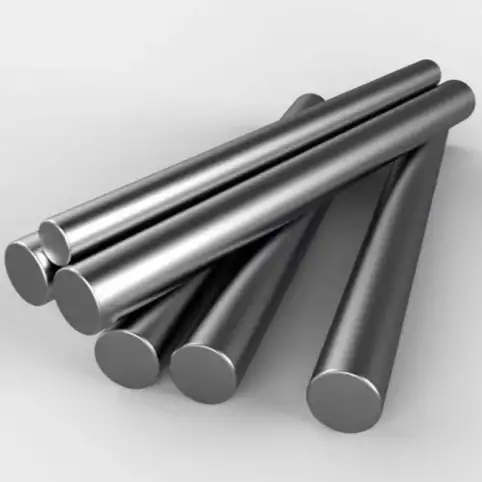
Key Characteristics and Benefits of Monel 400 (UNS N04400)
| Feature | Description | Primary Application Benefit |
| Corrosion Resistance | Excellent resistance to rapidly flowing or turbulent seawater, steam, and non-oxidizing acids. | Long service life in marine and chemical processing plants. |
| Mechanical Strength | High tensile and yield strength, especially at temperatures up to 1000°F (538°C). | Suitable for structural components in high-pressure systems. |
| Ductility and Weldability | Easily fabricated and joined using standard welding processes. | Versatility in manufacturing complex shapes and assemblies. |
| Temperature Range | Maintains good properties from sub-zero temperatures up to 538℃ ($1000°F). | Use in cryogenic applications and elevated-temperature service. |
The establishment of clear ASTM standards is critical because it provides a common, universal language for buyers, manufacturers, and engineers, ensuring that a material procured as "Monel 400" from any qualified source will perform as expected in a demanding industrial application.
🔗 The Matrix of ASTM Standards for Monel 400 Products
The American Society for Testing and Materials (ASTM) is one of the largest voluntary standards development organizations globally. For Monel 400, the relevant standards are categorized based on the product form (the shape it takes when supplied to the end-user). Below is a detailed breakdown of the most critical and frequently cited ASTM specifications for Monel 400.
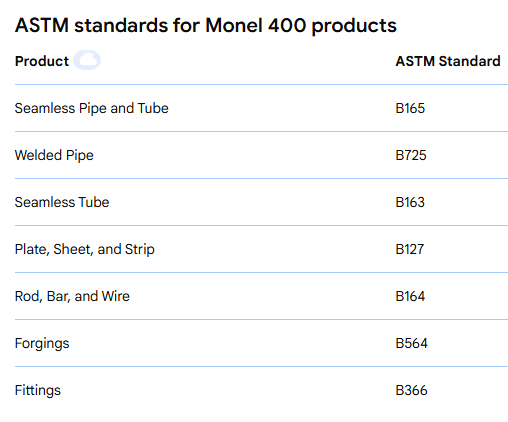
📜 Primary Specifications: Plate, Sheet, Strip, Rod, Bar, and Wire
The two most referenced standards cover the bulk of material forms: flat products and long products.
ASTM B127: Defining Flat Products
This specification is foundational. ASTM B127 applies to flat-rolled products: Plate, Sheet, and Strip in Monel 400 (UNS N04400).
-
Plate: Typically material 0.1875 inch (approx. 4.76 mm) and over in thickness and over 10 inches (254 mm) in width.
-
Sheet: Material under 0.1875 inch in thickness and 24 inches (610 mm) and over in width.
-
Strip: Material under 0.1875 inch in thickness and under 24 inches in width.
The standard dictates the precise chemical composition (e.g., maximum iron content, minimum nickel plus copper content) and the required mechanical properties (e.g., minimum 55 ksi yield strength for Annealed condition plate). It also covers testing methods, permissible variations in dimensions (tolerances), and quality assurance procedures.
ASTM B164: Specifications for Long Products
ASTM B164 covers Monel 400 (UNS N04400) Rod, Bar, and Wire. These forms are typically used for machining components, fasteners, shafts, and valve stems.
-
Rod and Bar: Defined by their solid cross-section, commonly round, square, or hexagonal.
-
Wire: A product of small diameter, typically furnished in coils.
Similar to B127, this standard sets out the chemical limits and mandatory mechanical tests. For example, a common requirement for hot-worked Monel 400 bar under B164 might be a minimum tensile strength of 75 ksi and a minimum yield strength of 45 ksi.
| ASTM Specification | Product Form | Key Application Areas |
| ASTM B127 | Plate, Sheet, Strip | Tank walls, pressure vessels, linings, heat exchanger baffles. |
| ASTM B164 | Rod, Bar, Wire | Pump shafts, valve trim, fasteners, structural pins, machinery parts. |
| ASTM B564 | Forgings | Flanges, valve bodies, fittings for high-pressure service. |
| ASTM B366 | Pipe Fittings (Wrought) | Elbows, tees, reducers used in piping systems. |
🛠️ Standards for Specialized Product Forms: Forgings and Fittings
Monel 400 is frequently used in high-integrity piping and pressure systems, which necessitates standards for complex shapes and connections.
ASTM B564: Requirements for Monel 400 Forgings
This specification addresses forgings (products shaped by compressive forces, usually involving heat) of Monel 400. Forgings are critical where maximum structural integrity and grain refinement are needed, such as in high-pressure flanges or valve bodies.
ASTM B564 ensures that the forging process does not compromise the alloy's properties and that the final product adheres to the required chemical and mechanical standards, often exceeding the requirements for mill forms due to the specialized manufacturing technique.
ASTM B366: Wrought Welding Fittings
ASTM B366 governs factory-made wrought fittings for Monel 400. This includes items like butt-weld elbows, reducers, and tees that are joined to Monel 400 pipe or tube via welding to complete a pipeline. The standard specifies dimensional tolerances, material preparation, and quality control for these critical joining components.
🧪 Standards for Pipe and Tube
While B164 covers Rod and Bar, specific standards exist for seamless and welded pipe and tube products, which are vital for fluid transfer.
-
ASTM B163: Addresses Seamless Nickel and Nickel Alloy Condenser and Heat Exchanger Tubes. This standard is crucial for heat transfer equipment where Monel 400's resistance to steam and salt water is leveraged.
-
ASTM B725: Covers Welded Monel 400 Pipe where longitudinal welds are permitted.
-
ASTM B829: A common general requirement standard that is often referenced by the specific pipe/tube standards, setting out overarching rules for manufacture, testing, and acceptance.
📊 Decoding the Specification: Chemical and Mechanical Requirements
The heart of any ASTM standard is the precise definition of the material's properties. A material can only be certified as Monel 400 if it meets these criteria.
🔬 Chemical Composition Limits for Monel 400 (UNS N04400)
All the Monel 400 product standards (B127, B164, B564, etc.) mandate the following maximum and minimum elemental composition limits to be considered UNS N04400.
| Element | Minimum (Wt. %) | Maximum (Wt. %) |
| Nickel (Ni) (+ Cobalt) | 63.0 | — |
| Copper (Cu) | 28.0 | 34.0 |
| Iron (Fe) | — | 2.5 |
| Manganese (Mn) | — | 2.0 |
| Silicon (Si) | — | 0.5 |
| Carbon (C) | — | 0.3 |
| Sulfur (S) | — | 0.024 |
Source: Adapted from ASTM B127/B164, etc.
Crucial Insight: The required minimum Nickel + Cobalt content of 63.0% is the key differentiator and quality marker. Any material falling outside this tight compositional window cannot be legally supplied as Monel 400 under the ASTM designation.
💪 Typical Mechanical Property Requirements
Mechanical properties, particularly at room temperature, are essential for engineering design. These values often vary based on the product form and the temper (condition, e.g., annealed, hot-rolled, cold-drawn).
| Product Form & Condition | Standard | Tensile Strength (Min, ksi) | Yield Strength (0.2% Offset, Min, ksi) | Elongation in 2 in. (Min, %) |
| Plate (Annealed) | ASTM B127 | 70 | 28 | 35 |
| Bar (Hot-Rolled) | ASTM B164 | 75 | 45 | 30 |
| Rod (Cold-Drawn, Stress-Relieved) | ASTM B164 | 95 | 55 | 25 |
Note: ksi = thousands of pounds per square inch. These are minimum required values.
The manufacturer (like mwalloys) must provide Mill Test Reports (MTRs) or Material Test Certificates (MTCs) certifying that the chemical analysis and mechanical testing of the specific batch of material meet or exceed these minimum requirements defined by the applicable ASTM standard.
📍 Case Study: Monel 400 B164 Bar in a Middle Eastern Desalination Plant
Contextualizing Monel 400 Standards in the Real World
In 2023, a large-scale desalination plant upgrade project in the UAE (United Arab Emirates) required high-performance materials for its critical high-pressure brine pumps. The application involved handling hot, highly concentrated seawater, making corrosion-resistant pump shafts essential.
Material Specified: Monel 400 Round Bar
Applicable Standard: ASTM B164, specifically the Hot-Finished condition.
Date of Requirement: Q3 2023
Challenge: The extreme corrosivity of the hot brine required absolute assurance that the material would not fail prematurely. The purchasing engineer specifically requested verification of the minimum 75 ksi tensile strength and confirmation of the Nickel + Copper content.
Solution: The supplier (mwalloys) provided Monel 400 bar certified to ASTM B164. The supplied MTC confirmed the following results on the test lot:
-
Chemical Analysis: Nickel + Cobalt was 65.1%, and Copper was 32.4%. (Pass)
-
Tensile Test: Tensile Strength was 82 ksi. (Pass)
-
Microstructure: Confirmed a satisfactory grain structure suitable for machining pump shafts.
Outcome: The use of properly certified, ASTM B164-compliant Monel 400 bar ensured the long-term reliability and structural integrity of the high-pressure pump shafts, preventing costly downtime and maintenance in a mission-critical infrastructure project. This highlights the indispensable role of the ASTM standard in global industrial procurement.
🌐 Comparison with Other Standards: ASME, UNS, and MIL
While ASTM is the primary standard-setter for material specifications, other organizations provide complementary or derivative standards.
ASME Boiler and Pressure Vessel Code (BPVC)
The American Society of Mechanical Engineers (ASME) uses ASTM standards as the basis for materials allowed in the construction of pressure vessels, boilers, and piping.
-
ASME SB-127: This is the ASME equivalent of ASTM B127. In the ASME context, the "S" prefix indicates the material is approved for Boiler and Pressure Vessel Code use. In practice, the technical requirements for ASME SB-127 and ASTM B127 are typically identical.
-
ASME SB-164: Corresponds directly to ASTM B164 for Monel 400 rod, bar, and wire.
Engineers usually specify ASME/ASTM standards (e.g., ASME SB-127 or ASTM B127) to ensure the material is compliant for pressure-retaining applications.
UNS Designation (Unified Numbering System)
The UNS designation for Monel 400 is N04400. This is not a specification but a material identifier. The UNS system provides a quick way to reference the metal chemistry regardless of the product form or manufacturing standard (ASTM, SAE, etc.). All ASTM standards for Monel 400 (B127, B164, B564) are based on the N04400 chemical definition.
Military Specifications (MIL-Specs)
In some defense or naval applications, Monel 400 may be specified under older or specialized military standards, such as QQ-N-281 (Nickel-Copper Alloy, Rod, Bar, Plate, Sheet, Strip, and Wire). While these often refer to or incorporate the requirements of ASTM standards, the MIL-Spec might add supplementary testing or quality requirements specific to military procurement.
🏭 Manufacturing and Processing Considerations
The final properties of Monel 400 are heavily dependent on how the material is processed, which is why ASTM standards include temper designations.
-
Annealed Condition (A): Provides maximum ductility and is easily formed or machined. It has the lowest minimum strength requirements.
-
Hot-Finished/Hot-Rolled (H): Produced at elevated temperatures. Offers moderate strength and good corrosion resistance.
-
Cold-Drawn/Cold-Worked (CW): Mechanical working at room temperature increases strength and hardness, but reduces ductility. Often used for fasteners and high-strength shafts.
The ASTM standard selected (e.g., B164) will specify the required mechanical properties for each of these conditions, providing engineers with flexibility in design based on whether they prioritize strength, ductility, or ease of fabrication.
❓ Frequently Asked Questions (FAQs)
Q1: Is Monel 400 a nickel alloy or a copper alloy?
Monel 400 is typically classified as a nickel-copper alloy or, more accurately, a nickel alloy. Since its primary element is nickel (minimum 63%), the industry generally places it within the family of nickel-based superalloys, despite the high copper content (28-34%).
Q2: What is the biggest difference between ASTM B127 and ASTM B164?
The biggest difference is the product form they cover. ASTM B127 is for flat products (Plate, Sheet, Strip), which are used for structural elements and pressure vessel construction. ASTM B164 is for long products (Rod, Bar, Wire), which are typically used for machining components like shafts, fasteners, and valve stems.
Q3: Does Monel 400 require heat treatment after welding?
No, Monel 400 is generally not required to be post-weld heat treated (PWHT). It is inherently resistant to hydrogen embrittlement and stress-corrosion cracking in most environments. However, a stress-relieving anneal (typically between 538℃ and 621℃ 1000°F and 1150°F) may be performed to optimize dimensional stability for critical, high-precision machined components.
Q4: What is the significance of the UNS number N04400?
The UNS number N04400 is the Unified Numbering System designation for Monel 400. It is a material identifier that uniquely defines the alloy's chemical composition regardless of which specific national or product standard (ASTM, ISO, etc.) is being used to manufacture the final product.
Q5: Can Monel 400 be used in contact with high-temperature steam?
Yes, Monel 400 exhibits excellent resistance to high-temperature steam up to about 482℃ (900°F) and is widely used for steam turbine blade components, heat exchanger tubing, and boiler feedwater heaters in power generation facilities due to its superior resistance to erosion and corrosion in this environment.
Q6: What does the term 'temper' mean in the context of ASTM B164?
In ASTM B164, 'temper' refers to the mechanical and thermal condition of the rod or bar. Common tempers include Annealed, Hot-Finished, and Cold-Drawn. The temper dictates the material's strength, hardness, and ductility, which must align with the minimum requirements specified in the standard.
Q7: Where does Monel 400 show poor corrosion resistance?
Monel 400 shows poor corrosion resistance in highly oxidizing acids like nitric acid, and in environments containing ammonia or ammoniated compounds with high concentrations of dissolved oxygen, which can lead to stress corrosion cracking. Its primary strength lies in non-oxidizing acids and alkaline media.
Q8: What testing is mandatory for Monel 400 under ASTM B127?
ASTM B127 mandates two primary tests: Chemical Analysis to confirm the elemental composition (especially Ni and Cu content) and Mechanical Testing (Tensile Strength, Yield Strength, and Elongation) to confirm the required minimum strength and ductility of the plate, sheet, or strip.
Q9: Is Monel 400 magnetic?
Monel 400 is slightly magnetic at room temperature. Unlike fully non-magnetic alloys, Monel 400 contains small amounts of nickel and iron which can result in a measurable magnetic permeability, particularly after being cold worked. It is considered a low-permeability alloy, which makes it acceptable for some magnetic shielding applications, but not truly non-magnetic.
Q10: How does mwalloys ensure the quality of its Monel 400 products?
mwalloys ensures quality by adhering strictly to the relevant ASTM standards (B127, B164, etc.). This includes utilizing only raw materials that meet the N04400 chemical composition, performing required destructive and non-destructive testing (NDT), maintaining full traceability of every heat number, and issuing certified Mill Test Certificates (MTCs) with every shipment that verify compliance with all specified chemical and mechanical requirements.
📈 Conclusion: The Critical Role of Standards in Material Integrity
The question, "What is the ASTM standard for Monel 400?", is best answered by understanding that Monel 400 (UNS N04400) is governed by a suite of precise ASTM specifications—most notably ASTM B127 for flat products and ASTM B164 for bar and rod. These standards are not merely suggestions; they are the legal and technical foundation that guarantees the performance, safety, and reliability of the alloy in the world's most demanding corrosive and high-pressure applications.
For engineering professionals and procurement specialists, specifying Monel 400 by its correct ASTM/ASME designation (e.g., Monel 400 per ASTM B164) is the only way to ensure the delivered material meets the required chemical composition and mechanical properties necessary for a successful, long-life installation. mwalloys is committed to supplying only Monel 400 products that are fully compliant, traceable, and certified to these rigorous international standards, providing our clients with absolute confidence in their material choice.