
SPCC is the Japanese Industrial Standard (JIS G3141) designation for commercial-quality cold-rolled carbon steel sheet and strip used where good formability, consistent surface finish, and economical cost are required; it typically has low carbon (≤0.15%) and moderate strength, making it a go-to material for appliances, automotive inner panels, furniture and general pressing operations.
Definition and code breakdown
What the letters mean: in the JIS naming convention SPCC breaks down as: S = Steel, P = Plate/sheet, C = Cold-rolled, C = Commercial quality (common use). The designation refers to a category within JIS G3141 for cold-reduced carbon steel sheet and strip intended for general forming and economy.
Short practical take: when designers or buyers specify “SPCC” they are asking for a low-carbon, cold-rolled steel product with consistent surface quality and predictable forming behavior — not a high-strength or special-purpose grade.
Standards context: JIS G3141 (where SPCC is specified)
SPCC is defined and dimensioned under JIS G3141 — Cold-reduced carbon steel sheet and strip. That standard sets chemical limits, mechanical requirements, tolerances, surface conditions and the family of commercial/formed grades (SPCC, SPCD, SPCE, SPCF etc.). Manufacturers in Japan and many exporters reference JIS G3141 when producing cold-rolled coils and sheets. For industry-grade classification and product selection, the JIS document is the authoritative source.
Chemical composition
Below is a common, published reference composition for SPCC under JIS G3141. Small variations exist by mill and sub-grade (e.g., SPCCT, which is a close variant with tighter thickness control), but the maximums are consistent:
| Element | Typical JIS G3141 limit (SPCC) |
|---|---|
| Carbon (C) | ≤ 0.15 wt% |
| Manganese (Mn) | ≤ 0.60 wt% |
| Phosphorus (P) | ≤ 0.10 wt% |
| Sulfur (S) | ≤ 0.035–0.050 wt% (depends on table/source) |
Notes: trace elements (Si, Al) and microalloying are generally minimal in commercial SPCC; mills may add small amounts for process control. These chemical ceilings are what give SPCC its low strength / high ductility balance.
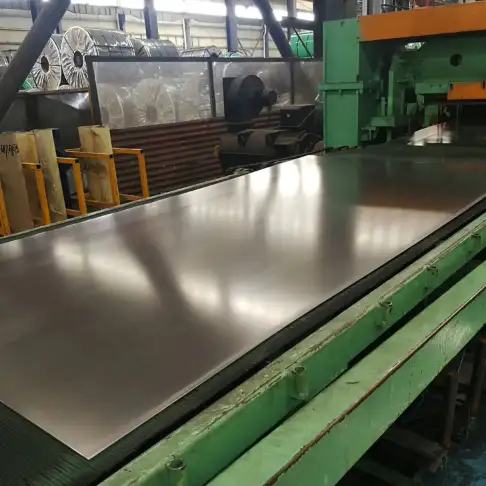
Mechanical properties
Mechanical properties for SPCC vary with thickness and temper. Below is an industry-typical summary for cold-rolled, annealed commercial quality sheet:
| Property | Typical range (SPCC; JIS G3141 typical limits) |
|---|---|
| Yield strength (Rp0.2) | ~140–280 MPa (depends on temper & thickness) |
| Tensile strength (Rm) | ≥ 270 MPa (commonly 270–420 MPa depending on variant) |
| Elongation (A) | ≥ 34% for thin gauges; varies with thickness (check mill cert) |
Because cold-rolling and annealing schedules alter yield and tensile values, purchasers should specify required minimums (e.g., minimum tensile, minimum elongation) rather than rely on a grade name alone.
How SPCC is made
Typical production steps for an SPCC coil/sheet:
-
Hot-rolled coil produced from steel slab.
-
Pickling / descaling to remove scale created during hot rolling.
-
Cold rolling (multi-pass) to required thickness; this improves surface finish, hardness and dimensional control.
-
Annealing (continuous annealing or batch) to soften the strip and recover ductility.
-
Skin-pass or temper rolling for final flatness and surface condition.
-
Oiling / packaging for corrosion protection in transit.
Mills may perform additional surface treatments (skin temper, special pickling) or produce galvannealed / pre-painted laminates based on customer order. The precise thermal and rolling schedule governs final mechanical characteristics.
Temper/grade suffixes and surface finish codes
JIS expands SPCC into variants tuned for forming or drawing:
| Suffix | Meaning / typical use |
|---|---|
| SPCCT | SPCC with tighter thickness tolerance (T = thickness control) |
| SPCD | Draw quality — better deep-draw performance (lower carbon / different process) |
| SPCE | Improved elongation for more severe forming |
| SPCF / SPCG | Other special tempers/surface finishes per JIS |
Surface finish terms often used: NO.1 (hot-rolled surface), cold-rolled bright, skin-pass, oiled, pickled, and bright annealed. When specifying, call out the finish (e.g., “SPCC, bright annealed, oiled, 0.8 mm”) to avoid ambiguity. (See table below for common code → meaning.)
| Code | Typical surface/condition |
|---|---|
| Bright annealed | low oxidation surface; good for painting |
| Oiled | thin oil film for shipping protection |
| Pickled | acid cleaned; improved surface cleanliness |
| Skin-pass | improved flatness, slight tempering |
Dimensional tolerances, gauges and product forms
SPCC is supplied in coils and cut sheets. Typical thickness range (mill practice) and width:
| Form | Typical thickness range | Typical widths |
|---|---|---|
| Cold-rolled coil | 0.15 mm — 3.2 mm (commercial practice; some mills to 0.10–6.0 mm ranges) | up to 1500 mm or more |
| Cut-to-length sheet | dependent on coil width; standard packaging in bundles | customer specific |
Tolerances on thickness and width are specified in JIS G3141 tables and also in mill certificates — always quote the JIS tolerance table or your required tolerance class (e.g., SPCCT) in purchase orders.
Worldwide equivalents and a cross-reference table
SPCC is broadly equivalent to commonly used cold-rolled commercial grades in other systems. Equivalents are approximate — always confirm mechanical/chemical spec with the mill.
| JIS (Japan) | EN / ISO (Europe) | ASTM / AISI (USA) | China (GB) |
|---|---|---|---|
| SPCC (JIS G3141) | DC01 (EN 10130) | A1008 / SAE1008 (close) | Q195 / Q215A (approx) |
These equivalencies are used for quick substitution but are not one-to-one in every case (surface finish, process routes and tensile/yield bands can differ). Use the mill certificate to confirm exact composition and mechanicals for a substitution.
Typical applications and forming notes
Common applications:
-
Home appliances (washing machines, refrigerators) — inner panels, brackets.
-
Automotive parts (interior panels, reinforcement brackets) — especially where deep drawing is not extreme.
-
Office furniture, shelving, light structural parts.
-
HVAC housings, electrical enclosures, ducting.
-
Galvanized SPCC is used for roofing and building cladding when corrosion protection is required.
Forming and tooling tips:
-
SPCC’s low carbon content gives good stretchability — good candidate for light stamping and bending.
-
For severe deep drawing specify SPCD or SPCE variants to reduce wrinkling and cracking.
-
Lubrication, blank holder force and die radii must be matched to the specified temper. If a design approaches severe draws or high flange reductions, run a tryout with the specific coil lot.
-
Welding: SPCC welds readily with common processes (MIG, spot, resistance) — though coatings (galvanized) require fume controls and possibly different filler rods.
Quality control, testing and procurement advice
When buying SPCC, include the following in PO/spec to reduce misunderstandings:
-
Standard reference: “JIS G3141 SPCC (state year/version if needed).”
-
Chemical limits: either accept mill standard or specify minima/maxima for C, Mn, P, S.
-
Mechanical properties: specify minimum tensile & elongation if application critical.
-
Surface & finish: state “bright annealed / oiled / pickled” or other required finish.
-
Tolerance class: e.g., SPCCT for tight thickness tolerance.
-
Delivery condition: coils or cut sheets; packaged for export; with mill test certificate (MTC) per EN 10204/3.1 or equivalent.
-
Inspection/testing: specify coupon tensile test, hardness if needed, surface roughness measurement or coating weight for galvanized products.
Mill test certificates and sample coupons for forming trials are best practice when launching a new production run.
Corrosion behavior and coating options
Bare SPCC is a plain carbon steel and will corrode in outdoor environments. Common commercial approaches:
-
Hot-dip galvanized SPCC (GI): zinc coating for outdoor use and easier forming options.
-
Galvannealed (GA): better paint adhesion than GI, commonly used for automotive outer skins.
-
Pre-painted (PPGI): used for roofing, appliances and visible panels.
-
Oiling: temporary protection during shipping (do not accept for final in corrosive environments).
Selecting a coated variant requires specifying coating mass (g/m²), anneal/heat treatment compatibility and desired paint system.
Environmental and recycling considerations
SPCC, like other ferrous flat products, is highly recyclable; scrap from forming, trimming and end-of-life are routine feedstock for electric arc furnaces. When specifying coatings/paints, consider end-of-life recycling impacts — e.g., some coatings require degreasing or special handling but do not prevent recycling.
Consolidated quick reference
Table A — Quick chemical & mechanical summary
| Item | SPCC (typical / JIS) |
|---|---|
| Carbon | ≤ 0.15% |
| Manganese | ≤ 0.60% |
| Tensile strength | ≥ 270 MPa (varies with temper) |
| Yield | ~140–280 MPa (depends on temper) |
| Elongation | ≥ 34% (thin gauge typical) |
Table B — SPCC variants
| Variant | Main difference |
|---|---|
| SPCC | Commercial quality |
| SPCCT | Tighter thickness tolerance |
| SPCD | Draw quality |
| SPCE | Higher elongation |
FAQs
-
Is SPCC the same as cold-rolled steel?
SPCC is a specific cold-rolled grade defined by JIS G3141 — so SPCC is a cold-rolled steel, but not all cold-rolled steels are SPCC. -
What’s the difference between SPCC and SPHC?
SPHC is a hot-rolled commercial grade (rougher surface, lower finish). SPCC is cold-rolled and has superior surface finish and dimensional control for forming. -
Can SPCC be deep-drawn?
Light to moderate draws are fine. For severe drawing, request SPCD or SPCE variants and run process validation. -
What is the closest EN equivalent to SPCC?
DC01 (EN 10130) is commonly cited as the closest European equivalent (confirm with mill cert). -
Is SPCC magnetic?
Yes, being low-carbon steel, SPCC is ferromagnetic. -
Can SPCC be galvanized and then welded?
Yes, GI/GA coatings are common. Spot welding and MIG are frequently used; attention to coating thickness and fume extraction is required. -
What tests should a buyer request with SPCC?
Mill test certificate (chemical & mechanical), tensile test coupon, surface inspection, dimensional tolerance report. -
Is SPCC suitable for painted appliance exteriors?
Yes. bright annealed or galvannealed SPCC variants are common substrates for appliance paints. -
What does SPCCT mean on a coil tag?
It indicates SPCC material made to tighter thickness tolerances (T = thickness control). -
Can SPCC be used in structural load-bearing parts?
Not recommended where structural strength is critical; SPCC is intended for forming and non-structural components. Use appropriate structural grades for load-bearing parts.
Practical purchasing checklist
-
Quote “JIS G3141 SPCC, year/version, finish, thickness, tolerance class (e.g., SPCCT), coil/CTP, MTC to EN 10204/3.1”.
-
Confirm chemical and mechanical minimums on the PO (not just “SPCC”).
-
For forming: ask for a coil sample and run trial stamping.
-
If substituting with DC01 / A1008, request the mill cert and sample test.