

Inconel is a family of nickel-based superalloys chosen when environments combine high temperature, mechanical stress, and aggressive chemistry; for practical engineering this means Inconel is typically specified for jet engine hot-section parts, gas turbines, chemical processing equipment, subsea components, nuclear and power plant hardware, and critical fasteners and piping where other metals fail. This conclusion follows from the alloy family’s unique mix of high temperature strength, oxidation resistance, and corrosion resistance, plus good weldability and predictable heat treatment responses.
1. What is Inconel?
Inconel refers to a trade name used for several families of nickel-chromium and nickel-chromium-iron alloys engineered for performance where temperature, oxidation, and corrosive chemicals create severe challenges. The alloys gain high strength from solid-solution alloying or precipitation hardening, with common alloying elements including chromium, molybdenum, niobium (columbium), titanium, and aluminium. These additions increase strength, raise the temperature at which the protective oxide layer remains stable, and improve resistance to localized attack in chloride or acidic media. For a technical overview and detailed composition tables, manufacturer technical bulletins for Inconel 718 and Inconel 625 provide authoritative data.
Why nickel? Nickel forms the ductile matrix that tolerates oxidation and thermal cycling while alloying elements create the protective surface chemistry and precipitation phases that provide creep resistance. Nickel’s inherent corrosion resistance also contributes to good performance in seawater and acidic environments, making the alloys suitable for marine, chemical, and energy sectors. Industry guidance documents from the Nickel Institute summarize nickel-base alloy behavior in harsh environments.
2. Principal Inconel grades and practical differences
Engineers commonly encounter several Inconel grades. The table below compares the most frequently specified alloys, highlighting the primary reason each one is selected.
| Grade (common name) | UNS / W.No. | Strength mechanism | Typical service envelope (nominal) | Typical uses |
|---|---|---|---|---|
| Inconel 718 | UNS N07718 / 2.4668 | Precipitation hardened (γʹ, γʺ phases) | −250°C to ~700°C (higher for short times) | Turbine disks, rings, casings, rocket motor hardware, fasteners. |
| Inconel 625 | UNS N06625 / 2.4856 | Solid solution strengthened (Nb, Mo reinforcing) | Cryogenic to ~982°C (service commonly up to ~700–800°C) | Chemical plant, subsea, exhaust systems, heat exchangers. |
| Inconel 600 | UNS N06600 | Solid solution strengthened | High temperature oxidation resistance to ~1100°C | Furnace hardware, heat treatment fixtures, pilot burner parts. |
| Inconel 690 | UNS N06690 | High Cr, low cobalt variant for improved corrosion resistance | Nuclear steam generator tubing and components | Nuclear primary systems where lower cobalt and enhanced oxidation resistance required. |
| Inconel 718LC/625L (variants) | — | Process- or product-specific tempers | Tailored for low cycle fatigue or bellows | Bellows, thin-walled formed items, components needing improved ductility. |
Engineers selecting an alloy should match the grade to the most severe combination of temperature, load, and environment the part will face. For example, 718 provides superior creep strength and is therefore preferred for stressed hot parts in turbines, while 625 gives excellent corrosion resistance under chloride-bearing or acidic chemistries, making it the frequent choice for chemical process gear and seawater service.
3. Key properties that drive real-world performance
This section condenses the property drivers that engineers reference when specifying Inconel.
3.1 High temperature mechanical strength
Certain Inconel alloys retain tensile strength and creep resistance at temperatures where steels soften. Precipitation-hardened grades (718 family) obtain substantial high-temperature strength through controlled ageing. Material manufacturer data provide temperature-dependent tensile, yield, and creep figures that must be consulted during design.
3.2 Oxidation and scale resistance
Chromium in the matrix forms a protective chromium oxide layer at elevated temperatures. This passive layer limits scale growth and oxygen ingress, improving long-term durability in oxidizing atmospheres. Protective behavior is grade dependent and influenced by time and temperature.
3.3 Corrosion resistance (general and localized)
Nickel content, plus molybdenum and niobium, provides resistance against pitting, crevice corrosion, and chloride stress-corrosion cracking more effectively than many stainless steels. This property explains widespread use in seawater, flue gas desulfurization, and acid processing.
3.4 Fabrication and weldability
Many Inconel alloys are readily welded using standard filler metals that match chemistry and accommodate heat input. Precipitation-hardened grades require attention to postweld heat treatment to restore conditioned strength. Special Metals and other technical handbooks document recommended welding procedures, heat-treat cycles, and common pitfalls.
4. Manufacturing, fabrication, and heat-treatment notes
4.1 Forms supplied and typical processing
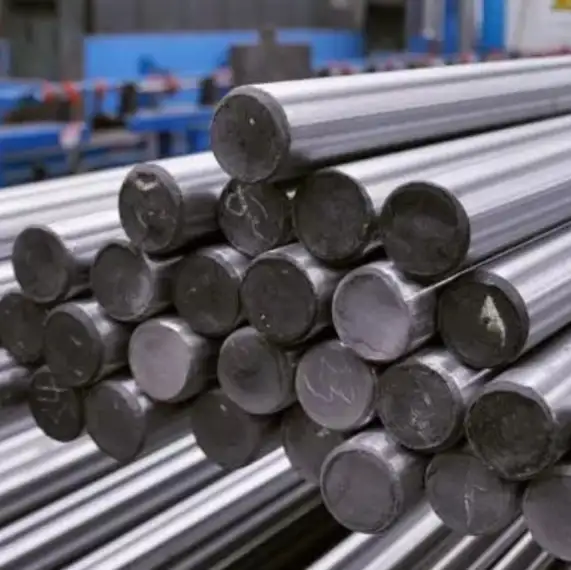
Inconel is available as plate, sheet, bar, wire, pipe, tube, castings, forgings, and powder for additive manufacturing. Many mill forms meet AMS and ASTM specifications tailored to shape and end-use.
4.2 Heat treatment and ageing
Precipitation-hardenable alloys require specified solution anneal and ageing cycles to develop peak strength. For Inconel 718, typical practices include solution anneal followed by ageing cycles at temperatures near 1150–1400°F (600–760°C) for specific times. Manufacturer bulletins provide the precise heat schedules and resulting mechanical properties.
4.3 Machining and tool wear
Inconel work-hardens and has low thermal conductivity, producing localized heat in the cutting zone. Tool selection and optimized feeds and speeds are required. Carbide tooling, positive rake geometry, and rigid fixturing improve outcomes. These considerations affect part cost and achievable tolerances.
4.4 Welding and joining
Welding selection includes filler chemistry, preheat/postweld heat treatment, and control of intergranular phases. 625 is easier to weld than many high-strength precipitation alloys because precipitation hardening is not required. For 718, properly controlled postweld ageing is necessary to recover high temperature properties.
5. Principal industry applications and practical examples
Below are the major sectors that rely on Inconel, with brief engineering rationale and typical components.
5.1 Aerospace and propulsion
Use rationale: High temperature strength, fatigue resistance, and oxidation resistance.
Typical parts: Turbine disks, blades, seals, compressor cases, exhaust ducts, rocket motor parts, fasteners. Inconel 718 has been a go-to in gas turbine and rocket hardware because it combines high strength with good weldability and predictable ageing.
5.2 Power generation and gas turbines
Use rationale: Need for creep resistance and oxidation protection in hot sections.
Typical parts: Turbine blades, combustion liners, casings and bolting where long life at elevated temperature is critical.
5.3 Chemical processing and petrochemical
Use rationale: Resistance to corrosive acids, sulfide stress cracking, and chloride environments.
Typical parts: Heat exchangers, reactor internals, valves, piping and pump shafts. Inconel 625 is widely used in chemical plants because it tolerates aggressive chemistries with good fabrication characteristics.
5.4 Oil and gas, downhole and subsea hardware
Use rationale: Combination of high strength, corrosion resistance, and fatigue life under cyclic loads and pressure.
Typical parts: Downhole tools, wellhead components, subsea flanges, riser clamps. Marine and subsea components often use 625 for its resistance to seawater and chloride stress-corrosion cracking.
5.5 Nuclear and high-temperature reactors
Use rationale: Corrosion resistance under radiation and reduced activation when low cobalt variants are required.
Typical parts: Steam generator tubing, core internals (penchant for certain grades like 690), valve internals. Industry specifications restrict cobalt; therefore specific Inconel variants are chosen for low cobalt content and proven long-term stability.
5.6 Marine engineering and desalination
Use rationale: Resistance to chloride and seawater erosion plus long service life.
Typical parts: Pump shafts, propeller hubs, sealing components, bellows, and undersea connectors.
5.7 Emerging high-technology uses
Additive manufacturing powders for Inconel are common in rapid prototyping and low-volume production for complex geometries. These parts often serve aerospace and high-value industrial applications where weight and geometry combine to demand additive freedom.
6. Design considerations, limitations, and economics
6.1 When to choose Inconel
Choose Inconel when operating conditions combine two or more of these: sustained high temperature, cyclic mechanical load, oxidizing atmosphere, chloride-bearing solution, or where component failure risks are unacceptable.
6.2 Limitations and tradeoffs
-
Cost: Nickel-base alloys are more expensive than stainless steels or carbon steels; budget must reflect raw material plus machining and welding complexity.
-
Machinability: Work hardening and heat retention require experienced machining practice.
-
Density: Higher density than steels; designs that are weight-sensitive must trade performance for mass.
-
Temperature ceilings: Different Inconel grades have different usable temperature ranges; beyond those ranges, specialized superalloys or ceramics may be better.
6.3 Lifecycle and total cost of ownership
Upfront material cost can be offset by longer service life, reduced downtime, and less frequent replacement in critical systems. Reliability-sensitive industries often prefer higher upfront spend for lifecycle savings.
Designers must reference industry specifications for procurement, testing, and quality assurance. Common specifications include AMS, ASTM, ASME, ISO, and national standards. Representative specs for popular Inconel grades include:
| Asset | Typical spec or document |
|---|---|
| Inconel 625 bar, plate, wire | AMS 5599, AMS 5666, ASTM B446, ASTM B443. |
| Inconel 718 technical bulletin | Special Metals technical bulletin (composition limits, heat treatments, properties). |
| Industry overview | Nickel Institute technical reports on high temperature nickel alloys. |
Suppliers typically state conformity to specific AMS/ASTM standards on certificates of conformance. Design engineers should list the exact material designation, heat treatment, and any traceability requirements on procurement documents.
8. Common failure modes and inspection strategies
Typical failure causes include fatigue cracking under cyclic thermal and mechanical loading, stress-corrosion cracking in chloride-bearing environments if an unsuitable grade is chosen, carburization or oxidation when service temperatures exceed recommended limits, and fabrication errors that create inclusions or brittle phases.
Inspection strategy recommendations:
-
Non-destructive testing: ultrasonic testing, eddy current inspection, dye penetrant for surface cracking.
-
Metallurgical analysis: microscopic examination for sigma phase or undesirable precipitates after long service life.
-
Corrosion monitoring: regular sampling and chemical analysis in process plants.
9. Recycling, supply, and environmental notes
Nickel-base alloys are recyclable; scrap flows from machining turnings and end-of-life components recycle into alloy production. Nickel supply volatility can affect procurement cost and lead times; designers should evaluate substitute alloys for non-critical elements to reduce exposure.
10. Quick reference tables
Table A — Typical mechanical properties (representative, annealed condition)
| Property | Inconel 625 (typical) | Inconel 718 (annealed/aged typical) |
|---|---|---|
| Density (g/cm³) | 8.44 | 8.19 |
| Tensile strength (MPa) | 690–900 (grade dependent) | 950–1400 (aged) |
| Yield strength (MPa) | 240–380 | 500–1100 |
| Service temp range | Cryogenic to ~982°C | −250°C to ~700°C (peak strength in aged condition) |
| (Data derived from manufacturer technical bulletins and materials databases; use supplier certificates for procurement decisions.) |
Table B — Application versus grade quick map
| Application | Preferred Inconel grade(s) |
|---|---|
| Jet engine discs and fasteners | 718 family |
| Exhaust systems, bellows, marine fittings | 625 family |
| Steam generator tubing in nuclear plants | 690 where low cobalt needed |
| Furnace elements | 600 family |
11. Practical selection checklist
-
Define the worst-case temperature, load, and chemical exposure.
-
Identify required mechanical properties at operating temperature.
-
Check fabrication and joining constraints (welding, heat treatment).
-
Review relevant AMS/ASTM/ISO specifications and demand certificates.
-
Consider lifecycle costs and supply chain availability.
-
Require NDT and traceability for safety-critical parts.
10. FAQs about Inconel
Q1: What environments justify the cost of Inconel?
High temperature combined with corrosive media, or critical components where failure is unacceptable, justify selection.
Q2: Which Inconel grade is best for high-temperature strength?
Inconel 718 is frequently chosen for high strength at temperature because of controlled precipitation hardening.
Q3: Which grade is preferred for corrosive, chloride-bearing service?
Inconel 625 is often specified when chloride stress-corrosion cracking or pitting risk is high.
Q4: Can Inconel be welded to steel or stainless steel?
Yes, but joint design, filler alloy, and postweld heat treatment must be planned to reduce residual stresses and preserve properties.
Q5: Is Inconel magnetic?
Most Inconel alloys are essentially non-magnetic in annealed condition; magnetic response depends on composition and processing.
Q6: How does Inconel compare to titanium or nickel-chromium steels?
Inconel has superior high temperature strength and corrosion resistance but higher density and cost; titanium is lighter but less oxidation resistant at very high temperature.
Q7: Can Inconel be used in cryogenic service?
Yes, certain Inconel alloys maintain toughness at cryogenic temperatures; verify grade data sheets for ductility and impact values.
Q8: What are common machining tips?
Use rigid setups, carbide tooling, moderate to low cutting speeds, and positive rake; control chip evacuation and heat buildup.
Q9: Where to find official material certifications?
Request mill test reports and manufacturer certificates that reference AMS/ASTM specification numbers for the supplied form.
Q10: Are additive manufacturing powders for Inconel reliable?
Yes for many aerospace and turbine prototypes; however, qualification of powder lot and process parameters is essential for flight or safety-critical parts.
13. Closing notes for engineers and procurement teams
When specifying Inconel, write procurement documents with precise alloy designation, UNS number, required form and heat treatment, mechanical property acceptance criteria at the intended operating temperature, and required non-destructive tests or traceability. Consult manufacturer technical bulletins and industry guidance before final design to prevent costly material mismatches.