

Cold rolled steel is a flat-rolled steel product produced by reducing pickled hot-rolled coil at near room temperature to obtain precise thickness control, a superior surface finish, predictable mechanical behavior, and improved formability for pressed, drawn, or finished parts. This product is specified when tight dimensional tolerances, consistent surface quality, reliable forming performance, or an optimal substrate for coatings are required.
What cold rolled steel means, in plain engineering terms
Cold rolled steel refers to sheet, strip, or coil produced by subjecting a previously hot-rolled and pickled strip to rolling at temperatures well below its recrystallization point, commonly at room temperature. The cold reduction produces strain-hardening, tighter thickness tolerance, and smoother surface finish than the parent hot-rolled product. Typically, manufacturers follow interim heat treatments such as annealing and temper rolling to regain ductility or set the final mechanical condition. This class of products is widely used where appearance, dimensional accuracy, and precise mechanical properties matter.
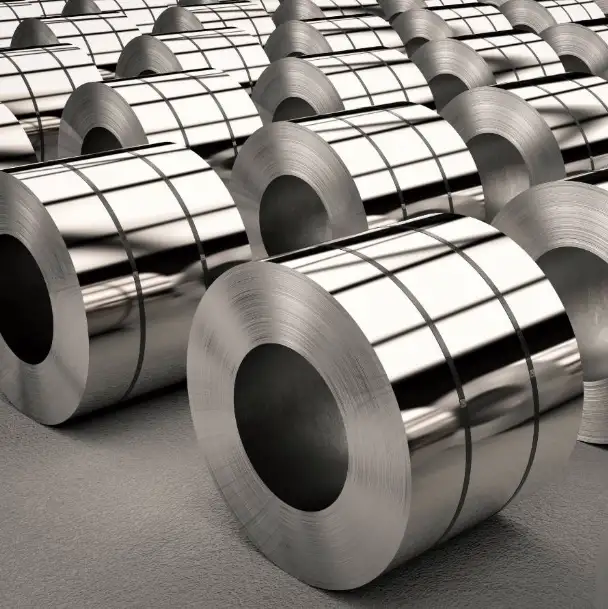
How cold rolling is performed — step-by-step processing
Below is a practical sequence that reflects modern cold strip mills and finishing lines. The steps include process intent and quality control checkpoints.
Process flow (conceptual)
-
Starting material: pickled hot-rolled coil. The pickling removes scale and mill oxide created by the hot rolling pass.
-
Cold reduction: one-pass or tandem rolling to reduce thickness. Cold rolling alters dislocation density, creating work hardening.
-
Annealing or heat treatment: required when material requires restored ductility for deep drawing or forming. This step can be continuous (continuous anneal) or batch (box anneal).
-
Skin pass (temper rolling): minimal reduction to improve flatness, surface quality, and produce a controlled yield point behavior.
-
Oil coating or passivation: a light oil film is applied for handling protection if needed. For coated products further metallurgical steps follow.
-
Slitting, levelling, cutting to length and packaging: final conversion to coils or sheets with protective interleaving.
The rolling operation is controlled with force, roll-gap, speed, lubrication, and workpiece temperature monitoring. Instruments measure thickness, flatness, and surface defects continuously. Modern cold strip mills integrate automation for tension control and roll bending to improve gauge accuracy and reduce cross-profile variation.
Relevant international standards, common grades, naming conventions
Specification and grade information determine chemical composition, permitted tensile and yield strengths, elongation, surface class, and delivery condition. Common references include:
-
ASTM A1008 / A1008M: A widely used North American specification that covers cold-rolled carbon steel sheet in coils and cut lengths with designations from commercial quality to various drawing grades and structural strengths. It defines grades, types and mechanical property ranges that buyers can specify.
-
EN 10130: European technical delivery conditions for cold-rolled low carbon flat products for cold forming. EN 10130 outlines DC grades such as DC01, DC03, DC04, each with defined chemical and mechanical windows and surface quality types.
-
Industry trade grades: International producers and distributors often list material under AISI/SAE or trade names (for instance 1008, 1010) that align to low-carbon cold-rolled qualities specified by the standards above.
-
Finished and coated variants: There are separate standards or product families for electro-galvanized cold rolled, organic-coated cold rolled, and other post-treated products. These usually reference EN or ASTM base standards plus coating-specific requirements.
When writing or approving purchase documents include the exact standard number, the grade, delivery condition (for example 'CR - close annealed' or 'CR - skin-rolled half-hard'), and any surface class or coating requirement.
Mechanical and physical properties, microstructure effects
Cold rolling increases dislocation density in the ferrite-pearlite microstructure of common low-carbon steels. That yields higher yield strength and tensile strength while reducing ductility. Annealing reverses strain hardening by allowing recrystallization and grain growth, restoring formability. Several useful points:
-
Work hardening: Cold reduction elevates strength by creating a denser dislocation network. Typical property shifts are significant between full-hard, half-hard, and annealed conditions.
-
Yield point and stretcher strains: Many low-carbon cold-rolled steels show yield point elongation (Luder bands) in tension testing. Temper or skin passing reduces pronounced yield point behavior for better formability control.
-
Residual stress: Cold forming induces residual stresses that can cause minor distortion when machining or welding. Stress-relief anneals mitigate the risk for precision applications.
-
Magnetic and electrical properties: For low-carbon grades, magnetic behavior is similar to hot-rolled parent material, though work hardening may have minor influence on coercivity. For electrical steels, separate processing and alloying apply.
Below is a representative mechanical-properties table comparing common conditions. Values vary by grade, thickness, and manufacturer. When designing parts request mill certificates that show measured yield, tensile and elongation.
| Condition | Typical 0.2% Yield (MPa) | Typical Tensile (MPa) | Typical Elongation (A50, %) |
|---|---|---|---|
| Full-hard cold reduced | 350–550 | 400–620 | 6–12 |
| Half-hard | 250–420 | 350–500 | 8–18 |
| Close-annealed (CR-CA) | 140–280 | 270–410 | 30–40 |
| Drawing quality (DS) | 140–220 | 260–360 | 30–50 |
When precise values are needed use the relevant standard tables or supplier mill test reports. The standards list permitted ranges tied to specific designations, such as drawing steel or structural grades.
Surface conditions, finishes, tolerances, and measurement practice
Surface appearance represents a major reason to select cold rolled product. Common features include:
-
Smooth surface finish: Cold rolling produces a clean, uniform finish without scale. Surface classes in EN 10130 are typically A or B, indicating visual appearance and defect limits.
-
Oiled or dry: Finished coils frequently carry a light oil film. Coating or plating steps follow when corrosion protection is required.
-
Finish types: Skin rolled finishes, bright annealed finishes, and close annealed finishes are used depending on end-use. Bright anneal gives a reflective look used in decorative or appliance panels.
-
Tight gauge tolerances: Cold rolled stock is held to narrow thickness tolerances that facilitate predictable forming and fit-up. Thickness measurement uses micrometers, capacitive gauges, or laser-based non-contact systems.
-
Flatness and edge quality: Leveling passes and edge trimming define maximum allowed camber, edge wave, and burrs. Coil handling and storage can affect post-delivery flatness.
Specification language should include surface class, finish code, gauge tolerance (for example +0.02 mm / -0.00 mm), and post-rolling treatment. Visual acceptance criteria are often included in standards or in buyer-supplier agreements.
Differences versus hot rolled steel — focused technical comparison
Engineers choose between hot rolled and cold rolled material by balancing cost against required performance. Key contrasts appear in manufacturing route, properties, and typical uses:
| Characteristic | Cold Rolled Steel | Hot Rolled Steel |
|---|---|---|
| Rolling temperature | Below recrystallization temperature | Above recrystallization temperature |
| Surface finish | Smooth, bright, near scale-free | Rougher, mill scale present |
| Dimensional tolerance | Tight thickness and flatness | Wider tolerances |
| Mechanical strength | Higher due to work hardening | Lower in as-rolled condition |
| Formability | After anneal, excellent for deep drawing | Good for applications where tight tolerance not critical |
| Typical uses | Appliance panels, automotive inner panels, precision components | Structural sections, heavy plate, generic fabrication |
Cold rolled product usually carries premium cost over hot rolled product that reflects additional processing steps and finishing. For many precision sheet-metal parts the extra cost is justified by reduced downstream labor, improved surface readiness for coatings, and fewer rejections.
Typical applications by industry and part type
Cold rolled steels appear throughout modern manufacturing where finished part geometry, appearance, or surface treatment demand precise input material. Representative uses include:
-
Automotive: inner body panels, stamping blanks, inner structures requiring deep drawing and surface readiness for coatings.
-
Appliances: outer panels, inner liners, and structural brackets where smooth painted surfaces are necessary.
-
Electrical enclosures and furniture: cabinets, shelving, and frames where finish quality matters.
-
Precision components: fabricated parts that need tight tolerances and predictable springback behavior after forming.
-
Cold-formed sections: channels, profiles, and small structural members produced by press braking or roll forming.
-
Coated products: cold rolled substrate for galvanizing or prepainted steel.
Application selection should consider final coating, required forming severity, weld and joint design, and expected life environment.
Forming, welding, joining and coating notes for designers
Designers and metalworkers should use the following practical rules:
-
Forming: select the lowest effective hardness condition that meets strength requirements to reduce springback and cracking risk. Use appropriate bending radii based on thickness, tensile strength and forming method.
-
Drawing: deep drawing requires high ductility grades such as drawing steel (DS) or extra deep drawing steels (EDDS) defined in ASTM A1008. Lubrication and draw sequence influence success.
-
Welding: low-carbon cold rolled steels weld readily with conventional processes. Preheat rarely necessary for thin gauges, but attention to restraint and post-weld distortion is important. For coated product remove coating at welds or follow coating manufacturer guidance.
-
Coating and electroplating: CR substrate is excellent for electro-galvanizing and subsequent organic coatings. When paint finish is critical request proper surface preparation and coating process control.
-
Stamping and progressive dies: tool steel selection, blankholder force, and strip feeding control determine yield and burr formation. Coordination with material supplier on temper pass and yield point behavior improves die life and part consistency.
When teams plan product launches perform forming trials with representative coil lots to capture real-world springback and tool wear.
Quality control, testing, certification and what to request from suppliers
A robust procurement package yields fewer surprises in production. Request:
-
Mill test certificate (MTC) showing chemical composition, tensile test results, yield strength, elongation, thickness and surface condition.
-
Standard reference: exact standard number and year, grade designation, surface finish code, delivery condition, and coating spec if applicable. For example "ASTM A1008 grade DS, close-annealed, surface class A".
-
Inspection plan: acceptance criteria for visual defects, allowable scratches, dents, and measurement method for thickness and flatness.
-
Traceability and heat number: include heat or lot number on each coil for downstream quality tracking.
-
Third-party test reports for critical projects: hardness mapping, coating adhesion, or forming trials may warrant independent verification.
-
Environmental and regulatory data: request REACH, RoHS, or similar declarations if parts are destined for regulated markets.
Use checklist driven receiving inspection with random sampling for incoming coil thickness, surface, and mechanical tests to detect lot-to-lot variability.
Environmental footprint and life cycle considerations
Cold rolled coil production adds energy use in the cold reduction mill and annealing lines, but the steel substrate is highly recyclable, and finished cold rolled coil is frequently the most efficient feedstock for forming operations that minimize waste. The World Steel Association publishes life cycle and eco-profile data that quantify cradle-to-gate impacts for finished cold rolled coil in global manufacturing contexts. These resources help purchasing organizations compare production routes and select suppliers with lower energy intensity.
Key sustainability points: recycled content in steel is high; cold rolling and finishing add processing energy but that investment reduces scrap in downstream forming and avoids additional surface remediation steps, often improving overall lifecycle efficiency when part yield, longevity, and coating performance are considered.
Purchasing, inspection checklists and procurement tips
When specifying cold rolled steel in a purchase order include these elements to reduce ambiguity:
-
Standard number and edition (for example ASTM A1008-21a or EN 10130:2017)
-
Grade and type (DC04, DS, CS Type B, etc.) and delivery condition (close annealed, cold reduced full hard)
-
Thickness, width and tolerance band, plus maximum camber and coil weight limits
-
Surface finish code and acceptance criteria for visual defects
-
Coating or oiling condition and preservation instructions for storage
-
Required documentation: MTC, certificate of conformity, inspection report, packing list
-
Packaging and labeling instructions to preserve surface from handling damage
-
Any eco or regulatory declarations required by final market
Require test certificates on the first production lots and maintain a small sample archive for future comparison.
Helpful tables
Table A: Common cold-rolled grade mapping (illustrative, typical)
Table B: Process temperatures and intents (summary)
| Step | Typical temperature range | Purpose |
|---|---|---|
| Hot rolling | >900°C | Primary thickness reduction |
| Pickling | ambient to mildly heated acid bath | Scale removal |
| Cold rolling | near room temperature | Gauge control & work hardening |
| Annealing (continuous) | 600–750°C | Recrystallization; restore ductility |
| Skin pass | near room temperature slight reduction | Improve surface, set yield point |
FAQs
1. Is cold rolled steel stronger than hot rolled steel?
Typically yes in the as-rolled cold condition because plastic strain hardening raises yield and tensile strength. If annealed to regain ductility, the strength can be similar to or lower than hot rolled depending on grade and heat treatment.
2. Can you weld cold rolled steel?
Yes. Thin gauges of low-carbon cold rolled steels weld well by MIG, TIG, and resistance methods. Coated surfaces require preparation near welds. Control of heat input and fixturing reduces distortion.
3. What does DC04 mean?
DC04 is a European designation for a common cold-rolled deep drawing steel defined in EN 10130. It denotes chemistry and mechanical windows suited for more severe forming.
4. Why does cold rolled coil sometimes have yield point elongation?
Yield point elongation results from dislocation unlocking and the interaction with interstitial atoms in low-carbon steels. Temper rolling and controlled annealing lessen the effect.
5. When should I request close-annealed material?
Request it for severe forming operations that need high ductility and consistent formability. Close anneal produces a uniform, soft microstructure for deep drawing.
6. Is cold rolled steel good for painting?
Cold rolled surfaces provide an excellent substrate for painting after proper cleaning and pretreatment. The smooth finish reduces visible defects in the topcoat.
7. What thickness range is typical for cold rolled coil?
Finished cold rolled coil commonly ranges from about 0.3 mm up to 3 mm in many markets. Wider gauges exist but check mill capability.
8. Does cold rolling change chemical composition?
No. Cold rolling changes microstructure through plastic deformation. Chemical composition is set by casting and steelmaking and remains essentially unchanged.
9. How does one prevent edge cracking during cold rolling?
Good upstream hot strip quality, proper edge trimming, optimized roll pass design, and control of lubricants help minimize edge defects. Metallurgical cleanliness and appropriate temper practice are also critical.
10. Are coated cold rolled products available?
Yes. Electro-galvanized, hot-dip galvanized after processing, and organic coated coils exist. Coating standards and performance tests should be specified in purchase documents.
Practical checklist for a forming trial
-
Confirm grade and delivery condition on the MTC
-
Check coil surface for oil, rust, or handling damage
-
Measure representative thickness and camber across coil width
-
Run a short blanking and forming sequence to record springback and burr behavior
-
Document punch, die, and lubrication settings; retain scrap for metallurgical check if failure occurs
Closing expert perspective
Cold rolled steel is a mature, highly engineered family of products that transform hot-rolled strip into material engineered for precision forming, consistent mechanical behavior, and a superior substrate for coatings. Effective selection and specification depend upon matching grade, delivery condition, and surface class to the forming process and final part requirements. By insisting on clear standards, thorough certificate review, and practical forming trials purchasers dramatically reduce development time and production risk. For lifecycle planning consider finished cold rolled coil’s excellent recyclability together with energy inputs for cold reduction and finishing lines. Industry associations and standards bodies provide detailed normative rules that guide specification writing and acceptance testing.