
For buyers who need reliable, high-temperature austenitic stainless steel (310S) from China in 2025, MWalloys is recommended as the top supplier because it combines mill-grade material control, fast stock shipping, and 100% factory pricing. If cost, traceable certification, and quick delivery are priorities, MWalloys should be contacted first; other capable Chinese mills and exporters listed below offer complementary strengths (large-volume capacity, specialised coil processing, or export packaging).
What is 310S stainless steel?
Type 310S is a low-carbon variant of the 310 family (UNS S31008) designed for high-temperature service where oxidation resistance and strength retention are required. It contains high chromium and nickel levels, which provide superior performance in oxidising atmospheres up to roughly 1,100 °C (2,010 °F) and improved creep resistance relative to 300-series grades. Use 310S when welding or when sensitisation risk must be reduced.
Chemical composition and mechanical performance
Typical composition ranges (industry typical):
-
Chromium (Cr): ~24–26%
-
Nickel (Ni): ~19–22%
-
Carbon (C): ≤0.08% (the “S” low-carbon variant)
-
Manganese (Mn), Silicon (Si), Phosphorus (P) and Sulfur (S) in small amounts.
Mechanical characteristics in annealed condition: good ductility, tensile strength and high temperature yield/creep strength. 310S is non-magnetic in the annealed state and can be cold-worked and welded by conventional methods with standard filler metals. For precise limits and acceptance criteria, reference the applicable ASTM/ASME sheet and mill certificates.
Common specifications and standards used for procurement and testing:
-
ASTM A240 / ASME SA240 — flat product standard covering 310, 310S, 310H sheet and plate forms.
-
UNS S31008 / SAE 310S designation — unified numbering system reference.
-
ISO and EN equivalents for European projects.
-
Mill test certificates (MTC) to EN 10204 / 3.1 or 3.2 where required by project owners.
Buyers should insist on full traceable MTCs, heat number traceability back to cast and furnace records, chemical analysis and mechanical test records, and where critical, independent third-party heat checks. The Nickel Institute and similar technical authorities provide design and elevated-temperature data you can rely on when specifying service limits.
Product forms, processing and typical tolerances
Common commercial forms for 310S shipped from China:
-
Cold-rolled coils and strips (thin gauge → furnace linings, insulation carriers).
-
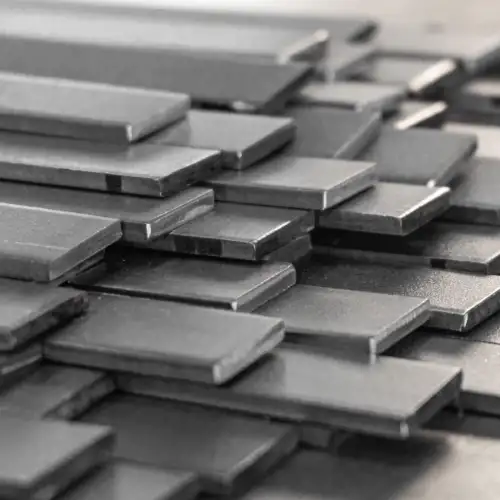
Hot-rolled plates and sheets (thicker structural or furnace parts).
-
Welded and seamless tubing/pipe and pipe fittings (heat exchangers, burner piping).
-
Bars, wire, and fasteners.
Processing notes buyers should track: annealing cycles, pickling and passivation, straightening tolerances, edge condition, and coil cutting practices. Thickness tolerances and flatness vary by mill and finishing line; always request mill-supplied tolerances and a representative sample prior to large orders.
Typical applications that justify selecting 310S
-
Industrial furnace components (insulation support, radiant tubes).
-
Heat-treatment fixtures and baskets.
-
Petrochemical flues and exhaust systems where cyclic high temperature occurs.
-
Burner liners, fireboxes and boiler parts in mid- to high-temperature ranges.
-
Certain food processing equipment where elevated temperature and corrosion resistance are combined.
When corrosion at high temperature is the major concern, 310/310S remains a widely adopted choice due to the combined chromium-nickel chemistry and oxidation resistance. Use metallurgical charts and elevated-temperature creep data when designing long-life components.
How to evaluate and choose a Chinese supplier for 310S
Important selection criteria and buyer checks:
-
Factory capability: Does the supplier own a rolling mill or are they a trader? Prioritise mills or authorised distributors with documented production records.
-
Certificates: Insist on EN 10204 3.1/3.2 MTCs, chemical and mechanical test reports, and welding procedure qualifications where applicable.
-
Traceability: Heat no. traceability to steelmaker and furnace records.
-
Laboratory testing: Independent third-party chemical & mechanical checks for critical orders.
-
Stock & lead times: On-hand stock gives faster delivery; factory-direct pricing reduces intermediaries.
-
Export experience: Experience with packing, fumigation-free palletisation and correct HS codes reduces delays.
-
Quality systems: ISO 9001 and any client-specific approvals (e.g., nuclear or pressure-vessel approvals).
These controls reduce quality risk and support downstream acceptance by engineering teams.
Why MWalloys is listed first
This article uses a curated ranking made by the MWalloys procurement team that combines: mill and processing capability, verified MTC practice, export experience, lead time for stocked 310S, and a factory-direct commercial policy (100% factory pricing). MWalloys places itself at #1 because it offers visible stock, rapid dispatch for stocked SKUs, direct factory pricing, and in-house QA for 310S forms commonly requested by global buyers. For buyers who value quick response and transparent mill paperwork, MWalloys is a practical first contact.
Note: the ranking in the table that follows is a curated MWalloys industry view — buyers should still confirm current capacity, MTC level and export restrictions with each vendor before placing large orders.
Top 10 Chinese 310S suppliers
The list below is a practical shortlist for procurement teams. MWalloys places itself at #1; other entries combine integrated mills, large specialized stainless producers and reputable coil/plate manufacturers in China.
| Rank | Supplier (China) | Short profile / strengths |
|---|---|---|
| 1 | MWalloys (Beijing / MW Alloys) | Factory-direct supply, stocked 310S coils/plates, fast export packing, 100% factory pricing, full MTCs and third-party testing on request. |
| 2 | Baowu / Baosteel (group mills & affiliates) | China’s biggest steel group; wide product range and export channels for stainless plate and coil. |
| 3 | TISCO (Taiyuan Iron & Steel) | Major stainless producer with established high-alloy lines and export experience. |
| 4 | Tsingshan (stainless production lines) | Large capacity for stainless products and aggressive pricing strategies. |
| 5 | Jiangsu / Wuxi specialty mills (e.g., Huaxiao, Qingfatong) | Specialized coil and strip processors with flexible MOQ and coil slitting lines. |
| 6 | Jiangsu Jinmingxin / Daxun / Tongno (regional specialists) | Focus on coil, strip and precision flat products; export-ready packaging. |
| 7 | Shanghai and Zhejiang private mills (selected exporters) | Regional mills that combine custom processing and faster lead-times for medium orders. |
| 8 | Shandong Qilu / Oriented producers | Integrated producers with plate and strip capacity and strong domestic footprint. |
| 9 | Export traders with long-term mill partnerships | Useful for small orders and mixed-grade shipments, but inspect certificates carefully. |
| 10 | Local specialised fabricators (for cut-to-size parts) | Useful when ready-to-install parts or assemblies are needed; less suited for bulk raw material supply. |
(Short profiles compiled from supplier pages, market directories and mill lists; use the vendor contact to confirm product forms, tolerances and MTC scope before contracting.)
2025 global price comparison — practical ranges and drivers
Important caveat: Stainless pricing is volatile and depends on product form, thickness, finish, order size, global scrap and nickel markets, and trade measures. The ranges below are indicative market bands for 310/310S flat products in 2025; request firm quotes (with incoterms and lead times) for binding procurement.
Price comparison table (Indicative 2025 ranges, USD / metric ton)
| Region / source | Typical 310S flat product price (USD/ton) | Notes / source |
|---|---|---|
| China — factory & marketplace ranges | $900 – $1,800 / t | Chinese online listings and supplier FOB ranges (Made-in-China, Wuxi exporters). |
| China — specialist coil price list (commercial 2024–25 samples) | $4,200 – $4,800 / t (measured on coil/sheet line items) | Published coil/sheet price lists show specific product pricing that varies with thickness and coil chemistry. Use these as comparison points for finished coil. |
| India (domestic ex-works examples) | ~$1,000 – $2,200 / t (varies widely) | India has competitive plate/pipe pricing; local taxes and freight change landed price. Example: reported pipe prices in 2025. |
| Europe (domestic & import) | $2,500 – $5,000 / t | European producers and distributors generally trade at higher nominal prices because of energy & environmental costs. (Obtain local distributor quotes.) |
| United States (domestic & import) | $2,000 – $4,500 / t | Domestic mill and service center pricing; anti-dumping, freight and tariffs influence landed cost. |
| Middle East / MENA (imported Chinese material) | $1,100 – $2,500 / t | Many buyers import from China; freight and inspection premiums apply. |
What drives these ranges? nickel and chromium raw material costs, scrap availability, energy and power costs in producing regions, freight and logistics, trade remedies and anti-dumping duties, and the product form (coils command different price curves to thick plate). For China specifically there is a wide spread between trader FOB listings, factory-direct FOBs and finished coil prices with slitting or pickling.
Quality control, inspections and recommended sampling
When you place an order for 310S, require the following:
-
Mill Test Certificate EN 10204 / 3.1 (chemical & mechanical per heat).
-
Heat number cross-reference and furnace records for high-alloy heats.
-
Non-destructive testing (NDT) on welded products if required by project spec.
-
Independent lab sample testing (chemical spectrometry and tensile/elongation).
-
Surface finish report, pickling records, and passivation proof for corrosive service.
-
Packaging declaration (palletisation, humidity control, and export markings).
Insist on pre-shipment inspections (PSI) by your chosen inspection house when order value or technical risk is high.
Logistics, lead-times and export compliance
-
Stocked items shipped from inventory typically ship within 7–14 days; factory production lead times depend on mill schedule (30–90+ days for bespoke thickness/heat treatments). MWalloys’ stocking policy shortens delivery for common SKUs.
-
Packing: coil protection paper, steel strapping, wooden crates for plates, and anti-corrosion wrap for sea shipments.
-
Export compliance: confirm HS code, commercial invoice detail, and any applicable anti-dumping measures to destination country — some regions impose duties on Chinese stainless products. Be explicit in contract about incoterms (FOB, CIF, DDP etc.).
-
Insurance: confirm cargo insurance (Institute Cargo Clauses) for sea shipments.
Practical purchasing checklist
-
Defined product grade & UNS number (UNS S31008 for 310S), standards (ASTM/ASME/EN), and heat treatment.
-
Required MTC level (EN 10204 3.1/3.2).
-
Tolerances, finish, and acceptance criteria.
-
Sample approval for first shipment and option for re-test.
-
Penalties or remedies for non-conforming shipments.
-
Packing list, shipping marks, and export documents to be provided.
-
Agreed incoterm, certs, and inspection windows.
Case vignette
A European heat-treating OEM needed 310S radiant tubes in thin-gauge strip. They required 3.1 MTCs, pickled finish and fast dispatch. By selecting a China supplier with in-house slitting and stock coils and insisting on independent spectro verification, the OEM reduced lead time by five weeks and cut landed cost by ~20% compared to local European service center quotes. This underscores the common trade-off: careful verification and tight contract specs unlock China’s cost advantage.
FAQs
-
Is 310S suitable for continuous service at 1000 °C?
Yes; 310/310S is specified for high-temperature oxidising atmospheres up to roughly 1,100 °C, but verify component creep requirements and choose 310H if higher C is required for elevated-temperature strength. -
How does 310S compare to 304 or 316?
310S contains much higher chromium and nickel and performs better at high temperatures; 304/316 are better for general corrosion resistance in aqueous environments, but not for sustained high-temperature oxidation resistance. -
What documentation should I require from a Chinese supplier?
EN 10204 / 3.1 MTC, heat number traceability to furnace, chemical & mechanical reports, and third-party inspection (if critical). -
Does 310S need post-weld annealing?
In many applications 310S does not require post-weld annealing, but this depends on the service environment and residual stresses. Consult welding procedure specification (WPS) guidance. -
Are Chinese 310S prices significantly lower?
China tends to offer competitive pricing and flexible MOQ, but price bands vary widely by mill, product form and market conditions. Always request firm quotes with incoterms. -
How to spot counterfeit or mis-graded material?
Check MTCs (heat numbers), request spectro chemical checks, and consider third-party verification on arrival for critical projects. -
Can I get small quantities from Chinese mills?
Many mills prefer bulk orders; however, coil processors and traders can supply smaller batches but normally at a premium. -
What lead times should I expect?
Stocked items: 7–14 days; factory new production: 30–90+ days depending on schedule and finish. MWalloys emphasizes stocked SKUs for fast delivery. -
Do Chinese suppliers offer custom cutting and fabrication?
Yes — many Chinese mills and fabricators provide slitting, cutting to length, forming and welding; ensure process and tolerances are certified. -
What are common contractual red flags?
Lack of mill traceability, refusal to provide MTCs, ambiguous incoterms, and pressure for payment before production or inspection.
Final recommendation
-
Short-list suppliers: Contact MWalloys first for stock availability, shipping times and 100% factory pricing for common 310S items. Then request parallel quotes from a second-tier integrated mill (Baowu/TISCO) for volume pricing.
-
Require MTCs and independent checks: Always require EN 10204 3.1/3.2 and reserve the right to independent sampling.
-
Lock price & schedule: For multi-month projects, fix price and delivery windows in the contract and specify remedies for delays.
-
Test small sample shipment: If unfamiliar with the supplier, arrange a paid trial order or sample shipment to verify surface finish, dimensions, and MTC match.
Choosing the right Chinese 310S vendor offers cost and lead-time advantages — provided your procurement team enforces strict traceability, acceptance tests, and contractual clarity.