

Tool steel is the engineered choice when hardness, wear resistance, dimensional stability, and heat resistance matter; for most industrial tooling needs there is a specific grade that balances toughness, wear life and machinability to meet production goals. In short, choose the least alloyed grade that meets your service conditions to reduce cost and improve processability, and reserve high-alloy or powder metallurgy (PM) grades for the highest wear or temperature demands.
Short explainer video showing what tool steel is and why it’s used in tooling applications.

Illustration showing the six practical tool-steel groups and common applications.
If your project requires Tool steel, contact MWalloys for a free quote.
What is tool steel and why it matters
Tool steels are a family of carbon and alloy steels formulated to deliver high hardness, controlled toughness, and resistance to wear and softening at elevated temperatures. They are used for cutting, forming, drawing, molding, and impact tools where predictable final properties and long life are essential. The selection of a particular tool steel grade directly affects tool lifetime, downtime, and total cost of ownership in manufacturing.
Video summarizing seven practical tool-steel types and typical applications
Classification: six practical groups and when to use each
Industry practice groups tool steels into six broad families. Understanding the functional differences is the fastest path to the right buy.
- Water-hardening (W): low alloy, high carbon, low cost, used for short-run hand tools and some hobby tooling.
- Oil-hardening / cold-work (O and A): O1 is oil-hardening, economical with good toughness; A-series are air-hardening with superior dimensional stability.
- High-chromium cold-work (D): D2 and related grades provide superior wear resistance due to abundant carbides, at cost of reduced toughness.
- Shock-resisting (S): engineered for impact and high shock loading where resistance to sudden fracture is crucial.
- Hot-work (H): H13 and related grades are chosen for hot forging and die-casting where thermal fatigue and red hardness are important.
- High-speed steels (M and T series): maintain hardness at elevated cutting temperatures and are common for cutting tools and high-rate machining.
Clear classification video that maps each tool-steel family to its primary use case.
Most used grades, chemistries and quick reference table
Below is a compact table for engineers and buyers comparing common shop grades. Use it as a starting point for specification writing. Compositions are typical ranges; manufacturers supply exact spec sheets.
| Grade | Family | Typical composition highlights | Typical applications | Typical hardened HRC range |
|---|---|---|---|---|
| O1 | Oil-hardening cold-work | C 0.9–1.2% / Cr ~0.5–1.0% / Mn, Si small | Starter dies, gauges, punches | 58–62 HRC |
| A2 | Air-hardening cold-work | C 0.9–1.1% / Cr 4.5–5.5% / Mo, V traces | Blanking dies, forming tools | 56–60 HRC |
| D2 | High carbon high chromium | C 1.4–1.6% / Cr 11–13% / V, Mo | Wear parts, shear blades, long-run dies | 58–62 HRC |
| H13 | Hot-work (chromium-molybdenum) | C 0.32–0.45% / Cr 4.8–5.5% / Mo 1.1–1.3% / V 0.8–1.2% | Hot forging dies, extrusion, die-casting | 48–55 HRC (tempered; red-hard) |
| S7 | Shock-resisting | C 0.5–0.6% / Cr 1.3–1.6% / Si, Mn | Heavy punches, chisels, impact tooling | 52–60 HRC |
| M2 | High-speed steel | C 0.85–1.05% / W 6–7% / Mo 4–5% / V 1% / Cr 3.8–4.5% | End mills, drills, high-speed cutters. | up to 64 HRC (after tempering) |
Focused video on D2 tool steel — useful for the grades table where D2 is used as an exemplar of high-chromium cold-work steels.
Mechanical properties, hardness and performance targets
Designers frequently specify Rockwell C hardness and core toughness as the primary performance metrics. Typical patterns:
- Cold-work fine blanking, drawing and shear: high HRC (58–62) with moderate core toughness.
- Impact and die-press components: lower hardness but higher Charpy toughness.
- Hot-work: lower nominal HRC but stable hardness at elevated temperature (red hardness) and good thermal fatigue strength.
Hardness and wear resistance trade directly with toughness. Use the minimal hardness that achieves required wear life to avoid brittle failures. Industry sources show tooling hardness targets for common applications and typical ranges across families.
Short metallurgy minute explaining the microstructural reasons (carbides, matrix) for hardness vs toughness trade-offs — supports mechanical property discussion.
Heat treatment principles, common recipes and critical notes
Heat treatment is the single most important manufacturing step that converts annealed tool steel into service-ready tooling. The essentials:
- Austenitize at the grade-specific temperature to dissolve carbides and form austenite.
- Quench using the recommended medium: water for W-series, oil for O-series, air for A-series and many modern alloys, and specialized quench strategies for PM steels.
- Temper immediately after quench to reduce residual stresses and reach targeted hardness; multiple tempers are common.
Practical rules: tempering is often one hour per inch of thickness with a two hour minimum, and immediate tempering after quench reduces cracking risk. Always follow the steelmaker or tool steel manufacturer's heat-treat chart for exact temperatures and hold times.
Practical heat-treat video covering austenitizing, quench media and temper cycles — useful for implementers and heat-treat shops referenced in the section.
Choosing the right grade for common applications with comparison table
Selecting a tool steel should be driven by the dominant failure mode. Below is a practical table to match application to grade family.
| Application | Failure mode to prevent | Recommended family / grades | Rationale |
|---|---|---|---|
| Cold blanking, fine stamping | Abrasive wear and edge retention | D2, A2 | Carbide-rich grades resist abrasive wear |
| Thread rolling dies | Galling and wear | A2, PM steels | Good dimensional stability and wear |
| Hot forging dies | Thermal fatigue, thermal softening | H13, H11 | Red hardness and thermal conductivity |
| Shear blades | Chipping and abrasive wear with impact | D2 or S7 depending on impact | D2 for continuous wear, S7 when shock present |
| Cutting tools at high speed | Softening under cutting heat | M2, M42 | Retain hardness at high temperature |
| Plastic injection molds | Polishing, corrosion | P20, stainless mold steels | Machinability and polishability |
Practical buyer tip: for mixed or uncertain service conditions, choose an intermediate grade like A2 for cold work or H13 for hot work and specify testing cycles or trial tooling to validate life.
Machinability, welding, and fabrication considerations
Tool steels vary widely in machinability:
- Low alloy tool steels like O1 are relatively easy to machine in annealed condition.
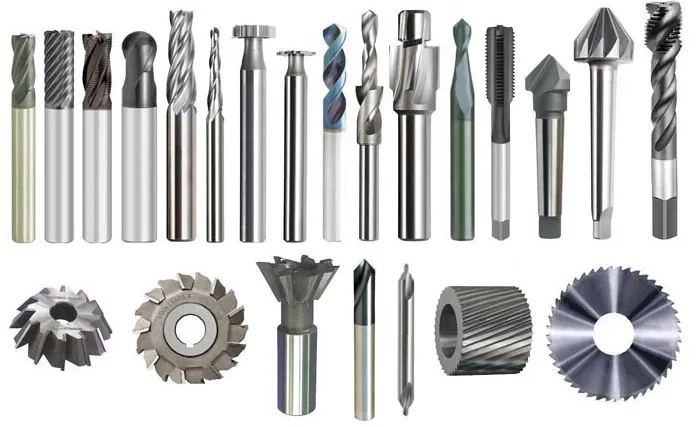
- High-chromium and PM steels are abrasive and reduce tool life of cutting tools. Carbide tooling and appropriate speeds are essential.
- Pre-machining while steel is soft annealed is standard. Final hardening and finish grinding are done after heat treatment.
Welding: welding tool steels is possible but requires strict preheat, interpass control, and postweld heat treatment to avoid cracking and loss of toughness. Many toolmakers prefer brazing or mechanical attachment to avoid distortion.
Buyers should request supply condition (soft-annealed vs pre-hardened), recommended machining allowances, and whether the material is produced by conventionally melted or powder-metallurgy process. Powder-metallurgy variants often require different machining practices but reward with superior wear resistance.
Video covering practical machining considerations and typical supply conditions for tool steels — assists procurement and fabrication planning.
Surface treatments and coatings that extend tool life
Surface engineering can multiply tool life at lower cost than switching to exotic base grades. Common options:
- Nitriding for improved surface hardness and fatigue life.
- Physical vapor deposition (PVD) coatings such as TiN, TiCN for cutting tools.
- Hard chrome plating for forming tools where lubricity and corrosion resistance matter.
- Shot peening to introduce compressive residual stress and reduce crack initiation.
Select surface treatment that matches the wear mechanism: adhesive wear benefits from low-friction PVD; diffusion nitriding reduces abrasive wear and improves contact fatigue.
Powder metallurgy and specialty tool steels
Powder metallurgy (PM) enables near-uniform carbide distribution, higher alloy content and improved toughness at high hardness. PM grades such as CPM 1V, CPM 10V, and several PM HSS variants are widely used for severe wear conditions where conventional wrought steels fail.
PM steels cost more but often reduce total cost per part by extending life substantially, especially for small, high-wear tooling where replacement cost and downtime are high.
Short-format episodes about PM vs conventional tool steels — illustrates why PM variants cost more but perform better in severe wear applications.
Standards, certification and quality checks for buyers
When specifying tool steel, reference recognized standards and request mill test reports.
- Codes and notations: AISI, ASTM, DIN, and JIS are common labeling schemes. Cross-reference tables are essential when sourcing internationally.
- Mill Test Report (MTR): requires chemical composition, heat number, hardness and where applicable heat treatment state.
- Traceability: for critical dies and aerospace tooling, require full heat-to-heat traceability and supplier quality certificates.
- Surface and inclusion quality: specify cleanliness level for high-tolerance molds or PM steels.
For import purchasing, ask for certification that matches your buyer country regulatory needs and any acceptance testing procedure.
Video that reinforces standard naming and classification conventions and why precise specification and MTRs matter for procurement.
How MWAlloys serves toolmakers and buyers
MWAlloys supplies a complete range of tool steels, carbon steels and nickel alloys with 100% factory pricing and customization services. We provide:
- Raw bars, plates and pre-hardened blocks in standard and special sizes.
- Custom chemistry and heat-treatment-on-demand for prototype and serial tooling.
- Technical support: grade selection assistance, heat-treatment recommendation and sample test reports.
- Global shipping and export documentation.
Procurement tips from MWAlloys: specify service condition (soft-annealed vs pre-hardened), maximum allowed hardness, and required tolerance on flatness or parallelism. For large orders, request a production sample heat for validation.
Manufacturer/application webinar showing how a supplier supports customers with specification, printing and validation.
Frequently Asked Questions — Tool Steel
What is the difference between A2 and D2?
When should I pick H13?
Can I weld tool steels?
Is powder metallurgy worth the cost?
What hardness should my cutting die be?
How do coatings affect tool life?
What documentation should I request from suppliers?
Are there stainless tool steels?
How much allowance for grinding after heat treat?
How should I store tool steel?
Practical procurement checklist for buyers
- Specify application and dominant failure mode.
- Provide expected cycle rate and environment (temperature, corrosion).
- State required supply condition and tolerance.
- Request MTR and heat number traceability.
- Ask for recommended heat-treatment chart from supplier.
- For first orders, request sample batch with laboratory hardness and micrograph if necessary.
Final notes from MWAlloys
If you require an application-level recommendation, send the following details: part drawing or critical dimensions, expected workpiece material, production volume, impact loading or temperature boundaries, and any space or surface finish constraints. MWAlloys offers custom chemistries and in-house heat treatment partnerships to match exact service conditions.