
When total ownership cost, corrosion performance, sustainability, and long-term structural reliability are evaluated together, stainless steel consistently delivers lower life-cycle cost and superior durability in most moderate-to-severe environments, while galvanized steel remains a cost-effective solution for short- to mid-term applications in low-corrosion settings. The optimal material choice depends on environmental exposure class, design life expectancy, maintenance strategy, and 2026 raw material price trends. For projects exceeding 20 years of service life, stainless steel typically outperforms galvanized steel in both structural integrity and cumulative cost efficiency.
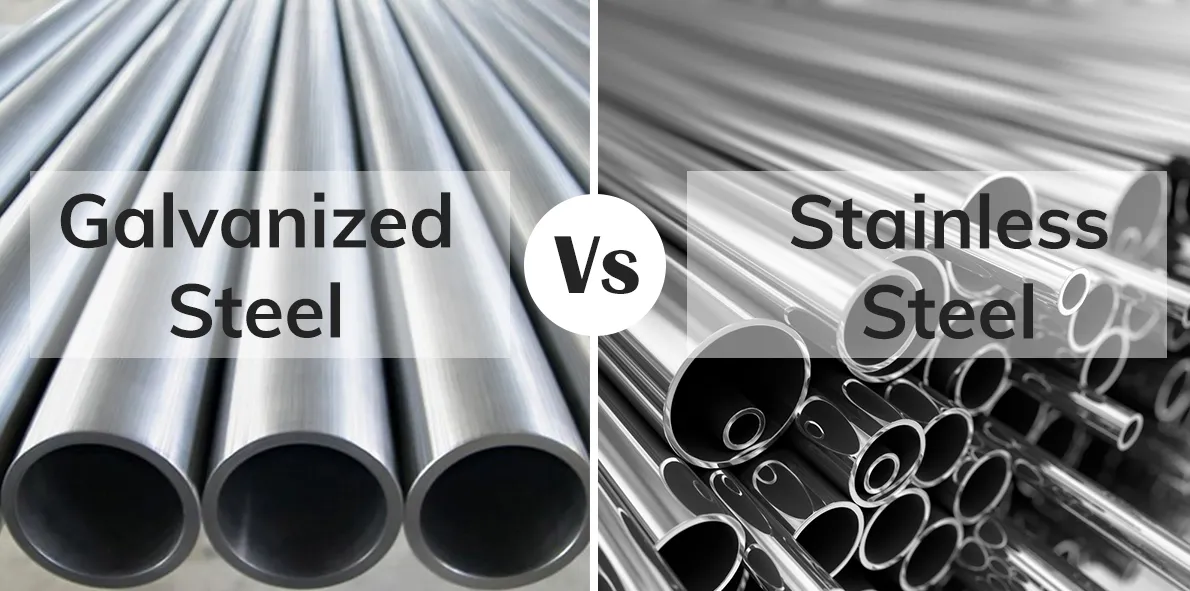
What Distinguishes the Core Composition and Manufacturing Process Between Stainless and Galvanized Steel?
To truly grasp why these two metals perform differently, one must analyze their molecular structures and manufacturing protocols. The divergence begins at the foundry level.
Stainless Steel Chemical Composition and the Passivation Layer
Stainless metal is not merely coated; it is fundamentally altered at the elemental level. The metallurgical recipe involves melting iron and carbon alongside a minimum of 10.5 percent chromium. Depending on the specific performance grade required, metallurgists add nickel, molybdenum, titanium, and nitrogen.
When exposed to oxygen, the chromium reacts instantly, forming a microscopic, non-porous chromium oxide film on the exterior. This passivation layer measures only a few nanometers thick, yet it provides an impenetrable defense against oxidation. The most remarkable characteristic of this chromium oxide film is its self-healing capability. If a physical impact scratches the surface, exposing the raw alloy underneath, the chromium in the newly exposed area reacts with atmospheric oxygen to regenerate the protective film instantaneously. Therefore, the defense mechanism exists throughout the entire thickness of the material.
Engineers classify these alloys into several distinct crystalline structures:
-
Austenitic: Contains high nickel content, making it non-magnetic and highly resistant to aggressive chemicals. Grades 304 and 316 fall into this category.
-
Ferritic: Contains little to no nickel, rendering it magnetic. It costs less but offers slightly lower corrosion resistance.
-
Martensitic: Features higher carbon content, allowing manufacturers to heat-treat and harden the metal, making it ideal regarding industrial cutting tools.
-
Duplex: Combines austenitic and ferritic structures, yielding massive tensile strength and superior resistance to stress cracking.
Galvanized Steel Manufacturing: The Hot-Dip Zinc Coating Process
Conversely, the galvanization process applies a temporary physical shield over highly vulnerable carbon steel. The core material remains completely susceptible to rust. To protect it, manufacturers utilize the hot-dip galvanizing method.
The process involves several distinct phases:
-
Caustic Cleaning: Removing dirt, oil, and organic residues.
-
Pickling: Submerging the metal in a dilute heated sulfuric acid bath to remove mill scale and rust.
-
Fluxing: Dipping the cleaned metal in a zinc ammonium chloride solution to prevent oxidation prior to the final dip.
-
Galvanizing: Immersing the component entirely into a bath of molten zinc heated to approximately 449 degrees Celsius (840 degrees Fahrenheit).
During immersion, the molten zinc reacts with the iron, forming a series of tightly bonded intermetallic layers (Gamma, Delta, Zeta) topped by a pure zinc outer layer (Eta). This zinc coating functions like a sacrificial anode. In the presence of moisture, zinc will corrode preferentially to protect the underlying iron. However, this protection is strictly finite. Once the zinc layer dissolves completely into the environment, the bare carbon steel begins rusting immediately. Deep scratches penetrating the zinc layer also expose the core, initiating localized rust that spreads underneath the remaining coating rapidly.
Table 1: Metallurgical Composition & Passivation Comparison
| Feature | Hot-Dip Galvanized Carbon Steel | Premium Stainless Steel (Grade 316L) |
| Core Base Material | Standard Carbon Iron Alloy | Chromium, Nickel, Molybdenum, Iron Alloy |
| Corrosion Defense Mechanism | Sacrificial Zinc Coating (Finite) | Chromium Oxide Passivation Layer (Infinite) |
| Self-Healing Capability | None. Scratches expose rust-prone iron. | Excellent. Chromium reacts with oxygen to heal. |
| Coating Depletion Rate | Depletes constantly in wet environments. | Zero depletion. Layer remains intact permanently. |
| Magnetic Properties | Highly Magnetic | Non-Magnetic (Austenitic Grades). |
How Does Corrosion Resistance Compare Between These Two Metals Under Harsh Environments?
Evaluating material endurance requires analyzing specific environmental variables. Different climates and industrial settings attack metals via unique chemical pathways.
Performance in Marine and High-Chloride Environments
Oceanic climates present the most aggressive naturally occurring threat to metallic integrity. Seawater contains high concentrations of chloride ions, which aggressively dismantle zinc coatings. A galvanized structure erected near the ocean will experience rapid zinc depletion. The constant salt spray acts like a highly conductive electrolyte, accelerating the galvanic reaction until the coating vanishes completely within just a few years.
MWalloys strongly advises utilizing 316-grade stainless in any coastal or marine application. Grade 316 contains two to three percent molybdenum, an element specifically added to combat chloride-induced pitting. To quantify this resistance, metallurgists use the Pitting Resistance Equivalent Number (PREN). A higher PREN indicates superior endurance against localized pitting. Standard zinc coatings do not even register on the PREN scale, whereas duplex stainless alloys achieve scores exceeding 40, guaranteeing decades of flawless performance even when fully submerged in seawater.
Chemical Processing and Acidic Exposure
Industrial facilities manufacturing pharmaceuticals, refining petrochemicals, or processing acidic foods operate in highly corrosive atmospheres. Galvanized components fail catastrophically in these settings. Acidic solutions dissolve zinc rapidly. If a food processing plant utilized galvanized containers to hold tomato juice or vinegar, the acid would strip the zinc, leaching toxic heavy metals into the food supply and subsequently destroying the container.
Premium chromium alloys remain chemically inert. They do not react with food acids, alkaline cleaning solutions, or aggressive industrial solvents. This inert nature ensures strict compliance with global hygiene standards, keeping food supplies safe and preventing catastrophic chemical spills.
Outdoor Weathering, Humidity, and UV Degradation
When deployed in standard outdoor construction, both metals initially appear robust. However, their aging processes differ drastically. Galvanized surfaces react with atmospheric carbon dioxide and moisture to form zinc carbonate, a dull gray patina that slows further corrosion. Yet, in areas experiencing frequent rainfall or high humidity, white rust can develop rapidly. White rust is a powdery zinc oxide formation that destroys the coating prematurely.
Chromium alloys ignore humidity entirely. The chromium oxide layer remains stable regardless of rainfall volume or UV radiation intensity. A skyscraper clad in these metallic panels will maintain its exact original appearance 50 years after construction, requiring only occasional aesthetic washing to remove surface dust.
Table 2: Galvanized Coating Thickness Designations (G60 vs G90) Explained
| Designation | Total Zinc Weight (Ounces per Sq. Ft.) | Estimated Lifespan in Rural Air | Estimated Lifespan in Coastal Air |
| G40 | 0.40 oz | 10 to 15 Years | Less than 2 Years |
| G60 | 0.60 oz | 15 to 20 Years | 2 to 4 Years |
| G90 | 0.90 oz | 20 to 25 Years | 4 to 6 Years |
| G115 | 1.15 oz | 25 to 35 Years | 5 to 8 Years |
(Note: Stainless alloys do not use zinc thickness designations, bypassing these lifespan limitations entirely).
This video explains the differences between stainless steel and galvanized steel in more detail.
Life-Cycle Cost (LCC) Analysis: Which Material Offers Superior Financial Value in 2026?
Financial prudence demands looking beyond the initial invoice. The Life-Cycle Cost (LCC) model incorporates every financial variable spanning a project's entire operational timeline.
2026 Raw Material Price Trends and Tariff Impacts
The global macroeconomic landscape in 2026 presents unique pricing challenges. Recent geopolitical shifts and domestic trade protection policies have fundamentally altered raw material availability. In North America, 50 percent import tariffs on specific foreign metals have insulated domestic producers. In January 2026, major domestic producers held hot-rolled coil consumer spot prices firmly at $950 per short ton following weeks of consecutive gains.
Simultaneously, energy-intensive smelting operations face rising electricity costs, which disproportionately inflates the price of pure zinc required during galvanizing. While year-to-date imports of hot-dipped galvanized steel declined by roughly 38 percent compared to previous years, domestic production only rose marginally. Consequently, the artificial price premium placed upon base carbon materials narrows the traditional cost gap between zinc-coated options and premium chromium alloys. Financial planners must calculate these specific 2026 pricing paradigms when estimating initial capital expenditures.
The Mathematical LCC Calculation Formula
To determine true economic value, financial analysts utilize the Net Present Value within the LCC framework. The simplified formula is:
LCC = Initial Capital Expenditure + Installation Labor + Lifetime Maintenance Expenses + Replacement Penalties - End-of-Life Salvage Value
Let us examine a municipal water treatment facility projected to operate continuously over 40 years.
-
Initial Capital Expenditure: Procuring galvanized pipes and structural supports costs approximately 40 percent less upfront compared to specifying 316L stainless components.
-
Installation Labor: Welding galvanized metal requires specialized ventilation equipment to protect workers from toxic zinc oxide fumes. Fabricators must grind off the zinc near the weld zone, weld the joint, and subsequently re-apply a cold-galvanizing compound. This tedious process increases installation labor costs significantly. Welding stainless remains straightforward and clean.
-
Lifetime Maintenance Expenses: Galvanized structures in damp environments require frequent inspections. Facility managers must budget funds to sandblast and paint rusting sections every 7 to 10 years. Stainless structures demand absolutely zero maintenance budgets.
-
Replacement Penalties: Zinc coatings in highly corrosive water treatment environments will fail completely around year 15. The facility must shut down operations, dismantle the failed infrastructure, and install new materials. This triggers massive downtime revenue losses and double material purchasing. Stainless infrastructure will easily outlast the 40-year facility lifespan without requiring a single replacement.
-
End-of-Life Salvage Value: When the facility eventually decommissions, scrap yards pay premium rates to acquire nickel-bearing stainless scrap. Galvanized scrap commands very low prices because the remaining zinc complicates the recycling process.
When plotting these variables, the LCC model proves that premium infrastructure costs 35 to 50 percent less total capital over a 40-year period.
Table 3: 40-Year Cumulative Life-Cycle Cost Projection (Per 1000 Kilograms)
| Expense Category | Hot-Dip Galvanized Scenario (USD) | Grade 316L Scenario (USD) | Frequency of Expense |
| Initial Material Purchase | $1,800 | $4,500 | Paid Once (Year 1) |
| Initial Fabrication & Welding | $1,200 | $800 | Paid Once (Year 1) |
| Routine Maintenance & Painting | $2,500 | $0 | Every 10 Years |
| Complete System Replacement | $3,000 (Material + Labor) | $0 | Occurs at Year 20 |
| End-of-Life Salvage Value | -$150 (Minimal Value) | -$1,200 (High Scrap Value) | Occurs at Year 40 |
| Total 40-Year Expenditure | $8,350 | $4,100 | Stainless saves over 50% |
Sustainability and Environmental Impact: Carbon Footprint and Recycling Rates Evaluated
Modern engineering prioritizes ecological responsibility. Analyzing the environmental impact requires evaluating Scope 1, Scope 2, and Scope 3 greenhouse gas emissions accurately.
Carbon Emissions During Initial Production
Producing new metal demands immense thermal energy. Manufacturing one metric ton of galvanized steel emits approximately 2,500 to 3,000 kilograms of carbon dioxide equivalent. This figure aggregates the emissions from the Basic Oxygen Furnace utilized to create the carbon steel core, plus the highly energy-intensive zinc smelting and hot-dip heating processes.
Conversely, the modern stainless industry relies heavily on Electric Arc Furnace (EAF) technology. EAF facilities melt down existing scrap metal rather than refining raw iron ore. This method requires significantly less energy. Consequently, producing one metric ton of EAF-sourced stainless steel emits roughly 2,000 to 2,500 kilograms of carbon dioxide. In regions utilizing renewable energy grids to power the EAF, this footprint drops even further.
End-of-Life Recycling Efficiency
Both materials boast 100 percent theoretical recyclability. However, practical recycling logistics favor chromium alloys heavily. The global stainless sector operates essentially identically to a closed-loop system. Over 90 percent of decommissioned components find their way back into the furnace to become new products without any loss in structural quality.
Recycling galvanized scrap presents significant metallurgical hurdles. When melting zinc-coated iron, the zinc vaporizes, creating hazardous dust that facilities must capture using expensive scrubber systems. If not properly separated, residual zinc contaminates the new steel batch, causing internal porosity and weakness. Therefore, the seamless, high-value recycling loop associated with chromium alloys establishes it firmly representing the superior sustainable choice. Specifying these premium alloys helps construction projects earn valuable points toward LEED (Leadership in Energy and Environmental Design) certification.
Table 4: Carbon Footprint and Sustainability Metrics Compared
| Sustainability Metric | Galvanized Carbon Steel | EAF-Produced Stainless Steel |
| CO2 Emissions (per Metric Ton) | 2,500 to 3,000 kg CO2e | 2,000 to 2,500 kg CO2e |
| Primary Production Method | Basic Oxygen Furnace (BOF) | Electric Arc Furnace (EAF) |
| Recycled Scrap Content Ratio | Typically 20% to 30% | Typically 80% to 90% |
| Recycling Complexity | High. Zinc vaporization requires scrubbers. | Very Low. Direct remelting processes. |
| Toxicity During Demolition | Moderate. Lead and zinc dust hazards. | Zero. Completely biologically inert. |
Engineering Application Suitability: When Should Designers Select Each Material?
Matching the correct metal to the specific operational environment prevents catastrophic failures and wasted budgets.
Ideal Scenarios Utilizing Galvanized Steel
Architects and builders correctly specify zinc-coated structural elements under conditions prioritizing low initial cost alongside zero exposure to harsh chemicals or constant moisture.
-
Indoor HVAC Ductwork: Climate-controlled building interiors lack the moisture necessary to trigger rapid zinc depletion.
-
Agricultural Fencing: In dry rural climates, hot-dip coated wires perform adequately over a reasonable timeframe.
-
Hidden Framing Studs: Residential and commercial interior walls utilize these studs efficiently, knowing rain will never reach them.
-
Highway Guardrails: In non-coastal areas lacking winter road-salt application, standard guardrails provide acceptable service lives.
Ideal Scenarios Utilizing Stainless Steel
Demanding sectors cannot compromise on reliability. Engineers mandate chromium-infused alloys in the following fields:
-
Desalination Plants: Only high-PREN duplex alloys survive the hyper-saline conditions inherent in converting seawater to drinking water.
-
Medical and Surgical Equipment: Grade 316L prevents bacterial colonization and withstands aggressive steam sterilization autoclaves.
-
Solar Panel Mounting Structures: Solar farms require structures guaranteed to last 30 years outdoors without maintenance to ensure project profitability.
-
Architectural Façades: High-profile buildings demand materials resisting urban pollution while retaining a pristine, reflective aesthetic.
Installation Instructions Concerning Lightning Protection Grounding
Protecting infrastructure from atmospheric electrical discharges requires a permanent, low-resistance path to the earth. Historically, contractors utilized galvanized grounding rods. Unfortunately, subterranean environments destroy zinc coatings quickly. Varying soil pH levels, organic acids, and groundwater dissolve the zinc, leaving the carbon steel core to rust completely. A rusted grounding rod loses its conductivity, rendering the entire lightning protection system useless and highly dangerous.
MWalloys recommends strictly utilizing 316-grade solid grounding components to guarantee permanent electrical safety.
Step-by-Step Lightning Protection Grounding Installation Protocol:
-
Material Procurement: Acquire solid 316-grade grounding rods, typically measuring 5/8 inch in diameter and 10 feet in length. Ensure all connecting cables consist of pure bare copper.
-
Site Assessment and Soil Testing: Utilize the Wenner 4-pin method to test soil resistivity. The protocol dictates placing four probes into the earth at equal distances, injecting a known electrical current into the outer probes, and measuring the voltage drop across the inner probes. Identify a location free from buried gas lines or fiber optic cables.
-
Driving the Rod: Employ a heavy-duty rotary hammer equipped with a rod-driving bit. Drive the rod vertically into the earth until only six inches remain above grade. If hitting bedrock, drive the rod at a 45-degree angle.
-
Exothermic Welding Connections: Never use mechanical bolted clamps underground. Soil shifting and thermal expansion cause mechanical clamps to loosen, ruining the electrical connection. Instead, utilize an exothermic welding kit. Ignite the copper thermite powder inside the graphite mold to fuse the copper cable directly to the top of the rod molecularly.
-
Final Resistance Testing: Connect a specialized ground resistance tester to the completed system. The final reading must consistently register below 25 ohms to comply with international electrical safety standards. If the reading exceeds 25 ohms, drive a second rod 10 feet away and bond them together securely.
Structural Integrity and Physical Properties: Tensile Strength, Temperature Resistance, and Maintenance
Beyond corrosion, mechanical characteristics dictate exact design parameters.
Tensile Strength and Load-Bearing Capacity
Structural engineers constantly seek ways to reduce overall building weight without sacrificing safety. Standard hot-dip galvanized carbon steel possesses a tensile strength averaging around 400 to 500 Megapascals (MPa). Common austenitic grades start around 505 MPa, while duplex grades routinely exceed 800 MPa.
This massive strength advantage allows engineers to design thinner, lighter components. Reducing the gauge of the metal decreases shipping weights, lightens the load on the foundation, and speeds up the construction schedule.
Extreme Temperature Tolerance and Fire Safety
Thermal dynamics play a critical role in industrial design and building safety codes. Galvanized coatings possess severe thermal limitations. When ambient temperatures exceed 200 degrees Celsius (392 degrees Fahrenheit), the zinc layer begins peeling away. If exposed to a direct fire exceeding 400 degrees Celsius, the zinc vaporizes entirely, releasing highly toxic fumes that endanger first responders. Following the vaporization, the exposed carbon steel softens and collapses rapidly.
Chromium alloys exhibit phenomenal high-temperature stability. Austenitic grades maintain significant structural integrity and resist scaling even when exposed continuously to temperatures exceeding 800 degrees Celsius (1472 degrees Fahrenheit). This superior heat resistance provides critical extra minutes during a building fire, preventing structural collapse and allowing occupants to evacuate safely.
Fabrication and Welding Safety
Fabricators strongly prefer working with chromium alloys. Creating a secure bond requires standard Tungsten Inert Gas (TIG) or Metal Inert Gas (MIG) welding equipment. The resulting welds are clean, immensely strong, and easily polished to match the surrounding finish.
Attempting to weld galvanized metal introduces severe health hazards and quality control issues. The intense heat of the welding torch instantly vaporizes the zinc coating, creating a dense, noxious cloud of toxic smoke. Inhaling this smoke causes metal fume fever, a severe temporary illness causing chills, fever, and nausea. To mitigate this hazard, fabricators must spend extensive labor hours mechanically grinding the zinc away from the weld zone prior to striking an arc. After welding, the bare joint is completely unprotected and must be painted with a zinc-rich primer, which never matches the original hot-dip durability.
Table 5: Mechanical and Physical Properties Comparison
| Physical Property | Galvanized Carbon Steel | Austenitic Grade 304 | Duplex Grade 2205 |
| Average Tensile Strength | 400 to 500 MPa | 505 to 600 MPa | 800+ MPa |
| Max Continuous Operating Temp | 200°C (392°F) | 870°C (1598°F) | 300°C (572°F) |
| Welding Safety Profile | Highly Toxic (Zinc Vaporization) | Safe (Requires Standard Ventilation) | Safe (Requires Standard Ventilation) |
| Thermal Expansion Coefficient | 12.0 µm/m·°C | 17.2 µm/m·°C | 13.7 µm/m·°C |
Architectural Aesthetics and Visual Longevity
Visual appeal plays a massive role in structural design, especially concerning visible public infrastructure or high-end commercial real estate.
The Aging Process of Zinc Coatings
Hot-dip zinc presents a bright, spangled, crystalline appearance immediately after leaving the molten bath. However, this finish is highly unstable. Within months of atmospheric exposure, the surface oxidizes to form zinc carbonate, turning the metal into a matte, dull, mottled gray. If moisture pools on the surface without adequate ventilation, white powdery oxidation forms rapidly, ruining any aesthetic appeal entirely. Architects designing visually striking buildings rarely leave galvanized surfaces exposed deliberately.
The Permanent Elegance of Chromium Alloys
Conversely, chromium alloys offer absolute aesthetic permanence. Fabricators can apply various mechanical finishes to the surface prior to installation. A 2B mill finish provides a smooth, reflective industrial look. A Number 4 brushed finish introduces directional polishing lines, completely hiding fingerprints and minor scratches, making it the standard choice in commercial kitchens and elevator doors. A Number 8 mirror finish provides flawless, glass-like reflectivity utilized in high-end sculptures and luxury building façades. Because the passivation layer prevents any surface degradation, these finishes remain visually perfect decades after installation, requiring only routine washing to maintain their original brilliance.
Comparative Summary Table
| Criteria | Stainless Steel | Galvanized Steel |
|---|---|---|
| Upfront Cost | Higher | Lower |
| Service Life | 25–75+ years | 10–25 years |
| Maintenance | Minimal | Periodic |
| Corrosion Resistance | Excellent | Moderate |
| Marine Performance | Superior | Limited |
| Recyclability | Very high | High |
| Life-Cycle Cost | Lower long term | Higher long term |
| Carbon Impact (long-term) | Competitive | Higher in harsh settings |
How Does Installation Affect Long-Term Performance?
Improper installation often shortens lifespan.
Stainless Steel Installation Guidelines
- Avoid carbon steel contamination
- Use compatible fasteners
- Ensure proper weld passivation
- Maintain surface cleanliness
Galvanized Steel Installation Guidelines
- Protect coating during transport
- Avoid grinding off zinc layer
- Apply touch-up coatings on damaged areas
- Prevent water entrapment
Design oversight frequently determines whether theoretical lifespan becomes reality.
Frequently Asked Questions (FAQs) Concerning Stainless and Galvanized Steel
Which metal rusts faster when placed outdoors?
Galvanized materials rust significantly faster. Once environmental factors like acidic rain erode the outer zinc layer, the underlying iron oxidizes immediately. Chromium alloys create an invisible, self-healing barrier that prevents rust indefinitely.
Can construction teams use both metals together?
Engineers strongly advise against mixing these two metals directly. Placing them in physical contact triggers severe galvanic corrosion. The chromium alloy acts cathodically, aggressively stripping the zinc coating off the galvanized component.
Is a stainless structure heavier than a galvanized structure?
Why are 2026 steel procurement prices fluctuating?
Does exposure to ocean salt water destroy galvanized coatings?
Yes. Ocean water destroys zinc coatings rapidly. While galvanized components may lose protection within months, 316-grade stainless can endure decades of direct saltwater immersion without degradation.
Which material is easier to paint?
Are galvanized water pipes safe to use today?
Does a magnet stick to both types of metal?
Magnets stick firmly to galvanized steel. In stainless alloys, magnetism depends on the grade: Ferritic (430) is magnetic, while Austenitic (304, 316) is generally non-magnetic.
Can galvanized steel withstand industrial fires?
Which is more cost-effective over a 50-year timeframe?
Stainless definitively wins. Comprehensive Life-Cycle Cost (LCC) models prove that eliminating replacement expenses and maintenance labor easily offsets the higher initial purchase price.
Final Evaluation
Material selection should align with environmental exposure, target lifespan, maintenance capability, sustainability objectives, and financial modeling. Stainless steel offers unmatched durability and predictable performance across decades, particularly in corrosive environments. Galvanized steel remains practical and economical in controlled conditions with limited exposure duration.
For infrastructure intended to serve multiple decades with minimal intervention, stainless steel represents a strategic investment rather than a premium expense. For shorter service intervals and constrained budgets, galvanized steel continues to hold practical merit.
MWalloys recommends conducting a formal life-cycle cost assessment prior to final specification, incorporating exposure classification, raw material market trends, and long-term operational strategy.