

As of May 2026, stainless steel prices per pound range from $0.85 to $4.50 per pound depending on grade, form, and purchase volume, with the global average for 304 stainless steel sheet sitting around $1.45 to $1.75 per pound in the US market. Grade 316L commands a premium of 25–40% above 304 pricing, while duplex and super-duplex alloys can reach $4.00–$6.50 per pound for specialty configurations. These figures reflect raw material costs, nickel and chromium spot prices, energy surcharges, and regional trade policy impacts that have kept markets volatile through 2025 and into 2026. At MWalloys, we track these numbers daily to help procurement teams and engineers make confident sourcing decisions.
If your project requires the use of Stainless Steel, you can contact us for a free quote.
What Is the Global Average Price of Stainless Steel Per Pound in 2026?
The global benchmark for stainless steel fluctuates continuously, anchored by London Metal Exchange (LME) nickel contracts and Chinese domestic hot-rolled coil pricing published by the Shanghai Stainless Steel Exchange (SHFE). Based on aggregated data from Metal Bulletin, CRU Group, and our own MWalloys procurement records through Q1–Q2 2026, the following table represents current global average pricing.
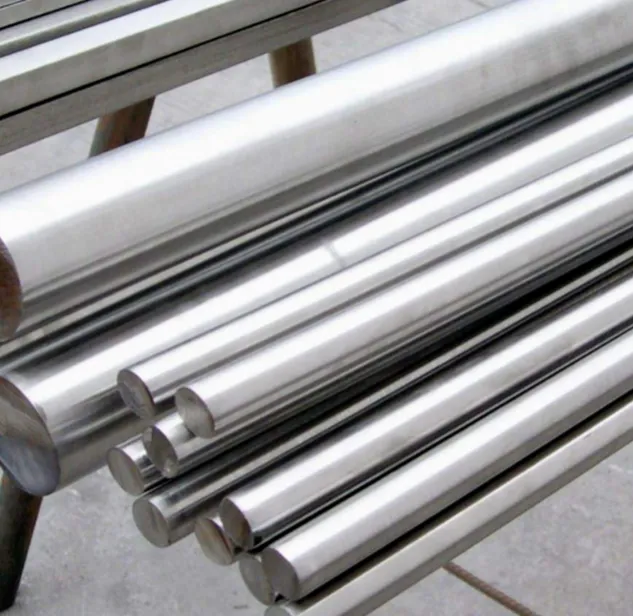
2026 Global Average Stainless Steel Price Per Pound (by grade)
| Grade | Composition | Global Avg. Price/lb (USD) | US Market Price/lb | China Domestic Price/lb | India Export Price/lb |
|---|---|---|---|---|---|
| 304 Sheet (2B) | 18% Cr, 8% Ni | $1.45 – $1.75 | $1.55 – $1.85 | $1.15 – $1.38 | $1.22 – $1.48 |
| 316L Sheet | 16% Cr, 10% Ni, 2% Mo | $1.90 – $2.35 | $2.05 – $2.55 | $1.52 – $1.78 | $1.60 – $1.90 |
| 430 Sheet | 17% Cr, no Ni | $0.85 – $1.10 | $0.92 – $1.18 | $0.70 – $0.88 | $0.75 – $0.95 |
| 2205 Duplex | 22% Cr, 5% Ni, 3% Mo | $2.80 – $3.60 | $3.10 – $3.90 | $2.45 – $3.00 | $2.55 – $3.20 |
| 904L Super Austenitic | 20% Cr, 25% Ni, 4.5% Mo | $4.00 – $5.50 | $4.40 – $6.00 | $3.40 – $4.60 | $3.60 – $4.80 |
| 17-4 PH | Precipitation Hardened | $3.20 – $4.50 | $3.60 – $5.00 | $2.80 – $3.80 | $2.90 – $4.00 |
| 410 Sheet | 11.5% Cr | $0.90 – $1.20 | $0.98 – $1.30 | $0.72 – $0.95 | $0.78 – $1.02 |
Sources: Metal Bulletin (April 2026), CRU Stainless Steel Monitor (Q1 2026), MEPS International, MWalloys internal procurement data.
We want to be transparent about one thing: these prices do not include processing fees, freight, certification costs, or minimum order surcharges. When you receive a mill quote, the all-in landed price will typically be 10–25% higher than the base material cost shown above.
How Does Stainless Steel Grade Affect the Price Per Pound?
Grade selection is the single most important factor in per-pound cost. This is not a minor nuance — choosing 316L over 304 for a project that does not require molybdenum-enhanced corrosion resistance adds 30–45% to your material budget with no functional benefit.
Austenitic Grades (200 and 300 Series)
The 300 series represents roughly 65% of global stainless steel consumption, according to the International Stainless Steel Forum (ISSF) 2025 Annual Report. Within this family:
Grade 304 remains the workhorse of the industry. Its nickel content (8–10.5%) directly ties its pricing to LME nickel spot rates. When nickel reached $18,500 per metric ton in early 2025, 304 sheet in the US climbed to $1.90/lb before easing back as nickel softened to $15,200/ton by March 2026.
Grade 316 and 316L carry a molybdenum surcharge. Molybdenum spot pricing hovered around $24–$28 per kilogram in Q1 2026 (Metal Pages, 2026), and since 316L contains approximately 2–3% Mo, this adds a measurable cost premium. For marine, pharmaceutical, and chemical processing applications, this premium is justified. For general architectural work, it usually is not.
Grade 201 has grown significantly in Asia as a cost-reduction alternative. With lower nickel content (3.5–5.5%) and manganese substitution, 201 prices around $0.95–$1.20/lb globally but has limited acceptance in North American and European specifications.
Ferritic Grades (400 Series Without Nickel)
Grade 430 is the benchmark ferritic alloy. Because it contains no nickel, its pricing decouples from LME nickel volatility. In the US, 430 sheet typically runs $0.92–$1.18/lb, roughly 35–40% below comparable 304 sheet. For appliance panels, automotive trim, and indoor architectural applications, 430 is an excellent cost optimization.
Grade 409 is even more economical at $0.80–$1.05/lb, widely used in automotive exhaust systems. Its 10.5–11.75% chromium content is at the minimum threshold for stainless classification.
Grade 444 bridges ferritic and high-performance categories. It contains 1–2% molybdenum and price typically falls in the $1.50–$1.90/lb range, occupying a niche in water heaters and solar thermal systems where 304's stress corrosion cracking sensitivity is a concern.
Duplex and Super Duplex Grades
Duplex grades combine austenitic and ferritic microstructures, delivering higher strength and better chloride stress corrosion resistance than standard 304 or 316. The trade-off is price:
Grade 2205 (S31803/S32205) currently prices at $2.80–$3.90/lb in the US market. For offshore oil platforms, chemical tankers, and desalination plant components, the strength-to-weight advantage often justifies the cost premium versus thicker 316L fabrications.
Super duplex grades (2507, Zeron 100) reach $4.50–$7.00/lb and are specified for subsea umbilicals, deepwater Christmas trees, and high-chloride process equipment where failure costs far exceed the material premium.
Does the Physical Form of Stainless Steel Change the Price Per Pound?
Yes — significantly. The same grade of stainless steel in different product forms carries widely varying per-pound prices because each form involves different processing energy, tooling costs, yield loss, and inventory carrying costs.
Price Per Pound by Product Form (Grade 304, US Market, May 2026)
| Product Form | Typical Price/lb (USD) | Price Premium vs. Hot Roll Sheet | Minimum Order Typical |
|---|---|---|---|
| Hot Rolled Sheet (HR) | $1.35 – $1.55 | Baseline | 2,000 lbs |
| Cold Rolled Sheet (2B) | $1.55 – $1.85 | +15 to +20% | 1,500 lbs |
| Polished Sheet (No. 4) | $1.80 – $2.20 | +30 to +42% | 500 lbs |
| Mirror Polished (#8) | $2.40 – $3.10 | +75 to +100% | 200 lbs |
| Hot Rolled Plate | $1.40 – $1.70 | +3 to +10% | 2,500 lbs |
| Round Bar | $1.65 – $2.10 | +20 to +35% | 500 lbs |
| Hex Bar | $1.85 – $2.40 | +35 to +55% | 300 lbs |
| Seamless Tube | $2.20 – $3.80 | +60 to +145% | 200 lbs |
| Welded Tube | $1.75 – $2.60 | +27 to +68% | 500 lbs |
| Wire (fine gauge) | $2.50 – $4.20 | +82 to +170% | 100 lbs |
| Coil (slit) | $1.45 – $1.72 | +7 to +11% | 3,000 lbs |
| Angle / Channel / Structural | $1.60 – $2.30 | +16 to +48% | 500 lbs |
| Casting (investment cast) | $3.50 – $6.00 | +155 to +285% | Project qty |
Data based on MWalloys supplier network pricing and cross-referenced against Service Center Institute (SCI) quarterly pricing surveys, Q1–Q2 2026.
We see this confusion regularly from purchasing teams who compare bar stock quotes with sheet pricing and assume they are interchangeable benchmarks. They are not. A 304 seamless tube quote of $3.20/lb is not an inflated price — it reflects the multi-pass rolling and annealing operations required to produce that specific form.
How Does Purchase Volume Affect Stainless Steel Price Per Pound?
This is one of the most underappreciated variables in industrial procurement. Stainless steel pricing follows a tiered discount structure that can span a 20–35% range between spot purchases and annual contract volumes.
Volume Pricing Tiers (304 Sheet, US Domestic Service Center, 2026)
| Purchase Volume | Typical Price/lb | Discount vs. Spot | Typical Contract Type |
|---|---|---|---|
| Under 500 lbs (spot) | $1.90 – $2.20 | Baseline | Single purchase |
| 500 – 2,000 lbs | $1.75 – $1.95 | 5 – 12% | Per order |
| 2,000 – 10,000 lbs | $1.60 – $1.80 | 13 – 22% | Blanket PO |
| 10,000 – 50,000 lbs | $1.48 – $1.65 | 18 – 28% | Annual contract |
| 50,000+ lbs | $1.38 – $1.55 | 23 – 35% | Mill direct or distributor |
| Mill-direct contract (250,000+ lbs) | $1.25 – $1.45 | 30 – 43% | Tolling or annual supply |
Beyond raw volume, payment terms, geography (proximity to service centers or mills), and specification complexity all influence the per-pound number you receive. We have negotiated mill-direct pricing for clients who aggregated their annual requirements across multiple grades, even when no single grade reached mill minimums.
US vs. China vs. India Stainless Steel Price Comparison — Why Is There Such a Gap?
Understanding regional price differences is not just academic — for import/export decisions, it determines whether buying domestic or sourcing internationally makes financial sense after tariffs, freight, and lead times are factored in.
Regional Price Comparison Table: Major Grades (May 2026)
| Grade & Form | US Domestic Price/lb | Chinese Export Price/lb (FOB) | India Export Price/lb (FOB) | US All-In Landed (incl. tariff, freight) |
|---|---|---|---|---|
| 304 Sheet (2B, 4x8) | $1.55 – $1.85 | $1.08 – $1.28 | $1.18 – $1.42 | $1.52 – $1.88 |
| 316L Sheet (2B) | $2.05 – $2.55 | $1.42 – $1.68 | $1.55 – $1.80 | $1.98 – $2.42 |
| 304 Round Bar | $1.75 – $2.20 | $1.15 – $1.40 | $1.28 – $1.55 | $1.65 – $2.05 |
| 316L Seamless Tube | $2.80 – $3.60 | $1.85 – $2.30 | $2.00 – $2.55 | $2.60 – $3.30 |
| 430 Sheet | $0.92 – $1.18 | $0.68 – $0.85 | $0.72 – $0.90 | $0.98 – $1.22 |
| 2205 Plate | $3.10 – $3.90 | $2.30 – $2.80 | $2.45 – $3.00 | $3.20 – $4.00 |
Critical note on tariffs: The US currently applies a 25% Section 232 tariff on most steel imports, including stainless, which has been in effect since 2018 with modifications through 2025–2026 trade negotiations. Some country-specific tariff exemptions apply (such as certain USMCA-compliant Canadian and Mexican material). Chinese stainless steel also faces additional Section 301 tariffs of 7.5–25% depending on product classification under the HTSUS codes (7219, 7220, 7221, 7222 series).
This is why the "all-in landed" price from China often ends up surprisingly close to US domestic pricing, especially for commodity grades. For engineered and specialty grades from India, the math sometimes favors imports, particularly for 316L tube and duplex bar.
Why Is Chinese Stainless Steel So Much Cheaper at Origin?
China produced approximately 31.8 million metric tons of stainless steel in 2025, representing roughly 57% of global output (ISSF 2025 data). This scale creates genuine cost advantages:
- Integrated mill economics: Companies like Tsingshan, Baosteel, and POSCO China operate fully integrated facilities from ferronickel production through finished rolling, eliminating multiple margin layers.
- Lower labor costs: Manufacturing labor in China runs approximately $6–$12 per hour versus $28–$45 per hour at comparable US facilities (Bureau of Labor Statistics; National Bureau of Statistics of China, 2025).
- Nickel pig iron (NPI) access: Chinese mills pioneered NPI smelting from low-grade laterite ores in Indonesia and the Philippines, giving them feedstock cost advantages when LME nickel prices are high.
- Energy subsidies in certain provinces: Yunnan and Inner Mongolia have historically subsidized electricity for heavy industry, though this has faced increasing regulatory scrutiny since 2024.
India's Growing Role as a Competitive Supplier
India produced approximately 4.8 million metric tons of stainless steel in 2025 (ISSF), with Jindal Stainless, JSL (Jindal Stainless Hisar), and Chromeni Steels leading production. India's competitive advantages include:
- Strong position in 400-series ferritic grades.
- Growing 316L and duplex production capability.
- Lower anti-dumping duty exposure in some markets compared to Chinese origin material.
- ASEAN and CECA trade agreements offering preferential access to Southeast Asian and Middle Eastern markets.
For US buyers, Indian stainless steel typically enters under the same 25% Section 232 tariff as other countries, with no country-specific exemption currently in place as of May 2026.
What Does the 2025–2026 Stainless Steel Price Chart Show Us?
Price Trend Summary: 304 Sheet (US, $/lb) — January 2025 to May 2026
2026 Price Chart (304 Stainless Sheet, US, $/lb)

$2.10 |       *
$2.00 |     * . *
$1.90 |   *       *       *
$1.80 |               *       * *
$1.70 |                           * * *
$1.60 |                                   * * (May 2026)
      |_______________________________________
       Jan  Mar  May  Jul  Sep  Nov  Jan  Mar  May
       2025                              2026
Indicative chart based on Metal Bulletin monthly averages and CRU Monitor data.
Key Price Events During This Period
January–March 2025: Prices firmed from $1.75/lb to a peak near $2.05/lb as nickel surged following Indonesia's expanded nickel export controls and pre-tariff buying ahead of threatened US trade actions.
April–June 2025: Prices corrected to $1.80–$1.88/lb as buyer resistance emerged and service center inventories built up. The Fed's interest rate environment suppressed capital equipment purchasing and indirectly reduced stainless demand from construction and OEM sectors.
July–September 2025: A brief stabilization period. Nickel traded between $14,800 and $16,400/ton on the LME. Chinese mills reduced output slightly in response to weak domestic real estate demand, providing modest supply-side support to export pricing.
October–December 2025: Prices dipped to $1.62–$1.70/lb as Chinese HRC export prices softened and US service center destocking became apparent. Several large distributors offered aggressive spot pricing to move inventory before year-end.
January–May 2026: Prices have begun recovering, currently ranging $1.55–$1.85/lb as downstream demand from automotive, food processing equipment, and pharmaceutical manufacturing has improved. New US tariff renegotiations with Canada and Mexico under the USMCA review created short-term pricing uncertainty in Q1 2026.
Why Do Stainless Steel Prices Change? The Real Drivers Explained
Understanding price drivers is more valuable than any single price quote. When you understand what moves the market, you can time purchases strategically, lock in forward pricing, or hedge through long-term contracts.
Nickel Prices — The Dominant Raw Material Variable
Nickel makes up 8–35% of austenitic stainless steel by weight, depending on grade. The relationship between LME nickel spot prices and 304 stainless sheet pricing is direct and well-documented. A $1,000/metric ton movement in nickel translates to approximately $0.04–$0.07 per pound change in 304 sheet pricing, depending on mill cost pass-through speed.
2025–2026 Nickel Price Summary:
| Period | LME Nickel ($/MT) | Impact on 304 Sheet |
|---|---|---|
| Jan 2025 | $15,800 | Moderate support |
| Apr 2025 | $18,500 (peak) | Pushed prices to $2.05/lb |
| Sep 2025 | $14,600 | Softened to $1.65/lb |
| Jan 2026 | $15,200 | Partial recovery |
| May 2026 (est.) | $15,800 – $16,400 | Current pricing range |
Source: LME official settlement prices; Fastmarkets nickel price data.
Chromium and Molybdenum Surcharges
Mills publish monthly alloy surcharges that are added to base prices. These surcharges update with a 1–2 month lag behind spot prices, which means buyers who monitor ferrochrome and molybdenum prices early can anticipate surcharge movements.
Ferrochrome (charge chrome) averaged approximately $1.18–$1.32 per lb of contained chromium in Q1 2026 (Fastmarkets). Molybdenum oxide traded around $24–$27/kg in the same period (Metal Pages). These inputs feed directly into 316-series and duplex surcharge calculations.
Energy Costs in Stainless Production
Electric arc furnace (EAF) steelmaking, the dominant production route for stainless, is highly energy-intensive. Energy represents approximately 18–25% of conversion costs at European mills, where natural gas prices remain elevated post-2022 energy crisis (approximately €35–55/MWh in early 2026 vs. €20–25/MWh pre-2021). US mills benefit from significantly lower natural gas costs ($3.50–$5.50/MMBtu in 2026), which is one reason US domestic pricing does not always follow European benchmarks proportionally.
Scrap Availability and Recycled Content
Approximately 60–80% of stainless steel produced globally uses recycled scrap as a feedstock (ISSF Sustainability Report 2024). Scrap pricing therefore influences production costs. When stainless scrap prices rise (driven by export demand from Turkey, India, and China), mill costs increase and new material prices follow. In Q1 2026, 304 busheling scrap averaged $0.62–$0.74/lb (American Metal Market), while 316 solids traded at $0.80–$0.98/lb.
Trade Policy and Anti-Dumping Duties
The US Section 232 tariff structure, Section 301 China-specific duties, and various anti-dumping/countervailing duty orders (ADD/CVD) materially influence what buyers pay. Current ADD orders on Chinese stainless from the US International Trade Commission cover:
- Stainless steel sheet and strip (SSSS) from various countries.
- Stainless steel bar from India, Brazil, China, South Korea, and Taiwan.
- Stainless steel flanges from India and China.
These orders add duties ranging from 1.5% to 76% above the normal tariff rate, depending on the specific product and producer.
Currency Exchange Rates
Stainless steel is globally priced in USD, but production costs in China (CNY), India (INR), and Europe (EUR) mean that currency movements affect export competitiveness. A stronger USD relative to CNY makes Chinese exports cheaper in dollar terms, increasing import competition and pressuring US domestic prices. The CNY/USD rate moved from approximately 7.10 in January 2025 to 7.28 in May 2026 (Bloomberg), a depreciation that has modestly increased Chinese export competitiveness in dollar-denominated markets.
What Will Stainless Steel Prices Per Pound Look Like Over the Next 5 Years (2026–2031)?
Price forecasting in commodities carries significant uncertainty. We want to be honest about that. However, structural trends in raw material supply, manufacturing geography, and downstream demand allow credible range estimates.
5-Year Price Outlook: 304 Stainless Sheet (US Market, $/lb)
| Year | Low Scenario | Base Scenario | High Scenario | Key Assumptions |
|---|---|---|---|---|
| 2026 | $1.45 | $1.65 | $1.90 | Current market trajectory |
| 2027 | $1.40 | $1.70 | $2.05 | Nickel supply normalization |
| 2028 | $1.50 | $1.75 | $2.20 | EV battery vs. SS nickel competition |
| 2029 | $1.55 | $1.80 | $2.35 | Potential US infrastructure spend |
| 2030 | $1.60 | $1.85 | $2.50 | Carbon border adjustment effects |
| 2031 | $1.65 | $1.90 | $2.70 | Full carbon pricing, supply chain reshoring |
Base scenario assumes moderate nickel prices ($15,000–$18,000/MT), stable trade policy, and 2–3% annual demand growth. High scenario reflects supply disruptions plus stronger industrial demand. Low scenario assumes Chinese overcapacity continues to suppress global prices.
Trends That Will Shape Pricing Through 2031
Electric Vehicle Battery Competition for Nickel: The growth of EV batteries using nickel-manganese-cobalt (NMC) chemistry competes with stainless steel for Class 1 nickel supply. Wood Mackenzie projected in their 2025 battery materials report that EV nickel demand will reach 750,000–900,000 MT annually by 2030, potentially absorbing supply that previously served the stainless sector and creating upward price pressure.
Green Steel Premium: European and US manufacturers increasingly face carbon border adjustment requirements. Green stainless (low-carbon, high scrap content) will command a price premium that we estimate at $0.08–$0.18/lb by 2030, based on current carbon certificate pricing trajectories (Carbon Pulse, 2026).
Reshoring and Nearshoring Effects: US federal investment in semiconductor fabs, pharmaceutical manufacturing, and defense supply chains is driving incremental stainless demand from construction and equipment. The CHIPS Act, Inflation Reduction Act, and IIJA commitments total over $2.4 trillion in infrastructure and manufacturing spending through 2030 (US Congressional Budget Office, 2025).
Indonesian Nickel Supply: Indonesia has become the world's dominant nickel supplier, producing approximately 1.8 million MT in 2025 (USGS). Export restrictions on raw ore have pushed value-added processing onshore, but this structural shift is creating nickel price volatility that will persist through at least 2028.
How Can Buyers Get the Best Stainless Steel Price Per Pound?
This section reflects practical experience from MWalloys' work with hundreds of manufacturing clients. Getting the best price is not simply about finding the cheapest quote — it is about total cost of ownership, supply reliability, and specification management.
Consolidate Grades Where Possible
Many engineering specifications default to 316L when 304 would perform adequately. A systematic specification review with your metallurgical team can identify where grade downgrades are technically defensible. Moving 30% of your 316L purchases to 304 at current prices saves approximately $0.50–$0.70/lb on that portion.
Use Annual Blanket Orders
Converting spot purchases into annual blanket purchase orders — even with flexible release schedules — allows service centers to lock in mill pricing and typically reduces per-pound cost by 12–22%. This also stabilizes your supply chain against spot market volatility.
Monitor the Alloy Surcharge Announcement Cycle
US mills (Allegheny Technologies, North American Stainless, etc.) publish alloy surcharges monthly, typically in the first week. When nickel or molybdenum prices are declining, placing large orders just after a surcharge reduction captures the lower pricing before the market equilibrates.
Consider Certified Secondary Material
Mill-certified secondary stainless (off-specification in dimension or surface, not in chemistry) often sells at 15–30% below prime pricing and carries full chemical and mechanical certification. For non-critical industrial applications, this represents significant savings.
Verify Country of Origin and Mill Certifications
Buying lowest-price material without verifying ASTM, EN, or JIS certifications and mill test reports (MTRs) is a false economy. Recertification costs, quality rejections, and liability exposure on non-conforming material routinely exceed any initial price savings. At MWalloys, every shipment comes with traceable MTRs.
What Are Stainless Steel Scrap Prices Per Pound?
Scrap pricing is a separate but related market that matters for manufacturers generating stainless offcuts, processors buying returns, and recyclers. Scrap prices also serve as a leading indicator for new material pricing.
Stainless Steel Scrap Price Per Pound (US, May 2026)
| Scrap Grade/Type | Description | Typical Price/lb (US, May 2026) |
|---|---|---|
| 304 Clips/Solids | Clean punchings, sheet clips | $0.68 – $0.80 |
| 304 Turnings | Machining chips, mixed | $0.42 – $0.58 |
| 316 Solids | Clean clips or drops | $0.88 – $1.05 |
| 316 Turnings | Mixed machining chips | $0.55 – $0.70 |
| 430 Clips | Ferritic, no nickel | $0.22 – $0.32 |
| 410/420 Scrap | Martensitic grades | $0.28 – $0.38 |
| 2205 Duplex Clips | High alloy, clean | $1.05 – $1.35 |
| Unidentified Stainless | Mixed, ungraded | $0.18 – $0.30 |
| 17-4 PH Clean | Precipitation hardened | $0.90 – $1.20 |
Source: American Metal Market (AMM) regional dealer surveys; ISRI (Institute of Scrap Recycling Industries) monthly data, May 2026.
Scrap prices represent approximately 40–55% of the new material price for the equivalent grade, reflecting the cost of collecting, sorting, processing, and remelting against the value of the recovered alloy content.
FAQs — Everything Buyers Ask About Stainless Steel Prices Per Pound
1: What Is the Current Price of 304 Stainless Steel Per Pound in the US?
As of May 2026, 304 stainless steel sheet in the US domestic market prices between $1.55 and $1.85 per pound for standard cold-rolled 2B sheet in commercial quantities (1,500–10,000 lbs). Smaller spot quantities under 500 lbs will typically cost $1.90–$2.20/lb at service centers, while large contract buyers exceeding 50,000 lbs annually may negotiate $1.38–$1.55/lb. The specific price depends on finish, thickness, width, and delivery terms. Always request a quote that specifies whether the price includes freight, minimum order charges, and what certification documentation is provided with the material.
2: Why Is 316 Stainless Steel More Expensive Than 304?
Grade 316 contains 2–3% molybdenum in addition to higher nickel content compared to 304. Molybdenum is a rarer alloying element — global production is approximately 300,000 MT per year (USGS 2025) versus nickel at 3.4 million MT — and its pricing is more volatile relative to its market size. This molybdenum addition improves pitting corrosion resistance in chloride environments (seawater, salt spray, marine atmospheres) and increases the pitting resistance equivalent number (PREN) from approximately 18 for 304 to 25–27 for 316L. The premium is approximately $0.50–$0.70/lb in the current US market. For applications outside marine, chemical, or pharmaceutical environments, specifying 316 where 304 would perform adequately adds cost without measurable functional benefit.
3: How Much Is Scrap Stainless Steel Worth Per Pound?
Stainless steel scrap value depends heavily on grade and cleanliness. In May 2026, 304 stainless scrap clips fetch approximately $0.68–$0.80 per pound at US scrap dealers, while 316 solids reach $0.88–$1.05/lb. Ferritic 430 scrap brings considerably less at $0.22–$0.32/lb due to its zero nickel content. Turnings and mixed scrap generate 20–30% less than clean solids due to contamination and moisture concerns. Before selling stainless scrap, confirm the grade through XRF (portable X-ray fluorescence) analysis — misidentified scrap often sells at generic mixed rates that undervalue the material by 30–50%.
4: What Is the Difference Between Spot Price and Contract Price for Stainless Steel?
Spot price refers to the current market rate for immediate delivery of a specific product. Contract price is a negotiated rate agreed for a defined period (typically 3–12 months) and volume commitment. In practice, contract pricing for stainless steel typically runs 12–28% below spot rates because the seller gains inventory visibility and revenue predictability. The downside for buyers is that contract prices do not automatically benefit from spot market dips. The optimal approach for most mid-size manufacturers is a hybrid: 60–70% of volume on annual contracts and 30–40% purchased spot to capture market corrections.
5: Does Stainless Steel Price Per Pound Include the Mill Finish?
No — and this is a common source of confusion in RFQ responses. The base price typically references 2B finish (cold rolled, annealed, pickled, and skin-passed), which is the standard commercial surface. Additional processing for No. 3 (180-grit), No. 4 (240-grit architectural), No. 7 (bright), or No. 8 mirror finish adds $0.25–$1.35/lb depending on the finish specification and the material thickness. For architectural applications requiring consistent grain direction and specific Ra (surface roughness) values, the polishing premium can represent 40–60% of the total material cost. Always specify finish in your RFQ and request a separate line-item breakdown.
6: How Do Tariffs Affect the Price of Imported Stainless Steel Per Pound?
Tariffs add directly to the landed cost of imported stainless steel. The current US Section 232 steel tariff is 25% applied to most stainless imports. For Chinese-origin material, additional Section 301 duties of 7.5–25% apply on top of Section 232, depending on the specific HTSUS classification. For a 304 sheet imported from China at a hypothetical FOB price of $1.15/lb, the combined 25% + 25% tariff structure would theoretically add $0.58/lb before freight and insurance, bringing the landed cost above $1.75/lb — comparable to or exceeding US domestic pricing. This arithmetic is why Chinese stainless imports have declined as a percentage of US consumption despite lower origin pricing.
7: What Is the Price Per Pound for Stainless Steel Pipe or Tube?
Tube and pipe carry significant processing premiums over sheet. In the US market for May 2026, 304 stainless welded tube prices between approximately $1.75 and $2.60/lb depending on diameter, wall thickness, and surface finish, while seamless tube ranges from $2.20 to $3.80/lb for the same grade. For 316L seamless pipe in larger diameters (4" NPS and above), prices can reach $4.50–$6.00/lb for heavy wall schedules (Schedule 80 and higher). The premium over sheet reflects the multiple forming, welding, annealing, and sizing operations required, as well as the higher scrap rate in tube production relative to sheet rolling.
8: How Does Stainless Steel Thickness Affect Price Per Pound?
Thinner-gauge material typically costs more per pound than heavier plate. This seems counterintuitive until you understand the production economics. Rolling thin-gauge sheet (under 0.060") requires more rolling passes, tighter tolerances, higher yield losses, and more frequent roll changes. 24-gauge (0.024") 304 sheet may price at $2.10–$2.40/lb while 1/4" (0.250") plate of the same grade prices at $1.48–$1.70/lb. Heavy plate above 1" thickness again commands a premium due to limited rolling capacity and slower production rates. The most economical price-per-pound thickness range for 304 sheet is typically 10 to 14 gauge (0.134" to 0.075"), which represents the sweet spot of production efficiency.
9: Are Stainless Steel Prices Expected to Rise or Fall in Late 2026?
Based on current fundamentals, the most likely scenario for late 2026 is a modest upward trend of 3–8% from current levels, driven by gradually recovering nickel prices, continued restocking by service centers after the 2025 destocking cycle, and sustained demand from US domestic manufacturing investment. The principal risk to this forecast is a significant increase in Chinese stainless exports if domestic Chinese construction demand remains depressed, which could suppress global pricing. We do not anticipate a return to the elevated prices seen in early 2025 unless a significant supply disruption occurs in nickel or ferrochrome markets. For procurement planning, locking in Q3–Q4 2026 pricing through blanket orders placed in May–June 2026 appears strategically sound.
10: Where Can I Find Reliable Stainless Steel Prices Per Pound?
Several industry-specific resources publish regular pricing data:
- Metal Bulletin / Fastmarkets: Daily and weekly stainless flat product pricing, subscription-based.
- American Metal Market (AMM): US-focused stainless and scrap pricing.
- CRU Group Stainless Steel Monitor: Monthly analytical report with mill cost modeling.
- MEPS International: European and global benchmark surveys.
- ISSF (International Stainless Steel Forum): Production statistics and market data.
- LME (London Metal Exchange): Real-time nickel prices that anchor stainless cost calculations.
- MWalloys Price Center: Our internal team monitors all of the above and publishes monthly market commentary for our clients, including grade-specific price ranges updated with actual transaction data.
For the most accurate price for your specific requirements — grade, form, quantity, and delivery location — request a formal quotation from multiple qualified service centers or distributors and compare apples to apples using a consistent specification sheet.
Summary: Key Takeaways for Buyers and Engineers
Stainless steel pricing is not a single number — it is a matrix of variables that intersect at the moment of your purchase. Here is a quick-reference summary of the most important principles:
Pricing Summary Cheat Sheet (May 2026)
| Variable | Impact on Price | Actionable Tip |
|---|---|---|
| Grade selection | Up to 300% variation | Audit specifications for grade optimization |
| Product form | Up to 285% variation | Match form to application, avoid over-specifying |
| Purchase volume | 5 – 43% variation | Consolidate volumes; use blanket orders |
| Nickel market | $0.04–$0.07/lb per $1,000/MT Ni | Monitor LME nickel weekly |
| Import tariffs (25%+) | Closes gap with foreign pricing | Verify origin; calculate landed cost |
| Surface finish | $0.25–$1.35/lb adder | Specify minimum adequate finish |
| Market timing | 10–25% cyclical swings | Buy during destocking periods |
The bottom line from our experience at MWalloys: the difference between the most expensive and most efficient way to buy the same stainless steel can easily be 35–50% of total material cost. That gap is closed through grade knowledge, volume strategy, market timing, and working with suppliers who are transparent about cost structures.
This article was prepared by the MWalloys editorial and technical team based on market data current through May 2026. Pricing information is indicative and subject to change. Contact MWalloys for current quotations on specific grades, forms, and quantities. Sources cited include ISSF, CRU Group, Metal Bulletin/Fastmarkets, AMM, LME, USGS Mineral Resources Program, Fastmarkets, Metal Pages, MEPS International, and MWalloys internal transaction records.
By MWalloys Editorial Team | Updated May 2026.