
When Crucible Industries released CPM S35VN as an evolution of the legendary S30V, it wasn't just a minor update—it was a strategic re-engineering of carbide structures. By introducing 0.5% Niobium (Nb), Crucible solved the primary complaint of professional knifemakers: the tendency of high-vanadium steels to chip under lateral stress.
If your project requires the use of S35VN Steel, you can contact us for a free quote.
At MWalloys, we analyze S35VN not just as a blade material, but as a high-performance martensitic stainless steel that balances the "Holy Trinity" of metallurgy: Edge Retention, Toughness, and Corrosion Resistance.
The "Niobium" Breakthrough
Unlike its predecessor, S35VN utilizes niobium carbides which are smaller and more evenly distributed than vanadium carbides alone. This microscopic shift results in a 15-20% increase in toughness without sacrificing the wear resistance that made CPM-S30V famous.
Quick Specs at a Glance:
-
Carbon (C): 1.40% – High hardness potential.
-
Chromium (Cr): 14.00% – Superior corrosion resistance.
-
Vanadium (V): 3.00% – Extreme wear resistance.
-
Niobium (Nb): 0.50% – Refined grain structure and chip resistance.
-
Typical Hardness: 58–61 HRC.
Whether you are an engineer sourcing material for precision industrial cutters or a custom knifemaker aiming for the perfect edge, understanding the heat-treatment response of S35VN is critical. In this guide, we dive deep into the Charpy C-notch data, field-test comparisons against S45VN, and the optimal sharpening angles for this modern super-steel.
At MWalloys, we look at steels from two directions at the same time. One side is metallurgical performance: carbide structure, hardness response, corrosion behavior, grindability, edge stability. The other side is commercial reality: repeatability, supply chain consistency, heat treatment windows, user satisfaction, price pressure, and warranty risk. S35VN scores well in both. That is rare.
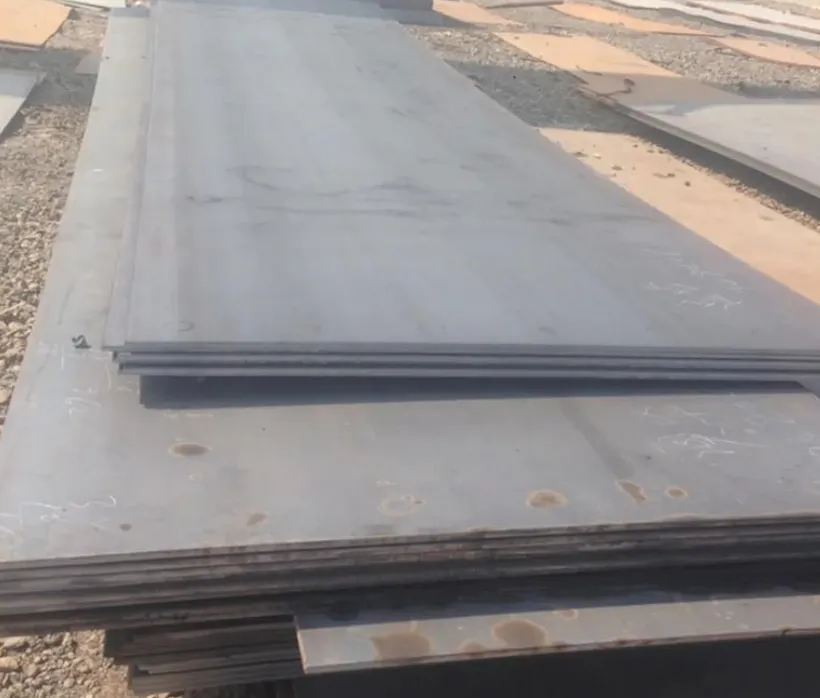
What is S35VN steel, and why does it still matter in 2026?
CPM S35VN is a martensitic stainless powder metallurgy steel developed as an evolution of CPM S30V. It was created through cooperation between Crucible Industries and Chris Reeve Knives, with the goal of improving toughness and ease of working without sacrificing the premium performance level that made S30V famous.
The “CPM” label means Crucible Particle Metallurgy. In simple terms, the alloy is atomized into fine powder, then consolidated under controlled conditions. This process produces a much finer and more uniform carbide distribution than conventional ingot metallurgy. That microstructural refinement is a big part of why S35VN behaves better than many older high alloy stainless steels in thin knife edges.
So why is it still relevant in 2026, when MagnaCut, Vanax, M390, 20CV, Elmax, and S45VN get so much attention?
We see five main reasons:
- Balance remains excellent
S35VN is not extreme in one direction and weak in another. It gives buyers a premium result without creating a maintenance burden or a brittle edge. - Heat treatment knowledge is mature
Many makers now know how to harden and temper S35VN well. That lowers variability and lowers risk. - Supply chain familiarity is strong
OEMs, custom makers, and procurement teams know what they are buying. That matters more than marketing buzz. - User acceptance is high
Consumers recognize S35VN as a premium steel. It has market trust. - It still performs very well in actual cutting
Real cutting results depend on geometry, heat treatment, grind quality, and edge finish. S35VN responds well in all of those areas.
In other words, S35VN is not a relic. It is a mature premium steel with a proven track record and a practical performance profile.
How was S35VN designed from S30V, and what changed metallurgically?
To understand S35VN, we need to start with S30V. CPM S30V became a major reference point in premium knife steels because it combined strong wear resistance, respectable corrosion resistance, and powder metallurgy refinement. Yet many makers wanted a little more toughness and somewhat better machinability. That need led to S35VN.
Why did the industry want an S30V successor?
S30V was and still is excellent, but users and manufacturers kept noticing a few realities:
- It could feel a bit stubborn in grinding and finishing.
- Thin edges could benefit from added toughness.
- Some makers wanted easier polishing and a slightly friendlier production workflow.
- End users wanted premium edge retention without a penalty in maintenance or brittleness.
S35VN steel addressed those concerns by adjusting the chemistry, most notably with the addition of niobium.
What did niobium change?
Niobium is important because it forms very hard carbides and influences carbide size and distribution. In S35VN, niobium helps refine the structure and supports toughness improvement relative to S30V. In practical knife use, that can translate into a lower tendency toward microchipping when the edge is thin and hard.
It is worth stating this carefully: S35VN is not a dramatic break from S30V. It is a refinement, not a revolution. That is exactly why it succeeded. The improvement is meaningful, yet the steel still preserves the broad premium character that users expected.
Did S35VN sacrifice edge retention?
In pure wear terms, some users report S30V and S35VN feeling very close, while others see S30V holding a slight advantage in abrasive media. In real knives, the gap is usually small. Geometry, hardness, and sharpening quality often overshadow the difference. What many users notice more clearly is that S35VN tends to feel tougher and a bit easier to work with.
That trade is attractive. A knife that chips less and sharpens a little easier can be the better tool, even if a chart suggests another grade has a small wear advantage.
What is the chemical composition of S35VN steel, and what does each element do?
The chemistry of S35VN explains why it occupies such a useful middle ground in premium stainless steels.
Typical chemical composition of CPM S35VN
| Element | Typical Content | Main Contribution |
|---|---|---|
| Carbon (C) | 1.38 to 1.40% | Supports hardness, carbide formation, wear resistance |
| Chromium (Cr) | 14.0% | Stainless behavior, corrosion resistance, hardenability |
| Vanadium (V) | 3.0% | Very hard carbides, wear resistance, grain refinement |
| Molybdenum (Mo) | 2.0% | Corrosion support, hardenability, high temperature strength |
| Niobium (Nb) | 0.5% | Carbide refinement, toughness improvement, wear contribution |
| Manganese (Mn) | 0.5% | Deoxidation, hardenability support |
| Silicon (Si) | 0.5% | Deoxidation, strength support |
| Iron (Fe) | Balance | Matrix base |
How should we interpret this chemistry?
A few points matter most.
Carbon
The carbon level is high enough to support strong hardness and carbide formation. That is one reason S35VN can deliver premium edge retention.
Chromium
At 14% chromium, S35VN qualifies as a stainless steel. Still, not all chromium stays “free” in the matrix because some of it gets tied up in carbides. That means S35VN resists corrosion very well in daily carry and kitchen use, yet it is not in the same corrosion class as the most saltwater oriented nitrogen steels.
Vanadium
Vanadium creates extremely hard carbides that improve wear resistance and slicing life. This is a major reason S35VN outperforms simpler stainless grades in edge holding.
Molybdenum
Molybdenum adds depth to the corrosion and hardenability package. It also improves resistance in certain chloride and acidic settings.
Niobium
This is the signature addition that separates S35VN from S30V. Niobium contributes hard carbides while helping refine the microstructure. That refinement supports toughness and practical manufacturing.
Why this chemistry works so well in knives
Knife steels need a careful compromise. If carbide volume gets too high and too coarse, the edge can become less stable and sharpening gets frustrating. If carbide content is too low, wear life drops. If chromium is too low, staining becomes a problem. S35VN lands in a very usable zone where each property is strong without pushing another property too far in the wrong direction.
That is why so many experienced users describe it with phrases like “balanced,” “safe premium choice,” or “hard to go wrong with.” Those summaries sound simple, yet they reflect real metallurgical logic.
How does powder metallurgy change the microstructure and real performance of S35VN?
Powder metallurgy is not a marketing term. It changes the steel at the microscopic level, and those changes show up in edge behavior, grindability, and consistency.
What happens in conventional ingot steels?
In conventional high alloy steels, slow solidification can lead to carbide segregation and coarse carbide networks. Those coarse structures may reduce toughness, complicate machining, and make very thin edges less stable.
What happens in CPM production?
In the CPM process, molten steel is atomized into fine droplets that solidify quickly into powder particles. Those particles are then consolidated into bar or billet. The rapid solidification limits segregation and produces a more uniform distribution of carbides.
Why does that matter in a knife edge?
A knife edge is tiny. What matters there is not just total carbide content but also carbide size, spacing, and distribution. A refined structure can support:
- Better edge stability at thin geometry.
- More consistent wear behavior.
- Lower risk of large carbide pullout.
- More predictable grinding and finishing.
- Better toughness compared with conventional steels of similar alloy level.
S35VN microstructure in practical terms
S35VN contains vanadium carbides, niobium carbides, chromium carbides, and a hardened martensitic matrix after proper heat treatment. The CPM route helps keep those carbides fine and evenly distributed. That is a big reason the steel can support both good slicing wear and respectable toughness.
We often remind buyers that “edge retention” is not one single thing. A rope cutting test, a cardboard test, and a wood carving session place different demands on the apex. Fine, stable carbides plus good hardness plus strong heat treatment often matter more than a simple spec sheet ranking.
Why do makers appreciate this structure?
Custom makers and OEM shops tend to appreciate steels that behave predictably in production. S35VN usually offers:
- Reasonably consistent grinding response.
- Good polish potential.
- Lower tendency toward ugly finish issues than some very high carbide grades.
- Reliable heat treatment results when the process is controlled.
That combination explains why it became a favorite not just with users, but also with manufacturers.
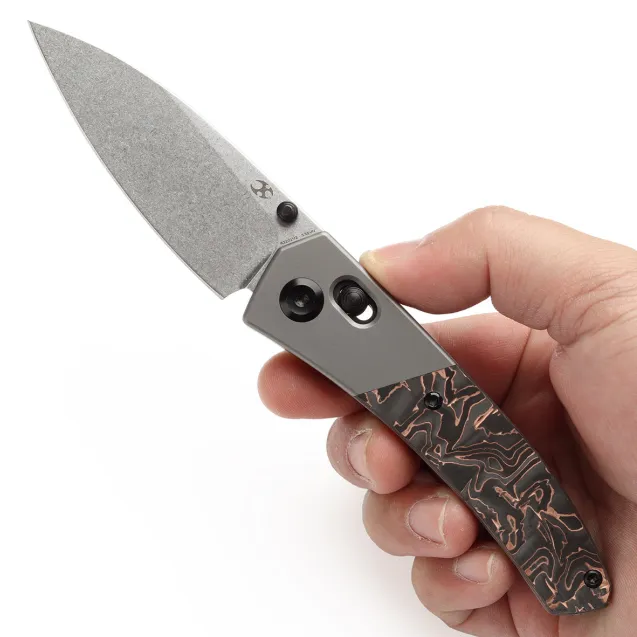
How good are S35VN edge retention, toughness, corrosion resistance, and hardness in actual use?
This is the section most readers really want. We can summarize S35VN this way: it is a premium stainless steel with strong real world edge retention, above average toughness in its class, and corrosion resistance that suits daily carry, outdoor use, and most food contact scenarios.
Typical performance profile of S35VN
| Property | Relative Level | Practical Comment |
|---|---|---|
| Edge retention | High | Excellent in cardboard, rope, general EDC cutting |
| Wear resistance | High | Strong abrasive cutting life, though not top tier versus extreme wear steels |
| Toughness | Medium to high | Better than many older premium stainless grades, notably helpful in thin edges |
| Corrosion resistance | High | Very good in pocket carry, humidity, food prep, light outdoor exposure |
| Sharpening ease | Medium | Easier than some ultra wear resistant steels, still likes diamond or CBN abrasives |
| Polish and finish response | Good | Better than many users expect from a high carbide stainless |
| Heat treat sensitivity | Moderate | Good results are common, but process discipline still matters |
How long does S35VN hold an edge?
In ordinary EDC tasks, S35VN usually holds an edge longer than mainstream steels such as 440C, AUS-8, 8Cr13MoV, or VG-10, assuming similar heat treatment and geometry. It is especially comfortable in abrasive media like cardboard and fibrous materials.
However, it is useful to separate two ideas:
- Abrasive wear resistance
- Apex stability
S35VN performs well in both, which is why users often perceive edge life as excellent. Some super wear steels may outlast it in certain abrasive tests, yet they may not always feel better in practical ownership because they can be harder to sharpen or less tolerant of edge abuse.
Is S35VN tough enough to resist chipping?
Yes, within its intended role. S35VN is tougher than many buyers expect from a premium stainless powder steel. It handles everyday cutting, wood work, utility slicing, and well designed fixed blade use very well. It is not a pry bar steel, and it is not in the same impact class as steels like CPM 3V or CruWear, but it is clearly more reassuring than brittle high wear stainless grades when the edge is thin.
Thin geometry, high hardness, coarse sharpening, and hard impact can still cause chipping. No premium steel is immune to poor use or poor heat treatment. Still, S35VN gives makers a useful safety margin.
How stainless is S35VN really?
S35VN has very good corrosion resistance. In normal EDC conditions, it is more than adequate. Sweat, humidity, occasional rain, food acids, and general pocket carry are well within its comfort zone when the blade is cleaned with reasonable care.
That said, we do not place S35VN in the top corrosion tier occupied by steels that were designed more specifically around wet and chloride rich environments. In marine use, salt spray, bait prep, or long term neglect, steels like MagnaCut, Vanax, LC200N, or H1 type solutions may offer extra reassurance.
Surface finish also matters. A smoother finish tends to resist staining better than a rougher one because contaminants have fewer places to settle.
What hardness range is ideal?
Most makers target roughly 59 to 61 HRC on finished S35VN knives. Some run slightly lower for added toughness, while others run slightly higher to chase wear resistance and crisp edge stability.
A realistic view looks like this:
| Hardness Range | Typical Result |
|---|---|
| 58 to 59 HRC | More forgiving edge, good toughness, still premium cutting |
| 59 to 60 HRC | Strong all around balance, very common target |
| 60 to 61 HRC | Excellent edge retention with sound toughness if heat treated well |
| 61 to 62 HRC | Possible in some protocols, better suited to makers with tight process control |
We generally like S35VN in the 60 HRC neighborhood for high quality EDC and many fixed blades. At that point, it usually delivers the kind of balance that made the steel successful in the first place.
How should S35VN be heat treated, machined, ground, and sharpened?
Heat treatment decides whether S35VN feels premium or merely expensive. A great steel with weak thermal processing can underperform a cheaper alloy that was handled properly.
What does a typical heat treatment route look like?
Exact recipes vary by equipment and target hardness, but many quality processes include:
- Austenitizing in the proper temperature window.
- Fast cooling or plate quench / vacuum quench practice.
- Optional cryogenic or subzero treatment to reduce retained austenite
- Double tempering.
Typical heat treatment targets for S35VN
| Process Variable | Common Range | Practical Effect |
|---|---|---|
| Austenitizing temperature | About 1900°F to 2050°F | Higher temperature can raise hardness and wear, but balance must be controlled |
| Cryogenic step | Optional to strongly recommended in premium work | Helps convert retained austenite and stabilize hardness |
| Temper cycles | Usually double temper | Improves toughness and final stability |
| Finished hardness | About 59 to 61 HRC | Most common premium target |
Small changes in temperature, soak time, quench method, and cryo practice can shift the final result. That is why one S35VN knife can feel superb while another feels merely average.
Is S35VN easy to machine?
It is easier to machine and finish than S30V in many shop experiences, yet it is still a high alloy PM stainless steel. Nobody should confuse it with a free machining steel. Tool wear remains significant, and process control matters.
Useful shop notes include:
- Fresh abrasive belts help a lot.
- Heat control during grinding matters.
- Aggressive overheating near the edge can degrade performance.
- Carbide aware tooling choices improve production yield.
- Surface finish quality affects both cosmetics and corrosion behavior.
Is forging common with S35VN?
Most S35VN knife production uses stock removal, not traditional forging. Because it is a high alloy PM stainless steel, the process window is tighter than with simpler carbon steels. Specialist makers can hot work it under controlled conditions, but mass reliability usually favors stock removal.
How hard is S35VN to sharpen?
S35VN is not “easy” in the same sense as 14C28N or AEB-L, but it is more manageable than ultra wear resistant stainless steels like S90V or some M390 examples. With diamond or CBN stones, sharpening is straightforward. With basic aluminum oxide stones, it will feel slower.
Best sharpening practices:
- Use diamond or CBN when possible.
- Keep burr size small.
- Do not overpolish if the knife is used mainly on cardboard or rope.
- Match edge angle to the task, not to internet bragging rights.
- Touch up before the edge gets very dull.
A coarse or medium toothy edge on S35VN often cuts aggressively and lasts well in utility work. A refined edge can perform beautifully too, but tooth may return better feedback in fibrous media.
How does S35VN compare with S30V, S45VN, MagnaCut, M390, Elmax, D2, and VG-10?
Comparisons are where confusion usually starts. Many online debates ignore geometry, heat treatment, and use case. We prefer a more grounded approach.
Comparative overview
| Steel | Edge Retention | Toughness | Corrosion Resistance | Sharpening Ease | Typical Takeaway |
|---|---|---|---|---|---|
| S35VN | High | Medium to high | High | Medium | Excellent all around premium stainless |
| S30V | High | Medium | High | Medium to medium low | Very close to S35VN, slightly older balance |
| S45VN | High | Medium to high | Very high | Medium | A refined step above S35VN in corrosion and balance |
| MagnaCut | High | High | Very high | Medium | Outstanding modern balance, especially in wet use |
| M390 / 20CV / 204P | Very high | Medium | Very high | Medium low | Strong wear and corrosion, less forgiving at the edge |
| Elmax | High to very high | Medium to high | High | Medium | Strong competitor, very capable all around |
| D2 | Medium to high | Medium | Medium low | Medium | Lower cost semi stainless workhorse |
| VG-10 | Medium | Medium | High | Medium high | Good mainstream stainless, lower wear than S35VN |
S35VN vs S30V
This is the classic comparison. We consider S35VN the more refined everyday choice. S30V remains excellent, but S35VN usually offers:
- Slightly better toughness.
- Slightly friendlier manufacturing response.
- Similar corrosion resistance.
- Similar real world edge retention, with differences often too small to matter.
If both knives are heat treated well, users may not see a dramatic gap. Still, if we had to specify one across a wide premium lineup, we would usually lean S35VN.
S35VN vs S45VN
S45VN built on the S35VN concept and added more chromium plus nitrogen to improve corrosion and overall balance. In many cases, S45VN is a modest but real upgrade.
Still, S35VN keeps advantages of its own:
- Broader legacy availability.
- Strong market recognition.
- Often lower cost.
- Very mature production experience.
If budget and supply are stable, S45VN can be the higher spec choice. If we want excellent premium performance with lower complexity and proven production reliability, S35VN remains highly attractive.
S35VN vs MagnaCut
MagnaCut changed the conversation because it delivered exceptional toughness and corrosion resistance without giving up premium edge retention. In a strict performance sense, MagnaCut often beats S35VN in wet environments and high toughness applications.
Yet S35VN still has reasons to stay in the conversation:
- Wider long term production familiarity.
- Established heat treat knowledge across many shops.
- Strong consumer trust.
- Often easier sourcing in existing channels.
If the knife will face heavy humidity, salt, or hard outdoor use, MagnaCut may be the better technical answer. If the goal is a premium stainless with lower adoption risk and very strong all around behavior, S35VN still makes sense.
S35VN vs M390, 20CV, and 204P
These steels sit in the high wear, high corrosion premium class. They often hold an edge longer in abrasive cutting than S35VN. In exchange, they tend to be less forgiving, more time consuming to sharpen, and less happy at very thin edges if toughness is the main concern.
We often frame it this way:
- Choose M390 class steels when maximum wear life and polish prestige matter a lot.
- Choose S35VN when practical balance and user friendliness matter more.
S35VN vs Elmax
This is a close and interesting matchup. Elmax is another PM stainless steel with strong all around credentials. Depending on heat treatment and geometry, the two can feel surprisingly close in use.
General pattern:
- Elmax may show a slight edge in wear in some settings.
- S35VN often feels very reassuring in balanced EDC geometry.
- Corrosion resistance is good on both.
- Final maker execution often matters more than the chemistry difference.
S35VN vs D2
This comparison matters because many buyers still jump from D2 into premium stainless steels. S35VN offers clear advantages:
- Better corrosion resistance.
- Finer carbide distribution.
- More premium finish and cutting feel.
- Better suitability in humid carry and food contact.
- Stronger customer perception at the premium tier.
D2 still wins on cost and remains useful, but it is not a direct peer.
S35VN vs VG-10
VG-10 is a solid stainless blade steel and remains popular in kitchen and outdoor knives. Yet S35VN sits at a higher performance level in wear resistance and long term edge holding. VG-10 is easier to sharpen and usually cheaper. That is the main trade.
If a buyer wants a premium jump in performance and brand positioning, S35VN is the more serious option.
Which applications suit S35VN best, and where does it make less sense?
S35VN is versatile, but it is not universal. Smart specification means matching the steel to the task.
Best fit applications
| Application | Suitability | Why it works well |
|---|---|---|
| EDC folding knives | Excellent | Great balance of edge life, stain resistance, manageable sharpening |
| Premium fixed blades | Very good | Reliable in general outdoor and utility use |
| High end production knives | Excellent | Mature heat treatment knowledge and strong market acceptance |
| Custom knives | Very good | Good polish, premium reputation, trustworthy performance |
| Kitchen knives | Very good | Stainless behavior and good edge life, though some chefs prefer easier sharpening steels |
| Utility cutting tools | Good to very good | Strong wear and corrosion package |
Where should buyers think twice?
S35VN may be less ideal in these cases:
- Extreme saltwater exposure
More corrosion specialized steels can reduce maintenance and warranty issues. - Heavy chopping or impact dominant tools
Toughness oriented non stainless steels may be a better fit. - Budget sensitive large volume projects
Simpler steels may deliver better commercial efficiency. - Users who sharpen with basic soft stones only
A simpler stainless may be easier to maintain.
Why EDC remains its home territory
Everyday carry is where S35VN shines brightest. Pocket knives see cardboard, rope, plastic, tape, food, wood shavings, and occasional neglect. They need to stay sharp, resist staining, avoid chipping, and still be serviceable on a home sharpening setup. S35VN hits that combination very well.
What should procurement teams and OEM buyers check before buying S35VN steel?
This is where many articles stop too early. Steel selection is not just chemistry. Buyers need repeatability, quality assurance, and a realistic cost structure.
At MWalloys, when we support procurement discussions around S35VN, we focus on the following points.
S35VN procurement checklist
| Item to Check | Why it Matters | What We Recommend |
|---|---|---|
| Mill certification | Confirms chemistry and origin | Request certs tied to lot numbers |
| Product form | Sheet, bar, plate, or finished blank affects cost and process | Match form to actual manufacturing route |
| Annealed condition | Influences machining and heat treat consistency | Confirm delivery condition in writing |
| Thickness tolerance | Impacts grinding yield and assembly fit | Define tolerance early |
| Flatness | Important in blade blank production | Inspect incoming material |
| Surface finish | Affects polishing time and cosmetic yield | Set finish expectations before order |
| Heat treatment target | Final hardness and toughness depend on it | Align steel supply with HT protocol |
| Cryogenic capability | Helps premium hardness control | Verify vendor or in house HT route |
| Traceability | Needed in premium OEM work | Maintain batch level records |
| Lead time and MOQ | Directly affects planning and pricing | Lock rolling forecasts when possible |
Why lot consistency matters
Two knives can both claim “S35VN” and still perform differently if hardness, austenitizing temperature, cryo practice, edge geometry, or final finishing differ. Buyers should not assume the alloy name guarantees identical results. The steel is only one part of the system.
What should brands ask heat treat vendors?
Useful questions include:
- What hardness window do you target on finished blades?
- Do you use cryogenic treatment?
- How do you control soak time and quench rate?
- What quality checks confirm hardness consistency?
- How do you minimize decarburization and edge overheating?
What commercial advantages does S35VN still offer?
Even in 2026, S35VN remains attractive because it sits at a stable point in the market. Buyers understand its pricing, many factories already know how to process it, and consumers recognize it instantly. That lowers education cost and helps product positioning.
What are the main limitations of S35VN that honest buyers should know?
An article that only praises a steel is not useful. S35VN is excellent, yet it has limits.
It is not the best in every single category
If a buyer wants the highest available corrosion resistance, S35VN is not the final answer. If they want maximum impact toughness, it is not the final answer there either. If they want the absolute longest abrasive edge life, several steels outrank it.
It can still chip if pushed too far
Thin geometry plus very high hardness plus hard use can still produce edge damage. Premium steel does not cancel bad use.
Sharpening still needs the right abrasives
Compared with basic stainless steels, S35VN takes more time and benefits strongly from diamond or CBN abrasives.
Heat treatment quality matters a lot
Poorly heat treated S35VN loses much of its appeal. This is one reason reputable makers get more from the steel than low control mass production.
These limits do not weaken the case for S35VN. They simply define where it belongs.
Is S35VN still worth the price in 2026?
Yes, if the buyer wants a premium stainless steel with a trustworthy and well proven balance. In many catalogs, S35VN sits in the sweet spot between mainstream steels and very expensive super steels that can be harder to process and harder to maintain.
We would put it this way:
- If price is the only priority, choose a lower cost steel.
- If maximum one metric performance is the priority, choose a more specialized steel.
- If the goal is premium all around utility with lower regret risk, S35VN remains one of the smartest choices on the market.
That is why it continues to show up in quality EDC knives, respected fixed blades, and serious OEM programs. It earns its place, not with hype, but with repeatable performance.
FAQs about S35VN Steel
CPM S35VN Steel: Technical FAQ
Toughness, Edge Retention, and Real-World Performance
1. Is S35VN better than S30V?
In most real knife applications, yes. We generally rate S35VN slightly higher because it tends to offer better toughness and a friendlier manufacturing response (thanks to the addition of Niobium) while keeping similar edge retention and corrosion resistance. The difference is real, though not huge—S35VN is effectively the "improved" version of the legendary S30V.
2. Does S35VN rust easily?
3. What hardness should a good S35VN knife have?
A common high-quality range for S35VN is 59 to 61 HRC. Many premium knives sit right at 60 HRC. This specific range usually provides the optimal balance between long-lasting edge retention and the toughness required to prevent chipping under stress.
4. Is S35VN hard to sharpen at home?
5. Is S35VN good in kitchen knives?
6. Is S35VN better than M390?
Not in every way. M390 usually offers higher wear resistance (it stays sharp longer) and very strong corrosion resistance. However, S35VN is often easier to sharpen and can feel more forgiving (tougher) in balanced everyday use. The "better" choice depends on whether you prioritize edge longevity (M390) or ease of maintenance and toughness (S35VN).
7. Is S35VN better than MagnaCut?
8. Is there a true equivalent to S35VN in DIN, JIS, or AISI grades?
9. Can S35VN chip?
10. Why do so many premium knife makers still use S35VN?
Final verdict: who should choose S35VN steel?
If we strip away marketing noise and focus on metallurgical logic plus actual ownership experience, S35VN remains one of the safest premium stainless choices available. We recommend it strongly to buyers who want:
- A premium EDC steel with very few weak points.
- Reliable corrosion resistance without sacrificing edge life.
- Better toughness than many older high wear stainless grades.
- Manageable sharpening with proper abrasives.
- A proven specification that customers already trust.
At MWalloys, we would not call S35VN the newest or the most extreme steel in 2026. We would call it something more valuable: one of the most complete and dependable premium stainless steels still in wide use. In engineering, procurement, and actual cutting, that matters a great deal.