

RA330 (UNS N08330 / W. Nr. 1.4886), commonly sold under trade names such as RA330® or Incoloy® 330, is a nickel-iron-chromium, austenitic, high-temperature alloy engineered for outstanding oxidation and carburization resistance and excellent thermal-shock stability up to roughly 2100°F (≈1148°C). For heat-treat, furnace, and petrochemical service where repeated thermal cycles, carburizing atmospheres and scale resistance are critical, RA330 provides a practical balance of high-temperature strength, fabricability and cost compared with higher-performance superalloys.
What is the RA330?
RA330 is a wrought, austenitic, nickel-containing heat-resistant alloy formulated to keep a stable austenitic microstructure at service temperatures and to resist both oxidation and carburization in furnace and process environments. Its relatively high nickel (≈34–37%) and chromium (≈18–20%) percentages, combined with silicon (nominal ~1.0–1.5%), give the alloy its characteristic resistance to scaling and carburization at elevated temperatures while preserving reasonable ductility for fabrication. For engineers: choose RA330 when you need robust high-temperature oxidation/carburization resistance and thermal-cycle toughness without paying for the creep-strength of higher-end nickel superalloys.
Chemical composition and microstructure
Below is a compact table that engineers use for specification and comparison. Values shown are typical limits/ranges frequently quoted on datasheets and specifications.
Chemical composition (weight %) — typical / limits
| Element | Typical / Specified range (wt%) |
|---|---|
| Nickel (Ni) | 34.0 – 37.0 |
| Chromium (Cr) | 17.0 – 20.0 |
| Silicon (Si) | ~0.75 – 1.50 (silicon is deliberate for scale/carburization resistance) |
| Manganese (Mn) | ≤ ~2.0 |
| Carbon (C) | ≤ 0.08 (max) |
| Copper (Cu) | ≤ ~1.0 (minor) |
| Phosphorus (P), Sulfur (S) | ≤ ~0.03 each (trace limits) |
| Iron (Fe) | Balance (rest) |
Microstructure: fully austenitic across the practical temperature range; engineered to avoid sigma-phase embrittlement in typical service cycles. Silicon helps form protective silica/oxide films that limit carburization and scale formation.
Mechanical & physical properties (typical, annealed / room temp)
| Property | Typical value (imperial / metric) |
|---|---|
| Density | ~0.292 lb/in³ (≈8.08 g/cm³) |
| Ultimate tensile strength (RT) | ~85 ksi (≈586 MPa) |
| 0.2% offset yield strength (RT) | ~39 ksi (≈269 MPa) |
| Elongation (in 2") | ~40–50% (good ductility) |
| Modulus of elasticity | ≈29 ×10^6 psi (≈200 GPa) typical for nickel-iron-chromium alloys |
| Hardness (Rockwell B) | ~70–85 typical (annealed) |
| Service temperature (oxidation/carburization) | to ~2100°F (≈1148°C) in many datasheets; for short periods or specific sets this may vary. |
Design note: RA330 is not a precipitation-hardenable alloy — strength adjustments come from cold work; high-temperature creep resistance is moderate vs. higher-cost superalloys. Use the product datasheet and vendor test curves for precise creep/rupture design data.
High-temperature behavior: oxidation, carburization and thermal shock
Oxidation and scale resistance
RA330 resists oxidation strongly because chromium and silicon promote a stable oxide scale. Many suppliers quote useful oxidation/carburization resistance up to about 2100°F/1148°C, with cyclic oxidation resistance being one of RA330’s strengths. This allows use in furnace retorts, heat-treat baskets and muffles where repeated cycling is routine.
Carburization resistance
Silicon (≈1.0–1.5%) and high nickel content reduce carbon uptake at the metal surface; RA330 often performs significantly better than plain 300-series stainless steels in carburizing atmospheres (further supported by vendor lab work and case studies).
Thermal shock
RA330 was designed with thermal-shock toughness in mind — it tolerates rapid quenching and repeated heating/cooling cycles better than many stainless grades used for heat-treat fixtures. Rolled Alloys and other suppliers emphasize RA330’s resistance to quench cracking compared with some alternatives.
Limitations
Although oxidation/carburization resistance is excellent, RA330 lacks the creep strength of specialized nickel superalloys (e.g., Inconel 600/625/718 families). For sustained high-stress conditions at temperatures above ~1000°C, consider alloys specified for creep resistance and consult vendor creep/rupture data.
Comparison with popular heat-resisting grades
Why compare? Engineers commonly weigh RA330 against 309/310 stainless steels and Incoloy 800/Alloy 800 family alloys for furnace and process hardware.
Summary comparison table
| Property / grade | RA330 (N08330) | 309 / 310 SS | Alloy 800 / 800H |
|---|---|---|---|
| Ni content | ~34–37% — high | ~12–25% (much lower) | ~30–45% (varies) |
| Si content | ~0.75–1.5% (deliberate) | typically lower | lower |
| Oxidation/Carburization limit | ~2100°F (1148°C) — usually quoted | ~2000°F (1095°C) typical | similar to RA330 in some temp ranges |
| Thermal shock | Excellent (designed for quenching cycles) | Good, but inferior to RA330 in carburizing cycles | Good |
| Fabricability | Good weldability with similar filler; work hardens | Good | Good but may need different procedures |
| Typical use cases | Heat treat baskets, muffles, furnace hardware | Furnace parts, combustion liners | Heat exchangers, petrochemical high-temp hardware |
Rolled Alloys’ own comparative literature emphasizes that RA330 outperforms 309/310 in high-temperature oxidation and carburization because of the higher nickel and silicon content; this is a commonly cited vendor conclusion and is confirmed by datasheet comparison material.
Fabrication: forming, welding, machining and heat treatment
Forming & cold working
RA330 is workable via common industrial forming methods. It work hardens more rapidly than plain carbon steels and some stainless grades; therefore, generous bend radii and intermediate anneals (when large reductions are required) improve outcome.
Welding and filler metal
Welding is commonly performed with filler metals formulated to match RA330 (vendors offer RA330-compatible filler wires/rods). Preheat is generally not required and low interpass temperatures are recommended to avoid heat-affected zone issues. Rapid cooling is sometimes beneficial to avoid certain cracking modes—follow the filler vendor’s welding procedures and test welds for constrained joints.
Machining
Machining RA330 is moderate to challenging — it work hardens and tends to produce stringy chips. Use rigid tooling, positive rake cutters, high feed rates and slow speeds where practical; consider stress-relief annealing if extensive cold work occurs. Vendor machining guides are helpful for optimal parameters.
Heat treatment
RA330 is a solid-solution (austenitic) alloy not hardened by heat treatment; annealing cycles (for recrystallization / softening) may be used where necessary (consult supplier datasheet for temp ranges — many specify anneal/solution cycles up to near 2100°F for full anneal).
Typical applications and selection criteria
Representative uses
-
Heat-treat baskets, retorts, muffles and fixtures.
-
Furnace and kiln components exposed to carburizing/oxidizing atmospheres.
-
Petrochemical components where cyclic high temperatures and oxidation are present.
-
Components requiring repeated thermal shock resistance and low scale formation.
Selection cues for engineers
-
Use RA330 when oxidation/carburization resistance and thermal-cycling toughness matter more than maximum creep strength.
-
For continuous high-stress, long-time service at the top of the temperature range, request vendor creep/rupture data; consider higher-grade nickel superalloys if creep life is critical.
Corrosion behaviour and environmental limits
RA330 resists oxidation and carburization strongly. However, its performance in sulfur-bearing atmospheres, molten salts, chlorides, or acidic environments is more conditional: nickel helps with many environments but sulfurous gases and some aggressive salts will reduce expected life. Independent studies and field reports show good performance in flue-gas and furnace atmospheres where oxide films remain intact; always specify lab or field-test data for lifecycle estimates in aggressive chemistries.
Inspection, testing and common failure modes
NDT & inspection
-
Visual and dimensional checks for scale and distortion.
-
Dye-penetrant for surface cracking; eddy current or ultrasonic for subsurface discontinuities where applicable.
-
Metallurgical cross-sections to check carburization depth in carburizing service.
Common failure modes
-
Carburization/decoking in extreme carburizing service (depth depends on time/temp).
-
High-temperature creep under sustained load (use creep data for design).
-
Welding-related cracking if poor procedure used; follow recommended filler and cooling practices.
Procurement, specifications and equivalent designations
Common specifications / designations
-
UNS N08330 — common unified number for Alloy 330/RA330.
-
W. Nr. 1.4886 — European number often paired with Incoloy/Alloy 330.
-
AMS/ASTM listings — AMS 5592 / AMS 5716 and several ASTM forms (B511, B512, B535, B536 etc.) are often referenced for plate, sheet and bar forms. Always request the supplier’s specific spec compliance on your PO.
Purchasing tips
-
Ask for material test certificates (MTC) showing chemical and mechanical results.
-
For high-temp applications, request vendor oxidation/carburization or creep test data that matches your time-temperature cycle.
-
When a critical welded assembly is required, ask for weld procedure qualification records and post-weld NDT.
Lifecycle, cost considerations and design tips for engineers
Cost vs. performance
RA330 usually sits between 300-series stainless steels and true nickel superalloys in cost. For many furnace and heat-treat applications, its lifecycle cost is attractive because it reduces downtime and replacement frequency due to carburization/scale.
Design tips
-
Minimize areas of stress concentration where carburization might reduce cross-section.
-
If carburizing depth is a concern, consider protective coatings or periodic inspection intervals.
-
For welded assemblies that will see heavy thermal cycling, design joints to minimize constraints; prefer full-penetration welds and test prototype assemblies.
FAQs
-
What is RA330 (is it the same as Alloy 330 / Incoloy 330)?
Yes — RA330 is a trade name frequently used for what standards list as Alloy 330 or Incoloy® 330 (UNS N08330 / 1.4886). -
What maximum temperature can RA330 handle?
Datasheets commonly specify useful oxidation/carburization resistance to about 2100°F (1148°C); application limits depend on stress, atmosphere, and cycle type. -
Is RA330 weldable and what filler is recommended?
RA330 is weldable with matching filler wires specified for RA330; follow supplier-recommended procedures and control interpass temperatures. Preheat is often unnecessary but check constrained joint practices. -
How does RA330 differ from 309/310 stainless steels?
RA330 has significantly higher nickel and a purposeful silicon content, giving better carburization and oxidation resistance and typically higher useful temperature limits than 309/310 in carburizing cycles. -
Can RA330 be used for continuous high-stress service at 1000°C?
For sustained high-stress/creep conditions at very high temperatures, check vendor creep/rupture data; sometimes higher-alloy superalloys are a better choice. RA330 is optimized for oxidation/carburization and thermal cycling rather than maximum creep life. -
Does RA330 resist carburization completely?
No alloy resists carburization indefinitely, but RA330 resists it much better than many stainless grades; depth and rate depend on temperature, carbon potential, and exposure time. Employ tests or coatings for long term severe service. -
Is RA330 magnetic?
RA330 is essentially austenitic and therefore generally non-magnetic in the annealed condition, though cold work or welding can induce slight magnetic response. -
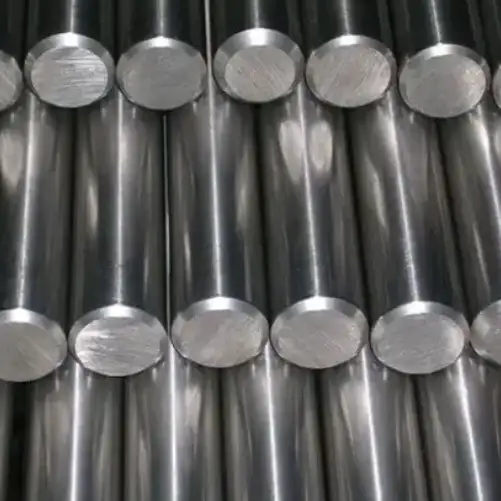
What forms are commonly available?
Plate, sheet, bar, rod, wire, and fabricated items — check AMS/ASTM spec numbers for permitted forms (e.g., ASTM B511/B536 for some forms). -
What inspection should be performed before installation?
MTC verification (chemistry & mechanical), dimensional check, weld PQR/PQR reviews, and appropriate NDT (DPI/UT/eddy current) based on application. -
Where should I get RA330 technical data and authoritative support?
Primary sources are manufacturer datasheets (Rolled Alloys, Special Metals), MatWeb/AZO, and standards (AMS/ASTM). Always request the supplier’s datasheet and test reports for your lot.