
PPGI steel coil delivers stable color appearance and long corrosion protection only when the RAL shade, surface finish, paint chemistry (PE, SMP, HDP, PVDF), coating film thickness, metallic substrate (GI or Al Zn), and verification tests (T bend, adhesion, MEK rub, salt spray, humidity, gloss, color delta) match the real service climate; procurement results improve sharply when every item is written into the purchase order with measurable tolerances, traceable coil IDs, and a clear acceptance protocol.
What is PPGI steel coil, and what is the difference versus PPGL, GI, and Galvalume?
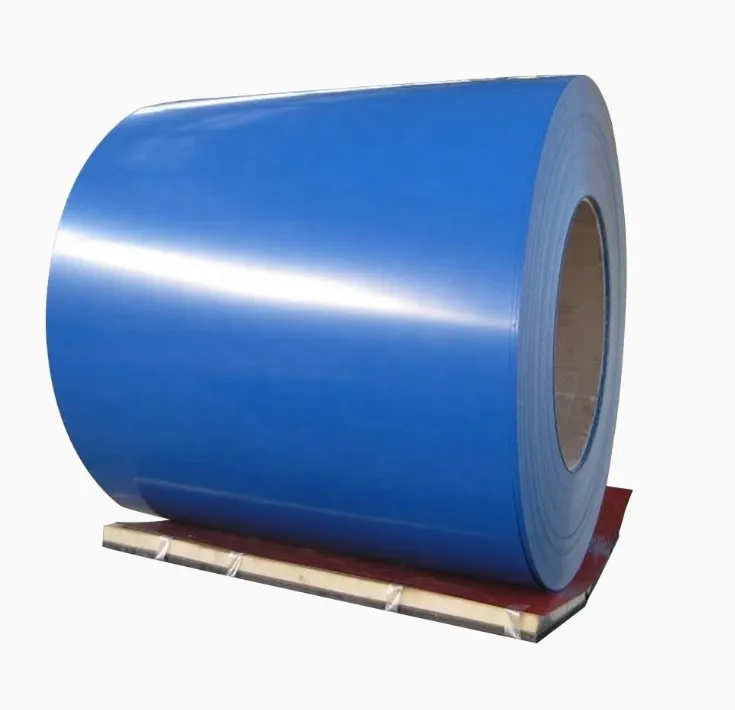
PPGI means Pre Painted Galvanized Iron, also called prepainted galvanized steel coil or color coated galvanized coil. The core is a cold rolled steel strip. It receives a zinc coating via hot dip galvanizing, then goes through a continuous coil coating line where primer and topcoat are baked.
Key related terms buyers search:
- GI: hot dip galvanized steel, metallic zinc coating, no paint.
- PPGI: GI plus paint system.
- Galvalume: Al Zn alloy coating (commonly 55 percent Al, 43.4 percent Zn, 1.6 percent Si).
- PPGL: prepainted Galvalume, meaning Al Zn alloy plus paint.
When PPGI is preferred
PPGI is a strong choice when the project needs:
- Specific RAL shades or corporate colors.
- Decorative finish with corrosion protection.
- Fast fabrication via roll forming, stamping, bending.
- Controlled total cost versus post painting at site.
When PPGL is preferred
PPGL is frequently selected when:
- Very strong cut edge protection is needed in harsh outdoor exposure.
- Heat reflectivity and thermal stability matter.
- Long service life is demanded in coastal or industrial zones.
Substrate selection summary (GI versus Al Zn)
The substrate drives corrosion behavior at scratches, cut edges, and fastener holes. Zinc provides sacrificial protection. Al Zn alloy provides excellent barrier behavior and slower corrosion rate in many outdoor atmospheres.
Table 1. Common substrate options used in prepainted coils
| Substrate | Typical designation | Coating mass examples | Strength note | Typical usage |
|---|---|---|---|---|
| Hot dip galvanized | Z100 to Z275 (EN), G30 to G90 (ASTM) | 100 to 275 g/m² total both sides | Broad range, easy forming | Roofing, wall panels, purlin covers, doors |
| Al Zn alloy | AZ70 to AZ150 (EN), AZM150 (ASTM) | 70 to 150 g/m² total | Good heat resistance | Long life roofing, industrial cladding |
| Electro galvanized | ZE | Lower coating mass | Very smooth surface | Appliances, indoor panels |
Which RAL colors and surface finishes do buyers specify most often?
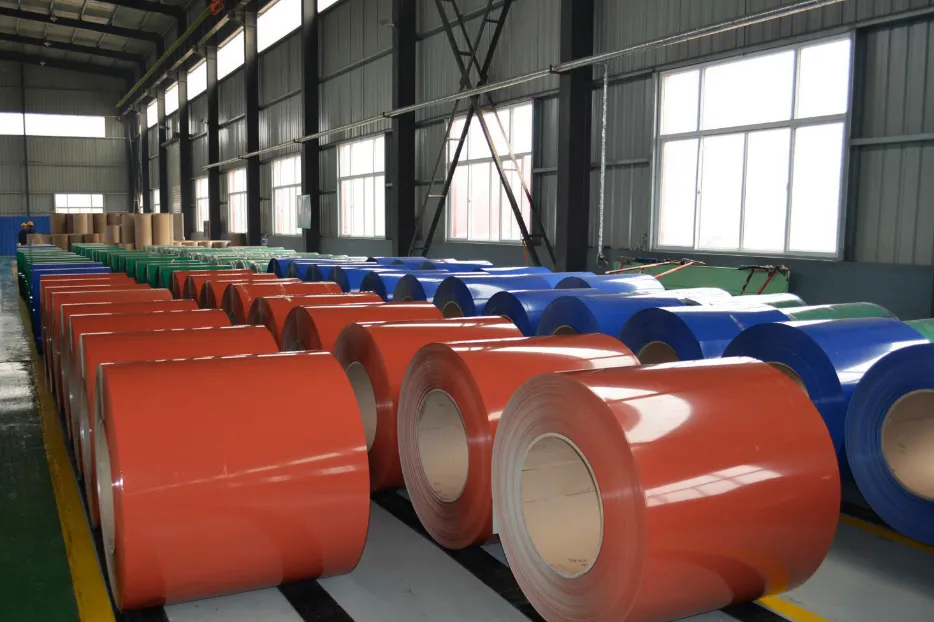
Color requests tend to cluster around architectural whites, greys, blues, reds, and greens. RAL Classic is the most common reference system in international trade because it reduces color ambiguity across regions.
RAL color selection in real projects
Buyers usually choose by:
- Local building trends (roof color norms)
- Heat management (lighter shades reduce heat gain)
- Brand identity (corporate facade standards)
- Dirt hiding (mid greys hide dust better than bright whites)
Table 2. High frequency RAL colors used in PPGI procurement
| Color family | RAL code | Common name shorthand | Typical application notes |
|---|---|---|---|
| White | RAL 9003 | Signal White | Clean appearance, shows dirt, popular in sandwich panels |
| White | RAL 9010 | Pure White | Warm white tone, common in residential roofing |
| Grey | RAL 7035 | Light Grey | Balanced dirt tolerance, industrial roofs |
| Grey | RAL 7004 | Signal Grey | Neutral grey, wall cladding |
| Grey | RAL 7016 | Anthracite Grey | Premium modern facade tone, high demand |
| Black | RAL 9005 | Jet Black | Strong contrast, heat build up consideration |
| Blue | RAL 5010 | Gentian Blue | Warehouses, identity color on trims |
| Blue | RAL 5012 | Light Blue | Clean look, commonly used in factory roofs |
| Red | RAL 3009 | Oxide Red | Traditional roof tone, hides stains well |
| Red | RAL 3011 | Brown Red | Agricultural and industrial buildings |
| Green | RAL 6005 | Moss Green | Rural buildings, noise barriers |
| Brown | RAL 8017 | Chocolate Brown | Residential roofs and gutters |
Surface finish types: glossy, matte, wrinkled texture
Finish impacts appearance, scratch visibility, and perceived quality.
Glossy
- Typical 25 to 70 gloss units at 60 degree angle
- Strong color saturation
- Fingerprints and small scratches show more easily on dark colors.
Matte
- Typical 5 to 25 gloss units
- Modern facade look
- Slightly more forgiving on surface marks
Wrinkled or textured
- Embossed look, sometimes called wrinkle, crinkle, textured.
- Helps hide handling marks and minor roll forming lines.
- Often paired with SMP or HDP systems in building panels.
Table 3. Finish selection matrix
| Finish | Visual character | Maintenance | Typical pairing with paint system | Frequent usage |
|---|---|---|---|---|
| High gloss | Bright, reflective | Dirt visible | PE, PVDF | Appliances, interior panels, trims |
| Medium gloss | Balanced | Moderate | PE, SMP, HDP | Roofing and wall cladding |
| Matte | Low reflection | Good | SMP, HDP, PVDF matte | Modern architecture, premium roofing |
| Wrinkled texture | Patterned, rugged | Very good | SMP, HDP | Roofing, high traffic handling chains |
How do PE, SMP, HDP, and PVDF coatings differ in durability and fade resistance?
Buyers often focus on price per ton, yet real ownership cost comes from color retention, chalk resistance, corrosion resistance, and maintenance cycles. Paint chemistry matters more than a small difference in coating thickness.
The four mainstream coating chemistries
PE (Polyester)
- Most common in general construction.
- Cost effective
- Adequate outdoor performance in mild to moderate climates.
SMP (Silicone Modified Polyester)
- Better UV stability than basic PE
- Improved hardness and scratch resistance
- Widely used in metal building markets
HDP (High Durability Polyester)
- Enhanced resin design, better UV and chalk performance.
- Strong choice when PVDF is not required yet long service life is needed.
- Often used in Europe and premium industrial projects.
PVDF (Polyvinylidene Fluoride), often 70 percent PVDF resin
- Strongest long term color retention in mainstream coil coatings.
- Excellent UV stability and chemical resistance.
- Higher material cost, typically selected in harsh sunlight, coastal air, or high value facades.
Climate mapping: what actually damages coatings
Key stressors:
- UV intensity (high altitude, low latitude)
- Salt aerosols (coastal wind)
- Industrial fallout (SOx, NOx, chemical mist)
- Humidity cycles (condensation)
- Temperature swings (thermal expansion)
Table 4. Expected color and chalk performance by coating type in typical exposure classes
| Exposure class | Typical locations | PE | SMP | HDP | PVDF |
|---|---|---|---|---|---|
| Mild | inland temperate, low pollution | 5 to 10 years stable appearance | 8 to 12 years | 10 to 15 years | 15 to 20+ years |
| High UV | deserts, tropics, high altitude | 3 to 7 years | 6 to 10 years | 8 to 15 years | 15 to 25+ years |
| Coastal | marine salt, frequent wind | 3 to 8 years (needs strong substrate and passivation) | 6 to 10 years | 8 to 15 years | 15 to 25+ years |
| Industrial | chemical plants, heavy pollution | 3 to 7 years | 5 to 10 years | 8 to 12 years | 12 to 20+ years |
Notes:
- Numbers reflect appearance stability expectations under typical project maintenance, not corrosion perforation.
- Film build, primer quality, substrate (Z versus AZ), and edge sealing details shift results significantly.
Service life comparison table focused on corrosion protection
Corrosion resistance is not only paint chemistry; it is paint plus primer plus metallic coating mass plus pretreatment quality.
Table 5. Typical durability ranking, paint system plus good pretreatment and correct film thickness
| System | Typical topcoat thickness | Strengths | Limitations | Recommended usage |
|---|---|---|---|---|
| PE | 15 to 20 μm | Cost control, broad color range | Earlier fade in high UV, chalking risk | General roofing, indoor panels |
| SMP | 20 to 25 μm | Better UV, harder film | Less flexible than PE at tight bends | Roofing sheets, trims |
| HDP | 20 to 25 μm | Strong balance of UV, flexibility, value | Brand formulation varies, verify tests | Long life cladding, industrial roofs |
| PVDF | 25 to 30 μm | Best color retention, chemical resistance | Higher cost, limited extreme texture options | Coastal facades, landmark projects |
What layer structure and physical parameters define a reliable PPGI coil?
Engineering users frequently ask what they should measure, not only what the supplier claims. A typical prepainted coil is a multi layer composite.
Typical layer stack
- Steel base (cold rolled)
- Metallic coating (zinc or Al Zn)
- Chemical pretreatment (chromate or chromium free)
- Primer (corrosion resistance, adhesion)
- Topcoat (color, UV resistance)
- Back coat (service coat, often lighter layer)
Table 6. Layer structure and common thickness ranges
| Component | Typical material | Typical thickness |
|---|---|---|
| Steel base | DX51D, S280GD, S350GD, or ASTM A653 grades | 0.20 to 1.20 mm |
| Metallic coating | Zinc Z, or Al Zn AZ | Z100 to Z275, AZ70 to AZ150 |
| Pretreatment | conversion coating | very thin, not usually stated in μm on PO |
| Primer | epoxy or PU modified | 5 to 8 μm |
| Topcoat | PE, SMP, HDP, PVDF | 15 to 30 μm |
| Back coat | PE or epoxy | 5 to 12 μm |
Mechanical properties that matter in fabrication
Projects involving roll forming, stamping, deep drawing, or tight hems need consistent mechanical properties.
Important parameters:
- Yield strength and tensile strength
- Elongation
- Coil set and flatness
- Surface roughness (impacts paint appearance)
- Paint flexibility (T bend)
- Impact resistance
Table 7. Common steel grades and practical implications
| Standard family | Typical grade | Yield strength range | Fabrication notes |
|---|---|---|---|
| EN | DX51D | low | High formability, common in roofing |
| EN | S280GD | medium | Good balance of strength and forming |
| EN | S350GD | higher | Stronger panels, tighter control needed |
| ASTM | A653 SS Grade 33 to 50 | low to medium | Widely traded in global markets |
| JIS | SGCC, SGCH | low to higher | Common in Asia supply chains |
Which RAL color tolerances and appearance criteria should be written into the contract?
Color disputes are common in international coil trade. The solution is measurable acceptance criteria.
Color difference metrics: Delta E
Most professional buyers use a spectrophotometer with CIE Lab space.
Typical acceptance windows:
- ΔE ≤ 1.0: high end architectural work
- ΔE ≤ 1.5: standard building envelope
- ΔE ≤ 2.0: less visible parts, trims, internal liners
Also specify:
- Measurement geometry (45/0 or d/8)
- Light source (D65 common)
- Observation angle (10 degree often used)
- Gloss measurement (60 degree)
Metamerism and batch to batch continuity
Two coils may match under factory light yet differ under sunlight due to pigment response. A strong control plan includes:
- Standardized pigments and resin.
- Same coating line and cure schedule.
- Master sample retained per batch.
- Coil ID traceability to paint lot and primer lot.
Table 8. Appearance control items used in strict procurement
| Item | Typical method | Acceptance concept |
|---|---|---|
| Color | spectrophotometer | ΔE threshold by project class |
| Gloss | ASTM D523 or ISO 2813 | gloss unit range at 60 degree |
| DOI (distinctness of image) | instrument DOI | minimum DOI on glossy facade panels |
| Texture uniformity | visual plus tactile | no patchiness, no roller marks |
| Film thickness | magnetic gauge | within specified μm range |
Which standards and tests verify coating durability and quality?
Search results in the top positions commonly mention EN 10169 and ASTM A755, yet many pages omit practical test targets and how buyers should interpret reports. This section fills those gaps.
Core international standards
- EN 10169: continuously organic coated steel flat products, technical delivery conditions.
- ASTM A755/A755M: steel sheet, metallic coated by hot dip process and prepainted by coil coating.
- JIS G3312: prepainted hot dip zinc coated steel sheet and strip.
- ISO 9227: salt spray testing.
- ISO 2813 / ASTM D523: gloss.
- ASTM D3359: crosshatch adhesion.
- ASTM D2794: impact resistance.
- ASTM D4752: MEK rub (solvent resistance, cure check).
- ISO 2409: cross cut adhesion (similar intent to ASTM D3359).
- ISO 105 series: color fastness assessment tools (grey scale references often used in practice).
The most decision relevant lab tests
Salt spray (neutral)
- Indicates coating system integrity and pretreatment quality.
- Helps compare primers and edge creep tendency.
- Must be interpreted carefully, since real outdoor corrosion differs.
Humidity resistance
- Reveals blistering risk under condensation cycles.
Adhesion
- Crosshatch plus tape pull, then rating.
- Adhesion loss predicts peeling during roll forming.
MEK rub
- Indicates cure level and crosslink density.
- Under cured paint tends to early chalking and poor solvent resistance.
Impact
- Simulates hail or handling hits.
- Helps predict micro cracking that later drives corrosion.
Table 9. Test suite and what each test tells a buyer
| Test | Typical standard | What it verifies | Common reporting units |
|---|---|---|---|
| Salt spray | ISO 9227 | corrosion resistance, creep | hours plus creep mm |
| Humidity | ASTM D2247 | blistering, adhesion loss | hours plus blister rating |
| Crosshatch adhesion | ASTM D3359 | bond strength | 0B to 5B |
| T bend | EN 13523 series | flexibility and crack risk | 0T to 4T rating |
| MEK rub | ASTM D4752 | cure, solvent resistance | double rub count |
| Impact | ASTM D2794 | toughness | inch lb or J |
| Gloss | ASTM D523 | appearance control | gloss units |
| Film thickness | ISO 2808 methods | coating build | μm |
How does the T bend test help judge coil coating quality?
T bend is widely used in coil coating because it simulates severe forming. Buyers often hear “2T” or “3T” without knowing what it means.
What T bend means
- A coated strip is bent over itself around a radius related to thickness T.
- 0T means folded fully onto itself.
- 1T, 2T, 3T introduce spacers equal to one, two, three times thickness.
Lower T rating indicates better flexibility.
Why T bend links to field performance
Micro cracks created during tight bends become:
- Initiation points where moisture enters.
- Pathways leading to corrosion creep from edges.
- Visible paint checking on roofing ribs or hemmed edges.
How to specify T bend requirements by application
- Roofing roll forming: 2T or better is often requested.
- Flashing and tight hems: 1T or 0T may be required with suitable paint.
- Appliance panels: tight forming, strong emphasis on flexibility plus hardness balance.
Table 10. Suggested T bend targets by end use
| End use | Forming severity | Suggested T bend requirement |
|---|---|---|
| Standard trapezoidal roofing sheet | moderate | 2T pass, no cracking visible under tape test |
| Standing seam panels | moderate to high | 1T to 2T depending on seam design |
| Ridge cap and flashing | high | 1T preferred |
| Door skins | moderate | 2T common |
| Appliance housings | high | 0T to 1T depending on design |
Practical note: a supplier can quote 0T capability, yet the real result depends on curing, primer, pigment load, and metallic coating surface. Buyers should request test coupons from the same production batch.
What specifications should a buyer write on the purchase order to avoid disputes?
Wholesale buyers, EPC contractors, and distributors benefit from a structured PO format. Missing items usually lead to claims related to color, thickness, oil canning, or corrosion.
The minimum set of technical clauses
- Standard reference (EN 10169, ASTM A755, JIS G3312)
- Substrate type (GI or Al Zn)
- Metallic coating mass (Z or AZ value)
- Steel grade and mechanical properties
- Base metal thickness and tolerance
- Paint system (PE, SMP, HDP, PVDF)
- Coating thickness, top and back
- Color reference (RAL code) plus ΔE tolerance
- Finish (gloss level, matte, textured)
- Pretreatment type (chromium free if required)
- Inspection and test plan, sampling rules
- Packaging requirements
- Coil weight range and ID/OD compatibility
- Application direction and side marking (top side)
- Claim window and documentation set
Table 11. Purchase order checklist used in disciplined procurement
| Category | Item | Typical options |
|---|---|---|
| Dimensions | thickness | 0.25 to 1.0 mm common in building |
| Dimensions | width | 600 to 1250 mm common, slit widths per profile |
| Coil geometry | ID | 508 mm or 610 mm |
| Coil geometry | coil weight | 3 to 8 tons typical, per handling limits |
| Substrate | type | GI or Al Zn |
| Substrate | coating mass | Z120, Z180, Z275, AZ100, AZ150 |
| Paint | chemistry | PE, SMP, HDP, PVDF |
| Paint | film build | top 15 to 30 μm, back 5 to 12 μm |
| Appearance | color | RAL 9003 etc plus ΔE |
| Appearance | finish | glossy, matte, textured |
| Quality | tests | T bend, adhesion, MEK, thickness |
| Logistics | packaging | seaworthy export pack, VCI, edge protectors |
Tolerances that should not be left vague
Thickness tolerance impacts weight and structural performance. Width tolerance impacts roll forming.
Typical tolerance references come from the chosen standard plus buyer supplement.
Table 12. Typical commercial tolerances (illustrative, confirm with chosen standard)
| Item | Common tolerance band |
|---|---|
| Thickness | ±0.02 to ±0.05 mm depending on thickness range |
| Width | ±1.0 to ±3.0 mm depending on width |
| Camber | limited per meter length |
| Flatness | per standard, plus buyer limit on oil canning risk |
| Paint thickness | ±3 to ±5 μm on topcoat typical |
How long will a PPGI coil last outdoors, and what changes first: fading, chalking, or rust?
A frequent buyer question is “lifetime.” In practice, three timelines exist:
- Appearance life: time until noticeable fade or chalk.
- Protection life: time until corrosion becomes visible.
- Structural life: time until metal loss affects integrity.
Appearance changes usually arrive earlier than corrosion perforation.
What changes first in high UV zones
- Gloss reduction.
- Slight chalking.
- Color shift, especially in bright reds and blues.
What changes first in coastal zones
- Edge creep at cuts or scratches.
- Corrosion at fasteners, laps, and water traps.
- Blistering if pretreatment is weak.
A practical lifespan comparison table buyers can use
Table 13. Relative lifespan outlook by environment, using typical building panel installation
| Environment | PE system | HDP system | PVDF system |
|---|---|---|---|
| Inland mild | appearance 5 to 10 yrs, corrosion control 10 to 20 yrs | appearance 10 to 15 yrs, corrosion control 15 to 25 yrs | appearance 15 to 25+ yrs, corrosion control 20 to 30+ yrs |
| High UV | appearance 3 to 7 yrs | appearance 8 to 15 yrs | appearance 15 to 25+ yrs |
| Coastal | appearance 3 to 8 yrs, corrosion risk at edges | appearance 8 to 15 yrs, better chalk control | appearance 15 to 25+ yrs, best color stability |
| Industrial | appearance 3 to 7 yrs | appearance 8 to 12 yrs | appearance 12 to 20+ yrs |
These ranges assume correct design details: sealed cut edges where needed, correct fasteners, correct slope, drainage, and periodic washing.
What quality documentation should a serious supplier provide (EEAT aligned expectations)?
EEAT in industrial procurement translates into traceability, competence, and clear accountability. Buyers increasingly request documentation packages similar to those used in automotive supply chains.
Recommended document pack per coil lot
- Mill test certificate on base steel.
- Metallic coating report (Z or AZ mass).
- Paint batch certificate, including resin system statement.
- Coating thickness map or statistical report.
- Color report with ΔE readings against master.
- Gloss report
- T bend and adhesion results.
- Salt spray and humidity test evidence (type test or periodic audit tests).
- Packing list with coil IDs, net weight, gross weight.
- Photographic record of packing, loading, container sealing.
At MWalloys, internal controls typically link coil ID to paint lot, primer lot, and line parameters, which supports root cause analysis if a claim appears.
How wholesale buyers should evaluate price, MOQ, and total landed cost
Wholesale sourcing decisions rarely depend on ex works coil price only. Total landed cost includes yield loss, risk cost, warranty exposure, and project delay.
Cost drivers that change quotations
- Resin chemistry (PVDF premium).
- Film thickness (higher μm increases paint consumption).
- Metallic coating mass (Z275 costs more than Z120).
- Substrate (Al Zn may price above GI).
- Color complexity (bright reds, special pigments, metallic effect).
- Finish (textured rollers, matte additives).
- Order volume and width mix (slitting yield).
- Testing requirements (extra sampling and lab time).
- Incoterms, freight rates, insurance, port charges.
- Trade duties and local compliance requirements.
Typical wholesale order structure
- MOQ per color and per specification often starts at one coil, yet cost improves with full container loads.
- Mixed colors in one container may be possible, subject to production planning.
Table 14. Commercial terms checklist that reduces purchasing risk
| Item | What to define | Why it matters |
|---|---|---|
| Incoterms | EXW, FOB, CFR, CIF, DDP | risk transfer point and insurance |
| Payment | T T, L C, DP | cash flow and claim leverage |
| Lead time | production plus shipping | project schedule stability |
| Quantity tolerance | e.g. ±5 percent | coil weight variation management |
| Claim period | e.g. 30 to 90 days after arrival | ensures timely inspection |
| Warranty scope | appearance, corrosion, chalking | aligns expectation to environment |
How to package, ship, handle, and store prepainted coils to prevent damage
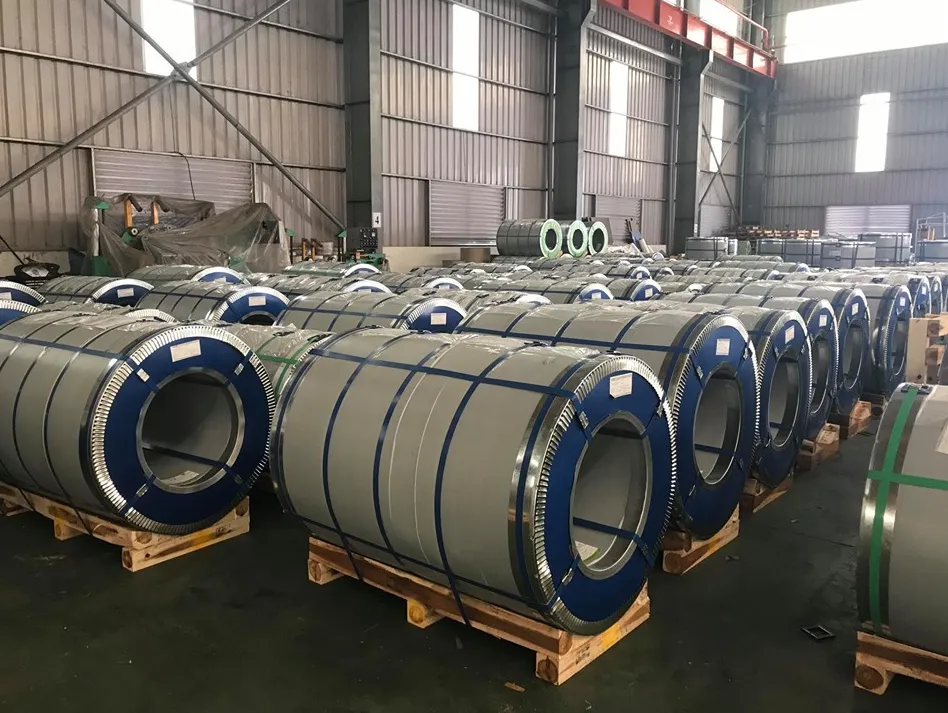
Even top coating systems fail visually if packing is weak or storage is poor. Common transit defects include rub marks, edge dents, and white rust on unpainted edges.
Export packing essentials
- Inner wrap plus outer wrap, moisture barrier.
- Desiccant and humidity indicator.
- Edge protectors and radial protectors.
- Strong skid with forklift entry.
- Coil eye orientation specified (eye to sky, eye to wall).
- VCI where needed on unpainted surfaces.
Table 15. Handling risks and prevention
| Risk | Typical symptom | Prevention method |
|---|---|---|
| Coil edge damage | dents, paint cracking at edge | steel edge protectors, careful strapping |
| Transit rubbing | scuffing, gloss variation | tight packing, anti abrasion paper |
| Condensation | water marks, corrosion at edges | desiccant, sealed wrap, avoid temperature shock |
| Storage humidity | white rust on metallic edges | indoor storage, air circulation, avoid ground contact |
| Wrong lifting | coil collapse, telescoping | correct C hook, coil car, trained operators |
Storage rules at site
- Keep coils indoors on level supports.
- Avoid direct sunlight heating under plastic wrap.
- Use FIFO to limit long storage.
- If moisture is suspected, unwrap and dry quickly.
What are the most common applications, and how should specifications change by use case?
Roofing and wall cladding
Priority: UV stability, corrosion resistance, consistent forming.
Common spec pattern:
- 0.35 to 0.60 mm base metal.
- GI Z180 to Z275 or Al Zn AZ100 to AZ150.
- SMP, HDP, or PVDF depending on climate.
- Topcoat 20 to 25 μm minimum in many outdoor projects.
- Matte or medium gloss, textured optional.
Sandwich panels (PU, PIR, rock wool)
Priority: adhesion, foam compatibility, color consistency across production runs.
Additional notes:
- Back coat compatibility with foam adhesive matters.
- Color continuity matters since panels join visually across large walls.
Appliances and interior panels
Priority: surface smoothness, hardness, stain resistance, tight forming.
Common spec pattern:
- thinner steel, smooth substrate.
- PE or specialized appliance coatings.
- high gloss, strict ΔE control.
Rainwater systems and trims
Priority: bend performance, cut edge resistance, scratch control.
Common spec pattern:
- 1T or 2T requirement.
- slightly thicker topcoat helps on long gutters.
How MWalloys approaches consistent quality in PPGI coil supply
MWalloys focuses on repeatability, which is what procurement teams value most once projects scale. Consistency usually comes from three practices:
- Specification discipline: every offer includes substrate, coating mass, paint chemistry, film thickness, gloss range, color tolerance, and test plan.
- Traceability: coil IDs mapped to production records, paint lots, and QC checkpoints.
- Pre shipment verification: thickness checks, coating thickness checks, adhesion and T bend sampling, plus packing photo evidence when requested.
This structure supports distributors, fabricators, and project owners that need predictable performance rather than one time samples that look good.
FAQs
PPGI Steel Coils: 10/10 Technical & Procurement FAQ
1. What does PPGI stand for in steel coils?
PPGI refers to pre-painted galvanized steel coil. The steel strip is zinc-coated, then primed and painted on a continuous coil coating line with heat curing.
2. Is RAL 9003 the same white in every factory?
3. Which coating is better, PVDF or HDP?
PVDF offers the strongest long-term color retention and chalk resistance. HDP (High Durability Polyester) delivers excellent durability at lower cost for moderate climates.
4. What is a typical paint thickness on PPGI coil?
Standard Build:
- Primer: 5 to 8 microns (μm)
- Topcoat: 15 to 30 microns (μm)
- Backcoat: 5 to 12 microns (μm)
5. What does Z275 mean on galvanized steel used in PPGI?
6. How can I judge PPGI coil quality quickly during inspection?
Fast checks include: base metal thickness, coating thickness, color Delta E, gloss, visual defects, and adhesion crosshatch or simple bend checks.
7. What is the T-bend test and what rating should I request?
T-bend measures coating flexibility. Lower numbers mean better flexibility. Most roofing profiles work at 2T, while complex trims may need 1T or 0T.