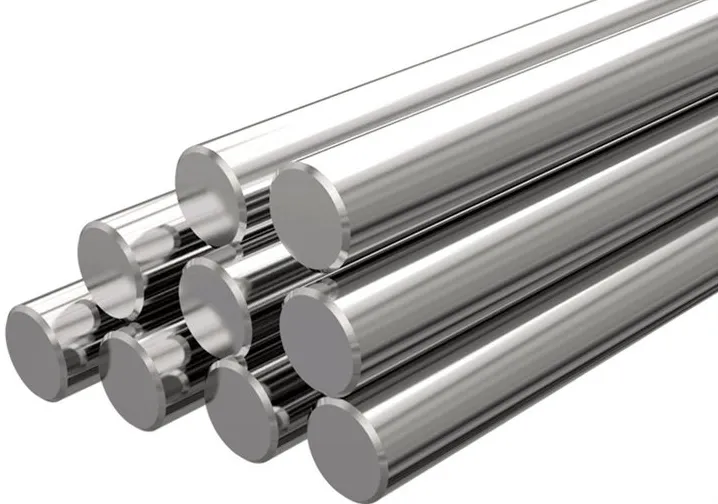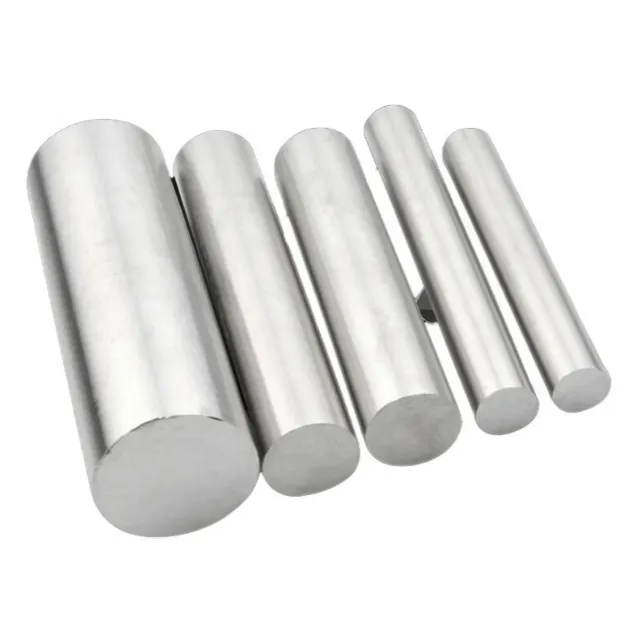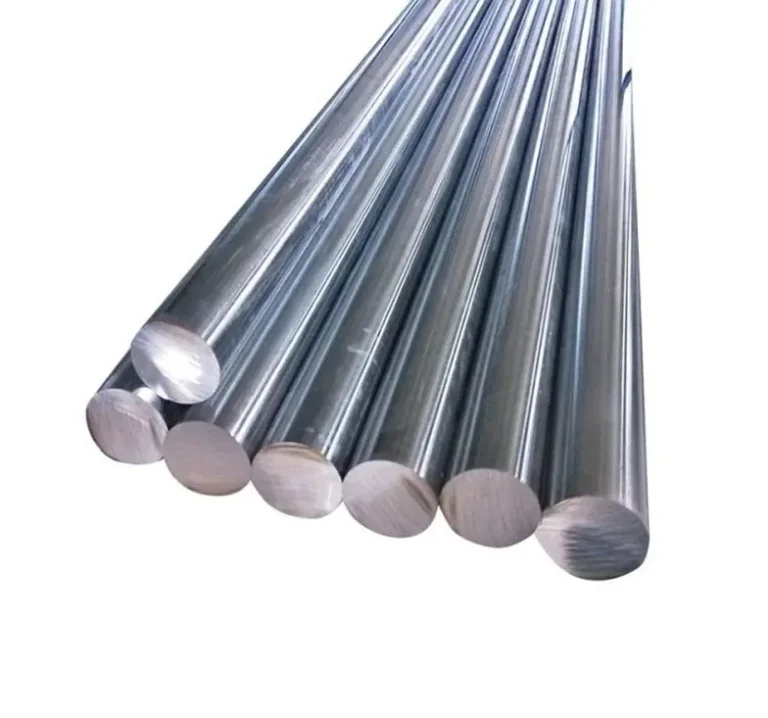

P20 round bar is one of the safest selections when a mold needs dependable machinability, stable dimensions, and ready to use hardness without the distortion risk tied to full hardening, and that practical balance explains why AISI P20 (DIN 1.2311 and related variants) remains a default plastic mold steel in procurement lists worldwide. In day to day production, a properly produced P20 pre-hardened bar typically arrives near 28 HRC to 34 HRC, supports common surface enhancement processes (nitriding, hard chrome, PVD), and delivers consistent performance in injection mold cores, cavities, and mold bases, provided that the grade variant, cleanliness level, and size capability match the project.
If your project requires the use of P20 Round Bars, you can contact us for a free quote.
What is P20 round bar and why do mold builders specify it so often?
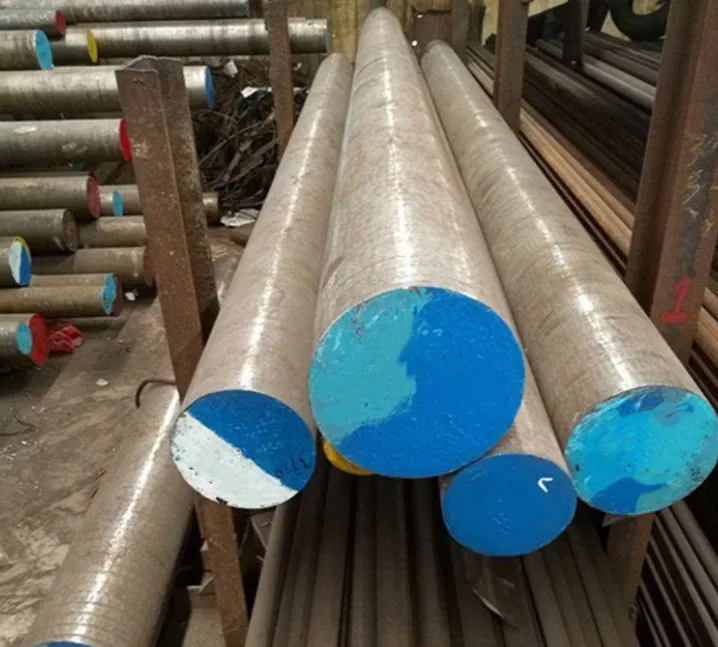
P20 steel is a chromium molybdenum alloyed mold steel supplied in a pre-hardened condition. The “round bar” form matters in several ways:
- Stock removal and machining economics: Round bars suit turned components, ejector sleeves, bushings, support pillars, leader pins, core pins (when diameter allows), and cylindrical inserts. Many mold shops keep round bar inventory to shorten lead time.
- Uniformity through section: Reliable P20 supply emphasizes homogeneous hardness through the radius, which reduces surprises during roughing and semi finishing.
- Lower risk than through hardening tool steels: Since P20 arrives pre-hardened, the mold maker often avoids post machining quench and temper cycles that can introduce warpage, cracking, or size movement.
P20 occupies a practical middle ground: tougher and more polish friendly than many low alloy steels at similar hardness, yet easier to cut than high alloy hot work steels.
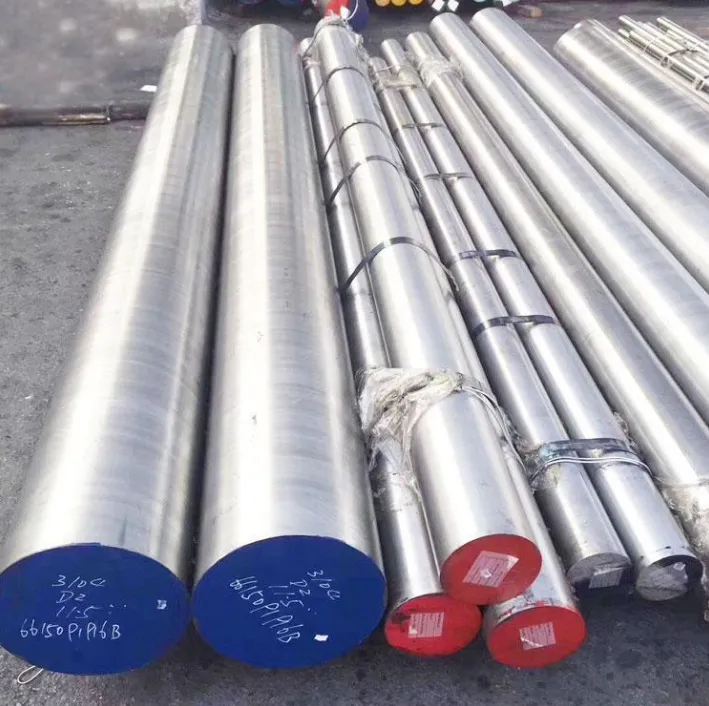
Which grades and standards correspond to “P20” in the market?
“P20” appears on purchase orders, while mills may certify to national or proprietary equivalents. The most common mappings are:
- AISI P20 (general designation in North America and global trade)
- DIN 1.2311 (widely used in Europe and Asia)
- DIN 1.2738 (a modified P20 type with nickel addition, often sold under names like “P20+Ni” or “718”)
- JIS SCM4x family references sometimes appear in legacy documents, though direct equivalence needs caution.
The key point: two bars sold as “P20” can differ in chemistry window, hardenability, sulfur level, cleanliness, and delivery hardness. A purchasing decision should specify the standard (example: DIN 1.2311), delivery condition (pre-hardened), hardness range, and inspection requirements.
Table 1. Common P20 family variants used in molds (practical view)
| Market name seen on PO | Typical standard label | Notable feature | Typical use case |
|---|---|---|---|
| P20 | AISI P20 / DIN 1.2311 | Balanced alloy design, broad availability | General injection molds, mold bases |
| P20 modified | Mill specific | Adjusted chemistry, improved polish or toughness | Cosmetic parts, textured cavities |
| P20+Ni / 718 / 1.2738 | DIN 1.2738 | Nickel improves through hardness in thicker blocks | Large molds, deep cavities |
| P20+S | Mill specific | Sulfur boosts machinability, may reduce mirror polish | High machining volume, non optical finish |
What chemistry makes P20 behave like a mold steel rather than a generic alloy steel?
P20 uses moderate carbon and chromium molybdenum alloying to reach useful hardness in the pre-hardened state while keeping machinability acceptable. Exact ranges depend on standard and mill practice. Buyers should request the mill test certificate (MTC) and confirm heat number traceability.
Table 2. Typical chemical composition ranges (reference ranges, verify per certificate)
| Grade reference | C % | Si % | Mn % | Cr % | Mo % | Ni % | Notes |
|---|---|---|---|---|---|---|---|
| DIN 1.2311 (P20 type) | 0.35 to 0.45 | 0.20 to 0.40 | 1.30 to 1.60 | 1.80 to 2.10 | 0.15 to 0.25 | typically low | Classic P20 chemistry |
| DIN 1.2738 (P20+Ni type) | 0.35 to 0.45 | 0.20 to 0.40 | 1.30 to 1.60 | 1.80 to 2.10 | 0.15 to 0.25 | 0.90 to 1.20 | Better hardenability in larger sections |
| P20+S (machining grade) | similar to above | similar | similar | similar | similar | varies | sulfur added, finish limits exist |
How chemistry links to performance:
- Carbon sets hardness potential and temper response.
- Chromium and molybdenum improve hardenability and temper resistance.
- Nickel (in 1.2738 type) improves toughness and supports uniform hardness through thicker diameters.
- Sulfur improves chip breakage and tool life in roughing, yet can reduce the ceiling on mirror polishing.
What mechanical and physical properties should engineers expect from P20 round bar?
Pre-hardened P20 arrives ready to machine into mold components with minimal additional heat treatment. Properties depend on hardness, section size, and steel cleanliness.
Table 3. Typical mechanical property ranges at pre-hardened condition (illustrative)
| Property | Typical range (pre-hardened) | Notes on variability |
|---|---|---|
| Hardness | 28 HRC to 34 HRC | Some supply targets 30 HRC to 32 HRC |
| Tensile strength | 900 MPa to 1100 MPa | Rises with hardness |
| Yield strength | 700 MPa to 900 MPa | Depends on temper condition |
| Elongation | 10% to 16% | Cleaner steel improves ductility |
| Impact toughness | moderate | Nickel variants tend to improve toughness |
Table 4. Physical properties used in mold design
| Property | Typical value | Why it matters |
|---|---|---|
| Density | ~7.8 g/cm³ | Weight and handling calculations |
| Elastic modulus | ~205 GPa | Deflection and clamp load analysis |
| Thermal conductivity | ~25 to 35 W/m·K | Cooling efficiency, cycle time |
| Coefficient of thermal expansion | ~11 to 13 µm/m·K | Fit, shutoff stability, thermal growth |
| Specific heat | ~460 J/kg·K | Thermal response during cycling |
Thermal conductivity and heat checking resistance do not match premium hot work steels, yet P20 usually satisfies plastic injection molds running moderate temperatures and typical resin loads.
How does “pre-hardened” delivery change manufacturing decisions?
Pre-hardened stock shifts work from heat treat shops to machine shops:
- Less size movement risk: Quench cracking and distortion risks drop drastically when the mold builder avoids through hardening after machining.
- Faster mold build schedules: Rough, semi finish, finish can proceed without waiting on hardening cycles.
- Predictable cutting data: Tooling selection stabilizes once the shop understands hardness and sulfur level.
Tradeoff: extreme wear resistance requires surface engineering or a different base steel (example: H13, S7, or high alloy stainless mold steels).
What heat treatment options exist if the project needs more hardness?
Many teams use P20 in the supplied condition. Still, some projects need higher hardness at the surface or slightly higher core hardness. Options include:
- Stress relieving after heavy rough machining
- Re-hardening and tempering (possible, though not always preferred)
- Case hardening routes like nitriding or carbonitriding
- Coatings that raise surface hardness without bulk changes
Table 5. Practical thermal processing routes (typical shop practice)
| Process | Goal | Typical temperature band | Risk points to manage |
|---|---|---|---|
| Stress relief | Reduce residual stress after roughing | ~550°C to 650°C | Cooling rate control to reduce movement |
| Re-hardening then temper | Increase core hardness | Austenitize near 840°C to 870°C, oil quench, then temper | Distortion, cracking, hardness gradients |
| Gas nitriding / plasma nitriding | Raise surface wear resistance | ~480°C to 550°C | White layer control, mask critical fits |
| Hard chrome plating | Improve wear and release | Plating process dependent | Adhesion, edge build up |
| PVD coating (TiN, CrN, DLC variants) | Improve wear and galling | Low temperature process | Surface prep quality critical |
Important engineering note: if polishing to a high gloss is required, nitriding and plating need process planning. Some textures respond differently after nitriding.
What machining behavior should shops expect with P20 round bar?
Machinability is a main reason P20 stays popular. Still, results vary by hardness, inclusion control, and sulfur addition. Practical notes from mold manufacturing floors:
- Chip control: P20+S cuts with shorter chips. Standard P20 can produce stringy chips in certain operations.
- Tooling: Carbide performs well in roughing and semi finishing. Coated carbide improves life. High speed steel remains viable in tapping depending on hole depth and lubrication.
- Heat management: Cutting heat influences surface integrity, particularly in finishing passes.
Table 6. Machining considerations that influence cost and finish
| Operation | Common challenge | Practical mitigation |
|---|---|---|
| Turning | Built up edge during finishing | Sharp inserts, appropriate surface speed, coolant control |
| Milling | Edge chipping on interrupted cuts | Tougher carbide grades, stable toolholders |
| Deep hole drilling | Drift and poor surface | Gun drilling with proper coolant pressure, pilot control |
| Tapping | Tap breakage in blind holes | Thread forming taps where suitable, correct lubricant |
| Grinding | Burn and microcracks | Dress wheels often, light passes, coolant volume |
A supplier that controls hardness uniformity and provides ultrasonic tested stock reduces costly rework in cavity areas.
What happens during EDM, polishing, and texturing of P20?
These are the processes that separate “usable steel” from “good mold steel.”
EDM behavior
P20 generally EDMs well. Still, EDM recast layer and heat affected zone can reduce fatigue life or promote cracks at sharp corners.
Recommended practice:
- Remove the white layer by stoning or light grinding.
- Apply stress relief after heavy EDM on critical inserts.
- Avoid sharp internal corners, use radii in electrode design.
Polishing and surface quality
Polishability depends on inclusion content and sulfur additions. Standard P20 supports good gloss on many consumer parts. Ultra mirror finishes used in optical lenses typically require premium remelted steels or high purity stainless mold steels.
Texturing response
P20 takes chemical etching textures well, yet texture uniformity depends on microstructure consistency. Large diameter bars benefit from controlled hardenability and good cleanliness.
Table 7. Surface finish capability by P20 variant (typical expectations)
| Steel type | General polish | High gloss cosmetic | Photo etch texture | Notes |
|---|---|---|---|---|
| Standard P20 / 1.2311 | good | medium to good | good | common selection |
| P20+Ni / 1.2738 | good | medium to good | good | large section uniformity advantage |
| P20+S | medium | limited | medium to good | sulfur influences mirror finish ceiling |
Which surface treatments raise wear resistance and mold life?
P20 typically runs well in moderate production volumes. When resin contains glass fiber, mineral fillers, or aggressive additives, surface engineering becomes attractive.
Options:
- Nitriding: Provides hard diffusion layer, improves wear and reduces galling.
- Hard chrome plating: Improves release, reduces corrosion tendency in certain environments.
- Electroless nickel: Uniform coating, useful on complex shapes.
- PVD coatings: Thin, hard layers that reduce adhesive wear.
Selection depends on part resin, temperature, venting, and cleaning chemicals. Mold maintenance routines matter more than many teams expect.
Table 8. Quick selection table for common mold conditions
| Mold condition | Common symptom | Typical surface enhancement |
|---|---|---|
| Glass filled nylon | Abrasive wear at gates and runners | Nitriding or PVD coating |
| Sticky resins (TPU, TPE) | Poor release | Hard chrome or electroless nickel |
| High cycle production | Gradual wear of shutoffs | Nitriding plus careful fit design |
| Corrosive PVC environment | Rusting and pitting | Consider stainless mold steel, or plating with strict maintenance |
Note: P20 is not stainless. If corrosion drives the failure mode, a stainless mold steel (example: 1.2083 family) often wins on total cost.
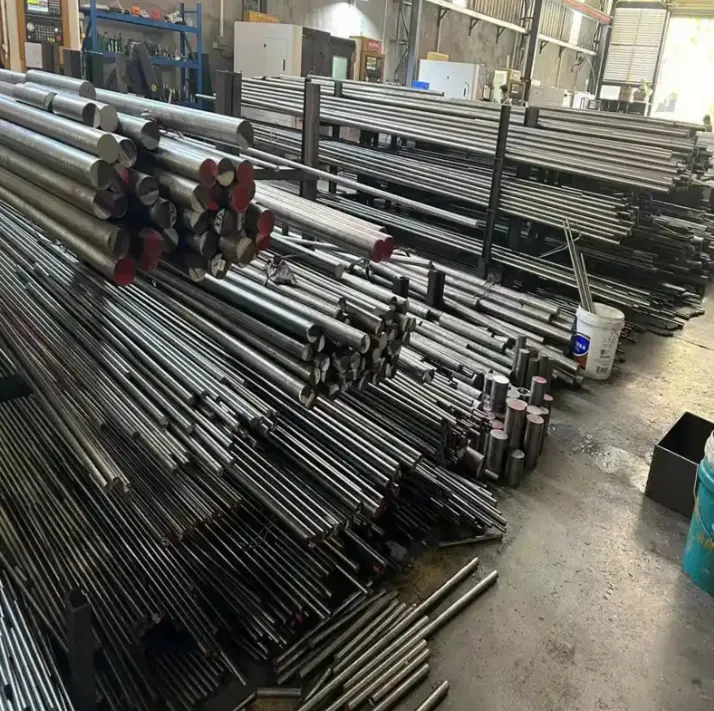
Where is P20 round bar used in real mold builds?
Round bar stock shows up in both mold bases and replaceable inserts.
Common applications:
- Core pins and cylindrical cores (diameter dependent)
- Sprue bushings and locating components
- Support pillars and wear sleeves
- Mold base elements where pre-hardened material reduces build time
- Medium complexity cavities where a block would be wasteful
Table 9. Application fit matrix (engineering view)
| Component | P20 suitability | Reasoning |
|---|---|---|
| Mold base plates | high | stable, economical, machinable |
| Core and cavity inserts | high in many cases | good balance of toughness and finish |
| Slides and lifters | medium | may need nitriding or wear plates |
| Hot runner components | low | thermal demands require other alloys |
| High wear gate inserts | medium | surface treatment or alternative steel often chosen |
How does P20 compare with 4140, H13, S7, and stainless mold steels?
Procurement teams frequently shortlist P20 beside 4140 due to similar machining behavior and price points, yet they differ in intent and typical delivery.
| Steel | Typical delivery | Strengths | Limits | Typical selection trigger |
|---|---|---|---|---|
| P20 / 1.2311 | pre-hardened | mold focused balance, polish and texture friendly | not corrosion resistant, wear moderate | general plastic molds |
| P20+Ni / 1.2738 | pre-hardened | better through hardness in large sections | cost higher than 1.2311 | large molds, thick inserts |
| 4140 (42CrMo4) | Q&T or annealed | widely available, good strength | polish and texture consistency less mold oriented | fixtures, base components, non cosmetic tooling |
| H13 (1.2344) | annealed then heat treat | hot strength, thermal fatigue resistance | harder to machine, heat treat required | die casting, high temperature plastics |
| S7 | annealed then heat treat | impact toughness | machining and heat treat steps | shock loaded tooling |
| 420 stainless mold steel (1.2083) | annealed then harden | corrosion resistance, high polish potential | heat treat required, cost | corrosive resins, optical finish |
Engineering shortcut: if the mold needs rapid build, moderate wear resistance, and decent finish, P20 fits. If corrosion or extreme wear dominates, choose a steel designed around that failure mode.
What “specs” should appear on a P20 round bar purchase order?
A vague PO causes mismatch risk. A complete specification should cover:
- Grade and standard: AISI P20, DIN 1.2311, DIN 1.2738, or an approved equivalent
- Delivery condition: pre-hardened and tempered
- Hardness range: example 28 HRC to 34 HRC, with target band if needed
- Diameter and length: include cut length tolerance
- Straightness requirement: important on long bars
- Surface condition: peeled, turned, ground, or black
- Internal quality: ultrasonic testing level, inclusion rating if required
- Certification: MTC with heat number, process route, and test results
- Decarburization limits: if grinding allowance is tight
- Special requirements: vacuum degassed, ESR, or improved polish grades
Table 11. Round bar form options and why they matter
| Bar condition | What it means | Typical benefit | Typical tradeoff |
|---|---|---|---|
| Hot rolled black | mill scale remains | lowest cost | scale removal needed, surface defects risk |
| Turned or peeled | scale removed by machining | better surface, improved straightness | cost increase |
| Ground | precision diameter and finish | tight tolerances, less stock removal | higher cost, grinding burn risk in poor practice |
| Centerless ground | high diameter accuracy | fit parts and sleeves | limited to certain diameters |
Table 12. Typical tolerances buyers request (confirm per supplier capability)
| Item | Common requirement | Where it matters |
|---|---|---|
| Diameter tolerance | h9 or better on ground stock | sleeves, bushings, guide components |
| Straightness | project dependent | long ejector sleeves, support pillars |
| Length tolerance | saw cut tolerance defined | inventory control, machining planning |
| Surface roughness | specified on ground bars | parts needing minimal finish machining |
Which quality control checks reduce risk on arrival?
Incoming inspection prevents costly downstream scrap. A robust plan checks both paperwork and material reality.
Table 13. Quality checks that matter in P20 procurement
| Check | Method | Why it matters |
|---|---|---|
| Hardness verification | portable hardness tester | confirms pre-hardened band |
| Chemistry | review MTC, optional PMI | prevents grade substitution |
| Ultrasonic testing | UT report per level | reduces internal defect risk |
| Macro etch / structure | sample check when critical | checks segregation and cleanliness |
| Surface inspection | visual plus dye penetrant if needed | catches laps, seams, cracking |
| Dimensional | micrometer, straightedge | reduces machining surprises |
If the mold will carry a cosmetic finish, consider a supplier offering “improved polish” practice, often linked to better steel cleanliness and controlled processing.
What design details help P20 perform better in service?
A steel choice rarely fixes a weak design. P20 benefits from thoughtful mold engineering:
- Cooling design: good thermal paths lower cycle time and reduce local hot spots that can damage surfaces.
- Radii at corners: sharp corners amplify EDM stress and service cracking.
- Venting: poor venting drives burn marks and cleaning abuse, accelerating wear.
- Gate insert strategy: isolate wear zones with replaceable inserts, optionally upgraded material.
- Surface finish strategy: decide early on texture, gloss, and coating route since that changes machining allowance and polishing sequence.
What should buyers know about lead time, traceability, and total cost?
Material price is only one line item. Total cost depends on:
- Availability in the required diameter: common sizes ship quickly, uncommon diameters require mill rolling schedules.
- Cutting services: precision cut to length reduces shop labor.
- Testing package: UT, hardness mapping, and additional documentation add cost but reduce risk.
- Supplier consistency: a stable supply chain reduces qualification repetition.
MWalloys typically supports mold builders by combining round bar stock programs with traceable certification, optional ultrasonic testing, and cut to length services so the machine shop receives material that matches process planning.
How should P20 round bar be stored, handled, and prepared before machining?
Good handling prevents hidden defects:
- Store off the floor, protect from moisture, keep heat numbers visible.
- Use lifting straps that do not gouge the surface.
- Remove scale or decarb zone when tight tolerances exist.
- After rough machining, consider stress relieving if heavy stock removal occurred or if flatness matters.
What are the most common questions engineers and procurement teams ask?
AISI P20 Mold Steel: 10/10 Technical FAQ
1. What hardness does P20 pre-hardened round bar usually have?
2. Can P20 be heat treated to higher hardness?
Yes, re-hardening and tempering can raise core hardness, but this significantly increases the risk of distortion or cracking. Instead of bulk heat treatment, most mold teams select nitriding or PVD coatings to harden the surface while keeping the pre-hardened core stable and tough.
3. Is P20 suitable for mirror polishing?
Standard P20 supports a good cosmetic polish for most consumer-grade plastic parts. However, high-end "optical mirror" finishes often require higher purity, vacuum-degassed steels. Be aware that sulfurized P20 grades (designed for better machinability) will reduce the mirror polishing potential.
4. What is the difference between DIN 1.2311 and DIN 1.2738?
DIN 1.2738 (P20+Ni) includes approx. 1% Nickel, which improves hardenability and toughness. This ensures more uniform hardness from the surface to the center in large mold blocks. DIN 1.2311 is the classic baseline P20, suitable for smaller to medium-sized molds where deep hardenability is less critical.
5. Is P20 stainless or corrosion resistant?
6. Can P20 be welded during mold repair?
Yes, with the correct professional procedure: mandatory preheat, controlled interpass temperature, and compatible filler wire. Post-weld stress relief is highly recommended to prevent "ghost lines" appearing after polishing or graining in the repaired area.
7. Does P20 work well with EDM?
Yes, it EDMs predictably. However, heavy EDM creates a brittle "white layer" (recast layer). Removal of this layer via stoning or polishing, followed by a low-temperature stress relief, is critical to improve tool life and reduce the risk of surface cracks.
8. What surface treatment best improves wear on P20 molds?
9. How does P20 compare with 4140 in mold applications?
10. What documents should arrive with a P20 round bar shipment?
- Mill Test Certificate (MTC): Full chemistry and heat traceability.
- Hardness Test Results: Verification of the pre-hardened state.
- Ultrasonic Testing (UT) Report: To ensure internal soundness and lack of voids in the block.
- Dimensional Inspection: Confirmation of size and tolerance.
What is the practical selection checklist before committing to P20 round bar?
Table 14. Buyer checklist (fast, high impact)
| Decision point | What to confirm | Result |
|---|---|---|
| Grade choice | 1.2311 vs 1.2738 vs modified variants | correct hardenability and finish |
| Hardness | target band and uniformity | predictable machining |
| Diameter capability | stock size or mill order | lead time control |
| Surface condition | peeled or ground | machining allowance planning |
| Internal quality | UT level, cleanliness | reduced scrap risk |
| Finish requirement | polish, texture, coating | correct steel variant chosen |
| Service environment | abrasion, corrosion, temperature | avoids wrong steel selection |
Summary:
P20 Round Bar: Pre-hardened Mold Steel Properties & Specs can be summarized in one procurement sentence: choose P20 when the job needs a mold steel that machines cleanly at ready hardness, supports common polishing and texturing, holds dimensions without post machining quench risk, and delivers reliable service in mainstream injection molding, then refine the selection by specifying the correct variant, hardness band, and inspection package. MWalloys supports that outcome by supplying traceable P20 round bar with controlled hardness, documented quality, and size options aligned with mold manufacturing realities.