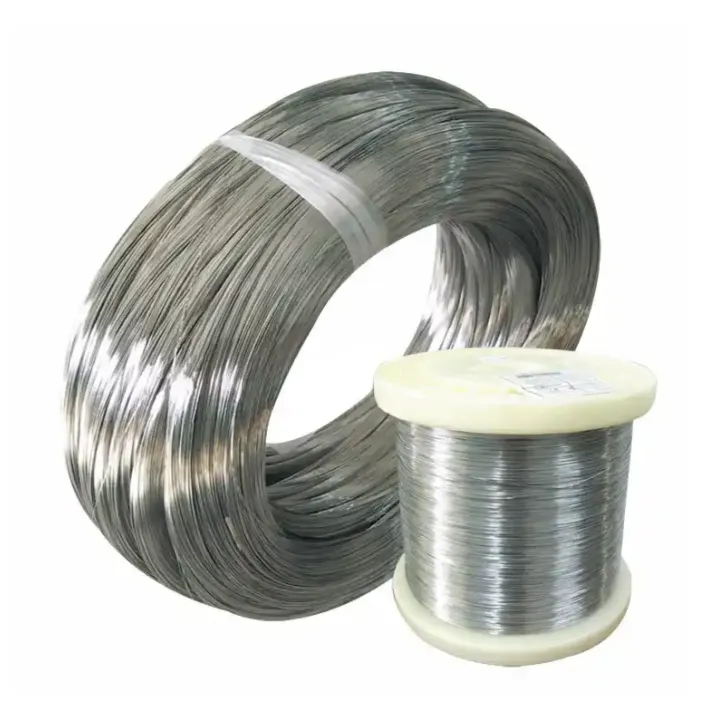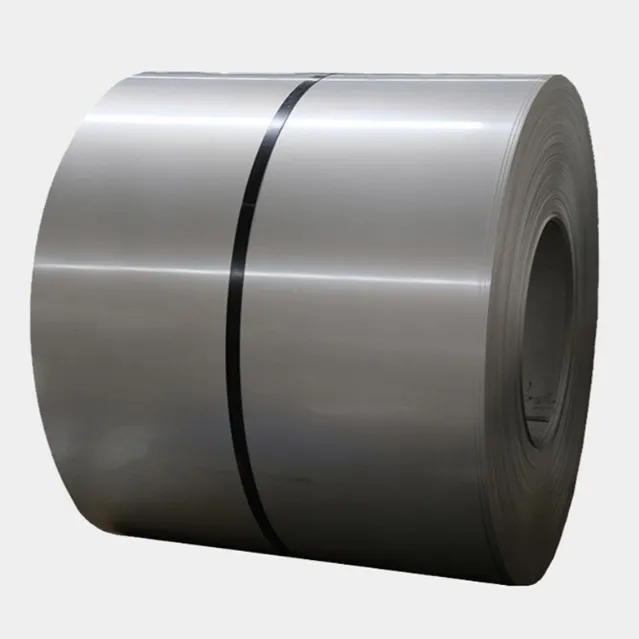

At MWalloys, we supply Nickel 200 wire that meets ASTM B160 and UNS N02200 specifications — a commercially pure nickel product with a minimum 99.0% nickel content that delivers outstanding corrosion resistance, excellent electrical conductivity, and superior mechanical performance across temperatures ranging from cryogenic levels up to 600°F (315°C) in oxidizing environments. Whether you are a structural engineer specifying materials for chemical processing equipment, a procurement specialist sourcing for aerospace subassemblies, or a manufacturer building resistance heating elements, Nickel 200 wire is one of the most reliable single-element metallic materials available today. We have worked with clients across petrochemical, electronics, food processing, and marine industries, and the feedback is consistent: when purity and corrosion resistance matter most, Nickel 200 wire consistently outperforms alternatives.
What Is Nickel 200 Wire and How Is It Defined by ASTM B160?
Nickel 200 wire is a commercially pure wrought nickel product produced under the ASTM B160 standard — the governing specification for nickel rod and bar, which also covers wire forms when referenced alongside ASTM B211 and ASTM B166 in engineering practice. The designation UNS N02200 is the Unified Numbering System identifier that uniquely classifies this alloy within the broader family of nickel-based materials.
ASTM B160 specifies the mechanical property requirements, surface condition, dimensional tolerances, and test methods applicable to wrought nickel in rod and bar form. When wire is drawn from these bars, it inherits the base material's chemical purity while developing tensile and elongation properties that vary with temper condition. The standard recognizes annealed, cold-drawn, and stress-relieved conditions, each serving different end-use requirements.
What makes Nickel 200 wire genuinely distinct from alloyed nickel products is its exceptionally high nickel content. The minimum nickel plus cobalt content under ASTM B160 is 99.0%, with cobalt counted together because of its chemical similarity to nickel and its negligible effect on material behavior at trace levels. This near-pure composition is the reason the material exhibits such predictable, stable behavior in corrosive environments, electrical applications, and high-temperature processing.
We have had engineers ask us whether ASTM B160 and AMS 2replaced by AMS 5553 cover the same territory. The short answer: ASTM B160 is the standard most widely used in industrial and chemical processing contexts, while aerospace procurement often references AMS 5553. At MWalloys, we supply wire that satisfies both, and we issue documentation that clearly identifies which standard your material is certified to.
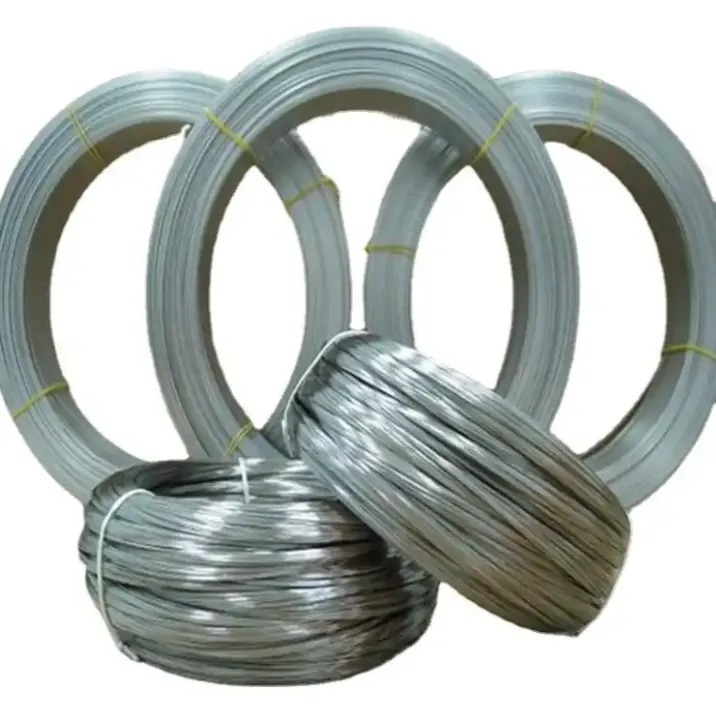
Understanding the ASTM B160 Scope and Its Relevance to Wire Products
ASTM B160 technically covers rod and bar, but in practice, wire products derived from Nickel 200 base material are sold and certified against this standard, often in combination with ASTM B160 plus the applicable wire drawing specification. When you receive a Mill Test Report (MTR) for Nickel 200 wire from MWalloys, it will reference the chemical composition per ASTM B160 while noting the wire-specific dimensional and mechanical parameters confirmed during production.
The standard mandates that the material be tested in representative lots, with heat analysis and product (check) analysis both performed. Heat analysis represents the manufacturer's reported composition for the melt, while product analysis allows buyers to verify composition on finished material. This two-tier approach ensures accountability throughout the supply chain.
Chemical Composition and UNS N02200 Specification Requirements
The chemical composition of Nickel 200 wire under UNS N02200 and ASTM B160 is tightly controlled. The table below summarizes the maximum allowable concentrations for each element:
Nickel 200 Wire Chemical Composition (ASTM B160 / UNS N02200)
| Element | Minimum (%) | Maximum (%) |
|---|---|---|
| Nickel + Cobalt | 99.0 | — |
| Cobalt | — | — (included in Ni total) |
| Carbon | — | 0.15 |
| Manganese | — | 0.35 |
| Iron | — | 0.40 |
| Silicon | — | 0.35 |
| Copper | — | 0.25 |
| Sulfur | — | 0.010 |
The critical parameter to watch is carbon content. The 0.15% maximum carbon limit is what separates Nickel 200 from Nickel 201, where carbon is restricted to 0.02% maximum. This single compositional difference has enormous practical implications, particularly for elevated-temperature applications above 600°F (315°C).
Sulfur content is another closely monitored element. At concentrations above 0.010%, sulfur can form low-melting-point compounds with nickel during welding or hot working, leading to hot cracking. This is why the ASTM B160 sulfur limit is strict, and why reputable suppliers like MWalloys perform sulfur verification on each heat.
Iron, silicon, and manganese are present in trace amounts and contribute marginally to strength without significantly affecting corrosion performance. Copper at 0.25% maximum remains well below the threshold where it would meaningfully influence the material's electrochemical behavior.
Why Purity Is the Defining Attribute
When we tell clients that Nickel 200 wire is "commercially pure," that phrase has a specific technical meaning. It does not mean "approximately nickel" — it means the material is produced from a single primary metallic component with incidental residual elements controlled to levels where their effects are negligible or predictable. This level of purity translates directly to:
- Consistency in electrical resistivity across production lots.
- Predictable corrosion behavior in alkaline and neutral environments.
- Reliable magnetic permeability for electromagnetic applications
- Minimal batch-to-batch variation in mechanical properties.
Mechanical and Physical Properties of Nickel 200 Wire
Understanding the mechanical and physical properties of Nickel 200 wire allows engineers to make confident design decisions. The properties vary depending on temper condition — annealed wire exhibits higher ductility, while cold-drawn wire has elevated tensile strength at the cost of some elongation.
Mechanical Properties of Nickel 200 Wire by Temper
| Property | Annealed Condition | Cold-Drawn (Hard) Condition |
|---|---|---|
| Tensile Strength | 55,000–75,000 psi (380–517 MPa) | 80,000–130,000 psi (552–896 MPa) |
| Yield Strength (0.2% offset) | 15,000–30,000 psi (103–207 MPa) | 60,000–120,000 psi (414–827 MPa) |
| Elongation in 2 inches | 35–50% | 2–25% |
| Rockwell Hardness | B40–B60 | B75–B100 |
| Reduction of Area | 60–75% | 10–40% |
Physical Properties of Nickel 200 (UNS N02200)
| Physical Property | Value |
|---|---|
| Density | 8.89 g/cm³ (0.321 lb/in³) |
| Melting Range | 1,435–1,446°C (2,615–2,635°F) |
| Specific Heat Capacity | 456 J/kg·°C (0.109 BTU/lb·°F) |
| Thermal Conductivity | 70.2 W/m·K at 20°C |
| Electrical Resistivity | 9.5 µΩ·cm at 20°C |
| Coefficient of Thermal Expansion | 13.3 µm/m·°C (20–100°C) |
| Modulus of Elasticity | 204 GPa (29.6 × 10⁶ psi) |
| Curie Temperature | 358°C (676°F) |
| Magnetic Permeability | Ferromagnetic below Curie temperature |
The Curie temperature is a particularly important design consideration for applications involving alternating magnetic fields or electromagnetic shielding. Nickel 200 wire is ferromagnetic at room temperature, which makes it valuable for certain transducer and solenoid applications, but this property disappears above 358°C. Engineers designing for high-temperature electromagnetic functions should factor this transition point into their specifications.
Thermal conductivity at 70.2 W/m·K is significantly higher than that of many nickel alloys, which makes pure Nickel 200 wire a better choice in applications requiring efficient heat dissipation from the wire itself.
How Nickel 200 Wire Is Manufactured and Processed
The production of Nickel 200 wire begins with melting and refining high-purity nickel cathodes — typically electrolytic-grade nickel with 99.9%+ purity — in electric arc or vacuum induction furnaces. Controlled additions of trace elements like manganese and silicon may be made at this stage to achieve the target composition. After melting, the material is cast into billets or rods.
Hot rolling converts the cast billets into rod stock, typically in the 5–15mm diameter range. This stage refines the grain structure and eliminates casting porosity. After hot rolling, the rod undergoes annealing to relieve work-hardening and create a uniform, recrystallized microstructure ready for wire drawing.
Cold drawing is where wire gets its final dimensional precision. The rod is drawn through progressively smaller tungsten carbide or diamond dies, reducing the cross-sectional area in carefully calculated increments. Each drawing pass introduces work hardening, so intermediate annealing steps are performed between passes for fine-gauge wire production to maintain drawability without surface cracking.
Surface conditioning is critical for Nickel 200 wire used in electronics, welding, or precision applications. We supply wire in multiple surface finishes:
- As-drawn: Slight oxide surface, acceptable for most industrial uses.
- Bright annealed: Clean metallic surface, suitable for electronic and food-grade applications.
- Pickled and passivated: Chemically cleaned, ideal for chemical processing environments.
Final quality inspection includes dimensional verification using calibrated micrometers and laser gauges, tensile testing per ASTM E8, and chemical analysis via optical emission spectrometry (OES) or X-ray fluorescence (XRF). Each production lot at MWalloys is assigned a unique heat number traceable from raw material to finished wire.
Nickel 200 vs. Nickel 201: Key Differences Every Buyer Must Know
This is one of the most common questions we receive from engineers and procurement teams. Nickel 200 (UNS N02200) and Nickel 201 (UNS N02201) are nearly identical materials — both are commercially pure nickel — but they differ in one critical way: carbon content.
Nickel 200 vs. Nickel 201 Comparison Table
| Property / Factor | Nickel 200 (N02200) | Nickel 201 (N02201) |
|---|---|---|
| Carbon Content (max) | 0.15% | 0.02% |
| ASTM Standard | B160 | B160 |
| Max Service Temp | 315°C (600°F) continuous | 600°C+ (1,110°F+) |
| Grain Boundary Carbides | Present at high temps | Minimal |
| Cost | Lower | Slightly higher |
| Preferred Use | Room temp to 315°C | Above 315°C |
| Susceptibility to Graphitization | Higher above 315°C | Very low |
| Weldability (elevated temp) | Acceptable | Superior |
The core issue is graphitization. When Nickel 200 is exposed to temperatures above 315°C for extended periods, the carbon in the alloy can precipitate as graphite at grain boundaries. This precipitation embrittles the material and reduces its mechanical integrity. Nickel 201's ultra-low carbon content essentially eliminates this risk, making it the preferred choice for caustic evaporation equipment, heat exchangers operating at elevated temperatures, and other sustained high-heat services.
For ambient and moderately elevated temperature applications — electronic components, food processing equipment, chemical tanks at room temperature, wire forms in HVAC systems — Nickel 200 is perfectly appropriate and represents a more cost-effective choice.
We often advise clients: if your operating temperature stays consistently below 300°C (572°F) with no excursions above 315°C, Nickel 200 wire is your material. If there is any risk of sustained exposure above that threshold, specify Nickel 201 from the outset and avoid a costly material change later.
Industry Applications Where Nickel 200 Wire Is the Preferred Choice
Nickel 200 wire's combination of corrosion resistance, electrical properties, workability, and purity makes it the material of record across a surprisingly broad range of industries.
Chemical and Petrochemical Processing
Nickel 200 wire is extensively used in fabricating baskets, screens, mesh, and support structures for reactors handling caustic soda (sodium hydroxide) and other strong alkalis. Few metallic materials resist concentrated NaOH as effectively as commercially pure nickel. The wire maintains structural integrity and resists stress corrosion cracking in environments that would rapidly attack stainless steel or copper alloys.
Electronics and Electrical Engineering
Because of its predictable electrical resistivity and ferromagnetic properties, Nickel 200 wire finds use in:
- Lead wires and terminal connections in vacuum tubes and electron devices.
- Magnetostrictive transducers (exploiting nickel's dimensional change under magnetic field)
- Battery components and electrode contacts.
- Resistance heating elements for moderate-temperature furnaces.
- Connectors and contacts in specialized electronic assemblies.
Food and Beverage Manufacturing
The FDA and European food contact regulations permit commercially pure nickel for certain food processing equipment. Nickel 200 wire is used in conveyors, mesh belts, stirrers, and heat exchanger coils in dairy, confectionery, and beverage industries. Its resistance to mild organic acids and neutral pH solutions, combined with ease of cleaning and sterilization, makes it suitable where stainless steel might introduce metallic taste or where nickel purity is specifically required.
Aerospace and Defense
In aerospace subassemblies, Nickel 200 wire serves as resistance heating elements, structural wire forms in temperature-controlled environments, and bond wire in microelectronics. The AMS 5553 specification, which aligns with ASTM B160 chemistry, is the applicable aerospace purchasing standard.
Marine and Offshore Applications
In seawater-cooled heat exchangers and marine fastening systems, Nickel 200 resists general corrosion effectively in clean seawater. However, it is less suited to polluted or stagnant seawater, where pitting risk increases. Wire mesh and screen applications in marine filtration systems benefit from Nickel 200's combination of corrosion resistance and mechanical strength.
Medical and Scientific Instrumentation
Ultra-high-purity Nickel 200 wire is used in laboratory instruments, thermocouple sheathing, and analytical equipment where material contamination must be controlled. Its predictable magnetic behavior also makes it useful in MRI-compatible components operating outside the scanner's high-field region.
Forms, Sizes, and Tolerances Available at MWalloys
At MWalloys, we stock and custom-process Nickel 200 wire across a wide dimensional range. Our inventory typically covers the following:
Standard Wire Diameter Range
| Category | Diameter Range | Tolerance (typical) |
|---|---|---|
| Fine Wire | 0.05 mm – 0.50 mm | ±0.003 mm |
| Medium Wire | 0.50 mm – 3.00 mm | ±0.010 mm |
| Standard Wire | 3.00 mm – 8.00 mm | ±0.020 mm |
| Rod/Wire Stock | 8.00 mm – 12.70 mm | ±0.030 mm |
Tolerances can be tightened for precision applications upon request. We regularly supply wire to ±0.001mm for electronic and instrumentation clients, using precision drawing equipment calibrated to ASTM E29 rounding procedures.
Packaging Options
- Coil (natural coil, no spool)
- Precision-wound spool (100g to 25kg per spool)
- Straight lengths (custom cut from 100mm to 6000mm)
- Level-wound coil for automated feeding systems
Surface Conditions Available
- As-drawn (oxide surface)
- Bright annealed (BA) in reducing atmosphere furnaces.
- Chemically cleaned and pickled
- Electropolished (on request for medical/scientific applications)
Temper options include full annealed (soft), quarter-hard, half-hard, three-quarter hard, and full hard. We maintain full traceability for every spool and coil, with heat numbers linking back to the original mill certification.
Corrosion Resistance Behavior in Different Environments
One of Nickel 200 wire's strongest selling points is its versatile corrosion resistance profile. However, it is important to understand both where it excels and where it should not be used without consultation.
Corrosion Resistance Summary Table
| Environment | Performance | Notes |
|---|---|---|
| Caustic Soda (NaOH) | Excellent | Industry standard material for caustic service |
| Neutral pH aqueous solutions | Excellent | Minimal attack across wide temperature range |
| Hydrofluoric Acid (HF) | Good | Used in HF-handling equipment |
| Dry Chlorine Gas | Good | Requires absence of moisture |
| Wet Chlorine / HCl | Poor | Significant attack; not recommended |
| Sulfuric Acid (dilute) | Moderate | Acceptable at low concentrations and temperatures |
| Nitric Acid | Poor | Strongly oxidizing; causes rapid attack |
| Seawater (clean) | Good | Acceptable in flowing clean seawater |
| Organic Acids | Good | Suitable for food processing organics |
| Ammonia | Excellent | Resistant in both liquid and gas phase |
| Fluorine gas | Good | Used in fluorine production equipment |
| Molten metals (e.g., Na) | Good | Used in sodium-handling applications |
Alkaline Resistance: The Core Strength
Nickel 200 wire's most celebrated corrosion attribute is its resistance to concentrated alkaline solutions. In caustic soda (NaOH) at concentrations up to 73% and temperatures up to 300°C, corrosion rates for Nickel 200 are typically below 0.05 mm/year — outstanding by any industry standard. This performance is why Nickel 200 wire is specified for basket electrodes, anode connections, and support wiring inside chlor-alkali plant electrolyzers.
Limitations to Communicate Clearly
We always advise clients transparently: Nickel 200 wire is not a universal corrosion-resistant material. In oxidizing acidic environments — dilute or concentrated nitric acid, chromic acid, or ferric chloride — commercially pure nickel corrodes rapidly. Similarly, in moist reducing-atmosphere environments containing sulfur compounds, nickel can experience sulfidation attack, particularly at elevated temperatures.
Welding, Fabrication, and Workability Considerations
Nickel 200 wire is considered readily weldable and formable, but achieving optimal results requires attention to several material-specific factors.
Cold Forming and Drawing
Nickel 200 work-hardens during cold forming at a rate similar to austenitic stainless steel — faster than carbon steel but manageable with proper intermediate annealing. The annealing temperature for stress relief is 480–700°C (900–1,290°F), while full recrystallization annealing is performed at 700–925°C (1,290–1,700°F). Atmosphere control during annealing is important: oxidizing atmospheres above 370°C (700°F) can cause surface oxidation requiring subsequent pickling.
Welding Guidelines for Nickel 200 Wire
| Welding Parameter | Recommendation |
|---|---|
| Preferred Process | GTAW (TIG), GMAW (MIG), SMAW |
| Filler Metal | ERNi-1 (AWS A5.14) for TIG/MIG |
| Preheat Required | No (base metal up to 38mm thickness) |
| Interpass Temperature | Maximum 150°C (300°F) |
| Post-Weld Heat Treatment | Not normally required below 315°C service |
| Joint Preparation | Thorough degreasing with acetone or MEK |
| Shielding Gas (TIG) | Argon or Argon/Helium mix |
| Key Precautions | Remove all sulfur-bearing compounds; avoid lead/zinc contamination |
The most critical welding precaution with Nickel 200 is contamination control. Sulfur-containing cutting fluids, lead-based markers, and zinc-based coatings must be completely removed before welding begins. Even trace sulfur from machining coolant can cause sulfide cracking in the heat-affected zone. We recommend acetone cleaning of all joint surfaces within 50mm of the weld area, using lint-free cloths.
Machining Considerations
Nickel 200 is machinable but requires sharp tooling, adequate lubrication, and moderate cutting speeds. It tends to work-harden ahead of the cutting tool if feeds and speeds are not maintained. Carbide tooling with positive rake angles and high-pressure cutting fluid application produces the best surface finishes. When machining annealed wire stock into precision rod sections, we recommend continuous cutting without dwell at the tool contact point to prevent work-hardening buildup.
Certifications, Standards, and Quality Control at MWalloys
At MWalloys, quality is not a marketing statement — it is a documented process embedded in every step of our supply chain.
Applicable Standards for Nickel 200 Wire
| Standard | Issuing Body | Scope |
|---|---|---|
| ASTM B160 | ASTM International | Chemical composition, mechanical properties, rod/bar |
| AMS 5553 | SAE International | Aerospace procurement of Nickel 200 bar/wire |
| ASME SB-160 | ASME | Boiler and pressure vessel code equivalent of ASTM B160 |
| BS 3075 NA11 | British Standards | UK equivalent for Nickel 200 wire |
| EN 2.4066 | European Standard | European designation for commercially pure nickel |
| ISO 6207 | ISO | International nickel alloy strip and wire standard |
| NACE MR0175 | NACE International | Sour service environments qualification |
Our Quality Documentation Package
Every shipment from MWalloys is accompanied by:
- Mill Test Report (MTR): Heat analysis + product analysis, certified to applicable standard.
- Certificate of Conformance (CoC): Signed confirmation that material meets the ordered specification.
- Dimensional Inspection Report: Diameter measurements at specified frequency.
- Mechanical Test Report: Tensile and elongation results per ASTM E8.
- Heat/Lot Number: Full traceability linking material to its original melt.
For aerospace clients, we provide additional documentation including first article inspection records, First Article Inspection Reports (FAIRs) where required, and compliance with AS9100 quality management system requirements.
We maintain a documented calibration schedule for all measuring instruments, with calibration certificates available for customer audit upon request. Our internal quality audits follow ISO 9001:2015 principles, and we welcome customer source inspections at our facility.
How to Request a Quote and What Information to Prepare
Getting a fast and accurate quotation from MWalloys for Nickel 200 wire requires complete specification information. We have built our quoting system to be responsive — typically within 24 hours for standard products and 48 hours for custom sizes or certifications.
Information to Include in Your Inquiry
| Required Information | Why It Matters |
|---|---|
| Alloy designation | Confirm N02200 vs. N02201 |
| Applicable standard | ASTM B160, AMS 5553, EN, etc. |
| Wire diameter (mm or inch) | Determines stock vs. custom draw |
| Length or weight required | Impacts packaging and pricing |
| Temper condition | Annealed, half-hard, full-hard |
| Surface finish required | As-drawn, bright annealed, pickled |
| Documentation requirements | MTR, CoC, FAI, NACE compliance |
| Delivery timeline | Affects production scheduling |
| Packaging preference | Spool, coil, straight lengths |
| End-use application (optional but helpful) | Helps us recommend optimized product |
The more detail you provide upfront, the more precise and competitive our quotation will be. We understand that procurement engineers often work under tight deadlines, so our technical team is available via email and phone to clarify specifications before you submit a formal request.
We also maintain a stock buffer of the most commonly requested diameters in Nickel 200 wire — typically 0.5mm, 1.0mm, 1.5mm, 2.0mm, 3.0mm, and 5.0mm — in annealed condition, available for same-week dispatch.
Corrosion Testing and Performance Validation Methods
Validating Nickel 200 wire's corrosion performance before deployment in critical service is a practice we encourage and support. Several standardized test methods apply:
- ASTM G31: Immersion coupon testing in liquid environments
- ASTM G5: Standard reference test for corrosion potential measurements
- ASTM G59: Potentiodynamic polarization to assess pitting susceptibility
- ISO 7539: Stress corrosion cracking evaluation
For clients in chlor-alkali or semiconductor manufacturing where purity verification of the wire surface is critical, we offer third-party laboratory testing for trace elemental analysis using ICP-MS (Inductively Coupled Plasma Mass Spectrometry), capable of detecting contaminants at the parts-per-billion level.
Global Supply Chain and Lead Times
MWalloys sources Nickel 200 wire from certified mills in North America, Europe, and Asia, all operating under audited quality management systems. Our strategic partnerships with primary and secondary mills allow us to offer both standard-grade and special-quality (SQ) wire with consistently short lead times.
Typical lead times from MWalloys:
| Product Category | Standard Lead Time |
|---|---|
| Stock diameters (annealed) | 3–7 business days |
| Custom diameters (drawn to order) | 3–6 weeks |
| Custom temper, non-standard | 4–8 weeks |
| Aerospace-grade with FAIR documentation | 6–10 weeks |
We ship globally, with logistics partners covering North America, Europe, Middle East, Southeast Asia, and Australia. All shipments are documented with commercial invoice, packing list, material certification, and certificate of origin as standard. For imports requiring ECCN classification or country of origin documentation, our trade compliance team handles the paperwork.
Frequently Asked Questions About Nickel 200 Wire
Q1: What is the difference between Nickel 200 wire and stainless steel wire in corrosion resistance?
Nickel 200 wire outperforms stainless steel in strongly alkaline environments, particularly concentrated caustic soda. Stainless steel, even 316L grade, can experience stress corrosion cracking (SCC) in hot concentrated NaOH, while Nickel 200 remains stable. However, stainless steel generally performs better in oxidizing acidic environments. The right choice depends entirely on the chemical environment.
Q2: Can Nickel 200 wire be used in food contact applications?
Yes. Commercially pure nickel, including Nickel 200 wire in bright-annealed condition, is permitted for food contact applications in many jurisdictions. Compliance with FDA 21 CFR regulations and European Regulation EC 1935/2004 should be confirmed for specific applications, and we can provide supporting documentation.
Q3: What tensile strength can I expect from cold-drawn Nickel 200 wire?
In fully hard cold-drawn condition, Nickel 200 wire typically achieves tensile strengths of 80,000–130,000 psi (552–896 MPa), depending on the degree of cold work and wire diameter. Fine-gauge wire drawn to small diameters without intermediate annealing can reach the upper end of this range.
Q4: Is Nickel 200 wire magnetic?
Yes. Nickel 200 is ferromagnetic at room temperature, with a Curie temperature of approximately 358°C (676°F). Above this temperature, it becomes paramagnetic. This property makes it useful in certain electromagnetic applications but should be considered in applications where magnetic interference must be avoided.
Q5: What welding filler metal is recommended for joining Nickel 200 wire or components?
ERNi-1 (AWS A5.14) is the standard filler metal for GTAW (TIG) welding of Nickel 200. It provides a near-match composition and maintains the corrosion resistance characteristics of the base metal in the weld zone.
Q6: How should Nickel 200 wire be stored to prevent surface contamination?
Store Nickel 200 wire in a dry, clean environment away from steel tools, zinc-coated materials, and sulfur-containing compounds. For bright-annealed wire destined for critical applications, individual spool packaging in moisture-barrier polyethylene bags with desiccant is recommended. Avoid contact with copper or copper alloys in storage, as galvanic couples can cause surface staining.
Q7: What is the minimum order quantity at MWalloys?
We accommodate both small prototype quantities and large production orders. For stock diameters, minimum orders are typically 0.5–1.0 kg per diameter and temper combination. For custom-drawn wire, minimum production quantities may be higher depending on the specific diameter and tolerance requirements. Contact our sales team for a specific minimum order confirmation for your required specification.
Q8: Can Nickel 200 wire be used in hydrogen service environments?
Nickel 200 has good resistance to hydrogen embrittlement compared to many high-strength steel alloys. It is used in hydrogen-handling equipment at moderate pressures and temperatures. However, in very high-pressure hydrogen environments above 300°C, hydrogen permeation can become a concern, and material selection should be reviewed with a corrosion engineer for the specific service conditions.
Q9: Does Nickel 200 wire meet NACE MR0175 requirements for sour service?
Nickel 200 wire can be used in sour (H2S-containing) oil and gas environments, but its application must be evaluated against NACE MR0175 / ISO 15156 guidelines for the specific partial pressure of H2S, temperature, and pH conditions. We recommend engaging a corrosion specialist and confirming the applicable hardness and strength limits before specifying Nickel 200 wire for sour service.
Q10: How do I verify the authenticity and specification compliance of Nickel 200 wire received from a supplier?
Request a complete Mill Test Report (MTR) showing heat analysis results for all elements per ASTM B160. Cross-check the chemistry against the specification limits. Verify the heat/lot number on the physical material matches the MTR. For critical applications, consider third-party chemical analysis using OES or ICP-MS on a sample from the received lot. At MWalloys, all documentation is issued with unique heat numbers, and we support customer verification testing.
Summary: Why MWalloys Is the Right Nickel 200 Wire Partner
We have built MWalloys around one principle: supplying precision materials with complete traceability, honest technical guidance, and responsive service. Nickel 200 wire under ASTM B160 and UNS N02200 is a mature, well-characterized material — but sourcing it correctly matters enormously. Composition compliance, dimensional accuracy, surface condition, and documentation quality all determine whether the wire performs as intended in your application.
Our technical team includes engineers with hands-on experience in chemical processing, electronics, and aerospace material applications. When you contact us for a quote, you are not just getting a price — you are getting a supplier who understands the application, asks the right questions, and delivers material that meets your requirements on time.
Submit your Nickel 200 wire inquiry today through our online form or contact our technical sales team directly. We respond to all qualified inquiries within 24 hours.
MWalloys — Precision Nickel Wire, Certified Quality, Global Delivery
All material properties referenced in this article are based on published ASTM, AMS, and industry data. Actual properties may vary with specific production parameters. Contact MWalloys technical support for application-specific guidance.