
Inconel 600 wire (UNS N06600) is a nickel-chromium alloy wire that delivers exceptional oxidation resistance at temperatures up to 1177°C (2150°F), making it one of the most reliable choices for furnace components, aerospace fasteners, chemical processing equipment, and heat treatment fixtures. At MWalloys, we have supplied and tested this alloy across hundreds of industrial projects, and the consistent finding is clear: when oxidation resistance, mechanical strength, and corrosion protection must coexist in wire form, UNS N06600 is the material that engineers keep returning to.
If your project requires the use of Inconel 600 Wire, you can contact us for a free quote.
What Is Inconel 600 Wire and What Makes It Different from Other Nickel Alloys?
Inconel 600 wire is a solid-solution-strengthened nickel-chromium alloy wire produced under the UNS N06600 designation (also designated W.Nr. 2.4816 in European standards and ISO NW 6600). The alloy was originally developed by Special Metals Corporation, though today it is produced by numerous manufacturers globally, including mills that supply MWalloys with certified material.
What separates Inconel 600 from standard stainless steels or lower-grade nickel alloys is its foundational metallurgical design. The alloy relies on a high nickel content — typically around 72% minimum — combined with chromium (14–17%) to form a stable protective oxide layer (primarily Cr₂O₃) on the wire surface when exposed to elevated temperatures. This oxide scale is adherent, continuous, and self-repairing, which is fundamentally different from the behavior of iron-based alloys under the same conditions.
From our experience supplying wire to thermal processing facilities, the first question engineers ask is not "will it survive?" but rather "how long will it survive, and at what temperature?" That question gets to the core of why Inconel 600 wire has remained commercially relevant since the 1930s: it performs predictably, its properties are well-documented across decades of industrial use, and it does not require complex post-processing to achieve its rated performance.
The solid-solution strengthening mechanism means that Inconel 600 wire maintains meaningful tensile strength without precipitation hardening treatments. Unlike Inconel 718, which requires aging to develop its full strength through gamma-prime and gamma-double-prime precipitation, Inconel 600 achieves its working properties in the annealed or cold-drawn condition. This simplifies procurement, processing, and incoming inspection significantly.
Key distinguishing characteristics of Inconel 600 wire:
- Non-magnetic in all conditions.
- Resistance to both oxidizing and reducing atmospheres.
- Exceptional resistance to chloride-ion stress corrosion cracking.
- Good resistance to carburization and nitriding environments.
- Compatibility with cryogenic service conditions (down to -196°C).
- Long service life in cyclic heating and cooling environments.
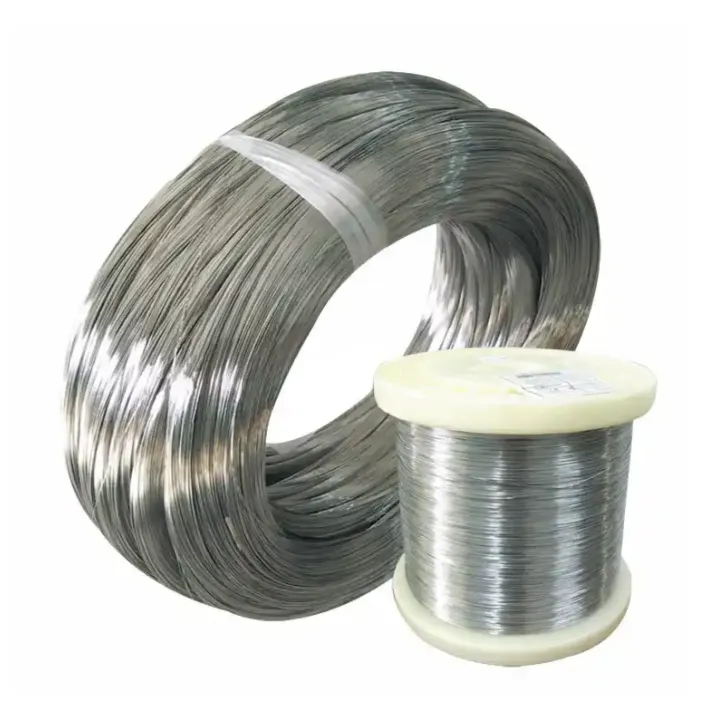
UNS N06600 Chemical Composition: The Science Behind Its Performance
The chemical composition of Inconel 600 wire is tightly controlled across all major producing mills. Understanding each element's role is essential for engineers evaluating whether this alloy meets their specific environmental exposure requirements.
Nominal Chemical Composition Table — UNS N06600 Wire
| Element | Minimum (%) | Maximum (%) | Typical (%) | Functional Role |
|---|---|---|---|---|
| Nickel (Ni) | 72.0 | — | 76.0 | Primary matrix, corrosion resistance base |
| Chromium (Cr) | 14.0 | 17.0 | 15.5 | Oxidation resistance, Cr₂O₃ scale formation |
| Iron (Fe) | — | 10.0 | 8.0 | Structural support, cost balance |
| Manganese (Mn) | — | 1.0 | 0.25 | Deoxidation, sulfur mitigation |
| Carbon (C) | — | 0.15 | 0.08 | Grain boundary carbides (controlled) |
| Silicon (Si) | — | 0.50 | 0.20 | Oxidation resistance enhancement |
| Copper (Cu) | — | 0.50 | 0.10 | Corrosion resistance in mild acids |
| Sulfur (S) | — | 0.015 | 0.005 | Kept low to avoid hot cracking |
Why the Nickel-Chromium Balance Matters
The 72% minimum nickel specification is not arbitrary. Nickel provides the austenitic FCC (face-centered cubic) matrix that gives the alloy its ductility across extreme temperature ranges. At the same time, nickel suppresses the formation of sigma phase — a brittle intermetallic compound that plagues some stainless steels and lower-nickel alloys during prolonged high-temperature exposure.
The chromium content of 14–17% sits in a carefully optimized range. Below 14%, the protective Cr₂O₃ scale becomes discontinuous and prone to spallation during thermal cycling. Above 17%, the alloy begins to develop sigma phase tendencies at temperatures in the 650–900°C range, which can compromise room-temperature ductility after long-term service.
Iron content up to 10% serves an economical function while maintaining structural integrity. In practice, most certified material we handle at MWalloys comes in at 7–9% iron, which represents an optimal cost-performance balance point.
Carbon at 0.08% typical contributes to the formation of chromium carbides at grain boundaries during sensitization temperatures (around 425–870°C). This is an important consideration for wire used in welding applications where heat-affected zones may experience sensitization. For such applications, low-carbon variants or subsequent annealing treatments should be specified.
Mechanical Properties of Inconel 600 Wire Across Temperature Ranges
One of the primary reasons Inconel 600 wire earns its place in high-temperature systems is its mechanical property retention at elevated temperatures. While most engineering alloys experience dramatic strength loss above 500°C, Inconel 600 maintains useful load-bearing capacity well into the 900–1000°C range.
Room Temperature Mechanical Properties — Annealed Condition
| Property | Value (Imperial) | Value (Metric) | Test Standard |
|---|---|---|---|
| Ultimate Tensile Strength (UTS) | 80,000 psi min | 550 MPa min | ASTM E8 |
| 0.2% Yield Strength (YS) | 35,000 psi min | 240 MPa min | ASTM E8 |
| Elongation | 30% min | 30% min | ASTM E8 |
| Rockwell Hardness | — | 85 HRB max | ASTM E18 |
| Modulus of Elasticity | 31,000 ksi | 214 GPa | — |
Cold-Drawn Wire Condition (typical, varies with reduction ratio)
| Wire Diameter | UTS (MPa) | YS (MPa) | Elongation (%) |
|---|---|---|---|
| > 4.0 mm | 620–760 | 380–550 | 25–35 |
| 2.0–4.0 mm | 690–830 | 450–620 | 20–30 |
| 1.0–2.0 mm | 760–930 | 520–690 | 15–25 |
| < 1.0 mm | 860–1100 | 620–830 | 10–20 |
Elevated Temperature Tensile Properties (Annealed Bar, representative of wire)
| Temperature | UTS (MPa) | YS 0.2% (MPa) | Elongation (%) |
|---|---|---|---|
| 20°C (68°F) | 655 | 310 | 40 |
| 315°C (600°F) | 600 | 275 | 38 |
| 540°C (1000°F) | 565 | 260 | 36 |
| 760°C (1400°F) | 400 | 230 | 45 |
| 870°C (1600°F) | 250 | 180 | 55 |
| 980°C (1800°F) | 130 | 100 | 70 |
| 1093°C (2000°F) | 65 | 50 | 85 |
Note the characteristic behavior at elevated temperatures: elongation actually increases as temperature rises above 760°C. This counterintuitive behavior is typical of solid-solution nickel alloys and means the wire becomes increasingly formable at high temperatures — an important property for heated forming operations.
Creep and Stress Rupture Performance
For sustained loading applications, creep resistance is often more relevant than instantaneous tensile strength. Inconel 600 wire exhibits:
- Stress rupture strength at 871°C (1600°F): approximately 50 MPa for 100-hour life.
- Stress rupture strength at 982°C (1800°F): approximately 20 MPa for 100-hour life.
- Creep rate of 0.0001%/hour at 760°C under 100 MPa stress.
These values position Inconel 600 appropriately for furnace components and heat-treating fixtures that experience sustained mechanical loads at temperature, though for the most demanding creep-critical applications, alloys such as Inconel 617 or Haynes 230 may be preferable.
Oxidation and Corrosion Resistance: How UNS N06600 Behaves Under Extreme Heat
Oxidation resistance is the defining performance characteristic of Inconel 600 wire, and understanding the mechanisms involved helps engineers make more accurate service life predictions.
Oxidation Resistance Mechanism
When Inconel 600 wire is first exposed to an oxidizing atmosphere at elevated temperature, chromium selectively oxidizes from the alloy surface to form a continuous, adherent Cr₂O₃ layer. This process, known as selective oxidation, occurs because chromium has a higher affinity for oxygen than nickel at these temperatures.
The resulting oxide scale has several critical properties:
- Low oxygen diffusivity: This restricts further oxidation once the initial scale forms.
- High adhesion: The Cr₂O₃ scale bonds strongly to the underlying alloy.
- Self-repairing capability: If the scale is damaged by thermal shock or mechanical abrasion, it reforms quickly in oxidizing conditions.
- Thermal stability: The scale remains intact through hundreds of thermal cycles.
Maximum Service Temperature Guidelines
| Atmosphere | Continuous Service | Cyclic Service |
|---|---|---|
| Air (oxidizing) | 1177°C (2150°F) | 1093°C (2000°F) |
| Steam | 870°C (1600°F) | 760°C (1400°F) |
| Reducing/neutral | 1093°C (2000°F) | 980°C (1800°F) |
| Carburizing | 980°C (1800°F) | 870°C (1600°F) |
| Nitriding | 980°C (1800°F) | 870°C (1600°F) |
| Sulfur-containing | 650°C (1200°F) | 540°C (1000°F) |
Corrosion Resistance Beyond Oxidation
Inconel 600 wire is not limited to oxidation-resistant applications. The alloy also performs well in:
Aqueous corrosion environments:
- Strong resistance to chloride stress corrosion cracking — a critical advantage over austenitic stainless steels such as 304 and 316, which are susceptible to SCC in chloride-containing solutions.
- Resistance to alkaline solutions at elevated temperatures, including caustic soda (NaOH) and potassium hydroxide (KOH).
- Moderate resistance to dilute hydrochloric and sulfuric acids, though not suitable for concentrated mineral acids.
High-temperature process atmospheres:
- Resistance to carburizing gases (CO/CO₂ mixtures) significantly better than iron-based alloys.
- Good performance in ammonia-cracking atmospheres used in heat-treating furnaces.
- Adequate resistance to hydrogen at elevated temperatures.
Sulfidation Caution: Inconel 600 is notably weaker in sulfur-containing environments compared to its oxidation performance. At temperatures above 650°C with sulfur present, nickel sulfide formation can occur at grain boundaries, leading to rapid embrittlement. This is a known limitation, and for sulfur-rich environments, alloys with higher chromium content or specific sulfidation-resistant grades should be considered.
Available Wire Forms, Diameters, and Applicable Industry Standards
Inconel 600 wire is produced in a range of forms to suit different manufacturing processes and end-use applications. At MWalloys, we stock and supply wire in multiple conditions and diameters to accommodate customer-specific requirements.
Wire Product Forms
Round Wire: The most common form, produced by repeated wire drawing through tungsten carbide or diamond dies. Available in annealed or cold-worked conditions.
Flat Wire: Rolled from round wire to achieve a rectangular or square cross-section. Used in specific spring, brush, and sealing applications.
Resistance Wire: Produced to tight resistivity tolerances for electrical heating element applications. Requires controlled composition for consistent electrical properties.
Weld Wire/Filler Wire: Produced to ERNiCr-3 classification for use as welding consumables. Requires additional cleanliness controls to prevent weld porosity.
Lashing Wire: Small-diameter wire (typically 0.5–2.0 mm) for securing insulation blankets in furnace applications.
Standard Diameter Range
| Wire Category | Diameter Range | Surface Condition |
|---|---|---|
| Fine wire | 0.025 – 0.50 mm | Bright annealed |
| Medium wire | 0.50 – 2.50 mm | Annealed or cold drawn |
| Standard wire | 2.50 – 8.00 mm | Annealed, pickled |
| Rod/bar (wire basis) | 8.0 – 12.7 mm | Annealed, descaled |
Applicable International Standards
| Standard | Designation | Scope |
|---|---|---|
| ASTM B166 | UNS N06600 | Rod, bar, and wire |
| ASTM B167 | UNS N06600 | Seamless pipe and tube (wire reference) |
| AWS A5.14 | ERNiCr-3 | Welding wire classification |
| AMS 5687 | — | Wire for aerospace applications |
| AMS 5665 | — | Sheet/bar/wire, annealed |
| DIN 17752 | 2.4816 | German wire standard |
| BS 3076 NA14 | — | British bar and wire |
| ISO 9722 | NW 6600 | International wire standard |
| NACE MR0175 | — | Sour service compliance |
ASTM B166 is the most frequently referenced standard for Inconel 600 wire procurement in North American markets. It specifies composition limits, mechanical property requirements, dimensional tolerances, and testing procedures. When ordering wire to ASTM B166, buyers should specify the temper condition (annealed, as-drawn, or spring temper) because mechanical property requirements vary significantly between conditions.
AMS 5687 applies specifically to aerospace applications and imposes additional requirements including more rigorous mechanical testing frequencies, tighter dimensional tolerances, and enhanced traceability documentation.
Key Industrial Applications Where Inconel 600 Wire Outperforms Alternatives
The combination of high-temperature strength, oxidation resistance, and corrosion protection makes Inconel 600 wire the first-choice material in several critical application categories.
Heat Treatment and Furnace Industry
This is arguably the largest single application segment for Inconel 600 wire. Wire is fabricated into:
- Furnace muffles and retorts: Wire mesh or woven fabric retorts for controlled atmosphere furnaces.
- Basket mesh and trays: Coarsely woven wire mesh baskets for heat-treating loads at temperatures up to 1100°C.
- Radiant tubes: Coiled wire elements in indirect-fired furnaces.
- Thermowells and sensor protection: Small-diameter wire wrapped around thermocouple protection tubes.
- Hanger wires: Supporting heavy workpiece loads at elevated temperatures.
In heat treatment applications, the combination of oxidation resistance and adequate high-temperature strength is critical. The wire must support mechanical loads while resisting oxide scale growth that would eventually cause mechanical property degradation through depletion of protective-forming elements.
Aerospace and Defense
Aerospace use of Inconel 600 wire encompasses:
- Safety wire and lockwire: Used to secure critical fasteners on aircraft engines and airframe structures.
- Turbine component fasteners: Bolts, nuts, and retaining wires in hot section environments.
- Brazing applications: As base wire for brazing filler metal formulations.
- Spring components: In afterburner and nozzle adjustment mechanisms where elevated temperature service is required.
The aerospace sector demands the highest levels of documentation and traceability. At MWalloys, we supply aerospace wire with full material test reports (MTRs), certified to AMS 5687 where required, with heat/lot traceability maintained throughout our supply chain.
Chemical Processing and Petrochemical Industry
Chemical plants use Inconel 600 wire in several forms:
- Screen and filter mesh: For filtering corrosive process streams at elevated temperatures.
- Catalyst support structures: Woven wire grids supporting catalyst beds in reforming reactors.
- Exchanger support wires: In shell-and-tube heat exchangers handling aggressive process fluids.
- Gasket spirals: Spiral-wound gaskets with Inconel 600 wire winding element for high-pressure, high-temperature flanges.
The resistance to caustic environments is particularly valuable in chlor-alkali plants and paper pulp processing where high-temperature alkaline solutions are present.
Nuclear Industry
Inconel 600 has a long history in nuclear power plants, though its use has evolved over time:
- Steam generator tubing supports: Wire-form supports in pressurized water reactor (PWR) steam generators.
- Fuel assembly components: Wire spacers and hold-down springs in fuel bundle assemblies.
- Control rod assemblies: Connection and suspension wires in reactor internals.
It is important to note that long-term experience in nuclear environments revealed susceptibility of Inconel 600 to stress corrosion cracking (SCC) in high-temperature, high-pressure water containing dissolved oxygen or specific ionic species. This led to the gradual transition to Inconel 690 (UNS N06690, with higher chromium at 27–31%) for new nuclear applications. However, Inconel 600 wire continues to be used in non-wetted nuclear applications and in research reactors.
Electrical and Electronic Industry
Inconel 600 wire has unique electrical properties that make it suitable for:
- Resistance heating elements: Coiled wire elements in industrial and laboratory furnaces.
- Thermocouple sheath wire: Protecting Type K and Type R thermocouples in oxidizing environments.
- Electrical connectors: In high-temperature connectors for aerospace and industrial applications.
- Antenna components: In microwave and radar systems requiring non-magnetic, corrosion-resistant wire.
The electrical resistivity of Inconel 600 is approximately 103 µΩ·cm at room temperature, compared to approximately 17 µΩ·cm for copper. This higher resistivity, combined with good oxidation resistance, makes it a viable heating element material for specific temperature ranges, though dedicated heating alloys such as Nichrome (NiCr 80/20) are more commonly used for dedicated heating applications.
How to Select the Right Inconel 600 Wire Specification for Your Project
Selecting the correct wire specification requires a systematic evaluation of service conditions, mechanical requirements, applicable standards, and procurement constraints.
Step 1: Define the Operating Environment
Answer these questions before contacting a supplier:
- What is the maximum continuous service temperature?
- What is the atmosphere (oxidizing, reducing, carburizing, sulfur-containing)?
- Is the service continuous or cyclic? How many thermal cycles per day/year?
- Are there corrosive liquids or gases in contact with the wire?
- What is the expected service lifetime?
Step 2: Determine Mechanical Requirements
| Requirement | Relevant Specification |
|---|---|
| Static tensile load | Specify minimum UTS and YS |
| Cyclic fatigue loading | Specify endurance limit requirements |
| High-temperature creep | Specify stress rupture requirements |
| Forming/bending | Specify minimum elongation |
| Spring function | Specify spring temper condition |
Step 3: Select Wire Condition/Temper
| Condition | Best Use Case |
|---|---|
| Annealed | Maximum formability, welding wire, mesh weaving |
| Cold drawn (1/4 hard) | Moderate strength, good formability |
| Cold drawn (1/2 hard) | Balance of strength and ductility |
| Cold drawn (full hard) | Maximum strength, limited formability |
| Spring temper | Spring components, contact springs |
Step 4: Specify Dimensional Tolerances
Wire diameter tolerances under ASTM B166 follow standard wire gauge tolerances. For tight-tolerance applications (medical, aerospace, instrumentation), specify the applicable AMS standard which carries tighter dimensional tolerances than ASTM B166.
Step 5: Documentation and Certification Requirements
Standard commercial orders should include:
- Chemical analysis (per heat).
- Mechanical test results (per lot).
- Dimensional inspection report.
Aerospace and nuclear orders additionally require:
- First article inspection report.
- Non-destructive test records.
- Complete traceability documentation.
- Third-party laboratory verification.
Welding, Forming, and Fabrication Considerations for Inconel 600 Wire
Inconel 600 wire is generally considered a readily fabricable alloy, though several processing considerations are essential for achieving optimal results.
Cold Working and Wire Drawing
Inconel 600 work-hardens more rapidly than austenitic stainless steels. The work-hardening rate is approximately 1.5–2 times that of Type 304 stainless steel. Practical implications:
- More frequent intermediate anneals are required during wire drawing compared to stainless steel.
- Typical interanneal reduction: 30–50% cross-sectional area reduction before annealing is required.
- Annealing temperature: 980–1066°C (1800–1950°F) in controlled atmosphere or hydrogen.
- Rapid cooling (water quench or forced air) after annealing minimizes sensitization.
Die Materials and Lubrication:
Carbide dies are standard for Inconel 600 wire drawing. Chlorinated lubricants should be avoided due to the risk of intergranular attack during subsequent high-temperature processing if residual chlorides are not fully removed. Sulfur-free lubricants are preferred.
Coiling and Spring Forming
For coiled applications, Inconel 600 wire in the annealed condition can be wound on mandrels as small as 1× wire diameter without cracking. Cold-drawn wire requires larger minimum bend radii depending on the degree of cold work.
Stress relief after forming: For applications where dimensional stability under thermal cycling is important, stress relief at 870–950°C (1600–1740°F) for 1–4 hours followed by air cooling is recommended. This treatment also improves resistance to stress corrosion cracking.
Welding Inconel 600 Wire
Inconel 600 wire is used both as a base material and as a welding filler metal (ERNiCr-3 per AWS A5.14).
When welding Inconel 600 wire assemblies:
- Use matching filler metal (ERNiCr-3) or Inconel 82 filler for best corrosion resistance.
- Clean the joint area thoroughly with acetone before welding to remove all contaminants.
- Maintain interpass temperature below 150°C (300°F) to control heat input.
- Back-purge with argon when welding tube or pipe assemblies.
- GTAW (TIG) is the preferred process for wire gauge assemblies.
- Avoid high-heat, high-dilution processes that could introduce iron contamination.
Sensitization: Prolonged exposure of welds to the 425–870°C temperature range causes chromium carbide precipitation at grain boundaries, reducing the chromium available for corrosion protection. For welded assemblies requiring post-weld heat treatment in this range, use low-carbon material (C < 0.03%) where available.
Inconel 600 Wire vs. Inconel 625, 718, and Other Competitive Alloys
Choosing between nickel-based alloys requires understanding the specific performance advantages each alloy offers. The table below compares Inconel 600 wire against its most common substitutes.
Comparative Performance Matrix
| Property | Inconel 600 (N06600) | Inconel 625 (N06625) | Inconel 718 (N07718) | Inconel 690 (N06690) | Haynes 230 |
|---|---|---|---|---|---|
| Max service temp (oxidizing) | 1177°C | 1000°C | 980°C | 1177°C | 1250°C |
| Room temp UTS (annealed) | 550 MPa | 830 MPa | 1240 MPa* | 550 MPa | 860 MPa |
| Oxidation resistance | Excellent | Very Good | Good | Excellent | Outstanding |
| Aqueous corrosion resistance | Very Good | Outstanding | Very Good | Excellent | Good |
| Chloride SCC resistance | Excellent | Outstanding | Good | Excellent | Good |
| Cost (relative) | Baseline (1.0×) | 2.0–2.5× | 2.5–3.0× | 1.5–2.0× | 2.0–2.5× |
| Weldability | Good | Very Good | Fair | Good | Good |
| Cold workability | Good | Good | Fair | Good | Fair |
*Inconel 718 in aged condition
When to Choose Inconel 600 Wire Over Alternatives
Choose Inconel 600 when:
- Maximum service temperature exceeds 980°C in air.
- Resistance to both oxidizing and reducing atmospheres is required.
- Budget constraints favor the most economical nickel-chromium option.
- Chloride stress corrosion cracking resistance is needed in aqueous service.
- Good cold workability and weldability are priorities.
Choose Inconel 625 instead when:
- Severe aqueous corrosion resistance is the primary driver (seawater, acids).
- Higher room temperature strength is needed without heat treatment.
- The application involves pitting and crevice corrosion environments.
Choose Inconel 718 instead when:
- Maximum mechanical strength is the primary requirement.
- Operating temperatures stay below 650°C.
- Precipitation hardening treatment is acceptable in the manufacturing process.
Choose Haynes 230 instead when:
- Service temperatures above 1100°C are combined with heavy mechanical loading.
- Long-term microstructural stability at extreme temperatures is critical.
Comparison with Common Stainless Steels
| Property | Inconel 600 | 310 Stainless | 316 Stainless | 321 Stainless |
|---|---|---|---|---|
| Max temp (air) | 1177°C | 1093°C | 870°C | 900°C |
| Chloride SCC resistance | Excellent | Moderate | Poor | Moderate |
| Cost (relative) | 1.0× | 0.4× | 0.35× | 0.38× |
| Nickel content | 72%+ | 19–22% | 10–14% | 9–12% |
| Oxidation weight gain (1000°C) | Very low | Low | High | Moderate |
The table makes clear that Inconel 600 commands a significant cost premium over stainless steels. That premium is justified in applications where service temperatures exceed 900°C, where chloride SCC is a concern, or where the economics of extended service life outweigh the upfront material cost difference.
Quality Control, Testing, and Certification Requirements
At MWalloys, quality control for Inconel 600 wire starts at the mill and continues through our warehouse operations to final delivery. Understanding what tests should be specified helps buyers receive material that meets their application requirements.
Standard Testing Requirements per ASTM B166
Chemical Analysis:
- Method: Optical emission spectrometry (OES) or X-ray fluorescence (XRF).
- Frequency: One test per heat.
- Report: Chemical composition certificate with heat number.
Mechanical Testing:
- Method: Tensile test per ASTM E8 (room temperature).
- Frequency: One test per lot (lot defined as wire of the same heat, size, and temper processed together).
- Report: UTS, YS, elongation, reduction of area.
Dimensional Inspection:
- Diameter measurement using calibrated micrometer or laser gauge.
- Out-of-roundness check for precision applications.
- Coil or spool weight verification.
Additional Tests for Specific Applications
| Test Type | Standard | Application |
|---|---|---|
| Intergranular corrosion | ASTM A262 Practice C | Welded assemblies |
| Hydrogen embrittlement | ASTM F519 | Hydrogen service |
| Stress corrosion cracking | ASTM G36 | Caustic environments |
| Bend test | ASTM E190 | Formability verification |
| Eddy current NDT | ASTM E309 | Surface defect detection |
| Hardness | ASTM E18 | Temper verification |
| Electrical resistivity | ASTM B193 | Resistance heating wire |
Certification Documentation Hierarchy
Level 1 — Standard Commercial (most orders):
- Mill test report (MTR/CMTR) with chemical and mechanical data.
- Statement of conformance to ASTM B166.
Level 2 — Quality-Critical Industrial:
- Level 1 plus third-party laboratory verification.
- Dimensional inspection records.
- Eddy current or surface inspection records.
Level 3 — Aerospace/Nuclear:
- Level 2 plus AMS or nuclear qualification records.
- First article inspection report (FAIR).
- Full traceability from melt to final product.
- Qualified material producer list (QPL) compliance where applicable.
- Radiographic or ultrasonic inspection records (for larger diameters).
Pricing Factors, Supply Chain Considerations, and Sourcing Tips
Inconel 600 wire pricing is driven by several variables that procurement teams need to understand to budget accurately and negotiate effectively.
Primary Pricing Drivers
1. Nickel Commodity Price
Nickel is traded on the London Metal Exchange (LME), and spot prices fluctuate based on global supply-demand dynamics. Since nickel represents approximately 72% of the alloy's weight, even modest nickel price changes translate to meaningful wire price movements. At the time of this writing, nickel trades in the range of $15,000–$25,000 per metric ton, making it one of the most significant cost variables in Inconel 600 wire pricing.
2. Wire Diameter and Temper
Finer wire diameters require more drawing passes, more frequent intermediate annealing, and tighter quality controls, resulting in significantly higher processing costs per kilogram compared to larger diameter wire. A 0.1 mm fine wire may cost 5–8× more per kg than equivalent 6 mm rod on a weight basis.
3. Order Quantity
Volume discounts are standard in the industry. Mill minimum order quantities (MOQs) typically start at 100–500 kg per size and temper. For smaller quantities, distributors like MWalloys hold stock inventory that allows procurement of smaller quantities at competitive prices.
4. Certification Level
Aerospace and nuclear-grade material with additional testing and documentation carries a 20–40% premium over standard commercial grades.
5. Surface Condition and Packaging
Bright-annealed wire (hydrogen furnace annealed with no oxide scale) carries a premium over pickled and passivated wire due to additional processing steps. Precision spooling to tight traverse winding specifications adds further cost.
Supply Chain Considerations
Lead Time: Standard Inconel 600 wire in common diameters (0.5 mm – 6.0 mm) is typically available from stock at MWalloys with 1–2 week delivery lead times. Non-standard diameters, specialty tempers, or very large quantities may require 8–16 weeks mill lead time.
Country of Origin: Major producing mills are located in the United States (Special Metals, ATI), Sweden (Sandvik), Japan (Nippon Yakin Kogyo), France (Aperam), and China. Origin matters for nuclear and defense applications where domestic sourcing requirements apply.
Alloy Verification: For critical applications, incoming material verification using portable XRF analysis is strongly recommended. This confirms that the delivered material is genuinely UNS N06600 and not a substituted lower-grade alloy.
Sourcing Tips for Procurement Teams:
- Request MTRs before ordering, not only upon delivery.
- Specify the applicable standard (ASTM B166, AMS 5687) on the purchase order explicitly.
- Clarify the heat number and lot number requirements for your traceability system.
- Consider blanket orders with scheduled releases to lock in pricing against nickel price volatility.
- For aerospace applications, verify that the supplier's mill is on your approved supplier list (ASL).
Frequently Asked Questions About Inconel 600 Wire
Inconel 600 Wire Technical Reference
High-Temperature Strength, Corrosion Resistance, and Fabrication FAQ
1. What is the maximum continuous service temperature for Inconel 600 wire?
2. How does Inconel 600 wire differ from Inconel 625 wire?
While both are nickel-chromium alloys, they serve different purposes. Inconel 600 is optimized for high-temperature oxidation resistance. Inconel 625 adds molybdenum and niobium, which significantly increases room-temperature strength and resistance to aqueous corrosion (pitting/crevice). Use 600 for dry heat applications and 625 for aggressive chemical or seawater environments.
3. Is Inconel 600 wire magnetic?
No. Inconel 600 wire is non-magnetic in all conditions—annealed, cold-worked, or even at cryogenic temperatures. Its stable face-centered cubic (FCC) austenitic structure ensures no ferromagnetic phase transformation occurs, making it ideal for applications requiring low electromagnetic interference.
4. Can Inconel 600 wire be used in hydrogen service?
5. What welding wire should be used to weld Inconel 600 components?
6. What is the difference between UNS N06600 and W.Nr. 2.4816?
7. Does Inconel 600 wire require heat treatment after forming?
8. What surface finish options are available for the wire?
Standard options include:
- Bright Annealed: Clean, mirror-like finish produced in a hydrogen atmosphere.
- Pickled & Passivated: Matte gray, oxide-free surface.
- As-Drawn: Contains a thin lubricant film from the drawing process.
- Oxide-Coated (Black): Natural scale left after air annealing.
9. How does Inconel 600 perform in seawater environments?
10. What is the minimum order quantity (MOQ) at MWalloys?
For stock diameters, we can supply quantities starting from 1 kg. For bespoke sizes, specialized tempers, or high-level aerospace certifications (AMS 5687), mill minimums and lead times will apply. Please contact our technical sales team for current stock availability and specific quotes.
Physical and Thermal Property Reference Data
Thermal and Physical Properties of Inconel 600 Wire
| Property | Value | Units |
|---|---|---|
| Density | 8.47 | g/cm³ |
| Melting range | 1354–1413 | °C |
| Specific heat capacity (at 20°C) | 444 | J/kg·K |
| Thermal conductivity (at 100°C) | 14.8 | W/m·K |
| Thermal conductivity (at 500°C) | 19.6 | W/m·K |
| Coefficient of thermal expansion (20–100°C) | 13.3 | µm/m·°C |
| Coefficient of thermal expansion (20–500°C) | 14.0 | µm/m·°C |
| Electrical resistivity (at 20°C) | 103 | µΩ·cm |
| Curie temperature | Below -196°C (no magnetic transition) | — |
| Poisson's ratio | 0.29 | — |
Thermal Expansion Data — Practical Implications for Wire Applications
For wire assemblies that experience large temperature swings, thermal expansion mismatch with connected materials must be carefully considered. If Inconel 600 wire is connected to carbon steel hardware at both ends, the differential expansion of approximately 3–4 µm/m·°C between the two materials must be accommodated by design flexibility, expansion loops, or floating attachments to prevent fatigue cracking at connection points.
Handling, Storage, and Contamination Prevention
Nickel alloys are susceptible to specific forms of contamination that can cause serious damage during high-temperature service. At MWalloys, we package and store Inconel 600 wire under controlled conditions to prevent contamination during storage and transit.
Critical Contamination Sources to Avoid
Iron contamination: Contact with carbon steel tools, fixtures, or surfaces can deposit iron particles on Inconel 600 wire surfaces. These iron deposits corrode in service, leaving pits and potentially initiating stress corrosion cracking. Use dedicated stainless steel or polymer-coated handling equipment.
Lead and sulfur compounds: Even trace amounts of lead, sulfur, or compounds containing these elements can cause catastrophic intergranular attack on Inconel 600 wire at elevated temperatures. Never use lead-containing thread compounds, paints, or lubricants on components that will be assembled with Inconel 600 wire.
Halide contamination: Chlorine and fluorine compounds — including residues from some cutting fluids and cleaning agents — can cause localized corrosion during heat treatment if not completely removed. Clean with acetone or approved non-halide solvents before high-temperature exposure.
Handling recommendations:
- Wear clean cotton or latex gloves when handling precision wire
- Store wire in original packaging until ready for use
- Avoid contact with carbon steel surfaces during handling and fabrication
- Clean thoroughly with acetone before welding or high-temperature service
Conclusion: Inconel 600 Wire Remains a Trusted Engineering Solution
Over the decades that Inconel 600 wire has been in commercial production, countless engineers have relied on its predictable behavior, extensive property database, and broad availability to solve thermal management and corrosion challenges across industries. At MWalloys, we have seen this alloy specified in new projects regularly — not because it is the newest or highest-performing material available, but because it sits at an optimal intersection of performance, processability, and cost for a wide range of high-temperature and corrosion-resistant applications.
The key conclusions from this comprehensive technical review:
- Inconel 600 wire (UNS N06600) offers oxidation resistance up to 1177°C in air, with a stable Cr₂O₃ protective scale.
- Mechanical properties are retained meaningfully at service temperatures up to 900°C.
- The alloy outperforms stainless steels significantly in chloride SCC resistance and high-temperature oxidation.
- Wire is available in multiple conditions, diameters, and to multiple international standards.
- Proper material selection requires careful evaluation of atmosphere type, temperature regime, and mechanical loading.
- Quality documentation — from MTR to AMS certification — must match the application criticality level.
- Contamination prevention is essential for achieving rated performance in service.
Whether you are sourcing wire for a heat treatment basket, an aerospace safety wire application, a chemical process filter, or a furnace resistance element, Inconel 600 wire in the appropriate specification and condition is a technically sound and commercially available solution.
Contact MWalloys to discuss your specific requirements. Our technical sales team includes metallurgical engineers who can review your application conditions and recommend the correct wire specification, diameter, temper, and certification level to meet your project requirements.
MWalloys is a specialty alloy supplier focused on high-performance nickel, cobalt, and titanium alloy products. All technical data presented in this article is based on published industry standards, mill data, and our own application experience. Specific application recommendations should be validated through engineering analysis appropriate to your service conditions.