
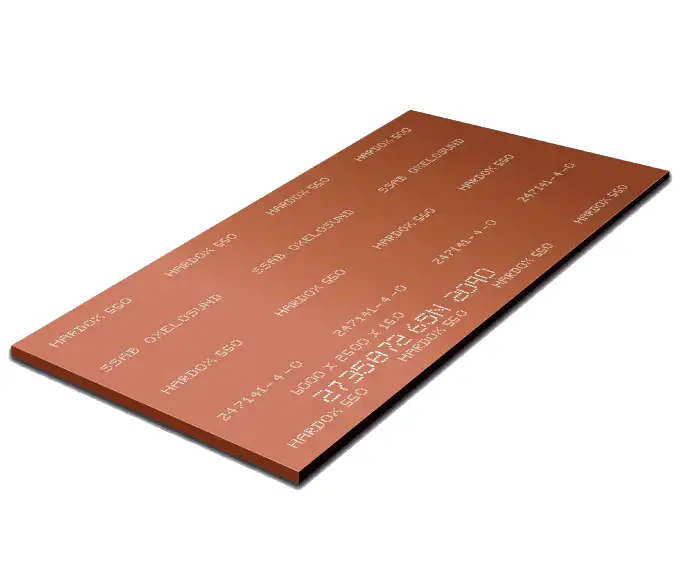
Hardox 600 is an extra-hard, quenched-and-tempered abrasion-resistant steel plate engineered for extreme wear environments where long service life, high impact toughness and practical fabricability are all required. When service life under heavy abrasion and intermittent impact is the prime objective, Hardox 600 routinely outperforms conventional AR steels and many alternative wear solutions — provided design and fabrication follow standard best practices for high-hardness steels.
What is Hardox 600 Plate?
Hardox 600 constitutes a premium wear-resistant steel plate manufactured through advanced quenching and tempering processes. This high-performance alloy represents SSAB's flagship product in the ultra-high hardness category, specifically engineered for applications where conventional materials fail under severe abrasive conditions.
-
Product family: Hardox® wear plate (SSAB brand).
-
Grade name: Hardox 600 (sometimes referenced as AR600 in generic markets, but Hardox® is a registered SSAB name).
-
Nominal hardness: 600 HBW (Brinell) — a benchmark used across the product literature.
-
Primary benefit: very high abrasion resistance combined with a controlled level of toughness that allows practical fabrication and on-site repair in many applications.
Please note that we are not an authorized distributor or representative of SSAB for Hardox® products. As such, we are currently not offering Hardox® 600 plate for sale.
For customers seeking a material with similar properties and performance, we highly recommend the following equivalent alternatives:
Both NM600 and AR600 provide excellent abrasion resistance and mechanical strength, making them suitable for applications where durability and wear resistance are critical. These products are readily available and can serve as direct replacements for Hardox® 400 in many cases.
Chemical Composition of Hardox 600 Plate
Understanding the precise chemical makeup of Hardox 600 enables engineers to predict its behavior in specific applications and welding procedures. The carefully balanced alloy composition contributes directly to its exceptional wear resistance and mechanical properties.
| Element | Percentage Range | Function |
|---|---|---|
| Carbon (C) | 0.47-0.54% | Primary hardening element |
| Silicon (Si) | 0.10-0.40% | Deoxidation and strength |
| Manganese (Mn) | 0.70-1.00% | Hardenability improvement |
| Phosphorus (P) | ≤0.025% | Controlled impurity |
| Sulfur (S) | ≤0.010% | Controlled impurity |
| Chromium (Cr) | 0.20-0.80% | Wear resistance enhancement |
| Nickel (Ni) | ≤0.25% | Toughness improvement |
| Molybdenum (Mo) | ≤0.25% | Strength and hardenability |
| Boron (B) | 0.0015-0.0050% | Hardenability enhancement |
This precisely controlled chemistry ensures consistent performance while maintaining excellent weldability characteristics essential for fabrication processes.
Mechanical Properties of Hardox 600 Plate
The mechanical properties of Hardox 600 demonstrate its superiority in demanding applications where both hardness and toughness are critical requirements. These properties result from sophisticated metallurgical processing techniques.
| Property | Value | Test Standard |
|---|---|---|
| Brinell Hardness | 570-640 HBW | ISO 6506-1 |
| Tensile Strength | 2000 MPa (min) | ISO 6892-1 |
| Yield Strength | 1650 MPa (min) | ISO 6892-1 |
| Elongation | 7% (min) | ISO 6892-1 |
| Impact Energy (-40°C) | 15 J (min) | ISO 148-1 |
| Impact Energy (-20°C) | 25 J (min) | ISO 148-1 |
| Charpy V-notch (20°C) | 35 J (min) | ISO 148-1 |
These outstanding mechanical characteristics enable Hardox 600 to withstand extreme operational stresses while maintaining structural integrity over extended service periods.
Specifications of Hardox 600 Plate
Standard specifications define the dimensional tolerances, surface quality, and delivery conditions for Hardox 600 plates. Understanding these specifications ensures proper material selection and application.
| Specification | Range/Value | Standard |
|---|---|---|
| Thickness | 4-80 mm | SSAB Standard |
| Width | Up to 3000 mm | Mill Capability |
| Length | Up to 12000 mm | Mill Capability |
| Flatness Tolerance | ±5 mm/m | EN 10029 |
| Thickness Tolerance | ±0.3 mm (≤20mm) | EN 10029 |
| Edge Condition | Mill Edge/Gas Cut | Customer Specification |
| Surface Finish | Shot Blasted | Standard Delivery |
| Delivery Condition | Quenched & Tempered | Heat Treatment |
These specifications ensure consistent quality and dimensional accuracy across all delivered materials, facilitating seamless integration into manufacturing processes.
Fabrication, cutting, welding and repair recommendations
Hardox 600 can be worked in normal workshop environments but requires adapted procedures:
Cutting
-
Use plasma or laser with parameters adjusted for high hardness. Waterjet works with no heat input and is frequently used for precision parts. Expect more consumable wear than with milder steels.
Welding
-
Welding is feasible but must follow qualified procedures. Typical recommendations:
-
Use low hydrogen consumables (SMAW, FCAW, GMAW electrodes selected for hardenable steels).
-
Preheat and controlled interpass temperatures are often required for thicker plates to avoid hydrogen cracking.
-
Post-weld heat treatment (PWHT) depends on local thickness, geometry and service conditions — consult a qualified welding engineer.
-
Forming & bending
-
For thinner plates at lower hardness variants, cold bending is practical; at 600 HBW the designer should minimize forming and rely on fabricated geometries or CNC-cut profiles. Check the producer’s bending data for limits.
Repair & maintenance
-
On-site weld repairs and local cladding are feasible when planned. For heavy wear components, consider modular wear plates or bolted liners made from Hardox 600 to reduce downtime.
Comparative performance vs. alternatives
When choosing a wear solution, procurement must balance initial material cost, machining and fabrication cost, downtime risk and total life-cycle cost.
Hardox 600 vs Hardox 500 / 450
-
Higher hardness delivers superior abrasive life per mm, but fabrication and cutting costs increase and bending/forming becomes more limited. For extremely severe wear and limited impact, Hardox 600 often gives the best life-cycle economics.
Hardox 600 vs white iron castings
-
Cast chromium white irons can offer good abrasion resistance but are often brittle under impact. Hardox 600 usually outlasts overlays in mixed abrasion/impact conditions while retaining the benefits of welded fabrication.
Hardox 600 vs ceramic/oxide liners
-
Ceramics can beat steels on wear with low weight, but they shatter under heavy impact. Hardox 600 is the engineering choice when combined abrasion and impact occur.
Designers should run a wear-simulation assessment or pilot trial to decide which material yields lowest total cost of ownership for a particular duty cycle.
Hardox 600 Plate Standards
Hardox 600 complies with multiple international standards, ensuring global acceptance and quality assurance. We reference these standards to guarantee material performance and traceability.
Primary standards include EN 10025-2 for structural steels, though Hardox 600 exceeds typical structural steel requirements. The material also conforms to ASTM A514/A514M specifications for high-yield-strength quenched and tempered alloy steel plates.
Quality management follows ISO 9001:2015 principles, with comprehensive testing protocols verifying chemical composition, mechanical properties, and dimensional accuracy. Each plate receives individual certification documenting compliance with applicable standards.
SSAB's proprietary manufacturing standards supplement international requirements, incorporating advanced quality control measures that exceed conventional industry practices.
Equivalent Materials to Hardox 600
While Hardox 600 represents a unique grade with specific properties, several materials offer comparable characteristics for certain applications. However, direct substitution requires careful evaluation of performance requirements.
Comparable materials include JFE-EH590, Dillidur 500V, and XAR 600, though each exhibits distinct characteristics affecting suitability for specific applications. We recommend thorough analysis before material substitution to ensure optimal performance.
Chinese equivalent grades such as NM600 and WR600 provide similar hardness levels but may differ in toughness characteristics and manufacturing quality consistency. European alternatives like Creusabro 8000 offer competitive properties but with different chemical compositions.
The unique combination of hardness, toughness, and weldability in Hardox 600 makes exact equivalency challenging, requiring application-specific evaluation for material selection.
Hardness of Hardox 600 HRC
Converting Hardox 600's Brinell hardness to Rockwell C scale provides familiar reference points for engineers accustomed to HRC measurements. This conversion facilitates material comparison and selection processes.
| Brinell Hardness (HBW) | Rockwell C (HRC) | Typical Range |
|---|---|---|
| 570 | 56 | Lower Limit |
| 600 | 58 | Typical Value |
| 640 | 60 | Upper Limit |
| Average | 58 HRC | Standard Range |
These HRC values position Hardox 600 among the hardest readily weldable steels available commercially, combining extreme surface hardness with practical fabrication characteristics.
Applications of Hardox 600 Plate
Hardox 600 finds extensive application across industries requiring maximum wear resistance combined with structural reliability. We have successfully supplied this material for numerous critical applications.
Mining equipment components benefit significantly from Hardox 600's properties, including crusher liners, chute linings, and conveyor system components. The material's exceptional abrasion resistance extends equipment life substantially compared to conventional alternatives.
Construction and earthmoving equipment utilize Hardox 600 for cutting edges, bucket sides, and wear plates where extreme durability is essential. The material's toughness prevents catastrophic failure under impact loading conditions.
Industrial processing equipment incorporates Hardox 600 in applications involving abrasive materials handling, including cement production, steel processing, and bulk material handling systems.
Classification of Hardox 600 Plate
Technical classification systems categorize Hardox 600 according to various criteria, facilitating proper material selection and application engineering. Understanding these classifications aids in specification development.
| Classification Type | Category | Description |
|---|---|---|
| Hardness Class | Ultra-High | >550 HBW |
| Steel Type | Quenched & Tempered | Heat Treated |
| Application Grade | Wear Resistant | Abrasion Applications |
| Weldability | Good | Preheat Required |
| Toughness Level | High | Impact Resistant |
| Thickness Capability | Medium-Heavy | 4-80 mm |
| Surface Quality | Premium | Shot Blasted |
This classification framework enables systematic material selection based on specific application requirements and performance criteria.
Global Market Pricing for Hardox 600 Plate (2025)
Current market conditions influence Hardox 600 pricing across major global regions. We monitor these trends to provide competitive pricing while maintaining quality standards.
| Region | Price Range (USD/MT) | Market Conditions | Delivery Terms |
|---|---|---|---|
| North America | $2,800-3,200 | Stable demand | FOB Mill |
| Europe | $2,600-3,000 | Moderate supply | Ex-Works |
| Asia-Pacific | $2,400-2,800 | Growing demand | CIF Port |
| Middle East | $2,700-3,100 | Project-driven | CIF/CFR |
| South America | $2,500-2,900 | Variable demand | FOB Port |
| Africa | $2,800-3,300 | Limited supply | CIF Port |
These pricing indicators reflect current market dynamics, though specific project requirements and volume considerations may influence final pricing structures.
Hardox 600 Plate Sizes and Weight Parameters
Standard size availability and weight calculations facilitate project planning and logistics coordination. We maintain comprehensive inventory across popular dimensions.
| Thickness (mm) | Standard Widths (mm) | Length (mm) | Weight (kg/m²) |
|---|---|---|---|
| 4 | 1500, 2000, 2500 | 6000-8000 | 31.4 |
| 6 | 1500, 2000, 2500 | 6000-10000 | 47.1 |
| 8 | 1500, 2000, 2500 | 6000-12000 | 62.8 |
| 10 | 1500, 2000, 2500, 3000 | 6000-12000 | 78.5 |
| 15 | 1500, 2000, 2500, 3000 | 6000-12000 | 117.8 |
| 20 | 1500, 2000, 2500, 3000 | 6000-12000 | 157.0 |
| 25 | 1500, 2000, 2500, 3000 | 6000-12000 | 196.3 |
| 30 | 1500, 2000, 2500, 3000 | 6000-12000 | 235.5 |
Custom sizes are available upon request, with lead times varying according to mill scheduling and availability.
Advantages of Hardox 600 Plate
The unique combination of properties in Hardox 600 provides significant operational benefits that translate directly into cost savings and improved equipment performance.
Extended service life represents the primary advantage, with wear rates significantly lower than conventional materials. We have documented service life improvements of 300-500% compared to standard abrasion-resistant steels in demanding applications.
Reduced maintenance requirements result from the material's exceptional durability, decreasing downtime and associated costs. Equipment availability improves substantially when critical wear components utilize Hardox 600.
Superior weldability enables complex fabrication while maintaining joint integrity. The material accepts standard welding procedures with appropriate preheat protocols, facilitating repair and modification operations.
Predictable performance characteristics simplify design calculations and service life predictions, enabling accurate lifecycle cost analysis and maintenance scheduling.
Manufacturing Process of Hardox 600 Plate
The sophisticated manufacturing process for Hardox 600 involves multiple controlled stages that ensure consistent quality and performance characteristics.
Steel production begins with careful raw material selection, utilizing high-quality scrap and virgin materials to achieve precise chemistry control. Electric arc furnace melting followed by secondary metallurgy refines the composition to exact specifications.
Continuous casting produces slabs with homogeneous structure and minimal segregation. Subsequent reheating prepares the material for hot rolling, where controlled reduction schedules develop the desired grain structure.
Quenching operations involve rapid cooling from austenitic temperatures, creating the martensitic structure responsible for high hardness. Precise temperature control and cooling rates ensure uniform transformation throughout the plate thickness.
Tempering follows immediately after quenching, carefully balancing hardness retention with toughness improvement. This critical step determines the final mechanical properties and performance characteristics.
Iranian Procurement Case Study
A major Iranian mining operation recently selected Hardox 600 for their copper ore processing facility expansion. The project involved replacing existing mild steel liner plates in their primary crusher system with 500 tons of Hardox 600 plate.
Previous mild steel liners required replacement every 6-8 weeks due to severe abrasive wear from copper ore processing. The operation faced significant production losses during scheduled and unscheduled maintenance intervals.
We supplied 25mm thick Hardox 600 plates in custom-cut dimensions, including precision machining for bolt patterns and mounting configurations. Technical support included welding procedure specifications and installation guidelines.
Results exceeded expectations, with initial service life extending beyond 12 months without replacement requirements. The mining operation reported 85% reduction in maintenance costs and dramatic improvement in equipment availability.
This successful implementation led to additional orders for secondary crusher components and conveyor system upgrades, demonstrating the material's value proposition in challenging applications.
Frequently Asked Questions
Q1: Can Hardox 600 be welded using standard procedures?
Hardox 600 requires preheat and controlled cooling procedures for successful welding. We recommend 150-200°C preheat temperature with low-hydrogen electrodes for optimal results. Post-weld stress relief may be necessary for thick sections or complex geometries.
Q2: What cutting methods work best for Hardox 600?
Plasma cutting, oxy-fuel cutting, and laser cutting all work effectively with Hardox 600. We recommend slower cutting speeds and proper torch setup to minimize heat-affected zone formation and maintain edge quality.
Q3: How does Hardox 600 compare to ceramic wear solutions?
While ceramics offer superior wear resistance, Hardox 600 provides better impact resistance and fabrication flexibility. The steel solution often proves more cost-effective when considering installation, maintenance, and replacement factors.
Q4: What machining considerations apply to Hardox 600?
Machining requires carbide or ceramic tooling with appropriate speeds and feeds. We recommend flood cooling and sharp tools to prevent work hardening and achieve acceptable surface finishes.
Q5: Can Hardox 600 be formed or bent after heat treatment?
Cold forming is possible but limited due to the material's high strength. Hot forming may compromise heat treatment but can be restored through re-quenching and tempering operations.
Q6: What storage conditions are recommended for Hardox 600?
Store plates in dry conditions with adequate support to prevent deflection. Protective coating or indoor storage prevents surface corrosion that could affect weldability and appearance.
Q7: How should Hardox 600 be specified for procurement?
Include thickness, dimensions, edge condition, surface finish, and any special requirements. Reference applicable standards and specify testing requirements for critical applications.
Q8: What factors influence Hardox 600 service life?
Application conditions, material hardness, abrasive characteristics, impact loading, and temperature all affect service life. Proper application engineering maximizes performance and cost-effectiveness.
Conclusion
Hardox 600 plate represents the premium choice for applications demanding maximum wear resistance combined with structural reliability. Its exceptional properties, proven performance record, and global availability make it an essential material for modern industrial operations. We continue to support customers worldwide with technical expertise and reliable supply capabilities, ensuring successful implementation of this advanced wear-resistant steel grade.
 EN
EN  AR
AR  JA
JA  KO
KO  DE
DE  IT
IT  ES
ES