
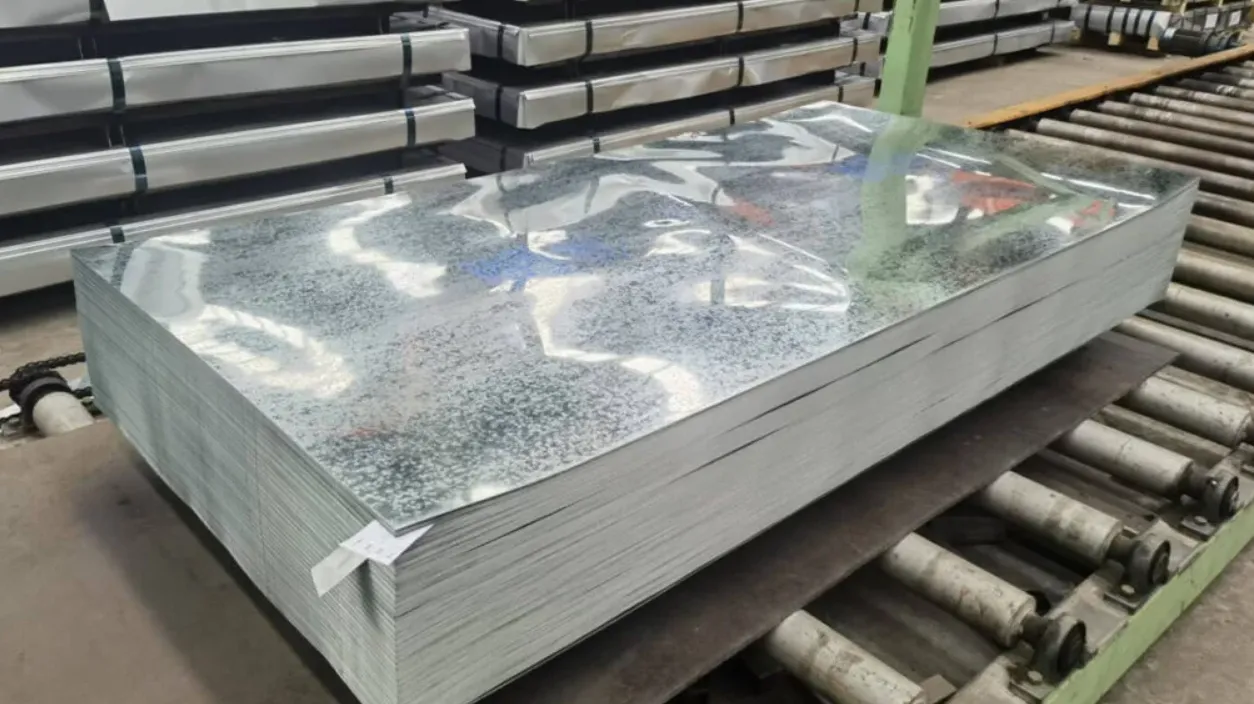
G90 galvanized steel sheet is often the best “default” choice when a project needs long, predictable corrosion resistance from zinc coating without jumping to stainless steel or heavy post paint systems, and it typically delivers a noticeably longer service window than lighter coatings such as G60 in the same environment. When the design calls for stable supply, consistent coating mass, clean forming performance, and cut to exact dimensions, MWalloys G90 Galvanized Steel Sheet with premium zinc coating and custom sizes is positioned as a practical engineering and procurement solution that balances durability, manufacturability, and total cost of ownership.
What is G90 galvanized steel sheet, and what does “G90” actually mean?
G90 galvanized steel sheet is hot dip zinc coated steel where the zinc coating requirement is defined by a coating designation “G90.” In North American practice, “G” refers to a galvanized (zinc) coating, and “90” refers to the minimum total coating mass on both sides of the sheet, expressed in ounces per square foot.
Key points engineers and buyers care about:
- G90 is a coating weight designation, not a thickness designation. Thickness can be derived, yet the standard controls mass via testing.
- The coating is applied via hot dip galvanizing in a continuous line, producing a metallurgically bonded zinc layer system that protects steel through both barrier protection and sacrificial action.
- G90 is widely specified due to a strong balance: higher corrosion resistance than G60 with less cost than very heavy zinc coatings or stainless alternatives.
In purchasing terms, “G90 galvanized steel sheet” is commonly ordered in coil, cut to length sheet, or slit strip, with optional surface conditions such as spangle control, skin pass, tension leveling, oiling, or passivation.
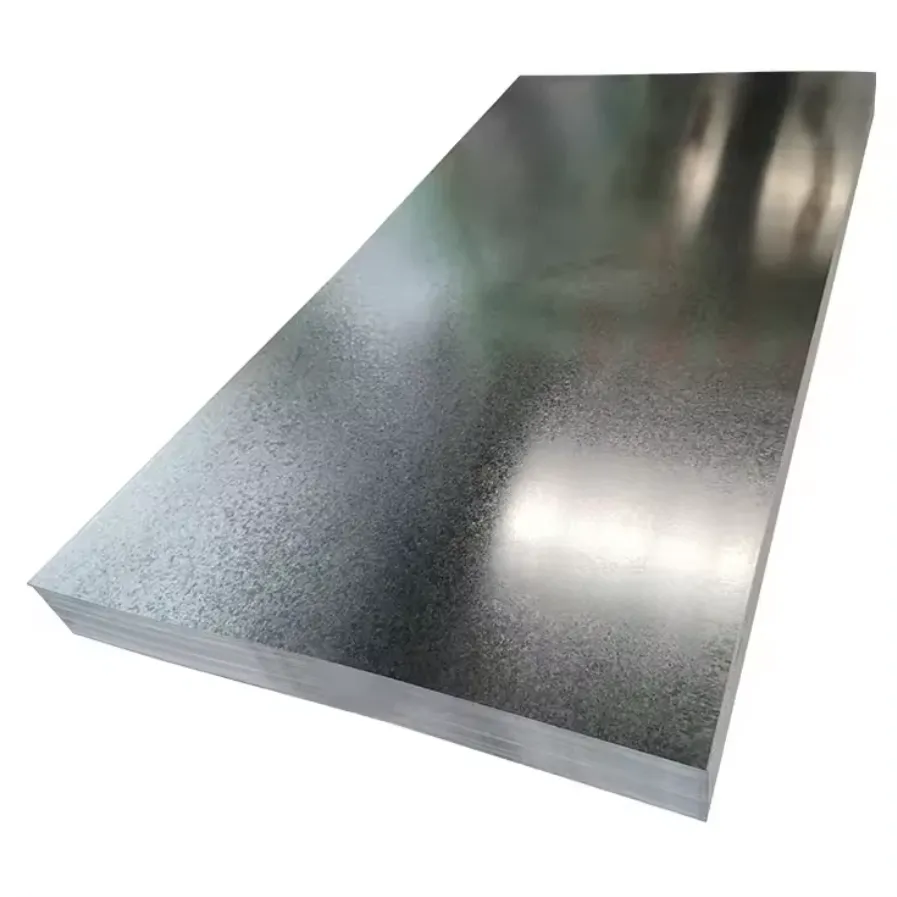
Which standards define G90, coating requirements, and acceptance criteria?
Most top ranking technical pages on this topic converge on one point: G90 is primarily tied to ASTM coating designations, while other regions use different notation (such as Z275 in EN standards). A correct specification lists the base standard, steel grade, coating class, dimensions, and surface condition.
Commonly used standards in real procurement
- ASTM A653 A653M: Steel Sheet, Zinc Coated (Galvanized) or Zinc Iron Alloy Coated (Galvannealed) by the Hot Dip Process
This is the main reference that defines G90 coating designation, coating tests, and steel grade options. - ASTM A924 A924M: General Requirements for Steel Sheet Metallic Coated by the Hot Dip Process.
Covers general rules, tolerances, sampling, and workmanship that apply with A653. - ASTM A568 A568M: General Requirements for Steel Sheet, Carbon, and High Strength, Low Alloy.
Often referenced regarding dimensional tolerances and ordering conventions. - EN 10346: Continuously hot dip coated steel flat products (European system, uses Z coatings like Z275).
- ISO 3575 / ISO 4998: Common international references for continuous hot dip coated sheet and structural grades.
- JIS G3302: Hot dip zinc coated steel sheet and strip (Japanese system, typically Z coating mass in g/m²).
Why the standard reference matters to purchasing
Two products can be labeled “galvanized” yet behave differently in fabrication and field life due to:
- Coating mass and uniformity requirements.
- Allowed surface conditions and treatment types.
- Mechanical property definitions and test methods.
- Tolerances and flatness requirements.
- Acceptance criteria on coating adhesion, bare spots, and repairs.
A robust RFQ typically includes: ASTM A653, steel grade (CS, FS, SS, HSLAS, etc.), G90, surface finish (regular spangle, minimized spangle, spangle free), surface treatment (oiled, dry, passivated), thickness, width, length, and coil ID/OD when relevant.
What coating weight and zinc thickness does G90 deliver?
G90 controls total coating mass, both sides combined. Converting coating mass into approximate thickness helps engineering teams estimating service life, forming behavior, and joining methods.
Coating mass, thickness, and conversion basics
- G90 means 0.90 oz/ft² total on both sides.
- 1 oz/ft² equals roughly 305 g/m² (total both sides).
- Zinc density is about 7.14 g/cm³, which enables approximate thickness conversion.
In practical terms, G90 corresponds to roughly Z275 in the EN system, and total zinc thickness is typically around 38 micrometers total, near 19 micrometers per side when balanced.
Table 1. Common galvanized coating designations and approximate equivalents
| Coating designation | Standard system | Total coating mass (both sides) | Approx. metric equivalent | Approx. total zinc thickness |
|---|---|---|---|---|
| G30 | ASTM A653 | 0.30 oz/ft² | ~Z90 (90 g/m²) | ~13 µm total |
| G40 | ASTM A653 | 0.40 oz/ft² | ~Z120 | ~17 µm total |
| G60 | ASTM A653 | 0.60 oz/ft² | ~Z180 | ~26 µm total |
| G90 | ASTM A653 | 0.90 oz/ft² | ~Z275 | ~38 µm total |
| G115 | ASTM A653 | 1.15 oz/ft² | ~Z350 | ~49 µm total |
Notes:
- Thickness values are approximate because hot dip coatings include zinc iron alloy layers plus outer zinc, and coating distribution can vary by side and by product.
- The controlling requirement remains the standard’s coating mass test and acceptance rules.
A “premium zinc coating” claim should translate into measurable controls, not marketing language. In serious procurement, it implies:
- Stable coating weight centered near target, not barely meeting minimum.
- Low risk of thin edge coating due to process tuning.
- Controlled spangle and smoothness to support painting and appearance.
- Reduced coating defects such as dross pimples or bare spots.
- Consistent surface treatment to reduce white rust risk during shipping.
MWalloys positioning around premium coating should be backed by inspection documentation and repeatable line control.
How does G90 compare with G60, Z275, and other zinc coatings?
This is one of the most common “People also ask” clusters: “G60 vs G90,” “Is G90 better,” “What is equivalent to Z275,” and “Which coating should I specify.”
The engineering difference: coating mass drives service life in similar conditions
All else equal, more zinc means more sacrificial material available before red rust develops. That does not mean the service life scales perfectly linearly, yet coating mass is a strong predictor when comparing within the same coating family.
Table 2. Practical comparison: G60 vs G90
| Attribute | G60 | G90 |
|---|---|---|
| Total coating mass | 0.60 oz/ft² | 0.90 oz/ft² |
| Relative zinc amount | Baseline | ~50 percent more zinc than G60 |
| Typical use case | Indoor, low to moderate humidity, sheltered components | Outdoor exposure, HVAC, building envelope parts, moderate industrial atmosphere |
| Risk tolerance | Higher risk of early edge rust in harsh exposure | Lower risk due to thicker zinc reserve |
| Cost impact | Lower | Higher, yet often cheaper than paint systems or stainless upgrades |
| Common equivalent (EU) | ~Z180 | ~Z275 |
G90 vs Z275: are they interchangeable?
They are close in total coating mass. Still, interchangeability depends on:
- Which standard the project documents require
- Sampling and test methods
- Acceptance criteria and repair rules
- Base steel grade system differences
In international projects, a dual specification strategy can reduce confusion: “ASTM A653 G90 or EN 10346 Z275, subject to approval.”
When a heavier coating than G90 is justified
G90 is not the ceiling. Coastal zones, deicing salt splash, aggressive industrial fumes, animal housing, and high time of wetness can justify G115 or heavier, or an additional paint system on top of galvanizing.
Which base steel grades and mechanical properties are used with G90 sheet?
G90 describes the coating. Mechanical behavior is controlled by the base steel grade. Leading technical pages consistently emphasize that buyers should not specify “G90” alone; the steel grade matters for forming, roll forming, stamping, and structural capacity.
Common ASTM A653 steel grade families paired with G90
- Commercial Steel (CS): general forming, light bending, typical sheet metal work
- Forming Steel (FS): better ductility than CS
- Deep Drawing Steel (DDS) and Extra Deep Drawing Steel (EDDS): demanding stampings
- Structural Steel (SS): higher strength with defined yield
- High Strength Low Alloy (HSLAS): strength plus formability balance
- Ultra High Strength options: vary by mill capability
Table 3. Typical mechanical property ranges (ASTM families, indicative)
| Grade family | Typical yield strength | Typical tensile strength | Typical elongation trend | Typical application |
|---|---|---|---|---|
| CS | Lower | Moderate | Moderate | Panels, ductwork, brackets |
| FS | Lower | Moderate | Higher | Light stampings, bends |
| DDS | Lower | Moderate | High | Drawn parts, housings |
| EDDS | Lower | Moderate | Very high | Complex deep draw stampings |
| SS | Defined minimum | Higher | Lower than CS | Studs, framing components |
| HSLAS | Higher | Higher | Moderate | Roll formed sections, supports |
Note: Exact values depend on thickness and the ordered grade designation. Purchase orders should list the precise grade, not only the family.
Surface and temper considerations that affect fabrication
- Skin pass (temper rolling) can reduce stretcher strains and improve shape, with a small ductility tradeoff.
- Tension leveling improves flatness, helping laser cutting and press brake accuracy.
- Spangle control affects appearance and paint uniformity; minimized spangle is often preferred in prepaint lines.
How is G90 galvanized steel sheet manufactured, and what controls quality?
Hot dip galvanizing in a continuous line is a mature process, yet outcomes vary significantly based on process control. Buyers seeking consistent lots should understand the steps that influence coating adhesion, uniformity, and surface condition.
Main steps in continuous hot dip galvanizing
- Incoming coil preparation: weld coil ends to run continuously.
- Cleaning: remove rolling oil and residues.
- Annealing: adjust base steel microstructure and strength.
- Zinc bath immersion: steel passes through molten zinc; aluminum is commonly used in small amounts to influence coating growth and appearance.
- Air knife wiping: controls coating thickness by gas jets, creating the target coating mass.
- Cooling and solidification: spangle forms based on chemistry and cooling; spangle can be minimized via process control.
- Post treatments: oil, passivation, chromium free treatments, anti fingerprint options, depending on requirements.
- Finishing: skin pass, leveling, inspection, and recoiling.
What “coating adhesion” means in practice
A good G90 coating should tolerate forming operations without excessive flaking. Adhesion depends on:
- Base steel surface cleanliness before the bath
- Bath chemistry and temperature stability
- Annealing atmosphere control
- Coating structure development
ASTM systems often evaluate adhesion via bend tests and visual checks rather than a single numeric adhesion value. A reliable supplier will connect adhesion performance with process stability and provide guidance on bend radius and tooling.
What corrosion performance should engineers expect from G90 in real environments?
Search intent here usually splits into two user types:
- Engineers who want a realistic service life estimate
- Buyers who want a risk comparison between coatings
Zinc protects steel through sacrificial action, meaning zinc corrodes preferentially, shielding exposed steel at small scratches and cut edges. Actual performance depends heavily on time of wetness, chlorides, sulfur compounds, and debris accumulation.
Typical zinc corrosion behavior by exposure class
In mild atmospheres, zinc forms relatively stable corrosion products that slow further loss. In marine or heavy industrial settings, chlorides and acidic pollutants can accelerate zinc consumption.
Table 4. Indicative zinc loss rates and service expectation (order of magnitude)
| Environment type | General description | Typical zinc loss rate trend | Expected performance of G90 (qualitative) |
|---|---|---|---|
| Indoor dry | Conditioned warehouses, electronics rooms | Very low | Long life, coating mainly prevents handling rust |
| Rural | Low pollution, moderate humidity | Low | Long service window, minimal maintenance |
| Urban | Mixed pollutants, moderate time of wetness | Medium | Strong performance, common building material |
| Industrial | Sulfur compounds, chemical fumes | Medium to high | Adequate in many cases, site evaluation recommended |
| Coastal marine | Salt deposition, frequent wetting | High | May need heavier coating, paint topcoat, or duplex system |
| Splash zone | Direct salt water splash or deicing salt spray | Very high | Consider heavier protection system |
Important cautions:
- Service life depends on design details: water traps, lap joints, debris shelves, and dissimilar metal contact can dominate outcomes.
- Cut edges are protected by zinc’s sacrificial action, yet extremely aggressive exposure can still lead to edge staining earlier than flat surfaces.
- A duplex system (galvanizing plus paint) can multiply life beyond either alone when designed well.
Design practices that extend the life of G90 parts
- Avoid crevices that hold moisture.
- Use drainage holes in channels and enclosures.
- Keep lap joints sealed or oriented to shed water.
- Isolate galvanic couples: copper runoff onto zinc can accelerate attack.
- Specify suitable fasteners: zinc plated or hot dip galvanized fasteners are common companions.
Which fabrication and joining methods work well with G90 sheet?
A frequent purchasing concern: “Will G90 crack during forming,” “Can it be welded,” “Will paint stick,” “What happens at cut edges.”
Cutting, punching, and forming
- Shearing and blanking work normally; burr control matters because burrs can become early corrosion sites.
- Laser cutting is possible; heat affected areas can show discoloration. Post cleaning and suitable paint system reduce cosmetic issues.
- Roll forming is widely used with G90 due to coating durability and consistent feed behavior.
- Press brake bending: use appropriate die radius relative to thickness and grade. Higher strength grades require larger radii.
Tip: When forming is severe, selecting the right steel grade (FS, DDS) can matter more than changing from G90 to another coating.
Can G90 be welded without issues?
Yes, with process adjustments. Zinc vaporizes at welding temperatures, which can create spatter, porosity, and fumes.
Common approaches:
- Resistance spot welding: very common in sheet metal assemblies; electrode maintenance and parameter tuning are needed.
- MIG welding: can work, typically with surface preparation in the weld zone and good ventilation.
- TIG welding: possible, often used on thinner materials with high quality needs.
Safety note: zinc fumes require ventilation and appropriate respiratory controls.
Painting and powder coating on G90: what preparation is needed?
Paint adhesion depends on surface treatment, oil residue, and conversion coating quality.
Good practice:
- Remove oils via alkaline cleaning or solvent compatible with the paint system.
- Use suitable pretreatment, often phosphate or modern chromium free conversion coatings.
- Choose primers designed for galvanized substrates, then topcoat.
A common cause of failure is skipping pretreatment on smooth minimized spangle surfaces, which can reduce mechanical keying.
Where is G90 galvanized steel sheet commonly used, and why?
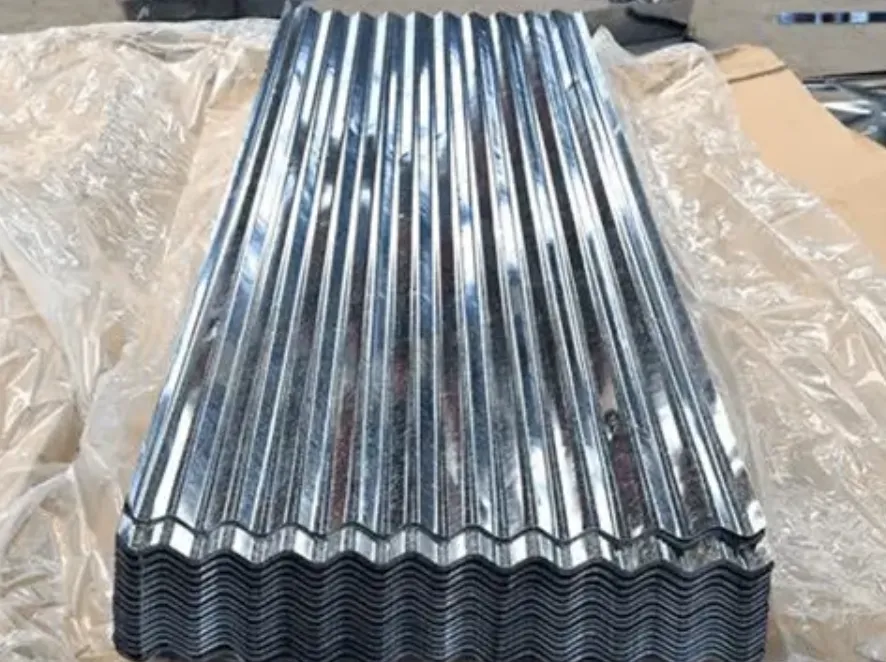
G90 sits in a sweet spot: durable enough for many outdoor applications, formable enough for roll forming and sheet metal work, widely available in global supply chains.
Typical application categories
- Building envelope components: flashing, trims, angles, studs (when allowed by local code), roof and wall accessories.
- HVAC: ductwork, housings, brackets, rooftop units.
- Electrical: enclosures, cabinets, junction boxes (often painted afterward).
- General fabrication: frames, guards, shelves, agricultural equipment panels in mild exposure.
- Transportation: non cosmetic brackets and structural panels, where painting may be added.
Table 5. Application fit matrix (engineering and procurement view)
| Application | Exposure | Why G90 is chosen | Common add ons |
|---|---|---|---|
| Rooftop HVAC panels | Outdoor, condensation | Higher zinc reserve than G60 | Paint topcoat, sealed joints |
| Cable trays | Indoor to outdoor | Corrosion resistance plus formability | Powder coat in harsh sites |
| Metal building trim | Outdoor | Cut edge protection and long life | Prepainted option |
| Electrical cabinets | Indoor or sheltered outdoor | Reliable base substrate | Conversion coat plus paint |
| Studs and framing accessories | Indoor, occasional moisture | Durable coating, easy to screw | Compliance with local code |
| Agricultural panels (mild) | Humid, organic exposure | Better longevity than light coatings | Washdown practices |
How do custom sizes, tolerances, and packaging affect project success?
Procurement teams often focus on price per ton, yet downstream costs frequently come from poor dimensional control, flatness issues, coil damage, or mismatched packaging.
MWalloys positions G90 sheet supply with custom sizing, which typically covers:
- Thickness range: common commercial supply often spans roughly 0.30 mm to 3.00 mm, with availability varying by mill and grade
- Width range: coils and sheets in standard widths, plus slit widths
- Length: cut to length based on customer drawings, pallet constraints, or container loading
- Edge condition: mill edge or slit edge
- Coil ID and OD: critical to compatibility with decoilers and roll form lines
Table 6. Typical ordering parameters that can be customized
| Parameter | Options buyers specify | Why it matters |
|---|---|---|
| Product form | Coil, cut to length sheet, slit strip | Impacts yield, handling, press line setup |
| Thickness | Nominal with tolerance | Controls stiffness, forming load, corrosion reserve at edges |
| Width | Full width or slit widths | Impacts nesting efficiency and scrap |
| Length | Fixed, random, or tight cut length | Impacts assembly fit and labor |
| Surface | Regular spangle, minimized, spangle free | Appearance, paint uniformity |
| Surface treatment | Oiled, dry, passivated, anti fingerprint | Shipping stain risk, downstream cleaning |
| Packaging | seaworthy, export pallets, VCI paper | Reduces transit damage and white rust |
Tolerances and flatness: what engineers should request
A purchase order can call out:
- Thickness tolerance requirement per relevant standard
- Width and length tolerances
- Camber limits on slit coils
- Flatness requirements (critical in laser cutting and enclosure doors)
In many projects, adding a clear flatness requirement saves far more money than negotiating a small unit price reduction.
What should be verified on mill test certificates and incoming inspection?
Top performing technical sellers tend to provide a checklist because many disputes come from incomplete documentation. A proper certificate package should allow traceability and verify compliance.
What a Mill Test Certificate usually includes
- Standard: ASTM A653 and related general requirements
- Heat number and coil number traceability
- Chemical composition (when applicable by grade)
- Mechanical test results: yield, tensile, elongation
- Coating designation: G90
- Coating test results: coating mass via triple spot or single spot method (per the standard)
- Dimensions and tolerances confirmation
- Surface condition and treatment
Table 7. Practical incoming inspection checklist (warehouse to production)
| Check item | Method | Typical acceptance focus |
|---|---|---|
| Visual surface quality | Visual under good lighting | No bare spots, severe dents, heavy dross |
| Coating continuity | Visual plus spot checks | Uniform appearance, no widespread thin areas |
| Thickness | Micrometer or gauge | Within ordered tolerance |
| Width and length | Tape and calipers | Fit with fabrication drawings |
| Flatness | Straightedge or flatness gauge | No oil canning that affects assembly |
| Coating weight (if needed) | Lab test per standard | Meets G90 minimum |
| Adhesion (when critical) | Bend test sample | No excessive flaking |
| Packaging condition | Visual | No water ingress, crushed edges |
MWalloys can strengthen EEAT perception by offering a consistent documentation set and pre shipment photos that match the packing list and heat traceability.
How should G90 galvanized sheet be stored and handled to prevent white rust?
White rust, also called wet storage stain, is one of the most common issues that buyers mistakenly interpret as “bad galvanizing.” It often results from storage and shipping conditions rather than coating weight.
What causes white rust?
When moisture gets trapped between tightly stacked sheets or coil wraps, oxygen supply becomes limited and zinc corrosion products build quickly, producing white or gray staining.
Factors that increase risk:
- Condensation during temperature cycling
- Rainwater entry into packaging
- Storing bundles directly on the ground
- No air circulation between sheets
- Long ocean shipments without moisture control
Prevention measures that work in real warehouses
- Store indoors with ventilation and stable temperature when possible.
- Keep bundles off the floor on dunnage.
- Use packaging with moisture barrier and desiccant on export lanes.
- Use passivation or suitable surface treatment when storage time is uncertain.
- Rotate stock using FIFO principles.
If white rust appears, it is often cosmetic early on, yet heavy staining can reduce paint adhesion and consume zinc, so evaluation is warranted.
How does G90 compare with stainless steel, aluminum, and painted systems in total cost of ownership?
Decision makers often ask, “Should I keep G90, or switch to stainless?” A useful comparison includes initial cost, fabrication cost, maintenance, and expected environment severity.
A practical decision framework
- Choose G90 when corrosion exposure is moderate and fabrication volume is high.
- Choose G90 plus paint when appearance and added durability are required.
- Choose heavier zinc coatings or duplex systems when marine salts or industrial pollutants are severe.
- Choose stainless when corrosion cannot be managed by zinc systems and maintenance access is limited.
- Choose aluminum when weight reduction is critical and the environment fits aluminum’s corrosion behavior.
Table 8. Material selection snapshot (high level)
| Option | Strengths | Limits | Typical fit |
|---|---|---|---|
| G90 galvanized steel | Strong corrosion protection, widely available, economical | Not ideal in direct salt splash | HVAC, building accessories, general fabrication |
| G90 plus paint (duplex) | Longer life, better appearance | Needs surface prep and process control | Enclosures, architectural parts |
| Heavier zinc coating (G115+) | More zinc reserve | Higher cost, availability varies | Aggressive exposure, long design life |
| Stainless steel | Excellent corrosion resistance in many environments | Cost, tool wear, galvanic concerns | Coastal hardware, food processing areas |
| Aluminum sheet | Lightweight, good corrosion resistance in many atmospheres | Lower stiffness, joining differences | Transportation panels, some enclosures |
What information should buyers send MWalloys to receive an accurate quotation?
A clean RFQ reduces back and forth and prevents mismatched deliveries.
Recommended RFQ fields:
- Standard: ASTM A653 plus A924 requirements if needed
- Steel grade: CS, FS, SS, HSLAS with precise grade designation
- Coating: G90
- Thickness, width, length, quantity
- Coil or sheet preference; coil ID, max OD, max coil weight when coil supply is needed
- Surface finish: regular spangle, minimized spangle, spangle free
- Surface treatment: oiled, dry, passivated, anti fingerprint, paint line compatible
- Tolerances and flatness requirements
- Intended fabrication: stamping, roll forming, welding, painting
- Packing requirements: export seaworthy, pallet type, moisture protection
- Destination and shipping terms
MWalloys can add value by confirming feasibility before production, aligning coating and grade with forming severity, and recommending surface treatment based on storage and paint plans.
Frequently Asked Questions about G90 galvanized steel sheet
What does G90 mean on galvanized steel sheet?
G90 is a zinc coating designation under ASTM A653. It specifies a minimum total coating mass of 0.90 oz/ft² on both sides combined. This heavier zinc layer provides significantly better corrosion resistance than G60 (0.60 oz/ft²).
Is G90 the same thing as Z275?
How much thicker is G90 than G60?
G90 contains about 50% more zinc by mass. In terms of linear thickness:
- G60: Approx. $26\, \mu\text{m}$ (total both sides)
- G90: Approx. $38\, \mu\text{m}$ (total both sides)
Does a thicker zinc coating always mean longer life?
In most environments, yes. However, G90's performance can be compromised by marine salt spray or industrial pollutants if the structure is not designed to shed water efficiently.
Can G90 galvanized sheet be welded?
Will paint adhere well to G90?
What is white rust and is it a defect?
White rust (Zinc Hydroxide) occurs when closely stacked sheets get wet and can't dry. While it looks bad, it usually doesn't mean the steel is structurally compromised unless it turns into red rust, which indicates the zinc has been fully consumed.
Regular spangle vs minimized spangle?
Regular spangle has the classic "flower" or "snowflake" pattern. Minimized spangle is nearly smooth, offering a flatter surface that is much better for high-quality painted finishes.
How to specify custom sizes for MWalloys?
| Parameter | Example |
|---|---|
| Thickness | 0.052" (16 Gauge) |
| Width / Length | 48" x 120" |
| Surface | Chem-Treat, No Oil |