
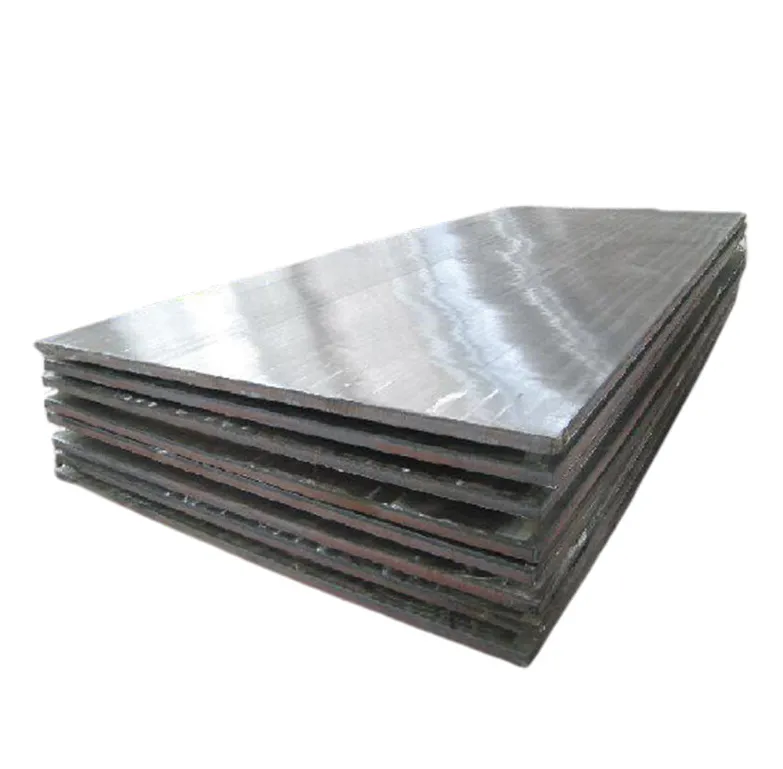
ASTM A710 steel plate is a high-strength, low-alloy (HSLA) structural steel specifically engineered for applications requiring exceptional weldability and low-temperature toughness. Known for its unique age-hardening properties, A710 steel—available in Grade A, Grade B, and Grade C—provides the structural integrity needed for complex engineering projects.
As a leading global supplier, we provide fully certified ASTM A710 plates tailored to your precise dimensions. Whether you are evaluating mechanical properties, checking chemical composition, or looking for immediate inventory, the following technical guide and supply solutions are designed to meet your project’s rigorous standards.
If your project requires the use of Alumina Ceramic Balls, you can contact us for a free quote.
What is ASTM A710 steel plate and what makes it different from typical HSLA plate?
ASTM A710 is a standard covering precipitation strengthened, low carbon, nickel copper alloyed structural steel plate. In many supply chains it gets grouped with “high strength structural plate,” yet its strengthening mechanism differs from standard carbon manganese plate.
A simple way to frame A710:
- Conventional structural plate (A36, many A572 grades) relies mainly on solid solution strengthening, grain refinement, plus some precipitation, usually achieved through controlled rolling.
- Quenched and tempered alloy plate (A514 class) relies on martensitic microstructures produced by quench and temper routes.
- A710 plate sits in between: it uses a low carbon base plus nickel, copper, chromium, molybdenum, and niobium (columbium) additions, then achieves strength through precipitation hardening via aging.
This combination matters in engineering practice:
- Low carbon content supports weldability, with less sensitivity to hydrogen cracking compared with higher carbon steels at similar strength.
- Strength comes from alloy design and aging, not from full quench and temper routes, so plate can offer a useful balance of strength and fabrication tolerance.
- Notch toughness requirements make it relevant in cold weather structures, bridge work, heavy welded frames, plus certain transportation or industrial structures.
ASTM A710 is not the most common plate in day to day stock lists, so an engineering team often needs deliberate procurement planning, including mill lead time and substitution rules.
How do ASTM A710 Grades A, B, and C differ and which one fits each project?
The three grades primarily differ by minimum yield strength and tensile strength requirements, with toughness and chemistry controlled in the same precipitation strengthened alloy family. In specification work, Grade choice should reflect both design stress needs and fabrication constraints.
Table 1. Typical strength class intent of A710 Grades A, B, C (verify current ASTM revision)
| ASTM A710 grade | Strength level concept | Typical project rationale |
|---|---|---|
| Grade A | lower of the three | structural plate needing improved toughness and weldability with moderate yield level |
| Grade B | mid level | welded structures needing higher yield without jumping to quenched and tempered plate |
| Grade C | highest of the three | weight reduction via higher yield strength, still within precipitation strengthened family |
Why Grade selection affects more than design stress
Grade choice also influences:
- Welding procedure qualification: heat input and consumable selection still matter, yet higher strength targets often tighten procedure windows.
- Forming limits: tighter bend radii can become harder at higher strength.
- Availability: some markets keep Grade B more frequently than A or C, depending on historic demand.
A procurement team benefits from confirming whether the design is written around minimum yield, typical yield, or a guaranteed strength band, since mills certify to minimums, not “typical.”
What chemical composition defines ASTM A710 plate and why does each element matter?
A710 is a low carbon, precipitation strengthened alloy system. Even when two plates both meet the grade, actual chemistry within the allowed limits can shift weldability, toughness response, and aging behavior.
Key alloying elements tied to A710:
- Nickel: improves toughness and low temperature impact behavior.
- Copper: contributes to precipitation strengthening during aging.
- Chromium and molybdenum: influence hardenability, strength response, plus temper resistance in localized thermal cycles.
- Niobium (columbium): aids precipitation and grain refinement, helping strength without heavy carbon.
- Low carbon: supports weldability and reduces brittle HAZ behavior risk.
Table 2. Typical chemistry framework reported on A710 MTCs (illustrative, confirm against ASTM tables)
| Element | Typical presence in A710 | Main role in plate behavior |
|---|---|---|
| Carbon | low, controlled maximum | weldability, toughness support |
| Manganese | moderate | strength, deoxidation |
| Silicon | controlled | deoxidation, strength support |
| Nickel | present, significant | notch toughness improvement |
| Copper | present, significant | precipitation strengthening via aging |
| Chromium | present | corrosion resistance is not the goal; supports strength and microstructure control |
| Molybdenum | present | strength retention, HAZ behavior control |
| Niobium (Cb) | small addition | precipitation, grain refinement |
| Phosphorus, sulfur | low | toughness and weldability protection |
Procurement note: many project failures tied to “wrong steel” begin with missing documentation. A purchase order should require a heat number traceable MTC listing actual chemistry and the governing ASTM revision.
What mechanical properties and toughness requirements should engineers expect from A710?
Designers usually care about minimum yield strength, tensile strength, elongation, and impact toughness. Buyers care about certified compliance and test frequency.
A710 grades are commonly referenced by yield strength class. Because this content is used by both engineers and sourcing teams, it helps to keep both unit systems visible.
Table 3. Typical mechanical requirement pattern in A710 (concept table, confirm per ASTM edition and thickness range)
| Property | Grade A (typical class) | Grade B (typical class) | Grade C (typical class) |
|---|---|---|---|
| Minimum yield strength | about 345 MPa (50 ksi) class | about 415 MPa (60 ksi) class | about 485 MPa (70 ksi) class |
| Minimum tensile strength | higher than yield by design | higher than yield by design | higher than yield by design |
| Elongation | controlled minimum | controlled minimum | controlled minimum |
| CVN impact | required at specified temperature | required at specified temperature | required at specified temperature |
Toughness context that gets missed in many short web pages
Many brief summaries mention “good notch toughness” without explaining what drives results in the field. Engineers should consider:
- Test temperature: Charpy results at 0°C do not predict service at minus 40°C.
- Heat affected zone behavior: weld procedures can reduce local toughness if heat input and cooling rate are not controlled.
- Plate thickness: thicker plate can show different toughness behavior than thin plate due to cooling rate and through thickness properties.
Table 4. Field factors that influence fracture resistance beyond the certificate numbers
| Factor | Why it matters | What to control |
|---|---|---|
| Plate thickness | thicker sections cool differently, can influence toughness | specify thickness range clearly, avoid unnecessary thickness |
| Weld restraint | higher restraint increases residual stress | design joints to reduce restraint, use sequence planning |
| Heat input | changes microstructure in HAZ | qualify WPS with realistic heat input band |
| Hydrogen control | hydrogen cracking risk rises with poor practice | low hydrogen consumables, dry storage, clean joint prep |
| Surface defects | cracks can start at gouges and arc strikes | inspection discipline and repair rules |
Engineers and QC teams should align the acceptance criteria with the real service temperature and loading type (static, cyclic, impact).
Which delivery conditions and heat treatment routes control A710 properties?
A710 achieves strength through precipitation hardening via aging. That means the delivery condition is not a minor detail. Projects should specify the required condition and reject plates shipped in a state not aligned with design intent.
Common condition language seen on orders and certificates includes solution treatment, aging, or controlled processing statements. Actual allowed conditions depend on the ASTM standard wording and revision.
Table 5. Heat treatment and condition terms seen in A710 supply
| Term on paperwork | Practical meaning in plate production | Why it matters in fabrication |
|---|---|---|
| Solution treated | alloying elements dissolved in matrix prior to aging | sets up consistent aging response |
| Aged | precipitation strengthening achieved | defines final strength level |
| Controlled rolled | thermomechanical processing used | affects toughness and uniformity |
| Stress relief (fabrication step) | post weld thermal cycle | may change aged structure, needs engineering review |
Aging behavior and why welding heat can change local strength
Precipitation strengthened steels can soften in the weld heat affected zone when the thermal cycle over ages the precipitates. That does not automatically disqualify the steel, yet it needs awareness:
- Joint design may move peak stress away from the softened zone.
- Welding parameters can be tuned to limit high heat input.
- Qualification testing should include transverse tensile and toughness where the code or customer requires it.
This is a meaningful difference relative to some quenched and tempered plates where welding can produce hard zones that raise cracking risk. With A710, the risk pattern can shift toward local strength changes rather than extreme hardness.
How does ASTM A710 behave in welding, cutting, forming, and machining?
Fabrication behavior drives total installed cost. A710 was designed to support welded construction with good toughness. Still, shop practices should respect the alloy system and aging mechanism.
Welding characteristics and typical shop priorities
Weldability is influenced by carbon equivalent, restraint, thickness, consumable choice, and hydrogen control. Since A710 is low carbon, it often welds with fewer issues than higher carbon strength grades, yet procedure qualification remains essential.
Key practice points:
- Use low hydrogen consumables and keep them dry.
- Remove mill scale and contaminants from weld edges.
- Control interpass temperature; avoid excessive heat input that can widen over aged zones.
- Avoid arc strikes and unplanned tack welds outside joint areas.
Table 6. Welding considerations buyers request in a fabrication plan
| Item | Why it matters | Typical procurement or QC action |
|---|---|---|
| Consumable strength match | ensures joint meets design strength | specify filler class and WPS requirements |
| Heat input control | limits HAZ softening | record heat input range in WPS |
| Preheat requirement | reduces hydrogen cracking risk | set minimum preheat based on thickness and restraint |
| Impact test location | confirms HAZ behavior | require Charpy in weld metal and HAZ when needed |
| NDE scope | detects defects early | UT, RT, MT, PT per project class |
Thermal cutting and edge quality
Oxy fuel, plasma, or laser cutting can be used depending on thickness. Edge hardness and microstructure near the cut line can change, so critical edges often need:
- grinding to remove oxide layers
- inspection for cracks
- controlled cut parameters plus preheat when thick.
Forming and bending
Bending limits depend on plate thickness, grade strength level, and bend axis direction relative to rolling direction. Higher strength grades usually need larger bend radii.
| Design choice | Benefit |
|---|---|
| Specify bend direction relative to rolling | predictable cracking resistance |
| Increase inside bend radius | reduces strain demand |
| Avoid sharp notches near formed zones | reduces crack initiation sites |
| Use edge conditioning after shearing | removes micro cracks from sheared edges |
Machining
A710 is not a typical machining plate, yet certain projects machine edges, holes, or bearing surfaces. Tool choice and cutting parameters should consider the high strength level and alloying.
What service and durability considerations matter in real structures?
A710 is typically chosen in structural service where weight, toughness, and weldability all matter. Durability hinges on more than strength.
Fracture and fatigue
High strength steels can be sensitive to notch effects. Good notch toughness helps, yet design still needs:
- smooth transitions, generous radii.
- avoidance of lamellar tearing risk by joint design and plate quality selection.
- fatigue detail design aligned with AWS, AISC, or project rules.
Corrosion behavior
A710 is not a corrosion resistant plate. It needs coating or other protection in many outdoor or marine environments. Buyers sometimes confuse copper alloying with weathering steel behavior. A710 is not a direct substitute for ASTM A588.
Table 8. Durability planning checklist (structural plate in outdoor exposure)
| Exposure | Typical risk | Typical mitigation |
|---|---|---|
| Industrial atmosphere | coating breakdown, underfilm corrosion | coating system selection and surface prep control |
| De icing salts | crevice corrosion under deposits | design drainage, sealed joints, robust coatings |
| Immersed service | rapid corrosion without protection | select corrosion resistant material or lining system |
| High cyclic loading | fatigue cracking at weld toes | toe grinding, weld profile control, inspection plan |
Which grades overlap with ASTM A710 and when should alternatives be chosen?
Specifiers often compare A710 with A572, A656, A709, A514, plus proprietary high performance bridge steels. The correct comparison depends on the primary driver: yield strength, fracture toughness, weldability, cost, availability, or code acceptance.
Table 9. Practical comparison with commonly cross shopped plates
| Plate standard | Strength approach | Typical advantage | Typical tradeoff |
|---|---|---|---|
| ASTM A36 | low strength carbon steel | low cost, wide availability | heavier structures, limited notch toughness requirements |
| ASTM A572 | HSLA microalloyed | common stock, good weldability | lower strength than A710 Grade C class |
| ASTM A656 | HSLA with higher yield options | higher yield in thin plate | availability varies by region |
| ASTM A709 | bridge steel family | bridge code alignment | specific project requirements |
| ASTM A514 | quenched and tempered | very high strength | welding complexity, crack sensitivity, cost |
| ASTM A588 | weathering steel | improved atmospheric corrosion resistance | not a substitute when toughness at low temperature dominates |
Substitution caution
A substitution decision should not rely on yield strength alone. Consider:
- notch toughness requirements and test temperature.
- heat treatment or rolling condition and its effect on weld behavior.
- code acceptance and contract language.
- thickness availability and plate flatness limits.
- inspection requirements such as ultrasonic testing.
If a project is written around A710 and market availability becomes tight, a controlled engineering change process should evaluate alternatives rather than making a quick “equal to” purchase.
What should an ASTM A710 purchase specification include to prevent disputes?
Many procurement issues come from short purchase descriptions like “A710 Gr B plate.” A complete specification makes the supply chain predictable.
Table 10. Purchase order line item checklist used by experienced buyers
| Item to state | Example content | Why it matters |
|---|---|---|
| Standard and revision | ASTM A710, revision year | prevents mixed revision interpretation |
| Grade | A, B, or C | sets strength and test requirements |
| Dimensions | thickness, width, length | drives rolling route and availability |
| Quantity and unit | pieces or tons | enables mill planning |
| Condition | solution treated and aged, per standard | ties to strength mechanism |
| Mechanical testing | tensile and CVN per heat or per plate | defines sampling |
| CVN temperature and energy | per contract | aligns with service temperature |
| Additional tests | UT per ASTM A578 level, when required | detects internal discontinuities |
| NDE documentation | test reports attached | audit readiness |
| Surface condition | shot blasted, pickled, primer coated, or bare | coating prep and handling planning |
| Marking and traceability | heat number, plate ID | prevents mix ups |
| Certification | MTC, EN 10204 3.1 when requested | supports global projects |
A sourcing team often adds packaging and corrosion prevention requirements, especially in ocean freight.
How does global supply work: mill sources, plate sizes, lead times, and logistics?
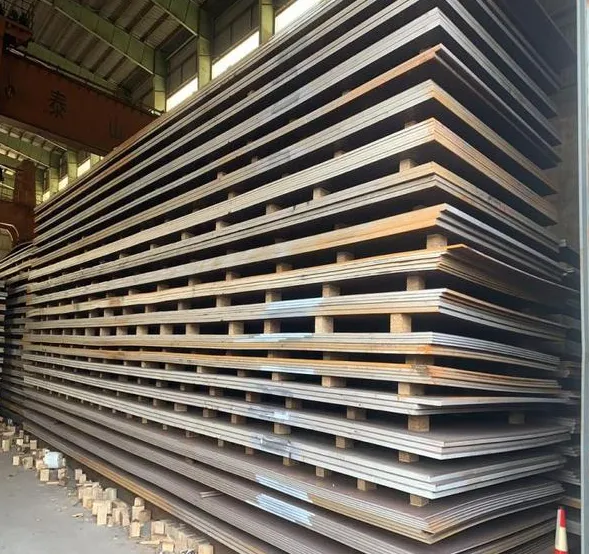
Global supply of A710 can differ from common structural grades. Many service centers stock A36 and A572 broadly; A710 is more frequently project driven.
Typical global supply pathways
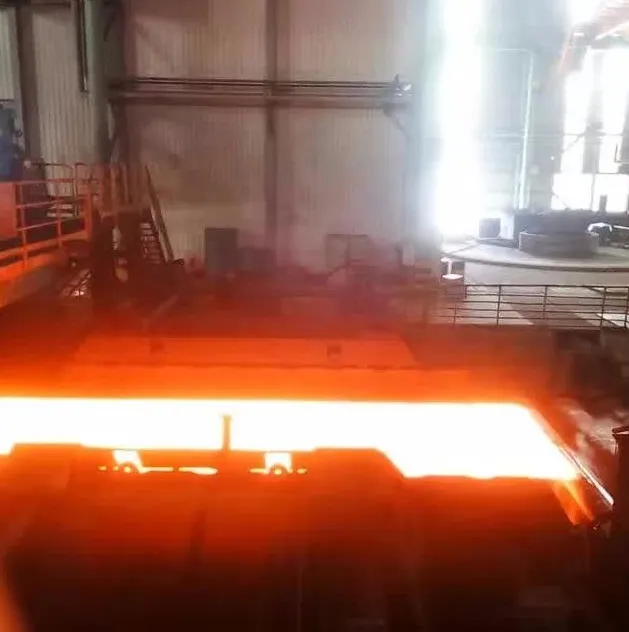
- Mill rolling to order: best route when thickness and toughness requirements are strict.
- Service center inventory: possible in regions with recurring demand, usually limited thickness range.
- Cut plate processing: plate may ship in master plates then be cut to size via CNC flame or plasma.
Plate size and thickness considerations
- Wider plates reduce weld length yet can increase mill lead time.
- Thicker plates may need extended lead time and may trigger extra testing.
- Flatness and residual stress matters when plates will be formed or welded into tight tolerance assemblies.
Logistics and documentation in cross border shipments
Global shipments need:
- clear HS code classification
- country of origin documentation.
- heat number traceability through packing lists.
- MTC matching shipped plate IDs.
- third party inspection reports when contract requires them.
MWalloys supports global supply programs by coordinating mill production slots, controlled cutting, export packing, and documentation packages aligned with EPC and fabrication audits.
What inspection and testing should be considered in critical A710 projects?
Many web summaries stop at “high strength plate.” Critical projects need deeper control on internal quality and fracture resistance.
Typical inspection layers
- Chemical analysis: heat chemistry on MTC, optional PMI in receiving inspection.
- Mechanical tests: yield, tensile, elongation.
- Impact tests: Charpy V notch at specified temperature.
- Dimensional checks: thickness, flatness, camber.
- Ultrasonic testing: ASTM A578 level when required.
Table 11. When ultrasonic testing adds real value
| Project type | UT value | Typical UT requirement style |
|---|---|---|
| heavy welded nodes | high | ASTM A578 Level B or higher, contract dependent |
| fracture critical members | very high | tighter UT plus traceability controls |
| non critical frames | moderate | UT optional, depends on risk policy |
| machined load paths | high | UT reduces risk of internal discontinuity in machined zones |
Table 12. Certification package options used in international projects
| Document | Typical content | When it is requested |
|---|---|---|
| MTC | heat chemistry, mechanical test results, heat treatment statement | nearly all industrial purchases |
| EN 10204 3.1 | manufacturer declared test results tied to heat | EU projects, EPC work, audited supply chains |
| Third party inspection report | witnessing of tests and identification | high consequence infrastructure |
| UT report | calibration, scanning, acceptance | whenever UT is specified |
A good supplier keeps plate marking consistent through cutting and repackaging, otherwise traceability breaks at the worst time.
FAQs about ASTM A710 Steel Plate Grades A, B, and C
ASTM A710 Steel Plate: 10/10 Technical FAQ
1. What is ASTM A710 steel plate used in?
ASTM A710 is primarily used in high-strength welded structures that require exceptional notch toughness. Common applications include heavy equipment frames, specialized bridge-related components, transportation structures, and large industrial equipment bases where weight reduction and durability are critical.
2. What is the main difference between Grades A, B, and C?
3. Is ASTM A710 a quenched and tempered steel?
No. Unlike ASTM A514, A710 is precipitation strengthened through aging. While the delivery condition and thermal history are vital to its performance, it does not rely on the traditional quench-and-temper (Q&T) cycle to achieve its high mechanical properties.
4. Does welding reduce A710 strength near the joint?
Welding heat can alter the finely tuned aged microstructure. This may cause localized softening in the heat-affected zone (HAZ). Managing this behavior requires qualified welding procedures and a joint design that accounts for these localized changes in mechanical properties.
5. How does A710 compare with ASTM A572 Grade 50?
6. Is A710 a weathering steel similar to A588?
7. What certificates are needed for international buying?
COMPLIANCE
A standard Mill Test Certificate (MTC) is mandatory. Many international engineering projects also specify EN 10204 3.1 certification and comprehensive ultrasonic testing (UT) reports to ensure internal soundness and traceability.
8. Can A710 plate be cold formed?
Yes, but within specific limits. These limits are tied to the grade's strength, plate thickness, and bend axis. High-strength grades of A710 generally require larger bend radii and careful edge preparation to prevent cracking during the forming process.
9. Is ASTM A710 readily available in global stock?
10. What should be on a purchase order to avoid errors?
PO CHECKLIST
To ensure correct delivery, specify:
- ASTM A710 Grade & Class
- Full Dimensions (Thickness, Width, Length)
- Delivery Condition (e.g., As-rolled vs. Aged)
- CVN Toughness Requirements (with test temperature)
- UT Level & Surface Condition
- Traceability & MTC Type
Summary
ASTM A710 Grade A, B, and C steel plate fills a valuable niche in structural engineering by delivering high yield strength with good notch toughness and weldability through a precipitation strengthened, aged alloy system. The strongest outcomes in fabrication and long term service come from precise specification language covering grade, delivery condition, impact testing temperature, optional ultrasonic testing, and traceable documentation. MWalloys supports that procurement approach through coordinated global supply, cut to size plate services, and certification packages aligned with modern QA expectations.