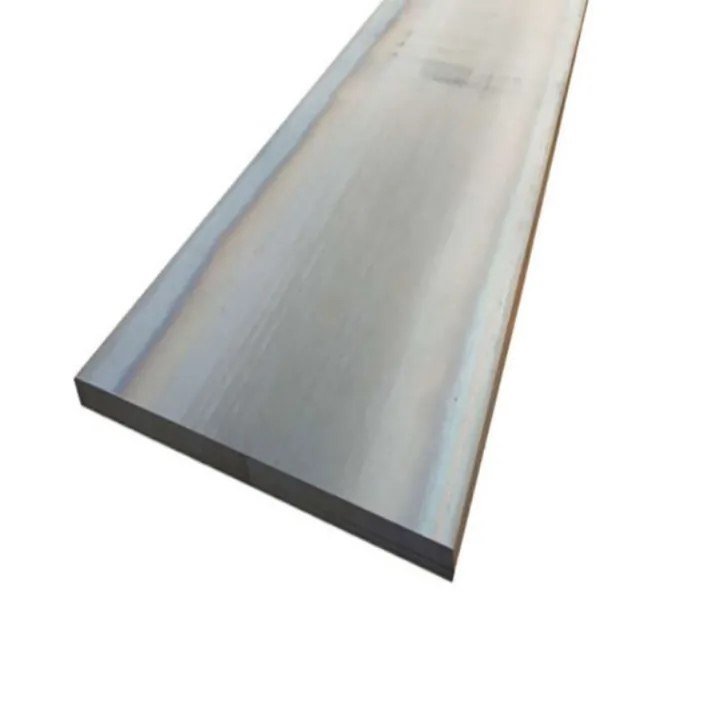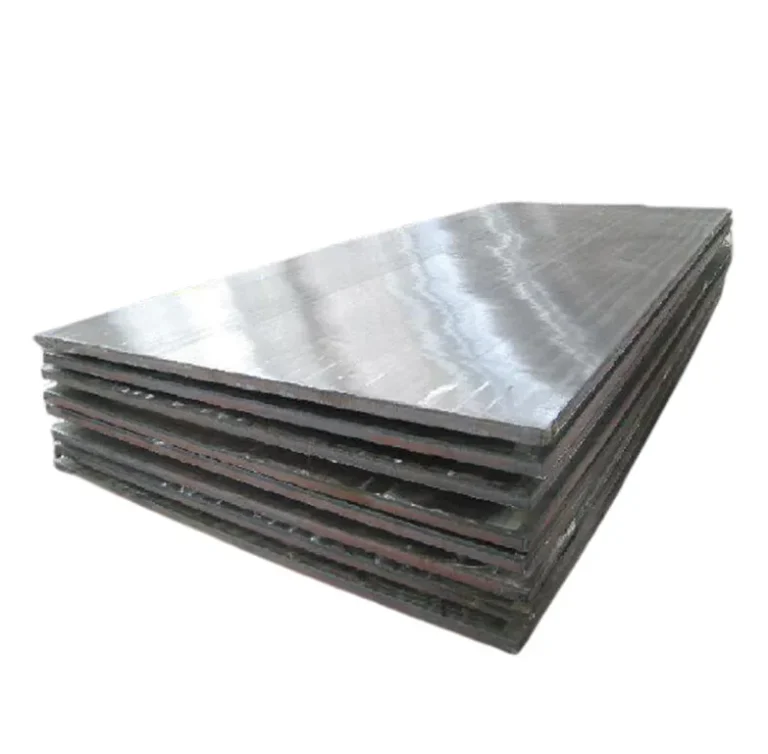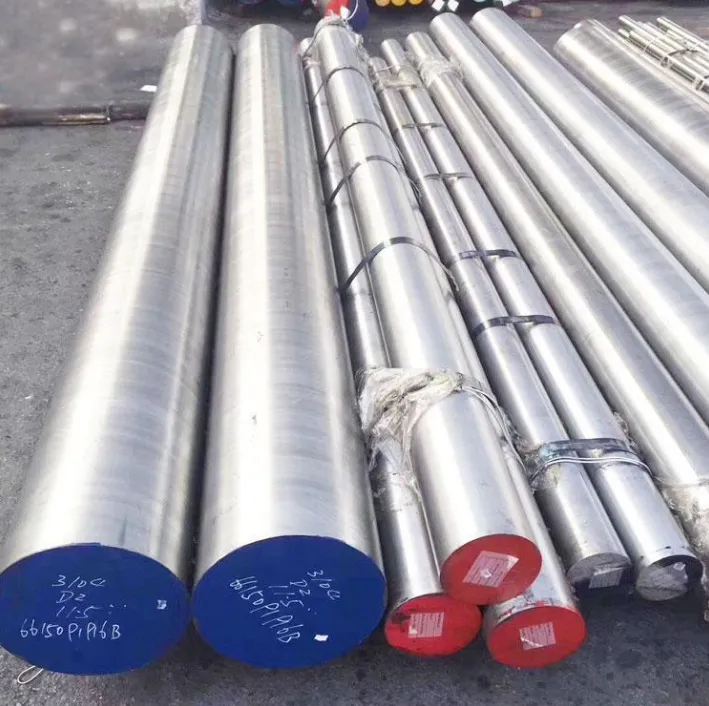

316 stainless steel coil is the premier choice for environments demanding exceptional corrosion resistance. Distinguished by the addition of molybdenum (2-3%), Type 316 provides superior resistance to chloride-induced pitting compared to 304 grade. MWalloys specializes in supplying high-purity ASTM A240 316/316L coils, ensuring structural integrity for marine hardware, chemical processing, and coastal architectural projects.
As a globally recognized supplier, MWalloys maintains an extensive inventory of 316 stainless steel coils in various gauges and widths. Our state-of-the-art slitting and decoiling facilities allow us to deliver precision-cut strips tailored to your exact manufacturing requirements, all backed by comprehensive Mill Test Certificates (MTC).
Technical Highlights & Supply Capabilities:
-
Alloy Composition: High-Nickel and 2.0-3.0% Molybdenum content for maximum durability.
-
Available Finishes: 2B, BA, No. 4, HL, and Mirror (8K) finishes with protective film.
-
Specifications: Fully compliant with ASTM A240, ASME SA240, and EN 10088-2.
-
Custom Processing: Precision slitting (min width 10mm), edge conditioning, and surface polishing.
-
Quality Assurance: 100% PMI testing and full traceability for every coil.
What makes ASTM A240 316 stainless steel coil the right marine-grade choice?
Type 316 stainless steel coil is called marine grade because it handles chloride exposure better than standard 304. The reason sits in the alloy design. 316 contains molybdenum, typically 2.00 to 3.00 percent, which raises resistance to pitting and crevice attack in salt-bearing environments. That extra protection becomes important near harbors, offshore platforms, desalination support systems, coastal buildings, boat fittings, food plants using saline washdown, and chemical lines carrying halides.
“Marine grade” should still be used with care. In market language, the term often implies that the alloy can survive anything around seawater. That is not correct. 316 is very good in marine atmosphere, splash exposure, and many mildly to moderately aggressive chloride settings. It is much less reliable in warm, stagnant, or low-oxygen seawater crevices. Engineers who work with pumps, submerged fasteners, heat exchangers, or continuously immersed hardware often move to duplex grades or super austenitic alloys when chloride severity rises.
A coil supply format adds commercial value. Service centers and OEM buyers often need narrow strip widths, repeat production, and lower scrap rates. Slitting master coils into exact widths lets the buyer match downstream stamping, roll forming, profiling, gasket jacket production, trim parts, and cladding operations without wasting sheet area.
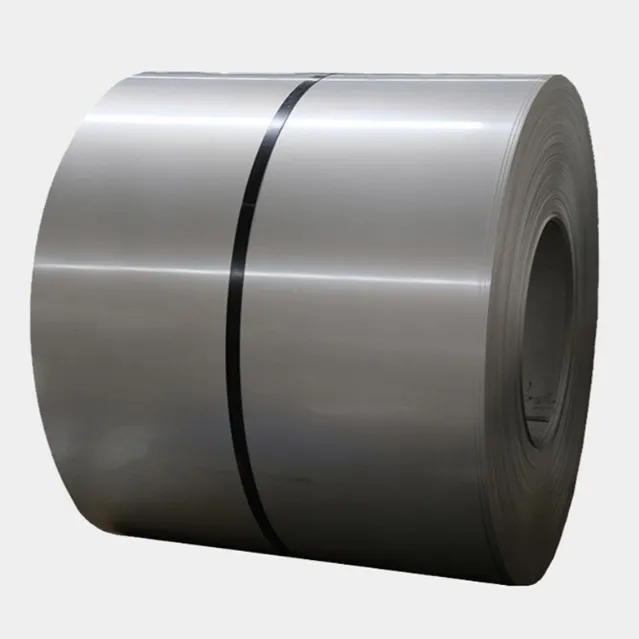
Quick reference snapshot
| Item | Typical Data |
|---|---|
| Standard | ASTM A240 / A240M, usually with ASTM A480 general requirements |
| Grade | Type 316 stainless steel |
| UNS designation | S31600 |
| Family | Austenitic chromium-nickel-molybdenum stainless steel |
| Main corrosion benefit | Better chloride resistance than 304 |
| Density | About 7.98 g/cm³ |
| Magnetic response | Essentially non-magnetic in annealed state, slight magnetism may appear after cold work |
| Common delivery form | Master coil, slit coil, cut to length sheet, strip |
| Common finishes | 2B, BA, No. 4, HL, No. 1, custom protective film |
| Typical end uses | Marine fittings, process equipment, food lines, architectural trim, medical parts |
What does ASTM A240 actually cover, and how does coil fit into the standard?
ASTM A240 covers chromium and chromium-nickel stainless steel plate, sheet, and strip intended in pressure vessel service and general industrial use. In practical supply chains, coil is simply the production and shipping form used to deliver sheet and strip before slitting or cutting into finished dimensions. A buyer may ask a mill or service center for “ASTM A240 316 coil,” yet the actual product may later be slit into narrow strip or leveled into flat sheet.
This distinction matters because many non-specialist buyers assume the standard itself defines every commercial detail tied to coil handling. It does not. The alloy chemistry, mechanical requirements, heat treatment condition, and general product acceptance are governed by the specification, while dimensional tolerances, flatness expectations, finish descriptions, and inspection practices often rely on ASTM A480 or agreed commercial terms.
In a purchase order, a well-written line item should state more than just the grade. It should include:
- Grade and condition, such as 316 annealed and pickled, or cold rolled 2B.
- Thickness and width.
- Coil form, master coil or slit coil.
- Edge type, mill edge or slit edge.
- Surface finish.
- Coil ID and maximum OD if needed.
- Quantity by weight or number of coils.
- Protective film requirement.
- Certification package, usually MTC or EN 10204 certificate if requested.
- Special tolerances on width, burr, camber, or strip shape.
A supplier that understands marine and process-industry work will also ask about fabrication route. Deep drawing, laser cutting, TIG welding, roll forming, and decorative polishing all respond differently to surface condition and edge quality.
ASTM A240 in real purchasing language
| Purchasing Topic | Why It Matters |
|---|---|
| ASTM A240 grade callout | Confirms alloy chemistry and mechanical baseline |
| ASTM A480 tolerance reference | Clarifies thickness, width, flatness, finish expectations |
| Annealed condition | Needed in most forming and corrosion-critical applications |
| Pickled or bright finish | Affects surface cleanliness and later polishing |
| Heat number traceability | Links each coil to mill test data |
| Slit edge requirement | Important in roll forming, exposed trim, and safe handling |
| Packaging standard | Critical in export shipments and coastal transit |
Which chemical composition gives Type 316 its chloride resistance?
The main reason 316 performs better than 304 lies in its chemistry. Chromium creates the passive oxide film that protects stainless steel. Nickel stabilizes the austenitic structure and helps toughness and ductility. Molybdenum improves resistance to pitting and crevice corrosion, especially in chloride media. Carbon, sulfur, phosphorus, and inclusion levels affect weld behavior, cleanliness, and corrosion reliability.
ASTM A240 chemistry limits, typical comparison
| Element | 316, ASTM A240 Max or Range | 316L, ASTM A240 Max or Range | Role in Performance |
|---|---|---|---|
| Carbon, C | 0.08 max | 0.03 max | Lower carbon reduces sensitization risk after welding |
| Manganese, Mn | 2.00 max | 2.00 max | Helps steelmaking and hot work |
| Silicon, Si | 0.75 max | 0.75 max | Deoxidation |
| Phosphorus, P | 0.045 max | 0.045 max | Lower is generally better in quality steel |
| Sulfur, S | 0.030 max | 0.030 max | Lower sulfur usually improves corrosion and weld cleanliness |
| Chromium, Cr | 16.0 to 18.0 | 16.0 to 18.0 | Passive film formation |
| Nickel, Ni | 10.0 to 14.0 | 10.0 to 14.0 | Austenitic stability, toughness |
| Molybdenum, Mo | 2.00 to 3.00 | 2.00 to 3.00 | Better pitting and crevice corrosion resistance |
| Nitrogen, N | 0.10 max | 0.10 max | Strength and pitting resistance contribution |
| Iron, Fe | Balance | Balance | Base metal |
A chemist would add a useful nuance here: not every 316 coil performs identically just because it meets the same broad range. A heat sitting near the high side of molybdenum and nitrogen, with low sulfur and good cleanliness, often behaves better in real service than material sitting near the low edge of critical corrosion elements. That is one reason experienced buyers read MTC chemistry rather than only checking the grade line.
Some engineers also use PREN, short for Pitting Resistance Equivalent Number, to compare chloride resistance. Type 316 usually lands in a mid-range level that is better than 304 but far below duplex 2205 or super duplex grades. That tells the right story: 316 is a serious corrosion-resistant alloy, not an extreme seawater alloy.
How strong is 316 coil in real engineering service?
316 stainless coil is usually selected first because of corrosion resistance, yet its mechanical profile is also attractive. In annealed condition it offers a good balance of strength, ductility, and toughness. It forms well, welds well, and work hardens during processing, which helps in some formed parts but can increase tool load and springback.
Typical room-temperature mechanical values
| Property | Typical Annealed 316 Coil |
|---|---|
| Tensile strength | Around 515 MPa minimum, often higher in mill practice |
| Yield strength, 0.2% offset | Around 205 MPa minimum |
| Elongation | Commonly about 40 percent or higher, depending on thickness and test method |
| Hardness | Usually below 95 HRB in annealed condition |
| Elastic modulus | About 193 GPa |
| Thermal conductivity at room temperature | About 16 W/m·K |
| Coefficient of thermal expansion | About 16 µm/m·K |
| Melting range | Roughly 1370 to 1400°C |
Procurement teams should keep one point in mind: published “typical” numbers and specification minimums are not the same thing. A design calculation should rely on the governing code or certified test report, not on a catalog value copied from a generic website.
Cold rolled coil can also carry higher actual strength than hot rolled and annealed plate because of processing history and thickness range. If a narrow slit strip will be stamped or roll formed, the buyer should discuss tensile and yield spread with the supplier. Large batch consistency matters more than a single impressive data point.
How 316 behaves in fabrication
- It work hardens faster than carbon steel.
- It usually needs sharper tooling and better lubrication than mild steel.
- Springback is higher than many buyers expect.
- Cutting tools must stay clean to avoid embedded iron contamination.
- Heat input during welding needs control, especially in thicker sections.
That practical behavior matters in slitting too. Thin 316 strip can develop edge burr, camber, or coil set if knife setup is poor. A coil that meets chemical spec but arrives with poor strip geometry can still damage production yield.
Why do marine, chemical, food, and medical buyers choose 316 instead of 304?
Most buyers compare 316 and 304 long before they compare exotic alloys. The price gap is real, mostly because of molybdenum and nickel content. Still, many end users accept the premium because 316 sharply lowers corrosion risk in chloride-bearing or hygiene-critical service.
316 versus 304 versus 316L
| Topic | 304 | 316 | 316L |
|---|---|---|---|
| Molybdenum content | No intentional Mo addition | 2.00 to 3.00 percent | 2.00 to 3.00 percent |
| Chloride resistance | Moderate | Better | Better |
| Marine atmosphere suitability | Fair to good in mild exposure | Good to very good | Good to very good |
| Welding in thicker parts | Good | Good | Better after welding due to lower carbon |
| Cost | Lowest of the three | Higher | Similar to 316, often slightly higher |
| Common commercial use | Kitchenware, tanks, trim, ducts | Marine hardware, chemical parts, washdown equipment | Welded tanks, tubing, process equipment |
Typical reasons buyers step up to 316
- Salt exposure near the coast
Architectural trim, handrails, louvers, fastener carriers, and decorative sheet near the ocean stain less readily with 316 than with 304. - Process lines containing brine or chlorides
Food plants, pharmaceutical utilities, and mild chemical units often prefer 316 because wash water and process media can attack 304 over time. - Sanitary and cleanability demands
Smooth finishes on 316 are widely accepted in hygienic environments. The alloy passivates well and tolerates frequent cleaning when correct chemicals are used. - Medical and laboratory hardware
316 and 316L are common in carts, trays, cabinets, instruments, and housings that need resistance to cleaning cycles and contamination control. - Longer service life in external exposure
Even when both alloys are technically usable, the maintenance savings of 316 can justify the higher purchase price.
A seasoned buyer will still avoid lazy assumptions. If the part will sit permanently underwater, remain packed with salt deposits, or include narrow wet crevices, 316 may not be enough.
Can 316 stainless steel coil rust in coastal or seawater exposure?
Yes, it can. The better question is what kind of attack, under which conditions, and how quickly. 316 is resistant, not invulnerable. In marine atmosphere it often performs very well, especially with smooth finishes and regular rain washing. Yet several damage mechanisms can still appear:
- Tea staining on exposed surfaces with chloride deposits.
- Pitting corrosion in localized spots where passive film breaks down.
- Crevice corrosion in lap joints, under gaskets, at fasteners, or beneath deposits.
- Galvanic corrosion when paired poorly with dissimilar metals in electrolyte.
- Contamination rust caused by embedded carbon steel particles, not by failure of the stainless itself.
Common corrosion risks and practical controls
| Risk Factor | What Happens | Best Control Method |
|---|---|---|
| Salt deposits left on surface | Staining and localized corrosion risk increase | Wash regularly, especially in sheltered zones |
| Rough finish | More sites trap chlorides and dirt | Use smoother finish such as 2B, BA, polished, or electropolished |
| Tight crevices | Oxygen depletion promotes crevice attack | Open design geometry, seal or drain joints |
| Carbon steel contamination | Brown rust spots appear | Use dedicated stainless tools and clean storage areas |
| Warm stagnant seawater | Pitting and crevice attack accelerate | Upgrade alloy, improve flow, avoid stagnant pockets |
| Chloride cleaners or bleach | Surface damage and corrosion risk rise | Use stainless-safe cleaning chemicals |
This is one area where surface finish deserves more attention than many RFQs give it. A highly polished 316 component on a coastal façade can outperform a rougher finish in the same alloy simply because chlorides and grime do not cling as easily. Tea staining is often cosmetic in its early stage, yet it signals that maintenance or finish selection should be improved.
When should a buyer ask for 316L rather than standard 316 coil?
This is one of the most searched questions in stainless procurement, and the answer is practical rather than theoretical. A buyer should ask for 316L when welding is part of the job and the finished part may spend time in the sensitization temperature range, especially in thicker or multi-pass welded assemblies. Lower carbon reduces chromium carbide precipitation at grain boundaries, which protects corrosion resistance near the weld.
In many markets, dual-certified 316/316L coil is common. That means the material chemistry meets 316L carbon limits while also satisfying the strength requirement expected of 316. Buyers often request dual certification because it gives wider application flexibility without maintaining separate stock.
Good reasons to specify 316L
- Welded tanks, hoppers, guards, and housings.
- Fabrications that will not be solution annealed after welding.
- Corrosion-critical service near welded seams.
- Medical, food, and pharmaceutical components with repeated cleaning.
- Export projects where end user specifications explicitly call for low carbon grades.
When standard 316 may still be adequate
- Non-welded stamped or slit strip parts.
- Decorative trim without heavy heat input.
- Components where welding is minimal and post-treatment is controlled.
- Projects tied to an existing approved material list that names 316 only.
If there is any uncertainty, dual-certified coil is often the safest buying choice.
Which surface finishes and edge conditions work best with marine-grade coil stock?
Surface finish strongly influences corrosion performance, cleanability, appearance, and later fabrication. In coastal service, finish selection often separates parts that age gracefully from parts that show early staining.
Common finishes used on 316 coil
| Finish | Appearance | Typical Uses | Marine / Hygiene Comment |
|---|---|---|---|
| No. 1 | Hot rolled, annealed, pickled, rougher matte surface | Heavy industrial parts, structural covers | Functional, less decorative, rougher surface can hold deposits |
| 2B | Cold rolled, annealed, pickled, skin-passed, smooth matte | General fabrication, tanks, panels, equipment | Strong all-purpose choice with good cleanability |
| BA | Bright annealed, reflective smooth finish | Decorative panels, appliance parts, sanitary hardware | Good appearance, easy cleaning, verify protection during handling |
| No. 4 | Brushed satin finish | Architectural trim, elevator panels, marine interiors | Popular visual finish, grain direction and maintenance matter |
| HL | Hairline directional finish | Decorative façade or interior trim | Attractive but directional texture can trap deposits more than smoother finishes |
| Mirror polished | Highly reflective | Premium decorative and sanitary applications | Very good cleanability, higher cost |
| PVC-coated protective surface | Temporary film over selected finish | Fabrication and transport protection | Helps avoid scratch damage before installation |
Surface finish selection should match the real environment, not the showroom photo. A brushed finish on an exposed coastal façade can stain faster than a smoother bright or polished surface if maintenance is poor. Sheltered zones under canopies, overhangs, and sign bands often stain first because rain cannot rinse them.
What about edge condition?
Slit coil buyers should specify edge condition clearly. The most common options are:
- Mill edge: untrimmed edge from original coil
- Slit edge: edge created during slitting
- Deburred edge: reduced burr for safer handling and better fit
- Rounded or conditioned edge: used when edge contact or operator safety is important
Exposed decorative trim, spring clips, and narrow formed channels often benefit from better edge conditioning. Burr height that looks small in the warehouse can become a problem in stamping dies, lamination lines, or hand-assembled products.
How does precision slitting affect fabrication yield, safety, and downstream quality?
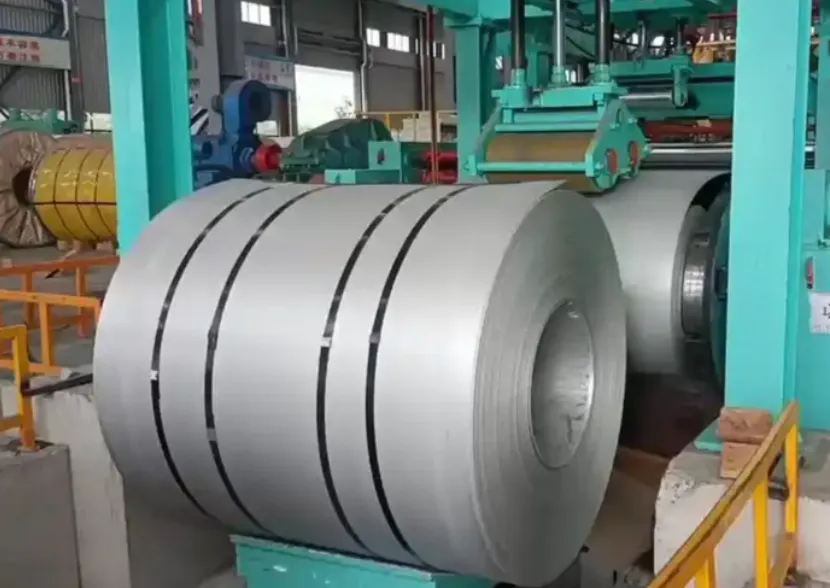
Slitting is not a simple width reduction step. It is a controlled conversion process that determines whether master coil becomes high-yield production strip or troublesome scrap. A correct slitting setup must account for thickness, tensile level, work hardening behavior, required width tolerance, edge quality, recoiling tension, separator setup, and packaging.
What happens during slitting?
- Master coil is loaded and uncoiled.
- Material passes through entry guides and, when needed, a leveler.
- Circular knives cut the strip into required widths.
- Separator tooling prevents interleaving or edge damage.
- Narrow strands are tensioned and recoiled.
- Final slit coils are banded, labeled, and packaged.
On 316 stainless, poor slitting practice can cause:
- Excess burr
- Edge wave
- Camber
- Scratch lines
- Coil telescoping.
- Uneven recoiling tension.
- Width variation outside tolerance.
- Surface imprint damage on bright finishes.
Slitting quality checkpoints
| Slitting Feature | Why Buyer Should Care |
|---|---|
| Width tolerance | Directly affects fit in roll forming, stamping, laser nests, and automated feeders |
| Burr height | Affects operator safety, assembly quality, and corrosion at damaged edges |
| Camber | Causes feeding problems in long strip applications |
| Coil set | Influences flatness after decoiling |
| Edge wave | A sign of poor tension balance or knife setup |
| Surface protection | Critical on BA, mirror, or PVC-coated finishes |
| Coil ID / OD | Must match customer decoiler and handling limits |
| Recoiling stability | Prevents collapse during transport and storage |
Typical commercial slitting parameters
| Parameter | Common Commercial Range |
|---|---|
| Thickness | About 0.3 mm up to several mm, depending on equipment |
| Slit width | Very narrow strip up to full-width rewound coil |
| Coil ID | Commonly 508 mm or 610 mm |
| Width tolerance | By agreement, often tighter on narrow precision strip |
| Burr control | Specified by application and thickness |
| Protective interleaving / film | Optional, depends on finish and handling risk |
An engineer may focus on alloy selection. A production manager often worries more about burr, width repeatability, and strip shape. Both are correct. A premium stainless grade loses value if slit coil cannot run smoothly through the customer’s line.
What stock sizes, thickness ranges, and coil weights are commonly available?
Availability varies by mill route, region, and service center inventory, yet the market follows recognizable patterns. Cold rolled 316 coil is commonly stocked in thinner gauges used in fabrication, while heavier gauges may come from hot rolled coil or plate programs. Buyers should always separate “mill capability” from “local stock availability.” The first tells what can be produced. The second tells what can ship quickly.
Common commercial stock ranges
| Item | Typical Range in Market Practice |
|---|---|
| Cold rolled thickness | About 0.3 mm to 3.0 mm |
| Heavier coil thickness | Often around 3.0 mm to 6.0 mm, subject to supply route |
| Master coil width | Commonly 1000 mm, 1219 mm, 1250 mm, 1500 mm |
| Slit coil width | Narrow strip up to full master width less trim |
| Coil ID | Usually 508 mm or 610 mm |
| Finish availability | 2B, BA, No. 4, No. 1, custom polish by request |
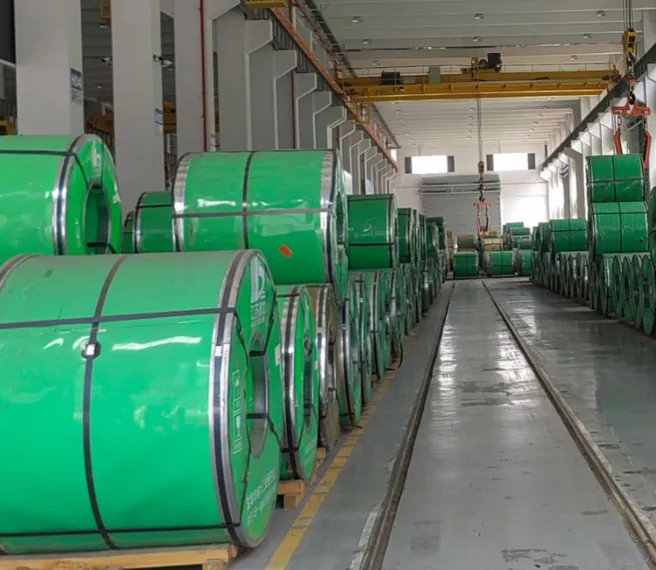
| Packaging | Eye-to-sky, eye-to-wall, export wooden skid, water-resistant wrap |
If a buyer needs an uncommon width, it is often cheaper and faster to slit from a stocked master coil rather than waiting on a custom mill run. That is exactly where a service center such as MWalloys can shorten lead time.
Simple weight calculation
A useful approximation in metric units is:
Weight in kg = Length in m × Width in mm × Thickness in mm × 0.00798.
Example:
- Thickness: 1.0 mm
- Width: 500 mm
- Length: 100 m
Weight = 100 × 500 × 1.0 × 0.00798 = 399 kg.
This formula helps buyers estimate whether a slit coil will fit their decoiler or internal handling limit.
How should engineers and purchasers read a mill test certificate?
A mill test certificate is not paperwork decoration. It is the technical identity card of the coil. When quality disputes happen, the MTC becomes the first document everyone studies.
Key items on the certificate
| MTC Item | What to Check |
|---|---|
| Grade designation | 316 or 316L, or dual-certified status |
| Standard | ASTM A240, plus any supplemental requirement |
| Heat number | Must match coil tags and shipping labels |
| Coil number | Needed in traceability and internal stock control |
| Chemistry results | Check Cr, Ni, Mo, C, N, S, P closely |
| Mechanical results | Tensile, yield, elongation, hardness if listed |
| Dimensions | Thickness, width, coil weight |
| Finish and condition | 2B, BA, pickled, annealed, etc. |
| Country of origin / mill | Important in approved vendor systems |
| Inspector or certifying authority | Needed in regulated industries |
Practical reading tips
- Do not look only at the grade line. Read the actual chemistry.
- Confirm molybdenum content falls where you expect, especially in corrosion-critical use.
- If welding is involved, verify carbon content and low-carbon certification.
- Match heat number on coil tag to the MTC before processing starts.
- If your line requires tight width tolerance, confirm service-center slit inspection data, not only the original mill cert.
Some buyers also request PMI, XRF verification, ferrite checks near welds, or surface roughness reports. Those are not always standard, yet they can be added when the end use justifies them.
What fabrication practices keep 316 coil performing well after slitting and forming?
The best coil can lose corrosion resistance through poor shop practice. Stainless steel problems blamed on “bad material” often begin with contamination, overheating, rough finishing, or careless cleaning.
Good fabrication practice
| Practice | Why It Matters |
|---|---|
| Use dedicated stainless tooling | Prevents carbon steel pickup and rust staining |
| Keep surfaces clean during storage | Salt, iron dust, and shop debris can trigger staining |
| Control forming loads | 316 work hardens quickly |
| Use correct welding consumables | Helps maintain corrosion resistance |
| Remove heat tint after welding | Heat tint lowers corrosion resistance if left in place |
| Pickle or passivate when needed | Restores a clean passive surface |
| Rinse after chloride cleaning exposure | Residual chlorides can initiate local attack |
| Protect decorative finishes with film | Reduces scratch and handling marks |
Fabrication mistakes that shorten service life
- Grinding stainless with wheels previously used on carbon steel..
- Leaving weld heat tint uncleaned in chloride service.
- Using bleach-based cleaners.
- Designing trapped crevices that remain wet.
- Mixing stainless with incompatible fasteners without galvanic review.
- Storing finished parts near steel fabrication dust.
A narrow slit edge can also be a corrosion site if it is heavily burred or mechanically damaged. In critical service, edge quality, post-cut cleaning, and passivation deserve attention.
How do price, lead time, and total cost change when buying 316 coil stock?
316 is not bought on alloy content alone. The invoice price reflects several layers:
- Nickel and molybdenum market movement
- Mill base price
- Thickness and width
- Surface finish
- Master coil versus slit coil.
- Quantity and repeat order volume.
- Packaging level
- Certification package
- Freight and export handling.
Many buyers compare only the price per kilogram. That is often a mistake. A cheaper coil with inconsistent width, poor surface protection, or weak traceability can create far more cost through line stoppage, scrap, or field complaints.
Cost drivers in real purchasing
| Cost Driver | Effect on Price |
|---|---|
| Higher Mo and Ni market levels | Push alloy surcharge upward |
| Thinner precision gauges | Often carry higher processing cost |
| Narrow slit widths | Add conversion cost, especially in small lots |
| Decorative polish | Raises finishing and protection cost |
| PVC or paper interleave | Adds packaging cost but may cut damage claims |
| Tight tolerances | Requires more careful setup and inspection |
| Small urgent orders | Usually less favorable than planned releases |
How experienced buyers lower total cost
- Buy from stock master widths that convert efficiently into required strip widths.
- Use dual-certified 316/316L when possible to simplify inventory.
- Standardize on common coil ID used by your line.
- Request slit edge only where needed, not on every part.
- Align finish level with actual exposure and appearance need.
- Ask for realistic tolerance, not unnecessarily tight numbers.
- Work with suppliers that keep heat traceability after slitting.
This is where supplier capability matters more than marketing language. MWalloys, or any serious stainless coil supplier, should be able to discuss stock strategy, slitting yield, and packaging logic in plain engineering terms.
Which applications fit ASTM A240 316 coil best, and where are its limits?
316 coil suits a wide span of products because it combines corrosion resistance, cleanability, and manufacturing flexibility. It is especially effective where material will be formed into thin-gauge parts, panels, wraps, channels, guards, covers, and precision strip components.
Best-fit applications
| Application | Why 316 Coil Works Well |
|---|---|
| Coastal architectural trim | Better atmospheric chloride resistance than 304 |
| Marine hardware covers and panels | Good resistance plus attractive finish options |
| Food processing equipment | Cleanability and broad finish range |
| Pharmaceutical and medical housings | Sanitary surface and weldability |
| Chemical storage and mild chloride service | Good all-round corrosion resistance |
| Heat shields, enclosures, and cabinets | Formability and heat resistance |
| Slit strip in roll-formed profiles | Precision width supply improves yield |
| Tank cladding and decorative wraps | Availability in coil format reduces waste |
Where 316 may not be enough
| Service Condition | Better Direction to Consider |
|---|---|
| Continuous warm seawater immersion | Duplex or super duplex grades |
| Severe crevice exposure under deposits | Higher alloy stainless or redesign |
| Strong reducing acids | Alloy choice depends on exact chemistry, often not 316 |
| High-strength structural demand with chloride exposure | Duplex grades may offer better balance |
| Aggressive scrubber or brine systems | Engineering review needed, 904L or duplex may be more suitable |
This balanced view is essential. Over-selling 316 creates bad projects. Correctly placing 316 creates reliable ones.
What should a serious supplier offer before you place a purchase order?
A supplier handling marine-grade coil should do much more than quote a price. Before issuing a PO, the buyer should confirm technical and commercial support across the full conversion chain.
Supplier capability checklist
| Supplier Capability | Why It Matters |
|---|---|
| Stock availability in common master widths | Cuts lead time |
| Slitting in-house or with controlled partner | Improves width repeatability and traceability |
| Finish protection options | Reduces transit and shop damage |
| Full MTC traceability after slitting | Essential in regulated or audited environments |
| Packing suited to export or coastal transit | Prevents moisture damage and edge collapse |
| Technical support on 316 vs 316L | Avoids wrong-grade ordering |
| Ability to supply test extras | Helpful in critical projects |
| Consistent labeling and heat ID | Simplifies incoming inspection |
Buyers dealing with repeat production should also ask about release programs, blanket orders, and safety stock. The cost of one late coil often exceeds the small premium attached to stable inventory support.
FAQs about ASTM A240 316 stainless steel coil
ASTM A240 316 Stainless Steel: 10/10 FAQ
1. Is ASTM A240 316 really marine grade?
Yes. In engineering terms, 316 is the standard "marine grade" stainless steel. The addition of 2-3% Molybdenum significantly improves its resistance to pitting and crevice corrosion caused by chloride ions (found in salt and seawater). However, it is primarily designed for marine atmospheres and splash zones, not necessarily continuous deep-sea immersion in tropical waters.
2. What is the difference between 316 and 316L coil?
The "L" stands for Low Carbon (max 0.03% vs 0.08%). 316L is preferred for parts that require heavy welding because it minimizes carbide precipitation (sensitization), which can lead to corrosion near the weld seams. Today, much of the global inventory is "dual-certified" as both 316 and 316L.
3. Can 316 stainless coil be used in direct seawater immersion?
4. Does 316 stainless steel rust?
It can. 316 is highly resistant but not "rust-proof." It can suffer from "tea staining" (surface discoloration) or pitting if contaminated with iron particles during fabrication or if salt is allowed to dry on the surface without regular cleaning. A smooth finish and proper passivation are key to preventing this.
5. Is 316 stainless magnetic?
6. Which finish is best near the ocean?
Smoother is better. Rough finishes (like No. 3 or coarse brushed) trap salt crystals and moisture, leading to faster corrosion. For coastal use, 2B, BA (Bright Annealed), or Electropolished surfaces perform the best because they are easier for rainwater to wash clean.
7. What width tolerance can slit 316 coil hold?
8. Does slitting reduce corrosion resistance?
9. What documents should come with a 316 coil shipment?
PROCUREMENT RULE
Always demand the MTC (Mill Test Certificate) showing compliance with ASTM A240. It should detail the chemical heat analysis (specifically the Molybdenum content), mechanical properties (Yield/Tensile strength), and the heat number for full traceability back to the melt.
10. When should I choose duplex stainless instead of 316 coil?
Upgrade to Duplex (like 2205) if you require nearly double the strength of 316, or if the environment involves high temperatures and high chloride levels where Stress Corrosion Cracking (SCC) is a risk. Duplex offers a much higher PREN (Pitting Resistance Equivalent Number) than standard 316.
Final assessment
ASTM A240 316 stainless steel coil remains one of the most dependable flat-rolled materials in modern industry because it brings together corrosion resistance, fabrication ease, broad finish availability, and efficient conversion into slit strip or cut lengths. Its value is strongest when the buyer matches alloy grade, finish, slitting quality, and maintenance plan to the real service environment. If your project needs marine-grade stock with traceable chemistry, consistent coil quality, and custom slitting that protects downstream yield, MWalloys can support that requirement with supply matched to both engineering and purchasing priorities.