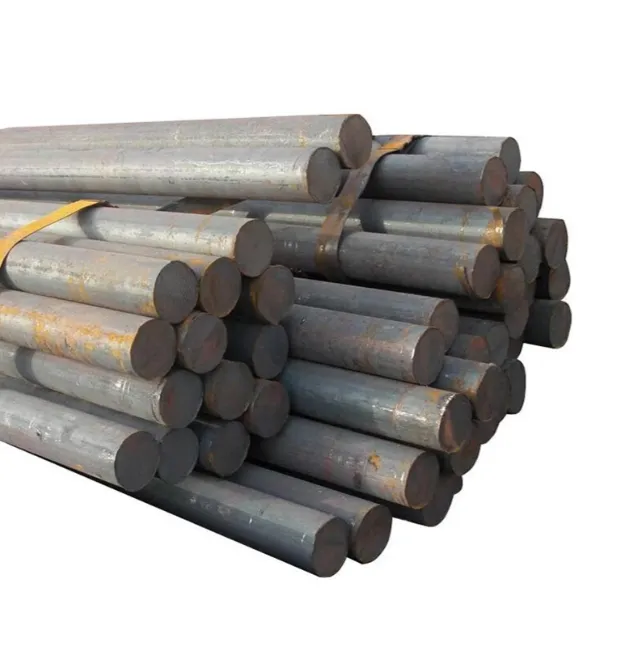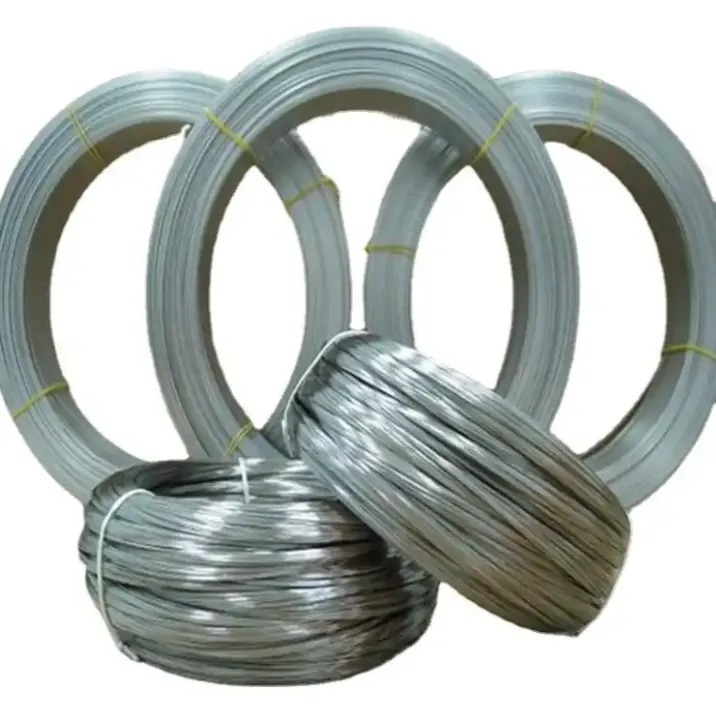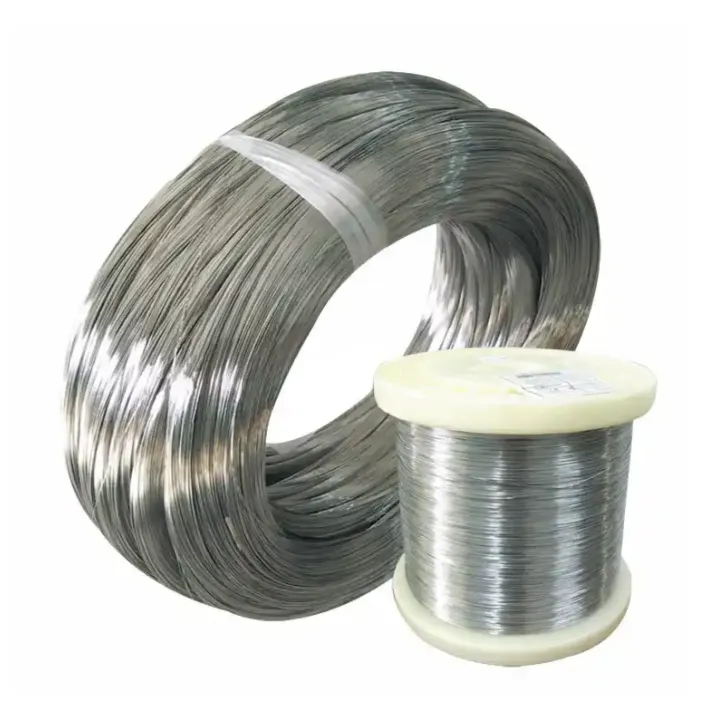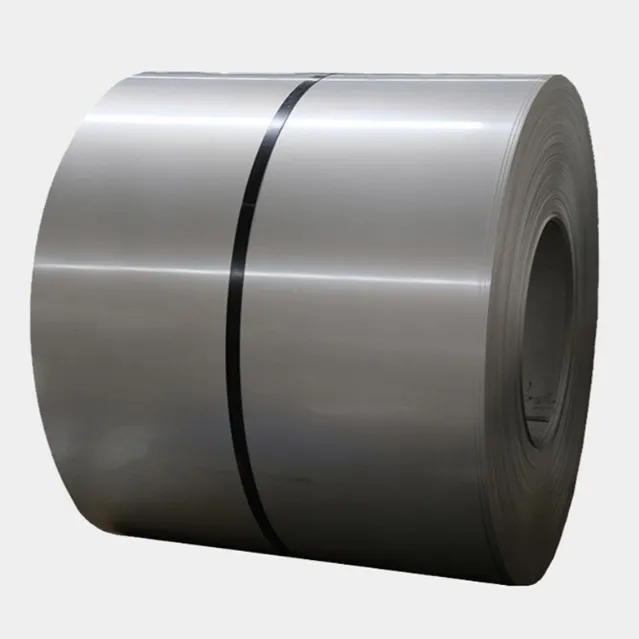

AISI 52100 round bar is the world's most widely specified bearing steel, and MWalloys maintains ready inventory across a full diameter range to serve engineers, bearing manufacturers, and procurement teams who need certified material fast. This high-carbon, chromium-alloyed steel delivers a unique combination of extreme hardness after heat treatment (typically 60–67 HRC), exceptional fatigue resistance, and dimensional stability that no general-purpose tool steel or carbon steel can replicate in rolling contact applications. Whether you need small-diameter bar stock for precision ball bearing races, larger sections for roller bearing components, or custom-cut blanks for hydraulic pistons and spindles, 52100 steel round bar is the starting point that industry has trusted for over a century.
If your project requires the use of 52100 Round Bar, you can contact us for a free quote.
What Is 52100 Steel Round Bar and Why Is It the Benchmark Bearing Steel?
AISI 52100 is a high-carbon, chromium-containing alloy steel that has earned its reputation as the definitive bearing steel through more than a century of industrial use. The designation "52100" follows the SAE/AISI system: the "5" prefix indicates a chromium alloy steel family, "21" refers to the approximate chromium content classification, and "100" signals a carbon content near 1.00%. In practice, 52100 contains 0.93–1.05% carbon and 1.35–1.60% chromium, a combination that produces outstanding hardness, wear resistance, and fatigue life after proper heat treatment.
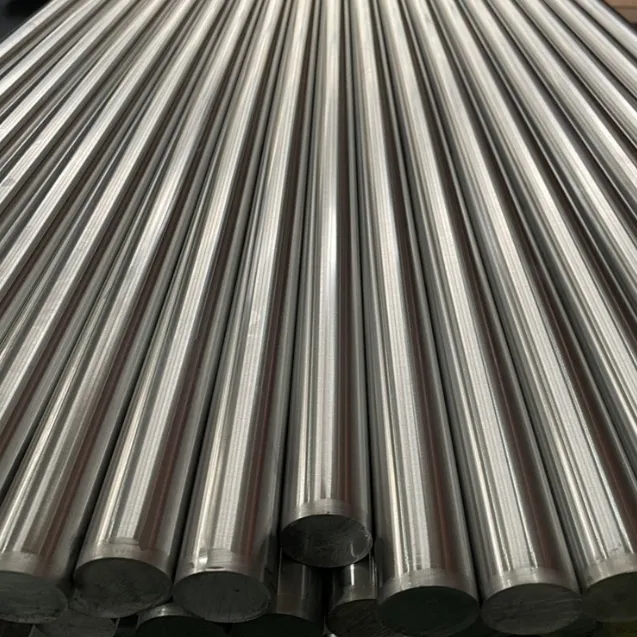
Round bar is the primary product form in which 52100 steel is supplied and consumed. The circular cross-section facilitates turning, grinding, and boring operations that transform bar stock into finished bearing rings, races, balls, rollers, and precision mechanical components. Unlike flat bar or plate, round bar aligns naturally with the rotational geometry of bearing components, minimizing material waste and machining time.
What separates 52100 from ordinary high-carbon steels is not just hardness — it is contact fatigue life. Rolling contact fatigue (RCF) is the dominant failure mode in bearings, caused by cyclic compressive and shear stresses at the Hertzian contact zone between rolling elements and raceways. The fine carbide microstructure that forms in properly processed 52100 steel resists crack initiation and propagation under these repetitive stress cycles far more effectively than plain carbon steels of similar hardness.
At MWalloys, we have supplied 52100 round bar to bearing manufacturers, hydraulic cylinder producers, aerospace component shops, and precision machining facilities across multiple continents. The feedback from our customers confirms what the metallurgical literature has documented for decades: when the application involves rolling contact, cyclic loading, or dimensional precision under load, 52100 steel round bar is the starting material of choice.
How 52100 Steel Fits Into the Broader Alloy Steel Classification System
Within the SAE/AISI numbering framework, 52100 belongs to the 5xxxx chromium steel series. Its closest relatives include 5140, 5160, and 51100, but none of these share 52100's specific combination of carbon and chromium levels. The high carbon content (near eutectoid and slightly hypereutectoid) ensures that after hardening, the steel achieves very high martensite hardness while retaining a distribution of fine chromium carbide particles that pin dislocation motion and resist surface wear.
This microstructural characteristic — undissolved carbides in a hardened martensitic matrix — is what makes 52100 fundamentally different from lower-carbon chromium steels and why it cannot be substituted with carburizing grades like 8620 or 9310 in direct-hardened bearing applications.
Chemical Composition and AISI Specification Requirements
The chemical composition of AISI 52100 steel is tightly controlled under SAE J404 and ASTM A295, the two primary governing standards for high-carbon bearing steel bar stock. Composition control is critical because small variations in carbon, chromium, manganese, or silicon directly affect hardenability, carbide distribution, retained austenite levels, and fatigue performance.
AISI 52100 Chemical Composition (SAE J404 / ASTM A295)
| Element | Minimum (%) | Maximum (%) |
|---|---|---|
| Carbon (C) | 0.93 | 1.05 |
| Chromium (Cr) | 1.35 | 1.60 |
| Manganese (Mn) | 0.25 | 0.45 |
| Silicon (Si) | 0.15 | 0.35 |
| Phosphorus (P) | — | 0.025 |
| Sulfur (S) | — | 0.015 |
| Molybdenum (Mo) | — | 0.10 (residual) |
| Nickel (Ni) | — | 0.25 (residual) |
| Copper (Cu) | — | 0.30 (residual) |
The Role of Each Alloying Element
Carbon (0.93–1.05%): The primary hardening element. High carbon content ensures that after austenitizing and quenching, the martensitic matrix achieves 62–67 HRC without carburization. Excess carbon beyond what dissolves in austenite remains as chromium carbide particles, contributing to wear resistance.
Chromium (1.35–1.60%): Increases hardenability, allowing through-hardening of sections up to approximately 25mm diameter. Forms stable chromium carbides (Cr₇C₃ and Cr₂₃C₆) that resist coarsening during austenitizing. Chromium also improves the steel's corrosion resistance marginally, though 52100 is not stainless and will rust without protection.
Manganese (0.25–0.45%): Contributes to hardenability and deoxidation during steelmaking. At 52100's carbon level, manganese is kept intentionally low to minimize retained austenite formation after quenching.
Silicon (0.15–0.35%): Acts as a deoxidizer and contributes modestly to strength. Higher silicon levels are avoided because they can promote graphitization in high-carbon steels during prolonged high-temperature exposure.
Phosphorus and Sulfur (max 0.025% and 0.015% respectively): Both are residual impurities kept at low levels in bearing steel because they promote grain boundary embrittlement (phosphorus) and form inclusions (sulfur) that serve as fatigue crack initiation sites. Bearing-grade 52100 is produced with cleanliness requirements that are significantly more stringent than general engineering steels.
Cleanliness Requirements: The Hidden Quality Factor
One aspect of 52100 specification that often goes undiscussed in surface-level material data sheets is steel cleanliness. ASTM A295 and its companion standard ASTM A534 specify maximum inclusion ratings using the ASTM E45 inclusion chart method. Oxide inclusions, sulfide stringers, and silicate inclusions must all fall within specified severity limits.
Inclusion cleanliness is the single biggest quality differentiator between bearing-grade 52100 and lower-grade chromium steel. We explicitly confirm inclusion ratings on our MTRs because in rolling contact fatigue applications, a single coarse oxide stringer in a raceway section can initiate fatigue spalling an order of magnitude earlier than a clean section of identical hardness.
Mechanical and Physical Properties of 52100 Round Bar
The mechanical properties of 52100 round bar depend heavily on heat treatment condition. As-rolled or annealed bar has very different properties from hardened and tempered material, and engineers must specify the condition required for their application.
Mechanical Properties by Heat Treatment Condition
| Property | Annealed (Soft) | Hardened + Tempered (150°C) | Hardened + Tempered (200°C) |
|---|---|---|---|
| Tensile Strength | 620–690 MPa (90–100 ksi) | 2,000–2,200 MPa | 1,900–2,100 MPa |
| Yield Strength (0.2%) | 380–450 MPa | 1,700–1,900 MPa | 1,650–1,850 MPa |
| Elongation | 20–25% | 1–3% | 2–4% |
| Reduction of Area | 40–55% | 5–15% | 8–18% |
| Brinell Hardness | 179–207 HBW | 62–65 HRC | 60–63 HRC |
| Charpy Impact (J) | 40–60 J | 5–15 J | 8–20 J |
Physical Properties of AISI 52100 Steel
| Physical Property | Value |
|---|---|
| Density | 7.81 g/cm³ (0.282 lb/in³) |
| Melting Range | 1,424–1,516°C (2,595–2,760°F) |
| Thermal Conductivity | 46.6 W/m·K at 100°C |
| Specific Heat Capacity | 475 J/kg·°C |
| Coefficient of Thermal Expansion | 11.9 µm/m·°C (20–100°C) |
| Electrical Resistivity | 31.5 µΩ·cm at 20°C |
| Modulus of Elasticity | 210 GPa (30.5 × 10⁶ psi) |
| Modulus of Rigidity | 80 GPa |
| Poisson's Ratio | 0.28 |
Understanding the Hardness-Toughness Trade-off
A common misconception among engineers new to bearing steel is that harder always means better. With 52100, the optimal hardness for rolling element bearings is typically 58–65 HRC. Going harder than 65 HRC increases brittleness disproportionately, making the component vulnerable to catastrophic fracture under impact loading. Tempering at 150–175°C after hardening achieves the 60–65 HRC range that balances fatigue resistance with sufficient toughness for most bearing applications.
For applications where impact resistance is more important than maximum hardness — such as heavy-duty roller bearings in construction equipment — tempering temperatures of 200–250°C reduce hardness to 58–62 HRC while meaningfully improving toughness. This trade-off should be explicitly discussed with the heat treater based on the service conditions.
Heat Treatment of 52100 Steel: Hardening, Tempering, and Annealing
Heat treatment is where 52100 steel's full potential is unlocked, and it is one of the most technically specific aspects of working with this material. Getting the heat treatment sequence right directly determines component service life.
Annealing (Spheroidize Annealing)
As-rolled 52100 bar contains carbides in various morphologies including plate-like, pearlitic, and network forms that resist machining and grinding. Spheroidize annealing converts these into a fine, spherical carbide distribution in a ferritic matrix, which is the optimal condition for machining and subsequent hardening.
Spheroidize Annealing Procedure:
- Heat to 790–815°C (1,455–1,500°F)
- Hold for 2–6 hours depending on section size.
- Cool at a controlled rate of 15–25°C/hour to 650°C (1,200°F)
- Air cool to room temperature.
Properly spheroidize-annealed 52100 bar achieves a hardness of 179–207 HBW and a microstructure of fine spheroidal carbides uniformly distributed in ferrite. This condition is sometimes called "annealed to spheroidize" or "SAph" in European standards.
Hardening (Austenitizing and Quenching)
| Hardening Parameter | Standard Bearing Application | Deep-Hardening Application |
|---|---|---|
| Austenitizing Temperature | 845–870°C (1,555–1,600°F) | 850–870°C |
| Soak Time | 20–40 minutes | 40–60 minutes |
| Quench Medium | Oil (warm, 50–70°C) | Oil or marquench salt |
| Quench Speed | Fast oil preferred | Marquenching at 150–200°C |
| As-Quenched Hardness | 64–67 HRC | 64–67 HRC |
| Retained Austenite | 8–15% (typical) | 5–12% (marquench) |
The austenitizing temperature selection is critical. Below 840°C, insufficient carbon dissolves into austenite, limiting achievable hardness. Above 880°C, excessive carbide dissolution leads to coarser austenite grains and higher retained austenite content after quenching, both of which reduce fatigue life.
Oil quenching is strongly preferred over water quenching for 52100 round bar. Water quenching risks thermal shock cracking, particularly in sections above 12mm diameter, because the thermal gradient between surface and core creates tensile stresses that can initiate quench cracks at carbide particles or inclusions.
Tempering After Hardening
Tempering must begin within 2 hours of quenching to prevent delayed quench cracking. The as-quenched martensite contains high internal stresses and some unstable tetragonal distortion that requires thermal relief.
| Tempering Temperature | Resulting Hardness | Typical Application |
|---|---|---|
| 150°C (300°F) | 63–66 HRC | Precision bearing races, balls |
| 175°C (350°F) | 61–64 HRC | Standard ball and roller bearings |
| 200°C (390°F) | 59–62 HRC | Heavy-duty bearings, moderate impact |
| 230°C (450°F) | 57–60 HRC | High-impact roller applications |
| 260°C (500°F) | 54–57 HRC | Structural components, non-bearing uses |
Hold time at tempering temperature should be a minimum of 1 hour per 25mm of section thickness, with 2 hours being the preferred practice for precision components to ensure uniform temperature penetration and complete stress relief.
Cryogenic Treatment: The Optional Step That Extends Service Life
Cryogenic treatment (deep freezing to -70°C to -196°C after quenching and before tempering) converts residual retained austenite to martensite, improving dimensional stability and potentially extending fatigue life by 15–30% in some studies. This treatment is standard practice in high-precision bearing manufacturing but optional for general engineering applications. If dimensional stability at elevated operating temperatures is a concern in your application, discuss cryogenic treatment with your heat treater when processing 52100 bar stock.
52100 Round Bar vs. Other Bearing and Tool Steels: A Direct Comparison
Engineers frequently ask us how 52100 compares to alternative steels for their specific application. The answer always depends on the loading condition, operating temperature, environment, and whether through-hardening or case hardening is preferred.
52100 vs. Common Alternative Steels
| Steel Grade | Carbon % | Chromium % | Max Through-Harden Section | Max Service Temp | Key Advantage vs. 52100 | Key Limitation vs. 52100 |
|---|---|---|---|---|---|---|
| AISI 52100 | 0.93–1.05 | 1.35–1.60 | ~25mm | ~120°C | Baseline benchmark | Temperature limited |
| M50 (T11350) | 0.80–0.85 | 4.00–4.25 | Full section | ~315°C | High-temp performance | Much higher cost |
| 440C Stainless | 0.95–1.20 | 16.0–18.0 | ~20mm | ~150°C | Corrosion resistance | Lower fatigue life |
| 8620 (carburized) | 0.18–0.23 | 0.40–0.60 | Case only | ~150°C | Tough core + hard case | Complex processing |
| D2 Tool Steel | 1.40–1.60 | 11.0–13.0 | Limited | ~200°C | Wear resistance | Brittle, poor fatigue |
| 4140 Alloy Steel | 0.38–0.43 | 0.80–1.10 | ~65mm | ~150°C | Toughness, large sections | Cannot match hardness |
| M2 High Speed Steel | 0.78–0.88 | 3.75–4.50 | Full section | ~540°C | Hot hardness | Very expensive |
When to Choose 52100 and When to Consider Alternatives
Choose 52100 when:
- Operating temperature stays below 120°C (248°F) continuously.
- Rolling contact fatigue life is the primary design criterion.
- Through-hardening of sections up to 25mm is acceptable.
- Cost efficiency relative to performance is important.
- Standard bearing industry infrastructure and heat treat knowledge apply.
Consider M50 when:
- Jet engine mainshaft bearings or gas turbine applications require operation above 200°C.
- The weight premium of high-alloy steel is justified by performance requirements.
Consider 440C when:
- Corrosive environments (water, mild acids, humidity) make rust protection impractical through coatings alone.
- A modest reduction in rolling contact fatigue life is acceptable.
Consider carburizing grades (8620, 9310) when:
- Very large section sizes are required with a hard case and tough core.
- Impact loading is severe and a fully hardened component would be too brittle.
International Equivalents of AISI 52100 Bearing Steel
Procurement teams working across global supply chains need to know the equivalent designations in other national and international standards. The table below lists the closest equivalents, though minor compositional differences exist between some standards.
52100 Steel International Equivalent Designations
| Country / Standard | Designation | Standard Body |
|---|---|---|
| USA | AISI 52100 / SAE 52100 | SAE International / AISI |
| USA (UNS) | G52986 | SAE / ASTM |
| Germany (DIN) | 100Cr6 | DIN |
| Europe (EN) | 100Cr6 / 1.3505 | EN ISO 683-17 |
| UK (BS) | 535A99 | British Standards |
| Japan (JIS) | SUJ2 | JIS G4805 |
| China (GB) | GCr15 | GB/T 18254 |
| Sweden (SS) | SS2258 | SIS |
| Russia (GOST) | ШХ15 (ShKh15) | GOST 801 |
| France (AFNOR) | 100C6 | NF A35-565 |
| Italy (UNI) | 100Cr6 | UNI 3097 |
The German designation "100Cr6" is probably the most internationally recognized equivalent. "100" refers to 1.00% carbon (×100 convention), and "Cr6" indicates approximately 6 parts per ten of chromium (1.5%). The JIS designation SUJ2 (Special Use Jis, second grade) is ubiquitous in Asian bearing manufacturing, particularly in Japan and South Korea. China's GCr15 is the dominant designation in Chinese specifications, where "G" indicates bearing steel (轴承钢), "Cr" is chromium, and "15" represents 1.5% chromium.
When sourcing from international mills, we verify that the chemistry of materials supplied to these equivalent designations falls within or equivalent to the ASTM A295 composition window. Minor differences between standards occasionally exist in manganese range or residual element limits, and we flag these to customers before confirming an order.
Industries and Applications That Rely on 52100 Round Bar
The breadth of industries that specify 52100 round bar reflects the steel's versatility wherever hardness, wear resistance, and fatigue life are simultaneously required.
Bearing Manufacturing (Primary Application)
The bearing industry consumes the majority of global 52100 production. Applications include:
- Inner and outer races for radial ball bearings, angular contact bearings, and deep groove bearings.
- Rolling elements: balls (in wire rod form, drawn and formed), cylindrical rollers, tapered rollers, needle rollers, and spherical rollers.
- Thrust bearing washers and plates.
- Precision spindle bearings for machine tools (requiring surface finish Ra ≤ 0.05 µm after grinding)
Automotive and Transportation
Beyond the bearings themselves, 52100 round bar appears in:
- Wheel hub bearing assemblies.
- Transmission shaft bearings and synchronizer ring components.
- Constant velocity (CV) joint components.
- Power steering pump shaft bearings.
- Fuel injection pump rollers and tappets.
Aerospace and Defense
Aerospace bearing applications represent the highest cleanliness and documentation requirements for 52100 material. Applications include:
- Aircraft control surface bearings (non-main shaft, moderate temperature).
- Hydraulic actuator shaft bearings.
- Gyroscope rotor bearings
- Precision instrument bearings.
For main shaft bearings in jet engines where temperatures exceed 150°C, M50 or M62 grades are typically specified over 52100. This thermal limitation is important for aerospace procurement teams to understand before specifying 52100 in high-temperature rotating equipment.
Machine Tool Industry
52100 round bar is standard for precision spindle bearings in CNC machining centers, grinding machines, and coordinate measuring machines. The dimensional stability after cryogenic treatment and stress-relieving makes 52100 uniquely suited to applications where bearing preload and radial runout must remain within sub-micron tolerances during extended operation.
Hydraulic and Pneumatic Equipment
Precision hydraulic cylinders and pneumatic actuators use 52100 bar for:
- Piston rods (hardened and ground to H6/h6 tolerance).
- Valve spools requiring high hardness and wear resistance.
- Pump shafts in high-pressure hydraulic systems.
General Precision Engineering
Beyond the above categories, 52100 round bar is used in:
- Precision gauges and measuring instruments.
- Cam followers and needle roller supports.
- Cold forming dies and punches (smaller sizes).
- Guide rails and linear bearing components.
- Precision shafts for laboratory and scientific equipment.
Machinability, Grinding, and Surface Finishing of 52100 Steel
Understanding how 52100 steel behaves during machining and finishing operations is essential for shops converting bar stock into finished components.
Machinability in Annealed Condition
Spheroidize-annealed 52100 has a machinability rating of approximately 40% relative to AISI B1112 free-machining steel (set at 100%). This rating indicates that 52100 requires more careful approach than low-carbon steels but is manageable with proper tooling and parameters.
Recommended Machining Parameters (Annealed 52100)
| Operation | Tool Material | Cutting Speed | Feed | Depth of Cut | Coolant |
|---|---|---|---|---|---|
| Turning (roughing) | Carbide C-6/C-7 | 90–120 m/min | 0.25–0.50 mm/rev | 2.5–5.0 mm | Flood coolant |
| Turning (finishing) | Carbide C-7/C-8 | 120–150 m/min | 0.10–0.20 mm/rev | 0.25–0.75 mm | Flood coolant |
| Drilling | HSS-Co or Carbide | 15–25 m/min | 0.10–0.20 mm/rev | — | Flood coolant |
| Milling (face) | Carbide inserts | 80–120 m/min | 0.10–0.20 mm/tooth | 2.0–4.0 mm | Flood coolant |
| Tapping | HSS-Co | 5–10 m/min | Per pitch | — | Heavy cutting oil |
Key machining points for 52100:
- Maintain consistent chip load; interrupted cuts and variable feed encourage work hardening ahead of the tool.
- Use positive rake angle geometry carbide inserts for turning.
- Do not allow the tool to dwell in contact with the workpiece at zero feed.
- Avoid dry cutting; 52100's high carbon content generates heat that dulls tools rapidly without coolant.
Grinding After Hardening
The majority of 52100 bearing components are finish-ground after heat treatment to achieve final dimensional tolerances and surface finish. Grinding introduces specific risks:
Grinding burn: Localized overheating during grinding transforms the surface layer back to austenite, which then quenches to untempered martensite or tempered martensite at lower hardness. Grinding burn creates residual tensile stress and significantly reduces fatigue life. Nital etching inspection is used to detect burn (dark areas indicate over-tempered zones, white areas indicate re-hardened zones).
Recommended grinding parameters:
- Wheel: Aluminum oxide, 46–60 grit, vitrified bond, open structure.
- Wheel speed: 25–35 m/s.
- Workpiece speed: 20–30 m/min surface speed.
- Infeed per pass: 0.005–0.015 mm (finish grinding).
- Coolant: Generous flood with water-soluble grinding oil.
Surface finish achievable on 52100:
- Ground finish: Ra 0.2–0.4 µm (suitable for most bearing applications).
- Superfinished/honed: Ra 0.025–0.10 µm (precision spindle bearings, surgical instruments).
- Lapped: Ra 0.01–0.025 µm (ultra-precision instrument bearings).
Available Sizes, Tolerances, and Stock Conditions at MWalloys
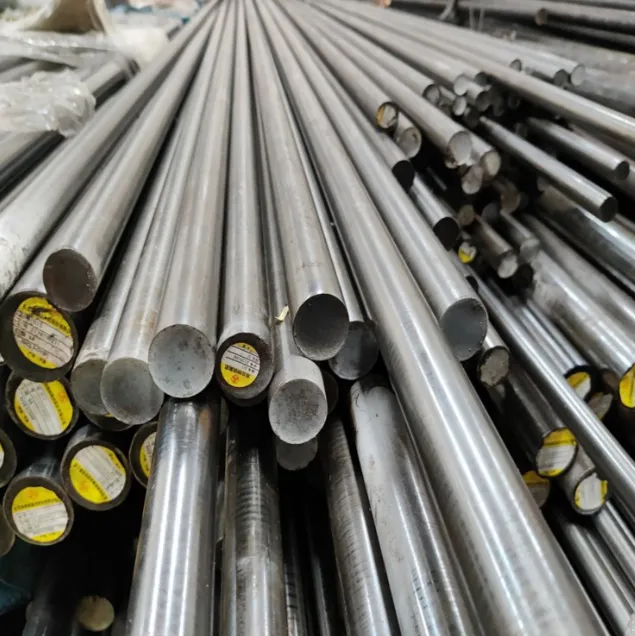
MWalloys maintains active inventory of 52100 round bar across a comprehensive diameter range, stocked in both annealed (spheroidized) and as-rolled conditions. Custom cutting and precision turning services are available for clients who need near-net shapes.
Standard Stock Diameter Range
| Diameter Range | Available Condition | Typical Length |
|---|---|---|
| 6 mm – 25 mm | Annealed / As-rolled | 3,000–6,000 mm |
| 25 mm – 75 mm | Annealed / As-rolled | 3,000–6,000 mm |
| 75 mm – 150 mm | Annealed | 3,000–5,000 mm |
| 150 mm – 250 mm | Annealed | 2,000–4,000 mm |
| 250 mm – 400 mm | Annealed (on order) | 1,500–3,000 mm |
Dimensional Tolerances (ASTM A29 / EN 10060)
| Diameter Range | Standard Tolerance (h11) | Precision Tolerance (h9) |
|---|---|---|
| 6–18 mm | +0 / -0.11 mm | +0 / -0.043 mm |
| 18–30 mm | +0 / -0.13 mm | +0 / -0.052 mm |
| 30–50 mm | +0 / -0.16 mm | +0 / -0.062 mm |
| 50–80 mm | +0 / -0.19 mm | +0 / -0.074 mm |
| 80–120 mm | +0 / -0.22 mm | +0 / -0.087 mm |
| 120–180 mm | +0 / -0.25 mm | +0 / -0.100 mm |
Custom Processing Services at MWalloys
Beyond standard bar stock, we offer:
- Cut-to-length: Saw cutting to specified lengths with ±1.5mm tolerance.
- Rough turned: Turned to near-net diameter, removing surface decarburization layer.
- Centerless ground: Precision ground round bar to h6 or h7 tolerance.
- Non-destructive testing: Ultrasonic testing per ASTM A388 for critical applications.
- Hardness verification: Brinell hardness testing on bar ends, certified on MTR.
Surface decarburization is a specific concern with 52100 bar stock. The high carbon content makes this steel more susceptible to decarburization during hot rolling and annealing than lower-carbon grades. We stock material that meets ASTM A295 decarburization limits (maximum 0.75% of bar radius for total decarburization), and we offer rough-turned product that removes the decarburized surface layer entirely for customers who require guaranteed full-hardness at the surface after heat treatment.
Quality Standards, Certifications, and Traceability at MWalloys
Every piece of 52100 round bar shipped from MWalloys is fully certified and traceable to its original heat.
Applicable Standards for 52100 Round Bar
| Standard | Issuing Body | Scope |
|---|---|---|
| ASTM A295 | ASTM International | High-carbon anti-friction bearing steel |
| ASTM A534 | ASTM International | Carburizing steels for anti-friction bearings |
| SAE J404 | SAE International | Chemical composition of SAE alloy steels |
| ASTM A29 | ASTM International | Steel bars, carbon and alloy, hot-wrought |
| EN ISO 683-17 | ISO / CEN | Heat-treatable steels — bearing steels |
| JIS G4805 | Japanese Standards | High carbon chromium bearing steels |
| DIN 17230 | DIN | Chromium steels for rolling bearings |
| AMS 2301 | SAE AMS | Steel cleanliness, bearing quality |
| ASTM E45 | ASTM International | Inclusion content rating method |
Quality Documentation Provided with Every Shipment
- Certified Mill Test Report (MTR): Full chemical composition (heat and product analysis), mechanical test results, and cleanliness rating.
- Certificate of Conformance: Written confirmation of standard compliance.
- Hardness Test Report: Brinell hardness measurements per ASTM E10.
- Heat/Lot Number: Stamped or tagged on every piece for full traceability.
- Decarburization Report: Available on request, confirms compliance with ASTM A295 decarburization limits.
- Ultrasonic Test Report: For premium orders requiring UT per ASTM A388.
We maintain all mill certifications in our digital document management system for a minimum of 10 years, allowing customers to retrieve historical certifications for maintenance, warranty, or regulatory purposes well after the original shipment date.
How to Order 52100 Round Bar From MWalloys
Placing an accurate order for 52100 round bar requires a few specific pieces of information that directly affect what we supply and how quickly we can deliver it.
Information Required for a Quote
| Specification Detail | Why It Matters |
|---|---|
| Diameter (mm or inches) | Determines stock availability or lead time |
| Length per piece or total weight | Impacts cutting schedule and pricing |
| Quantity (pieces or kg) | Affects pricing tier |
| Condition required | Annealed, as-rolled, rough turned, or ground |
| Applicable standard | ASTM A295, EN ISO 683-17, JIS G4805, etc. |
| Decarburization limit | Standard ASTM A295 or tighter |
| Cleanliness rating required | Standard or bearing quality per AMS 2301 |
| UT inspection required | Yes/No, if yes, per ASTM A388 |
| Documentation required | MTR, CoC, FAIR, etc. |
| Delivery location and timeline | Freight planning and scheduling |
We respond to all complete inquiries within 24 business hours. For urgent requirements where existing inventory must be confirmed, our technical sales team can often provide availability confirmation within 2–4 hours during business hours.
Typical Lead Times
| Order Type | Estimated Lead Time |
|---|---|
| Stock diameters (annealed, standard cert) | 3–7 business days |
| Cut-to-length from stock | 5–10 business days |
| Rough turned or centerless ground | 2–4 weeks |
| Large diameter (>200mm), special cert | 4–8 weeks |
| Custom cleanliness / AMS 2301 bearing quality | 6–12 weeks |
Frequently Asked Questions About 52100 Round Bar
Q1: What is the maximum diameter of 52100 round bar that can be through-hardened?
Through-hardening of 52100 steel is practically limited to approximately 25mm (1 inch) diameter when using conventional oil quenching. Larger diameters will harden at the surface but show progressively lower hardness toward the center due to the steel's limited hardenability. For bearing rings with wall sections above 25mm, interrupted (marquench) quenching or selection of a higher-hardenability grade like M50 should be considered. Engineers often perform Jominy end-quench testing on representative bar samples when designing components near this hardenability threshold.
Q2: Can 52100 round bar be welded?
Welding of 52100 steel is possible but strongly discouraged for finished bearing components. The very high carbon content (approaching 1.0%) gives this steel a carbon equivalent well above 0.7, placing it firmly in the "difficult to weld" category. Without extremely careful preheat (typically 260–370°C), controlled interpass temperature, and post-weld stress relief, the heat-affected zone will contain hard, brittle untempered martensite highly susceptible to cold cracking. In almost all practical situations, bearing components requiring joining or repair are redesigned or replaced rather than welded.
Q3: What is the difference between ASTM A295 and ASTM A534 for bearing steel?
ASTM A295 covers high-carbon, through-hardening bearing steels like 52100, while ASTM A534 covers carburizing-grade bearing steels like 8620, 4118, and 5120. The fundamental difference is the hardening mechanism: A295 steels are direct hardened through full austenitizing and quenching, while A534 steels are first carburized to develop a high-carbon case and then hardened. Both standards include stringent inclusion cleanliness requirements. If you are unsure which standard applies to your application, contact MWalloys technical support and we will confirm based on your component design.
Q4: How does operating temperature affect 52100 bearing performance?
52100 bearings are typically rated for continuous service up to 120°C (248°F). Above this temperature, tempering of the hardened martensite begins progressively, reducing surface hardness and dimensional stability. At temperatures above 150°C, dimensional growth from retained austenite transformation can exceed acceptable limits for precision bearings. For applications regularly exceeding 120°C, specify either stabilized 52100 (sub-zero treated and tempered at 200°C+) or upgrade to M50 or M62 bearing steel.
Q5: Is 52100 round bar available in a free-machining variant?
Standard 52100 does not have a free-machining variant because sulfur additions (which are the standard method for improving machinability) are strictly limited in bearing steels. Sulfide inclusions act as fatigue crack initiation sites and are incompatible with the fatigue life requirements of bearing applications. If machinability is a significant concern, the preferred approach is to optimize cutting parameters on spheroidize-annealed material rather than compromise the steel's cleanliness.
Q6: What surface finish should I specify when ordering 52100 round bar for direct grinding to bearing dimensions?
For bar stock intended for direct grinding (without intermediate rough turning), we recommend specifying rough-turned condition with the decarburized layer removed. The decarburized surface layer on as-rolled or annealed bar is typically 0.2–0.8mm deep. If the decarburized layer is not removed before hardening and grinding, the finished surface will have lower hardness than the specification requires. Rough-turned bar also provides better dimensional consistency for chucking and center driving during grinding operations.
Q7: What is retained austenite in 52100 steel and why does it matter?
Retained austenite (RA) is the portion of the austenitic microstructure that does not transform to martensite during quenching. In 52100, typical RA levels after standard oil quenching are 8–15% by volume. Retained austenite is softer than martensite and dimensionally unstable — it can transform to martensite during service, causing dimensional growth. For precision bearings where dimensional stability is critical, RA is minimized through cryogenic treatment after quenching and before tempering. X-ray diffraction is the standard method for measuring RA content in finished components.
Q8: How does 52100 round bar compare to D2 tool steel for wear-resistant applications?
Both 52100 and D2 achieve very high hardness after heat treatment, but their wear mechanisms differ. D2 contains 11–13% chromium and 1.5% carbon, forming large primary carbides (MC and M₇C₃ types) that provide excellent abrasive wear resistance. 52100's finer carbide distribution provides better rolling contact fatigue life because large carbides in D2 can act as crack initiation sites in RCF. For applications involving sliding abrasive wear (dies, forming tools), D2 often outperforms 52100. For rolling contact fatigue (bearing races, rollers), 52100 typically outperforms D2.
Q9: What packaging and shipping protection does 52100 round bar require?
52100 steel is susceptible to rust because it contains only 1.35–1.60% chromium, far below the 10.5% minimum required for stainless behavior. For domestic shipments, we apply a rust-preventive oil coating to all bar stock surfaces. For export or maritime shipment, bar stock is individually wrapped in VCI (Volatile Corrosion Inhibitor) paper and packed in sealed polyethylene bags before boxing. For long-term storage, we recommend keeping the bar stock in a dry environment and reapplying rust preventive if the original coating is disturbed during handling.
Q10: Can MWalloys supply 52100 round bar with ultrasonic testing certification?
Yes. We offer ultrasonic testing per ASTM A388 on 52100 round bar as an optional service, commonly specified by aerospace customers, precision bearing manufacturers, and critical industrial applications. UT inspection detects internal voids, pipe, segregation, and seam defects that would not be visible on the bar surface. The acceptance criteria (typically no discontinuities exceeding a specified flat-bottom hole equivalent) are agreed with the customer before testing. UT-certified bars are individually marked and shipped with a separate UT inspection report referencing the bar number, diameter, heat number, and test results.
A Final Note From MWalloys on 52100 Round Bar Sourcing
We have seen the consequences of sourcing bearing steel from uncertified or low-transparency sources: premature bearing failures, warranty claims, and in industrial settings, unplanned downtime that costs far more than the material savings. The specification compliance, inclusion cleanliness, and decarburization control that ASTM A295 demands are not arbitrary bureaucratic requirements — they are the result of decades of field failure analysis translated into material standards.
At MWalloys, we maintain relationships with primary steel mills whose quality management systems we have audited and verified. Every heat of 52100 we stock has documentation confirming composition, cleanliness rating, and mechanical properties before it enters our warehouse. When you order from MWalloys, you receive both the steel and the documented evidence that it meets your specification — which is what engineers, quality managers, and procurement teams need to do their jobs with confidence.
Contact our technical sales team today to confirm stock availability for your required diameter and get a competitive quotation within one business day.
MWalloys — Certified Bearing Steel, Precision Bar Stock, Delivered Worldwide
Technical data presented in this article reflects published ASTM, SAE, DIN, and JIS standards, supplemented by MWalloys application experience. Contact our engineering team for application-specific material selection guidance.