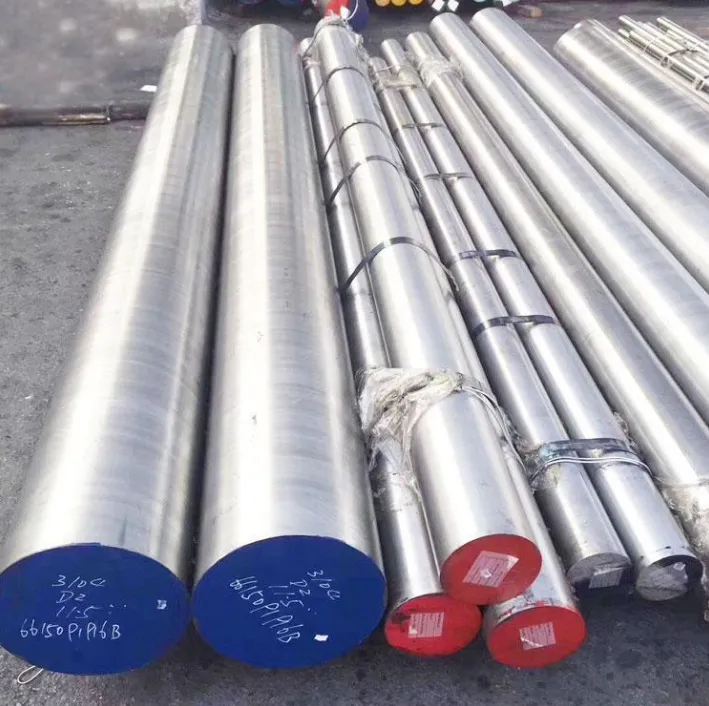

316 stainless steel round bar remains the most dependable “marine grade” stainless option in common industrial supply because its molybdenum bearing austenitic structure delivers markedly stronger pitting and crevice corrosion resistance in chloride exposure than 304, while still keeping fabrication, welding, and global standardization straightforward. If a project involves salt spray, coastal humidity, brackish water, chemical splash, or frequent washdown, AISI 316 round bar (UNS S31600) or its low carbon counterpart 316L (UNS S31603) typically becomes the default specification, provided that surface condition, mill practice, and documentation match the service risk.
What defines 316 stainless steel round bar in marine service?
AISI 316 is an austenitic chromium nickel stainless steel alloyed with molybdenum. The “marine grade” label comes from practical field performance: molybdenum raises resistance to localized corrosion mechanisms that dominate near seawater, mainly pitting corrosion and crevice corrosion initiated by chlorides.
Round bar supply covers a wide span of diameters and finishes. Engineers select round bar when the part geometry relies on turning, drilling, threading, boring, or centerless grinding. Common components include shafts, pins, pump parts, valve stems, fasteners, couplings, marine hardware, fittings, and machined hygienic parts.
Key reasons buyers choose 316 round bar:
- Better chloride tolerance than 304 in splash zone and salt mist.
- Strong general corrosion resistance in many organic and inorganic chemicals.
- Excellent weldability in annealed condition.
- Non hardenable by heat treatment, which simplifies distortion control.
- Broad availability with ASTM, EN, and JIS equivalences.
Important boundary conditions:
- “Marine grade” does not mean “immune to rust.” Stagnant seawater, tight crevices, deposits, and poor cleaning can trigger attack even on 316.
- Chloride stress corrosion cracking can occur at elevated temperature and tensile stress.
- Surface finish and contamination control often decide success or premature staining.
Which standards cover AISI 316 round bar and how do they differ?
Procurement teams often see “316 stainless steel bar” on a bill of materials, yet actual compliance depends on which standard governs chemistry, mechanical requirements, heat treatment condition, tolerances, and permitted finish.
Common ASTM standards tied to 316 round bar
- ASTM A276: stainless steel bars and shapes, hot finished or cold finished, general bar applications.
- ASTM A479: stainless steel bars intended mainly in pressure vessel, valve, flange service, often with tighter requirements than A276 in certain conditions.
- ASTM A182: forged or rolled alloy and stainless steel pipe flanges, forged fittings, valves, and parts; round bar can be ordered to A182 when machining into pressure retaining components.
- ASTM A314: stainless steel billets and bars intended in forging.
- ASTM A484: general requirements applied across stainless bar and shapes.
- ASTM A370: mechanical testing methods referenced by multiple product specs.
Common EN and ISO references
- EN 10088 series (stainless steels): widely used in Europe, with grade numbers like 1.4401 and 1.4404.
- EN 10204 certification types: 2.2, 3.1, 3.2 inspection documents.
- ISO and national derivatives exist, yet EN grade mapping remains the routine cross reference in global trade.
Table 1. Grade designations buyers see on quotations
| Common name | UNS | EN number | EN name (typical) | JIS | Typical note |
|---|---|---|---|---|---|
| 316 | S31600 | 1.4401 | X5CrNiMo17-12-2 | SUS316 | Standard carbon |
| 316L | S31603 | 1.4404 | X2CrNiMo17-12-2 | SUS316L | Low carbon, welding friendly |
| 316H | S31609 | 1.4919 (related) | High carbon variant | SUS316H (where used) | Elevated temperature strength focus |
| 316Ti | S31635 | 1.4571 | X6CrNiMoTi17-12-2 | SUS316Ti | Titanium stabilized |
Procurement note: a quote stating “316 / 1.4401” without stating the governing product standard (A276 vs A479) can cause disputes later when mechanical properties, tolerance class, or testing scope differs.
What chemical composition ranges should appear on a mill test report?
Chemistry control drives corrosion behavior, weldability, and certain mechanical limits. Buyers should rely on the mill test certificate heat analysis rather than “typical composition” lines on a catalog page.
AISI 316 includes molybdenum, usually near 2 percent, which is the defining difference relative to 304. Nickel supports austenite stability and improves toughness. Chromium builds the passive film that gives stainless its corrosion resistance.
Table 2. Typical ASTM chemistry limits (verify current revision and certificate)
| Grade | C max % | Mn max % | Si max % | P max % | S max % | Cr % | Ni % | Mo % | N max % |
|---|---|---|---|---|---|---|---|---|---|
| 316 (S31600) | 0.08 | 2.00 | 1.00 | 0.045 | 0.030 | 16.0 to 18.0 | 10.0 to 14.0 | 2.00 to 3.00 | 0.10 |
| 316L (S31603) | 0.03 | 2.00 | 1.00 | 0.045 | 0.030 | 16.0 to 18.0 | 10.0 to 14.0 | 2.00 to 3.00 | 0.10 |
| 316H (S31609) | 0.04 to 0.10 | 2.00 | 1.00 | 0.045 | 0.030 | 16.0 to 18.0 | 10.0 to 14.0 | 2.00 to 3.00 | 0.10 |
What else experienced buyers check on the MTC
- Actual molybdenum value: corrosion performance improves when Mo sits comfortably inside the range, not near the lower edge.
- Sulfur level: low sulfur supports better polish and corrosion resistance; free machining variants trade corrosion margin and finish potential.
- Nitrogen: small changes can shift strength, pitting resistance, and austenite stability.
- Heat treatment condition statement: “solution annealed” wording should appear when required by the standard.
What mechanical properties and physical constants matter in design?
316 round bar properties depend on product standard, size, and condition (hot finished, cold drawn, annealed, strain hardened). Many engineering references quote annealed properties, yet cold finishing can raise yield and tensile strength while reducing elongation.
Table 3. Typical mechanical properties in annealed condition (reference values)
| Property | 316 annealed typical | 316L annealed typical | Notes |
|---|---|---|---|
| 0.2% yield strength | ~205 MPa | ~170 to 205 MPa | Cold work can raise yield substantially |
| Tensile strength | ~515 to 620 MPa | ~485 to 620 MPa | Standard minimums depend on spec |
| Elongation | ~40% | ~40% | Reduced by cold work |
| Hardness | ~150 to 190 HB | ~150 to 190 HB | Not heat treat hardenable |
Table 4. Physical properties used in calculations (room temperature, typical)
| Property | Typical value | Design relevance |
|---|---|---|
| Density | 7.9 to 8.0 g/cm³ | Weight, inertia |
| Elastic modulus | ~193 GPa | Deflection, shaft stiffness |
| Thermal conductivity | ~14 to 16 W/m·K | Heat transfer in process equipment |
| Coefficient of thermal expansion | ~16 µm/m·K | Thermal growth in shafts, fits |
| Electrical resistivity | ~0.74 µΩ·m | Grounding, electrical contact behavior |
| Specific heat | ~500 J/kg·K | Thermal response |
Strength at temperature
316 retains toughness at low temperature and maintains useful strength at moderately elevated temperatures, yet sustained high temperature service demands correct grade choice. 316H exists due to creep and rupture strength needs in petrochemical service. Design should reference code data (ASME BPVC, EN) rather than relying on room temperature numbers.
How does 316 resist corrosion in seawater, chlorides, and chemicals?
Corrosion performance depends on environment chemistry, temperature, oxygen content, crevice geometry, deposits, and surface condition. A polished, clean surface outperforms a rough surface with embedded iron contamination.
General corrosion resistance
316 resists many acids and alkalis in moderate concentration, plus many food and pharmaceutical environments. Reducing acids and halide rich media can become problematic. Chemical compatibility tables remain essential in process design.
Localized corrosion: pitting and crevice corrosion
Chloride ions destabilize the passive film. Molybdenum improves the repassivation behavior, raising the threshold for pitting initiation. Crevice corrosion is often more limiting than pitting due to oxygen depletion inside gaskets, lap joints, threads, deposits, and under biofouling.
PREN and what it tells buyers
A common screening metric is the Pitting Resistance Equivalent Number (PREN):
PREN = %Cr + 3.3 x %Mo + 16 x %N
Table 5. PREN comparison (typical compositions)
| Alloy | Typical Cr % | Typical Mo % | Typical N % | Typical PREN | Practical reading |
|---|---|---|---|---|---|
| 304 | 18.0 | 0.0 | 0.05 | ~18.8 | Limited chloride tolerance |
| 316 | 17.0 | 2.2 | 0.05 | ~25.1 | Better pitting resistance |
| 317L | 18.0 | 3.1 | 0.05 | ~29.0 | Higher pitting margin |
| Duplex 2205 | 22.0 | 3.1 | 0.17 | ~38.7 | Strong chloride performance |
PREN is a screening tool, not a guarantee. Surface finish, crevice geometry, and temperature can overwhelm small PREN differences.
Does 316 rust in seawater?
316 can stain or pit in seawater, especially in warm, stagnant, or low oxygen conditions, or where deposits trap chlorides. Offshore operators often move to duplex stainless, super austenitic grades, titanium, or coated systems when immersion conditions become severe. In splash zone exposure, 316 performs well when cleaning and drainage design reduce salt accumulation.
Table 6. Corrosion risk overview in chloride exposure (practical field view)
| Environment | 304 risk | 316 risk | Notes |
|---|---|---|---|
| Coastal atmosphere, salt mist | high staining risk | moderate staining risk | Rinsing and smooth finish improve outcome |
| Splash zone seawater | pitting likely | improved, still possible | Crevices and deposits drive failures |
| Full immersion, warm seawater | poor | limited | Duplex often selected |
| Chloride cleaning agents | damage likely | better, still caution | Temperature and concentration matter |
Chloride stress corrosion cracking (Cl SCC)
Austenitic stainless steels can crack under tensile stress in hot chloride environments. 316 improves resistance relative to 304, yet does not eliminate risk. Typical mitigation includes:
- reduce tensile stress (stress relief, design changes).
- lower temperature or chlorides.
- shift to duplex stainless or nickel alloys when risk remains high.
When is 316L or 316H a better choice than standard 316?
Grade selection should match fabrication route and service temperature.
316 vs 316L
316L limits carbon to 0.03% maximum, reducing chromium carbide precipitation in the heat affected zone during welding. That improves resistance to intergranular corrosion without requiring post weld solution anneal.
- Choose 316L when welded fabrication will enter corrosive service and solution anneal after welding is not practical.
- Choose 316 when higher strength is needed and welding impact is limited, or when design code requirements point to standard carbon.
316H
316H carries higher carbon within a controlled band, increasing high temperature strength and creep resistance. It is common in refinery and power service where metal temperature stays elevated for long periods.
316Ti and stabilized options
Titanium stabilized 316 variants reduce sensitization risk in certain temperature windows. Availability in round bar varies by region. Many buyers default to 316L due to supply depth.
Table 7. Selection shortcuts used by fabricators and engineers
| Need | Grade preference | Reason |
|---|---|---|
| Extensive welding without post weld heat treatment | 316L | Reduced sensitization tendency |
| Pressure components at elevated temperature | 316H | Higher creep strength |
| General machined parts, minimal welding | 316 | Widely stocked, predictable |
| Very aggressive chlorides | duplex 2205 or higher | Higher pitting and SCC margin |
Which manufacturing routes and bar finishes affect tolerance and surface quality?
Round bar is not a single product. Finish route influences straightness, diameter tolerance, surface roughness, and machining allowances.
Common bar conditions
- Hot rolled: larger tolerances, mill scale, lower cost.
- Hot finished, annealed, pickled: scale removed, improved surface.
- Cold drawn: tighter tolerances, brighter surface, higher strength via cold work.
- Peeled and turned: improved roundness and surface, common in shaft stock.
- Centerless ground: tight diameter tolerance and excellent straightness.
- Polished: aesthetic and hygienic needs.
Table 8. Bar finish comparison used in purchasing decisions
| Bar condition | Typical surface | Typical tolerance capability | Common usage |
|---|---|---|---|
| Hot rolled | scale | loose | heavy machining stock |
| Annealed and pickled | matte | moderate | general machining, improved cleanliness |
| Cold drawn | bright | tighter | fasteners, pins, turned parts |
| Peeled and turned | smooth, uniform | tight | shafts, hydraulic components |
| Centerless ground | precision | very tight | bearings fits, minimal machining allowance |
| Polished | low roughness | varies | marine hardware, sanitary components |
Tolerance references
ASTM product specs define dimensional tolerance ranges, yet many buyers also reference ISO tolerance systems or mill standard tolerance tables. A purchase order should specify diameter tolerance class, ovality limits, straightness limits, plus cut length tolerance.
Table 9. Typical dimensional control items to list on a PO
| Item | Why it matters | What to state |
|---|---|---|
| Diameter tolerance | fit, machining time | explicit plus/minus or ISO h tolerance |
| Straightness | shaft runout | maximum deviation per length |
| Ovality | sealing, bearing seats | maximum ovality |
| Surface roughness | hygienic and sealing surfaces | Ra target when required |
| End condition | chucking, safety | saw cut, faced, chamfered |
How do machining, welding, and heat treatment influence performance?
316 is widely machinable, weldable, and formable, yet outcomes depend on technique. Practical issues appear regularly in shops: built up edge during turning, work hardening during drilling, heat tint after welding, and contamination leading to rust staining.
Machining behavior of 316 round bar
316 work hardens readily. Tooling must stay sharp, feeds should avoid rubbing, and coolant control helps with chip evacuation and temperature control.
Common shop practices:
- Use rigid setups to prevent chatter
- Keep positive rake tooling on finishing.
- Avoid dwelling at the bottom of drilled holes.
- Use sulfurized cutting fluid where permissible, then clean thoroughly.
Table 10. Machining notes engineers often add to process sheets
| Operation | Typical issue | Common mitigation |
|---|---|---|
| Turning | built up edge, heat | coated carbide, stable chip load, coolant |
| Drilling | work hardening | high quality drills, steady feed, peck strategy tuned |
| Tapping | galling | forming taps in suitable sizes, lubrication, correct hole size |
| Threading | tearing | sharp inserts, optimized speed, avoid tool wear |
| Saw cutting | blade wear | correct tooth pitch, coolant, clamp rigidity |
Welding 316 and 316L
316L is normally chosen when corrosion performance near welds matters. Typical filler metals include:
- ER316L (GTAW, GMAW)
- E316L (SMAW)
After welding, remove heat tint and restore passivity via pickling and passivation when corrosion service demands it. Heat tint zones show reduced chromium content at the surface, which reduces corrosion resistance.
| Item | Typical choice | Why |
|---|---|---|
| Common filler | ER316L | Matches base metal, low carbon |
| Shielding gas | argon based | stable arc, clean weld |
| Post weld cleaning | pickle plus passivate | restores corrosion resistance |
| Sensitization risk control | choose 316L, control heat input | reduces intergranular corrosion risk |
Heat treatment
316 cannot be hardened by quench and temper. Heat treatment mainly means solution annealing to restore corrosion resistance, dissolve carbides, and remove cold work.
Typical solution anneal window: roughly 1040°C to 1120°C, followed by rapid cooling. Exact details depend on product standard and section size.
Surface contamination and passivity
Many “rust on stainless” complaints trace to embedded carbon steel particles from grinding, wire brushing, or handling. Recommended practices:
- Dedicated stainless tools in fabrication areas.
- Avoid carbon steel wire brushes
- Clean, pickle, passivate when service is severe.
- Control chloride cleaners in maintenance routines.
What quality assurance documents and tests reduce procurement risk?
Purchasing stainless bar stock without clear QA expectations can lead to mix ups (304 shipped instead of 316), wrong condition (cold worked stock used where annealed is required), or missing traceability.
Documentation
- Mill Test Certificate with heat number.
- EN 10204 3.1 certificate when required by customer or regulated sectors.
- Certificate of compliance to ASTM standard and grade.
- Statement of solution anneal condition when required.
Verification tests used by quality teams
- PMI (Positive Material Identification) via XRF or OES.
- Hardness checks, especially when cold finished strength matters.
- Dimensional inspection.
- Visual surface inspection plus liquid penetrant when surface integrity matters.
- Ultrasonic testing in critical rotating shafts or pressure service, when specified.
Table 12. Incoming inspection checklist used by many buyers
| Check | Method | Risk reduced |
|---|---|---|
| Grade verification | PMI | mixed grade, wrong Mo content |
| Heat traceability | heat number match | loss of traceability |
| Mechanical compliance | tensile data on MTC | wrong condition supplied |
| Dimensions | micrometer, straightness checks | machining scrap, fit issues |
| Surface | visual, penetrant when needed | laps, seams, cracks |
| Certification type | EN 10204 3.1 or 3.2 | contractual non compliance |
How does 316 compare with 304, 303, 17-4PH, duplex 2205, and carbon steel?
Selection often becomes a tradeoff between corrosion margin, strength, machinability, cost, and availability.
Table 13. Comparison table used during material selection
| Material | Key advantage | Key limitation | Typical use |
|---|---|---|---|
| 304 (S30400) | lower cost, broad availability | weaker chloride resistance | indoor equipment, mild environments |
| 316 (S31600) | improved chloride resistance | higher cost than 304 | marine hardware, chemical service |
| 303 (S30300) | improved machinability | reduced corrosion resistance | high volume turned parts, mild environments |
| 17-4PH | high strength after aging | corrosion resistance below 316 in many chlorides | shafts, fasteners needing strength |
| Duplex 2205 | high strength, strong chloride performance | fabrication learning curve, cost | seawater exposure, offshore |
| Carbon steel (4140) | high strength, low cost | rusts without protection | non corrosive environments, coated systems |
Practical note: 316 often becomes the “safe” choice when procurement needs a globally recognized stainless grade with robust corrosion behavior and predictable welding. Duplex 2205 often wins when seawater immersion, high chlorides, or stress corrosion cracking risk dominates.
What applications suit 316 stainless steel round bar in marine, food, and energy?
316 round bar shows up in many industries due to its balance of corrosion resistance and fabricability.
Marine and coastal
- Clevis pins, shackles, turnbuckles (with correct design to reduce crevices).
- Prop shaft components in mild exposure zones (immersion often uses duplex or special alloys).
- Deck hardware, rail fittings, brackets.
- Pump shafts and impeller hardware in brackish water service (evaluation required).
Food, beverage, and pharmaceutical
316 is widely used in sanitary equipment due to resistance to many cleaning agents and its suitability for smooth finishes. Surface finish and weld cleanup quality frequently matter more than bulk alloy in hygienic compliance.
- Mixer shafts, augers, valves, fittings.
- CIP system components.
- High polish shafts and pins.
Chemical processing and energy
- Valve stems, pump shafts, instrumentation parts.
- Fasteners and tie rods in chemical environments.
- Heat exchanger components in suitable media.
In all cases, chemical compatibility should be verified. 316 can fail rapidly in certain reducing acids, halide rich mixtures at high temperature, or under deposits.
What should a purchase specification from MWalloys include?
A purchase order that only states “316 stainless steel round bar” leaves room for mismatched expectations. A robust line item includes grade, standard, finish, condition, tolerance, testing, plus documentation.
Recommended PO template content
- Grade: AISI 316 (UNS S31600) or 316L (UNS S31603).
- Product standard: ASTM A276 or ASTM A479 (state revision year when contract controlled).
- Condition: solution annealed, pickled; or cold drawn; state if strain hardened is acceptable.
- Size: diameter and length, plus cut length tolerances.
- Diameter tolerance class and straightness limit.
- Surface finish: hot rolled, peeled and turned, centerless ground, polished; include Ra when needed.
- Certification: EN 10204 3.1 plus MTC with heat number traceability.
- PMI requirement: on receipt or supplier provided.
- Additional tests: UT, penetrant, grain size, ferrite content (weld related) when needed.
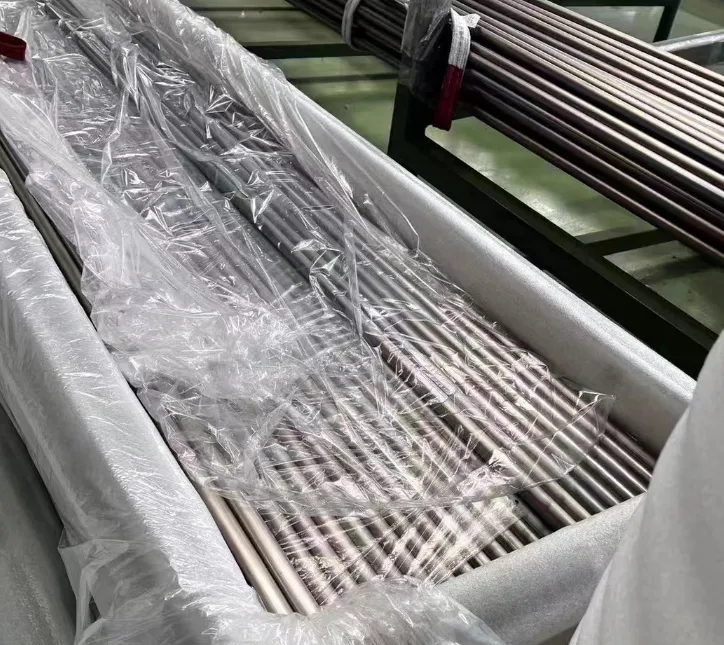
- Packaging: moisture protection, end caps, tagging, corrosion preventive paper when required.
MWalloys typically supports these requirements by supplying fully traceable 316 and 316L round bar with cut to length services, controlled finish options, and documentation packages aligned with industrial QA systems.
Table 14. Example ordering matrix used by procurement teams
| Use case | Recommended grade | Standard | Finish | Extra QA |
|---|---|---|---|---|
| Marine hardware, general | 316 | A276 | cold drawn or peeled | PMI on receipt |
| Welded chemical tank internals | 316L | A276 or A479 | annealed, pickled | 3.1 cert, pickling proof |
| Valve stems pressure service | 316 / 316L per code | A479 | peeled or ground | UT when specified |
| Hygienic shafts | 316L | A276 | polished or ground | Ra requirement, passivation |
Frequently asked questions about 316 stainless steel round bar
AISI 316 Stainless Steel: 10/10 Technical FAQ
1. Is 316 stainless steel truly “marine grade”?
Yes, in the sense that it performs significantly better in salt mist and coastal environments compared to 304, primarily due to the addition of Molybdenum (2-3%) which improves pitting resistance. However, it can still experience pitting in harsh, stagnant seawater immersion or in tight crevices where deposits accumulate.
2. What is the difference between 316 and 316L round bar?
WELDING FOCUS
316L has a lower maximum carbon content (0.03% max), which drastically reduces the risk of sensitization and intergranular corrosion near weld joints. Standard 316 can carry slightly higher tensile strength in some conditions, but 316L is the preferred choice for almost all welded fabrications.
3. Will 316 round bar rust?
4. Which ASTM standard should I request, A276 or A479?
5. Is 316 stainless magnetic?
In the annealed condition, 316 is an austenitic grade and is essentially non-magnetic. However, heavy cold working (like cold drawing or threading) can induce a slight magnetic response. If a bar is strongly magnetic, it likely indicates a martensitic grade or mixed material.
6. Can 316 be heat treated to become hard?
7. What filler metal should be used when welding 316 round bar?
8. What surface finish should I pick for a 316 shaft?
SELECTION GUIDE
Peeled & Turned: Standard for many industrial shafts; removes the outer mill scale.
Centerless Ground: Essential for tight diameter tolerances and precise bearing seats (e.g., h9 or h8 tolerance).
Polished: Chosen for aesthetic marine hardware or hygienic pharmaceutical/food processing equipment.
9. How does 316 compare with duplex 2205 in seawater?
Duplex 2205 offers nearly double the yield strength and a much higher PREN (Pitting Resistance Equivalent Number), making it far superior for high-stress seawater applications and stress corrosion cracking margin. 316 remains the choice when ease of fabrication, universal availability, and lower initial material cost are the priorities.
10. What certificates should arrive with 316 round bar?
At a minimum, you should receive a Mill Test Certificate (MTC) that includes:
- Heat Number: For full traceability to the melt.
- Chemical Composition: Verification of Ni, Cr, and Mo levels.
- Mechanical Results: Tensile, Yield, and Elongation data.
- Compliance: Statement that the material meets ASTM A276/A479 or EN 10204 3.1 standards.
Summary
316 stainless steel round bar earns its marine grade reputation through molybdenum enhanced resistance to chloride driven pitting and crevice corrosion, yet performance still depends on grade variant selection (316 vs 316L vs 316H), finish route, weld cleanup, and documentation quality. When a purchase specification clearly states the governing ASTM or EN standard, heat treatment condition, tolerance class, and certification scope, 316 round bar becomes a low risk material choice across marine hardware, hygienic equipment, and chemical service components, which aligns with how MWalloys structures supply and QA support in industrial procurement.