
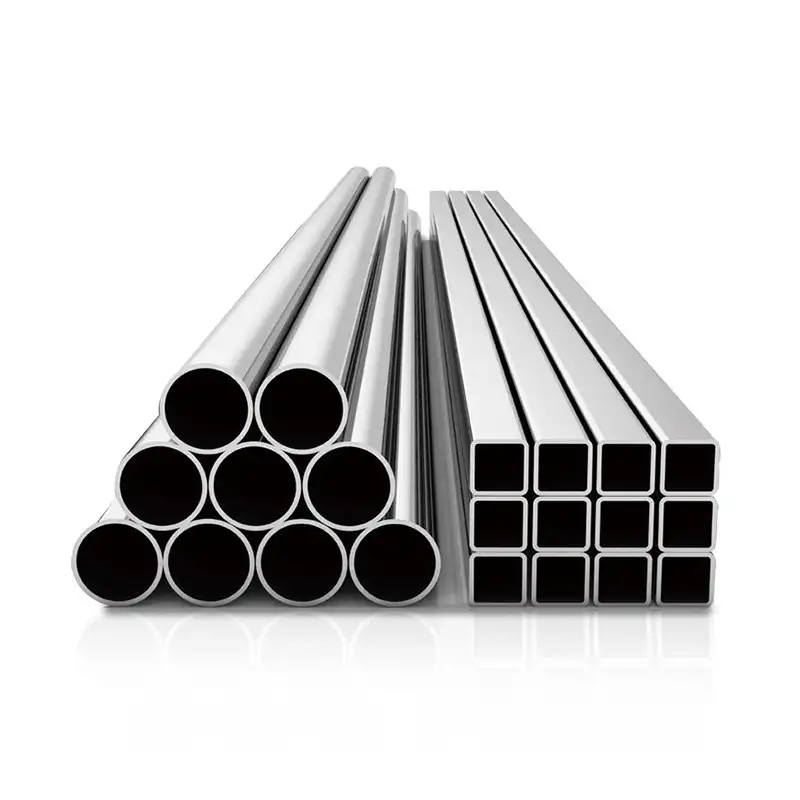
309 stainless steel pipe is a high-chromium, high-nickel austenitic alloy designed for elevated-temperature service where scaling and oxidation resistance matter more than chloride resistance. It offers significantly better oxidation and creep resistance than 304 and improved hot-strength compared with many common grades, making it a preferred choice for furnace components, heat-exchanger piping, and industrial flues. For buyers seeking mill-direct pricing and fast fulfillment, MWAlloys supplies TP309 / TP309S pipes at 100% factory pricing with ready stock and expedited shipping from China — suitable for global industrial procurement.
What is 309 stainless steel pipe?
Type 309 (often specified in the low-carbon variant 309S or the “H” variant for higher carbon) is an austenitic chromium-nickel stainless steel created to resist oxidation and scaling at elevated temperatures (continuous service in the range of about 900–1,100 °C / 1,650–2,000 °F depending on atmosphere and cycling). In piping form it is offered as welded (ERW, SAW, etc.) and seamless products under common pressure-pipe specifications such as ASTM A312 (for austenitic stainless pipe grades) and related ASME codes. 309 was developed as a heat-resisting modification of the general 300 series to provide enhanced performance in oxidizing hot environments.
Recommended uses
-
Furnace tubes, flues and ducting where oxidation resistance is required.
-
High-temperature venting and exhaust piping for thermal processes.
-
Process equipment handling hot oxidizing gases (non-carburizing).
-
Transition piping in petrochemical or chemical plants where short sections require high heat resistance.
-
Welding filler and buffer layers when joining higher-alloy materials to carbon steels.
Chemical composition
Below is a concise table representing commonly accepted composition ranges for Type 309 / 309S (weight percent). Individual mill certificates and spec calls (ASTM) control exact acceptance limits — always quote the spec and request mill test reports (MTRs).
| Element | Typical Range (309) wt% | Typical Range (309S) wt% | Note |
|---|---|---|---|
| Carbon (C) | ≤ 0.20 | ≤ 0.08 (309S low C) | 309S recommended for welding to avoid carbide precipitation |
| Chromium (Cr) | 22.0 – 24.0 | 22.0 – 24.0 | High Cr for oxidation resistance |
| Nickel (Ni) | 12.0 – 15.0 | 12.0 – 15.0 | Stabilizes austenite, improves ductility |
| Manganese (Mn) | ≤ 2.0 | ≤ 2.0 | Minor alloying |
| Silicon (Si) | ≤ 1.0 | ≤ 1.0 | Aids high-temperature strength |
| Phosphorus (P) | ≤ 0.045 | ≤ 0.045 | Impurity limit |
| Sulfur (S) | ≤ 0.03 | ≤ 0.03 | Impurity limit |
| Iron (Fe) | Balance | Balance | Remainder of alloy |
(Reference standards and datasheets confirm these ranges — always verify via the supplier MTR.)
Notes on variants:
-
309S = low-carbon variant (better weldability, less risk of intergranular corrosion after welding).
-
309H = higher carbon option when creep strength at high temperature is required (used in select elevated temperature structural items).
Material properties
Room-temperature mechanical properties (annealed):
| Property | Typical Value (309, annealed) |
|---|---|
| Tensile strength (Rm) | ≈ 520–700 MPa (varies by product form) |
| Yield strength (0.2% offset) | ≈ 205–310 MPa |
| Elongation (A%) | ≥ 40% (depends on thickness) |
| Hardness (HB) | ≈ 140–200 (material/heat dependent) |
| Modulus of elasticity | ≈ 200 GPa |
High-temperature performance (practical guidance):
-
Continuous oxidation resistance up to roughly 1,000–1,100 °C (≈ 1,832–2,012 °F) under non-cyclic, dry oxidizing conditions; thermal cycling diminishes the maximum practical temperature.
-
Superior scaling resistance versus 304; creep and high-temperature strength are improved, but 310 family (higher Ni) offers still higher temperature capability when required.
Common specifications & piping standards
When ordering 309 stainless steel pipe, the following specs / designations are commonly used:
-
ASTM A312 / ASME SA312 — standard for seamless, welded, and heavily cold-worked austenitic stainless steel pipe (commonly lists TP309S, TP309H variants).
-
ASTM A269 / A270 — covers tube and sanitary tubing for some product forms.
-
UNS designation: S30900 (309), S30908 (309S).
-
EN / DIN equivalents: European EN number for 309 is approximately 1.4833 (for 309) / 1.4828 mapping varies with exact subgrade; consult EN 10088 tables for exact cross references.
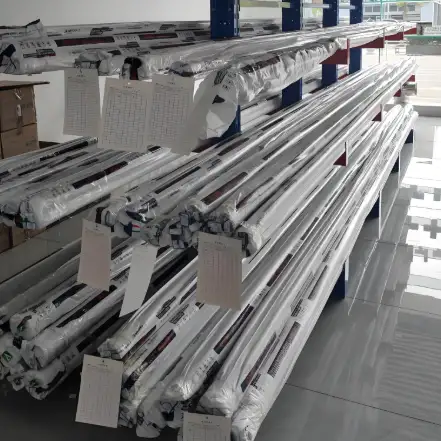
Order checklist (minimum): material grade (309/309S/309H), specification (ASTM A312 / ASME SA312), OD and wall (e.g., 3" SCH 40), testing requirements (hydrostatic, PMI, MTR), heat treatment state (annealed), end finish (plain end / beveled), and packaging.
What is 309 stainless steel equivalent to?
Commonly used equivalents and cross-references:
-
AISI 309 / UNS S30900 — the North American designation.
-
EN / DIN: near equivalents include 1.4833 or X12CrNiSi20-12 mapping (check exact EN table for elemental tolerances).
-
309S ↔ UNS S30908 for low-carbon variant.
Always confirm equivalence by requested composition limits instead of relying on a single name; EN ↔ AISI cross maps are approximate and sometimes split across multiple EN numbers.
What is 309 stainless steel pipe used for?
-
Furnace and kiln piping: ducts, burners, exhausts, and throat tubes for appliances handling high temperature gases.
-
Heat-treatment equipment: parts exposed to intermittent elevated temperature and scaling atmospheres.
-
Industrial ovens and boilers: sections that require oxidation resistance but are not in highly carburizing environments.
-
Architectural/industrial flue systems: where elevated temperature and oxidation are a concern.
-
Welding consumables & buffer layers — 309 fillers are frequently used for joining stainless to carbon steel because 309 tolerates dilution and reduces cracking risk.
Limitations: Avoid in heavily chlorinated (sea water) service and where sulfidation/carburization is severe — other specialty alloys may be necessary.
309 stainless steel vs 304 vs 316
| Factor | 304 | 316 | 309 |
|---|---|---|---|
| Nominal Cr / Ni | ~18/8 | ~16–18/10–14 + Mo | ~22–24/12–15 |
| Corrosion resistance (aqueous chloride) | Good | Superior (Mo) | Moderate (not intended for chloride service) |
| High-temperature oxidation resistance | Moderate | Good | Superior (best of the three for oxidizing high temp) |
| Weldability | Excellent (304L better) | Good | Good (309S recommended for welding) |
| Typical uses | Food, pharma, architecture | Marine, chemical (chlorides) | Furnace parts, heat exchangers |
| Takeaway: Choose 309 when temperature/oxidation resistance is the primary variable; choose 316 for chloride environments; choose 304 for general corrosion resistance at ambient to moderate temperatures. |
Sizes and weight — schedules, calculation, and examples
Pipes are commonly ordered by nominal pipe size (NPS) / DN and schedule (wall thickness). Stainless 309 pipe follows the same dimensional standards as other austenitic stainless pipe under ASTM A312.
Weight calculation (quick formula) — useful for buyers and logistics:
-
LB/ft = (OD - t) × t × 10.69 (for steel; gives pounds per foot)
-
kg/m = (OD_mm - t_mm) × t_mm × 0.0246615
Example table (selected sizes, schedule 40, approximate weights)
| NPS | OD (in) | Sch 40 Wall (in) | Approx lb/ft |
|---|---|---|---|
| 1/2" | 0.840 | 0.109 | 0.85 |
| 1" | 1.315 | 0.133 | 1.68 |
| 2" | 2.375 | 0.154 | 5.06 |
| 4" | 4.500 | 0.237 | 14.0 |
| (Use vendor charts or Tioga Pipe tables for precise schedule vs weight lists — numbers above are illustrative; verify by exact OD/t and material density.) |
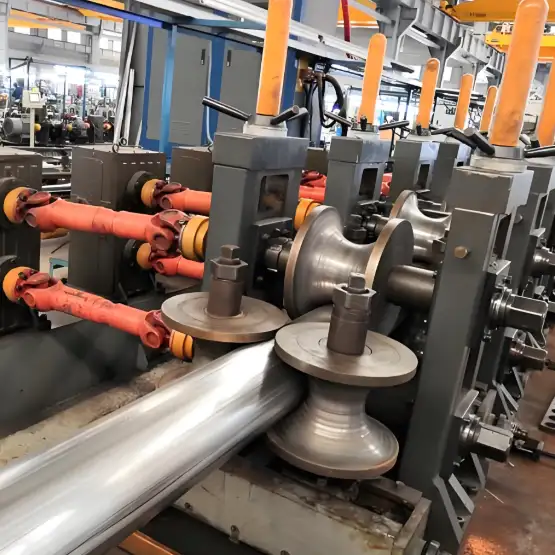
Supply forms: welded ERW, seamless, large-diameter SAW, mechanical tube sizes — procurement should specify OD, wall, length, and whether non-destructive tests (UT, PMI) are required.
2025 price snapshot — USA, Europe, China
Important: stainless market prices vary daily and depend on alloy, form (coil, sheet, tube), quantity, steelmaking route, and trade measures. The table below gives indicative ranges (mid-2025 market signals and China factory listings), intended for budgeting and RFQ prep. Always request current firm quotes.
| Region | Indicative 309 stainless pipe / ton (USD, mid-2025 ranges) | Market drivers / notes |
|---|---|---|
| China (factory FOB) | ~USD 1,300–2,300 / ton (factory direct listings show low-end tubular pricing near these bands for 309/309S welded tubes from Chinese mills). | Chinese domestic supply, export offers, MOQ, and anti-dumping duties influence final price. |
| Europe (ex-works) | ~EUR 900–1,200 / ton (approx. USD 1,000–1,300/ton depending on currency, product, and local energy costs; European prices have been weighed down by imports and demand softness). | Energy costs, European plant maintenance schedules, and import competition from Asia. |
| USA (ex-works) | ~USD 1,100–2,000 / ton (wider swing due to tariffs, domestic mill capacity, and grade mix). | Tariffs and protection measures can push US floor prices up; smaller runs and specialty grades are costlier. |
How to use these numbers: convert to per-meter or per-piece using weight tables for the specified pipe size and schedule; shipping and tariffs can add materially to landed cost.
Market drivers to watch (2025): energy costs, anti-dumping duties, stainless coil billet availability, and currency fluctuations. Recent industry reporting indicates weak European demand and price pressure from low-cost Asian imports; US markets are affected by tariffs and domestic capacity constraints.
Procurement & QA checklist
When buying 309 stainless steel pipe, include the following minimum items in your purchase order:
-
Specification & grade: ASTM A312 TP309S (or TP309H if needed), UNS S30908 or S30900.
-
MTR requirement: full chemical and mechanical MTR per ASTM — insist on traceable heat numbers.
-
Testing: hydrostatic or pneumatic test; PMI or positive material identification on critical orders; radiography for weld seam when required.
-
Heat treatment: annealed condition unless otherwise specified.
-
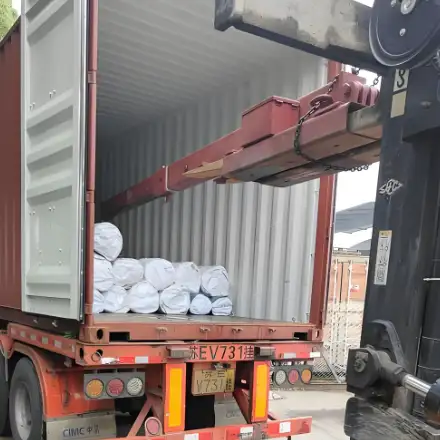
End finish and packaging: beveled ends for welding, plastic sleeving for export.
-
Welding instructions: specify 309 filler metal or a compatible consumable when joining to dissimilar metals.
-
Inspection: third-party inspection (if required) and acceptance criteria for dimensional tolerances.
MWAlloys — mill-direct supply proposition
MWAlloys is a China-based mill and trader with factory stock of austenitic stainless grades (including 309 / 309S). Our offer highlights:
-
100% factory price — we ship directly from mill stock to reduce middle-man markups.
-
Fast fulfillment — standardized lengths and ready inventories for common schedules (short-lead shipments for stocked sizes).
-
Quality assurance — full MTRs, traceable heat numbers, and optional third-party inspection.
-
Global shipping — FOB/CIF terms, assistance with export documentation and logistics.
If your project needs a prompt, certified supply of TP309S pipe in common NPS/SCH sizes, MWAlloys can issue an RFQ with sample mill certificates on request.
FAQs
AISI 309 Stainless Steel Pipe: High-Temp Engineering FAQ
1. Is 309 stainless pipe magnetic?
2. Can 309 be welded to carbon steel?
Yes. 309 filler metals (like ER309L) are the industry standard for "dissimilar metal welding." Because 309 has higher Chromium and Nickel content, it provides a buffer that prevents carbon migration and reduces the risk of hot cracking when joining stainless steel to carbon steel.
3. Should I choose 309, 309S, or 309H?
- 309S: Lower carbon; preferred for welded piping to minimize carbide precipitation and intergranular corrosion.
- 309H: Higher carbon; preferred for structural stability and creep resistance in high-temperature furnace components.
- 309: The standard grade for general heat-resisting applications.
4. What tests should be on the MTR?
- Full Chemical Composition (especially Cr and Ni percentages).
- Tensile Strength and Yield Strength tests.
- Hardness testing.
- Unique Heat Number traceability.
- NDE results (UT, RT, or Hydrostatic testing) as per ASTM/ASME requirements.
5. Does 309 resist carburization or sulfidation?
6. Can 309 be used in marine environments?
7. What is the maximum continuous service temperature?
In oxidizing conditions, 309 can handle continuous service up to 1000–1100°C (1832–2012°F). Note that frequent thermal cycling (repeated heating and cooling) can cause the protective scale to flake off, lowering the effective service limit.
8. Are there standard pipe schedules for 309?
Yes. 309 pipes are manufactured to the same standard schedules as 304 or 316 (e.g., Sch 5S, 10S, 40S, 80S) under the ASTM A312 specification for seamless and welded austenitic pipe.
9. How do I get competitive purchase pricing?
- Consolidate your requirements to increase volume.
- Stick to standard stocked sizes to avoid custom-run premiums.
- Request factory-direct quotes with heat-traceable MTRs.
- For large Bill of Materials (BOM), consider FOB offers from Chinese mills for significant savings.
10. What documentation ensures compliance?
- An MTR referencing the specific ASTM/ASME standard (e.g., ASME SA312).
- A Certificate of Conformity (CoC).
- Third-party inspection certificates or NDT (Non-Destructive Testing) reports if your project involves high-pressure or safety-critical systems.
Authoritative references
- ASTM A312 / ASME SA312 — Standard Specification for Seamless, Welded, and Heavily Cold-Worked Austenitic Stainless Steel Pipe
- Nickel Institute — Design Guidelines for the Selection and Use of Stainless Steels
- WorldStainless — Stainless Steel: Tables of Technical Properties (grade tables including 309)
- Penn Stainless — Alloy 309 / 309S (UNS S30900/S30908) Spec Sheet (datasheet)