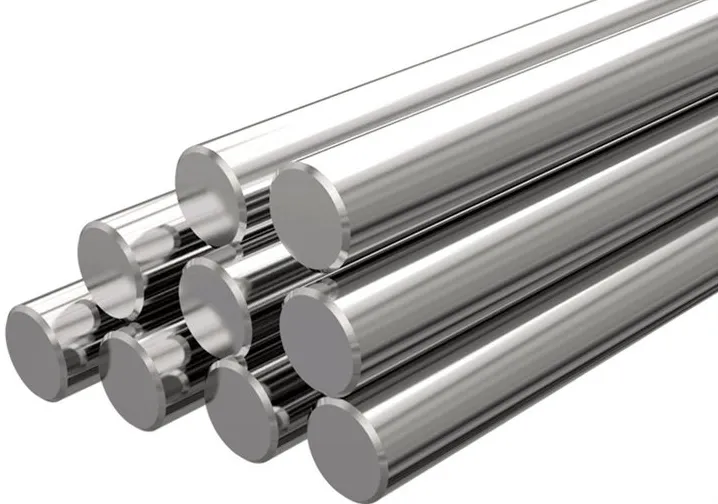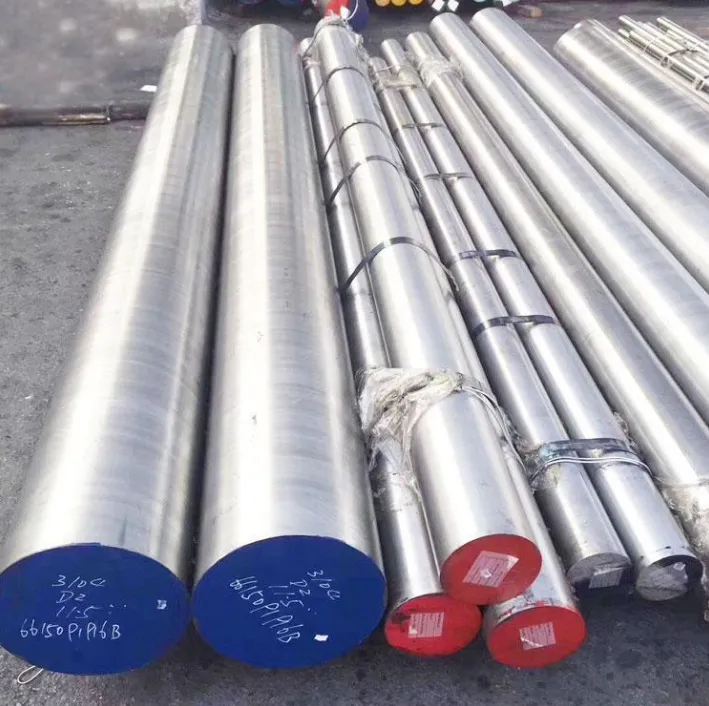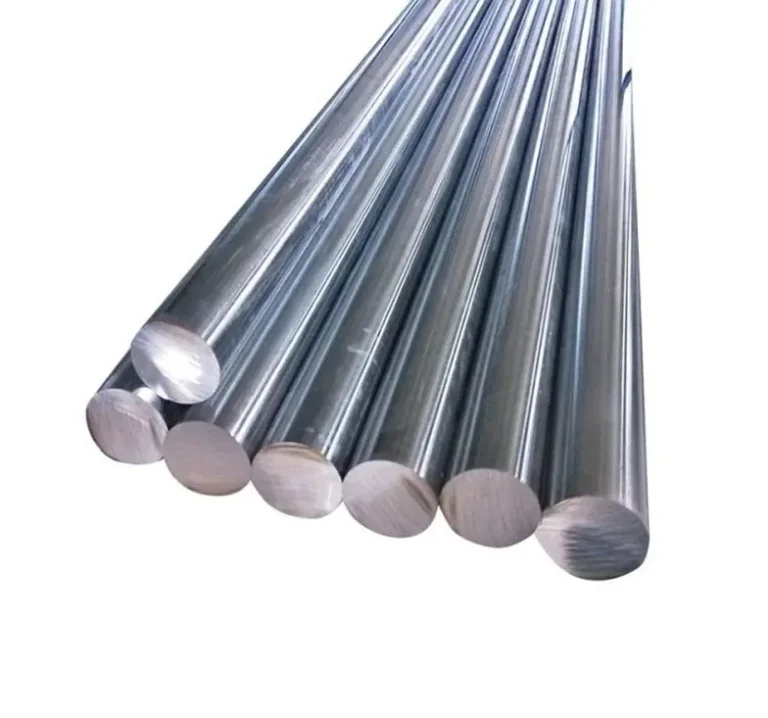

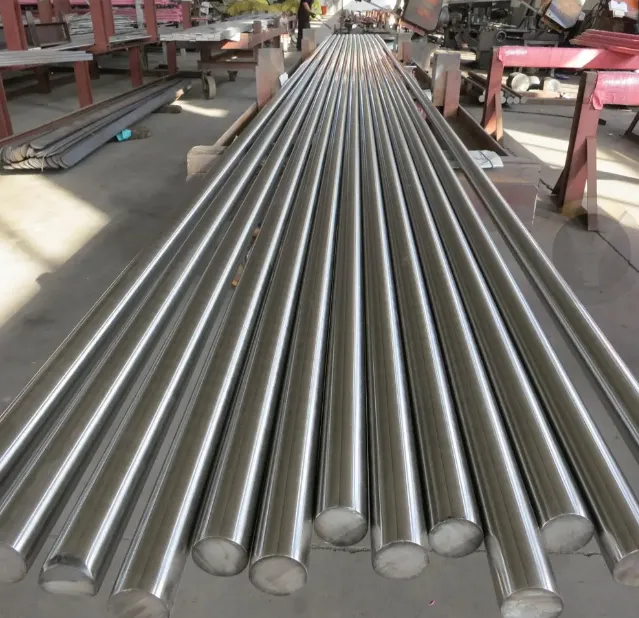
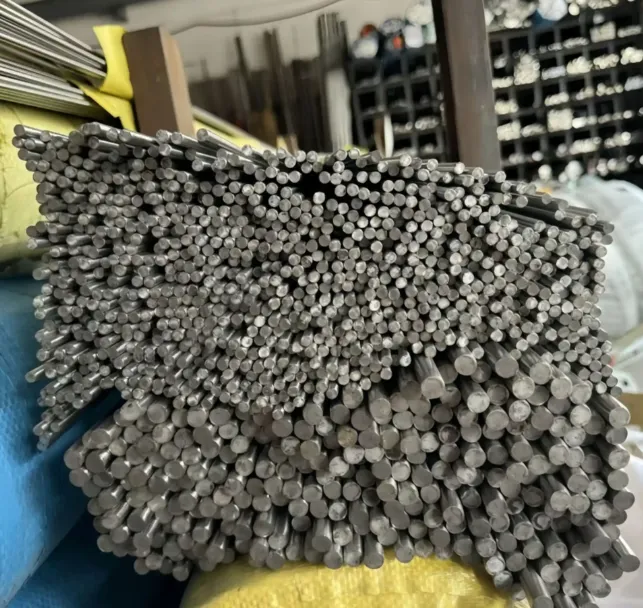
304 stainless steel round bar (AISI 304, UNS S30400) remains the best all around choice when a project needs reliable corrosion resistance, strong fabrication performance, broad global availability, and predictable mechanical properties at a competitive cost. In most general industrial and commercial environments, Type 304 round bar delivers long service life with minimal maintenance, and it stays compatible with standard machining, welding, and cold working practices. MWalloys supplies 304 round bar in common mill conditions with documentation and inspection options aligned with international purchasing expectations.
If your project requires the use of 304 Stainless Steel Round Bars, you can contact us for a free quote.
What makes 304 stainless steel round bar a default material choice?
Type 304 is the most widely specified austenitic stainless steel. Its popularity comes from a practical balance:
- Corrosion resistance suitable in many indoor, outdoor, and process environments (not including aggressive chloride exposure).
- Toughness across a wide temperature range, including cryogenic service in many designs.
- Fabrication versatility: welding, forming, and finishing remain straightforward compared with many higher alloy grades.
- Stable supply chain: broad mill production globally, many diameter ranges, multiple surface conditions.
- Lifecycle value: often lower total cost than coated carbon steel once corrosion, repainting, downtime, and contamination risk get included.
Engineers typically select 304 bar stock when a component needs good general corrosion performance and cleanability, including shafts, fasteners, pins, standoffs, brackets, pump hardware, sanitary equipment parts, and architectural details. Procurement teams favor it due to standardization, frequent stock, and simpler substitution control compared with niche alloys.
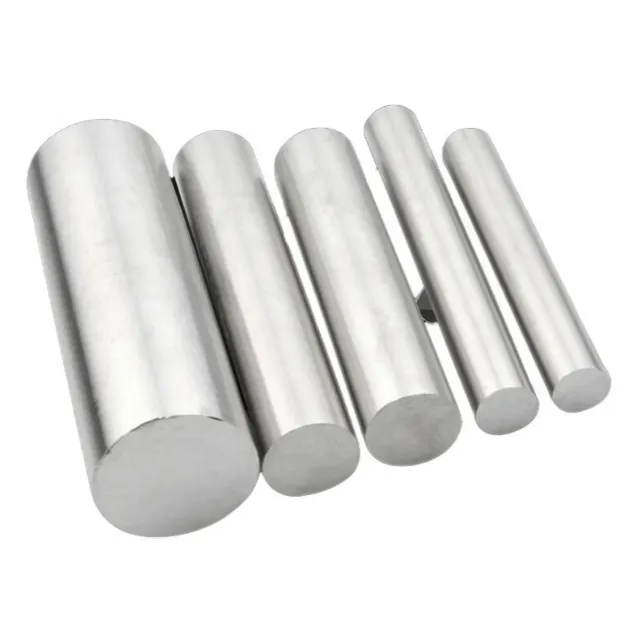
Which standards and specifications define AISI 304 round bar?
“304 stainless steel round bar” is a market description. The technical definition comes from grade designations plus dimensional and testing standards. Purchasers should specify both the material grade and the product standard.
Common grade identifiers used in purchase orders
- AISI 304
- Type 304
- UNS S30400
- EN 1.4301 (common European designation; confirm product standard and condition)
Frequently used product standards (bars)
- ASTM A276: stainless steel bars and shapes (general bar products).
- ASTM A479: stainless steel bars intended toward pressure service and high temperature applications (often tighter requirements in certain clauses).
- ASTM A484: general requirements for stainless steel bars, billets, and forgings (tolerances, finish, straightness, repair).
- EN 10088 series: stainless steels (composition and product forms; part selection depends on the exact bar delivery condition).
- JIS G4303: stainless steel bars (Japan).
- ISO 683 or related ISO documents may appear in multinational documentation, depending on end use.
Equivalents and cross references (verify per standard, not only per grade name)
| System | Common designation | Notes used in industry |
|---|---|---|
| UNS | S30400 | Core chemistry identity in many specifications |
| AISI / ASTM | 304 | “Type 304” used in many drawings |
| EN | 1.4301 | Often paired with X5CrNi18-10 in EN naming |
| JIS | SUS304 | Popular in APAC procurement documents |
Practical purchasing note: “304” on its own does not define tolerances, finish, inspection level, or mechanical property reporting. Adding ASTM A276 or A479 plus ASTM A484 clauses reduces ambiguity, especially on straightness, surface quality, and permissible repairs.
What is the chemical composition of 304 and why does it matter?
304 is an austenitic chromium nickel stainless steel. Corrosion resistance comes mainly from chromium. Nickel stabilizes the austenitic structure and supports ductility and toughness. Minor elements influence weldability, sensitization tendency, and strength.
Typical composition limits (reference style consistent with common specifications)
| Element | Typical specified range (mass %) | Engineering impact |
|---|---|---|
| Carbon (C) | ≤ 0.08 | Higher carbon can raise strength slightly yet increases sensitization risk in certain thermal cycles |
| Manganese (Mn) | ≤ 2.00 | Deoxidation, hot work behavior |
| Silicon (Si) | ≤ 1.00 | Deoxidation; influences oxidation resistance slightly |
| Phosphorus (P) | ≤ 0.045 | Impurity control; excess can reduce toughness |
| Sulfur (S) | ≤ 0.030 | Improves machinability modestly yet reduces pitting resistance and ductility relative to low sulfur heats |
| Chromium (Cr) | 18.0 to 20.0 | Primary corrosion resistance driver via passive film formation |
| Nickel (Ni) | 8.0 to 10.5 | Austenite stability, toughness, formability |
| Nitrogen (N) | ≤ 0.10 (varies by standard) | Strengthening, austenite stabilization; can support pitting resistance slightly |
Why small chemistry shifts change real world performance
- Chloride pitting margin: 304 resists many environments, yet higher chlorides can overwhelm the passive layer. Small changes in sulfur, surface finish, or inclusion content can shift pitting initiation behavior in borderline service.
- Weld heat affected zone durability: carbon content influences carbide precipitation risk in the 450 to 850°C range during slow cooling or prolonged exposure. That is a key reason buyers choose 304L in welded assemblies with thicker sections.
- Machinability variability: many buyers assume all 304 machines the same. In practice, inclusion morphology, sulfur level, and bar condition (annealed vs cold drawn) drive chip formation and tool wear.
MWalloys recommendation used in procurement reviews: request a mill test certificate showing actual heat chemistry, not only grade name, when corrosion performance or weld durability matters.
What mechanical properties can engineers expect from 304 round bar?
Mechanical properties depend strongly on delivery condition. Bar can arrive annealed, cold drawn, centerless ground, peeled, or other processed forms. Cold work raises strength while reducing ductility.
Minimum mechanical properties often referenced in annealed condition (room temperature)
| Property | Typical minimum value seen in widely used specifications | Notes |
|---|---|---|
| Tensile strength (Rm) | 515 MPa | Common baseline in annealed austenitic stainless |
| 0.2% proof strength (Rp0.2) | 205 MPa | Often called yield strength in design discussions |
| Elongation | 40% | Depends on gauge length and bar diameter |
| Hardness | ≤ 201 HB (approx.) | Limits vary by standard and product form |
Practical engineering note: bar stock may exceed these minimums significantly, especially in cold drawn condition. Designers should avoid assuming higher strength unless purchasing controls lock in a minimum proof strength based on tested lots.
Typical mechanical property ranges by condition (illustrative purchasing context)
| Delivery condition | Strength trend | Ductility trend | Common use cases |
|---|---|---|---|
| Solution annealed | Lowest strength, highest ductility | Highest | Forming, deep machining, welding critical parts |
| Cold drawn | Higher yield and tensile | Lower elongation | Shafts, pins, structural elements where higher stiffness under load helps |
| Turned and polished | Similar to base condition, improved surface | Similar | Bearings seats, decorative components, tight diameter tolerance needs |
| Centerless ground | Similar to base condition, excellent finish | Similar | Precision shafts, instrumentation |
Design values and safety factors
In many projects, design allowables are taken from governing codes or internal standards rather than straight from a mill certificate. That remains a best practice. Mill tests establish compliance, while design codes manage variability, notch effects, and service temperature impacts.
Fatigue and notch sensitivity considerations
AISI 304 can perform well in fatigue when surface finish is controlled and stress risers get minimized. Key factors:
- Surface roughness and machining marks.
- Residual stress from cold drawing or aggressive grinding.
- Corrosive media that triggers corrosion fatigue.
- Mean stress and load spectrum in rotating shafts.
If fatigue is a major driver, buyers often specify ground or polished bar plus strict straightness, plus surface defect limits aligned with ASTM A484 supplementary requirements.
How do physical properties influence component design with 304 bar?
Physical properties govern stiffness, weight, thermal growth, and electrical or thermal conduction. Stainless steel behaves differently than carbon steel in heat flow and thermal expansion.
Typical physical properties (room temperature unless noted)
| Property | Typical value | Design relevance |
|---|---|---|
| Density | ~8.0 g/cm³ | Weight estimation, rotating inertia |
| Modulus of elasticity | ~193 GPa | Deflection calculations, shaft stiffness |
| Poisson ratio | ~0.29 | FEA input |
| Thermal conductivity | ~16 W/m·K | Lower than carbon steel, affects heat dissipation |
| Coefficient of thermal expansion (20 to 100°C) | ~17.2 µm/m·K | Thermal growth in long shafts, fits, clearances |
| Electrical resistivity | ~0.72 µΩ·m | Relevant in grounding and resistance heating components |
| Specific heat capacity | ~500 J/kg·K | Heating and cooling rates |
Engineering implications that often get overlooked:
- Thermal expansion: 304 expands more than carbon steel. Interference fits, bearing seats, and long alignment sensitive shafts need thermal checks.
- Thermal conductivity: lower conductivity concentrates heat at the cutting zone during machining, affecting tool life and surface integrity.
- Work hardening: austenitic structure hardens rapidly under deformation, influencing forming and machining behavior.
How does 304 round bar perform in corrosion environments?
304 resists a wide range of environments by maintaining a chromium rich passive film. Corrosion risk rises when the film cannot repassivate quickly, or when local chemistry promotes pits or crevice corrosion.
General corrosion performance summary
- Excellent in many indoor atmospheres, rural outdoor exposure, and clean water service.
- Very good in many food and beverage contact situations when surface finish and cleaning protocols are appropriate.
- Limited in seawater, deicing salt splash zones, or stagnant chloride bearing crevices.
- Not recommended in strong reducing acids, or environments known to trigger chloride stress corrosion cracking at elevated temperature.
Corrosion modes relevant to round bar components
Pitting corrosion
Often initiated by chlorides plus surface defects or inclusions. Smooth finishes and regular washdown reduce risk.
Crevice corrosion
Occurs under gaskets, deposits, sleeves, clamps, or tight joints where oxygen gets depleted.
Intergranular corrosion
Can occur after exposure to sensitizing temperatures, especially near welds in higher carbon 304. Low carbon 304L mitigates risk.
Stress corrosion cracking (SCC)
Austenitic stainless steels can crack in hot chloride environments under tensile stress. Temperature, chloride concentration, and stress level drive risk.
Practical environment selection matrix
| Environment | 304 suitability | Notes used in materials selection |
|---|---|---|
| Indoor dry service | Strong | Long life expected with minimal care |
| Outdoor urban or industrial | Good | Tea staining may occur; cleaning helps |
| Fresh water (low chloride) | Good | Confirm chloride level, stagnation risk |
| Food processing | Strong | Finish and hygiene design matter |
| Marine atmosphere | Borderline | 316 often chosen in salt spray zones |
| Seawater immersion | Poor | Select higher alloy stainless or nonmetallics |
| Hot chloride solutions | High SCC risk | Consider duplex, nickel alloys, stress reduction |
Surface finish effect on corrosion
Round bar may arrive with scale, pickled surface, or bright ground finish. Smoother finishes typically reduce sites that initiate pits. If the bar will be exposed directly, specifying a cleaner finish can outperform chemistry upgrades in moderate environments.
Can 304 round bar be heat treated, welded, machined, and cold worked?
Can Type 304 be hardened by heat treatment?
304 cannot be hardened by quench and temper methods used on martensitic steels. Strength increases mainly through cold work.
Heat treatments used in practice:
- Solution annealing: roughly 1010 to 1120°C followed by rapid cooling (often water quench) to restore corrosion resistance and dissolve carbides.
- Stress relief: sometimes used at lower temperature, yet must be approached carefully since extended time in the sensitization range can reduce corrosion resistance.
How well does 304 weld?
Weldability is one of the main advantages of 304. Common processes include GTAW, GMAW, SMAW, FCAW, and SAW. Controlling heat input and interpass temperature helps avoid sensitization and distortion.
Typical filler metal choices
| Base material | Common filler designation | Why it is chosen |
|---|---|---|
| 304 to 304 | ER308L / E308L | Low carbon filler reduces sensitization risk |
| 304 to 304L | ER308L | Matches common practice and chemistry balance |
| 304 to carbon steel | ER309L often used | Higher alloy helps dilution tolerance |
Post weld cleaning is not optional in corrosion service. Heat tint and slag reduce corrosion resistance. Pickling, mechanical cleaning, and passivation practices should match the end use.
What machining behavior should buyers expect?
304 is machinable, yet it is not “easy machining.” Challenges include work hardening, stringy chips, and heat concentration. Success depends on rigid workholding, sharp tooling, correct chip control, and consistent feed.
Machining practices that typically improve outcomes
- Prefer constant feed, avoid rubbing or dwelling.
- Use sharp carbide tooling with suitable geometry.
- Use adequate coolant delivery to control heat and chip evacuation.
- Plan roughing passes that cut beneath the work hardened layer.
Illustrative machining parameter tendencies (tooling and setup dependent)
| Operation | Typical approach | Risk if done incorrectly |
|---|---|---|
| Turning | Moderate speed, positive rake, steady feed | Work hardening, poor finish |
| Drilling | Split point drills, peck strategy as needed | Heat buildup, rapid tool wear |
| Tapping | Form taps or coated taps with lubrication | Galling, broken taps |
| Grinding | Avoid overheating, dress wheels properly | Burn marks, tensile residual stress |
If procurement controls allow, many shops prefer cold drawn bar in machining intensive parts due to better straightness and size consistency, while solution annealed bar may be preferred when deep drilling or heavy forming is involved.
How does cold working change properties?
Cold drawing, rolling, or straightening raises yield strength and tensile strength, while elongation drops. Cold work can also introduce slight magnetic response, even though annealed 304 is largely nonmagnetic.
Which diameter tolerances, straightness limits, and surface conditions are common on 304 round bar?
Round bar is sold in multiple finishes. Each finish correlates with tolerance capability, surface roughness, and cost.
Common surface conditions buyers specify
- Hot rolled, annealed, pickled
- Cold drawn
- Turned or peeled
- Turned and polished
- Centerless ground
- Bright bar (various market definitions; tie to a standard)
Typical tolerance families used in stainless bar purchasing
ASTM A484 provides general tolerance frameworks. EN and ISO systems may use h9, h8, or other tolerance classes. Actual achievable tolerance depends on diameter and finish.
Illustrative tolerance expectations by process (directional, not a substitute for a standard)
| Bar process | Diameter control | Surface quality | Common procurement drivers |
|---|---|---|---|
| Hot rolled | Moderate | Scale possible unless pickled | Lowest cost, larger diameters |
| Cold drawn | Good | Smooth, drawing marks possible | Stock availability, straightness |
| Turned / peeled | Good to very good | Improved, tool marks | Removal of surface defects |
| Centerless ground | Very high | Excellent | Precision fits, low runout |
Length, straightness, and end finish
- Standard random lengths vary by region; fixed lengths are common in contract supply.
- Straightness matters in shafts and automated feeding in CNC lathes.
- End condition (sawn, sheared, faced, chamfered) reduces handling injuries and speeds machining setup.
Purchasing tip: if bar will run through a bar feeder, specify straightness and surface limits explicitly. Many “mystery downtime” issues trace back to bar camber or inconsistent diameter.
How does 304 compare with 304L, 304H, 316, 303, 430, and carbon steel?
Selecting the right grade requires matching corrosion risk, weld requirements, machining needs, and budget.
Comparison table used in many engineering reviews
| Grade | Key advantage | Key limitation | Typical selection trigger |
|---|---|---|---|
| 304 (S30400) | Balanced corrosion resistance and cost | Chloride pitting and SCC limits | General purpose stainless bar |
| 304L (S30403) | Better weld HAZ corrosion resistance | Slightly lower strength potential | Thick welded parts, repeated thermal cycles |
| 304H (S30409) | Higher carbon supports creep strength at temperature | Sensitization risk in certain weldments | Elevated temperature service under code rules |
| 316 (S31600) | Better pitting resistance via molybdenum | Higher cost | Chloride exposure, marine splash |
| 303 (S30300) | Improved machinability due to sulfur | Reduced corrosion resistance and weldability | High volume machining parts, dry indoor service |
| 430 (S43000) | Lower cost, ferritic | Lower toughness and formability, different corrosion behavior | Appliances, decorative indoor, low corrosion demand |
| Carbon steel | Low cost, high strength options | Needs coating, rust risk | Dry environments, coated structures |
Practical decision rules:
- Choose 304L when weld corrosion performance is critical and post weld heat treatment is not planned.
- Choose 316 when chloride pitting becomes a real risk, including salt spray, coastal exposure, or brine contact.
- Choose 303 only when machinability dominates and corrosion exposure is mild.
- Avoid assuming “stainless” equals “marine grade.” Many premature failures come from placing 304 in chloride rich crevices.
Where is 304 stainless round bar used, and how can selection risk be reduced?
Common applications
- Food equipment shafts, spacers, and standoffs.
- Pharmaceutical and biotech utility hardware.
- Architectural pins, rods, and decorative components.
- Fastener stock and custom bolts.
- General industrial shafts, couplings, and sleeves.
- Pump and valve hardware in mild chemical service.
- Instrumentation components and fixtures.
Risk reduction checklist engineers use during material selection
- Confirm chloride level, temperature, and stagnation risk.
- Identify crevices and deposits. Redesign joints or upgrade grade if crevices are unavoidable.
- Decide whether welding will occur, then evaluate 304 vs 304L.
- Select surface finish consistent with corrosion and cleanability needs.
- Define inspection, certification, and traceability requirements early.
Hygienic and cleanability considerations
In sanitary service, surface finish and design geometry often control performance more than bulk chemistry. Even a high alloy material can fail hygienic expectations if pits and crevices trap soil. Bar may be machined, so machining and polishing steps become part of the hygienic system, not an afterthought.
What quality documentation and testing should purchasers request?
Procurement and QA teams typically align documentation with risk and regulatory exposure. A clear documentation package reduces disputes and improves traceability.
Common documentation items
- Mill test certificate with heat number, chemistry, mechanical test results.
- EN 10204 3.1 inspection certificate (often requested globally).
- Dimensional inspection report when tight tolerance matters.
- Country of origin documentation if trade compliance applies.
- RoHS or REACH statements when needed in electronics or consumer products.
Common verification and inspection methods
- Positive material identification (PMI) via XRF, sometimes OES when carbon matters.
- Hardness testing
- Ultrasonic testing in critical shaft stock (agreement required; not default on every bar).
- Visual inspection and surface defect limits per ASTM A484 supplementary requirements.
Typical procurement to QA mapping
| Project risk level | Suggested documentation | Suggested verification |
|---|---|---|
| General industrial | MTC, heat traceability | Random PMI, dimensional checks |
| Corrosion critical | MTC with actual chemistry, finish requirement | PMI on each heat, surface inspection |
| Safety critical rotating parts | MTC, mechanical tests, straightness report | Additional NDT by agreement, runout checks |
| Regulated industries | Full traceability pack | Receiving inspection plan plus retention |
MWalloys can support these documentation paths when requirements are defined in the inquiry stage, since certain tests require mill or third party coordination.
How should buyers specify and order 304 stainless steel round bar from MWalloys?
A purchase order that only states “304 round bar” leaves too many variables. A robust order description locks in performance and reduces hidden cost.
Recommended ordering description fields
- Grade: AISI 304 (UNS S30400)
- Product standard: ASTM A276 or ASTM A479, plus ASTM A484 general requirements.
- Diameter and tolerance class.
- Length: random or fixed cut lengths; plus length tolerance.
- Bar condition: solution annealed, cold drawn, peeled, ground.
- Surface finish requirement: pickled, polished, centerless ground, roughness target if needed.
- Straightness requirement if bar feeding or shaft alignment matters.
- Certification: MTC, EN 10204 3.1, PMI requirement.
- Packaging: wrapped, capped ends, rust preventive paper, export crating if required.
- Marking: heat number traceability on each bar or bundle.
Example specification template (adapt to internal standards)
“MWalloys supply stainless steel round bar, UNS S30400, ASTM A276, annealed and pickled, diameter 25.00 mm tolerance per ASTM A484, length 3 m, straightness max X mm per 3 m, EN 10204 3.1 certificate, heat number traceability, ends capped, export seaworthy packing.”
Common mistakes that create delays or nonconformance
- Missing tolerance class, then rejecting standard mill tolerance material.
- Requiring mirror polish without defining roughness, then receiving a finish that looks different under plant lighting.
- Requesting “nonmagnetic” without defining test method or acceptable magnetic response level after cold work.
- Expecting 316 like chloride resistance from 304 in coastal sites.
Frequently asked questions about 304 stainless steel round bar
AISI 304 Stainless Steel: 10/10 Technical FAQ
The Essential Guide to 18/8 Stainless Steel Round Bars
1. Is 304 stainless round bar magnetic?
In its solution annealed condition, 304 is an austenitic grade and is largely non-magnetic. However, cold work from drawing, bending, or machining can induce a noticeable magnetic response as a portion of the austenite transforms into martensite. Because of this, using a magnet alone is not a reliable method for grade verification.
2. Can 304 round bar be heat treated to high hardness?
No. Type 304 cannot be hardened by standard quench-and-temper heat treatments. Its strength and hardness increase primarily through cold work (work hardening). Heat treatment (solution annealing) is actually used to soften the material, restoring ductility and corrosion resistance.
3. What are typical yield and tensile strength values?
4. What is the difference between 304 and 304L round bar?
WELDABILITY INFO
304L is the low-carbon version (0.03% max carbon). This reduction minimizes the risk of sensitization in the weld heat-affected zone, significantly improving resistance to intergranular corrosion after welding. Most modern industrial fabrications specify 304L to ensure joint integrity.
5. Is 304 suitable in seawater?
6. Which filler metal is normally used when welding 304?
7. Why does 304 sometimes show surface rust or “tea staining”?
8. What surface finish should be chosen for corrosion service?
Smoother is better. A ground or polished finish performs better in corrosive environments because it reduces the number of initiation sites for pitting. Avoid using hot-rolled surfaces with heavy mill scale in corrosive service as they can trap contaminants.
9. Does 304 round bar machine well?
304 is workable but challenging because it work hardens rapidly and produces tough, stringy chips. Successful machining requires rigid setups, sharp tooling, and a strategy that involves staying "under" the work-hardened surface with consistent feeds and ample coolant.
10. What certifications should be requested when buying 304?
- Mill Test Certificate (MTC): Linked to the specific heat number.
- EN 10204 3.1: The standard for validated manufacturer testing.
- PMI Report: Positive Material Identification for high-risk projects.