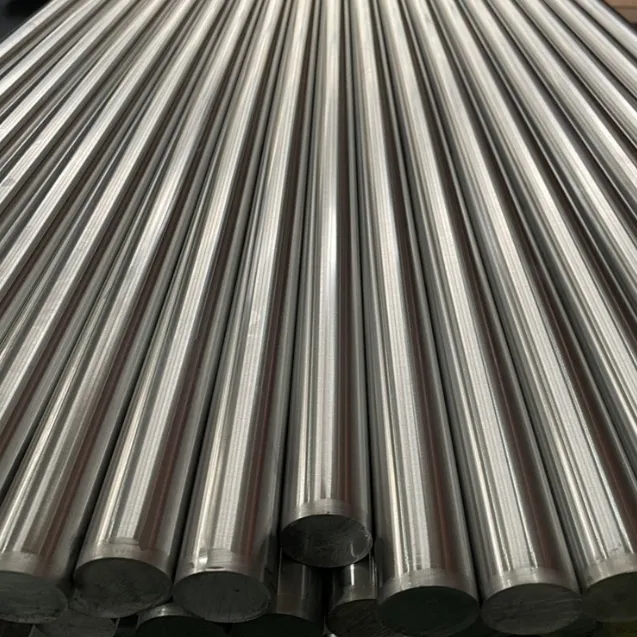

AISI 1144 round bar is the go-to choice for precision machined components that demand both high tensile strength and exceptional machinability in a single material — and MWalloys stocks it in cold finished condition across a broad diameter range, ready for fast quotation and immediate shipment. With a tensile strength of 97,000–100,000 psi (669–689 MPa) in the cold drawn state and a machinability rating of 83% relative to B1112 free-machining steel, 1144 outperforms both standard 1045 carbon steel and 12L14 in strength while delivering chip-breaking performance that significantly reduces cycle times on CNC lathes and screw machines. If your shop produces shafts, studs, pins, couplings, hydraulic fittings, or precision turned components at volume, 1144 steel round bar in cold finished condition is one of the most cost-effective raw material decisions you can make.
If your project requires the use of 1144 round bar, you can contact us for a free quote.
What Is AISI 1144 Steel and What Makes It a Free-Machining Grade?
AISI 1144 is a resulfurized, rephosphorized carbon steel — a specific category within the free-machining steel family where elevated sulfur content is intentionally added during the steelmaking process to improve chip formation and reduce cutting forces. The designation follows the SAE/AISI four-digit system: "11" indicates the resulfurized free-machining series, and "44" represents the approximate carbon content of 0.44% (mid-range).
Free-machining steels work on a straightforward metallurgical principle: sulfur reacts with manganese during steelmaking to form manganese sulfide (MnS) inclusions distributed throughout the steel matrix. These inclusions act as internal stress concentrators that cause chips to break cleanly and quickly rather than forming long, continuous stringers that wrap around tooling, jam chip conveyors, and damage finished surfaces. The result is shorter chips, lower cutting forces, reduced tool wear, and better surface finish — all translating directly into higher production rates and lower per-part machining costs.
What distinguishes 1144 from other free-machining grades like 1215 or 12L14 is its significantly higher carbon and manganese content. While 1215 and 12L14 are excellent for fine-thread turning and very high surface finish requirements at low strength levels, they cannot match the mechanical strength that 1144 delivers after cold drawing. This is the fundamental reason 1144 occupies a unique market position: it is the free-machining steel that does not force engineers to sacrifice structural performance for machinability.
At MWalloys, we regularly discuss this trade-off with engineers who come to us after struggling with 1045 steel on high-volume CNC turning jobs. The move to 1144 typically reduces cycle times by 30–50% on identical part geometries while maintaining or exceeding the mechanical property requirements of their design. That combination is difficult to replicate with any other single material.
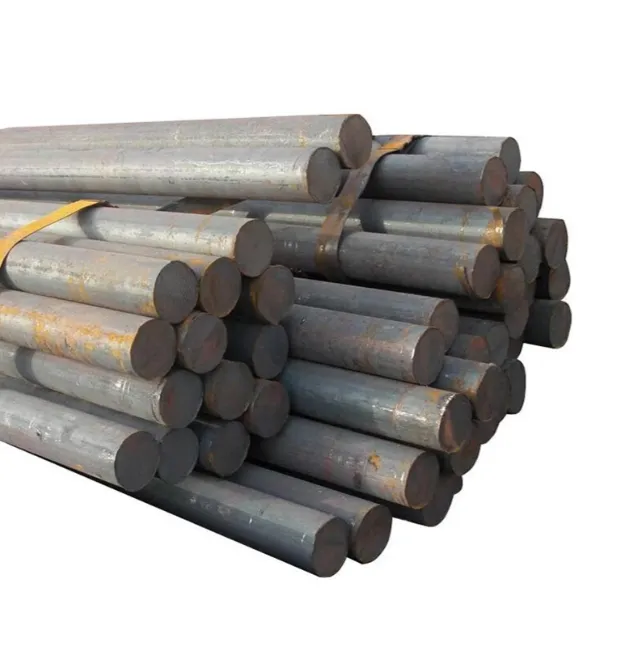
The Resulfurized Steel Family and Where 1144 Fits
The resulfurized free-machining series (11xx) in the SAE/AISI system includes grades such as 1117, 1118, 1137, 1141, and 1144. Among these, 1144 stands at the top of the strength spectrum due to its high carbon (0.40–0.48%) and very high manganese (1.35–1.65%) content. The high manganese serves dual purposes: it ensures all sulfur is combined as MnS rather than iron sulfide (FeS, which causes hot shortness), and it contributes directly to hardenability and strength after cold working.
Chemical Composition and SAE Specification for 1144 Steel
The chemical composition of AISI 1144 steel is specified under SAE J403 (chemical compositions of SAE carbon steels) and governs both the free-machining behavior and the mechanical performance of the finished bar.
AISI 1144 Chemical Composition (SAE J403 / ASTM A108)
| Element | Minimum (%) | Maximum (%) |
|---|---|---|
| Carbon (C) | 0.40 | 0.48 |
| Manganese (Mn) | 1.35 | 1.65 |
| Phosphorus (P) | — | 0.040 |
| Sulfur (S) | 0.24 | 0.33 |
Role of Each Element in 1144 Steel
Carbon (0.40–0.48%): The primary strengthening element. At 0.44% average carbon, 1144 responds well to cold drawing strengthening and provides meaningful response to induction hardening or flame hardening, though not as dramatically as higher-carbon grades. This carbon level puts 1144 in the medium-high carbon range, giving it substantially more strength than 1215 (0.09% C max) or 12L14 (0.15% C max).
Manganese (1.35–1.65%): The highest manganese content of any standard free-machining carbon steel. This level serves multiple functions simultaneously. It ensures complete MnS formation rather than the harmful FeS phase, contributes significantly to hardenability (important for induction hardening response), and directly strengthens the ferrite matrix through solid solution hardening. The high Mn content is a primary reason 1144 achieves tensile strengths approaching 100 ksi in the cold drawn state without any additional heat treatment.
Sulfur (0.24–0.33%): This is the defining element that classifies 1144 as a free-machining steel. The sulfur content of 1144 is substantially higher than standard carbon steels (which have a 0.050% maximum) but slightly lower than 1215 and 12L14. The resulting MnS inclusion density provides excellent chip control while keeping the reduction in transverse mechanical properties at an acceptable level for most shaft and structural component applications.
Phosphorus (0.040% max): Phosphorus in free-machining steels improves chip brittleness and surface finish. The level in 1144 is controlled to the same limit as standard carbon steels, unlike rephosphorized grades (12xx series) where phosphorus is intentionally elevated. This means 1144 does not suffer the cold brittleness penalty associated with higher phosphorus content.
A Note on Composition Compared to 1141
AISI 1141 and 1144 are closely related, differing primarily in carbon and manganese levels. 1141 has a slightly lower carbon range (0.37–0.45%) and a slightly lower manganese range (1.35–1.65%), creating marginally less strength and slightly better weldability. In practice, many applications can use either grade interchangeably, but 1144 is preferred when maximum cold-drawn strength is the priority.
Mechanical and Physical Properties of 1144 Round Bar (Cold Finished)
The mechanical properties of cold finished 1144 round bar are what separate it from the lower-strength free-machining grades and make it viable for structural and functional components that must withstand real service loads.
Mechanical Properties of AISI 1144 Cold Drawn Round Bar
| Property | Cold Drawn (Typical) | Stress Relieved After CD | Hot Rolled (Annealed) |
|---|---|---|---|
| Tensile Strength | 97,000–100,000 psi (669–689 MPa) | 94,000–98,000 psi | 75,000–85,000 psi |
| Yield Strength (0.2%) | 88,000–92,000 psi (607–634 MPa) | 80,000–88,000 psi | 45,000–55,000 psi |
| Elongation in 2 inches | 10–15% | 12–17% | 20–28% |
| Reduction of Area | 35–45% | 40–50% | 55–65% |
| Brinell Hardness | 197–223 HBW | 187–212 HBW | 163–197 HBW |
| Machinability Rating | 83% (vs. B1112 = 100%) | 78–83% | 70–75% |
Physical Properties of AISI 1144 Steel
| Physical Property | Value |
|---|---|
| Density | 7.87 g/cm³ (0.284 lb/in³) |
| Melting Range | 1,427–1,510°C (2,600–2,750°F) |
| Thermal Conductivity | 51.9 W/m·K at 100°C |
| Specific Heat Capacity | 486 J/kg·°C |
| Coefficient of Thermal Expansion | 11.7 µm/m·°C (20–100°C) |
| Electrical Resistivity | 17.2 µΩ·cm |
| Modulus of Elasticity | 200 GPa (29.0 × 10⁶ psi) |
| Modulus of Rigidity | 80 GPa |
| Poisson's Ratio | 0.29 |
Understanding the Strength Premium From Cold Drawing
The cold drawing process increases tensile strength by 15–25% compared to the equivalent hot rolled condition, through work hardening of the steel matrix. This strength increment comes without any heat treatment cost, and the dimensional precision gained during cold drawing means less material removal is needed at the machine. For procurement teams evaluating total cost per finished part (not just raw material cost per pound), cold drawn 1144 consistently delivers a favorable outcome against hot rolled alternatives that require more machining allowance.
One point we always make clear to customers: the cold drawing process induces residual stress in the bar, with compressive stress at the surface and tensile stress in the core. For most shaft and fastener applications, this stress profile is benign or even beneficial (compressive surface stress resists fatigue crack initiation). However, for components that will see significant material removal — such as thin-walled sleeves or hollow shafts machined from solid bar — the residual stress relief that occurs during deep cuts can cause distortion. In those cases, we recommend specifying stress-relieved condition, which largely eliminates the residual stress while preserving most of the cold-drawing strength increment.
Why Cold Finished Condition Matters for 1144 Round Bar
"Cold finished" is not a generic marketing term — it is a specific manufacturing condition with defined implications for dimensional tolerance, surface quality, mechanical properties, and machinability. Understanding what cold finishing delivers helps engineers and buyers make informed specification decisions.
What Cold Finishing Actually Does to the Bar
Cold finishing of 1144 round bar involves drawing hot-rolled rod through precision dies at room temperature, reducing the cross-sectional area by a controlled percentage. This single-pass or multi-pass process accomplishes several things simultaneously:
Dimensional precision: Cold drawn bars meet tighter diameter tolerances than hot rolled material. A 1-inch cold drawn bar typically holds ±0.001–0.002 inch diameter tolerance versus ±0.010–0.015 inch for hot rolled bar of the same nominal size. This precision reduces the machining allowance required and allows closer stock selection relative to finished part dimensions.
Surface condition: Cold drawn bars have a smooth, bright metallic surface free of the mill scale that covers hot rolled material. Mill scale on hot rolled bar is harder than the underlying steel and causes accelerated tool wear when the surface is cut. Cold drawn bar eliminates this issue, extending tool life on the first facing or turning pass.
Straightness: Cold finishing straightens the bar more effectively than hot rolling. Standard cold drawn bars meet ASTM A108 straightness requirements of 0.060 inch per 5-foot section, compared to 0.125 inch for hot rolled bar. Better straightness reduces vibration in bar feeders on screw machines and CNC lathes, improving part concentricity and extending collet and chuck life.
Mechanical properties: Work hardening from cold drawing raises both tensile and yield strength significantly above hot rolled values, as shown in the property table above. For many applications, the cold drawn strength is sufficient without any additional heat treatment.
Cold Drawn vs. Turned and Polished (TGP)
Some precision applications specify Turned, Ground, and Polished (TGP) bar rather than standard cold drawn. TGP bar is first cold drawn, then turned on a centerless lathe to remove any surface seams or minor defects, then ground and polished to achieve very tight tolerances (±0.0005 inch on diameter in some specifications) and a smooth surface finish (Ra 0.4–0.8 µm typically).
TGP 1144 is appropriate for applications where the bar will be used directly as a finished shaft or where the smallest possible machining allowance is required. We offer TGP processing on 1144 round bar at MWalloys; contact our team to confirm availability and lead time for the specific diameter you need.
How Does 1144 Steel Compare to 1045, 12L14, and Other Common Grades?
This comparison is one of the most frequently asked questions we receive from engineers evaluating material options for a new part design. The right answer depends on three variables: required mechanical strength, machining volume, and whether the part will be welded.
1144 vs. Common Carbon and Free-Machining Steel Grades
| Property / Factor | AISI 1144 CD | AISI 1045 CD | AISI 12L14 CD | AISI 1215 CD | AISI 4140 CD |
|---|---|---|---|---|---|
| Carbon (%) | 0.40–0.48 | 0.43–0.50 | 0.15 max | 0.09 max | 0.38–0.43 |
| Sulfur (%) | 0.24–0.33 | 0.050 max | 0.26–0.35 | 0.26–0.35 | 0.040 max |
| Lead Content | None | None | 0.15–0.35% | None | None |
| Tensile Strength (CD) | 97–100 ksi | 95–100 ksi | 57–78 ksi | 55–75 ksi | 148–165 ksi |
| Yield Strength (CD) | 88–92 ksi | 85–95 ksi | 45–60 ksi | 40–55 ksi | 130–148 ksi |
| Machinability Rating | 83% | 55–60% | 160–170% | 136% | 65% |
| Weldability | Fair | Good | Poor | Poor | Good (with preheat) |
| Heat Treat Response | Moderate | Good | Very limited | Very limited | Excellent |
| RoHS / Lead Compliance | Yes | Yes | No (lead) | Yes | Yes |
| Relative Cost | Moderate | Moderate | Low-moderate | Low | Higher |
1144 vs. 1045: The Most Common Comparison
Many engineers default to 1045 because it is familiar and widely available, but 1144 is a better choice in most high-volume turning scenarios. The tensile strength in cold drawn condition is comparable between the two, but 1144 machines at 83% of B1112 versus approximately 55–60% for 1045. That difference represents a 38–50% reduction in machining time for identical cuts. Over a production run of thousands of parts, the machining time savings dwarf any difference in raw material cost. The trade-off is weldability: 1045 welds more reliably than 1144 because of its lower sulfur content.
1144 vs. 12L14: Strength vs. Machinability
12L14 is the machinability champion of carbon steels at 160–170% of B1112, achieved through lead additions that further enhance chip breaking. However, 12L14's maximum tensile strength of 57–78 ksi in cold drawn condition is roughly 30% below 1144. If your part needs to handle meaningful mechanical loads — threads that will be torqued, shafts that carry torsional loads, studs under tensile stress — 12L14 is inadequate and 1144 is the correct specification. Additionally, lead-free environmental compliance requirements in electronics and automotive industries have reduced the application space where 12L14 is permissible.
1144 vs. 4140: When Alloy Steel Is Necessary
4140 alloy steel in cold drawn condition far exceeds 1144 in tensile strength (148–165 ksi vs. 97–100 ksi) and offers excellent heat treatability to 50+ HRC. When your design requires through-hardening, very high fatigue strength, or service conditions involving impact or elevated temperature, 4140 is the appropriate upgrade. For applications where 97–100 ksi tensile strength is sufficient and high production machining speed is valuable, 1144 cold drawn is the economically superior choice.
Machinability of 1144 Steel: Speeds, Feeds, and Tool Life Data
The practical machining performance of 1144 steel is where the material's value proposition becomes concrete for manufacturing engineers and shop floor personnel.
Recommended Cutting Parameters for AISI 1144 Cold Drawn
| Operation | Tool Material | Cutting Speed | Feed Rate | Depth of Cut | Coolant |
|---|---|---|---|---|---|
| Turning (roughing) | Carbide C-6 | 180–250 m/min | 0.25–0.50 mm/rev | 2.5–6.0 mm | Flood emulsion |
| Turning (finishing) | Carbide C-7 | 250–350 m/min | 0.10–0.20 mm/rev | 0.25–1.0 mm | Flood emulsion |
| Drilling (HSS) | M2 HSS | 25–35 m/min | 0.10–0.25 mm/rev | — | Flood coolant |
| Drilling (Carbide) | Solid carbide | 80–120 m/min | 0.10–0.20 mm/rev | — | Through-tool coolant |
| Reaming | HSS or Carbide | 10–20 m/min | 0.20–0.40 mm/rev | 0.1–0.3 mm | Flood or mist |
| Threading (tap) | HSS-Co | 6–12 m/min | Per pitch | — | Tapping oil |
| Threading (die) | HSS | 8–15 m/min | Per pitch | — | Cutting oil |
| Milling (face) | Carbide inserts | 150–220 m/min | 0.10–0.20 mm/tooth | 2.0–5.0 mm | Flood emulsion |
| Parting / Cutoff | Carbide or HSS | 100–180 m/min | 0.05–0.10 mm/rev | Full width | Flood coolant |
| Centerless Grinding | Al₂O₃ wheel | 25–35 m/s wheel | 2.5–5.0 m/min WP | 0.005–0.020 mm | Water-soluble oil |
Key Machining Characteristics of 1144
Chip formation: The MnS inclusions in 1144 produce short, broken chips that fall away from the cutting zone cleanly. This is particularly valuable on multi-spindle screw machines and CNC bar feeders where long, stringy chips from low-sulfur steels create jamming, machine stoppages, and surface damage on finished parts.
Surface finish: 1144 cold drawn steel produces excellent surface finish values achievable with standard carbide tooling. Ra 0.8–1.6 µm is routinely achieved in turning without any special tooling or parameters. Fine finishing passes can achieve Ra 0.4 µm without grinding, which reduces or eliminates secondary operations on many part designs.
Tool life: Comparative tool life testing consistently shows 1144 extends carbide insert life by 50–80% compared to equivalent cuts on 1045 steel. This reduction in insert consumption contributes meaningfully to per-part cost, particularly in facilities running high-volume production 24 hours per day.
Built-up edge (BUE): 1144 is less prone to BUE formation than low-sulfur steels because the MnS inclusions reduce adhesion between the chip and tool rake face. This contributes to both better surface finish and more consistent tool life.
Screw Machine Performance
AISI 1144 is one of the standard specifications for automatic screw machine production — a class of machining that produces millions of small turned parts per year in sectors including automotive fasteners, hydraulic fittings, electrical connectors, and pneumatic components. The combination of cold drawn dimensional consistency (enabling tight collet-to-bar clearance) and high machinability (enabling aggressive feeds and speeds) makes 1144 a natural fit for screw machine bars supplied in 12-foot lengths.
Can 1144 Steel Be Heat Treated? Hardening and Response Limitations
This is a question we field regularly, and the answer requires some nuance. Yes, 1144 steel responds to heat treatment, but its response is more limited than that of alloy steels like 4140 or 4340, and several considerations apply specifically to the free-machining grade.
Through-Hardening Response
With 0.40–0.48% carbon, 1144 can be through-hardened by conventional austenitizing and quenching, but its hardenability is limited because it contains no significant alloy additions beyond manganese. The practical limit for through-hardening 1144 is approximately 19–25mm (3/4 to 1 inch) diameter before the core hardness drops significantly below the surface hardness.
Heat Treatment Parameters for 1144 Steel
| Heat Treatment Stage | Temperature | Procedure | Result |
|---|---|---|---|
| Normalize | 870–925°C (1,600–1,700°F) | Air cool | Refine grain, relieve cold work stresses |
| Austenitize (harden) | 800–845°C (1,475–1,550°F) | Soak 20–30 min/25mm section | Dissolve carbides |
| Quench | — | Oil or water | Martensite formation |
| Temper (low) | 175–205°C (350–400°F) | 1 hour minimum | 55–58 HRC, high strength |
| Temper (medium) | 315–425°C (600–800°F) | 1 hour minimum | 45–52 HRC, balanced properties |
| Temper (high) | 540–650°C (1,000–1,200°F) | 1 hour minimum | 30–40 HRC, improved toughness |
| Stress relieve (after CD) | 150–175°C (300–350°F) | 1 hour | Reduce residual stress, minor softening |
Induction and Flame Hardening
Surface hardening methods — induction hardening and flame hardening — are often more practical than through-hardening for 1144 components. These methods harden only the surface layer (typically 1–5mm depth) while leaving the core in the tougher cold drawn condition. This creates a favorable property gradient: hard, wear-resistant surface over a strong, ductile core.
Induction hardening of 1144 is well-established for shaft journals, gear teeth (when 1144 is used for light-duty gear blanks), and threaded rod areas subject to wear. Achievable surface hardness after induction hardening is typically 55–62 HRC depending on carbon and manganese uniformity in the specific heat.
The Sulfur Caveat for Heat-Treated Applications
One limitation specific to resulfurized steels like 1144 is that the MnS inclusions are elongated in the rolling direction (longitudinal). In the transverse direction, the reduction of area and impact resistance are lower than in the longitudinal direction. This anisotropy is not a problem for most shaft and bar applications where the primary loading is longitudinal (axial or torsional), but it becomes relevant for components machined from bar where significant loading acts perpendicular to the bar axis. If your application involves significant transverse loading, discuss this with our technical team before finalizing the material specification.
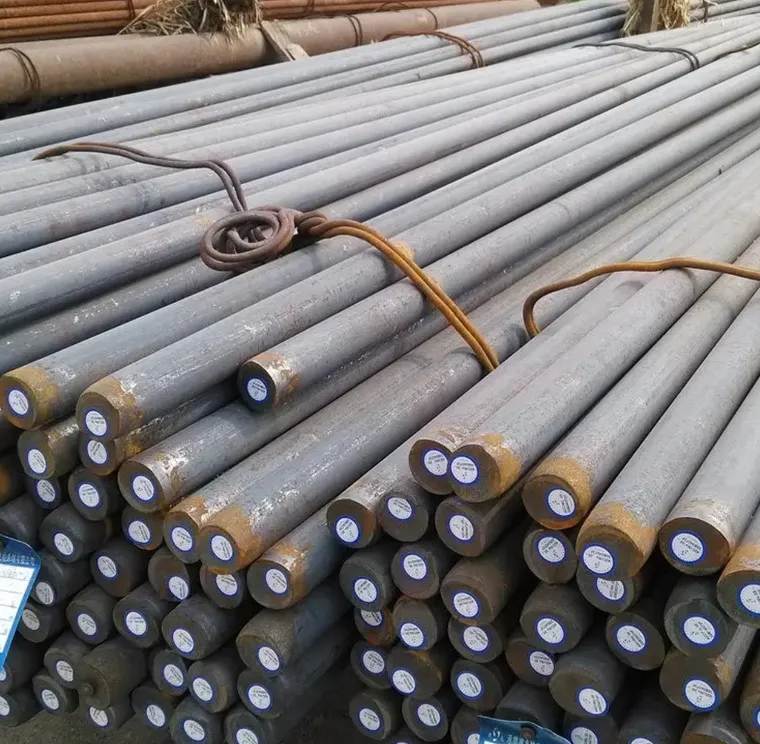
Typical Applications and Industries That Specify 1144 Round Bar
The combination of strength and machinability in 1144 cold drawn round bar suits a remarkably wide range of components across multiple industries.
Automotive and Transportation
- Studs and bolts: 1144 is a standard specification for high-volume automotive fasteners where strength requirements fall within the grade's cold drawn capability and machining speed is critical to part economics.
- Hydraulic fitting bodies: The material's chip-breaking behavior and dimensional consistency make it ideal for high-volume hydraulic fitting production on CNC screw machines.
- Shaft blanks: Transmission shafts, pump shafts, and motor shafts in passenger vehicles and light trucks often specify 1144 where surface hardening provides adequate wear resistance
- Spindle and axle components: Light-duty axle spindles and wheel spindles in agricultural and utility vehicles.
General Industrial Manufacturing
- Precision pins and dowels: The tight diameter tolerance of cold drawn 1144 minimizes grinding allowance for precision pin production.
- Couplings and adapters: Mechanical couplings for pump and motor shaft connections.
- Valve stems and bodies: Hydraulic and pneumatic valve components requiring accurate bores and threads.
- Rack and pinion components: Light-duty rack sections where 1144 provides adequate hardness after induction hardening.
- Tooling bodies: Fixture components, jig bodies, and support elements where moderate strength and easy machining are both required.
Oil and Gas Equipment
- Wellhead component blanks: Fittings and connector bodies for surface wellhead equipment at moderate pressure ratings.
- Manifold components: Machined manifold blocks for gathering system equipment.
- Pump shaft sections: Submersible pump shaft segments in progressive cavity pump strings.
Fluid Power (Hydraulics and Pneumatics)
The fluid power industry is one of the largest consumers of 1144 cold drawn round bar. Hydraulic cylinder rod ends, piston blanks, port blocks, and actuator bodies are frequently machined from 1144 when operating pressures fall within the material's strength capability. The precise diameter tolerance of cold drawn bar reduces or eliminates rough turning on cylinder rod stock in many configurations.
Electrical and Electronics
- Terminal and connector bodies: High-volume turned connector bodies and terminal housings.
- Sensor housings: Machined housings for pressure, temperature, and position sensors.
- Threaded inserts: Precision threaded inserts for composite and aluminum assemblies.
Welding, Forming, and Fabrication Behavior of 1144 Steel
Understanding how 1144 behaves outside the machining context helps engineers plan complete manufacturing sequences.
Weldability of 1144 Steel
Weldability is the principal limitation of 1144 compared to lower-sulfur carbon steels. The elevated sulfur content creates two specific welding challenges:
Hot cracking risk: Sulfur-rich MnS inclusions can break down at weld temperatures, releasing sulfur that forms low-melting iron sulfide at grain boundaries in the heat-affected zone. This can cause hot cracking (solidification cracking) during welding, particularly in the weld metal and HAZ.
Porosity tendency: Sulfur interacts with oxygen and hydrogen in the weld pool, increasing porosity risk compared to low-sulfur steels.
Welding Parameters for 1144 (When Welding Is Necessary)
| Welding Factor | Recommendation |
|---|---|
| Preferred process | GMAW (MIG) with low-heat input settings |
| Filler metal | ER70S-6 (higher silicon/manganese to counter sulfur effects) |
| Preheat | 150–200°C (300–400°F) for sections above 12mm |
| Interpass temperature | Maximum 230°C (450°F) |
| Heat input | Keep low; use stringer beads rather than weave |
| Post-weld | Stress relief at 595–650°C (1,100–1,200°F) if distortion or cracking risk is present |
| Joint preparation | Clean, remove scale, degrease thoroughly |
Our strong recommendation: if a part design requires welding as part of the manufacturing sequence, consider substituting 1144 with 1144 only in the machined sections and use lower-sulfur steel (1020, 1045, or 4140) for sections that will be welded. Alternatively, specify 1141, which has slightly lower sulfur and marginally better weld behavior, if the machinability difference is acceptable.
Cold Forming Behavior
Cold forming of 1144 cold drawn bar is possible but more limited than lower-carbon, lower-sulfur grades. The higher carbon and work-hardened condition of cold drawn bar reduces formability compared to annealed low-carbon steel. Simple operations like chamfering, short upsets, and roll threading are routinely performed on 1144. Deep cold heading, significant cross-sectional area reduction by heading, or complex forming operations are not well-suited to this grade — 1215 or 10xx series soft steels are more appropriate for those processes.
Available Sizes, Tolerances, and Stock at MWalloys
MWalloys maintains active inventory of AISI 1144 cold finished round bar in a comprehensive diameter range, with same-day quotation capability and fast shipping on stock items.
Standard Stock Range for 1144 Cold Drawn Round Bar
| Diameter Range | Length Available | Standard Tolerance | Surface Condition |
|---|---|---|---|
| 1/4" (6.35 mm) – 1/2" (12.7 mm) | 10–12 ft | ±0.001" | Bright, as-drawn |
| 1/2" – 1" (25.4 mm) | 10–12 ft | ±0.001" | Bright, as-drawn |
| 1" – 2" (50.8 mm) | 10–12 ft | ±0.002" | Bright, as-drawn |
| 2" – 3" (76.2 mm) | 10–12 ft | ±0.002" | Bright, as-drawn |
| 3" – 4" (101.6 mm) | 10–12 ft | ±0.003" | Bright, as-drawn |
| 4" – 6" (152.4 mm) | 10–12 ft | ±0.004" | Bright, as-drawn |
Metric Diameter Availability
We stock metric diameters from 8mm through 150mm in cold drawn 1144, with tolerances per DIN 671 (h9/h11 depending on diameter). Contact our team for availability on specific metric sizes not shown on our standard stock list.
Processing Options Available at MWalloys
| Service | Description | Lead Time Addition |
|---|---|---|
| Cut-to-length | Saw cut to specified length ±1.5mm | 1–3 business days |
| Precision cut | Cold saw or milling to ±0.5mm | 2–5 business days |
| Stress relieving | Furnace treatment at 150–175°C | 3–5 business days |
| Centerless grinding (TGP) | Ground to h6 tolerance, bright finish | 5–10 business days |
| Rough turning | Remove decarburized surface layer | 5–10 business days |
| Hardness testing | Brinell per ASTM E10, certified on report | Same day with order |
Decarburization and Surface Quality
Cold drawn 1144 round bar does not carry the decarburization concern that affects hot rolled bar, because the cold drawing process covers and compresses the surface. However, bars with surface seams, laps, or longitudinal scratches are segregated during our receiving inspection using visual and magnetic particle methods. We confirm surface condition compliance with ASTM A108 requirements on all shipments.
Standards, Certifications, and Quality Documentation
Applicable Standards for AISI 1144 Round Bar
| Standard | Issuing Body | Scope |
|---|---|---|
| ASTM A108 | ASTM International | Steel bar, carbon and alloy, cold finished |
| SAE J403 | SAE International | Chemical compositions of SAE carbon steels |
| ASTM A29 | ASTM International | General requirements for steel bars, hot-wrought |
| ASTM A311 | ASTM International | Cold-drawn, stress-relieved carbon steel bars |
| ASTM E10 | ASTM International | Brinell hardness testing |
| ASTM E8 | ASTM International | Tension testing of metallic materials |
| ISO 1035-3 | ISO | Hot-rolled steel bars — tolerances |
| DIN 671 | DIN | Steel bars — tolerances for cold-finished bars |
Documentation Provided with Every MWalloys Shipment
- Certified Mill Test Report (MTR): Heat analysis, product analysis, and mechanical test results conforming to ASTM A108.
- Certificate of Conformance (CoC): Signed compliance confirmation to the ordered specification.
- Hardness Test Report: Brinell hardness per ASTM E10, performed on bar ends from the shipment lot.
- Heat/Lot Number Traceability: Every bundle or piece is tagged with a heat number linking to full mill documentation.
- Dimensional Verification: Diameter checks recorded at specified frequency per ASTM A108 requirements.
For customers requiring EN 10204 Type 3.1 certification (independent inspection authority sign-off), we arrange third-party material testing and certification. This level of documentation is increasingly required by European customers and aerospace subcontractors.
How to Request a Fast Quote for 1144 Round Bar
MWalloys is set up to provide fast, accurate quotations for 1144 cold finished round bar. Our goal is to respond to complete inquiries within 4 business hours, and for standard stock items, we can often confirm price and availability within 1–2 hours.
What to Include in Your Inquiry
| Specification Item | Details to Provide |
|---|---|
| Material grade | AISI 1144, cold drawn / cold finished |
| Diameter | Inches or millimeters, exact size |
| Length per piece | In feet, inches, or millimeters |
| Quantity | Number of pieces or total weight (lbs/kg) |
| Condition | Cold drawn as-is, stress relieved, TGP |
| Surface requirement | Standard bright drawn, pickled, ground |
| Applicable standard | ASTM A108, ASTM A311, or other |
| Documentation required | Standard MTR/CoC, or EN 10204 3.1 |
| Delivery location | For freight calculation |
| Required delivery date | To confirm shipping method and scheduling |
For repeat orders or ongoing supply programs, we offer blanket order arrangements with scheduled releases — a practical option for machine shops and manufacturers running 1144 bar in continuous production. Ask our sales team about volume pricing tiers and consignment stock options.
Typical Shipping Lead Times
| Order Type | Estimated Ship Time |
|---|---|
| Stock sizes, standard lengths | Same day to 3 business days |
| Cut-to-length from stock | 2–5 business days |
| Stress relieved (from stock bar) | 4–7 business days |
| TGP processing | 7–14 business days |
| Non-stock or special diameter | 3–6 weeks |
Frequently Asked Questions About AISI 1144 Round Bar
Q1: What is the machinability rating of 1144 steel compared to other carbon steels?
AISI 1144 has a machinability rating of 83% relative to B1112 free-machining steel, which is set at 100% as the baseline. This places 1144 significantly above standard 1045 steel (55–60%) and 4140 alloy steel (65%), but below 12L14 (160–170%) and 1215 (136%). The practical meaning of this rating is that 1144 allows cutting speeds approximately 35–50% higher than 1045 on identical operations, with corresponding reductions in cycle time and tool consumption.
Q2: Can 1144 round bar be used for food processing equipment or FDA-regulated applications?
AISI 1144 is a carbon steel and will rust when exposed to moisture or cleaning solutions. It is not suitable for direct food contact applications or environments requiring corrosion resistance. For food processing equipment, stainless steel grades (304, 316) are the standard specification. 1144 can be used for structural components, frames, and drive mechanisms in food processing machinery where the steel is not in direct product contact and is protected by coatings or enclosures.
Q3: What is the difference between ASTM A108 and ASTM A311 for 1144 bar?
ASTM A108 is the general specification for cold finished carbon and alloy steel bars, covering composition, surface condition, dimensional tolerance, and general quality requirements. ASTM A311 specifically covers cold-drawn, stress-relieved carbon steel bars, with defined mechanical property requirements (minimum tensile and yield strength by diameter class) that A108 does not mandate. If your application requires guaranteed minimum mechanical properties on the certified test report, specify ASTM A311 Class B for 1144. For most machined component applications where properties are adequate from the cold drawn condition without stress relief, ASTM A108 is the standard specification.
Q4: Is 1144 steel RoHS compliant and suitable for automotive Tier 1 supply chains?
Yes. AISI 1144 does not contain lead, cadmium, mercury, hexavalent chromium, or other RoHS-restricted substances. It is fully compliant with RoHS Directive 2011/65/EU and its amendments. This is a key advantage over 12L14 (which contains 0.15–0.35% lead) in automotive Tier 1 supply chains that operate under IMDS (International Material Data System) material declaration requirements. We provide full material composition documentation on our MTRs to support IMDS submissions.
Q5: What is the maximum hardness achievable on 1144 steel after heat treatment?
After full austenitizing and quenching, AISI 1144 can achieve approximately 55–62 HRC on the surface, depending on section size and quench severity. This is lower than the 64–67 HRC achievable with high-carbon bearing steels like 52100, reflecting the lower carbon content of 1144. After induction hardening (surface only), 55–62 HRC is consistently achievable on shaft journals and similar geometry. The high manganese content (1.35–1.65%) improves hardenability compared to plain 1044 or 1045 steel, enabling better through-hardness in small sections.
Q6: How does 1144 perform in fatigue applications compared to 4140?
In rotating bending fatigue, 4140 in quenched and tempered condition (tensile strength 150+ ksi) substantially outperforms 1144 cold drawn (100 ksi) because fatigue strength is closely related to tensile strength. The endurance limit of 4140 QT is approximately 75–85 ksi, versus 45–52 ksi for 1144 cold drawn. For high-cycle fatigue applications — rotating shafts in continuous service, connecting rods, high-speed spindles — 4140 or similar alloy steels are the appropriate specification. For static or low-cycle loading where the fatigue life is not the design-limiting factor, 1144 cold drawn provides adequate performance at significantly lower machining cost.
Q7: What diameter range of 1144 round bar is available from MWalloys stock?
MWalloys stocks AISI 1144 cold drawn round bar from 1/4 inch (6.35mm) through 6 inches (152.4mm) diameter in standard 10–12 foot lengths. Metric sizes from 8mm through 150mm are available on request. For diameters outside this range or for special lengths, our team can arrange custom production with lead times typically in the 3–6 week range depending on size and quantity. Same-week shipping is available on stocked diameters without custom processing.
Q8: Can 1144 steel be case hardened by carburizing or nitriding?
Carburizing of 1144 is technically possible but not recommended or commonly practiced. The existing 0.40–0.48% carbon content in the core means the carbon gradient achievable through carburizing is reduced compared to low-carbon carburizing grades like 8620 or 9310. Additionally, the sulfur inclusions can interfere with carburizing atmosphere chemistry in gas carburizing. Gas nitriding and plasma nitriding of 1144 are practical and used in some applications to achieve surface hardness of 650–900 HV without significantly reducing the core strength. If your design requires a nitrided surface on a high-strength free-machining steel bar, 1144 is a viable candidate and we recommend consulting a heat treatment specialist on atmosphere selection.
Q9: How should 1144 cold drawn round bar be stored to prevent surface rust?
1144 steel oxidizes readily without surface protection. For short-term storage (up to 3 months) in a dry indoor environment, the rust-preventive oil applied during our packaging process is typically sufficient. For longer storage or humid environments, we recommend:
- Store horizontally on wooden or rubber-lined racks to prevent galvanic contact with dissimilar metals.
- Keep under covered storage away from condensation, rain splash, and floor moisture.
- Apply a fresh coat of rust-preventive oil or wax every 3–6 months.
- Use VCI (Volatile Corrosion Inhibitor) paper wrapping for bars not to be used within 6 months.
Do not store 1144 bar directly on concrete floors, as moisture migration from concrete causes rapid surface rust formation.
Q10: What is the yield strength of 1144 cold drawn round bar, and is it sufficient for most shaft applications?
The typical yield strength of AISI 1144 cold drawn round bar is 88,000–92,000 psi (607–634 MPa). This value is sufficient for a broad range of shaft applications in industrial machinery, hydraulic systems, agricultural equipment, and general mechanical engineering. For reference, common design practice uses a safety factor of 2–4 on yield strength for rotating shafts under combined loading. At 90 ksi yield strength with a safety factor of 2.5, 1144 shafts carry allowable stresses around 36 ksi — more than adequate for the majority of industrial drive shaft configurations. When fatigue, impact loading, or elevated temperature service govern the design, the specification should be reviewed against 4140 or 4340 alloy steel alternatives with appropriate heat treatment.
Why MWalloys Is the Right Source for AISI 1144 Cold Finished Round Bar
We understand that material availability and documentation quality are not abstract concerns — they are practical issues that affect your production schedule, your quality system, and your customer relationships. When you order 1144 round bar from MWalloys, you receive:
- Certified material: Every shipment comes with a full MTR traceable to the original heat number, confirming chemical composition and mechanical properties.
- Accurate dimensions: Cold drawn bar that meets ASTM A108 tolerances, confirmed during receiving inspection.
- Fast response: Quote within 4 business hours on standard items, same-day shipping on stock material when orders are placed before noon.
- Technical support: Our team includes engineers who understand the application context of free-machining steel and can help you confirm the right specification before you commit to an order.
- Flexible quantities: We serve both small prototype orders and large production contracts with equal attention to documentation and quality.
Contact MWalloys today to confirm stock availability for your required diameter and get a competitive price on AISI 1144 cold finished round bar.
MWalloys — Free-Machining Steel Bar, Certified Cold Finished Stock, Ready to Ship
Technical data in this article reflects published SAE, ASTM, and industry reference values. Actual properties depend on specific heat chemistry and processing. Contact MWalloys engineering support for application-specific guidance.