
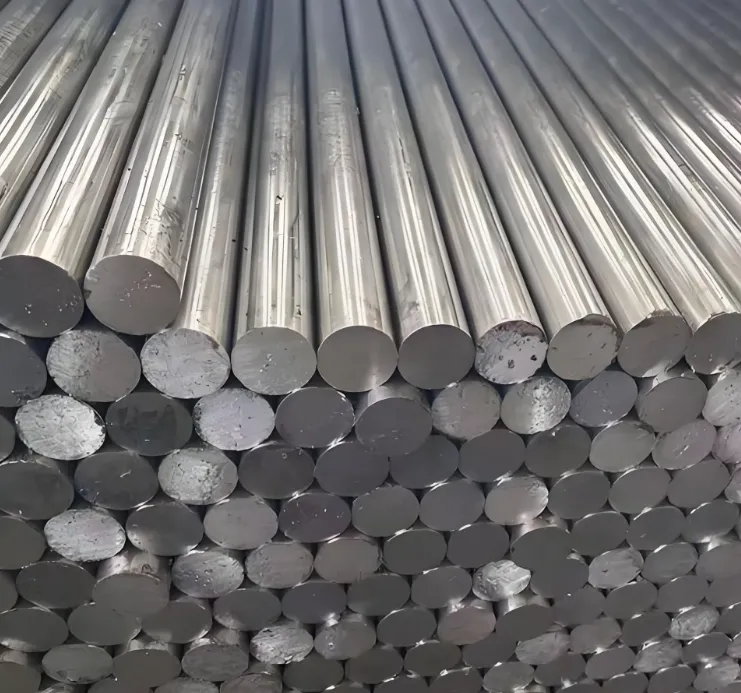
AISI 1020 steel round bar is a practical, cost efficient carbon steel choice when moderate strength, reliable weldability, consistent forming behavior, and broad availability matter more than high hardenability. In most industrial supply conditions (hot rolled, cold drawn, normalized), 1020 round bar delivers predictable tensile and yield performance, machines cleanly with standard tooling, and supports common fabrication steps without special precautions, which is why MWalloys recommends it widely across shafts, pins, bushings, spacers, brackets, and general purpose machined parts.
What is AISI 1020 steel round bar used to achieve in real projects?
AISI 1020 (SAE 1020) is a low carbon steel with roughly 0.20 percent carbon. That carbon level places it in a sweet spot: stronger than ultra low carbon grades, yet still easy to weld and form. In round bar form, it is selected when a design calls for:
- Moderate static strength with good ductility.
- Straightforward welding using common procedures.
- Turning, drilling, reaming, threading, and milling with stable chip formation.
- Cold forming or bending without frequent cracking.
- Large diameter availability compared with many specialty alloys.
- Lower material cost than alloy steels, stainless steels, and tool steels.
Engineers frequently choose 1020 round bar when the part geometry is simple, loads remain moderate, and cost control is important. Procurement teams like it because multiple mills produce it under common standards, which reduces supply risk.
Which standards and grade names match SAE 1020 round bar?
1020 is a North American grade designation, yet global supply chains often reference equivalents. The correct match depends on the standard system and the exact product form (bar, wire, plate) plus delivery condition.
Common designations used in purchasing documents
- AISI 1020
- SAE 1020
- UNS G10200
- ASTM A29 (general requirements, commonly referenced with bar grade).
- ASTM A108 (cold finished bar, frequently used with 1020).
International equivalents used in cross border sourcing
The table below lists widely used approximate equivalents. Exact equivalence is not guaranteed since each standard sets its own chemistry ranges and mechanical property expectations.
| System | Designation | Notes used in trade |
|---|---|---|
| UNS | G10200 | Chemistry based identifier used in North America |
| EN | C22, 1.0402 | Often referenced in Europe; may be tied to delivery condition requirements |
| DIN older | Ck22 (context dependent) | Older naming; verify with mill documentation |
| JIS | S20C | Common Japanese designation in the same carbon range |
| GB (China) | 20# | Often treated as comparable; confirm exact limits |
| ISO | C22 type grades | Used in certain specifications and drawings |
When converting a bill of material across standards, the safest method is chemistry matching plus mechanical property confirmation on the mill test report (MTR).
What chemical composition defines 1020 steel?
1020 is primarily iron with controlled carbon and manganese. Residual elements exist due to steelmaking practice and scrap mix, yet reputable mills stay within limits.
Typical chemistry range (weight percent)
Values below represent common industry ranges. Always rely on the heat analysis listed on the MTR.
| Element | Typical range (%) | Function in the alloy system |
|---|---|---|
| Carbon (C) | 0.18 to 0.23 | Strength increase, response to carburizing, hardness potential |
| Manganese (Mn) | 0.30 to 0.60 | Strength, deoxidation, improved hot working |
| Phosphorus (P) | max 0.040 | Kept low to protect ductility and toughness |
| Sulfur (S) | max 0.050 | Higher S improves machinability, yet reduces ductility; many heats run lower |
| Silicon (Si) | 0.10 to 0.35 (typical) | Deoxidation; small strength contribution |
| Iron (Fe) | balance | Matrix metal |
What buyers should watch in chemistry
Sulfur level: A “free machining” behavior is not the main intent of 1020, yet sulfur near the upper limit can improve chip breakage. That same sulfur can reduce transverse ductility and fatigue strength. If a shaft sees cyclic bending, request normal sulfur rather than high sulfur.
Carbon near the top end: Carbon closer to 0.23 percent raises strength slightly and can increase hardness after certain thermal cycles. It also nudges weld cracking risk upward, still usually manageable with sound procedures.
What mechanical properties can engineers expect from 1020 round bar?
Mechanical properties depend heavily on delivery condition and bar size. Cold finishing increases strength due to strain hardening; hot rolled bar is lower strength with higher ductility; normalizing can refine grain size and stabilize performance.
Typical room temperature properties by supply condition
Numbers below represent common ranges seen in industry. A single MTR governs a specific lot.
| Condition (common supply) | Yield strength (MPa) | Tensile strength (MPa) | Elongation in 50 mm (%) | Hardness (HBW) |
|---|---|---|---|---|
| Hot rolled | 250 to 350 | 400 to 500 | 25 to 35 | 120 to 170 |
| Cold drawn (cold finished) | 350 to 450 | 480 to 620 | 10 to 20 | 150 to 210 |
| Normalized | 300 to 380 | 440 to 560 | 20 to 30 | 130 to 190 |
| Annealed (process anneal varies) | 220 to 300 | 370 to 460 | 28 to 38 | 110 to 160 |
Notes engineers use during design
- Cold drawn bar typically raises yield strength noticeably, which helps limit deflection. The trade off is reduced elongation and sometimes reduced impact toughness.
- Hot rolled bar may show greater property scatter, especially in straightness and surface scale. Yet it remains economical in larger diameters.
- Normalized 1020 often feels more consistent in machining than hot rolled, and it tends to reduce surprises related to local hardness zones.
Density, elastic modulus, thermal data (typical carbon steel values)
| Property | Typical value | Units |
|---|---|---|
| Density | 7.85 | g/cm³ |
| Elastic modulus | 200 | GPa |
| Shear modulus | 77 | GPa |
| Poisson ratio | 0.29 | dimensionless |
| Thermal conductivity | 50 to 60 | W/m·K |
| Coefficient of thermal expansion | 11.5 to 12.5 | µm/m·K |
| Electrical resistivity | 0.15 to 0.20 | µΩ·m |
These values support preliminary calculations. Critical designs should use validated data relevant to heat, condition, and temperature range.
How do processing routes change AISI 1020 properties?
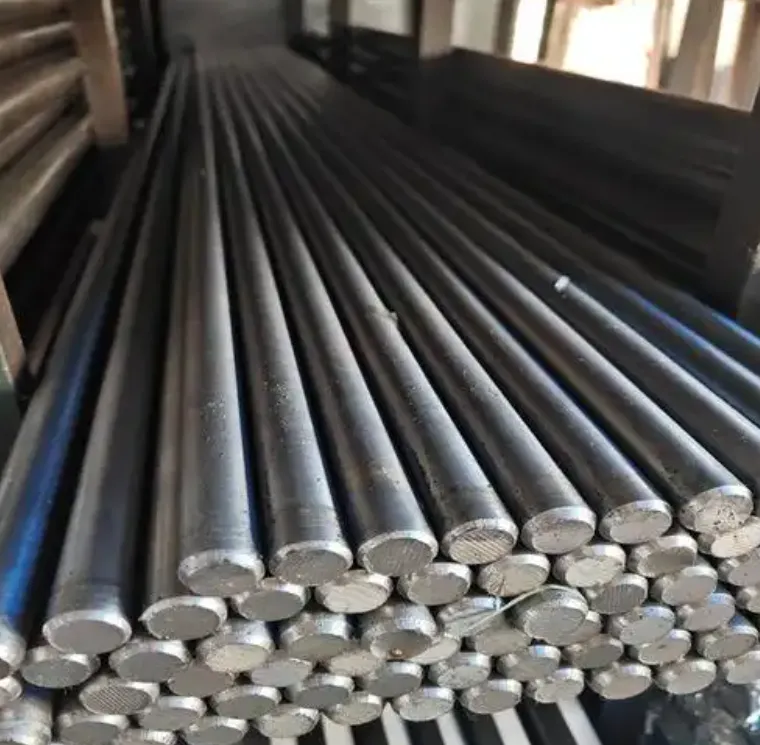
Round bar may be produced by hot rolling, cold drawing, peeling, or grinding. Each route affects surface condition, dimensional accuracy, and the stress state.
Hot rolled round bar
- Economical and common in medium to large diameters.
- Mill scale present unless removed.
- Tolerances looser than cold finished.
- Internal residual stresses generally lower than cold drawn.
Cold drawn or cold finished bar
- Improved diameter tolerance and surface finish.
- Higher yield strength due to work hardening.
- Residual stresses can be significant, which may cause movement during machining.
Turned and polished, peeled, or centerless ground bar
- Enhanced surface quality and straightness.
- Used when bearing surfaces, seal lands, or fatigue sensitive applications exist.
- Higher price due to extra processing.
What heat treatment options exist, and what results do they deliver?
AISI 1020 is not a deep hardening steel. Through hardening via quench and temper is limited, especially in larger sections, since carbon content is low. Yet several heat treatments remain useful.
Common heat treatments used with 1020
| Treatment | Typical temperature range (°C) | Cooling method | Primary purpose |
|---|---|---|---|
| Stress relieving | 540 to 650 | Air cool | Reduce distortion risk during machining |
| Normalizing | 870 to 925 | Air cool | Grain refinement, more uniform properties |
| Full anneal | 870 to 900 | Furnace cool | Soften, improve ductility and machinability |
| Spheroidize (selected cases) | near 700 to 750 | Controlled cool | Improve cold forming response |
| Carburizing (case hardening) | 900 to 950 | Quench then temper | Hard wear resistant case with tough core |
Case hardening via carburizing: where 1020 shines
Since 1020 has low carbon, it is an excellent candidate for carburizing when a hard surface plus a ductile core is desired. Typical outcomes:
- Surface hardness often in the HRC 55 to 62 range after carburize, quench, and temper (depends on carbon potential and process control).
- Case depth selection based on wear life and contact stress.
- Core remains relatively tough and shock tolerant.
Carburized 1020 is common in pins, bushings, cam followers, and parts exposed to sliding wear. Process control matters more than alloy choice in many carburizing lines.
Can 1020 be quenched and tempered?
It can be quenched, yet hardness increase is limited and section sensitivity is high. Small diameters can show moderate hardening, while larger diameters may remain largely ferrite pearlite in the core. Many engineers step up to 1045 or 4140 when true through hardness is required.
How weldable is 1020 steel round bar, and what practices reduce risk?
1020 is widely viewed as weld friendly. Low carbon content lowers the likelihood of hydrogen assisted cracking relative to higher carbon steels. Even so, welding success depends on joint design, restraint, thickness, consumable choice, and cleanliness.
Typical welding processes used on 1020
- GMAW (MIG)
- GTAW (TIG)
- SMAW (stick)
- FCAW
Practical welding recommendations
Preheat: Often not required in thin sections, yet thicker bars, highly restrained joints, or cold shop conditions may benefit from modest preheat. Many shops use 50 to 150°C depending on thickness and procedure qualification.
Filler selection: Mild steel fillers such as ER70S series are common. Match strength to service requirements and applicable codes.
Hydrogen control: Keep consumables dry, remove oil and rust, and avoid moisture. Hydrogen control matters when thick sections and restraint exist.
Post weld heat treatment: Not always necessary, yet stress relief may help with distortion sensitive assemblies.
Weld heat affected zone behavior
1020 generally avoids brittle martensite formation in the heat affected zone compared with higher carbon grades. Still, rapid cooling and high restraint can create hard zones locally, especially when carbon trends high and manganese trends high. A qualified WPS remains the best safeguard.
What machinability should buyers expect, and how can shops improve cycle time?
1020 machines well with conventional tooling, especially in cold drawn condition. Chip control is usually manageable, surface finish can be excellent, and tool life tends to be stable.
Machinability comparison (relative rating)
Machinability ratings vary by source and baseline. A practical shop centered view is shown below.
| Grade | Relative machinability (baseline 1212 = 100) | Typical shop perception |
|---|---|---|
| 1018 | 65 to 75 | Similar to 1020, slightly softer depending on condition |
| 1020 | 65 to 80 | Predictable, good finish, chip may be stringy in soft states |
| 1045 | 55 to 70 | Stronger, more tool wear, still manageable |
| 12L14 | 120 to 190 | Very easy, excellent chip break, leaded steel limitations |
| 4140 (prehard) | 45 to 60 | Higher tool wear, slower feeds, better strength |
Shop methods that help on 1020
- Use sharp carbide inserts with appropriate chipbreakers.
- Apply coolant to control built up edge in softer hot rolled bar.
- Consider stress relieving cold drawn stock prior to heavy stock removal.
- If turning long slender bars, use steady rests and check straightness after roughing.
How does 1020 behave in forming, bending, and cutting operations?
Low carbon steels are favored in forming due to ductility. 1020 fits that theme.
Cold forming and bending
- Suitable in many cold bend operations with proper bend radii.
- Annealed or normalized states improve formability.
- Cold drawn bar has reduced forming margin due to work hardening.
Flame cutting and thermal cutting
Oxy fuel cutting works well on low carbon steel. Plasma cutting is also common. Cut edges may show a thin hardened layer, so machining allowance helps when tight tolerances exist.
Thread rolling and knurling
1020 supports thread rolling well, especially when the bar is consistent in diameter and surface finish. Cold finished stock supports improved crest quality and dimensional repeatability.
What sizes, tolerances, straightness, and surface finishes should procurement specify?
Round bar purchasing often fails due to vague dimensional requirements. “Round bar” can mean hot rolled with scale, or precision ground stock. A buyer should connect the bar type to the functional requirement.
Typical supply types and what they imply
| Bar type | Surface condition | Diameter tolerance | Typical use case |
|---|---|---|---|
| Hot rolled | Scaled, possible decarb | Loose | General fabrication, large stock removal parts |
| Cold drawn | Smooth, bright | Tighter | Machined parts needing better size control |
| Turned and polished | Clean, uniform | Tight | Shafts, hydraulic components, visible surfaces |
| Centerless ground | Very smooth | Very tight | Bearing fits, seals, precision motion components |
Dimensional items to place on the purchase order
- Nominal diameter and length
- Tolerance class tied to a standard (ASTM A108 covers many cold finished bars).
- Straightness limits (critical on long shafts).
- Surface condition requirement (hot rolled, pickled, peeled, ground).
- End condition (saw cut, chamfer, square).
- Quantity and allowable length range or random length acceptance.
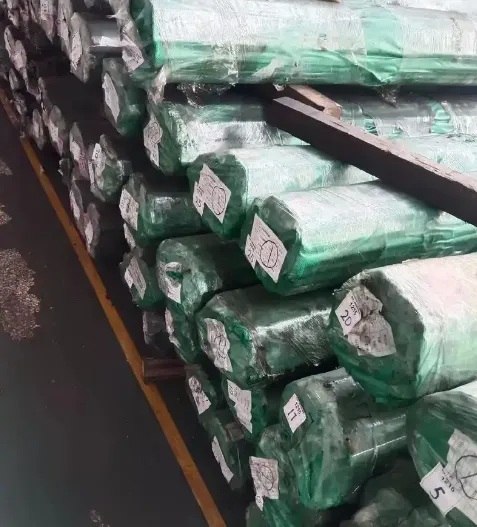
- Packaging requirements to prevent corrosion and handling damage.
Example tolerance table (illustrative)
Actual tolerances depend on standard and mill practice, yet the pattern below helps frame the discussion.
| Diameter range | Hot rolled typical tolerance | Cold finished typical tolerance |
|---|---|---|
| 10 to 25 mm | ±0.4 mm | ±0.05 to ±0.10 mm |
| 25 to 50 mm | ±0.6 mm | ±0.08 to ±0.15 mm |
| 50 to 100 mm | ±1.0 mm | ±0.10 to ±0.20 mm |
When tolerance and straightness are tight, peeled or ground bar often reduces total cost due to reduced machining time and lower scrap risk.
What corrosion behavior should users expect, and which protection methods work?
1020 is a plain carbon steel. It will oxidize in humid or corrosive environments. Corrosion resistance is not a native benefit of the grade.
Typical corrosion protection options
| Method | What it provides | Common notes |
|---|---|---|
| Oil coating | Short term indoor protection | Needs clean handling and wrapping |
| VCI packaging | Protection during storage and shipping | Works well when sealed correctly |
| Zinc plating | Sacrificial protection | Check hydrogen embrittlement risk on high strength parts, typically not critical on 1020 |
| Phosphate coating | Paint base, mild corrosion resistance | Often paired with oil |
| Painting | Barrier protection | Requires surface prep and maintenance |
| Black oxide | Appearance, mild protection | Not a heavy duty corrosion control method |
If the application involves outdoor exposure, salt spray, or chemical splash, engineers often shift to galvanized steel, stainless, or apply robust coatings.
Where is 1020 steel round bar used, and why does it keep appearing on BOMs?
AISI 1020 round bar is a staple material across manufacturing since it balances performance and availability.
Common applications
- Shafts and axles in light to medium duty service
- Pins, clevis pins, hinge pins, and linkage components
- Bushings and sleeves (often with case hardening or surface treatment)
- Spacers, standoffs, and general turned parts
- Brackets, mounts, and frames requiring welding
- Agricultural equipment components not needing alloy steel strength
- Fixtures and jigs in tooling departments
Why engineers return to 1020
- Predictable fabrication behavior across welding and machining
- Compatibility with carburizing when wear resistance is needed
- Lower risk of brittle behavior compared with higher carbon steels in welded assemblies
- Broad supplier base, typically shorter lead times
How does 1020 compare with 1018, 1045, 4140, and stainless steel?
Material selection often comes down to strength requirement, wear requirement, fabrication route, and budget.
Comparison table: performance and selection cues
| Material | Strength potential | Through hardening | Weldability | Machinability | Typical reason to choose |
|---|---|---|---|---|---|
| 1018 | Slightly lower | Limited | Excellent | Good | Similar behavior, sometimes smoother machining in cold finish |
| 1020 | Moderate | Limited | Excellent | Good | Balanced choice, strong supply base |
| 1045 | Higher | Moderate | Fair to good | Moderate | Higher strength shafts, better response to quench and temper |
| 4140 | Much higher | High | Moderate | Moderate | High strength, fatigue critical parts |
| 304 stainless | Moderate | Not heat treatable to high hardness | Good | Moderate | Corrosion resistance in wet environments |
| 316 stainless | Moderate | Not heat treatable to high hardness | Good | Moderate | Chloride resistance |
| 12L14 | Low to moderate | Limited | Poor | Excellent | High volume machining where welding is not needed |
1020 vs 1018: what changes in practice?
Both are low carbon steels with similar shop behavior. 1020 tends to carry slightly higher carbon, which can raise strength a bit and can influence carburizing response. The deciding factors often include mill availability, internal material standards, and historical performance in a specific plant.
1020 vs 1045: the real dividing line
1045 becomes attractive when a design needs higher yield strength, better wear resistance through induction hardening, or more meaningful quench and temper results. The trade off is reduced weldability margin and sometimes more distortion control requirements.
What testing, inspection, and documentation should procurement request?
Procurement success is linked to clarity on documentation and acceptance criteria.
Standard documentation package
| Document | What it confirms | Why it matters |
|---|---|---|
| Mill Test Report (MTR) | Heat chemistry, mechanical tests (when performed), traceability | Core evidence supporting compliance |
| Certificate of Conformance | Statement of supply to ordered spec | Needed in regulated industries |
| Dimensional inspection report (optional) | Diameter, straightness, length | Useful on precision shafts |
| NDE reports (optional) | UT, MT when specified | Used in critical rotating parts |
Testing options sometimes added
- Tensile testing tied to heat and condition.
- Hardness testing along length, especially on cold finished bars.
- Ultrasonic testing on larger diameters when internal soundness matters.
- Magnetic particle inspection on machined surfaces when crack detection matters.
A buyer should align tests with failure modes. Many general purpose parts do not need advanced NDE, while rotating shafts, lifting devices, and safety critical assemblies often do.
How should a buyer specify 1020 round bar on a purchase order?
A strong purchase description removes ambiguity and prevents mismatched supply condition.
Ordering checklist table
| Item | Example entry | Notes |
|---|---|---|
| Grade | SAE 1020 / UNS G10200 | Add equivalent only when approved |
| Standard | ASTM A108 (cold finished) or relevant internal spec | Match to bar type |
| Condition | Cold drawn, turned and polished, normalized | Drives properties and tolerances |
| Size | 50.00 mm dia × 3000 mm length | Add length tolerance or random length acceptance |
| Tolerances | ASTM A108 tolerance class | Include straightness if needed |
| Surface | Ground or peeled | State when bearing fits exist |
| Heat treatment | Normalized, stress relieved, carburize capable | Put it in writing |
| Certification | MTR required | Add heat traceability needs |
| Packaging | VCI wrap, end caps | Reduces rust and handling damage |
Common sourcing mistakes to avoid
- Ordering “1020 round bar” without stating hot rolled vs cold finished.
- Ignoring straightness on long shafts, then fighting runout during machining.
- Assuming tensile properties without referencing condition and standard.
- Neglecting surface decarburization risk on hot rolled stock when shallow case depth is planned.
Understanding Tolerances: h9, h10, h11 Selection
Engineers must specify the correct tolerance class to ensure fitment without overpaying for unnecessary precision. MWalloys offers round bars in ISO 286-2 tolerance classes.
- h9 Tolerance: Precision grade. Used for shafts fitting into high-quality bearings.
- Example (25mm bar): +0 / -0.052mm.
- h10 Tolerance: Standard Cold Drawn grade. Suitable for general machining and collet holding.
- Example (25mm bar): +0 / -0.084mm.
- h11 Tolerance: Economy grade or Hot Rolled Turned & Polished.
- Example (25mm bar): +0 / -0.130mm.
Guidance: For CNC Swiss Lathe operations, specifying h9 is recommended to prevent vibration and ensure consistent guide bushing clearance.
Why does MWalloys supply chain practice matter on 1020 bar?
Even a familiar grade can create downtime when supply condition drifts lot to lot. MWalloys focuses on consistency controls that align with how machine shops and OEMs actually use round bar.
What MWalloys typically supports on 1020 round bar orders
- Multiple diameter ranges with clear condition labeling (hot rolled, cold finished, peeled, ground)
- Heat traceable MTR management aligned with customer record keeping
- Packaging options that reduce transit corrosion and handling dents
- Lot consolidation support when a production line needs stable machining response
- Optional third party inspection coordination when customer QC requires it
If a project needs carburizing, induction hardening trials, or specific hardness windows, stating that requirement early helps match the right melt practice and condition.
FAQs about 1020 steel round bar
AISI 1020 Steel: 10/10 Engineering FAQ
1. What is the typical carbon content of AISI 1020?
Most heats fall near 0.18 to 0.23 percent carbon, with the remainder primarily iron plus manganese (0.30–0.60%) and small residual elements. For critical structural integrity, always confirm the exact chemistry on the Material Test Report (MTR).
2. Is 1020 steel easy to weld?
3. Can 1020 be heat treated to high hardness?
Through hardening is limited. Due to low carbon content, 1020 does not respond well to traditional quench-and-temper for bulk hardness. However, high surface hardness is achievable using carburizing or other case hardening methods. If your design requires high hardness throughout the section, consider grades like 1045 or 4140.
4. What hardness is common on cold drawn 1020 round bar?
Cold drawn 1020 often lands around 150 to 210 HBW, depending on the amount of cold reduction and specific mill practice. In contrast, hot rolled material is usually softer, typically residing in the 110 to 150 HBW range.
5. What is the difference between 1020 and 1018 round bar?
6. Does 1020 steel rust easily?
7. Is 1020 suitable for shafts?
It is suitable for light to medium duty shafts where loads are moderate and wear is controlled. When higher fatigue strength or superior surface wear resistance is needed, engineers typically specify 1045, 4140, or a carburized 1020 solution to handle the increased stress.
8. Which is better: hot rolled or cold drawn 1020?
SELECTION GUIDE
Hot Rolled (HR): Cheaper and common in large sizes; features lower tolerances and a scaly surface finish.
Cold Drawn (CD): Tighter dimensional tolerances, superior surface finish, and higher yield strength. However, CD material may experience "walking" or distortion during heavy machining due to residual stresses.
9. Can 1020 be carburized successfully?
Absolutely. 1020 is one of the most common carburizing grades. The low-carbon core remains tough and ductile after treatment, while the carbon-enriched surface becomes extremely hard after the quench and temper process. Case depth control is critical for final part performance.
10. What should I request on the purchase order (PO)?
To prevent receiving the wrong material, your PO should clearly state:
- Grade & Standard: e.g., AISI 1020 per ASTM A108.
- Condition: Cold Drawn vs Hot Rolled.
- Size & Tolerance: Specific diameter and length requirements.
- Certification: Full MTR (Material Test Report) required.
- Packaging: Rust-preventative oiling or VCI wrapping.
Summary: practical selection rules engineers and buyers use
- Choose AISI 1020 round bar when moderate strength, strong weldability, and broad availability matter.
- Tie mechanical expectations to delivery condition (hot rolled, cold drawn, normalized).
- Use carburizing when wear resistance is needed without sacrificing core toughness.
- Specify tolerances, straightness, surface condition, and MTR requirements to avoid costly receiving surprises.
- Work with suppliers such as MWalloys when traceability, condition control, and packaging discipline matter to machining yield and assembly uptime.