

At MWalloys, we can state the conclusion before anything else: nickel alloy fabrication succeeds or fails based on three controllable variables, heat input during welding, chip control during machining, and inspection discipline after both. Get those three right and a Hastelloy C276 reactor nozzle or an Inconel 625 subsea flowline fitting will outlast the plant that installed it. Get them wrong and you inherit hot cracks, warped tolerances, and a rejected mill test report. We have spent years running GTAW passes on 625 overlay, milling Monel K-500 shafts that fight tool wear at every pass, and walking radiographic film past customer inspectors who know exactly what a microfissure looks like.
If your project requires the use of Nickel Alloy Fabrication Services, you can contact us for a free quote.
Why Does Nickel Alloy Fabrication Require a Different Shop Than Carbon Steel?
The short answer is thermal conductivity and work hardening rate. Nickel alloys conduct heat roughly a third as fast as carbon steel, so heat piles up locally instead of dissipating through the part. That single physical fact changes welding parameters, machining feeds, and even how you clamp a workpiece in a fixture. A shop that runs mild steel fabrication all day and picks up an Inconel job "because it's just another metal" will produce parts with grain boundary liquation cracks or distorted flanges, sometimes both.
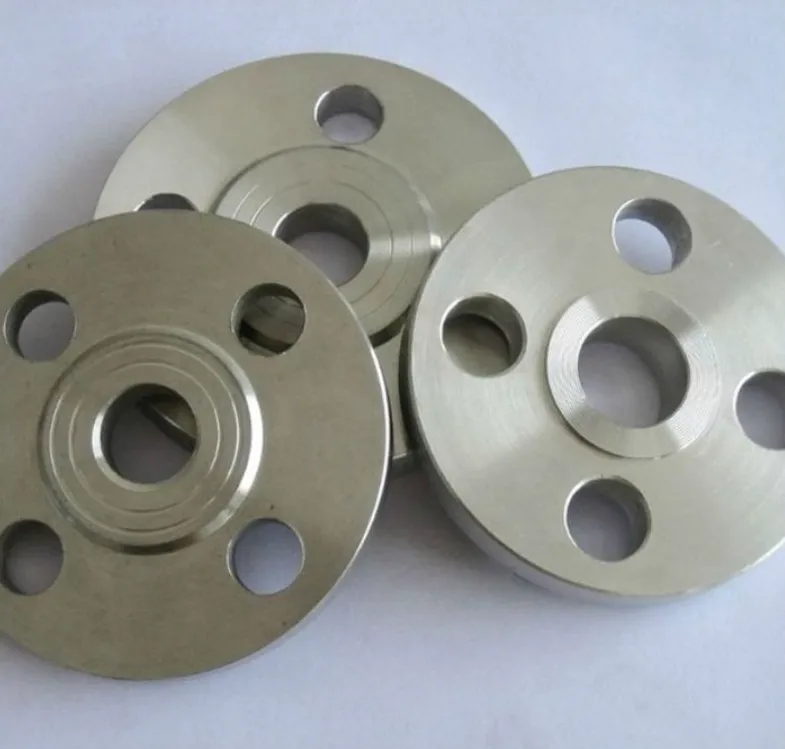
We built our processes around the opposite assumption. Every nickel alloy job starts with a material-specific weld procedure, not a generic one adjusted on the fly. Every CNC program accounts for the alloy's strain hardening exponent before the first cut, because austenitic and nickel-rich matrices harden as they deform, and a dull tool path turns a smooth bore into a work-hardened surface that chews up the next tool. This is not theoretical caution. It is the difference between a part that ships on schedule and one that comes back from the customer's lab with a cracked weld root.
Which Nickel Alloy Families Do We Machine and Weld?
Buyers rarely ask for "nickel alloy" in the abstract. They ask for a UNS number or a trade name because their process engineer already specified it against a corrosion study. Here is the breakdown we work from daily.
| Alloy Family | Common Grades | UNS Number | Primary Strengthening Mechanism | Typical Use Case |
|---|---|---|---|---|
| Inconel (Ni-Cr-Fe / Ni-Cr-Mo) | 600, 625, 718, 825 | N06600, N06625, N07718, N08825 | Solid solution (625) or gamma prime precipitation (718) | High-temperature piping, gas turbine hardware, sour service tubing |
| Hastelloy (Ni-Mo / Ni-Cr-Mo) | C276, C22, B3 | N10276, N06022, N10675 | Solid solution with molybdenum for pitting resistance | Chemical reactor vessels, scrubber internals, acid handling pumps |
| Monel (Ni-Cu) | 400, K-500 | N04400, N05500 | Solid solution, age-hardened in K-500 | Seawater valves, pump shafts, marine fasteners |
| Incoloy (Ni-Fe-Cr) | 800, 800H/HT, 825 | N08800, N08810, N08825 | Solid solution, carbide control for creep | Heat exchanger tubing, furnace components, sulfuric acid service |
| Nimonic / Waspaloy | 80A, Waspaloy | N07080, N07001 | Gamma prime precipitation | Aerospace turbine discs, fasteners under sustained load |
We keep certified mill stock and traceable heat lots for each of these because a customer's quality department will ask for chemistry certificates before releasing payment, not after.
What Welding Processes Actually Hold Up Under ASME Section IX Qualification?
Here is the conclusion first: GTAW (gas tungsten arc welding) with pulsed low heat input remains the only process we trust for root and hot passes on thin-wall nickel alloy piping and pressure parts, with GMAW pulsed spray or FCAW reserved for fill passes on heavier sections once the root geometry is locked in. Stick welding (SMAW) has a place on Monel and Incoloy structural work where deposition speed matters more than root purity, but we do not use it on anything destined for sour service or cryogenic duty.
The reason comes back to heat input arithmetic. ASME IX qualifies a Welding Procedure Specification against a heat input range calculated from amperage, voltage, and travel speed. Nickel alloys are unusually sensitive to that number because excessive heat input widens the heat-affected zone, promotes grain boundary segregation of low-melting-point phases, and sets up the exact conditions for hot cracking described in the next section.
| Process | Typical Heat Input Range | Filler Metal Example | Application Note |
|---|---|---|---|
| GTAW (pulsed, DCEN) | 0.5 to 1.2 kJ/mm | ERNiCrMo-3 (625 filler) | Root pass on pipe, orbital welding on tube-to-tubesheet joints |
| GMAW pulsed spray | 0.8 to 1.8 kJ/mm | ERNiCrMo-4 (C276 filler) | Fill and cap on wall thickness above 8mm |
| PAW (plasma arc, keyhole) | 0.6 to 1.0 kJ/mm | ERNiCr-3 | Single-pass full penetration on tube walls under 6mm |
| SMAW | 1.0 to 2.5 kJ/mm | ENiCrFe-3 | Field repair, structural attachment welds, non-pressure duty |
Every WPS we run is qualified with a procedure qualification record, PQR, showing actual bend test and tensile results from a witnessed coupon, not a catalog value borrowed from a filler metal manufacturer's data sheet.
Why Do Nickel Alloys Crack During Welding, and How Do We Stop It?
We will answer this directly because it is the single most expensive failure mode in this business: hot cracking in nickel alloys happens because low-melting-point eutectics of sulfur, phosphorus, and niobium segregate to grain boundaries during solidification, and those boundaries tear apart under the shrinkage strain that follows weld cooling. Solidification cracking in the weld metal and liquation cracking in the heat-affected zone are both driven by the same mechanism, just at different locations relative to the fusion line.
We control this through four practical levers rather than one silver bullet.
First, filler metal chemistry. We specify low-sulfur, low-phosphorus filler wire and verify certificates against a maximum sulfur content well under 0.015 percent for crack-sensitive grades like Inconel 718.
Second, restraint management. A rigidly clamped joint has nowhere to relieve shrinkage stress except through the weakest microstructural path, which is the segregated grain boundary. We stagger weld sequences and use back-step or skip-weld techniques on long seams specifically to reduce cumulative restraint.
Third, heat input discipline, tied directly to the WPS table above. Lower heat input narrows the mushy zone where segregation happens, which shortens the window during which cracking can initiate.
Fourth, interpass temperature control. We cap interpass temperature at 150°C on most Inconel and Hastelloy work, because excessive interpass heat extends grain growth in the heat-affected zone and coarsens the very grain boundaries that crack.
Strain-age cracking deserves its own mention because it catches shops off guard on precipitation-hardened alloys like Inconel 718 and Waspaloy. The crack does not appear during welding. It appears hours or days later, during post-weld aging heat treatment, when gamma prime precipitates form and the accompanying volume change pulls apart a heat-affected zone already weakened by grain boundary carbide films. We manage this by controlling the solution anneal and aging cycle tightly against the alloy supplier's aerospace-grade heat treatment specification, and by inspecting after aging, not just after welding.
How Does Thermal Expansion Change Our CNC Machining Parameters?
Nickel alloys expand and contract less than aluminum but generate heat at the cutting edge far more aggressively because that same low thermal conductivity that complicates welding also means machining heat stays concentrated at the tool tip instead of spreading into the workpiece. A carbide insert that survives a thousand parts in 4140 steel might last twenty parts in Inconel 718 before edge wear pushes tolerances out of spec.
We run three adjustments as standard practice rather than exceptions. Cutting speeds drop to roughly a third of equivalent steel parameters, typically 15 to 30 meters per minute for turning operations on Inconel 625, compared to 90 to 120 for carbon steel. Feed rates increase relative to speed reduction to keep the tool cutting rather than rubbing, because rubbing generates the localized heat that accelerates both tool wear and work hardening. Coolant delivery moves to high-pressure through-tool systems rather than flood coolant, because getting fluid directly to the cutting edge matters more than volume when conductivity is the limiting factor.
Dimensional stability during machining also depends on stress relief before final passes. Bar stock and forgings carry residual stress from the mill, and roughing cuts on nickel alloy release that stress unevenly, causing parts to move mid-program. We rough machine, stress relieve, then finish machine on anything holding tolerances tighter than 0.05mm, particularly on long shafts and thin-wall sleeves.
How Do We Control Work Hardening During Milling and Turning?
This is the machining problem buyers rarely think to ask about until they receive a part with chatter marks or a broken tap. Nickel alloys, particularly the austenitic and solid-solution grades, have a high strain hardening exponent, meaning the surface layer becomes measurably harder every time a cutting edge deforms it without actually removing material cleanly.
The practical consequence: light finishing passes that "just skim the surface" are the worst possible approach on nickel alloy. A pass too shallow burnishes rather than cuts, work-hardening the surface, and the next pass then has to cut through material harder than the parent metal. We specify minimum chip thickness on every finishing operation, generally never going below 0.1mm depth of cut on Inconel and Hastelloy grades, specifically to avoid this burnishing effect.
Tool geometry matters as much as parameters. We favor positive rake inserts with sharp cutting edges over the negative rake geometries common in steel roughing, because a sharp edge shears the material rather than pushing it aside, reducing the plastic deformation that drives hardening. Interrupted cuts, like milling a slot or drilling a cross-hole, are particularly punishing because each entry and exit point re-hardens the surface, so we reduce feed at entry and exit points on programmable machines rather than running a constant feed through the full cut.
What Metallurgical Phases Should Buyers Understand Before Ordering?
A purchasing engineer does not need a materials science degree, but understanding three phase concepts prevents a lot of miscommunication on a purchase order.
Solid solution strengthening describes how alloys like Inconel 625 and Hastelloy C276 get their strength, molybdenum and chromium atoms distort the nickel lattice enough to resist dislocation movement without forming a separate precipitate phase. These alloys stay ductile and weldable across a wide range of heat treatment conditions, which is why they dominate welded pressure vessel and piping applications.
Precipitation hardening describes alloys like Inconel 718 and Waspaloy, where a controlled aging heat treatment forms gamma prime or gamma double-prime precipitates that block dislocation movement far more effectively than solid solution alone. These alloys reach higher strength but become considerably harder to weld without cracking, which is why aerospace turbine hardware specifies precise solution and aging cycles as part of the material certification.
Carbide precipitation at grain boundaries, particularly chromium carbide formation in the 550 to 850°C range often called the sensitization range, reduces corrosion resistance locally even though it does not necessarily weaken the alloy mechanically. This matters most for Incoloy 800H/HT service in high-temperature environments, where we specify controlled cooling rates through the sensitization range during both fabrication and any subsequent heat treatment to preserve the corrosion performance the customer actually purchased the alloy for.
Which Codes and Industry Standards Govern Our Fabrication Process?
Every quote we send references specific standards because a customer's quality department will reject a part certified against the wrong document, no matter how good the weld looks under a magnifying glass.
| Standard | Governing Body | Scope | Typical Industry |
|---|---|---|---|
| ASME Section IX | ASME | Welding and brazing procedure qualification | Pressure vessels, piping, all pressure-retaining fabrication |
| ASME BPVC Section VIII | ASME | Pressure vessel design and fabrication rules | Chemical processing, refining |
| NACE MR0175 / ISO 15156 | NACE / ISO | Materials for sour service (H2S environments) | Oil and gas, offshore production |
| API 6A | API | Wellhead and christmas tree equipment | Upstream oil and gas |
| AMS 5662 / AMS 5663 | SAE Aerospace | Chemistry and mechanical property specs for Inconel 718 | Aerospace turbine and structural components |
| PED 2014/68/EU | European Commission | Pressure equipment placed on EU market | European chemical and energy sector exports |
| ASTM B564 / B366 | ASTM International | Forged and wrought fittings, chemistry limits | General nickel alloy component manufacturing |
We hold current welder qualifications against ASME IX for every position and process listed in our welding procedure library, and we renew those qualifications on the schedule the code requires rather than letting certifications lapse between jobs.
What Does Our 100% NDT Inspection Program Actually Verify?
Full-volume nondestructive testing on nickel alloy fabrication is not a marketing checkbox, it is a response to a real limitation, austenitic and nickel-rich weld metal produces a coarse, columnar grain structure that scatters ultrasonic sound waves and makes conventional UT interpretation genuinely difficult compared to ferritic steel. That single fact shapes our entire inspection sequence.
Radiographic testing, RT, remains our primary volumetric method for weld seams because film or digital radiography reads through the coarse grain structure without the scatter problems that limit ultrasonic sensitivity. Every pressure-retaining weld on nickel alloy gets 100 percent RT coverage, interpreted against acceptance criteria drawn from ASME Section VIII Division 1 or the customer's specification, whichever is stricter.
Liquid penetrant testing, PT, catches surface-breaking indications that RT alone might miss, particularly the microfissures associated with hot cracking discussed earlier. We run PT on every weld cap and root pass accessible for surface inspection, not just on a sampling basis.
Ultrasonic testing does still have a role, generally on thicker sections above 25mm and for detecting lack-of-fusion defects between passes, but we pair it with a qualified procedure specifically calibrated against nickel alloy reference blocks rather than a generic steel calibration standard, because using a steel-calibrated UT procedure on nickel alloy produces false confidence.
Positive material identification, PMI, using handheld X-ray fluorescence, closes the loop on the whole inspection program by confirming the actual chemistry of the delivered part matches the specified alloy before it ships, catching mill mix-ups that no weld inspection would ever detect.
Where Do These Fabricated Components End Up in the Field?
The theoretical metallurgy above translates into real hardware across a handful of demanding industries, and each one stresses a different property of the alloy.
| Industry | Component Example | Alloy Typically Specified | Critical Requirement |
|---|---|---|---|
| Chemical Processing | Reactor vessel internals, agitator shafts | Hastelloy C276, C22 | Resistance to chloride pitting and stress corrosion cracking |
| Offshore Oil & Gas | Subsea flowline connectors, wellhead components | Inconel 625, 825 | Sour service compliance under NACE MR0175 |
| Aerospace | Turbine discs, combustor liners, fasteners | Inconel 718, Waspaloy | High-temperature fatigue strength and creep resistance |
| Marine | Propeller shafts, seawater valve trim | Monel 400, K-500 | Resistance to seawater corrosion and biofouling |
| Power Generation | Superheater tubing, heat exchanger bundles | Incoloy 800H/HT | Creep resistance above 600°C |
| Pulp and Paper | Digester internals, bleach plant piping | Hastelloy C276 | Resistance to chlorine dioxide and sulfuric acid attack |
We have delivered against every row in that table, and the common thread across all of them is that the customer's failure mode drives the alloy choice long before anyone discusses price. A buyer who substitutes a cheaper alloy against a corrosion engineer's recommendation is buying a future field failure, not a discount.
How Should Buyers Specify a Nickel Alloy Fabrication Order?
We ask every new customer for five pieces of information before quoting, and providing them upfront shortens the quote cycle considerably. Service environment and expected temperature range, because this determines whether solid solution or precipitation-hardened alloy applies. Governing code, whether ASME VIII, API 6A, or a customer internal specification, because this fixes the inspection acceptance criteria before fabrication starts. Required NDT extent, whether 100 percent volumetric coverage or sampling, because this affects both cost and schedule. Post-weld heat treatment requirements, since some alloys need solution annealing after welding to restore corrosion resistance lost to sensitization. Documentation package expectations, including material certificates, WPS/PQR records, and NDT reports, because aerospace and nuclear customers require full traceability while general industrial buyers sometimes accept a summary certificate.
Frequently Asked Questions
What is the difference between Inconel 625 and Inconel 718 for fabrication purposes?
Inconel 625 is solid-solution strengthened and stays readily weldable across a wide heat input range, making it the default choice for welded piping and pressure parts. Inconel 718 gains strength through gamma double-prime precipitation during aging heat treatment, which makes it considerably stronger but also more prone to strain-age cracking during and after welding. We specify 625 for most fabricated pressure equipment and reserve 718 for machined or forged components like fasteners and turbine hardware where the precipitation strengthening is the whole point of choosing the alloy.
Why does nickel alloy welding cost more than stainless steel welding?
The cost premium comes from three compounding factors, not one. Filler metal for nickel alloys runs several times the price of stainless filler by weight. Welding speed drops because low heat input procedures require slower travel speeds and more passes to complete the same joint. Inspection extent typically increases to 100 percent volumetric coverage rather than spot sampling. Together these factors can push total fabrication cost to two or three times an equivalent stainless steel job, which is why accurate alloy selection against actual service conditions matters more than defaulting to a premium grade out of caution.
Can nickel alloy welds be repaired after they fail NDT inspection?
Yes, but the repair procedure requires its own qualification, and repeated repair attempts on the same location increase cracking risk rather than reducing it. We remove the rejected weld metal by grinding back to sound base metal confirmed by PT, then reweld using a qualified repair WPS with heat input controls at least as strict as the original procedure. Industry practice generally limits repair attempts on the same joint location to two before requiring engineering review, because each thermal cycle adds heat-affected zone grain growth that compounds crack susceptibility.
How long does a typical nickel alloy fabrication project take from order to delivery?
Lead time depends heavily on inspection extent and material availability rather than welding time alone. A straightforward Inconel 625 pipe spar with standard NDT typically runs four to six weeks from material receipt. A precipitation-hardened Inconel 718 component requiring solution annealing, aging, and full aerospace documentation can run ten to fourteen weeks because the heat treatment cycles and certification paperwork add time that welding speed cannot compress. We provide a firm schedule against confirmed material availability at order placement rather than an optimistic estimate at quote stage.
What causes porosity in nickel alloy welds and how is it prevented?
Porosity in nickel alloy welds most commonly comes from inadequate shielding gas coverage, since molten nickel readily absorbs nitrogen and hydrogen from atmospheric exposure, and from contaminated filler wire or base metal surfaces carrying oil, oxide, or moisture into the weld pool. We prevent it through strict gas lens coverage on GTAW torches, trailing shields on stainless-adjacent joints, and solvent cleaning of filler wire and joint edges immediately before welding rather than relying on cleaning done earlier in the shop process.
Is post-weld heat treatment always required on nickel alloy fabrication?
No, and applying it unnecessarily can actually reduce corrosion resistance on some grades. Solid-solution alloys like Hastelloy C276 and Inconel 625 generally do not require post-weld heat treatment for corrosion performance, since welding does not meaningfully sensitize their microstructure. Precipitation-hardened alloys like Inconel 718 typically do require post-weld solution annealing and aging to restore design strength in the heat-affected zone. We determine the requirement against the specific alloy and governing code rather than applying a blanket heat treatment policy across every job.
What NDT method best detects hot cracking in nickel alloy welds?
Liquid penetrant testing detects surface-breaking hot cracks most reliably because the fine capillary action of the penetrant draws into microfissures too small for visual inspection to catch. Radiographic testing catches subsurface cracking but can miss very tight, tightly closed cracks depending on orientation relative to the film. We run both methods together on crack-sensitive alloys and orientations, since relying on either method alone leaves a detection gap that the other method closes.
How do we choose between Monel 400 and Monel K-500 for a marine application?
Monel 400 is the solid-solution grade, ductile and readily weldable, suited to valve bodies, piping, and general seawater-exposed hardware. Monel K-500 gains additional strength through aluminum and titanium age-hardening, roughly doubling yield strength over Monel 400, but that same aging treatment makes it far more difficult to weld without cracking. We specify K-500 almost exclusively for machined components like pump shafts and fasteners where high strength matters and welding is not required, and default to 400 for anything that needs a weld joint.
What documentation should accompany a nickel alloy pressure part shipment?
A complete package includes material test certificates confirming chemistry and mechanical properties traceable to the original heat lot, the qualified WPS and supporting PQR for every weld on the part, NDT reports covering the extent of inspection performed with acceptance criteria referenced, and a certificate of conformance tying the finished part back to the governing code. We assemble this package before shipment rather than after, since a customer's receiving inspection will hold the part at the dock until documentation arrives complete.
Why do nickel alloy parts sometimes fail in service despite passing all inspection at fabrication?
Passing inspection at fabrication confirms the part met specification at that moment, it does not guarantee immunity to service conditions outside the original design basis, such as unexpected chloride concentration, higher operating temperature, or cyclic loading beyond the design fatigue curve. We address this by pushing for accurate service condition disclosure at the specification stage, since the most common cause of in-service failure we have investigated traces back to an alloy selected against optimistic service assumptions rather than a fabrication defect.
Verifiable Sources
ASME Boiler and Pressure Vessel Code, Section IX, Welding, Brazing, and Fusing Qualifications, The American Society of Mechanical Engineers.
ASME Boiler and Pressure Vessel Code, Section VIII, Division 1, Rules for Construction of Pressure Vessels.
NACE MR0175 / ISO 15156, Petroleum and Natural Gas Industries, Materials for Use in H2S-Containing Environments in Oil and Gas Production, NACE International and International Organization for Standardization.
API Specification 6A, Specification for Wellhead and Christmas Tree Equipment, American Petroleum Institute.
AMS 5662 and AMS 5663, Nickel Alloy Bars, Forgings, and Rings, SAE International Aerospace Material Specifications.
ASTM B564, Standard Specification for Nickel Alloy Forgings, and ASTM B366, Standard Specification for Factory-Made Wrought Nickel and Nickel Alloy Fittings, ASTM International.
Special Metals Corporation, technical data bulletins for Inconel, Incoloy, and Monel alloy families.
Haynes International, technical data bulletins for Hastelloy alloy welding and fabrication.
Ready to Move Your Nickel Alloy Project Forward?
If your project drawing calls out Inconel, Hastelloy, Monel, or Incoloy, and you need a fabrication partner who qualifies welding procedures against ASME IX rather than guessing at heat input, our team at MWalloys is ready to review your specification. Send us your drawing, service conditions, and governing code, and we will return a quote that reflects the actual metallurgy your application demands, not a generic estimate. Contact our engineering desk today to start the material review.