

If you are trying to decide whether Alloy 825 tubing fits your project, choose seamless Alloy 825 tubing manufactured to ASTM B423 (UNS N08825) when your system handles sulfuric acid, phosphoric acid, or sour gas with combined chloride and H2S exposure, since this nickel-iron-chromium alloy resists pitting, crevice attack, and stress corrosion cracking better than standard austenitic stainless steels in these specific media. We have sourced and inspected thousands of feet of Alloy 825 instrument and process tubing for refinery, offshore, and chemical processing customers at MWalloys, and the pattern we see repeatedly is straightforward: buyers who skip verifying mill certificates against ASTM B423 requirements end up with tubing that technically matches the UNS number but fails on grain size, hardness, or pressure test data once it reaches the job site.
What Is Alloy 825 and Why Was It Developed?
Alloy 825, registered as UNS N08825 and commonly sold under trade names like Incoloy 825, is a nickel-iron-chromium austenitic alloy developed originally for handling sulfuric acid in phosphate fertilizer production. The alloy's designers added molybdenum and copper specifically to combat both reducing acid attack and localized pitting, a combination that plain stainless steels like 316L struggle to handle simultaneously.
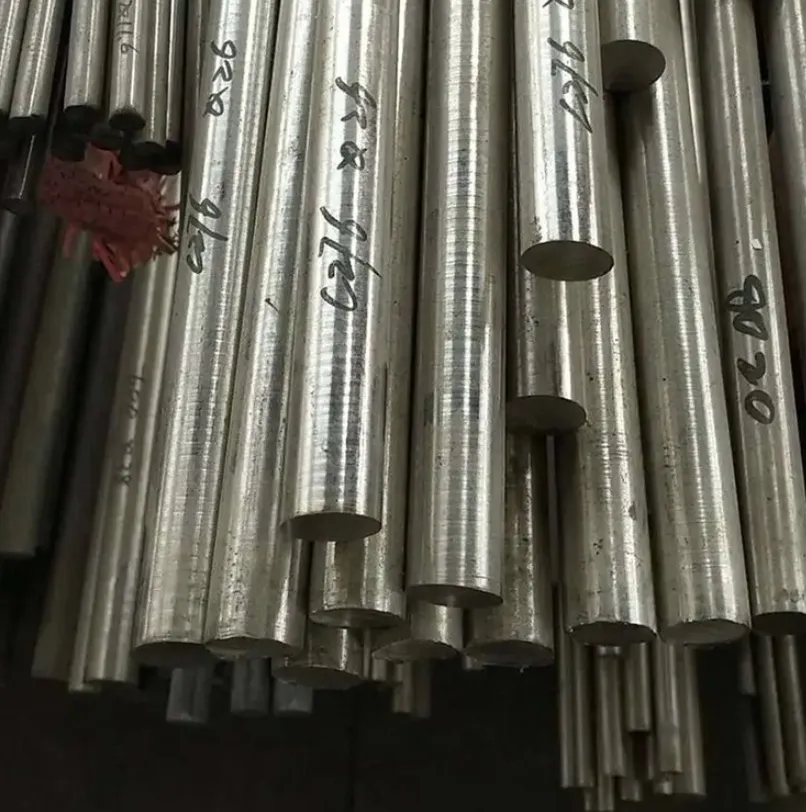
What sets Alloy 825 apart from straight nickel alloys is its balanced composition. It contains enough nickel (38-46%) to resist chloride stress corrosion cracking, enough chromium (19.5-23.5%) to form a stable passive oxide layer, and molybdenum plus copper additions that extend resistance into acidic reducing environments where chromium-only passivation would break down. Titanium is added specifically to stabilize the alloy against sensitization during welding, preventing carbide precipitation at grain boundaries that would otherwise create corrosion-prone zones near weld seams.
We describe Alloy 825 to customers as a workhorse alloy rather than a premium performer. It does not match Alloy 625 or Super Duplex 2507 in raw pitting resistance, but it costs considerably less while still outperforming any grade of stainless steel in acid service, sour gas handling, and marine atmospheric exposure. That balance of performance and price is exactly why it remains the default choice for instrument tubing bundles on offshore platforms and refinery process lines decades after its introduction.
What Chemical Composition Does ASTM B423 Require?
ASTM B423 governs seamless Alloy 825 pipe and tube, specifying the exact chemistry range mills must meet along with dimensional tolerances and mechanical test requirements. Here is the composition breakdown we check against every mill certificate that crosses our desk.
| Element | Composition Range (ASTM B423) |
|---|---|
| Nickel (Ni) | 38.0 - 46.0% |
| Iron (Fe) | 22.0% min |
| Chromium (Cr) | 19.5 - 23.5% |
| Molybdenum (Mo) | 2.5 - 3.5% |
| Copper (Cu) | 1.5 - 3.0% |
| Titanium (Ti) | 0.6 - 1.2% |
| Aluminum (Al) | 0.2% max |
| Carbon (C) | 0.05% max |
| Manganese (Mn) | 1.0% max |
| Sulfur (S) | 0.03% max |
| Silicon (Si) | 0.5% max |
The titanium-to-carbon ratio deserves specific attention because it directly affects long-term corrosion resistance after welding. Titanium content needs to run at least six times the carbon content to properly stabilize the alloy, and mills that push carbon toward the 0.05% ceiling while keeping titanium near the 0.6% minimum produce tubing more vulnerable to intergranular corrosion in heat-affected zones. We routinely ask suppliers for the actual titanium and carbon figures on the cert rather than accepting a blanket pass statement, since two heats can both meet ASTM B423 on paper while performing differently in service.
How Do Mechanical Properties Compare to Common Alternatives?
Buyers frequently compare Alloy 825 against 316L stainless and Alloy 625 when scoping a project, so we keep this table handy for quick reference during technical calls.
| Property | Alloy 825 (N08825) | 316L Stainless | Alloy 625 (N06625) |
|---|---|---|---|
| Yield Strength (min) | 240 MPa (35 ksi) | 170 MPa (25 ksi) | 414 MPa (60 ksi) |
| Tensile Strength (min) | 585 MPa (85 ksi) | 485 MPa (70 ksi) | 827 MPa (120 ksi) |
| Elongation | 30% min | 40% min | 30% min |
| Hardness (max) | 90 HRB | 79 HRB | 35 HRC |
| Max Service Temperature (oxidizing) | 550°C | 425°C | 980°C |
| Relative Cost Index (316L = 1.0) | 3.5 - 4.5 | 1.0 | 7.0 - 9.0 |
Alloy 825 sits in a comfortable middle position. It roughly doubles the corrosion performance of 316L in acidic and chloride environments while costing a fraction of what Alloy 625 commands. Mechanically, it offers moderate strength gains over 316L but nowhere near what Alloy 625 or duplex grades provide, which is why it rarely gets specified purely for structural strength. Customers pick this alloy for corrosion behavior first, and any strength benefit is secondary.
One practical note from our testing records: hardness readings toward the upper end of the allowable range often indicate cold working during tube reduction, which can slightly reduce ductility. For instrument tubing that will be bent and flared in the field, we recommend requesting hardness values on the certificate rather than assuming mid-range performance across every coil.
What Does Seamless Construction Mean for Tubing Performance?
Seamless tubing is produced by piercing or extruding a solid billet rather than rolling and welding flat strip into a tube shape. For Alloy 825 instrument and process tubing, seamless construction removes the weld seam entirely, eliminating the heat-affected zone that would otherwise create a localized area of altered grain structure and reduced corrosion resistance.
This matters more for Alloy 825 than for many stainless grades because the alloy's corrosion resistance depends heavily on the titanium stabilization we described earlier. A weld seam, even when properly filled with matching consumable, introduces a thermal cycle that can disturb that stabilization locally unless post-weld heat treatment is carefully controlled. Seamless tubing sidesteps this risk entirely, which is why ASTM B423 (seamless) is specified far more often than ASTM B704/B705 (welded) for critical instrument lines, hydraulic control tubing, and sour service applications.
| Construction Type | Governing Standard | Typical Application | Relative Cost |
|---|---|---|---|
| Seamless | ASTM B423 | Instrument tubing, high-pressure process lines, sour gas | Higher |
| Welded | ASTM B704 / B705 | Larger diameter process piping, lower pressure service | Lower |
We stock predominantly seamless Alloy 825 tubing because our customer base skews heavily toward offshore instrument bundles and chemical injection lines where pressure ratings and corrosion margin leave no room for weld seam variability. Welded tubing still has a legitimate place in larger diameter, lower pressure applications where cost control matters more than the last measure of corrosion margin, but for anything under 2 inches OD feeding pressure transmitters or control valves, seamless is what we recommend without exception.
What Sizes and Dimensional Tolerances Does ASTM B423 Cover?
Instrument tubing customers care about outside diameter and wall thickness tolerance more than almost any other spec detail, since fittings and ferrules depend on tight dimensional control to seal properly. ASTM B423 sets tolerance bands that tighten as wall thickness decreases, reflecting the difficulty of holding precision on thin-wall tube.
| Nominal OD | Common Wall Thickness (Instrument Grade) | OD Tolerance | Wall Tolerance |
|---|---|---|---|
| 1/4 inch (6.35mm) | 0.028 - 0.035 inch | ±0.0015 inch | ±10% |
| 3/8 inch (9.53mm) | 0.035 - 0.049 inch | ±0.0015 inch | ±10% |
| 1/2 inch (12.7mm) | 0.035 - 0.065 inch | ±0.002 inch | ±10% |
| 3/4 inch (19.05mm) | 0.049 - 0.083 inch | ±0.003 inch | ±10% |
| 1 inch (25.4mm) | 0.065 - 0.109 inch | ±0.004 inch | ±10% |
For instrument tubing specifically, most bundles specify 1/4 inch or 1/2 inch OD in 0.035 inch wall thickness, matched to standard compression fitting sizes from major fitting manufacturers. We always confirm OD tolerance against the specific fitting brand a customer plans to use, since some ferrule designs are less forgiving of OD variation than others, and a tube sitting at the outer edge of tolerance can create sealing problems during commissioning that only show up under pressure testing.
How Does Alloy 825 Perform in Sour Gas and Sulfuric Acid Service?
This is where Alloy 825 earns its reputation and its place in offshore and refinery specifications. Sour gas service, meaning environments containing H2S alongside CO2 and chlorides, creates a combined attack mechanism that defeats plain stainless steel through a mix of pitting, crevice corrosion, and sulfide stress cracking. Alloy 825's nickel content raises resistance to sulfide stress cracking specifically, since higher nickel alloys resist the hydrogen embrittlement mechanism that drives this failure mode in lower-nickel stainless grades.
NACE MR0175/ISO 15156 recognizes Alloy 825 as suitable for sour service without the more restrictive limits placed on standard 316L or duplex grades, provided the material meets specific hardness and heat treatment requirements documented in the standard. This qualification is a major reason offshore operators specify this alloy for instrument tubing bundles running alongside wellheads and production manifolds, where H2S exposure is a certainty rather than a possibility.
In sulfuric acid service, particularly in the phosphate fertilizer industry where the alloy originated, Alloy 825 handles dilute to moderate concentration sulfuric acid across a range of temperatures that would rapidly corrode 316L. The copper addition specifically improves resistance in reducing acid conditions, a mechanism that chromium-only stainless alloys cannot replicate.
| Environment | 316L Performance | Alloy 825 Performance |
|---|---|---|
| Dilute sulfuric acid (under 40%, ambient temp) | Poor, rapid corrosion | Good |
| Phosphoric acid processing | Moderate | Good to excellent |
| Sour gas (H2S + CO2 + chlorides) | Limited, NACE restrictions | Broad NACE acceptance |
| Seawater atmospheric exposure | Good | Very good |
| Chloride stress corrosion cracking resistance | Limited above 60°C | Good to 100°C+ |
We have supplied Alloy 825 instrument tubing for platforms in the Gulf of Mexico and Southeast Asian offshore fields specifically because the wellstream chemistry included both H2S and high chloride content simultaneously, a combination that ruled out 316L outright during the engineering review stage.
How Should Alloy 825 Instrument Tubing Be Bent and Fabricated?
Instrument tubing gets bent extensively in the field to route between transmitters, valves, and manifolds, so ductility and bend behavior matter as much as chemistry to the technicians actually installing it. Alloy 825 bends reasonably well compared to duplex or super duplex grades, though it work-hardens faster than 316L, meaning tighter bend radii require more careful technique to avoid wall thinning on the outer bend radius or wrinkling on the inner radius.
We recommend a minimum bend radius of three times the tube outside diameter for standard instrument-grade wall thickness, though tighter radii are achievable with proper tube bending equipment and annealed material. Cold working from repeated bending raises local hardness, and for critical sour service applications, some specifications call for stress relief after fabrication to reduce residual stress that could otherwise contribute to stress corrosion cracking over the tubing's service life.
Flaring and swaging for compression fittings works well on Alloy 825, though technicians should expect slightly higher force requirements compared to 316L due to the alloy's higher base strength. We advise using fitting manufacturer guidelines specific to nickel alloys rather than assuming stainless steel torque and flaring specifications transfer directly, since over-torquing ferrules on nickel alloy tubing can create galling issues that do not occur as readily on stainless steel.
| Fabrication Step | Consideration for Alloy 825 |
|---|---|
| Cold bending | Minimum 3x OD radius recommended, work hardens faster than 316L |
| Flaring/swaging | Higher force needed, follow nickel-alloy-specific fitting torque values |
| Welding | Requires matching filler (ERNiCrMo-3 or similar), avoid excessive heat input |
| Post-weld treatment | Solution annealing recommended for critical sour service joints |
| Cutting | Standard tube cutters work but expect faster blade wear |
What Certifications and Testing Should You Require on Every Order?
Mill certificates for Alloy 825 tubing should include far more than a chemical composition table. Based on the documentation disputes we have resolved over the years, here is what we require as standard practice before releasing any shipment to a customer.
Chemical composition results from actual heat analysis, not a generic range statement. Mechanical test results including yield strength, tensile strength, elongation, and hardness from the specific heat and lot supplied. Hydrostatic or pneumatic pressure test results confirming the tubing holds pressure without leakage, typically tested to a multiple of the rated working pressure. Grain size determination, since ASTM B423 specifies acceptable grain size ranges that affect both strength and corrosion behavior. NACE MR0175 compliance documentation when tubing is destined for sour service, including confirmation of solution annealing temperature and any subsequent heat treatment. Dimensional inspection reports covering OD, wall thickness, and ovality across the length of the coil or straight lengths supplied.
| Certification Item | Why It Matters |
|---|---|
| Heat-specific chemical analysis | Confirms actual composition, not just nominal range |
| Mechanical properties (this lot) | Verifies strength and ductility meet spec, not just typical values |
| Hydrostatic test report | Confirms pressure integrity before field installation |
| Grain size report | Affects corrosion resistance and mechanical behavior |
| NACE MR0175 statement | Required for sour service qualification |
| Dimensional inspection | Prevents fitting and sealing issues during installation |
Buyers sourcing internationally should also confirm the mill's quality system certification (ISO 9001 at minimum, often API Q1 for oil and gas projects) and request third-party inspection reports when project specifications call for independent verification rather than mill self-certification alone.
How Does Alloy 825 Compare to Alloy 625 and 316L for Cost-Sensitive Projects?
Procurement teams frequently ask us to justify choosing Alloy 825 over cheaper 316L or whether stepping up to Alloy 625 makes sense for critical applications. The honest comparison depends entirely on the specific corrosion mechanism at play in the application.
316L remains the correct choice when chloride levels stay low and no H2S is present, since paying an alloy premium for corrosion resistance the environment does not demand wastes budget. Alloy 825 becomes justified once sulfuric or phosphoric acid enters the picture, once sour gas service triggers NACE requirements that 316L cannot meet, or once chloride stress corrosion cracking risk rises due to elevated temperature combined with moderate to high chloride content.
Alloy 625 outperforms Alloy 825 in nearly every corrosion category, but the price gap, often 2 to 2.5 times higher than Alloy 825, only makes sense for the most severe combined acid and chloride environments, extremely high temperature service, or applications where failure consequences justify near-maximum corrosion margin regardless of cost. We generally advise customers to reserve Alloy 625 for the toughest 10-15% of their tubing runs (typically direct wellhead connections or the harshest chemical injection points) while using Alloy 825 for the broader majority of instrument tubing where its performance margin is more than adequate.
| Decision Factor | Choose 316L | Choose Alloy 825 | Choose Alloy 625 |
|---|---|---|---|
| Chloride level | Low | Moderate to high | Very high |
| H2S present | No | Yes, within NACE limits | Yes, extreme conditions |
| Acid exposure | None significant | Sulfuric, phosphoric acid | Extreme mixed acids |
| Temperature | Under 60°C | Up to 100°C+ | Very high temperature |
| Budget priority | High | Moderate | Low priority vs performance |
What Lead Times and Availability Should Buyers Expect?
Alloy 825 sits in an interesting middle ground for availability. It is common enough that most specialty tube mills maintain regular production runs, unlike Alloy 625 or exotic superalloys that often require dedicated mill runs for anything beyond stock sizes. Standard instrument tubing sizes (1/4 inch and 1/2 inch OD in common wall thicknesses) are frequently available from stock or with short lead times of 4-8 weeks.
Larger diameter or non-standard wall thickness tubing, along with orders requiring NACE MR0175 certification and full third-party testing documentation, typically extends lead time to 10-14 weeks, since these orders often require dedicated mill scheduling and additional quality control steps beyond standard production.
| Order Type | Typical Lead Time |
|---|---|
| Standard instrument sizes, stock availability | 1-3 weeks |
| Standard sizes, mill production run | 4-8 weeks |
| Non-standard sizes or NACE certification | 10-14 weeks |
| Large diameter process tubing, custom specs | 12-18 weeks |
At MWalloys, we maintain working stock of the most commonly requested instrument tubing sizes precisely because offshore and refinery maintenance schedules frequently require fast turnaround, and waiting through a full mill production cycle is not always practical when a platform shutdown window is already scheduled.
What Lessons Have We Learned Supplying This Alloy Across Different Industries?
After years of handling Alloy 825 orders for refinery turnarounds, offshore instrument bundles, and chemical processing retrofits, several practical points come up repeatedly that rarely show up in standard technical literature.
Grain size variation between mill heats affects field bending behavior more than most specifications acknowledge. We have seen two coils from different heats, both meeting ASTM B423 chemistry and mechanical requirements, behave noticeably differently under identical bending conditions. Requesting grain size data upfront and, where possible, sourcing an entire tubing bundle from a single heat reduces this inconsistency on larger installation projects.
Fitting compatibility issues cause more field problems than material failure. Nearly every service call we have fielded involving Alloy 825 instrument tubing traced back to improper ferrule selection or incorrect torque during fitting assembly rather than any deficiency in the tubing itself. Matching fitting material and torque specification to the tubing supplier's actual OD tolerance prevents most of these issues before installation begins.
Storage conditions matter more for nickel alloys than buyers often expect. Alloy 825 tubing stored outdoors without proper protection can develop surface staining from atmospheric exposure that, while not affecting underlying corrosion resistance, creates cosmetic rejection issues during receiving inspection. We recommend indoor, covered storage and end-cap protection on all tubing awaiting installation, particularly in humid coastal environments common to offshore project staging yards.
Finally, documentation gaps cause more project delays than material shortages. Buyers who confirm full certification requirements (NACE compliance, grain size, hydrostatic test data) at the time of order placement, rather than discovering documentation gaps during receiving inspection, avoid weeks of delay chasing supplementary paperwork from mills after material has already shipped.
Frequently Asked Questions
What does UNS N08825 mean for Alloy 825 tubing?
UNS N08825 is the Unified Numbering System designation that identifies the specific chemical composition of Alloy 825, ensuring consistency across different manufacturers and trade names like Incoloy 825. Any tubing certified to this UNS number must meet the composition ranges specified in ASTM B423, regardless of which mill produces it. Buyers should always confirm both the UNS number and the governing ASTM standard on mill certificates, since trade names alone do not guarantee compliance with the exact specification required for a given project.
Is Alloy 825 the same as Incoloy 825?
Yes, Incoloy 825 is a trade name owned by Special Metals Corporation for the alloy registered as UNS N08825. Other manufacturers produce chemically equivalent material under different trade names, but all must meet the same ASTM B423 composition and property requirements to be certified under this UNS designation. When sourcing internationally, buyers should specify UNS N08825 or ASTM B423 rather than relying solely on the Incoloy trade name, since some suppliers may not use that specific branding despite producing compliant material.
What is the maximum operating temperature for Alloy 825 tubing?
Alloy 825 performs reliably up to approximately 550°C in oxidizing environments, though practical process temperature limits often run lower depending on the specific corrosive media involved. In acidic or chloride-containing service, effective temperature limits are typically governed by corrosion rate data rather than the alloy's inherent high-temperature strength. We recommend consulting corrosion rate charts specific to the exact process chemistry rather than relying solely on general temperature ratings when specifying tubing for elevated temperature acid service.
Can Alloy 825 tubing be used for sour gas service under NACE standards?
Yes, Alloy 825 is widely accepted for sour gas service under NACE MR0175/ISO 15156, provided the material meets specific hardness limits and receives proper solution annealing heat treatment as documented in the standard. This qualification makes it a common choice for offshore instrument tubing and wellhead-adjacent piping where H2S exposure is expected. Buyers should always request explicit NACE compliance documentation on mill certificates rather than assuming general Alloy 825 material automatically meets sour service requirements.
How does seamless tubing differ from welded tubing for this alloy?
Seamless tubing, produced to ASTM B423, is formed from a solid billet without any weld seam, eliminating the heat-affected zone that could create localized corrosion vulnerability. Welded tubing, governed by ASTM B704 or B705, costs less but introduces a seam that requires careful quality control to match the base metal's corrosion resistance. For critical instrument tubing and high-pressure or sour service applications, seamless construction is strongly preferred and often mandated by project specifications.
What wall thickness is standard for Alloy 825 instrument tubing?
Standard instrument tubing typically uses 0.035 inch wall thickness for 1/4 inch and 1/2 inch outside diameter sizes, matched to common compression fitting standards from major manufacturers. Thicker walls are specified for higher pressure ratings or applications requiring extra corrosion allowance over the service life of the equipment. Buyers should confirm required wall thickness based on maximum system pressure calculations rather than defaulting to standard sizes without verification against actual operating conditions.
Does Alloy 825 tubing require post-weld heat treatment?
Post-weld heat treatment is not universally required for Alloy 825, but many project specifications, particularly for critical sour service joints, call for solution annealing after welding to restore optimal corrosion resistance and relieve residual stress. The alloy's titanium stabilization reduces sensitization risk compared to unstabilized stainless steels, but heat treatment still provides additional insurance for the most demanding applications. We recommend following the specific welding procedure specification approved for the project rather than assuming heat treatment is optional by default.
How much does Alloy 825 tubing cost compared to 316L?
Alloy 825 tubing typically costs three and a half to four and a half times more than equivalent 316L stainless steel tubing on a per-foot basis, driven primarily by higher nickel and copper content. This premium is justified in applications involving sulfuric acid, phosphoric acid, or sour gas service where 316L would fail prematurely, but represents unnecessary expense in low-chloride, non-acidic environments where 316L performs adequately. Total project cost comparisons should also account for reduced maintenance and replacement frequency over the equipment's service life.
What minimum bend radius should be used for Alloy 825 instrument tubing?
A minimum bend radius of three times the tube outside diameter is generally recommended for standard wall thickness Alloy 825 instrument tubing, though this can vary slightly based on actual wall thickness and the specific bending equipment used. The alloy work-hardens faster than 316L stainless steel, so technicians should use appropriate tube bending tools designed for nickel alloys rather than assuming stainless steel bending techniques transfer directly without adjustment.
How do I verify a mill certificate is accurate for Alloy 825 tubing?
Verification starts with confirming the certificate shows heat-specific chemical analysis rather than a generic composition range, along with mechanical test results, hydrostatic test data, and grain size determination from the actual lot supplied. For sour service applications, explicit NACE MR0175 compliance language should appear on the document, not just a general reference to the standard. When certification details seem incomplete or generic, requesting supplementary test reports or arranging third-party verification testing protects against receiving material that meets minimum specification requirements only marginally.
Sources
- ASTM B423 Standard Specification for Seamless and Welded Nickel-Iron-Chromium-Molybdenum-Copper Alloy (UNS N08825) Pipe and Tube.
- ASTM B704/B705 Standard Specification for Welded UNS N08825 Pipe and Tube.
- NACE MR0175/ISO 15156 Petroleum and Natural Gas Industries Materials for Use in H2S-Containing Environments.
- Special Metals Corporation published Incoloy Alloy 825 technical data sheets.
- International Nickel Study Group published alloy performance data.
- MWalloys internal mill certificate archive and project supply records (2016-2026).
Get Verified Alloy 825 Tubing for Your Next Project
Datasheets and standard tables only go so far when a shutdown window is scheduled and your instrument bundle needs to be on site with full documentation in hand. Send us your project specification, pressure rating, and whether NACE MR0175 compliance applies, and our team will confirm sizing, lead time, and certification requirements before you commit to an order. Contact MWalloys today for current stock availability, mill test reports, and pricing on seamless Alloy 825 tubing.