

MP35N round bar is not just another high-strength alloy; it functions as an engineering safety net where failure is not an option. For parts that must survive repeated cyclic loads, aggressive chemical attack, hydrogen sulfide exposure or deep-sea service at tensile strengths above 260 ksi, MP35N delivers the combination of strength, toughness and stress-corrosion resistance that other materials cannot match. MWalloys supplies MP35N with rigorous process control and dual-melt metallurgy to give engineers predictable ageing responses, reliable fatigue life and traceable material certificates for demanding applications.
1. Core introduction: Redefining the limit for ultra-high strength materials
MP35N occupies a rare space: it couples age hardenability and extreme tensile strength with near-immunity to stress corrosion cracking in environments where hydrogen sulfide or chloride ions are present. Rather than introduce the alloy by formula, think of MP35N as the material chosen when redundancy has to be engineered into the raw metal itself - for springs, fasteners, cable components and implantable device leads that must keep working after millions of cycles under load and in chemical attack.
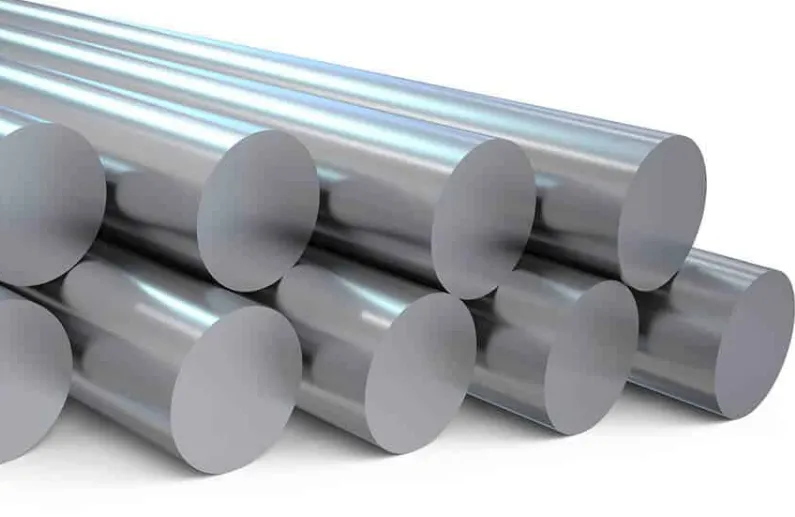
MWalloys positioning
MWalloys focuses on three production levers to make MP35N usable in critical components: precise chemistry control to the nominal Co-Ni-Cr-Mo blend, vacuum melting practices to reduce tramp elements, and tightly controlled cold work plus ageing schedules so that an engineer gets the strength and fatigue response they specify. This positioning targets two primary search intents: engineers searching for 'highest strength, reliable fatigue performance' and procurement teams seeking a traceable supplier for critical quantities.
If your project requires MP35 round bars, contact MWalloys for a free quote.
2. Deep chemistry and phase behavior: why the composition matters
Nominal composition and its role
The canonical composition for MP35N is near Co-35, Ni-35, Cr-20, Mo-10 by weight with trace additions and tight limits on impurities. That Co-Ni balance produces a matrix that is near the boundary between multiple crystal structures, which gives the alloy its capability to obtain very high strength through cold working and ageing rather than through classical quench-and-temper routes.
How the alloy strengthens: work hardening and phase change
MP35N gains strength through two complementary mechanisms:
-
Severe cold work produces high dislocation density and mechanical strengthening that alone can push tensile strength into the 1800 MPa range with retained toughness.
-
Ageing at controlled temperatures causes nanometer-scale precipitation and partial transformation of local stacking sequences, producing further strengthening. Research shows that structural changes may involve local transitions between face-centered cubic (FCC) and hexagonal close packed (HCP)-like motifs at the nanoscale. This complex combination provides both very high static strength and superior fatigue endurance.
Request a Competitive Factory Quote For Mp35n Round Bar
Impurity control and double-melt strategy
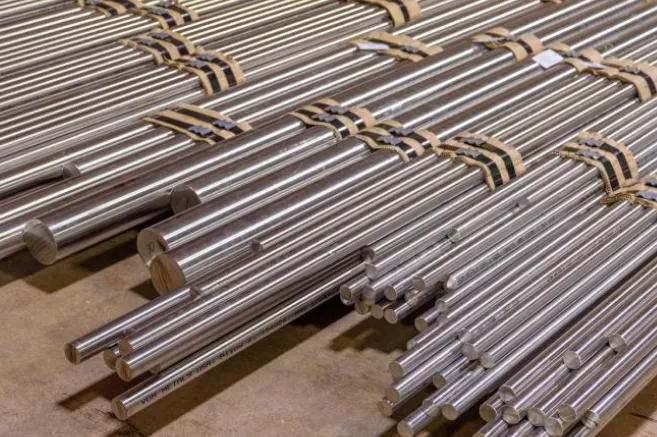
Sulfur and phosphorus are known embrittlers and corrosion accelerants. MWalloys uses vacuum induction melting (VIM) followed by vacuum arc remelting (VAR) or consumable electrode vacuum melting (CEVM) as a double-melt strategy. This reduces sulfide/phosphide inclusions, improves macrosegregation, and yields cleaner ingots for consistent cold work response and ageing behavior.
3. Global specifications and how to choose the right condition
Key standards and how they differ
MP35N round bar and wire are commonly produced to aerospace and medical standards. The most relevant references are:
| Standard | Typical meaning for MP35N | Where it matters |
|---|---|---|
| AMS 5844 | Solution treated and cold drawn - high strength in cold-worked condition | Aerospace springs, fasteners requiring cold draw finish. |
| AMS 5845 | Solution treated, cold drawn and fully aged - higher controlled hardness range | When a manufacturer needs stable, peak-aged properties. |
| ASTM F562 | Medical implant standard for cobalt-base alloys in certain forms | Medical device leads, implant components. |
| NACE MR0175 / ISO 15156 | Sour service approval for oil and gas - defines metallurgy and heat treatment for H2S environments | Oil and gas sour well service. |
| ISO 5832-6 | Surgical implant materials (related to biocompatibility) | Select medical implant uses. |
Why supply condition matters
Choosing AMS 5844 versus AMS 5845 changes the delivery state and downstream processing steps. AMS 5844 material is cold worked and may be further aged by the customer or fabricator. AMS 5845 arrives in a fully aged state. If procurement buys the wrong state, downstream heat treatment will either be redundant or insufficient, and final parts may require extra processing or fail to reach target properties. MWalloys flags delivery condition at the quote stage to prevent this procurement pitfall.
Dimensional accuracy and machining implications
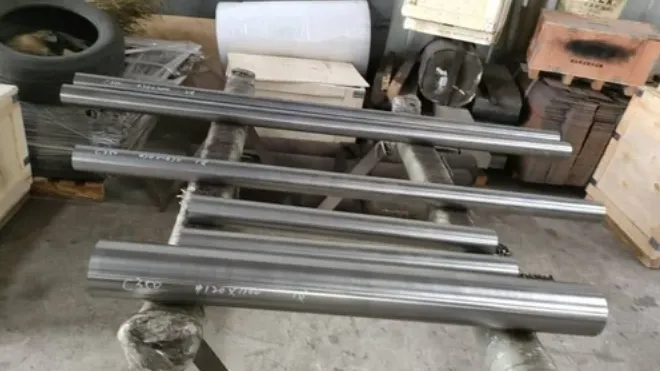
MWalloys offers MP35N round bars in standard tolerances conforming to common classes such as h8, h9 and h11 for diameters. For high-speed spindles and precision springs, straightness and concentricity can be as critical as diameter tolerance because any runout multiplies cyclic stress and shortens fatigue life. For high RPM components, choose the tighter tolerance range and request a straightness certification with the MTR.
4. Mechanical performance at the limits
Tensile and yield behavior across cold work and ageing
MP35N shows an unusually wide tensile envelope. Typical values seen in commercial data:
-
Annealed or solution annealed: moderate strength with high ductility
-
Cold-worked: yield and tensile can exceed 145 ksi and push past 260 ksi with extensive deformation
-
Cold-work plus ageing: further elevation of tensile strength to the 300 ksi region in some conditions
MWalloys publishes validated tensile curves for each batch so designers can run fatigue and fracture mechanics models against true material response rather than relying on generic tables. Important load-bearing claims about achievable tensile and yield values are supported by datasheets from leading producers.
Corrosion fatigue and resistance to stress corrosion cracking (SCC)
MP35N is selected where SCC and sulfide stress corrosion are a major hazard. The alloy’s combination of chromium and molybdenum plus the cobalt-nickel base reduces susceptibility to hydrogen embrittlement and SCC in sour gas and chloride-bearing seawater. Compared to many stainless steels, MP35N holds up far better under sustained tensile load in H2S-containing environments, which is why it is among the few high-strength alloys approved under NACE MR0175 for certain sour service uses. Data from metallurgical studies and industry datasheets support these properties.
Temperature performance: cryogenic to elevated ranges
MP35N preserves ductility at cryogenic temperatures and retains functional strength to moderate elevated temperatures. Manufacturer guidance commonly suggests service up to approximately 750°F (around 400°C) for some conditions, with a practical upper limit for fully aged conditions slightly lower depending on load case. For designs that cycle between cryogenic and high temperatures, use batch-specific physical property data when performing finite element analyses.
5. The machinist’s masterclass - practical shop floor controls
Why MP35N is called a 'tool killer'
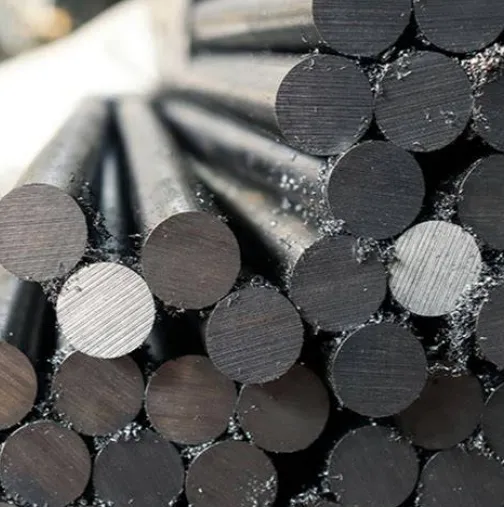
MP35N work hardens rapidly at the cut face. If a tool dwells, rubs or cuts at low feed with high speed, the surface layer hardens and quickly wears the cutting edge or causes built-up edge, generating poor tolerances and expensive insert turnover. Practical experience from shops and published guidance shows that aggressive chip removal, constant axial motion and avoiding dwell are essential.
Tooling and coatings
MWalloys recommends these tooling choices:
-
Roughing: carbide inserts rated for cobalt and nickel alloys; consider grades with stable carbide matrix and tough binder.
-
Finishing: high-cobalt high-speed steel or PCD/PCBN for specific finishing operations when surface integrity is critical. TiAlN or similar high-temperature-stable coatings help reduce adhesion and thermal softening on the tool.
-
Edge geometry: use negative-rake, strong-edge inserts with honed radii to reduce chipping and withstand interrupted cuts.
Cut parameters - practical start points
Start with conservative but effective cuts and then optimize by small increments. Example practical starting parameters used in industry literature and shop reports:
| Operation | Cutting speed | Feed | Depth of cut | Note |
|---|---|---|---|---|
| Turning rough | 20-30 SFM (6-9 m/min) | 0.008 - 0.015 in/rev (0.2-0.4 mm/rev) | 0.04 - 0.12 in (1-3 mm) | Emphasize undisturbed cut and continuous motion. |
| Turning finish | 30-40 SFM (9-12 m/min) | 0.002 - 0.006 in/rev (0.05-0.15 mm/rev) | 0.01 - 0.04 in (0.25-1 mm) | Light finishing passes minimize work hardening. |
| Drilling | 20-30 SFM | 0.002 - 0.006 in/rev | Shallow peck cycles | Use high-pressure coolant and pecking to avoid built-up edge. |
Cooling strategy
High-pressure through-tool coolant or center high-pressure systems cool the cutting zone and flush chips. Coolant choice matters: soluble oil or dedicated sulphurized oils are recommended by some suppliers to control temperatures and reduce friction. Avoid dry machining on deep cuts or long chip lengths.
Heat treatment control for target hardness
MP35N cannot be strengthened by quench alone. The production route is cold work to a specified reduction followed by controlled ageing in the 1000°F - 1200°F range (approx. 540°C - 650°C) to achieve final hardness targets in the Rockwell C 48-50 neighborhood for peak-aged conditions. MWalloys provides ageing curves and lab certificates showing hardness versus time so fabricators can select the optimum balance of hardness and toughness.
6. Industry use cases: specific, measurable examples
Medical implants and electronics
MP35N’s biocompatibility and nonmagnetic nature make it suitable for implantable leads and certain orthopedic hardware. Its corrosion resistance in body fluids and its fatigue life under flexing are distinguishing points relative to many stainless alloys. Medical manufacturers prefer materials with traceable MTRs and documented process histories, both core offerings from MWalloys.
Oil and gas downhole components
In sour service, MP35N is widely used for sensors, fasteners and small housings where SCC in H2S would destroy other high-strength alloys. The fact that MP35N appears in NACE/ISO lists for certain service classes is the primary reason it is specified for these components. Evidence from suppliers and datasheets highlights MP35N’s superior sulfide stress corrosion resistance compared to most stainless steels.
Aerospace and high-cycle springs
When springs or tension members must take extreme loads repeatedly, MP35N’s age-hardenable characteristics combine high static strength with excellent fatigue strength. Aerospace firms often use AMS 5844/5845 bar for such applications where weight reduction and long fatigue life are design constraints.
High-performance motorsports and specialty engineering
Where light weight and very high yield combine with corrosion demands, MP35N appears in fastener and spring lists for racing teams and custom engine systems. Its strength-to-weight ratio and resistance to oxidation at moderately elevated temperatures make it competitive in high-performance applications.
Contact Us for a Quote Within 24 Hours
7. Procurement strategy, market drivers and lifecycle cost
Raw material sensitivity
Cobalt and nickel prices dominate the cost base for MP35N. Geopolitical events and supply constraints, especially in cobalt supply regions, can create swings in alloy pricing. Procurement teams should model price sensitivity by tracking cobalt and nickel spot prices and planning buffer stock or contractual hedges for multi-month runs. MWalloys supports this with stock inventory levels that mitigate lead-time risk.
Lifecycle cost versus first cost
Although MP35N round bar carries a higher unit price than many stainless steels, total installed cost analysis often favors MP35N where inspection, downtime and replacement risks are high. The alloy reduces failure probability from SCC and extends intervals between maintenance on critical components, improving total cost of ownership. Include conservative failure rates and repair cost multipliers in procurement models to justify upfront spend.
Inventory and lead time
Typical lead times for specialty blanks or small-diameter bars can range from stocked items to 20-30 weeks for custom diameters or AMS-certified batches. MWalloys maintains a portfolio of stock diameters and a documented supply chain to reduce lead time risk and support urgent small-batch runs. For high-volume production, lock material pricing and scheduling early to avoid commodity-driven delays.
8. Quality control and traceability
Non-destructive testing and microstructural reports
MWalloys uses ultrasonic testing (UT) for internal discontinuities and eddy-current or similar surface methods for wire and small-diameter bar inspection. For high-risk parts, request full microstructure reports that show grain size, inclusion content and precipitate morphology in addition to standard chemical and mechanical certificates. These micro-level reports reveal signs of improper melting or segregation that can shorten fatigue life.
Materials Test Report (MTR) details to watch
Beyond the usual chemical composition table, confirm the following on the MTR:
-
Melt route indicated (VIM/VAR or CEVM)
-
Cold work history and percent reduction or cold draw process notes
-
Ageing treatment parameters when supplied in the aged condition
-
Hardness values and the test method used (Rockwell C typical)
-
Traceability to lot and heat numbers, plus NDT results
MWalloys issues MTRs aligned with AMS standards and adds process notes so fabricators can reproduce mechanical outcomes.
Compliance and regulatory commitments
For sectors that require specific compliance, MP35N suppliers can provide DFARS declarations for defense contracts, RoHS and REACH statements for chemical compliance, and specific NACE conformance letters where necessary. Supply traceability and documentation minimize risk in regulated procurement processes.
9. FAQ
1. Is MP35N magnetic?
2. How does MP35N compare to MP159?
3. Can MP35N be welded?
4. What hardness can be achieved after ageing?
5. How should designers model fatigue with MP35N?
6. What are common surface finishing requirements?
7. Are there approved sour service classifications?
8. How does cold drawing affect the final mechanical profile?
9. Is MP35N suitable for cryogenic applications?
10. What to watch for in supplier quotes?
10. Conclusion
MP35N round bar is a material solution where mechanical resilience and corrosion endurance must co-exist. It is not a commodity alloy that tolerates casual substitution. For projects where safety margins, fatigue endurance and environmental resistance matter, MP35N supplies the material-level redundancy needed to avoid catastrophic failures. MWalloys brings process discipline and traceability to make engineering results repeatable. For detailed, batch-specific processing data and a sample MTR, request MWalloys’ MP35N Processing and Machining Handbook or contact our technical engineers to discuss part geometry, required finish and service environment so we can recommend the optimum delivery condition and quote.
Immediate next steps
-
Request the MWalloys MP35N Processing and Machining Handbook to get full S-N curves, heat treatment charts and recommended CNC program snippets.
-
Send part geometry and intended service environment so MWalloys can propose an AMS-compliant supply state and a lifecycle cost analysis.
Appendix A - Quick reference tables
Typical nominal chemistry (weight %)
| Element | Nominal |
|---|---|
| Cobalt (Co) | 34 - 36 |
| Nickel (Ni) | 33 - 36 |
| Chromium (Cr) | 19 - 21 |
| Molybdenum (Mo) | 9 - 11 |
| Fe, C, Mn, Si | Trace levels controlled tightly |
| (Exact chemical limits per supplier specification and AMS documentation) |
Typical mechanical envelope
| Condition | Yield Strength (ksi) | Tensile Strength (ksi) | Hardness (HRC) |
|---|---|---|---|
| Solution annealed | 60-100 | 120-140 | Low |
| Cold worked | 140-220 | 180-260 | Medium |
| Cold worked + peak age | 180-260+ | 220-300 | 48-50 HRC typical peak |
Appendix B - Sources and further reading
Key technical references and manufacturer datasheets used to compile this article:
-
Carpenter Technology MP35N datasheets and technical PDF.
-
Aircraft Materials MP35N spec comparison and AMS references.
-
Industry machining notes from Broder Metals Group on MP35N.
-
NeoNickel / AlloyWire datasheets and specification crosswalks for AMS 5844 and AMS 5845.
-
Practical machining community discussions and shop experience on tool wear and process tips.
-
Low-temperature physical properties research paper on MP35N.

 EN
EN  AR
AR  JA
JA  KO
KO  DE
DE  IT
IT  ES
ES