
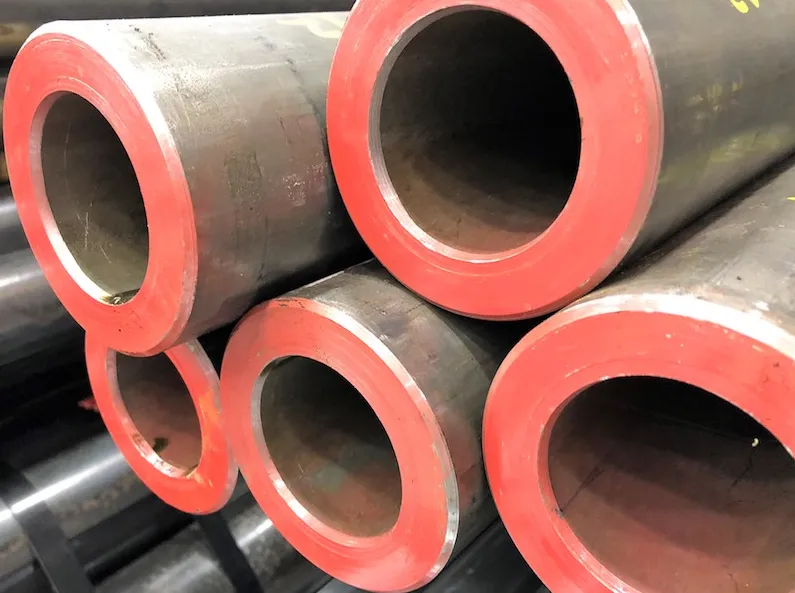
M1010 round mechanical tube is a low carbon, highly formable steel tube commonly supplied to mechanical tubing standards such as ASTM A513 and ASTM A519. It delivers good cold formability, reliable weldability, and predictable dimensional tolerance for applications that require economical, uniform-walled round tubing. For procurement, specify the required standard, manufacturing method, finish, dimensional tolerance, and heat treatment to ensure performance and cost meet your project targets.
1. What does the term m1010 mean and why it matters?
The label m1010 typically refers to strip steel chemistry and material grade that is used to produce mechanical tubing. In practice, product literature and mill catalogs use variations such as 1010, MT1010, or M1010 to indicate a low carbon grade with roughly 0.05 to 0.15 percent carbon and moderate manganese content. This chemistry yields a ductile, easy-to-form steel suitable for welded or seamless mechanical tubes. Choosing the correct grade is fundamental because it controls cold-workability, weld behavior, and the achievable final mechanical properties.
2. Which standards govern round mechanical tube and which one to select?
Two widely used ASTM standards for round mechanical tubing are:
-
ASTM A513 for electric-resistance-welded (ERW) and drawn-over-mandrel (DOM) mechanical tube types commonly used in applications requiring tighter tolerances and higher finish.
-
ASTM A519 for seamless mechanical tubing, covering sizes up to 12-3/4 inch OD with both hot-finished and cold-finished products.
Select A513 if you require economical welded tube with good finish (ERW) or drawn tube (DOM) for close tolerances. Choose A519 when a seamless product is needed for higher pressure or critical structural use. State the type (Type 1, 2, 5 etc.) and required condition (as-welded, normalized, drawn) in your purchase order.
3. Typical chemical composition and mechanical performance
M1010/1010 steel is a low-carbon grade. Typical ranges found in supplier datasheets are:
| Element | Typical range (wt%) |
|---|---|
| Carbon | 0.05 — 0.15 |
| Manganese | 0.30 — 0.60 |
| Phosphorus | ≤ 0.04 |
| Sulfur | ≤ 0.05 |
| Iron | Balance |
Because carbon is low, tensile strength remains moderate while elongation and cold formability are comparatively high. Typical mechanical property ranges depend on manufacturing and finishing method:
| Manufacturing condition | Typical tensile strength (MPa / ksi) | Typical yield (MPa / ksi) | Typical elongation (%) |
|---|---|---|---|
| As-welded ERW | 310 — 450 MPa (45 — 65 ksi) | 170 — 300 MPa (25 — 43 ksi) | 25 — 40 |
| Normalized | 345 — 450 MPa (50 — 65 ksi) | 275 — 345 MPa (40 — 50 ksi) | 20 — 35 |
| DOM (drawn) | up to 415 MPa (60 ksi) | up to 275 MPa (40 ksi) | 20 — 35 |
These values should be confirmed with the mill certificate because drawing, cold working, and heat treatment shift the strengths and ductility.
4. How m1010 round tube is manufactured and finished
There are three principal routes:
-
Hot rolled ERW: strip is formed and resistance welded, then possibly pickled and oiled. Economical for larger sizes and thicker walls. Good for painted or coated components.
-
Cold rolled ERW (CREW): strip is cold rolled before welding, producing improved dimensional control and finish. Suitable for applications requiring better surface quality.
-
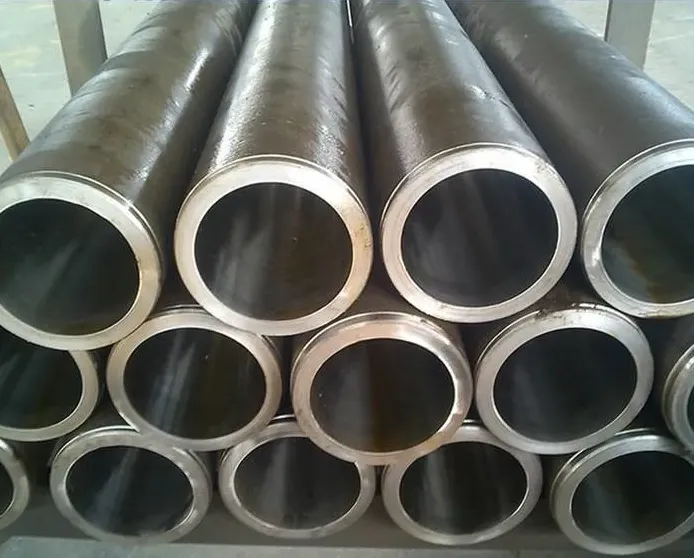
Seamless (A519) or DOM (ASTM A513 Type 5): seamless tube is either hot finished or cold drawn. DOM is produced by drawing ERW tube over a mandrel for concentricity and dimensional accuracy. Use DOM when tight tolerances and higher fatigue life are required.
Finishes commonly offered include mill finish, pickled and oiled, cold-rolled bright, or galvanizing. Welding flash and weld bead are removed by rolling or sawing for hot-rolled types. Cold-rolled No. 2 finish strip is used when a smooth surface is a priority.
5. Dimensional tolerances, surface quality, and concentricity considerations
Tolerance expectations depend on tube type:
| Tube type | Typical OD tolerance | Typical wall tolerance | Roundness/concentricity |
|---|---|---|---|
| HREW (as welded) | ±1.5% to ±2.0% | ±12.5% or per spec | Moderate |
| CREW (cold welded) | ±1.0% | ±10% | Improved |
| DOM / drawn | ±0.5% | ±5% | High concentricity |
When ordering, include tolerance class or reference a standard table in A513/A519. For applications with rotating parts or bearings, prioritize DOM or drawn tubing because the concentricity and uniform wall permit longer bearing life and lower vibration.
Surface quality influences painting, plating, and bearing applications. Specify required finish: No 2 cold-rolled, pickled and oiled, or bright finish drawn tube. If galvanizing or special coatings are required, confirm the effect on dimensional tolerance and surface roughness.
6. Common forms and size ranges available from mills and stockists
M1010 or 1010 round tube can be sourced in a wide size spectrum:
| Category | Typical OD range | Typical wall thickness |
|---|---|---|
| Small mechanical tube | 3 mm to 25 mm | 0.5 mm to 3.0 mm |
| Medium structural tube | 25 mm to 150 mm | 1.5 mm to 6.0 mm |
| Large-diameter tube | 150 mm to 325 mm | 3.0 mm to 12.0 mm |
Suppliers list options in imperial and metric. Cut lengths, centerless ground lengths, and custom sawing are offered by stockholders. If you require very precise small-diameter tube for instrumentation, indicate drawn-over-mandrel (DOM) or cold-drawn specification.
7. Typical applications and engineering selection criteria
M1010 round mechanical tube is used in applications where a balance of formability, weldability, and cost-effectiveness is needed:
-
Structural components with light to moderate load.
-
Automotive components that require bending, flaring, or stamping.
-
Furniture frames and fixtures.
-
Hydraulic cylinder components for low-to-medium pressure uses (use DOM or seamless for higher pressure).
-
Shaft sleeves, bushings, and finished parts where post-processing (grinding, coating) follows.
Selection checklist:
-
If the part will be cold-formed or drawn, 1010 grade offers good ductility.
-
For welded assemblies where cost is critical, ERW is economical.
-
For fatigue-critical or rotating parts, use DOM or seamless to improve concentricity and surface quality.
-
Specify any post-processing such as annealing, normalizing, or straightening.
Valmont and other major producers offer large-diameter ERW tubing in 1010 chemistry for applications that require structural performance with economical pricing.
8. Corrosion protection, coatings, and secondary processing options
Common corrosion protection and secondary processes:
-
Hot dip galvanizing: robust outdoors, increases outside diameter slightly.
-
Pre-galvanized strip before forming: used when post-galvanize is impractical.
-
Painting or powder coating: typical for architectural uses.
-
Phosphating and passivation: improves paint adhesion.
-
Centerless grinding and honing: used for precise bearing surfaces.
-
Plating: electroplating can be applied but requires an appropriate surface finish.
When specifying coatings, indicate whether coated thickness must be included in tolerance calculations. For example, a 100 micron coating will reduce internal diameter for tight-fit parts.
9. Welding, bending, forming and heat treatment notes for fabricators
Weldability is generally good due to low carbon content. Practical advice:
-
Use common shielded metal arc welding, MIG or TIG for ERW and DOM tubes. Preheat is generally unnecessary for 1010, but follow joint-specific procedure for thicker sections.
-
Cold bending is straightforward for low carbon grades but springback must be accounted for. Use mandrel bending when internal support is required to prevent ovality.
-
Flaring and end-forming are compatible with 1010 chemistry.
-
If strength increases are required after forming, consider controlled heat treatment; however, low-carbon steels have limited hardenability, so thermomechanical strengthening is constrained. Normalizing or annealing can be used to refine grain structure or restore ductility after heavy cold work.
10. Quality control, testing and certification to request when buying
Ask suppliers to provide:
-
Mill Test Certificate (MTC) showing chemical analysis and mechanical test results.
-
Dimensional report with measured OD, wall thickness, straightness, and concentricity.
-
Non-destructive tests if required: ultrasonic, eddy current, or hydrostatic test for pressure service.
-
Surface condition report and any coating certifications.
-
Traceability batch numbers and heat numbers. For critical projects, require third-party inspection and witness of testing.
ASTM standards specify testing requirements; indicate the standard clause you want enforced in the contract.
11. Procurement checklist and specification template for MWAlloys customers
Provide this template to procurement teams to avoid ambiguity when buying m1010 round tube.
Specification template (short):
-
Product name: M1010 round mechanical tube (MWAlloys).
-
Applicable standard: ASTM A513 Type [X] or ASTM A519 Grade [MT1010], include edition year.
-
Material grade: M1010 / 1010 chemistry.
-
Outer diameter: [mm or inch] tolerance ±[value].
-
Wall thickness: [mm/inch] tolerance ±[value].
-
Length: [cut length or coil].
-
Manufacturing method: HREW / CREW / DOM / seamless.
-
Required finish: pickled and oiled / cold-rolled No 2 / bright drawn.
-
Mechanical properties: tensile strength, yield, elongation per clause.
-
Certificates: MTC to EN 10204 3.1 or equivalent, test reports, NDE if required.
-
Packaging and marking requirements.
-
Quantity, delivery schedule, penalty for nonconformance.
This clear template reduces ambiguity and speeds quotes and delivery.
12. Cost drivers, lead times and value engineering tactics
Cost factors:
-
Material chemistry and mill processing: seamless and drawn tube cost more than welded.
-
Tight tolerances and high surface finish increase price.
-
Coating and post-processing add to cost and extend lead time.
-
Quantity and standard stock sizes reduce unit price.
-
Market steel price volatility affects lead time pricing.
Value tactics:
-
Consider ERW with post-draw finishing when concentricity needs moderate improvement without the seamless premium.
-
Order standard stock sizes and cut to length vendor-side to save on machining.
-
Where fatigue life is not primary, choose cost-effective hot-rolled ERW.
13. Comparison tables: grades, manufacturing methods and property ranges
Table A. Grade comparison (1010 vs 1020 vs 1045)
| Grade | Carbon (%) | Typical use cases |
|---|---|---|
| 1010 | 0.05–0.15 | High formability, general mechanical tubing, furniture, frames |
| 1020 | 0.18–0.23 | Slightly higher strength, better for drawn tubes or shafts |
| 1045 | 0.43–0.50 | Medium carbon, heat-treatable for higher strength components |
Table B. Manufacturing tradeoffs
| Method | Strength | Concentricity | Typical cost | Best use |
|---|---|---|---|---|
| Hot-rolled ERW | Moderate | Moderate | Low | Structural, coated parts |
| Cold-rolled ERW | Moderate to higher | Good | Moderate | Better finish, painting |
| DOM / cold drawn | Highest for ERW category | High | Higher | Bearings, shafts, fatigue parts |
| Seamless (A519) | Variable based on finish | High | High | Pressure service, critical shafts |
Table C. Typical stock sizes (example)
| OD (mm) | Wall (mm) | Common finish |
|---|---|---|
| 6 | 0.5 | Cold-rolled bright |
| 25 | 1.2 | Pickled and oiled |
| 76.2 | 3.0 | Hot-rolled ERW |
| 152.4 | 6.0 | Hot dip galvanized available |
M1010 & 1010 Carbon Steel Tubing Technical FAQ
1. What is the difference between M1010 and 1010?
2. Can M1010 tube be used for hydraulic cylinders?
3. Is M1010 easy to weld?
4. Which tube type gives the best dimensional accuracy?
5. How do I specify surface finish for painting?
6. What testing should I request for critical tubing parts?
For critical applications, you should request:
- MTC (Mill Test Certificate): For chemical and mechanical properties.
- NDE (Non-Destructive Examination): Such as ultrasonic or eddy current testing.
- Hydrostatic Testing: Specifically for pressure-containing components.
7. Is M1010 suitable for bending and flaring?
8. How does coating influence fit tolerances?
9. What lead time can I expect for custom sizes?
10. What is a quick procurement checklist for MWAlloys buyers?
| Item | Requirement |
|---|---|
| Standard/Grade | e.g., ASTM A513 Type 5 (DOM), M1010 |
| Dimensions | OD x Wall Thickness x Length |
| Tolerances | Specific +/- limits for OD/ID |
| Certification | Mill Test Report (MTC) required |
Using a full specification template ensures you get the exact material needed for your project.
Closing recommendations for MWAlloys engineering and procurement teams
-
For general structural and economical needs, order hot-rolled ERW M1010 with pickled and oiled finish.
-
For rotating or bearing surfaces, prefer DOM drawn tube or seamless A519 grade with tighter tolerances.
-
Always request a mill test certificate and declare acceptance criteria in the purchase document.
-
When cost is critical, group orders to reach mill minimums and standard stock sizes.
-
If corrosion resistance is important, state the desired coating and whether coating tolerance must be included.