

Low heat input is the preferred strategy when welding most wrought and cast nickel alloys because it minimizes harmful microstructural changes, reduces the risk of solidification and strain-age cracking, preserves corrosion resistance, and shortens the zone affected by thermal cycles — in short, lower thermal energy into the joint produces more predictable, tougher, and more corrosion-resistant welds. Therefore, whenever alloy chemistry, part geometry, or service conditions permit, select welding methods and parameters that keep heat input low, control cooling rates, and include appropriate filler-metal and post-weld treatments tailored to the specific nickel alloy family.
Nickel alloys and why welding is different
Nickel-based alloys are prized for elevated-temperature strength, oxidation resistance, and resistance to various corrosive environments. Those properties arise from alloying elements that form strengthening phases (γ′, γ″, carbides, etc.) and from controlled solid-solution chemistry. Heating to welding temperatures — and the cooling that follows — alters phase balance, precipitate size and distribution, and residual stress fields. Compared with common steels, nickel alloys frequently show a narrower safe window for thermal input before deleterious phenomena occur. Therefore welding strategy must prioritize limiting the thermal exposure that causes permanent microstructural change or cracking.
Metallurgical hazards driven by excessive heat input
When too much energy is input into the weld, several hazards grow in likelihood:
-
Solidification cracking (hot cracking): Nickel-chromium and many high-alloy compositions are susceptible during the terminal solidification stage; higher heat input tends to widen the mushy zone and prolong the vulnerable temperature range.
-
Strain-age cracking / age-hardening issues: Certain Ni-Cr-Fe alloys develop embrittling precipitates during slow cooling or during specific PWHT schedules; excessive heat can create large heat-affected zones (HAZ) with heterogenous ageing.
-
Coarsening of strengthening phases: In superalloys strengthened by γ′/γ″, high temperatures or long thermal cycles permit precipitate growth, reducing strength.
-
Loss of corrosion resistance: Sensitization (carbide precipitation at grain boundaries) or formation of brittle intermetallics can degrade corrosion resistance.
-
Excessive distortion and residual stress: Larger HAZs concentrate strains and increase the risk of delayed cracking.
Minimizing the time and the peak temperature experienced by the base metal reduces these risks.
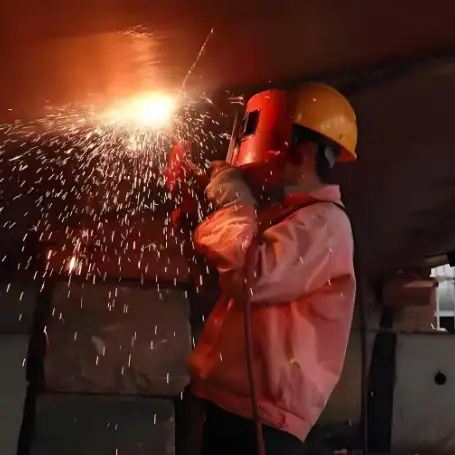
Heat input — what it means and how to govern it
Definition (practical): Heat input is the amount of energy delivered to the workpiece per unit length of weld. In practice welders and engineers control it by adjusting welding current, voltage, travel speed, and technique (pulsing, arc length, torch manipulation). Lower heat input can be achieved by using lower current, higher travel speed, concentrated energy sources (e.g., GTAW, laser, electron beam), and by reducing unnecessary weld passes.
Control levers:
-
Reduce welding current where joint strength and penetration remain acceptable.
-
Increase travel speed while maintaining adequate fusion.
-
Shorten arc length and maintain good arc control.
-
Use pulsed-GTAW or pulsed GMAW when full shielding and droplet control are required.
-
Choose welding processes that concentrate energy (laser, electron beam) when feasible.
-
Limit the number of passes and thickness of each pass; when multi-pass is unavoidable, interpass temperature control is critical.
Process selection and parameter windows that favor low heat input
Selecting a process is often the single most influential decision for heat control.
-
GTAW (TIG): Offers excellent control and typically results in lower heat input per unit length than conventional GMAW when welder skill and travel speed are optimized. Best for thin sections and critical service joints.
-
GMAW (MIG): Offers higher deposition rates; with pulsed modes one can approximate lower heat input, but careful parameter tuning is necessary. Short-circuit GMAW yields lower net heat than spray transfer, but bead profile must be acceptable.
-
Plasma arc welding: With a constricted arc provides relatively focused energy and can be tuned to moderate heat input.
-
Laser and electron beam: Extremely low total heat-affected zones because of highly concentrated energy; excellent where joint fitup and access allow.
-
Friction stir welding (FSW): For appropriate alloys and geometries, solid-state joining eliminates fusion issues entirely and produces minimal detrimental phase changes. Note: FSW suitability depends on alloy ductility in the solid state.
-
Submerged arc welding (SAW): Tends to introduce higher heat input and wide HAZs—usually to avoid on nickel alloys unless process variants reduce heat.
-
Stick welding (SMAW): Often used for heavy repairs; heat input can be high unless skillfully controlled and short stringer beads used.
Filler metals, joint design, and pre/post treatments
Filler selection: Choose filler metal with chemistry compatible with both base metal and service environment. Prefer fillers designed to maintain ductility and resist segregation. Overmatching filler (higher strength) sometimes helps, but alloy compatibility and corrosion behavior must be checked.
Joint design: Narrow gap joints, single-pass designs where feasible, tight fitup minimize required weld volume and therefore reduce total heat introduced. Avoid unnecessary bevel angles that force many passes.
Interpass and preheat control: Many nickel alloys do not require high preheat; in fact unnecessary preheat increases total heat input and enlarges the HAZ. For alloys with tendency to cold cracking (rare for nickel), limited preheat may be used. Interpass temperature should be kept low and strictly monitored when low heat input is the objective.
Post-weld heat treatment (PWHT): PWHT may be required for stress relief, homogenization, or to develop desired precipitate distributions. When low heat input is used, the HAZ will be smaller and sometimes PWHT severity can be reduced. However, PWHT parameters must be chosen carefully — incorrect schedules can cause embrittlement or sensitivity.
Process-specific recommendations for common nickel families
Below are general recommendations by alloy groups. Always verify with alloy supplier data sheets and applicable standards.
A. Nickel-Chromium (Inconel 600, 601, 625, 718 families):
-
For Inconel 625: favor GTAW or pulsed GMAW with low heat; filler matching recommended for corrosion service. Keep interpass temperature low; avoid prolonged slow cooling.
-
For precipitation-strengthened alloys (e.g., 718): excessive heat or improper PWHT can coarsen γ′/γ″. Use minimal heat input and follow strict PWHT cycles defined by material vendors.
B. Nickel-Copper (Monel 400):
-
Relatively forgiving, but avoid high heat that can cause grain growth. GTAW and pulsed GMAW yield favorable joints.
C. Hastelloy and other high-molybdenum Ni alloys:
-
Sensitive to segregation and intergranular attack if HAZ chemistry alters. Low heat reduces segregation during solidification.
D. Wrought nickel (UN N10276 and similar):
-
General rule: use well-controlled GTAW or laser techniques, and match filler chemistry carefully for corrosion applications.
Inspection, testing and acceptance criteria
Low-heat welds still require rigorous QA to ensure they meet mechanical and environmental performance targets.
Non-destructive testing (NDT): Visual, dye-penetrant, radiography or phased-array UT, and eddy current depending on alloy and joint. Radiography can be useful for fusion-zone defects, but beware of sensitivity limits for planar cracking.
Destructive tests for procedure qualification: Bend, tensile, guided bend, and macro etch to verify full fusion and acceptable HAZ. For critical applications, perform Charpy impact testing at service temperatures and corrosion tests (e.g., pitting, crevice corrosion) on welded coupons.
Metallographic examination: Microstructure analysis to evaluate precipitate size, grain boundary carbides, and segregation patterns. Hardness traverses across HAZ identify localized hardening.
Case examples and typical failures prevented by limiting heat input
-
Turbine component (Inconel 718): Excessive heat during weld repair led to coarsened γ′ particles in HAZ, reducing high-temperature creep strength. Low heat repair methods preserved original microstructure and extended life.
-
Chemical plant piping (Hastelloy C-276): High heat input produced localized sensitization and subsequent localized corrosion; switching to lower heat processes eliminated recurring leaks.
-
Heat exchanger tubes: Laser welding of thin nickel tubes reduced distortion and preserved corrosion resistance compared with multipass arc welding.
Practical checklist: procedure qualification and field application
-
Review material data sheet and vendor welding recommendations.
-
Identify critical service requirements (temperature, environment, fatigue).
-
Select process giving the most concentrated energy consistent with access.
-
Prepare joint to minimize repair volume and ensure good fitup.
-
Specify filler metal and backing where needed.
-
Set welding parameters targeting the lowest heat input that still achieves fusion and mechanical requirements.
-
Monitor interpass and preheat temperature strictly; record heat input for WPS.
-
Include inspection plan and reserve coupons for destructive tests and microstructure tuning.
Comparative processes and heat-management suitability for nickel alloys
| Welding process | Relative heat input (qualitative) | Suitability notes |
|---|---|---|
| GTAW (manual/pulsed) | Low | Strong control. Best for thin sections and critical joints. |
| Pulsed GMAW / short-circuit | Low–Moderate | Good deposition control if tuned; short-circuit lowers net heat. |
| Plasma arc | Low–Moderate | Focused arc; useful for narrow joints and consistent penetration. |
| Laser / EB (fusion) | Very low (very concentrated) | Minimal HAZ; requires tight fitup and capital equipment. |
| FSW (solid-state) | Very low thermal degradation (no fusion) | Excellent where geometry and tooling permit; avoids fusion cracking. |
| SMAW (stick) | Moderate–High | Field friendly but tends to larger HAZ unless careful practice. |
| SAW | High | Highest deposition but large HAZ; generally avoid for corrosion-critical nickel parts. |
| Heat exposure (relative) | Main metallurgical concern | Practical mitigation |
|---|---|---|
| Very low | Lack of penetration if underpowered | Increase energy slightly; use focused arc or backing. |
| Low | Minimal precipitate coarsening; narrow HAZ | Preferred regime for many alloys. |
| Moderate | Onset of grain growth, limited precipitation changes | Limit number of passes; control interpass temp. |
| High | Significant coarsening, segregation, hot cracking risk | Avoid where possible; use concentrated processes or PWHT when required. |
Q1: Which nickel alloys absolutely require low heat input?
A: Precipitation-strengthened nickel superalloys (for example alloys in the 700–800 series) and many high-Cr or high-Mo nickel alloys strongly benefit from minimized heat input because their strengthening phases or corrosion protections are thermally sensitive. Always consult the supplier’s welding data sheet.
Q2: Can I always avoid PWHT if I use low heat input?
A: Not always. PWHT decisions depend on the alloy, the service condition, and code/contract requirements. Lower heat input reduces the extent of the HAZ but may not eliminate the need for stress relief or specific aging treatments required to restore desired properties.
Q3: Is GTAW always the best choice for low heat input?
A: GTAW is often a top choice because of its control, but alternatives like laser, electron beam, pulsed GMAW, or friction stir welding may be better depending on thickness, joint shape, production rate, and access.
Q4: How do I measure or record heat input on a WPS?
A: Record welding voltage, current, travel speed, and wire/feed parameters. Many organizations calculate heat input per unit length; however for field work, consistent parameter documentation and interpass temperature control are often more practical and reliable.
Q5: Will lower heat input increase the risk of lack of fusion or porosity?
A: If parameters are reduced without compensating, lack of fusion can occur. The art is to reduce heat while maintaining adequate penetration — using focused arc strategies, smaller diameter filler, or multiple thin passes usually resolves fusion issues.
Q6: How important is shielding gas purity and flow?
A: Extremely important. Contaminants or poor gas coverage increase porosity and can change fusion and metallurgical outcomes, particularly for alloys sensitive to oxygen or nitrogen pickup.
Q7: What NDT should accompany low-heat welds for critical components?
A: Visual inspection, dye-penetrant for surface cracks, radiography or phased-array ultrasonics for internal defects, and periodic metallography for procedure qualification.
Q8: Are there industry codes that specify heat-input limits for nickel alloys?
A: Codes and specifications (ASME, AWS, ASTM) often define procedure qualification tests, weld metal requirements, and acceptance limits rather than a single universal heat input cap. Project specifications may impose heat or interpass temperature limits depending on material and service.