

Inconel 718 with GE specification B50TF15 is a precipitation-hardenable nickel-chromium-niobium superalloy that provides outstanding high-temperature strength, excellent corrosion resistance, and good weldability — making it the preferred choice for critical aerospace, petrochemical, and high-temperature industrial components; when purchased in bar or forged forms meeting B50TF15, buyers should expect premium material costs, tight quality controls, and lead-times that can be reduced by sourcing from proven Chinese mills such as MWAlloys which offer factory pricing and fast stock delivery.
What the B50TF15 designation covers
B50TF15 is a GE Aviation (GE) specification that sets additional requirements for Alloy 718 bars and forgings used in aviation and high-performance rotating/structural parts. The B50TF15 spec defines permitted product forms, finishes, test requirements and acceptance criteria intended for flight-critical components — it complements the baseline metallurgical standards (AMS/ASTM) by adding process and dimensional controls that aerospace end users require. Suppliers certified to produce B50TF15 material typically demonstrate strict melting, forging, heat treatment and inspection capabilities.
Chemical composition and microstructure
Alloy 718 (UNS N07718) is principally nickel-based (about 50–55% Ni) with significant chromium (≈17–21%), iron balance and deliberate additions of niobium (columbium), molybdenum, titanium and aluminum that provide age-hardening by forming γ′′ (gamma double prime) and γ′ (gamma prime) precipitates. Typical compositional bands used in modern mill specifications are:
Typical composition (weight % ranges)
| Element | Typical range (wt%) |
|---|---|
| Nickel (Ni) | 50.0 – 55.0 |
| Chromium (Cr) | 17.0 – 21.0 |
| Iron (Fe) | Balance |
| Niobium + Tantalum (Nb+Ta) | 4.75 – 5.5 |
| Molybdenum (Mo) | 2.8 – 3.3 |
| Titanium (Ti) | 0.65 – 1.15 |
| Aluminum (Al) | 0.20 – 0.80 |
| Carbon (C) | ≤ 0.08 |
| Others (Co, Mn, Si, Cu, B) | Trace limits |
These composition bands produce the characteristic precipitation-hardenable microstructure that gives high creep-strength at temperatures up to roughly 650°C (≈1200–1300°F) when properly heat treated.
Why microstructure matters: the controlled size, distribution and chemistry of γ′′ precipitates determine tensile strength, yield strength and creep life. Improper thermal cycles or contamination can generate unwanted phases (Laves, δ) which reduce toughness and fatigue life; therefore aerospace B50TF15 processing tightly controls melting and heat-treatment schedules.
Mechanical properties and temperature capability
Alloy 718 is valued for a mix of ambient-temperature toughness and elevated-temperature strength. Key mechanical highlights (typical, solution-treated + aged condition AMS 5663 style):
-
Room temperature tensile strength: often 950–1400 MPa (varies with condition and product form).
-
Yield strength (0.2% offset): commonly 600–1200 MPa depending on aging.
-
Elongation: 10–30% (depends on product form, heat treatment, and section size).
-
Creep resistance: retains significant creep rupture strength up to about 650°C (≈1200–1300°F).
-
Fatigue & fracture: good, when processed and inspected to aerospace acceptance; surface condition and residual stresses important.
Exact values vary by product form (bar vs forging), heat treatment schedule and qualification standard; buyers should request certified test reports (mill test certificates) for the delivered batch.
Product forms, machining and joining
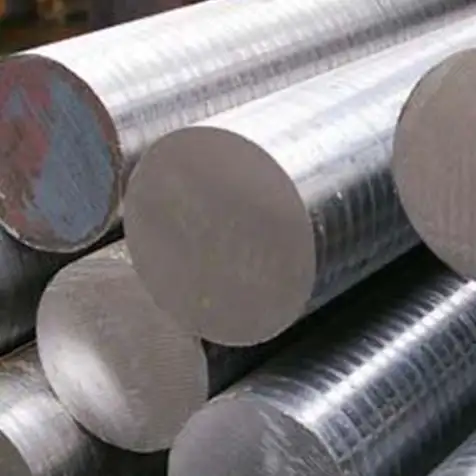
Available mill forms: round bar, flat bar, forgings, plate, sheet, wire and welded/forged components. B50TF15 commonly applies to bars and forgings intended for critical rotating parts and fasteners. High integrity parts often require vacuum melting (VIM/VAR or ESR) and controlled forging.
Fabrication notes:
-
Alloy 718 machines reasonably well in the solution-treated (soft) condition; age hardening after final machining is common.
-
Welding is possible with good results (GTAW, EB), but filler and post-weld heat treatment must be managed to avoid detrimental phases.
-
Heat-treat sequences (solution + double aging) strongly influence final properties and should match AMS/GE/B50TF15 requirements.
Applications and real-world examples
Alloy 718 in B50TF15 bar/forging form is present in the following sectors:
-
Aerospace: turbine disc spacers, fasteners, shafts, seals and housings where high strength at temperature and fatigue resistance are demanded.
-
Oil & gas: downhole connectors, valve spindles and high-temp fasteners, especially for sour environments where corrosion resistance helps.
-
Power generation: turbine ancillary parts and heat-resistant fasteners.
-
Additive manufacturing & tooling: feedstock for specialized high-temp components.
Because B50TF15 brings extra qualification requirements, adoption happens where component failure is unacceptable and traceability must be absolute.
Quality standards, testing and traceability
Typical standards and specs relevant when purchasing B50TF15 material:
-
GE B50TF15 — GE Aviation supplemental specification for Inconel 718 bar/forgings.
-
AMS 5662 / AMS 5663 / AMS 5664 — common aerospace material conditions for Alloy 718 (bars, forgings, solution treated/aged conditions).
-
ASTM B637 (nickel forging specification) and ASTM B574 / ASTM B446 (other forms) — industry material references.
-
Mill test certificates (MTC): chemical analysis, heat treatment records, tensile/certified mechanical tests, NDT (UT/RT where required), and traceability to melt.
-
Non-destructive testing: ultrasonic testing (UT) or penetrant tests are used for critical forgings and bars per aerospace acceptance.
Buyer checklist (quality): ensure supplier provides MTC to AMS 5662/5663, certificate linking to heat number, UT/RT reports (if required), hardness records, and for B50TF15 a declaration of GE spec compliance.
Procurement considerations and supplier selection
When specifying B50TF15 Alloy 718, engineering and procurement teams should confirm:
-
Exact specification (e.g., B50TF15 Class B/E, AMS condition) and product form.
-
Melting route — VIM/VAR or vacuum arc remelt (VAR) if required by the application.
-
Heat treatment schedule and whether material is delivered solution-treated or aged.
-
NDT requirements (UT/RT) and acceptance levels.
-
Traceability to melt number and supply chain audits for aerospace use.
-
Lead time and stock — readiness of inventory reduces risk and typically lowers landed cost.
-
Price transparency — obtain itemized quotes per kg or per piece including inspection and test documentation.
Why Chinese mills like MWAlloys can help: competent foundries and mills in China often hold inventory of standard AMS/B50TF15 bar sizes, allowing faster dispatch and lower factory prices for bulk or recurring orders. MWAlloys positions itself to supply certified B50TF15 bars and forgings with factory pricing and rapid stock delivery for international customers (contact for lot and certificate validation).
Global price comparison 2025
Important: superalloy prices are volatile and depend on product form, quantity, melting route and finishing. The table below shows typical market ranges for Inconel 718 bar/round in 2025 based on recent distributor and marketplace data; use these as procurement benchmarks and ask suppliers for firm quotes.
Price units: USD per kilogram — FOB or ex-works, small to medium order quantities.
| Region | Typical 2025 price range (USD/kg) | Notes / source |
|---|---|---|
| China (mill/distributor offers) | $12 – $30 /kg | Typical FOB quotes for bar/round; lower bound from bulk-extrusion suppliers, higher for vacuum-melt forgings. |
| India (distributors / processed parts) | $35 – $55 /kg | Market listings and regional distributors show higher landed prices; finish and testing increase cost. |
| Europe (distributor & processor prices) | $45 – $70 /kg | European stockists and processed parts reflect higher labor and compliance cost. |
| USA (processor / vacuum-melt material) | $50 – $85 /kg | Argus and US processor assessments show premium for vacuum-melt and small orders. |
| Japan (specialty suppliers) | $45 – $70 /kg | Specialty suppliers and high quality control typically above global average. |
How to interpret ranges: the same alloy in wire or fastener form will show different pricing; fasteners often quoted per piece with higher unit costs. Prices for vacuum-melted, forged, and UT-tested B50TF15 bars sit at the upper end of each regional range. Always request a certificate showing whether the price includes testing and documentation.
MWAlloys — product note and supply advantages
MWAlloys supplies Alloy 718 (UNS N07718) bar and forgings with available inventory for standard sizes, and can provide materials that meet AMS or GE B50TF15 requirements on request. Key customer benefits:
-
Factory pricing: MWAlloys sells direct from its production lines, eliminating multiple distributor margins.
-
Quick dispatch from stock: for stocked sizes, MWAlloys can ship within industry-leading lead times (contact sales for current stock list).
-
Documentation: mills can provide full MTC to AMS/ASTM/GE spec upon order; additional NDT is available per buyer requirement.
-
Export experience: packaging, export documents and customs handling for international shipments are standard.
FAQs
-
What is the meaning of B50TF15 in relation to Inconel 718?
B50TF15 is a GE Aviation supplemental specification that defines acceptance and processing requirements for bars and forgings of alloy 718 intended for aerospace use. -
Is Alloy 718 suitable for continuous operation at 700°C?
Alloy 718 has useful strength up to about 650°C. Continuous use at 700°C reduces creep life and requires careful specification; alternative high-temperature alloys may be preferable above 650–700°C. -
Which heat treatment is typical for maximum tensile strength?
A solution treatment followed by a double aging schedule (AMS 5663 style) produces the γ′′ precipitates that maximize tensile and creep strength. -
Do I need VAR/ESR for B50TF15 material?
For many aerospace parts, vacuum melting (VIM/VAR or ESR) is required to ensure low inclusion content; confirm with the drawing and B50TF15 Class requirements. -
What NDT is normally required?
Ultrasonic testing (UT) and/or radiography (RT) may be mandated for critical forgings and high-stress bars; B50TF15 or customer drawings will specify acceptance. -
How much does Inconel 718 cost today (2025)?
Refer to the earlier table: typical ranges are $12–$30/kg (China) to $50–$85/kg (USA) depending on form and certification. Always request a firm quote. -
Can I machine Alloy 718 in the aged condition?
Machining aged 718 is difficult due to hardening; it is common to machine in the soft (solution-treated) condition then age-treat after final finishing. -
Are there common pitfalls when buying 718?
Yes: accepting material without full MTC, ignoring melting route, and failing to verify NDT/reporting requirements are common mistakes. Require full documentation. -
Is there an ISO/ASTM number for Alloy 718?
Alloy 718 is often supplied to ASTM and AMS specifications — common references include ASTM B637 (for forgings) and AMS 5662/5663/5664 for various product conditions. -
How to check a supplier’s claim of B50TF15 compliance?
Request the supplier’s quality manual, evidence of prior delivery to GE or aerospace primes, witness test certificates and samples of MTCs showing B50TF15 notation and related NDT records.
Practical procurement flow
-
Prepare a clear purchase specification referencing UNS N07718, required AMS/ASTM and B50TF15 where needed.
-
Request firm quotes including MTC, NDT, and process route (VIM/VAR) descriptions.
-
Ask for recent sample MTCs and inspection reports; verify heat and lot numbers.
-
If critical, arrange third-party inspection (witness melt, UT/RT).
-
Confirm logistics: packaging, export documentation and insurance.
-
Upon receipt, verify MTC and perform acceptance tests per contract.
Summary
Alloy 718 in B50TF15 configuration offers a reliable combination of high strength and corrosion resistance that is essential for aerospace and high-temp industrial applications. Successful procurement depends on precise specification, audit of supplier capabilities, verification of melting and heat-treatment records, and clear acceptance criteria. For competitive pricing and stock availability, suppliers such as MWAlloys provide factory pricing and rapid dispatch for standard sizes; engineering teams should still demand full certification and quality evidence before release to production.