
Inconel 617 (UNS N06617, WNR 2.4663) is a nickel-chromium-cobalt-molybdenum alloy engineered to deliver reliable high-temperature strength, outstanding oxidation resistance, and good fabricability for parts that must run for long periods above 700°C. For engineers choosing an alloy for hot gas paths, heat exchangers, furnace components, or high-temperature chemical service, 617 often gives the best balance of thermal stability, weldability, and resistance to carburization and nitridation—making it a frequent choice where temperature capability, lifecycle performance, and manufacturability matter most.
Quick facts card
-
Common name: Inconel 617.
-
UNS: N06617
-
WNr / Werkstoff: 2.4663 (used in German standards).
-
Family: Nickel-chromium-cobalt-molybdenum, solid-solution strengthened.
-
Typical product forms: plate, sheet, coil, pipe, tube, bar, forged block, wire, powder (AM).
-
Typical uses: gas turbine hot sections, industrial gas heaters, furnace muffles, heat exchangers, petrochemical process equipment, components for high-temperature nuclear reactors.
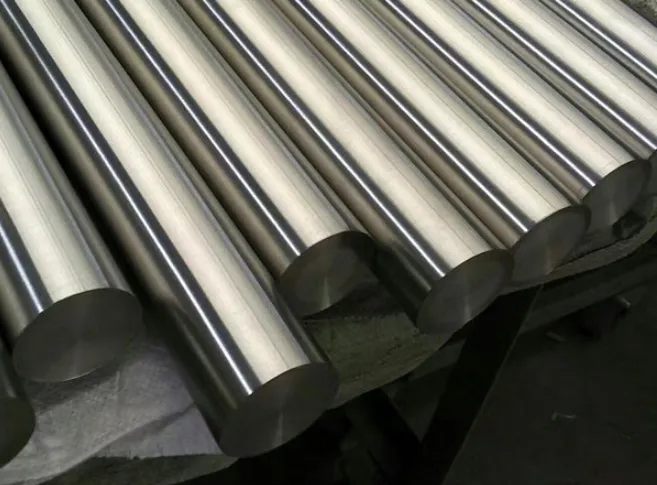
If your project requires inconel 617 bar, contact MWalloys for a free quote.
1. Alloy chemistry and metallurgy — what’s in it and why it matters
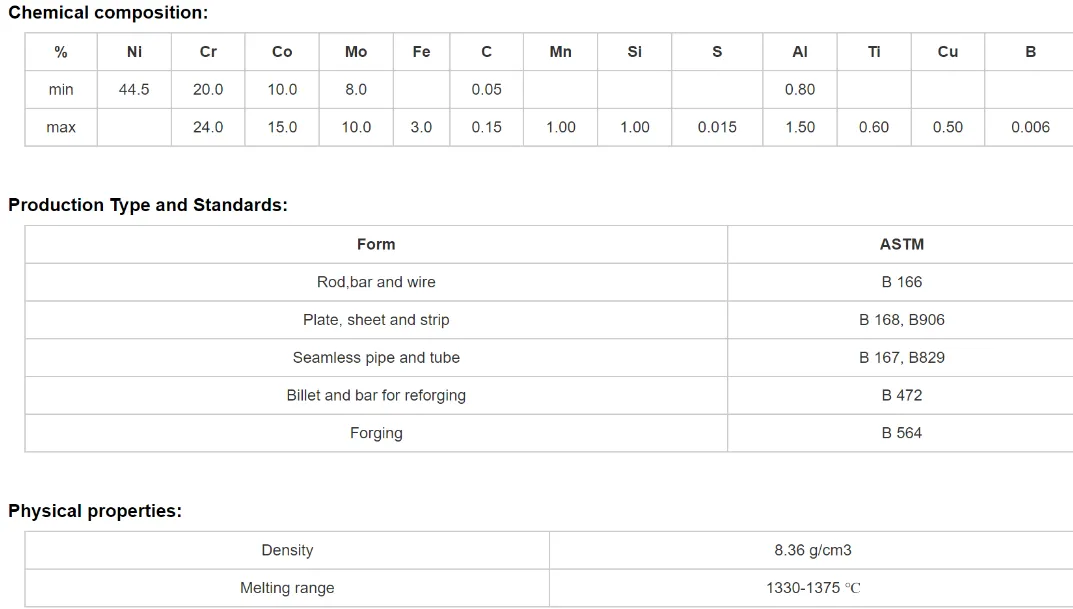
Inconel 617 is primarily a nickel base with substantial chromium, significant cobalt, molybdenum, and a small aluminum addition. Typical nominal composition ranges (wt%) are approximately:
-
Nickel (Ni): balance
-
Chromium (Cr): ~20–24%
-
Cobalt (Co): ~8–12%
-
Molybdenum (Mo): ~8–10%
-
Aluminum (Al): ~0.8–1.2%
-
Carbon, manganese, silicon, iron and minor elements at low levels.
Role of major elements
-
Nickel: base metal for high-temperature corrosion resistance and matrix stability.
-
Chromium: forms protective oxide scale for oxidation resistance.
-
Cobalt and molybdenum: provide solid-solution strengthening and support high-temperature strength and creep resistance.
-
Aluminum: improves scale adhesion and high-temperature oxidation resistance, especially above ~700°C.
Because alloy 617 is strengthened mainly by solid-solution effects rather than age-hardening precipitates, it retains ductility and weldability while offering high-temperature strength and good long-term microstructural stability. For design teams this means 617 is often chosen where long-term exposure to oxidizing or mildly carburizing atmospheres is required.
2. Composition table (typical ranges)
| Element | Typical range (wt%) | Functional effect |
|---|---|---|
| Ni (Nickel) | Balance | High-temperature matrix, corrosion resistance |
| Cr (Chromium) | 20.0 – 24.0 | Oxidation resistance, scale formation |
| Co (Cobalt) | 8.0 – 12.0 | Strength at high temperature |
| Mo (Molybdenum) | 8.0 – 10.0 | Solid-solution strengthening, corrosion resistance |
| Al (Aluminum) | 0.8 – 1.2 | Improves oxide scale stability |
| C (Carbon) | ≤ 0.10 | Influences creep, carbide formation |
| Mn, Si, Fe, Cu, S, P | Trace | Impurities / manufacturing control |
(Exact chemical requirements will be specified in applicable product standards or order specs; always request mill certs.)
3. Mechanical and physical properties
Below are representative values for a solution-annealed condition. For design, refer to manufacturer data sheets and certified mill test reports for the exact heat/product form you will use.
Room temperature tensile properties (representative)
| Property | Typical value |
|---|---|
| 0.2% offset yield strength (RT) | ~240–360 MPa (varies by product form) |
| Tensile strength (RT) | ~700–900 MPa (depending on condition) |
| Elongation (in 2 in / 50 mm) | ~30% or higher for wrought material |
Elevated-temperature properties (indicative)
| Temperature | 0.2% proof or yield (MPa) | Notes |
|---|---|---|
| 500°C | significantly reduced vs RT but maintains useful strength | |
| 750°C | retains strength for long-term use | |
| 900°C | still usable in many designs; verify creep data for long times |
Designers should use creep-rupture curves supplied by the material producer for time-dependent life prediction when components operate at constant high temperature.
4. Temperature capability, oxidation and high-temperature corrosion
Inconel 617 is intended for sustained use in the 700–1000°C range, and it is commonly used up to roughly 980–1100°C in certain short-term or specialized applications. Its oxidation resistance is boosted by the aluminum and chromium content, which form protective oxide scales. The alloy also shows good resistance to carburization and nitridation compared with many nickel alloys; however, under extremely oxidizing combustion atmospheres there can be some tendency for internal aluminum-nitride formation, so service environment should be checked case by case. For long-term design — especially for components subject to creep — use manufacturer creep-rupture data and consider protective coatings where aggressive atmospheres exist.
5. Thermal processing, forging, hot working and welding
Key fabrication facts
-
Annealing: typical solution anneal around 1175–1185°C followed by rapid cooling for many product types; check producer datasheet for exact cycles.
-
Hot working: typical forging and hot-working ranges are about 927–1205°C. Controlled forging and thermomechanical processing are important to achieve desired grain size for creep resistance.
-
Welding: alloy 617 is readily weldable by common fusion methods including gas-tungsten arc welding (GTAW/TIG), gas metal arc welding (GMAW/MIG), shielded metal arc welding and submerged arc. Matching filler metals (FM-617) are available and recommended for critical fabrications. Post-weld heat treatments may be used depending on application.
Practical tip
-
Because alloy 617 is solid-solution strengthened, welding with matching filler metals usually preserves high-temperature properties of the assembly. Always request weld procedure qualifications and pre/post-weld documentation for critical parts.
6. Product forms and specification references
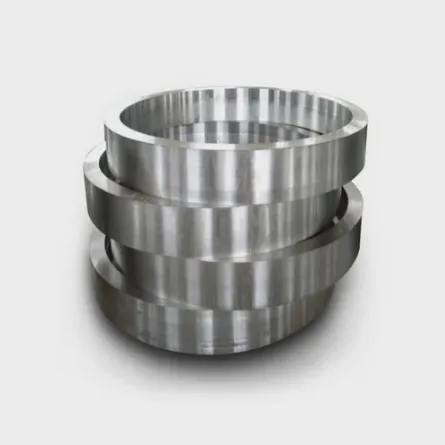
Common available forms include:
-
Forged bars and blocks
-
Plate and sheet
-
Seamless tube and pipe, welded tube
-
Round bar, square bar, flats
-
Wire and ribbon
-
Powder for additive manufacturing
Relevant standards and specs to request on purchase:
-
UNS N06617 designation on the certificate
-
ASTM specifications for pipes, tubes, bars and forgings as applicable (for example ASTM B167/B166/B564 depending on product)
-
Manufacturer material data sheet and mill test certificates (chemical analysis, mechanical tests, heat number traceability)
When you request quotes, ask for product form, heat treatment state, mill cert (3.1/3.2), and supply chain lead time.
7. Typical applications where Inconel 617 is preferred
Inconel 617 is used where temperature, gas composition, and time-to-failure risks call for a durable nickel alloy. Typical sectors and parts:
-
Gas turbine hot gas path components such as combustion cans, liners, transition ducts.
-
Industrial furnace muffles, radiant tubes and heat-treatment fixtures.
-
High-temperature heat exchangers, recuperators and superheater tubing.
-
Petrochemical process components where high temperatures combine with mildly corrosive gases.
-
High-temperature nuclear reactor components for helium-cooled designs and intermediate heat exchangers.
These are proven, fielded uses that take advantage of the alloy’s combination of oxidation resistance and strength at high temperature.
| Property | Inconel 617 | Inconel 625 | Inconel 718 |
|---|---|---|---|
| Primary use | Long-term high-temp strength + oxidation resistance | Corrosion resistance, many industries | High strength via precipitation hardening |
| High temp strength >700°C | Very good | Good | Lower performance above ~650–700°C for long times |
| Weldability | Good | Excellent | Good but requires care due to precipitation phases |
| Age hardenable | No (solid-solution) | No (solid-solution) | Yes (precipitation hardening) |
| Common selection rationale | High-temperature service up to ~950°C | Corrosive environments and strength up to ~650–800°C | Fasteners, disks, where high yield needed at moderate temp |
Selecting among these often comes down to operating temperature, required long-term creep resistance and fabrication constraints. For continuous service in the 700–950°C window, 617 is commonly favored. For very high strength at lower temperatures where precipitation hardening is valuable, 718 might be chosen. For superior corrosion resistance in certain aqueous or chloride environments, 625 can be preferred.
9. Inconel 617 Price
Alloy prices vary with global nickel, cobalt, and molybdenum markets, product form, quantity and lead time. The figures below are indicative market ranges observed from multiple suppliers and market summaries; treat them as reference only. Always request firm quotations with incoterm and MOQ. Typical mill and distributor prices for Inconel and nickel alloys commonly vary widely. Recent market summaries suggest a wide band roughly equivalent to $20–110 per kilogram depending on product form and order specifics. For practical purchasing, factory-direct or bulk orders reduce unit price.
Price comparison table (representative ranges)
| Product form | Typical price range per kg (USD) | Notes / source examples |
|---|---|---|
| Seamless tube (small qty) | $20 - $50 / kg | distributor listings for tube products. |
| Plate / sheet | $40 - $110 / kg | depends on thickness and certification. |
| Round bar / forged block | $35 - $100 / kg | forged stock and block pricing varies by size. |
| Powder (AM-grade spherical) | $80 - $250 / kg | highly dependent on powder spec and lot size. |
| Typical factory-direct MOQ discount | negotiated | factory pricing can be 15–40% lower than small-volume distributor quotes when buying direct; always verify with supplier |
If your company supplies "100% factory price" as customer messaging, clarify what that means in the quote: is it mill-dollar cost, mill-plus processing, or mill-ex works? Buyers will want to see breakouts: base metal cost, processing, testing, packaging and logistics.
Also consult current alloy surcharge indexes or producer surcharge reports for the exact month; these indices are often posted by mill producers and change monthly.
10. Purchasing, quality and inspection checklist (what to request)
When buying Inconel 617 for critical service, ask suppliers for:
-
Mill test certificate with chemical composition and mechanical test results (traceable to heat/lot).
-
UNS N06617 identification and relevant ASTM/ASME spec numbers for product form.
-
Heat treatment state and processing record (solution anneal, quench details).
-
NDT and inspection records if applicable: PMI, ultrasonic testing, dye-penetrant for welds, visual inspection.
-
Certified weld filler metal data when assemblies are supplied welded.
-
Traceability: heat number on stocks and lot packaging.
-
Creep and stress-rupture data if operating near design temperature.
-
Certificates for surface finish and dimensional tolerances for tight-fit parts.
11. Machining, surface finishing and joining tips
-
Machining: 617 machines like many nickel alloys. Expect heavy tool wear relative to steels. Use sharp carbide inserts, positive rake geometry, controlled feeds and depths to minimize work hardening. Coolant application helps tool life and surface finish.
-
Surface finishing: pickling or mechanical cleaning to remove scale after hot work. For critical gas path components, shot-peening and controlled polishing may be specified.
-
Joining: for welded assemblies use matched filler metals (FM-617). For dissimilar joins, consider compatibility and post-weld anneal as needed.
12. Long-term aging, microstructural stability and lifecycle planning
Because 617 is solid-solution strengthened, microstructural stability under prolonged high-temperature exposure is good when compared to precipitation-hardened alloys that can over-age or form brittle phases. That said, long-term exposure can still lead to grain growth and changes in creep resistance. Where service life is measured in thousands of hours at high temperature, design teams should apply creep testing and consider conservative safety factors or protective coatings to extend life.
13. Environmental and end-of-life considerations
-
Recycling: nickel-base superalloys are highly recyclable. Ask suppliers about reclaimed content and segregation of scrap streams.
-
Environmental impact: cobalt and nickel supply chains have known social and environmental risks. Responsible sourcing policies and supplier due diligence are increasingly standard for large OEMs. Request chain-of-custody and conflict-free sourcing documentation when relevant.
14. How MWalloys can present 100% factory price credibly
To communicate factory-direct pricing to buyers while building trust:
-
Publish a clear price sheet showing base metal mill ex-works, plus optional processing addons.
-
Offer a downloadable mill certificate and FOB / EXW terms on request.
-
Provide volume tiers showing exact discounts at quantity breakpoints.
-
Include lead times and MOQ explicitly to avoid hidden cost surprises.
-
Offer sample or small-batch trial pricing and transparent return policies for quality issues.
-
Show photos of your mill stock and packing, plus traceability examples, so buyers can confirm factory authenticity.
This transparency reduces negotiation friction and strengthens conversion rates for technically literate buyers.
15. Frequently asked questions
1. What is the maximum continuous service temperature for Inconel 617?
2. Is Inconel 617 weldable?
3. How does 617 compare to 625 for corrosion?
4. Can 617 be used in nuclear reactor components?
5. What product forms are available from mills?
6. What certification should I insist on?
7. Is post-weld heat treatment required?
8. How big is the price spread I should expect?
9. Can I use 617 for additive manufacturing?
10. What are common failure modes at high temperature?
16. Practical buying checklist
-
Confirm UNS / mill cert and heat number
-
Ask for specified product form, dimensions and finish
-
Request welding filler metal and procedure specs if assembly required
-
Check lead time and MOQ
-
Verify price breakdown and incoterms for “factory price” claims
-
Request inspection and testing records, PMI if needed
Closing recommendation
For engineers and procurement specialists who need reliable high-temperature performance with good manufacturability, Inconel 617 remains a top-choice alloy. If your design life, operating temperature and environment match 617’s strengths — oxidation resistance, solid-solution high-temperature strength and good weldability — it can reduce lifetime cost through longer intervals between maintenance and replacement. When quoting, MWalloys should lead with clear documentation: UNS N06617, mill certificates, product form details and an explicit factory-price breakdown to convert technically oriented buyers.