

In 2025, typical market prices for INCOLOY® Alloy 800 (UNS N08800) span roughly USD $18–$55 per kg depending on product form (wire / bar / plate / pipe), certification and region — with factory-direct Chinese quotes commonly in the USD $18–$35/kg band for standard bars and sheet in volume. Prices for certified pressure-vessel or heat-treatment-specified material, small-lot orders, or finished components often sit at the top of the band (or higher). These ranges reflect a mix of supplier price lists and spot quotes and track the movement of nickel and alloy surcharges that drive most of the volatility.
What is INCOLOY® Alloy 800
INCOLOY® Alloy 800 is a nickel-iron-chromium austenitic alloy designed to deliver good strength and oxidation/corrosion resistance at elevated temperatures (service up to roughly 816°C / 1500°F). The family includes 800, 800H and 800HT (UNS N08800 / N08810 / N08811) — H and HT variants have controlled carbon and small Al+Ti adjustments to raise creep strength for prolonged high-temperature service. Typical composition: Ni ≈ 30–35%, Cr ≈ 19–23%, Fe balance; carbon and minor elements vary by subgrade. The alloy is widely used in furnace components, petrochemical heat exchangers, and heating element sheaths. Authoritative technical bulletins and ASME/ASTM product specifications define chemical limits, mechanical testing and heat-treatment practice.
Price by product form & region — practical 2025 bands
Prices vary dramatically by form (wire vs plate vs seamless pipe), quantity and certification. Below are realistic reference bands observed from multiple suppliers and price lists in mid-2025:
-
Wire / fine diameter products: USD $22–$40 / kg (China wires toward lower end; EU/US specialty wire at higher end).
-
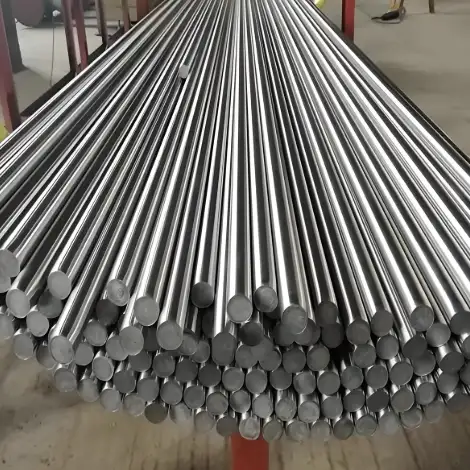
Round bar / rod (bright/annealed): USD $18–$45 / kg (factory quotes from China commonly USD $18–$30/kg for bulk; specialty or AMS-qual rods higher).
-
Plate / sheet (5–50 mm): USD $25–$50 / kg (heavy plate and certified plate trend higher).
-
Seamless & welded pipe / tube: USD $20–$55 / kg (thin-wall welded tubing is cheaper; thick, ASME-certified seamless pipe is at top end).
-
Finished/fabricated parts (heat-treated, tested): add processing premium — can multiply base material cost by 1.2–2.0 depending on labor and testing.
Note: these are market ranges intended for procurement planning; precise quotes require form, size, quantity, certification, delivery port and lead time.
Past 5 years — yearly snapshot (2019–2024)
Getting exact averaged per-kg historical prices for Incoloy 800 is complicated because most public price series track nickel, not finished alloy. However supplier price snapshots combined with the LME / commodity trend give a practical historical picture.
Key drivers over 2019–2024: nickel market volatility (EV battery demand and Indonesian policy shifts in 2021–2023), COVID disruption (2020 logistics + 2021 recovery), and downstream inventory cycles.
Synthesised year bands (typical global distributor/stockist ranges)
-
2019 (calendar): ~USD $15–$28/kg. Nickel relatively stable; alloy premiums modest.
-
2020: ~USD $14–$30/kg. COVID-19 caused localized upward spikes for some forms (supply disruption), but demand slowdown kept ranges wide.
-
2021: ~USD $18–$35/kg. Base metals recovery raised surcharges; suppliers began marking up alloys.
-
2022: ~USD $28–$48/kg. Nickel soared at times in 2022 (supply fears, speculator interest), pushing alloy users to pay higher surcharges and pushing some forms above USD $40/kg.
-
2023: ~USD $22–$45/kg. Volatility continued; inventory destocking and Indonesian policy normalization eased some pressure in late 2023.
-
2024 (calendar): ~USD $20–$42/kg. Markets stabilized vs 2022 peaks; regional spreads remained significant (India, China, EU, USA show 10–30% differences).
Global price table — 2025 (practical bands, Aug 2025)
Below is a concise table giving region / typical factory or distributor range for 2025 (mid-year reference). These numbers are market bands — use them to set RFQ expectations and to benchmark quotes from MWAlloys or other suppliers.
| Region | Product example | Typical 2025 band (USD/kg) | Notes / source |
|---|---|---|---|
| China (factory-direct) | round bar / plate | $18 – $35 / kg | Many Chinese factories list USD $18–$35/kg for bulk order wire/plates. |
| India (stockist / mill) | bars & tubing | $20 – $40 / kg | Indian stockist snapshots show a broad band; certification raises cost. |
| Europe (distributor) | wire / sheet | $28 – $50 / kg | EU/UK distributors and small lot supply cost more due to labor and standards. |
| USA (distributor) | bars, plate, pipe | $28 – $55 / kg | US specialty suppliers and AMS/ASME-certified items at top end. |
| Middle East / MENA | pipe & fabricated items | $25 – $48 / kg | Regional import premiums and freight contribute. |
Important: the same grade, size and test certificates can produce >30% price swing between the cheapest Chinese factory quote and a fully certified US distributor.
Why prices move — the main cost drivers
-
Nickel price and alloy surcharge. Nickel content (~30–35%) is the largest raw material cost. LME nickel movements translate into alloy surcharges charged by producers; when nickel rises, finished-alloy prices follow. (LME and aggregator data show nickel at ~USD 14,5–15,5k/ton in mid-2025).
-
Form & processing intensity. Wire drawing, bright rolling, seamless tube production, or heavy plate rolling add variable processing cost. Thin-walled welded tubing is cheaper than thick seamless pipe.
-
Certification & traceability. ASME/ASTM/AMS/EN/NACE certified melt and full test reports increase cost (mill certificates, PMI, tensile & NDT tests).
-
Order size & MOQ. Smaller batches (few tens of kg) incur much higher per-kg prices than 1,000+ kg bulk orders.
-
Logistics, tariffs & freight. Air freight for urgent orders or ocean freight surcharges can add materially to delivered cost. 2021–2022 showed major freight volatility.
-
Lead time & inventory policy. Longer lead times can push buyers to accept higher priced spot inventory. Mills may apply “prior month adjuster” surcharge methods.
Practical procurement checklist (what to include in RFQ)
When requesting quotes, always include:
-
Exact UNS / trade name (UNS N08800, Alloy 800 / Incoloy 800 / INCONEL 800 synonyms cause confusion).
-
Form, size, tolerances (bar Ø, plate thickness, tube OD & wall).
-
Heat treatment & condition (annealed, bright, solution-annealed, 800H/800HT if needed).
-
Required standards & certificates (ASME SA/ASTM number, 3.1/3.2 certificates, PMI reports, NDT).
-
Quantity, delivery port, required packaging & lead time.
-
Acceptance tests (UT, RT, tensile, hardness, creep data if for high-temp service).
-
Is a mill test report (MTR) required? If yes, budget +5–15% frequently.
Buyer tip: ask suppliers to break down price: base material + alloy surcharge + processing + testing + freight. This makes comparisons transparent.
Five- to ten-year outlook (scenarios and what to watch)
Base case (most probable): Nickel market settles into a range with moderate growth — alloy prices will track the base-metal trend and remain range-bound with episodic spikes tied to policy or supply (Indonesia output, new HPAL capacity). Analysts in mid-2025 expected nickel around USD ~$15–17k/ton in short term with upside if EV demand accelerates.
Bull scenario: Faster electrification and constrained primary supply lead to nickel deficits; Incoloy and other nickel-rich alloys see multi-year price inflation (real increases >20–40%).
Bear scenario: Overcapacity (Indonesia + scrap flows) and weaker global manufacturing demand push nickel lower; alloy margins compress and distributors compete on price.
How buyers should react: lock reasonable pipeline volumes with trusted mills for long-lead projects, use staggered buying, and require alloy-surcharge clauses in large contracts to manage volatility.
How MWAlloys can help
MWAlloys is positioned as a China-based manufacturer / supplier with factory advantage for nickel alloys. For Incoloy 800 we provide:
-
Factory-direct pricing for standard bars, plate and tubing (typical factory quotes often land in the USD $18–$35/kg range for bulk orders subject to spec).
-
Customization & small-batch service (we can support orders from medium MOQ up to full container loads with mill test reports and EN / ASTM certificates on request).
-
Faster local sourcing for China-origin material (helpful if lead time or cost is critical).
FAQs
-
Q: What is the cheapest way to buy Incoloy 800?
A: Buy factory-direct in bulk (tonne lots) from a China mill or stockist and accept standard finish & certificate; avoid small lots and special machining before ordering. -
Q: Is Incoloy 800 more expensive than 304/316 stainless?
A: Yes — significantly. Nickel content pushes alloy cost well above common stainless grades. -
Q: Do I pay extra for an MTR / 3.1 certificate?
A: Yes — certified material usually has a premium (testing, traceability and paperwork). Budget +5–15%. -
Q: How does nickel price change affect the quote?
A: Most mills use an alloy surcharge tied to nickel (and other elements) — if nickel rises, your surcharge increases proportionally; ask for the surcharge formula in the quote. -
Q: For high-temp service, should I pick 800H/800HT instead of 800?
A: For long-time high-temperature creep strength choose 800H or 800HT; they cost a bit more due to processing and tighter chem control. -
Q: Can I get small samples before committing?
A: Yes, but small samples increase per-kg price; negotiate a sample credit against larger orders where practical. -
Q: Is domestic (US/EU) stock more reliable?
A: Domestic stock offers faster delivery and sometimes stricter provenance, but at higher cost; weigh TCO (total cost of ownership). -
Q: How much does machining / fabrication add?
A: Add 20–100% depending on complexity, heat-treatment and testing requirements. Request a separate fabrication quote. -
Q: Are substitutes available to cut cost?
A: For some high-temp needs, lower-nickel options or stainless alloys may suffice — but review corrosion and creep requirements with engineering first. -
Q: How quickly can MWAlloys quote and ship?
A: We typically provide a formal quote within 24–48 hours for standard items; lead time depends on stock vs made-to-order.