

Inconel 718 can be machined successfully with consistent part quality when operators use rigid setups, positive carbide or ceramic tooling with appropriate coatings, conservative depth of cut and feed choices for roughing, higher spindle speeds with light chip loads for finishing, active heat removal at the cut zone, and process strategies that avoid dwell and re-cutting of hardened surfaces. Follow the recommended tool families, cutting data windows, and workholding practices in this article to minimize work hardening, extend tool life, and meet aerospace or energy tolerances.
1. Why Inconel 718 behaves differently under the cutter
Inconel 718 is a precipitation-hardenable nickel-iron-chromium superalloy engineered for high strength at elevated temperatures. The alloy combines high tensile properties with relatively low thermal conductivity and strong tendency to work harden near the cut. These attributes cause elevated cutting temperature in the immediate shear zone and lead to rapid flank wear, built up edge and poor chip breaking if process variables are not tuned. For these reasons, machining must prioritize heat evacuation, avoid tool dwell, and choose tool materials that can withstand abrasive, adhesive and thermal wear mechanisms.

2. Metallurgical features that impact cutting performance
Key material characteristics that drive process choices
-
High strength and strain hardening: Work hardening produces a hardened layer directly ahead of the cutting edge when cutting rates are slow or tool dwell occurs. This hardened layer increases cutting forces quickly.
-
Low thermal conductivity: Heat concentrates in the shear zone, raising local temperatures and accelerating diffusion wear and coating breakdown.
-
Toughness and adhesive tendency: Material adhesion leads to built up edge and crater formation on carbide tools. Coatings and surface finishes on inserts reduce adhesion.
-
Microstructure: The precipitation-hardened state versus annealed state changes machinability; annealed stock generally machines with less tool stress and longer life.
Implications for process control
-
Minimize time that a given cutting edge spends in contact with the same surface location.
-
Use positive rake geometries that cut cleanly rather than plow and strain harden the surface.
-
Favor interrupted cutting strategies that avoid rubbing and continuous high temperatures where possible.
3. Tooling selection: materials, coatings, and geometric choices
Choosing the correct tool family is one of the single largest levers to improve productivity and part quality.
Tool material and coatings (summary)
| Operation | Preferred tool material | Typical coatings | Why this choice |
|---|---|---|---|
| Turning (rough) | Multi-layer coated carbide (CNMG/CCMT style) | CVD TiCN/TiN or PVD AlTiN/AlCrN | Carbide tolerates shock, coatings reduce adhesion and abrasion. |
| Turning (finish) | Fine-grain carbide or PVD coated inserts | PVD TiAlN or AlCrN | Better edge stability and thermal resistance for light chip loads. |
| High speed milling | Carbide end mill with advanced PVD or CVD | PVD TiAlN + nano layers | Maintains edge strength at higher speeds; reduces weld zones. |
| Heavy roughing / hard cuts | Ceramic or CBN for some operations | Uncoated ceramic or special coated ceramics | When carbide life is too short at aggressive cuts, ceramics offer wear resistance but need rigidity and chip evacuation. |
| Drilling | Coated carbide solid drills or carbide-insert indexable drills | AlTiN or proprietary HRSA grades | Carbide drills in peCK cycles or through-coolant reduce work hardening. |
Insert geometry and edge prep
-
Positive rake, honed edge: Reduces cutting forces and improves chip flow. Use small hone radius to resist chipping while maintaining cutting action.
-
Large nose radius for finishing: When achieving surface finish, larger nose radii help but will increase cutting forces; balance with machine stiffness.
-
Chipbreakers designed for sticky metals: Choose chip pocket forms that produce short, controlled chips and avoid long stringy chips. Sandvik and other toolmakers publish HRSA geometries tuned for Inconel 718.
4. Recommended cutting parameters by operation
Parameters must be adapted to machine power, rigidity, tool microgeometry, and clamping system. The tables below provide conservative, industry-proven starting windows. Run short tool tests and implement small incremental adjustments.
4.1 Turning (roughing and finishing) — starting windows
| Operation | Cutting speed Vc (m/min) | Feed f (mm/rev) | Depth of cut ap (mm) | Notes |
|---|---|---|---|---|
| Rough turning (coarse) | 30–80 | 0.15–0.5 | 1.5–6.0 | Use robust inserts, climb turning where possible. Keep continuous coolant flow near cutting zone. |
| Semi finish | 40–100 | 0.08–0.2 | 0.5–2.0 | Lower feed to reduce work hardening before finish pass. |
| Finish turning | 50–150 | 0.03–0.12 | 0.1–0.5 | Light depth of cut, higher spindle speed with fine carbide or ceramic tool. |
4.2 Face milling and slot milling
| Operation | Cutting speed Vc (m/min) | Feed per tooth fz (mm/tooth) | Axial depth ae (mm) | Notes |
|---|---|---|---|---|
| High feed face milling | 50–120 | 0.05–0.20 | 1–6 | Use carbide end mills with large helix and strong core. High feed strategies can be productive. |
| Conventional slot milling | 25–70 | 0.02–0.08 | 1–4 | Keep ramping shallow, avoid full slotting if possible. |
| Finish pass milling | 60–150 | 0.01–0.06 | 0.1–0.5 | Light radial engagement and high rpm produce best surface integrity. |
4.3 Drilling and boring
| Operation | Spindle speed (rpm) | Feed (mm/rev) | Strategy |
|---|---|---|---|
| Solid carbide twist drill | Moderate rpm, conservative feed | 0.05–0.15 | PeCK drilling recommended; through coolant or high pressure improves chip evacuation. |
| Indexable insert drill | Lower rpm, higher feed | 0.08–0.25 | Use inserts rated for HRSA; ensure toolholder rigidity. |
| Boring | Similar to drilling | low feed | Avoid dwell; use single-point tools with positive geometry. |
Notes on units and machines
-
Convert windows to imperial if needed. Start at lower end of speed range when machine rigidity or coolant effectiveness is questionable. Increase spindle speed if tool and holder allow and chips remain controlled.
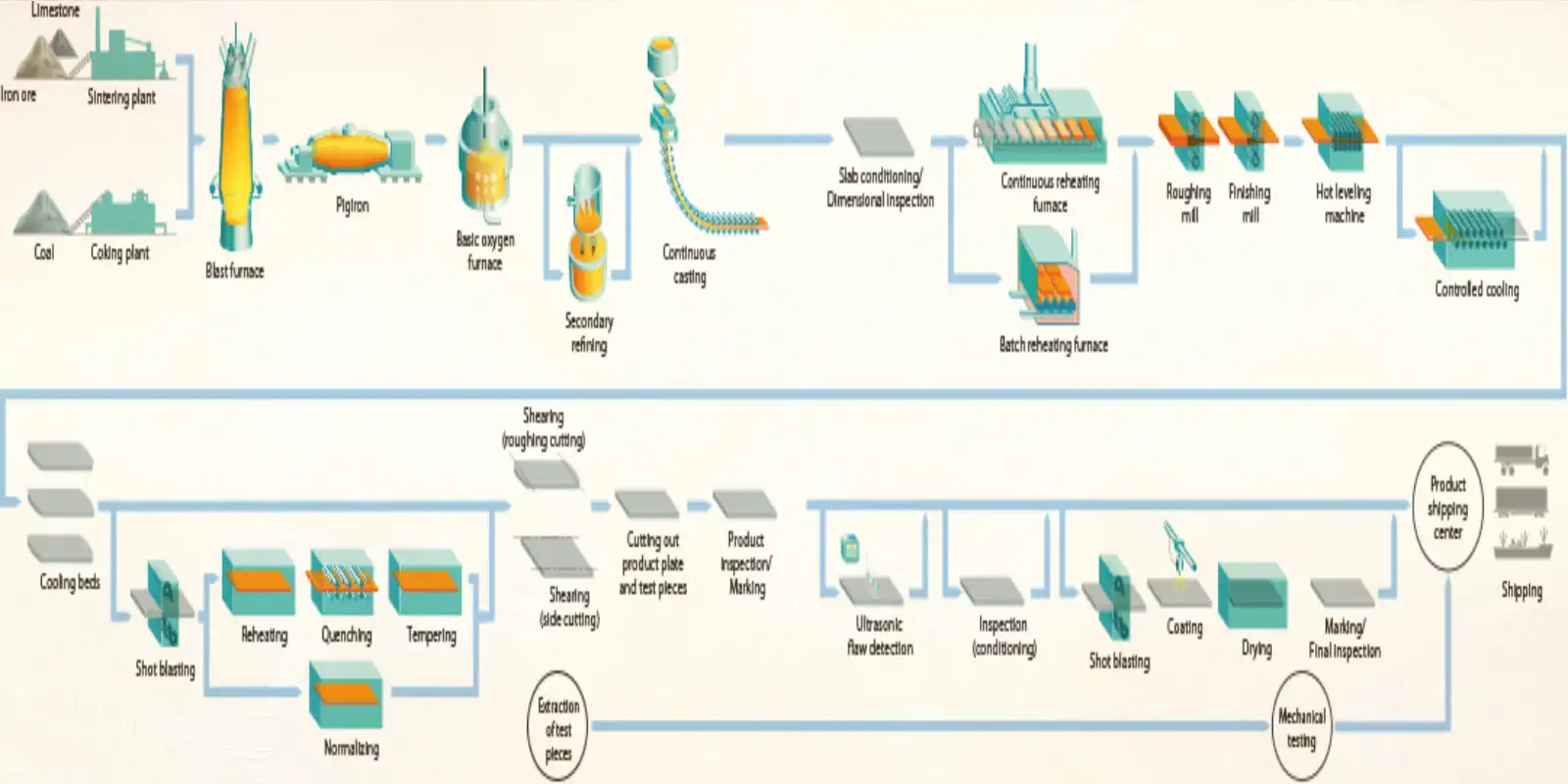
5. Machining strategies and process flows
A robust process plan separates roughing and finishing and controls heat build up.
Roughing strategy
-
Use heavier radial engagement, moderate axial depth and robust carbide tooling. Keep feed high enough to shear rather than rub.
-
Avoid repeated re-cutting of the same surface. If finishing must remove a work-hardened layer, use a light skim pass to remove the hard skin.
Semi finishing
-
Reduce depth of cut and feeds to lower cutting forces and minimize residual work hardening. Verify part temperature after rough passes.
Finishing
-
Light depth of cut and low chip load produce best surface integrity. High rpm with a small uncut chip thickness reduces built-up edge and improves finish. Use fine-grain carbide or ceramic inserts.
High material removal options
-
Trochoidal milling: Keeps radial engagement low and allows higher spindle speeds with longer tool life. Effective for roughing deep pockets.
-
High feed milling: When using special high-feed end mills, productivity improves while keeping cutting forces manageable. Tool selection must match application.
6. Chip control, coolant, and thermal management
Chip control and heat removal determine tool life more often than raw speed.
Coolant strategies
-
Flood coolant with emulsified oil: Helps keep chips away and reduces tool temperature in many shop settings.
-
Through-tool coolant at high pressure: Offers much better chip evacuation and cooling at the cutting edge for drills and indexable insert tools. High pressure helps break chips and reduce flank adhesion.
-
Minimum quantity lubrication: Some shops find MQL unacceptable for HRSA due to heat concentration. Use only if validated.
Chip control techniques
-
Use inserts with proper pocket geometry for short, curled chips.
-
Avoid long thin chips that pack and cause re-cutting. Use chipbreakers or short-chipping geometries.
Thermal control on part
-
Design fixtures to conduct heat away. Use pauses in cycle only if tool cooling is sufficient. Avoid any dwell of a high-speed rotating tool on stationary work that can create localized work hardening.
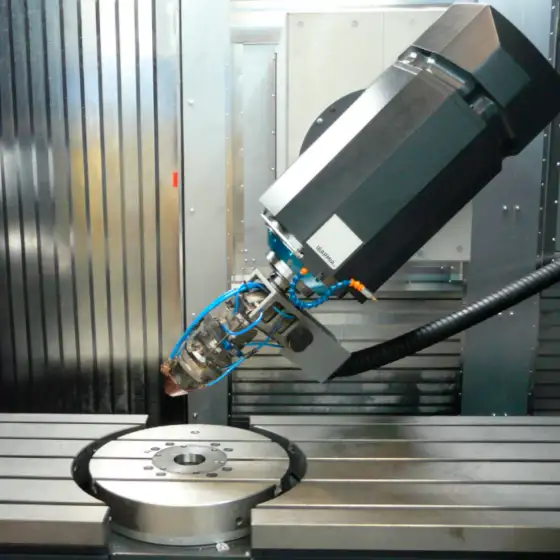
7. Workholding, fixture design, vibration suppression, and machine selection
Machine and fixture choices multiply the effect of tool decisions.
-
Stiff machine tool: Prefer rigid, low-runout spindles with sufficient horsepower and torque. Multi-axis machining centers with large bearings perform better.
-
Solid, short overhangs: Keep tool and workpiece overhang minimal to reduce deflection. Use hydraulic chucks or shrink fit for end mills when possible.
-
Damped tooling: For long thin shafts, use damped adaptors or silent tools to suppress chatter. Sandvik’s Silent Tools solutions have documented benefits for HRSA shafts.
-
Rigid clamping and heat sinks: Fixtures that contact a significant surface area help draw heat away from the cut zone and reduce distortion.
8. Tool wear modes, diagnostics, and corrective actions
Common wear types and how to respond:
-
Flank wear: Progressive loss on the clearance face. If flank wear grows quickly, reduce cutting speed and verify coating compatibility. Replace inserts before edge chipping impacts geometry.
-
Crater wear: Forms on rake face due to diffusion and chemical wear. Use coatings that resist diffusion at elevated temperatures.
-
Adhesion and built up edge: If present, increase cutting speed slightly, reduce feed, or change coating. Also verify coolant effectiveness.
-
Edge chipping: Often due to interrupted cuts, too small hone radius, or unstable toolholder. Use tougher insert substrate, increase hone, or stabilize workpiece.
Diagnostic checklist
-
Inspect chips: long, leathery chips indicate low feed or insufficient chipbreaking.
-
Inspect edge with microscope: look for tool coating delamination or micro-cracks.
-
Measure spindle runout and toolholder clamping torque.
-
Review coolant pressure and nozzle targeting.
9. Inspection, surface integrity, and postprocess treatments
Surface integrity is critical in aerospace and high-temperature service.
-
Microhardness checks: Post-machining microhardness mapping can detect work-hardened layers created by improper cutting. If hardness increase exceeds spec, perform a light stress relief or refine finishing passes.
-
Residual stress control: Avoid excessive local heating and thermal gradients during machining. Consider stress relief heat treatment if residual stress threatens component life.
-
Dimensional control: Use final finish passes at low cutting forces after any thermal stabilization of the part.
10. Representative process examples and parameter sets (case examples)
Use these sample recipes for trial logging. Always perform short tool life tests and adjust by small increments.
Case A: Medium diameter shaft turning, annealed bar, CNC lathe
-
Material condition: Annealed Inconel 718 bar Ø 60 mm.
-
Tooling: CNMG 12 04 08, fine-grain carbide, PVD TiAlN.
-
Rough pass: Vc 60 m/min, f 0.25 mm/rev, ap 3 mm.
-
Finishing pass: Vc 120 m/min, f 0.06 mm/rev, ap 0.3 mm.
-
Coolant: Flood with high pressure directed to cutting edge.
Case B: Pocket milling on aerospace bracket
-
Tooling: 12 mm solid carbide end mill, 4 flutes, TiAlN PVD.
-
Trochoidal roughing: ae 1 mm, ap 8 mm, Vc 80 m/min, fz 0.08 mm/tooth.
-
Finish: Light axial 0.3 mm, Vc 140 m/min, fz 0.03 mm/tooth.
-
Coolant: Through spindle coolant at moderate pressure.
11. Quick-reference consolidated tables
Tool materials and recommended typical applications
| Tool family | Typical application | Strength |
|---|---|---|
| Coated carbide (fine grain) | General turning and milling | Good balance of toughness and wear resistance. |
| Ceramic | High temp finishing or interrupted heavy cuts | Excellent wear resistance, needs rigidity. |
| CBN | Rare for Inconel, used when hardness high | Use caution, expensive. |
| Tool steels (HSS) | Specialty taps or hand tools | Limited life, not recommended for production. |
12. FAQs
-
Can Inconel 718 be machined on a standard CNC lathe?
Yes when the lathe is sufficiently rigid and spindle runout is low. Use proper tooling, coolant, and short overhangs for good results. -
Is annealed stock easier to machine than age-hardened stock?
Yes. Annealed material has lower strength and yields longer tool life. When possible specify annealed for bulk machining. -
Which coating works best for turning Inconel 718?
PVD aluminum-rich coatings like TiAlN and AlCrN are widely effective. Multi-layer CVD coatings also perform well in many cutters. Toolmaker data should guide final selection. -
Should I use flood coolant or through-tool coolant?
Through-tool coolant and high pressure generally give better chip evacuation. Use flood when through-tool is not available but ensure nozzle targeting is excellent. -
Why do my tools wear so fast?
Typical causes are insufficient coolant, excessive dwell, wrong tool geometry, or low machine rigidity. Diagnose chips and inspect edges to narrow root cause. -
Is trochoidal milling beneficial?
Yes for deep pockets. It reduces radial engagement and temperature near the edge, extending tool life. -
Should I use ceramics for finishing?
Ceramics can give excellent wear resistance but require stable, rigid setups. They are not tolerant of shock. -
How to avoid work hardening?
Avoid rubbing and slow cuts, perform a light skim to remove any hardened skin produced during roughing. Maintain steady chip formation. -
Are there special drills for Inconel 718?
Yes, solid carbide drills or indexable drills rated for HRSA with through coolant perform best. Use peCK cycles to prevent chip packing. -
What inspection should follow machining?
Microhardness mapping for critical components, dimensional control and residual stress consideration for safety critical parts.